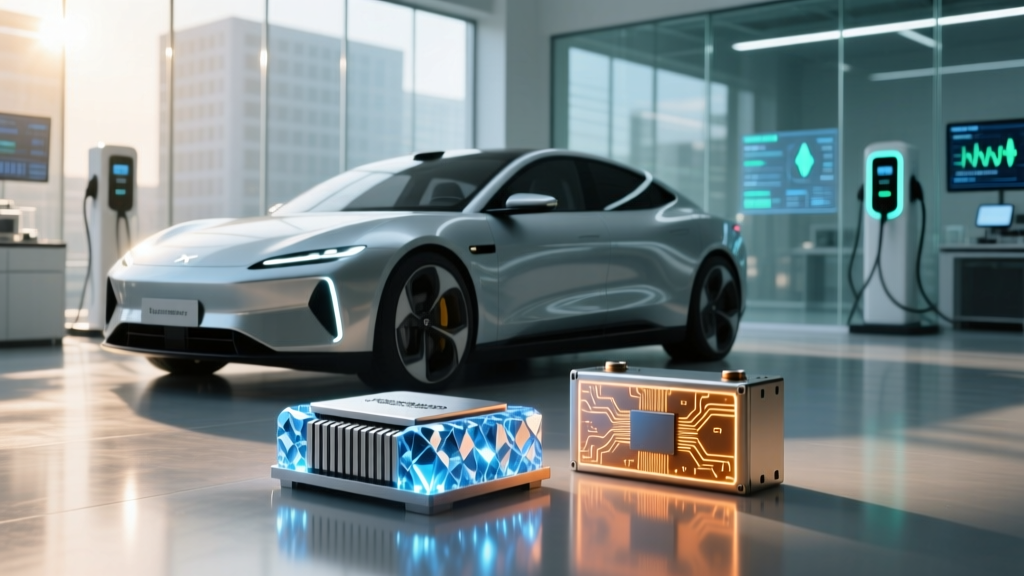
If you have been following battery-headline news, you have likely seen the term magnesium battery surface alongside solid-state and silicon-anode breakthroughs. The promise is tantalizing: an earth-abundant metal that carries a +2 charge (versus lithium's +1), theoretically doubling the charge carriers per ion, with supply chains free of the geopolitical bottlenecks that plague lithium, cobalt, and nickel.
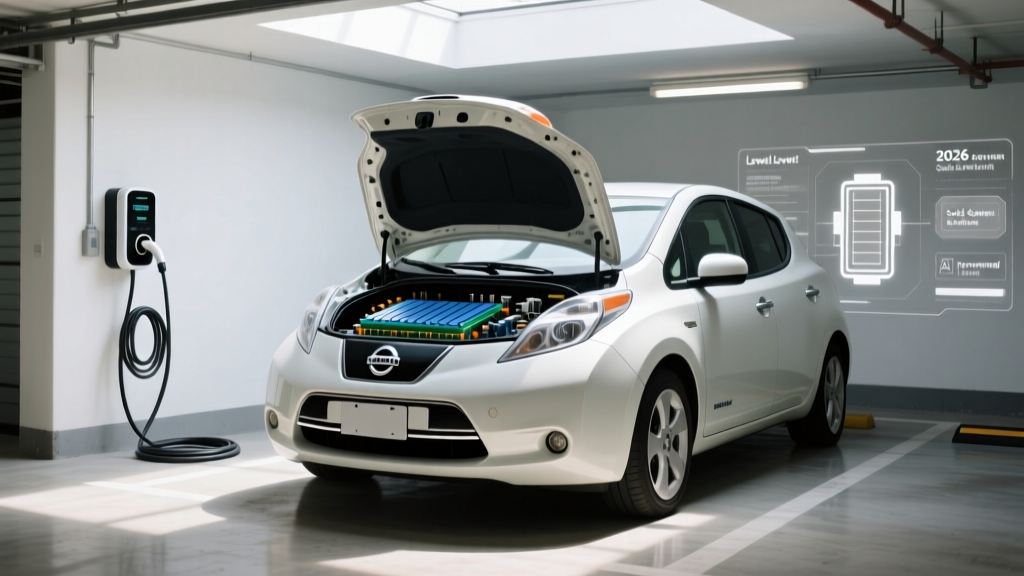
But as of 2026, every mass-production EV rolling off a line in Fremont, Seoul, Stuttgart, or Shanghai still runs on a lithium-ion traction pack — either NMC/NCA (nickel-manganese-cobalt / nickel-cobalt-aluminum) or LFP (lithium iron phosphate). Magnesium-ion and magnesium-metal cells remain in the lab-to-pilot stage, with commercial EV deployment still years away.
This guide explains where magnesium battery research actually stands, then gives you the actionable numbers you need today: how long current lithium-ion packs last, what warranties cover, how much replacements cost, and how to maximize the State of Health (SoH) of the pack in the EV you already own or are about to buy.
Where Magnesium Battery Tech Stands in 2026
Magnesium's appeal is rooted in three physics advantages:
- Volumetric capacity: Mg metal anodes can theoretically deliver ~3,833 mAh/cm³, roughly double lithium metal's ~2,046 mAh/cm³.
- Abundance: Magnesium is the 8th most abundant element in Earth's crust, with massive reserves in China, Russia, and Turkey — reducing supply-chain risk.
- Safety: Mg does not form dendrites as aggressively as lithium metal, lowering internal-short-circuit risk.
The hurdles keeping magnesium out of 2026 EVs are equally concrete:
- Electrolyte compatibility: Conventional carbonate electrolytes form a passivation layer on Mg anodes that blocks ion flow. Newer borohydride and organohaloaluminate electrolytes work in coin cells but are corrosive and hard to scale.
- Cathode options are limited: Mg²⁺'s double charge causes strong electrostatic interaction with cathode host lattices, slowing diffusion and reducing cycle life. Chevrel-phase Mo₆S₈ cathodes work but deliver low voltage (~1.2 V).
- Manufacturing ecosystem: The gigafactory tooling, dry-room specs, and slurry chemistry for Mg cells do not yet exist at automotive scale.
Companies like Toyota (partnering with its battery R&D arm) and startups such as Pellion Technologies (now absorbed into larger entities) have published promising pouch-cell data, but no OEM has announced a production-vehicle timeline. Realistic commercial deployment for passenger EVs is 2032–2035 at the earliest, and likely first in stationary storage or specialty applications.
For now — and for the foreseeable ownership cycle of any EV you buy today — lithium-ion chemistry is what you are living with. Here is how to make sense of it.
LFP vs NMC/NCA: The Chemistry You Actually Choose
Every 2026 BEV sold in the U.S. uses one of two cathode families. The anode is typically graphite (with some silicon blending for higher energy density), but the cathode defines the pack's personality.
| Attribute | LFP (LiFePO₄) | NMC / NCA |
|---|---|---|
| Energy density (cell-level) | ~160–180 Wh/kg | ~220–300 Wh/kg |
| Cycle life (to 80% SoH) | 3,000–6,000 cycles | 1,000–2,500 cycles |
| Cold-weather performance | More range loss below 32°F; slower regen | Better low-temp conductivity |
| Thermal stability | Excellent (~270°C onset of runaway) | Lower (~210°C onset) |
| Cobalt / nickel content | None | Significant (supply-chain & ESG concern) |
| Cost per kWh (2026 pack-level) | ~$85–$105 | ~$115–$145 |
| Typical 2026 models | Tesla Model 3/Y RWD, Ford Mustang Mach-E Select (base), BYD Atto 3, Rivian Standard | Tesla Long Range, Hyundai Ioniq 5/6, BMW iX, Rivian Max, Lucid Air |
Choose LFP if you prioritize longevity, can charge to 100% daily (LFP actually benefits from periodic full charges for BMS calibration), and don't need maximum range per kWh of pack weight. Choose NMC/NCA if you need long highway range, tow frequently, or live in a cold climate where winter range loss matters.
How Long Do EV Batteries Actually Last?
The short answer: longer than most buyers expect, and usually longer than the rest of the car. The long answer requires looking at real-world fleet data, not lab-cycle spec sheets.
Observed Degradation Curves (Fleet Averages)
Based on aggregated telematics from Recurrent Auto, Geotab, and Tesla's 2025 Impact Report, here is typical capacity retention for liquid-cooled packs:
- Year 1 / ~15,000 mi: 95–97% SoH (initial "break-in" drop)
- Year 3 / ~45,000 mi: 91–94% SoH
- Year 5 / ~75,000 mi: 88–92% SoH
- Year 8 / ~120,000 mi: 84–90% SoH (NMC); 89–94% SoH (LFP)
- Year 10 / ~150,000 mi: 80–87% SoH (NMC); 86–92% SoH (LFP)
Note the curve is non-linear: most loss happens in the first 12–24 months, then flattens. A pack reaching 70% SoH — the typical warranty threshold — is uncommon before 200,000+ miles in temperate climates.
Tesla's published fleet data shows Model 3/Y packs retaining roughly 85% capacity at 200,000 miles. Hyundai/Kia's 800V E-GMP packs (Ioniq 5, EV6, EV9) have shown similar trajectories in South Korean taxi-fleet data, where high-utilization DC fast charging is the norm.
The takeaway: catastrophic pack failure is rare. Gradual capacity fade is the real-world experience, and it is usually livable for the vehicle's useful life.
What the Battery Warranty Actually Covers
Federal law in the U.S. mandates a minimum of 8 years / 100,000 miles for EV battery warranties on light-duty vehicles; California Air Resources Board (CARB) states extend that to 10 years / 150,000 miles. Most OEMs match or exceed these floors.
| Vehicle | Term | Capacity Threshold | Notes |
|---|---|---|---|
| Tesla Model 3/Y RWD (LFP) | 8 yr / 100,000 mi | 70% | Long Range/Performance: 8 yr / 120,000 mi |
| Hyundai Ioniq 5 / Ioniq 6 | 10 yr / 100,000 mi | 70% | Lifetime coverage for original owner on some MY |
| Ford Mustang Mach-E / F-150 Lightning | 8 yr / 100,000 mi | 70% | Extended-range pack same terms |
| Rivian R1T / R1S | 8 yr / 175,000 mi | 70% | Higher mileage cap reflects truck use case |
| BMW iX / i4 | 8 yr / 100,000 mi | 70% | Includes module-level replacement option |
| Lucid Air | 8 yr / 100,000 mi | 70% (estimated) | Confirmed per Lucid owner manual |
Key fine print: warranties cover defects and excessive degradation below the threshold, not cosmetic damage, abuse (e.g., repeated 100% SoC storage in heat), or aftermarket modifications. Most OEMs now offer module-level replacement — swapping only the degraded modules rather than the full pack — which keeps warranty claims economically viable.
EV Battery Replacement Cost: The Honest Numbers
This is the question that generates the most fear-mongering online. Context matters: the vast majority of 2026 EVs will never need a full pack replacement under normal ownership. But if you are buying used out of warranty, or planning a 300,000-mile lifecycle, here is what you are looking at.
| Vehicle / Pack Size | New OEM Pack | Remanufactured | Module-Level Repair |
|---|---|---|---|
| Tesla Model 3 RWD (~60 kWh LFP) | $12,000–$14,500 | $8,000–$10,000 | $1,500–$3,500 per module |
| Tesla Model Y LR (~82 kWh NMC) | $16,000–$20,000 | $11,000–$14,000 | $2,000–$4,000 per module |
| Hyundai Ioniq 5 (~77.4 kWh) | $15,000–$19,000 | $10,000–$13,000 | $1,800–$3,800 per module |
| Ford F-150 Lightning Ext. Range (~131 kWh) | $25,000–$32,000 | $17,000–$22,000 | $2,500–$5,000 per module |
| Rivian R1T Max Pack (~149 kWh) | $29,000–$36,000 | $20,000–$25,000 | $3,000–$5,500 per module |
| Lucid Air Grand Touring (~112 kWh) | $22,000–$28,000 | $15,000–$19,000 | $2,500–$4,500 per module |
Two important caveats: (1) Pack prices have fallen roughly 8–12% per year on average over the past decade, so a replacement in 2035 will cost materially less than today's figures. (2) Independent EV repair shops are increasingly offering module-level diagnostics and replacement, which is almost always the right fix for a single weak module rather than a full pack swap.
For comparison, a modern automatic transmission replacement on an ICE vehicle runs $4,000–$8,000, and a timing-chain job on a high-mileage V8 can exceed $5,000. EV drivetrains eliminate most of those failure points.
What Kills a Battery Early: The Five Real Factors
Lithium-ion packs degrade from two mechanisms: calendar aging (time and temperature) and cycle aging (charge/discharge use). You cannot stop calendar aging, but you can dramatically slow cycle aging.
Battery Care Checklist for Maximum SoH
- Avoid sustained 100% SoC (NMC/NCA only): Store between 20–80% for daily use; charge to 100% only when departing for a road trip. LFP is the exception — periodic 100% charges help the BMS rebalance cells.
- Minimize DC fast charging as a routine: Occasional 150–350 kW sessions are fine; daily DCFC at peak rate accelerates lithium plating. Level 2 home charging at 7–11 kW is the longevity sweet spot.
- Precondition before fast charging: Most 2026 EVs do this automatically when you navigate to a charger. A cold pack accepting 150 kW suffers more stress than a pack warmed to 35–40°C.
- Park in shade or a garage in summer heat: Calendar aging roughly doubles for every 10°C above 25°C. A pack sitting at 90% SoC in a 100°F driveway for a week is the single worst thing you can do.
- Don't baby it too much: Driving the car normally — including occasional regen-heavy driving and highway speeds — is fine. Obsessing over 50% SoC storage while the car sits unused for weeks causes more harm than moderate use.
How to Check Your Battery's State of Health
State of Health (SoH) is the ratio of a pack's current maximum capacity to its original nameplate capacity. A 77.4 kWh pack at 90% SoH can still store ~69.7 kWh.
Here is how owners in 2026 actually check it:
- In-vehicle menus: Tesla (under Service → Battery Health), Hyundai/Kia (EV settings → Battery), BMW (iDrive → Vehicle Status), and Rivian now all expose a SoH percentage or "battery health" indicator.
- OEM apps: The Tesla app, FordPass, Hyundai Bluelink, and myChevrolet show SoH or recent trip efficiency trends that serve as proxies.
- Third-party OBD-II tools: Apps like Battery Health (for Tesla via Bluetooth) or OBDLink + LeafSpy-style tools (for CCS vehicles) read BMS-reported capacity directly.
- Dealer diagnostic reports: Request a "battery health report" at any scheduled service. OEM dealers can pull cell-level voltage delta data, which reveals weak modules before they trigger a check-engine light.
For used-EV buyers, a pre-purchase battery health check is now as routine as a compression test was for ICE cars. Services like Recurrent offer independent SoH reports tied to the VIN.
Beyond Magnesium: Solid-State, Silicon Anode, and What's Next
Magnesium is not the only next-generation chemistry chasing lithium-ion. Here is where the other candidates stand as of 2026:
- Solid-state batteries: Toyota has announced limited production in its 2027–2028 EVs, targeting 750 km (~465 mi) WLTP range and 10-minute 10–80% charging. QuantumScape's cells are in VW Group validation. Realistic mass-market availability: 2029–2031.
- Silicon-dominant anodes: Already shipping in limited form (GM's Ultium cells blend ~10% silicon; Group14 and Sila Nanotechnologies supply Porsche and Mercedes). Expect 20–30% energy-density gains through 2028 without cathode changes.
- Sodium-ion: CATL and BYD are producing Na-ion cells for Chinese-market city cars (lower energy density, no lithium needed). U.S. passenger-vehicle adoption unlikely before 2028; more likely for grid storage first.
- Lithium-sulfur: Still in lab stage for automotive; promising 400+ Wh/kg at cell level but cycle life remains below 200 cycles in published data.
None of these change the buying calculus for a 2026 EV. Today's lithium-ion packs are mature, warrantied, and proven to outlast 150,000+ miles with manageable fade. The next chemistry revolution will arrive in the 2030s — and when it does, it will likely debut in premium segments before filtering down.
Frequently Asked Questions
Will magnesium batteries make my current EV obsolete?
No. Magnesium battery technology is not expected to reach mass-production passenger vehicles before the early-to-mid 2030s. Your 2026 lithium-ion EV will remain serviceable, supported, and resellable well into the 2030s. Battery chemistries coexist for decades — LFP and NMC have run in parallel since 2018.
How long do EV batteries last in real-world driving?
Fleet data from Geotab and Recurrent shows most liquid-cooled lithium-ion packs retain 80–90% of original capacity at 150,000 miles and 8–10 years. LFP packs trend toward the upper end of that range. Catastrophic failure is rare; gradual fade is the norm.
What does a battery warranty actually cover?
Defects and capacity loss below a stated threshold (typically 70% SoH) over 8 years / 100,000 miles (10/150,000 in CARB states). It does not cover physical damage, abuse, or normal gradual fade above the threshold. Module-level repairs are increasingly common and covered when a single module is the culprit.
How much does it cost to replace an EV battery out of warranty?
Full-pack replacement runs $12,000–$36,000 depending on pack size and OEM, but most replacements are module-level repairs in the $1,500–$5,500 range. Prices continue to fall, and independent EV shops are expanding access to remanufactured packs at 30–50% below new OEM pricing.
LFP or NMC — which battery is better for me?
LFP wins on longevity, safety, and cost; choose it if you charge at home daily, live in a moderate climate, and don't need maximum range. NMC/NCA wins on energy density, cold-weather performance, and towing range; choose it for road trips, cold climates, or heavy payloads.
Does frequent DC fast charging damage the battery?
Occasional DC fast charging (a few times per month on road trips) causes negligible extra wear on a preconditioned, liquid-cooled pack. Daily DCFC at peak kW, especially without preconditioning and in hot climates, measurably accelerates degradation. fueleconomy.gov offers a solid primer on charging best practices.
How do I check my EV's battery health myself?
Use the in-vehicle battery health menu, OEM app, or an OBD-II Bluetooth reader paired with a BMS-reading app. For a used-EV purchase, request a dealer diagnostic report or an independent SoH report tied to the VIN.
Magnesium batteries are a legitimate long-horizon research path, but they are not a reason to wait on an EV purchase. The lithium-ion packs in 2026 vehicles are the most mature, warrantied, and cost-effective they have ever been — and with basic care, they will outlast the rest of the car.