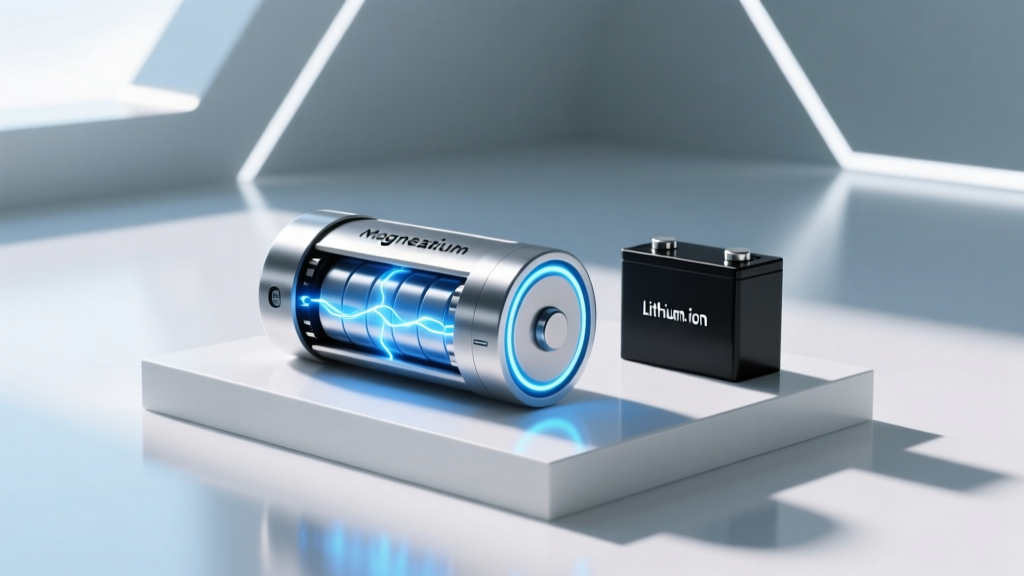
If you have spent any time reading EV battery news, you have likely encountered the term magnesium batteries — a next-generation chemistry that researchers and startups claim could one day rival or replace lithium-ion. The promise is enticing: magnesium is cheaper and far more abundant than lithium, and it can theoretically carry two electrons per ion instead of one, which hints at higher energy density.
But promises in battery chemistry take years, sometimes decades, to reach a production vehicle. As of 2026, every mass-market EV sold in the United States still runs on some variant of lithium-ion — either NMC/NCA (nickel manganese cobalt / nickel cobalt aluminum) or LFP (lithium iron phosphate). Magnesium batteries remain firmly in the lab-and-prototype stage.
This guide explains what magnesium batteries actually are, how they compare to the lithium-ion chemistries you can buy today, and what you should actually focus on when evaluating an EV battery in 2026.
What Are Magnesium Batteries and Why Do They Matter?
A magnesium battery uses magnesium ions (Mg²⁺) as the charge carrier instead of lithium ions (Li⁺). Because each magnesium ion carries a +2 charge versus lithium's +1, a single Mg ion moves twice the electrical charge per cycle. In theory, this means:
- Higher volumetric energy density — more energy packed into a smaller volume.
- Lower raw-material cost — magnesium is the eighth most abundant element in the Earth's crust and is dramatically cheaper per kilogram than lithium carbonate.
- Potential safety benefits — magnesium does not form dendrites (needle-like structures that can cause short circuits) as readily as lithium metal anodes.
The catch is significant. Finding a suitable cathode material that can reversibly insert and extract Mg²⁺ ions has proven extremely difficult. Magnesium's double charge also means stronger electrostatic interactions inside the cathode lattice, which slows ion diffusion and limits power output. Electrolyte compatibility remains another unresolved hurdle.
Companies like U.S. DOE-funded research labs and a handful of startups have demonstrated magnesium-ion coin cells in controlled settings, but no automotive-grade pouch or prismatic cell has been validated for vehicle use. Realistic commercialization timelines place magnesium batteries in production vehicles no earlier than the early-to-mid 2030s, and likely later for mainstream adoption.
The Chemistries You Can Actually Buy: LFP vs NMC vs NCA
While magnesium batteries mature in the lab, today's EV buyers choose between two dominant lithium-ion families. Understanding the trade-offs is essential for making a smart purchase.
| Attribute | LFP (Lithium Iron Phosphate) | NMC / NCA (Nickel-Based) |
|---|---|---|
| Energy density (cell-level) | ~160–180 Wh/kg | ~220–300 Wh/kg |
| Typical cycle life | 3,000–5,000+ cycles to 80% SoH | 1,000–2,000 cycles to 80% SoH |
| Cold-weather performance | Moderate — range loss ~30–40% below freezing without preconditioning | Better — range loss ~20–30% below freezing |
| Thermal stability / safety | Excellent — highly resistant to thermal runaway | Good — requires more robust BMS and cooling |
| Cost per kWh (cell) | ~$80–$100 | ~$110–$140 |
| Cobalt content | None | Yes (NMC) / Minimal (NCA) |
| Recommended daily SoC limit | 100% — LFP tolerates full charge well | 80% for daily use; 100% for trips only |
| Examples (2026 models) | Tesla Model 3 RWD, Model Y RWD, BYD Atto 3 | Hyundai Ioniq 5, Ford Mustang Mach-E Extended Range, BMW iX |
The practical takeaway: If you want maximum range per charge and don't mind careful state-of-charge management, NMC/NCA is the better fit. If you plan to own the car for 10+ years, charge to 100% daily without worry, and prioritize cost savings, LFP is the stronger choice — provided you can accept slightly less range and worse cold-weather performance.
How Long Do EV Batteries Actually Last?
The short answer: most EV batteries outlast the vehicle they're installed in. But the data matters more than the reassurance.
Typical Degradation Trajectory (Lithium-Ion, Liquid-Cooled):
- Year 1–2: ~2–5% capacity loss (initial formation loss)
- Year 3–5: ~1–2% per year (linear slow degradation)
- Year 6–10: ~1% per year (continued gradual decline)
- At 150,000 miles / ~10 years: Expect ~80–90% State of Health (SoH) for liquid-cooled packs
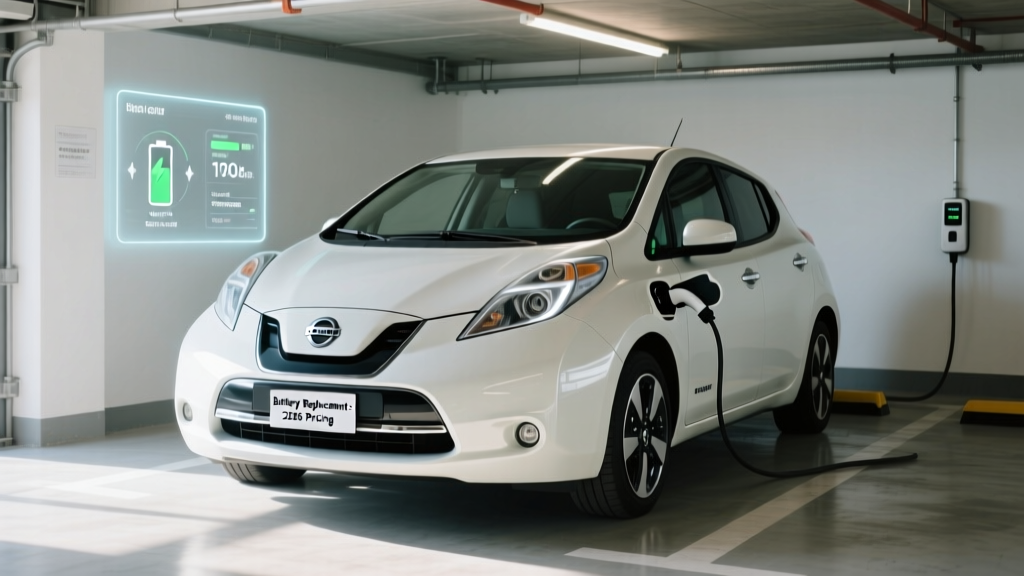
Real-world data from fleet operators and third-party studies supports these figures. A widely cited Geotab study of 6,300 fleet EVs found average annual degradation of approximately 1.8% across all models. Tesla's own impact reports have shown Model S/X batteries retaining roughly 88% capacity at 150,000 miles. Liquid-cooled packs (standard on virtually all modern EVs) degrade significantly slower than the passively air-cooled packs found in early Nissan Leafs.
It is worth noting: a battery at 75% SoH still provides usable range — it simply reduces a 300-mile EPA-rated EV to roughly 225 miles. That is still adequate for most daily driving and road trips with planned charging stops.
What Does the EV Battery Warranty Actually Cover?
Federal law mandates a minimum battery warranty of 8 years / 100,000 miles for all EVs sold in the U.S. Several manufacturers exceed this baseline.
| Manufacturer | Warranty Period | Capacity Retention Threshold | Notes |
|---|---|---|---|
| Tesla (Model 3/Y LFP) | 8 yr / 120,000 mi | 70% | Longer mileage for LFP trims |
| Tesla (Model S/X) | 8 yr / 150,000 mi | 70% | Premium-tier coverage |
| Hyundai / Kia (NMC) | 10 yr / 100,000 mi | 70% | Industry-leading duration |
| Ford (Mach-E, F-150 Lightning) | 8 yr / 100,000 mi | 70% | Standard federal minimum |
| GM (Ultium-based) | 8 yr / 100,000 mi | 70% | Applies to Blazer EV, Equinox EV, Silverado EV |
| BMW (iX, i4) | 8 yr / 80,000 mi | 70% | Lower mileage cap than most |
What triggers a warranty claim: If your battery's usable capacity drops below the stated threshold (typically 70% of original) within the warranty period, the manufacturer must repair or replace the battery at no cost. This covers defects and abnormal degradation — it does not cover damage from accidents, flooding, or unauthorized modifications.
The warranty covers the high-voltage traction battery only, not the 12V auxiliary battery that powers accessories and computers. The 12V battery is a conventional lead-acid or lithium unit that typically needs replacement every 3–5 years, just like in any vehicle.
How Much Does an EV Battery Replacement Cost?
This is the question that generates the most anxiety — and the most misinformation. Here are the actual numbers.
| Vehicle | Battery Size (kWh usable) | Estimated Pack Cost | Labor + Installation | Total Estimate |
|---|---|---|---|---|
| Tesla Model 3 RWD (LFP) | ~57 kWh | $6,500–$9,000 | $1,500–$2,500 | $8,000–$11,500 |
| Tesla Model Y Long Range (NMC) | ~75 kWh | $10,000–$14,000 | $1,500–$2,500 | $11,500–$16,500 |
| Hyundai Ioniq 5 (NMC) | ~77 kWh | $11,000–$15,000 | $2,000–$3,000 | $13,000–$18,000 |
| Ford F-150 Lightning Extended Range | ~131 kWh | $18,000–$25,000 | $2,500–$4,000 | $20,500–$29,000 |
| Chevrolet Equinox EV (Ultium NMC) | ~85 kWh | $10,000–$14,000 | $2,000–$3,000 | $12,000–$17,000 |
Context that matters: Cell-level pricing has fallen from over $1,000/kWh in 2010 to roughly $100–$130/kWh in 2026, according to BloombergNEF tracking. Replacement costs continue to trend downward as packs age out of warranty. Additionally, most failures involve individual modules or cell groups, not the entire pack — a module-level repair can cost $1,500–$4,000 rather than a full replacement.
The realistic scenario: if you buy a 2026 EV and drive it for 10 years and 150,000 miles, the battery will likely retain 80–90% capacity. Full replacement is statistically uncommon within the first ownership cycle. The fear of a $20,000 surprise bill is largely driven by worst-case early-generation examples (2011–2015 Leafs with passive cooling), not modern liquid-cooled packs.
Factors That Accelerate (or Slow) Battery Degradation
Not all miles are equal when it comes to battery wear. These are the variables you can actually control:
Habits That Maximize Battery Longevity:
- Limit DC fast charging — Use Level 2 (home/work) for daily charging. Reserve DC fast charging (50 kW+) for road trips. Frequent 150–350 kW sessions increase cell stress and accelerate degradation by an estimated 0.5–1% per year versus L2-only charging.
- Avoid extreme states of charge — For NMC/NCA: keep daily SoC between 20–80%. For LFP: charging to 100% regularly is acceptable and even recommended for BMS calibration.
- Precondition before fast charging — Most EVs warm the battery to ~35°C (95°F) before a DC session. If your car offers navigation-to-charger preconditioning (Tesla, Hyundai/Kia, BMW), use it. Cold batteries charged at high power suffer lithium plating, which causes permanent capacity loss.
- Minimize prolonged storage at 100% SoC — If leaving the car for more than a week, set the charge limit to 50–60%. Sitting at full charge at high ambient temperatures is the single worst condition for lithium-ion cells.
- Park in shade or a garage when possible — Sustained battery temperatures above 35°C (95°F) accelerate calendar aging. Thermal management systems help, but they cannot fully compensate for a car baking in an Arizona parking lot for days.
How to Check and Monitor Your Battery's State of Health
State of Health (SoH) is expressed as a percentage of the battery's original usable capacity. A new battery is 100% SoH; a degraded battery at 80% SoH holds 80% of its original energy.
Methods available to EV owners in 2026:
- In-car displays — Tesla, BMW, and some Hyundai/Kia models now show estimated SoH or battery-health indicators in the vehicle settings menu.
- OBD-II dongles + apps — Tools like OBD2 adapters paired with apps such as Torque Pro, ABRP (A Better Route Planner), or manufacturer-specific tools can read the BMS-reported SoH value directly. This is the most accurate consumer-accessible method.
- Dealer diagnostics — A service center can run a full battery health report. Request this during routine service visits, especially as you approach warranty mileage thresholds.
- Manual calculation — Charge to 100% (or a known SoC), note the displayed range estimate, and compare to the original EPA-rated range adjusted for the current SoC. This is approximate but useful for spotting sudden changes.
If your SoH drops below 70% within the warranty period, contact the manufacturer or dealer for a warranty claim. Document your readings with dates and mileage.
Emerging Battery Technologies: Beyond Lithium-Ion
Magnesium batteries are not the only advanced chemistry in development. Here is where the major next-generation technologies stand as of 2026:
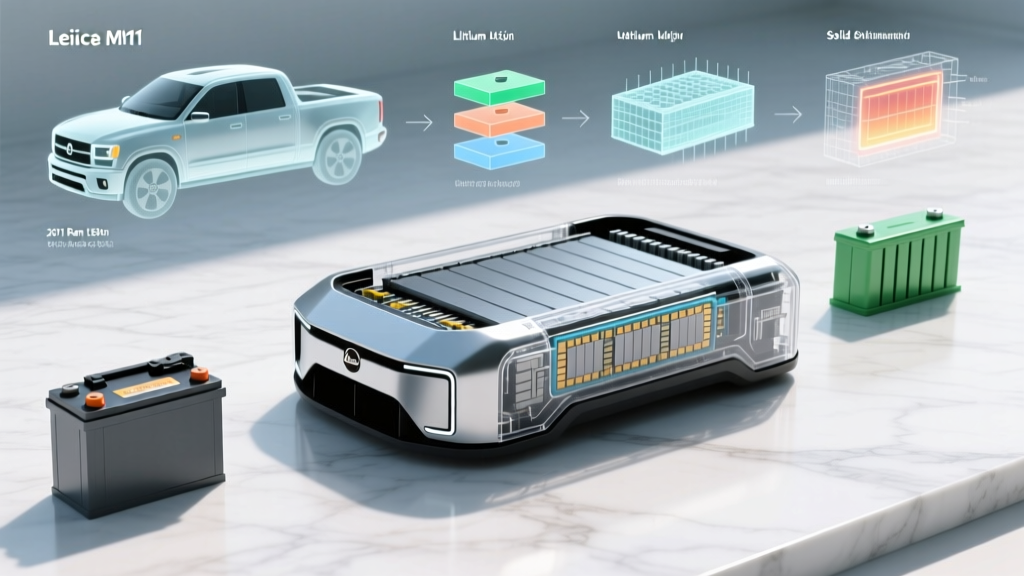
- Solid-state batteries — Replace the liquid electrolyte with a solid ceramic, polymer, or sulfide conductor. Benefits include higher energy density (potentially 400+ Wh/kg at cell level), faster charging, and improved safety. Toyota has announced limited solid-state production for 2027–2028, but at very low volumes and likely in premium models only. Broad commercialization is expected no earlier than 2030.
- Silicon-dominant anodes — Replacing graphite anodes with silicon can boost energy density by 20–40%. Companies like Sila Nanotechnologies and Group14 are supplying silicon-composite anode materials to manufacturers now, with incremental adoption already underway in 2025–2026 models. This is not a future technology — it is arriving in production vehicles.
- Sodium-ion batteries — Use abundant sodium instead of lithium. Lower energy density (~120–160 Wh/kg) but dramatically cheaper. CATL and BYD have begun deploying sodium-ion packs in Chinese-market micro-EVs and energy storage. U.S. vehicle adoption is expected later in the decade for budget-oriented models.
- Magnesium batteries — As discussed, still in early-stage R&D. The fundamental cathode and electrolyte challenges remain unsolved at automotive scale. Do not plan a purchase decision around magnesium availability.
The honest assessment: incremental improvements (silicon anodes, better NMC formulations, LFP cost reductions) will deliver more near-term impact than any breakthrough chemistry. The battery in a 2026 EV is already dramatically better and cheaper than one from 2020, and the trajectory continues.
Frequently Asked Questions
Will magnesium batteries make current EVs obsolete?
No — not in any timeframe relevant to today's buyers. Magnesium batteries face unsolved cathode and electrolyte challenges and are at least 8–12 years from potential automotive production. Current lithium-ion chemistries (LFP and NMC) will dominate through the 2030s. If you need an EV now or in the next few years, there is no reason to wait for magnesium.
How long do EV batteries last in real-world use?
Liquid-cooled lithium-ion EV batteries typically retain 80–90% of original capacity after 150,000 miles and 10 years. Fleet data from Geotab shows average annual degradation of ~1.8%. Most batteries outlast the vehicle's useful life. Early-generation air-cooled packs (2011–2015 Nissan Leaf) degraded much faster, but modern thermal management has largely solved this.
How much does it cost to replace an EV battery out of warranty?
Out-of-warranty replacement costs range from approximately $8,000 for smaller packs (Tesla Model 3 LFP, ~57 kWh) to $20,000–$29,000 for the largest packs (F-150 Lightning Extended Range, ~131 kWh). However, full pack replacement is rare — most degradation-related issues involve individual modules repairable for $1,500–$4,000. Cell costs continue declining year over year.
What does the federal battery warranty require?
U.S. federal law requires a minimum of 8 years / 100,000 miles of battery warranty coverage. The warranty guarantees the battery will retain at least 70% of its original capacity. Hyundai and Kia extend this to 10 years / 100,000 miles. The warranty covers defects and abnormal degradation but not accident damage or the 12V auxiliary battery.
LFP or NMC — which battery chemistry should I choose?
Choose LFP if you want lower cost, longer cycle life (3,000–5,000+ cycles), the ability to charge to 100% daily, and superior thermal safety — and can accept ~10–15% less range and worse cold-weather performance. Choose NMC/NCA if you need maximum range per charge, better cold-weather efficiency, and don't mind limiting daily charge to 80%. For most commuter-oriented buyers, LFP is the more practical 2026 choice.
How can I check my EV battery's health?
Use your car's built-in battery health display (if available), connect an OBD-II adapter with a compatible app to read BMS-reported State of Health, or request a diagnostic report from your dealer. Track SoH readings over time and document them — especially important as you approach warranty mileage thresholds.