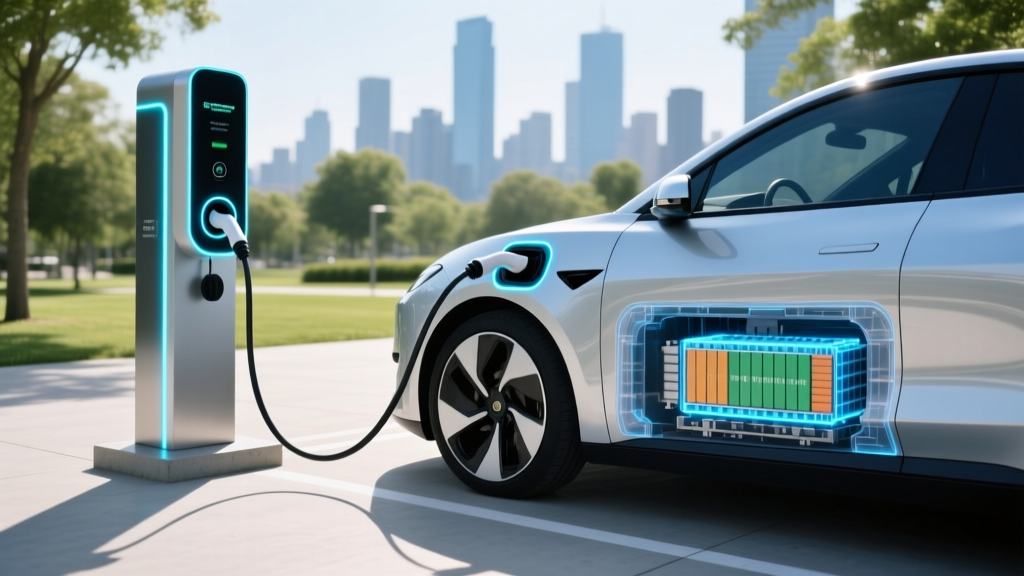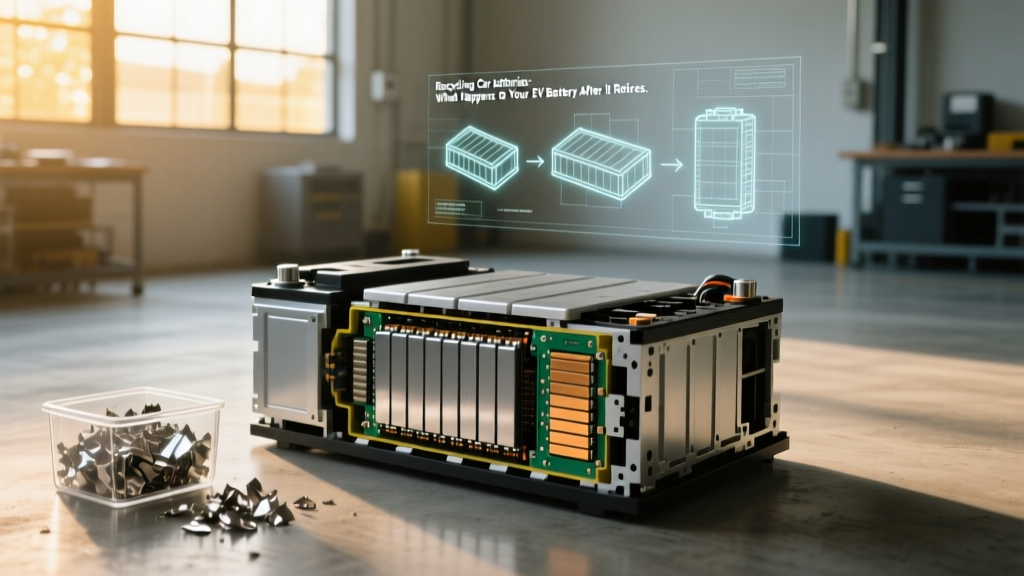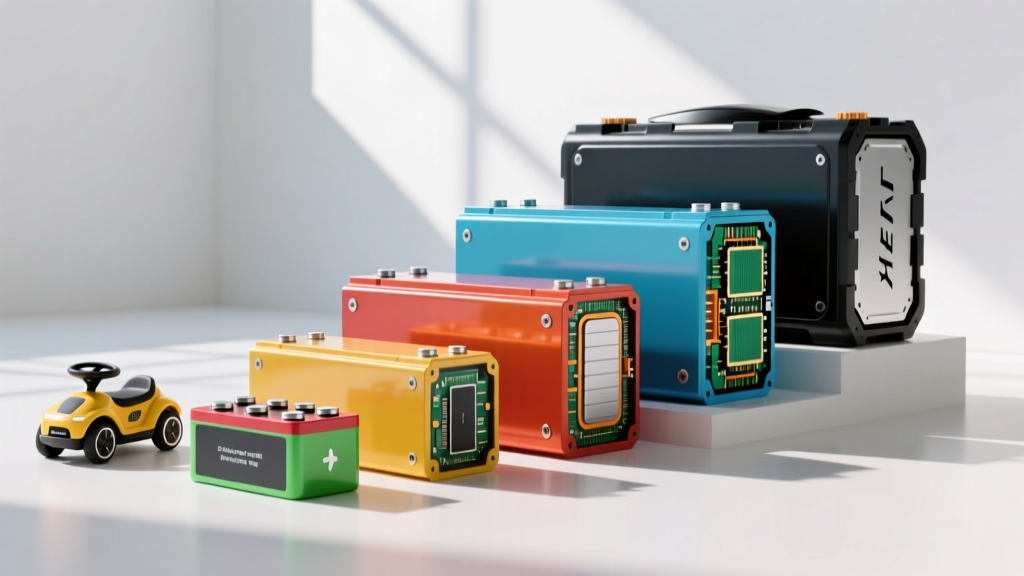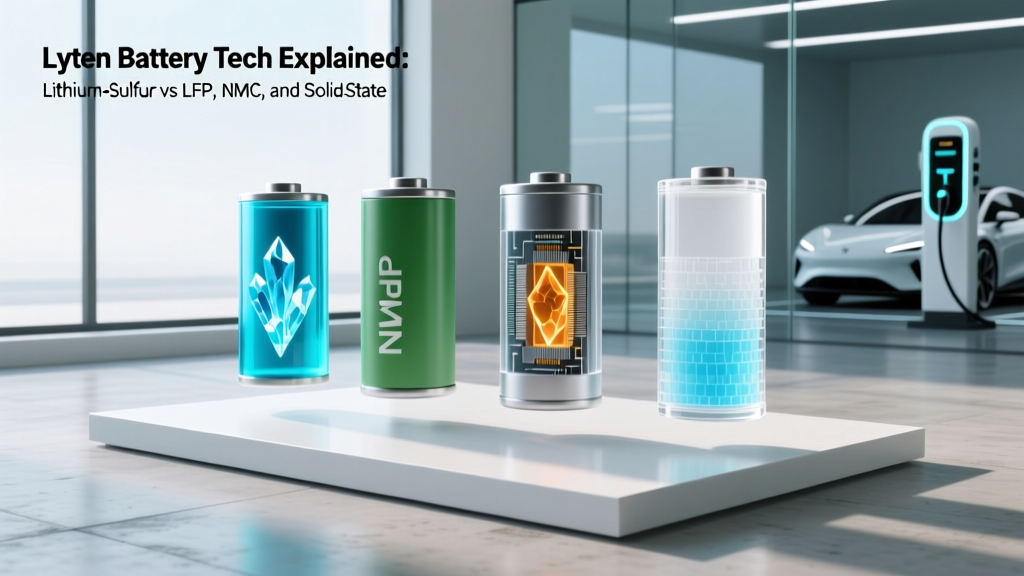
If you have been following EV battery headlines, you have likely seen the name Lyten — a San Jose-based startup developing lithium-sulfur (Li-S) cells using a proprietary 3D graphene scaffold. The promise is eye-catching: roughly double the energy density of today's best NMC cells, no nickel or cobalt, and potentially lower cost per kilowatt-hour. But how does Lyten's technology stack up against the batteries you can actually buy in a 2026 EV? And when — or if — will it reach production vehicles?
This guide breaks down Lyten's lithium-sulfur approach alongside the chemistries dominating the current market — LFP (lithium iron phosphate) and NMC/NCA (nickel manganese cobalt / nickel cobalt aluminum) — while covering the degradation data, warranty terms, replacement costs, and care practices every EV owner or buyer needs to know.
What Is a Lyten Battery? Lithium-Sulfur Meets 3D Graphene
Lyten's cells use a lithium-sulfur (Li-S) chemistry rather than the intercalation cathodes found in conventional lithium-ion batteries. In a standard NMC cell, lithium ions shuttle between a graphite anode and a metal-oxide cathode (nickel, manganese, cobalt). In Lyten's design, the cathode is sulfur — cheap, abundant, and free of critical minerals — held in a lightweight 3D graphene matrix that the company says solves the polysulfide shuttle problem that has historically plagued Li-S cells.
The polysulfide shuttle occurs when intermediate sulfur compounds dissolve into the electrolyte during cycling, leading to rapid capacity fade. Lyten's graphene scaffold is engineered to physically trap these polysulfides, which the company claims enables cycle life far beyond earlier Li-S prototypes.
Lyten has demonstrated prototype cells with energy density exceeding 350 Wh/kg at the cell level, compared to roughly 250–300 Wh/kg for top-tier NMC cells from CATL and LG Energy Solution in 2025–2026. The company targets automotive, defense, and consumer electronics applications, and in late 2024 it acquired assets from the now-bankrupt Northvolt to accelerate its European manufacturing ambitions. As of early 2026, Lyten is producing A-sample and B-sample cells for OEM evaluation — meaning the technology is still in the pre-commercialization stage. No production vehicle on sale today uses a Lyten battery.
LFP vs NMC vs Lithium-Sulfur: Chemistry Trade-Offs
To understand where Lyten fits, you need to know the two chemistries that power virtually every EV sold in the US today.
| Attribute | LFP (Lithium Iron Phosphate) | NMC / NCA (Nickel-Based) | Li-S (Lyten — Prototype) |
|---|---|---|---|
| Cell energy density | 160–200 Wh/kg | 250–300 Wh/kg | 350+ Wh/kg (lab) |
| Cycle life | 3,000–5,000+ cycles | 1,000–2,000 cycles | 500–1,000+ cycles (claimed, evolving) |
| Cold-weather performance | Moderate — more range loss below 32°F | Better low-temp discharge | Not yet publicly validated |
| Cost per kWh (cell) | ~$60–80 (2026) | ~$90–120 (2026) | Target <$60 (projected at scale) |
| Critical minerals | None (iron, phosphate) | Nickel, cobalt, manganese | None (sulfur, carbon) |
| SoC recommendation | Can charge to 100% regularly | Daily limit 80% recommended | TBD |
| 2026 vehicle availability | Wide (Tesla Model 3/Y RWD, BYD, Ford Maverick EV) | Wide (most long-range / AWD models) | None (pre-production samples) |
The bottom line for today's buyers: LFP offers superior longevity and lower cost at the expense of energy density and cold-weather range. NMC delivers more range per kilogram, making it the choice for long-range and performance trims. Lyten's Li-S aims to combine the best of both — high energy density without critical minerals — but remains years away from showroom availability.
How Long Do EV Batteries Actually Last? Degradation Data
The single most persistent fear among prospective EV buyers is battery failure. The data, however, tells a reassuring story: modern EV batteries are outlasting the vehicles they power in most cases.
Typical degradation curves from real-world fleet data:
- Year 1: 1–3% capacity loss (initial "formation" drop)
- Years 2–5: Roughly 1–2% per year (linear slow-degradation phase)
- Years 6–10: Continued slow decline; most packs retain 80–90% of original capacity at 100,000–150,000 miles
- 150,000–200,000+ miles: Packs typically retain 70–85% capacity depending on chemistry and usage
Tesla's 2024 Impact Report (the most recent comprehensive OEM dataset) showed that Model 3/Y batteries retained approximately 85% of original capacity at 200,000 miles. LFP-equipped vehicles from Tesla and BYD are showing even slower degradation in early fleet data, with many units above 90% State of Health (SoH) at 100,000 miles.
Geotab's large-scale fleet study of over 10,000 EVs found an average annual degradation rate of 1.8% per year across all chemistries, implying a pack would retain roughly 82% capacity after 10 years — well above the 70% threshold most warranties guarantee.
What Does the EV Battery Warranty Cover?
Federal law in the United States mandates that EV batteries carry a minimum warranty of 8 years / 100,000 miles. In California Air Resources Board (CARB) states, that extends to 10 years / 150,000 miles. Most major automakers meet or exceed these thresholds.
| Manufacturer | Warranty Term | Capacity Threshold |
|---|---|---|
| Tesla | 8 yr / 120,000 mi (Model 3/Y); 8 yr / 150,000 mi (S/X) | 70% retention |
| Hyundai / Kia | 10 yr / 100,000 mi | 70% retention |
| Ford | 8 yr / 100,000 mi | 70% retention |
| GM (Chevrolet, Cadillac) | 8 yr / 100,000 mi | 70% retention (some Ultium models: 60%) |
| BMW | 8 yr / 100,000 mi | 70% retention |
| Rivian | 8 yr / 175,000 mi | 70% retention |
The warranty covers defects and excessive capacity loss — meaning if your battery drops below the stated threshold (typically 70% of original capacity) within the warranty window, the manufacturer must repair or replace it at no cost. Normal gradual degradation above that threshold is not covered.
Source: Warranty terms verified against manufacturer specification pages and fueleconomy.gov listings.
EV Battery Replacement Cost: What You Will Actually Pay
Out-of-warranty battery replacement is the nightmare scenario — and it is real, but far less common than internet forums suggest. Most EV batteries are lasting the life of the vehicle. When replacement is needed, it is typically due to a manufacturing defect (covered by warranty), physical damage from a collision, or, rarely, accelerated degradation in high-use fleet vehicles.
| Vehicle / Pack Size | Estimated Replacement Cost (2026) | Notes |
|---|---|---|
| Tesla Model 3 RWD (60 kWh LFP) | $8,000–$12,000 | LFP packs cheaper; module-level repair sometimes possible |
| Tesla Model Y LR (82 kWh NMC) | $12,000–$16,000 | Structural pack; full replacement more likely |
| Hyundai Ioniq 5 (77.4 kWh) | $10,000–$15,000 | E-GMP platform; module service available |
| Ford F-150 Lightning Ext. Range (131 kWh) | $18,000–$28,000 | Largest consumer pack; high material cost |
| Chevrolet Equinox EV (85 kWh Ultium) | $11,000–$16,000 | Ultium modular design may allow partial replacement |
These figures include the pack and labor but can vary significantly by region and service provider. Independent EV repair shops are increasingly offering module-level repairs — replacing only the degraded or failed cell modules rather than the entire pack — for $3,000–$7,000 on platforms that support it.
Five Factors That Accelerate (or Slow) Battery Degradation
Battery longevity is not purely a function of age. How you charge, drive, and store your EV has a measurable impact on capacity retention over time.
- Avoid sustained 100% State of Charge: For NMC/NCA packs, set your daily charge limit to 80%. LFP packs tolerate 100% better and Tesla/BYD recommend periodic full charges for calibration.
- Minimize DC fast charging when possible: Occasional Supercharging is fine, but daily 150+ kW sessions generate cumulative thermal stress. Geotab data shows vehicles that fast-charge more than 3x/week degrade roughly 0.5–1% faster annually.
- Precondition before fast charging: Warming the battery to its optimal temperature window (typically 25–40°C) before a DC session reduces lithium plating risk and enables faster, healthier charging.
- Avoid extreme storage states: If storing your EV for weeks, leave it at 40–60% SoC. Never store at 100% or below 10% for extended periods.
- Use Level 2 home charging as your daily driver: Slower charging (7–11 kW) generates far less heat than DC fast charging and is the single best habit for long-term health.
How to Check Your EV Battery's State of Health
State of Health (SoH) is a percentage representing your battery's current maximum capacity relative to its original capacity. A new pack is 100% SoH; a pack that can hold only 77.4 kWh of its original 82.8 kWh is at roughly 93.5% SoH.
Methods available to owners in 2026:
- In-app health indicators: Tesla, Rivian, BMW, and Hyundai now offer battery health readouts in their companion apps or vehicle settings menus. Tesla's service mode (accessible via the software menu) displays a degradation percentage.
- OBD-II diagnostic tools: Devices like the OBDLink SX paired with apps such as EV Health or LeafSpy (for Nissan Leaf) can read the battery management system's SoH estimate directly.
- Third-party testing: Companies like Recurrent and some dealerships offer battery health certificates based on controlled charge-discharge testing — useful for used-EV purchases.
- Manual calculation: Charge to 100% (on an LFP pack or occasionally on NMC), note the displayed range, and compare to the original EPA figure adjusted for your typical conditions. This is imprecise but directionally useful.
For more on monitoring battery health and efficiency, the U.S. Department of Energy's EV technology resources provide baseline efficiency data for comparison.
Emerging Battery Tech: Solid-State, Silicon Anodes, and Lyten's Timeline
Lyten is one of several next-generation battery technologies vying to replace or supplement today's lithium-ion cells. Here is how the landscape looks from a 2026 vantage point:
- Solid-state batteries: Toyota, Samsung SDI, and QuantumScape are targeting limited production in 2027–2029 vehicles. Solid-state cells promise 400+ Wh/kg and faster charging, but manufacturing scale-up and cost remain unsolved challenges. Expect initial deployment in premium/low-volume models only.
- Silicon-anode batteries: Companies like Sila Nanotechnologies and Group14 are already shipping silicon-dominant anode materials to consumer electronics and automotive partners. Mercedes-Benz's EQG (G-Class EV) uses a silicon-anode pack from Sila. These offer 20–40% energy density gains over graphite anodes and are the most commercially advanced next-gen technology.
- Sodium-ion batteries: CATL and BYD have begun deploying sodium-ion cells in low-range Chinese-market vehicles. Energy density is lower (~140 Wh/kg) but cost is extremely low, making them viable for city cars and energy storage. US availability is unlikely before 2028.
- Lyten lithium-sulfur: Targeting A/B sample delivery to automotive OEMs through 2026–2027, with C-samples and potential production qualification in 2028–2029. Earliest realistic vehicle integration: 2029–2031 model years, likely beginning with specialty or fleet applications before mass-market adoption.
None of these technologies should factor into a 2026 purchase decision. Today's LFP and NMC batteries are mature, well-warrantied, and backed by real-world degradation data spanning hundreds of thousands of vehicles.
LFP vs NMC: Which Should You Choose in 2026?
This is the practical question for current buyers. The Lyten lithium-sulfur battery is not an option yet, so here is how to choose between the chemistries available now.
- You plan to keep the vehicle 8+ years
- You have daily home charging and can charge to 100% regularly
- You live in a moderate climate (less concern about cold-weather range loss)
- You want the lowest cost per kWh and longest cycle life
- Examples: Tesla Model 3 RWD, BYD Atto 3, base Ford Maverick EV
- Maximum range is your priority (long road trips, limited charging access)
- You regularly drive in cold climates (better low-temp performance)
- You need AWD or performance trims (higher power output)
- You are comfortable following an 80% daily charge limit
- Examples: Tesla Model Y LR, Hyundai Ioniq 5 LR, BMW iX, Rivian R1S
Frequently Asked Questions
How long do EV batteries last in years and miles?
Based on fleet data from Tesla, Geotab, and other sources, modern EV batteries retain 80–90% of their original capacity at 100,000–150,000 miles (roughly 8–12 years of average driving). Many packs are lasting 200,000+ miles before approaching the 70% capacity threshold that triggers a warranty claim. LFP chemistry is showing particularly strong longevity in early data.
How much does it cost to replace an EV battery?
Full pack replacement ranges from approximately $8,000 for a smaller LFP pack (e.g., Tesla Model 3 RWD, 60 kWh) to $28,000 for a large pack (e.g., Ford F-150 Lightning Extended Range, 131 kWh). However, most replacements never happen — the vast majority of EV batteries outlast the vehicle itself, and defects within the 8–10 year warranty window are covered by the manufacturer. Module-level repairs at independent shops can reduce costs to $3,000–$7,000 where supported.
What does the EV battery warranty actually cover?
EV battery warranties cover defects in materials and workmanship, plus capacity loss that exceeds a defined threshold — typically 70% of original capacity — within the warranty period (usually 8 years / 100,000 miles, or 10 years / 150,000 miles in CARB states). Normal gradual degradation above the threshold is expected and not covered. Consult your specific owner's manual and the IRS clean vehicle credit page for related incentive details that may offset initial purchase cost.
How do I check and maximize my EV battery health?
Check your SoH through your vehicle's app, service mode, or an OBD-II diagnostic tool. Maximize longevity by using Level 2 home charging as your primary method, limiting NMC packs to 80% daily SoC, preconditioning before DC fast charging, avoiding prolonged storage at extreme charge states, and minimizing exposure to extreme heat when parked.
Is Lyten's lithium-sulfur battery available in any 2026 EV?
No. As of 2026, Lyten is in the A/B-sample phase, delivering prototype cells to OEM partners for evaluation. No production vehicle currently on sale uses a Lyten battery. The earliest realistic vehicle integration is projected for the 2029–2031 timeframe, pending successful scale-up and automotive qualification.
LFP vs NMC — which is better overall?
Neither is universally better; the choice depends on your use case. LFP wins on cost, cycle life, and the convenience of 100% daily charging. NMC wins on energy density, cold-weather performance, and availability in AWD/performance configurations. For most buyers who charge at home and drive under 40 miles daily, LFP is the more economical and lower-maintenance choice. For road-trip-heavy drivers in cold climates, NMC remains the stronger option.