What a Lucid Battery Diagnostic Service Actually Reveals
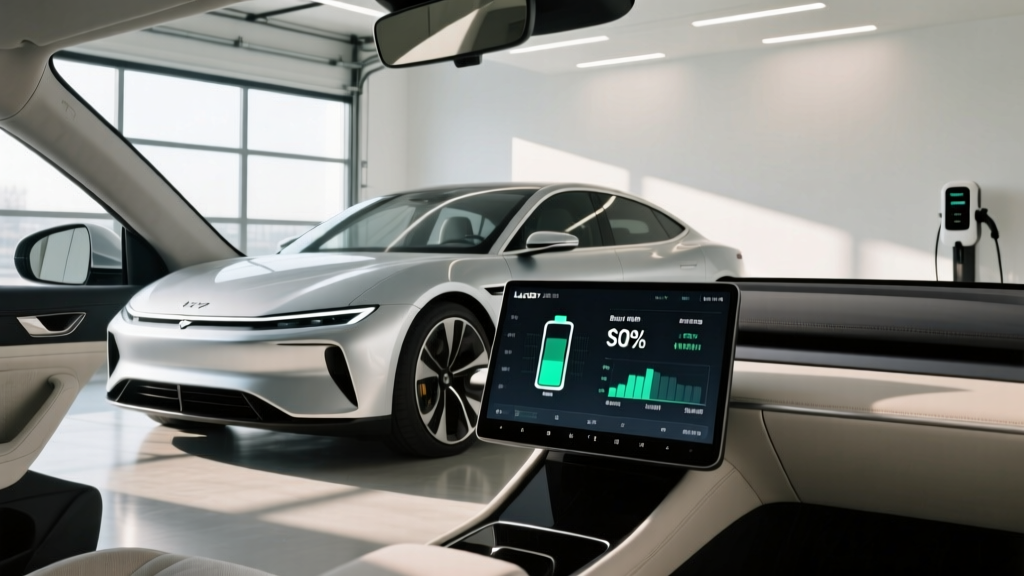
If you own a Lucid Air or are evaluating one on the used market, the phrase Lucid battery diagnostic service carries real weight. Unlike a simple OBD-II scan on a gas car, a high-voltage traction battery diagnostic pulls cell-level voltage deltas, internal resistance trends, thermal management logs, and State of Health (SoH) percentages that tell you exactly where a 112 kWh (Grand Touring) or 88 kWh (Pure) pack stands in its lifecycle.
Lucid's proprietary battery management system (BMS) tracks over 200 parameters per module. A dealer or certified mobile technician connects to the vehicle's diagnostic port and downloads a battery health report that includes:
- Usable capacity vs. original rated capacity (the core SoH metric)
- Cell voltage spread — a widening gap between the highest and lowest cells signals imbalance
- DC fast-charge history — cumulative exposure to high-C-rate charging
- Thermal event logs — instances where the pack exceeded optimal temperature windows
- Warranty eligibility flag — whether degradation has crossed the threshold for a claim
For context, Lucid's Air lineup uses nickel-manganese-cobalt (NMC) lithium-ion cells sourced from suppliers including LG Energy Solution and Samsung SDI, packaged in a structural module layout that contributes to the sedan's torsional rigidity. Understanding what the diagnostic reveals requires understanding the chemistry itself.
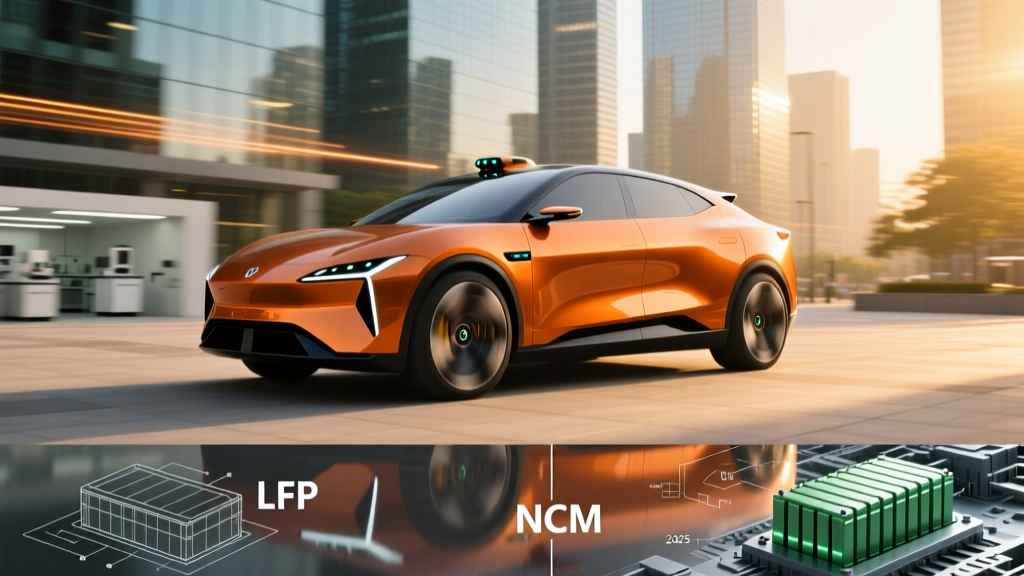
NMC vs LFP: The Chemistry Under the Floor
Most premium long-range EVs — Lucid Air included — rely on NMC or NCA (nickel-cobalt-aluminum) chemistries. Budget-oriented and standard-range models from Tesla, Ford, and others increasingly use lithium iron phosphate (LFP). The trade-offs are not abstract; they show up in daily driving.
| Attribute | NMC / NCA | LFP |
|---|---|---|
| Energy Density | 250–300 Wh/kg (cell-level) | 160–200 Wh/kg |
| Typical Cycle Life | 1,000–2,000 cycles to 80% SoH | 3,000–5,000+ cycles to 80% SoH |
| Cold-Weather Performance | Better low-temp conductivity; ~15–25% range loss at 20°F | More resistive in cold; ~25–35% range loss at 20°F without preconditioning |
| Cost per kWh (pack-level) | $130–$160 | $90–$115 |
| Recommended Daily SoC | 80% for longevity | 100% OK — LFP tolerates full charge better |
| Thermal Stability | Good, but requires active thermal management | Excellent — inherently more stable |
| Used In (examples) | Lucid Air, Tesla Model S/X, Rivian R1T, Hyundai Ioniq 5 LR | Tesla Model 3/Y RWD, Ford Mustang Mach-E SR, BYD models |
Which is better? There is no universal winner. NMC delivers the range and performance Lucid buyers expect — the Air Grand Touring achieves an EPA-estimated 512 miles on its 112 kWh pack. LFP sacrifices some energy density for dramatically longer cycle life, lower cost, and safer chemistry, making it ideal for daily commuters who charge to 100% nightly and don't need 500-mile range.
EV Battery Degradation: What the Data Actually Shows
The fear that EV batteries degrade like smartphone batteries within two years is not supported by fleet data. Real-world degradation follows a curve: a steeper initial drop (typically 2–5% in the first year) followed by a long, gradual linear decline.
Typical NMC Degradation Trajectory (Fleet Averages):
- Year 1 / 15,000 mi: 95–98% SoH (initial formation loss)
- Year 3 / 45,000 mi: 90–94% SoH
- Year 5 / 75,000 mi: 87–92% SoH
- Year 8 / 120,000 mi: 82–90% SoH
- Year 10 / 150,000 mi: 78–87% SoH
Sources: Recurrent Auto fleet data (2025 report), Geotab longitudinal study of 10,000+ EVs.
Lucid Air owners benefit from one of the most sophisticated thermal management systems in production. The Air's liquid-cooled pack maintains cells within a tight temperature band, which is the single most important factor in slowing degradation. A Lucid battery diagnostic service will flag whether the thermal system has been operating correctly — repeated excursions above 45°C (113°F) at the cell level accelerate calendar aging significantly.
For comparison, fueleconomy.gov notes that modern EV batteries are engineered to retain well above 70% capacity at the end of their warranty periods, and most packs in liquid-cooled vehicles exceed that threshold by a wide margin.
Battery Warranty Coverage: What Lucid and Others Guarantee
Federal law mandates a minimum 8-year/100,000-mile warranty on EV battery packs for emissions-related compliance, but manufacturers have standardized around this floor or exceeded it. Here is how major warranties compare:
| Manufacturer | Duration | Mileage | Capacity Threshold |
|---|---|---|---|
| Lucid Motors | 8 years | 100,000 miles | 70% retention (Air) |
| Tesla (Model S/X) | 8 years | 150,000 miles | 70% retention |
| Tesla (Model 3/Y LFP) | 8 years | 120,000 miles | 70% retention |
| Hyundai / Kia | 10 years | 100,000 miles | 70% retention |
| Ford (Mach-E) | 8 years | 100,000 miles | 70% retention |
| Rivian | 8 years | 175,000 miles | 70% retention |
| GM (Ultium-based) | 8 years | 100,000 miles | 70% retention |
What the warranty covers: If your battery's usable capacity drops below the stated threshold (typically 70% of original) within the warranty period, the manufacturer will repair or replace modules or the entire pack at no cost. The Lucid battery diagnostic service is the official mechanism for documenting a warranty claim — the technician's report serves as the evidentiary record.
What it does not cover: Damage from accidents, improper charging equipment, modifications to the high-voltage system, or cosmetic issues unrelated to capacity. Gradual degradation that stays above 70% is considered normal wear.
EV Battery Replacement Cost: Reality vs. Fear
This is where most EV misinformation concentrates. Yes, a full battery pack replacement is expensive. But the data shows most packs outlast the vehicles they're installed in, and module-level repairs are increasingly common.
| Vehicle / Pack Size | Full Pack (Parts + Labor) | Module Repair | Typical Replacement Timing |
|---|---|---|---|
| Lucid Air (112 kWh NMC) | $22,000–$28,000 | $3,500–$6,000 per module | Rarely before 200,000+ mi |
| Lucid Air Pure (88 kWh NMC) | $17,000–$22,000 | $3,000–$5,000 per module | Rarely before 200,000+ mi |
| Tesla Model 3/Y (75–82 kWh) | $13,000–$18,000 | $2,500–$4,500 per module | Rarely before 200,000+ mi |
| Ford Mach-E (91 kWh ext.) | $16,000–$21,000 | $2,800–$5,000 per module | Rarely before 180,000+ mi |
| Hyundai Ioniq 5 (77.4 kWh) | $14,000–$19,000 | $2,500–$4,000 per module | Rarely before 180,000+ mi |
| Chevy Bolt EV (65 kWh) | $10,000–$14,000 | $2,000–$3,500 per module | Rarely before 180,000+ mi |
Key context: Full pack replacements are uncommon. Most degradation-related service involves replacing individual modules (a pack contains 6–24 modules depending on architecture). Lucid's modular pack design allows technicians to swap a single underperforming module rather than the entire unit, keeping most out-of-warranty repairs in the $3,500–$6,000 range.
By the time a pack genuinely needs full replacement at 200,000+ miles, the vehicle's residual value has typically absorbed most of the cost calculus. For most first and second owners, the battery will never require replacement.
Factors That Accelerate (or Preserve) Battery Life
A Lucid battery diagnostic service will reveal the cumulative impact of your charging and driving habits. Here are the factors that matter most, ranked by impact:
Highest Impact:
- Extreme heat exposure — Parking in direct sun at 100°F+ without thermal management active causes more degradation than any single charging habit. Lucid's active thermal system mitigates this when the car is on or plugged in.
- Sustained high SoC storage — Leaving an NMC pack at 100% for days or weeks accelerates calendar aging. Set your charge limit to 80% for daily use.
- Exclusive DC fast charging — Daily 300+ kW sessions stress cells more than Level 2 charging. Lucid's 300 kW peak rate is excellent for road trips, but routine daily charging should happen on a home Level 2 (11.5 kW or 19.2 kW onboard charger).
Moderate Impact:
- Frequent deep discharges to 0% — Running the pack to near-empty regularly stresses the low-voltage end of the cell curve. Try to keep SoC above 10%.
- Cold-weather fast charging without preconditioning — Charging a cold NMC pack at high power causes lithium plating. Always use the navigation-to-charger preconditioning feature.
- Aggressive driving in extreme temperatures — High discharge C-rates combined with heat compound stress.
Low Impact (Don't Obsess):
- Occasional 100% charges — Charging to full before a road trip is fine; just don't let it sit at 100% for extended periods.
- Regen braking intensity — Standard regen settings do not meaningfully affect long-term degradation.
How to Check Your Battery Health (SoH) Yourself
Between official Lucid battery diagnostic service appointments, you can monitor your pack's health through several methods:
In-Vehicle Indicators
The Lucid Air's instrument cluster displays estimated range at full charge. If your Grand Touring originally showed 512 miles at 100% and now shows 480 miles, that suggests approximately 94% SoH — well within normal for a vehicle with 30,000–50,000 miles. Track this number quarterly rather than daily, as temperature and driving style cause short-term fluctuations.
Third-Party Apps and OBD-II Tools
Devices like the OBDLink SX paired with apps such as EV Battery Health or Scan My Tesla (adapted for Lucid via open-source CAN-bus protocols) can read real-time cell voltages, pack temperature, and estimated capacity. While not as comprehensive as a dealer diagnostic, these tools provide useful trend data between service visits.
Manual Calculation Method
Charge to 100%, then drive a measured distance (e.g., 100 miles of mixed driving) and note the percentage consumed. If 100 miles uses 22% of the battery, your usable capacity is approximately 454 miles equivalent — compare this to the original EPA rating for a rough SoH estimate. This method has ±3% error but requires no equipment.
Official Lucid Service
For warranty claims or pre-purchase inspections on used Lucid vehicles, the dealer diagnostic is the authoritative record. Request a printed battery health report that includes the SoH percentage, cell voltage delta, and warranty status. Expect this service to cost $150–$250 if out of warranty, or free if performed during a scheduled maintenance visit.
Emerging Battery Technology: What's Next and When
The battery landscape is evolving, but timelines matter. Here is where next-generation technologies actually stand as of 2026:
Silicon-dominant anodes: Companies like Sila Nanotechnologies and Group14 are shipping silicon-carbon composite anodes that boost energy density by 20–40% over graphite. These are appearing in limited production vehicles (notably the Mercedes G-Class electric SUV) and will expand through 2027–2028. Lucid has indicated interest in silicon-anode cells for future model years, but no current Air production uses them.
Solid-state batteries: Toyota, Samsung SDI, and QuantumScape have demonstrated prototype solid-state cells with 500+ Wh/L energy density and 10-minute fast-charge capability. However, manufacturing scale remains the bottleneck. Realistic volume-production timelines place solid-state in premium vehicles no earlier than 2028–2030, with mainstream availability likely 2031+.
Sodium-ion batteries: CATL and BYD are producing sodium-ion cells for budget EVs in China, offering lower cost and excellent cold performance at the expense of energy density (~140 Wh/kg). These may appear in US-market compact EVs by 2027–2028 but are not relevant to Lucid's performance-oriented lineup.
The practical takeaway: today's NMC and LFP packs are mature, well-understood technologies. Buying an EV based on the expectation of imminent solid-state availability is not a sound strategy — current batteries will serve most owners through the vehicle's useful life.
Frequently Asked Questions
How long do EV batteries actually last?
Modern liquid-cooled NMC and LFP packs routinely last 150,000–250,000 miles before reaching 70–80% of original capacity. At an average of 13,500 miles per year, that translates to 11–18+ years of service. Most EV batteries outlast the vehicles they're installed in. Lucid Air packs, with their advanced thermal management, are expected to be at the upper end of this range.
How much does a Lucid Air battery cost to replace?
A full pack replacement for a Lucid Air Grand Touring (112 kWh) runs $22,000–$28,000 including labor. The Air Pure (88 kWh) ranges from $17,000–$22,000. However, full replacements are rare — module-level repairs cost $3,000–$6,000 per module, and most packs never require full replacement before 200,000 miles. Under warranty, any repair needed to maintain 70% capacity is covered.
What does the Lucid battery warranty cover?
Lucid covers the Air's battery pack for 8 years or 100,000 miles, whichever comes first, guaranteeing a minimum of 70% capacity retention. If a Lucid battery diagnostic service confirms your pack has fallen below this threshold within the warranty period, Lucid will repair or replace the affected modules or full pack at no charge. The warranty does not cover damage from accidents, unauthorized modifications, or use of non-compliant charging equipment.
How do I maximize my Lucid Air battery health?
Set your daily charge limit to 80%. Use Level 2 home charging (the Air's 19.2 kW onboard charger adds up to ~80 miles per hour of charging) for routine use and reserve DC fast charging for road trips. Avoid leaving the car at 100% SoC for more than a few hours. Keep the vehicle plugged in during extreme heat so the thermal management system can maintain optimal pack temperature. Use the built-in preconditioning feature when navigating to a fast charger in cold weather.
LFP vs NMC — which should I choose?
If you prioritize maximum range and performance, NMC (used in all Lucid Air variants) is the correct choice — it delivers the energy density needed for 400–512 EPA-estimated miles. If you want the longest possible cycle life, lower cost, and don't mind shorter range, LFP vehicles like the Tesla Model 3 RWD or base Mustang Mach-E are excellent. LFP also tolerates daily 100% charging better, making it simpler to own for drivers who want to plug in and forget.
How often should I get a Lucid battery diagnostic service?
Lucid recommends battery health checks at annual service intervals or every 12,500 miles. If you're approaching the 8-year/100,000-mile warranty boundary and suspect degradation, schedule a diagnostic proactively to document your pack's condition while coverage is active. For used-car buyers, a pre-purchase battery diagnostic ($150–$250) is strongly recommended before finalizing any Lucid Air purchase.