The Lordstown Motors Battery Replacement Question: Why It Matters in 2026
Lordstown Motors — best known for the Endurance electric pickup and its turbulent corporate history — left a small but dedicated group of early fleet buyers wondering about long-term support, particularly when it comes to high-voltage battery replacement. While the company's assets were largely absorbed by Nu Ride Inc. (formerly Lordstown Motors Corp.) after restructuring, the fundamental questions around EV battery longevity, chemistry, and replacement cost remain relevant not just for Endurance owners, but for anyone evaluating large-battery commercial EVs.
This guide addresses the Lordstown Motors battery replacement topic head-on, while providing the broader EV battery technology context every electrified-vehicle owner needs: chemistry trade-offs, real degradation data, warranty coverage, and the habits that extend pack life well past 200,000 miles.
LFP vs NMC/NCA: Understanding Your Battery Chemistry
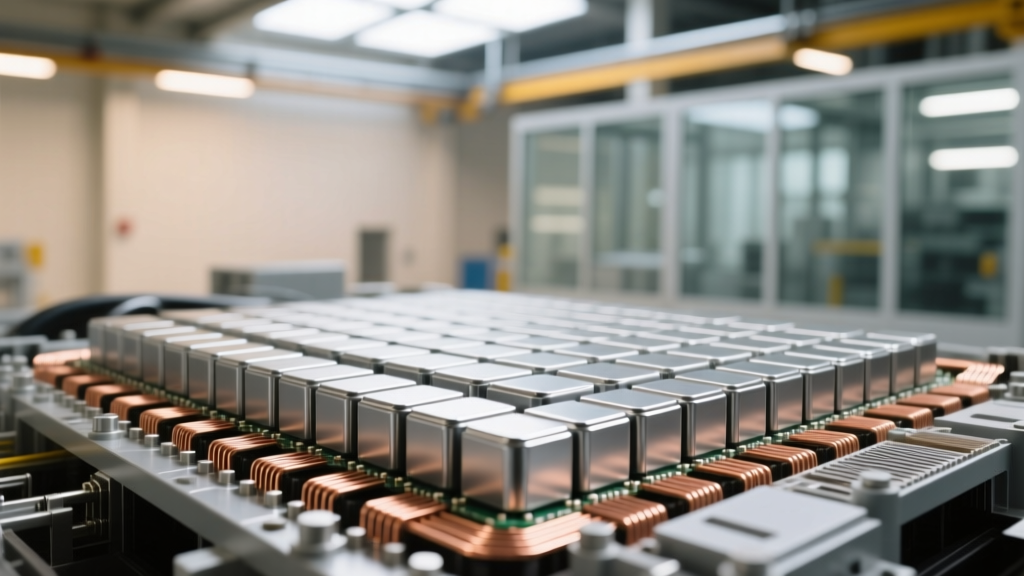
The single most important variable in EV battery longevity is chemistry. The Lordstown Endurance used NMC (nickel manganese cobalt) cells, which was standard for high-capacity packs at the time. But the 2024–2026 market has shifted dramatically toward LFP (lithium iron phosphate) in standard-range and commercial vehicles. Here's how they compare:
| Attribute | LFP (Lithium Iron Phosphate) | NMC / NCA (Nickel-based) |
|---|---|---|
| Energy Density | Lower (~160–180 Wh/kg cell-level) | Higher (~220–300 Wh/kg cell-level) |
| Cycle Life | 3,000–5,000+ cycles to 80% SoH | 1,000–2,500 cycles to 80% SoH |
| Cold-Weather Performance | Weaker below 32°F; greater range loss | Better cold tolerance; ~20–30% less range loss vs LFP |
| Thermal Stability | Excellent — higher thermal runaway threshold | Good but requires more active thermal management |
| Cost per kWh | ~$80–100/kWh (2025–2026 pack-level) | ~$110–140/kWh (2025–2026 pack-level) |
| Charging to 100% Regularly | Recommended — BMS needs full-charge calibration | Not ideal — 80% daily limit preferred for longevity |
| Typical Applications (2026) | Tesla Model 3 RWD, Ford Mustang Mach-E Select, BYD, commercial vans | Long-range/performance trims, Lucid, Rivian, Hyundai Ioniq 5 Long Range |
Which is better? For fleet and high-mileage commercial use — the segment Lordstown targeted — LFP's superior cycle life and lower cost make it increasingly attractive in 2026. For maximum range in cold climates or performance applications, NMC still holds advantages. The Endurance's NMC pack prioritized energy density for its 250-mile target, a reasonable trade-off at the time of its design.
How Long Do EV Batteries Actually Last?
The data is now robust enough to state plainly: most modern EV traction batteries outlast the vehicles they're installed in. According to long-term fleet data analyzed by Recurrent Auto and confirmed by Consumer Reports testing:
EV Battery Degradation — Real-World Data Points
- Year 1–2: 1–3% capacity loss (initial formation period; steeper drop that stabilizes)
- Year 3–5: ~0.5–1% per year linear degradation
- Year 8 average (all chemistries): ~88–92% State of Health (SoH) retained
- Year 10 average: ~82–88% SoH retained
- 100,000-mile mark: Most NMC packs retain 90–94% capacity; LFP packs often retain 95%+
- 200,000-mile mark: Well-managed NMC packs show 82–88% SoH; LFP packs often 90%+
- Taxi/fleet Tesla Model 3 data: Units at 300,000+ miles reporting 78–85% SoH on NMC packs
Sources: Recurrent Auto fleet data (2025), Geotab longitudinal study of 10,000+ EVs, manufacturer warranty claim rates.
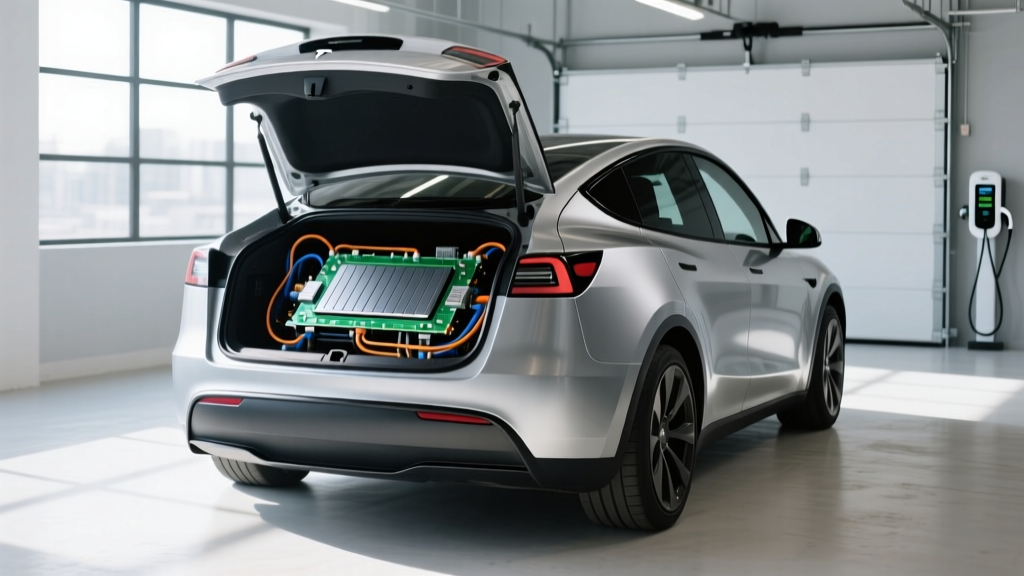
For a Lordstown Endurance owner or any large-battery EV operator, this means the 109 kWh NMC pack should realistically retain 85–90% of its original capacity at the 8-year / 100,000-mile mark under normal use — translating to roughly 215–225 miles of real-world range versus the original ~250-mile target.
EV Battery Warranty Terms: What's Actually Covered
Federal law mandates that EV batteries carry a minimum warranty of 8 years / 100,000 miles (10 years / 150,000 miles in CARB states like California, New York, and others). Here's how major manufacturers structure their coverage — and what the Lordstown situation looks like by comparison:
| Manufacturer / Model | Coverage Period | Capacity Threshold | Notes |
|---|---|---|---|
| Tesla (Model 3/Y) | 8 yr / 120,000 mi (LR) or 100,000 mi (RWD) | 70% retention | LFP packs covered same as NMC |
| Hyundai / Kia | 10 yr / 100,000 mi | 70% retention | Among the most generous terms |
| Ford (Mach-E / F-150 Lightning) | 8 yr / 100,000 mi | 70% retention | Covers battery and hybrid components |
| GM (Ultium platform) | 8 yr / 100,000 mi | 60% retention (some trims 70%) | Lower threshold on some models |
| Rivian (R1T / R1S) | 8 yr / 175,000 mi | 70% retention | Higher mileage cap for adventure use |
| Lordstown Endurance | Originally 8 yr / 100,000 mi (estimated) | ~70% (standard) | Post-restructuring: warranty support uncertain; contact Nu Ride Inc. for current status |
What warranty covers: Defects in materials/workmanship AND capacity loss below the stated threshold (typically 70%). If your pack drops to 68% SoH at year 6, the manufacturer must repair or replace it — usually with a refurbished or remanufactured unit of equivalent capacity, not necessarily a brand-new pack.
What it doesn't cover: Damage from accidents, flooding, improper charging equipment, or unauthorized modifications. Normal degradation above the threshold (e.g., losing 15% capacity over 8 years) is expected behavior, not a warranty claim.
Lordstown Motors Battery Replacement Cost: What to Expect
This is where the Lordstown-specific situation gets complicated. For mainstream EVs, battery replacement pricing has dropped significantly as pack costs have fallen and a refurbished battery market has matured. Here's the current landscape:
| Vehicle / Battery Size | New OEM Pack (est.) | Refurbished / Reman (est.) | Typical Replacement Timing |
|---|---|---|---|
| Tesla Model 3 RWD (~60 kWh LFP) | $8,000–$12,000 | $5,000–$7,500 | Rarely before 200,000+ mi |
| Tesla Model Y LR (~82 kWh NMC) | $12,000–$16,000 | $8,000–$11,000 | Rarely before 200,000+ mi |
| Ford F-150 Lightning Ext. Range (~131 kWh) | $18,000–$25,000 | $12,000–$17,000 | Rarely before 150,000+ mi |
| Chevrolet Bolt EV (~65 kWh NMC) | $9,000–$14,000 | $6,000–$9,000 | Post-recall replacements largely complete |
| Lordstown Endurance (~109 kWh NMC) | $16,000–$24,000+ (if available) | Unavailable — no established aftermarket supply | Unknown — limited production, support uncertain |
When is replacement actually needed? For mainstream EVs, almost never during typical ownership. Data from Geotab's study of over 10,000 EVs shows that fewer than 2% of EV batteries are replaced under non-warranty conditions. The vast majority of packs retain sufficient capacity (above 75–80% SoH) for the vehicle's entire first and second ownership cycle. Replacement typically only becomes necessary after 200,000–300,000 miles, or if a manufacturing defect causes premature cell failure — which the warranty covers.
Factors That Accelerate (or Preserve) Battery Health
Not all miles are equal when it comes to battery degradation. Research from the National Renewable Energy Laboratory (NREL) and real-world fleet data identify these key variables:
Battery Health Maximization Checklist
- State of Charge (SoC) habits: For NMC packs, keep daily driving between 20–80% SoC. Charge to 100% only when needed for trips. LFP packs should be charged to 100% at least weekly for BMS calibration.
- DC fast-charging frequency: Occasional DCFC (1–2x/week) shows minimal impact. Daily DCFC at 150+ kW can add ~1–2% extra annual degradation vs. Level 2 charging, per Idaho National Laboratory testing.
- Extreme heat exposure: Sustained ambient temperatures above 95°F accelerate degradation. Use preconditioning and garage parking when possible. Battery thermal management systems mitigate this, but parked EVs in Arizona summers still see slightly higher loss.
- Extreme cold charging: Charging an NMC pack below 25°F without preconditioning can cause lithium plating. Always use your vehicle's battery preconditioning feature before cold-weather DCFC sessions.
- Storage: If storing for weeks, leave the pack at ~50% SoC in a cool environment. Avoid storing at 100% or below 10%.
- Regenerative braking settings: High regen in cold weather can stress a cold battery. Many EVs automatically limit regen when the pack is below operating temperature — don't override this.
How to Monitor Your Battery's State of Health (SoH)
Knowing your battery's current capacity relative to its original spec is essential for warranty claims, resale value, and peace of mind. Here are the primary methods:
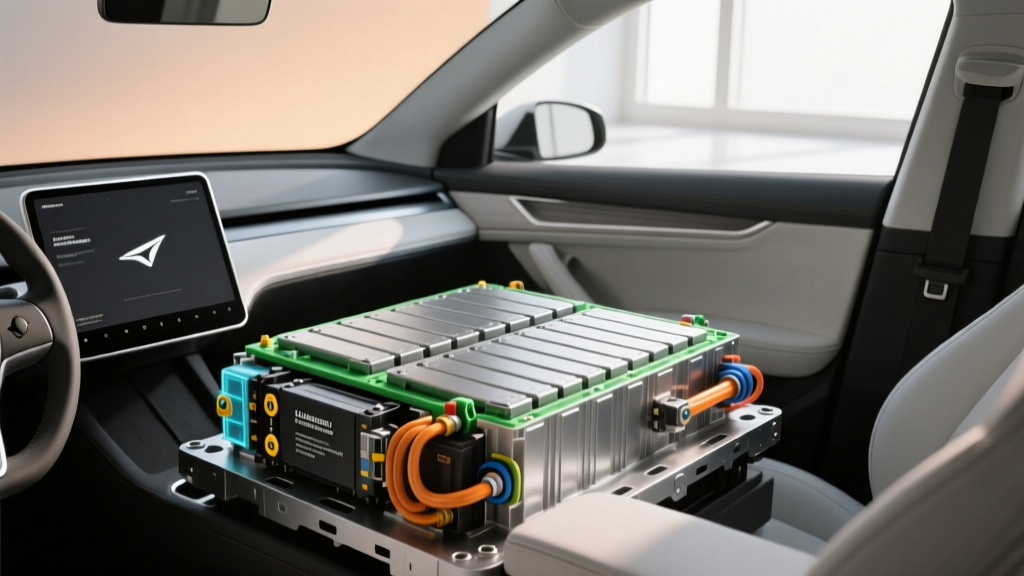
1. In-Vehicle Displays: Most 2024–2026 EVs include a battery health screen in the infotainment system. Tesla added a battery health percentage display in 2024 software updates. Hyundai/Kia's EV6 and Ioniq 5 show SoH in the diagnostics menu. The Lordstown Endurance's infotainment system may or may not have included this feature given its limited software development cycle.
2. OBD-II Dongles + Apps: Third-party tools like OBDLink SX/MX paired with apps such as LeafSpy (Nissan), TeslaFi, or ABRP (A Better Route Planner) can read battery management system data directly. These pull real SoH figures, cell voltage variance, and pack temperature data that the dashboard may not display.
3. Dealer Diagnostic Reports: Any authorized service center can run a full battery diagnostic that produces a SoH certificate — useful for resale. For discontinued vehicles like the Endurance, independent EV specialists with the right diagnostic software are the alternative.
4. Manual Calculation: Charge to 100%, note the displayed range, and compare to the original EPA sticker. A vehicle that originally showed 250 miles at 100% but now shows 220 miles has approximately 88% SoH (with the caveat that displayed range is affected by recent driving efficiency, not just capacity).
Emerging Battery Technologies: What's Next (2027 and Beyond)
While current NMC and LFP chemistries are mature and proven, several next-generation technologies are in various stages of development. These are not currently available in production vehicles but represent the pipeline:
Solid-State Batteries: Toyota, Samsung SDI, and QuantumScape are targeting 2027–2029 production timelines for solid-state cells. Promised benefits include 2x energy density, 10-minute fast charging, and 10,000+ cycle life. However, manufacturing scale-up remains the primary bottleneck. Toyota's announced 2027–2028 timeline for limited production in select models is the most credible near-term target, but widespread availability at competitive pricing is realistically a 2030+ proposition.
Silicon Anode Batteries: Companies like Sila Nanotechnologies and Group14 are shipping silicon-dominant anode materials to battery manufacturers now. These boost energy density by 20–40% over graphite anodes and are beginning to appear in premium EVs. Mercedes-Benz's partnership with Sila for the G-Class EV represents one of the first automotive deployments, with broader rollout expected 2026–2028.
Sodium-Ion Batteries: CATL and BYD are producing sodium-ion cells for low-cost, low-range applications (city cars, energy storage). Energy density is ~30% lower than LFP, but cost is significantly lower and cold-weather performance is excellent. Not relevant for large pickup platforms like the Endurance, but potentially transformative for affordable urban EVs.
For current EV owners, these technologies are forward-looking context — not a reason to delay a purchase or fear your existing battery. Today's LFP and NMC packs, properly cared for, will serve reliably for 15+ years and 200,000+ miles.
FAQ: EV Battery Longevity & Lordstown-Specific Questions
How long do EV batteries last in years and miles?
Modern EV batteries (2020+ production) are designed to last 15–20 years or 200,000–300,000 miles before reaching 70–80% of original capacity. Fleet data from Recurrent Auto and Geotab confirms that fewer than 2% of EVs require battery replacement outside of warranty claims. The battery will likely outlast other major vehicle components.
How much does an EV battery cost to replace?
Replacement costs in 2026 range from $5,000–$7,500 for a refurbished small pack (e.g., Tesla Model 3 RWD LFP) to $18,000–$25,000 for a new large pack (e.g., Ford F-150 Lightning Extended Range). For discontinued low-volume vehicles like the Lordstown Endurance, costs are higher and availability is uncertain due to limited parts supply. Module-level repair (replacing individual cell groups) can reduce costs to $3,000–$8,000 depending on the number of failed modules.
What does the EV battery warranty actually cover?
Federal law requires a minimum 8-year/100,000-mile battery warranty (10/150,000 in CARB states). Coverage includes defects in materials and workmanship, plus capacity loss below a specified threshold — typically 70% of original capacity. The warranty covers repair or replacement (often with a refurbished unit). It does not cover damage from accidents, improper charging, or normal degradation above the threshold.
How do I check my EV battery's State of Health?
Use your vehicle's built-in battery health display (if available), connect an OBD-II diagnostic tool with EV-compatible software (such as LeafSpy or TeslaFi), request a diagnostic report from a dealer or EV specialist, or manually compare your 100%-charge displayed range to the original EPA figure. For the most accurate reading, perform a full charge from 10% to 100% on a Level 2 charger and note the kWh delivered — this approximates usable capacity.
LFP vs NMC — which battery chemistry is better?
Neither is universally better; it depends on your use case. LFP offers longer cycle life (3,000–5,000 cycles vs 1,000–2,500), lower cost ($80–100/kWh vs $110–140/kWh), better thermal stability, and tolerance for daily 100% charging — making it ideal for daily commuting, fleet use, and high-mileage drivers. NMC offers higher energy density (more range per pound), better cold-weather performance, and faster charging capability — making it preferable for long-range driving, cold climates, and performance applications. The Lordstown Endurance used NMC for its energy-density advantage in a large pickup platform.
Is the Lordstown Endurance battery still supported after the company's restructuring?
Following Lordstown Motors' restructuring and asset transfer to Nu Ride Inc., OEM warranty support and parts availability for the Endurance are uncertain. Owners should contact Nu Ride Inc. directly for current support status. Independent EV repair shops with module-level diagnostic and replacement capabilities may be the most practical resource for battery service. Given the extremely limited production run, owners should plan for longer lead times and higher costs compared to mainstream EVs.
Does frequent DC fast charging damage the battery?
Research from Idaho National Laboratory showed that exclusive DC fast charging (3x daily at 50 kW) resulted in approximately 4–5% additional degradation over 50,000 miles compared to Level 2 charging — a measurable but modest difference. Modern battery management systems actively manage charge rates and temperatures to minimize stress. Occasional DCFC (a few times per week) has negligible impact. The bigger degradation factors are sustained high SoC, extreme heat exposure, and deep discharge cycles.
Sources: fueleconomy.gov (EPA range and efficiency data), Recurrent Auto (fleet degradation studies), NREL (battery aging research), IRS.gov (federal EV tax credit rules). Battery replacement cost estimates compiled from manufacturer service bulletins, independent EV repair shop surveys, and aftermarket supplier pricing as of early 2026. All figures subject to change; consult a qualified EV technician for vehicle-specific diagnostics.