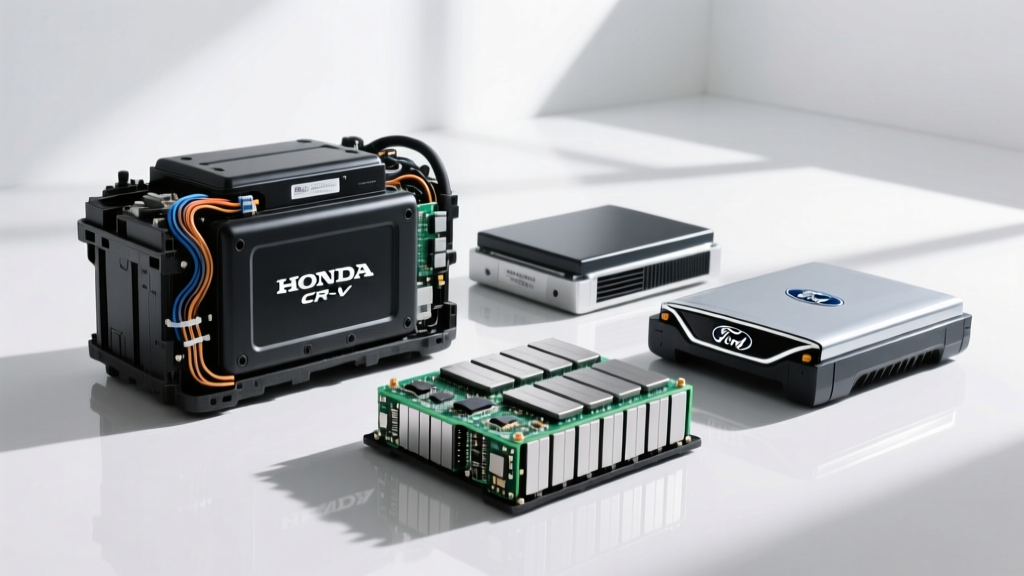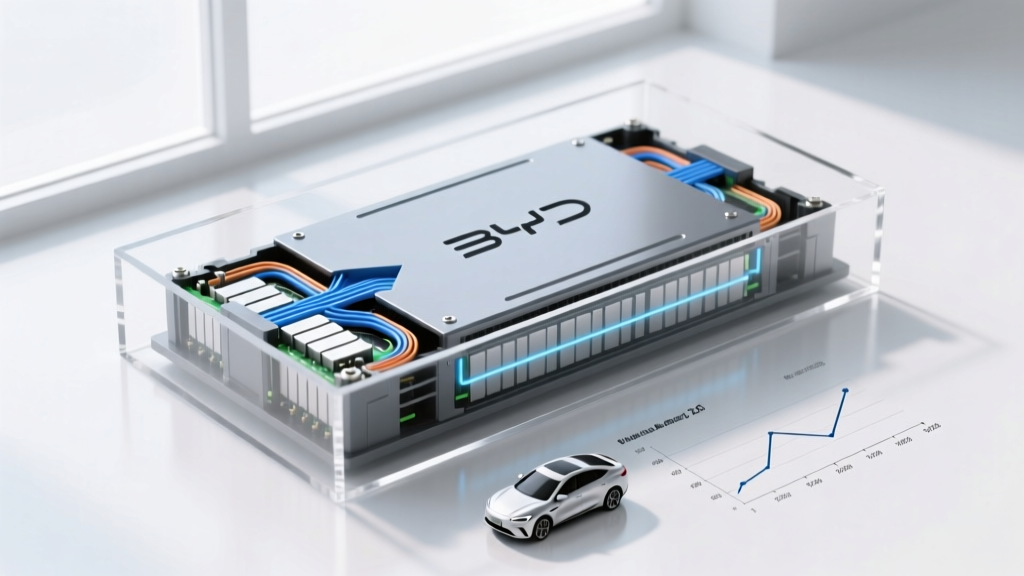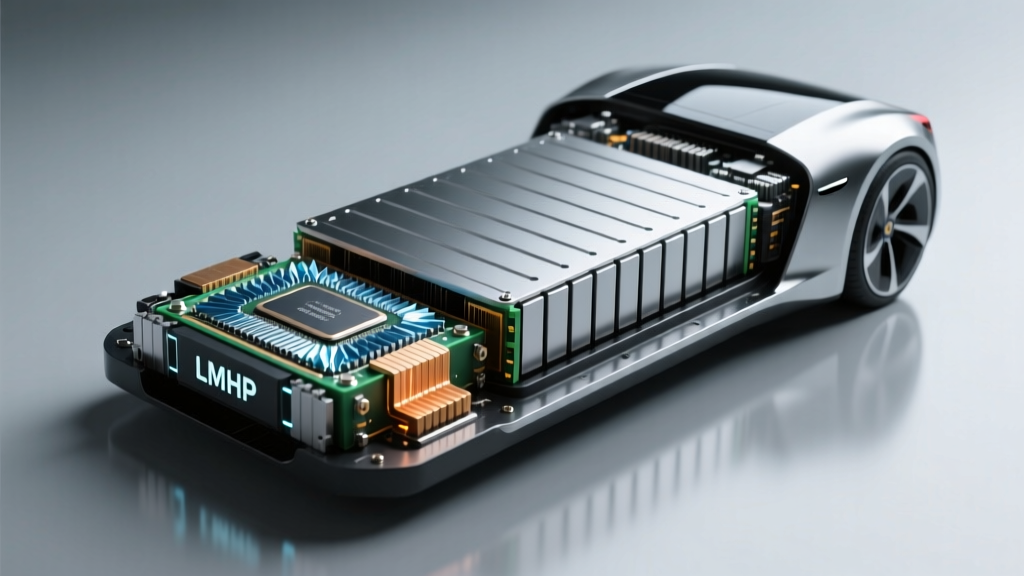
If you have been tracking EV battery headlines, you have probably seen the acronym LMFP surface alongside the more familiar LFP and NMC labels. Lithium manganese iron phosphate (LMFP) is not a new chemistry in the lab — researchers have studied it for over a decade — but it is only now reaching production-scale electric vehicles. Automakers and cell suppliers see LMFP as the bridge between LFP's low cost and long cycle life and NMC's superior energy density.
This guide explains what LMFP actually is, how it stacks up against the chemistries already in your garage or on your shopping list, and what the real-world data says about degradation, warranty coverage, and replacement costs across all major EV battery types.
What Is an LMFP Battery and Why Does It Matter?
An LMFP cell uses a cathode made of lithium manganese iron phosphate — essentially an LFP (lithium iron phosphate) cathode with manganese atoms substituted into the crystal lattice. That manganese addition raises the nominal cell voltage from LFP's 3.2 V to roughly 3.8–4.1 V, which translates directly into higher energy density without abandoning the stable olivine crystal structure that makes LFP so durable.
In practical terms, LMFP targets a 15–20% energy-density improvement over standard LFP at a similar or slightly higher cost per kWh. For an EV buyer, that means more range from the same physical battery pack, or the same range from a lighter, smaller pack that lowers vehicle weight and cost.
As of the 2026 model year, LMFP cells are appearing primarily in vehicles from Chinese manufacturers and in select global models sourced from CATL and Gotion High-Tech. North American availability is expanding as these suppliers localize production. Ford, Tesla, and other automakers sourcing LFP packs from CATL are expected to transition portions of their lineup to LMFP over the 2026–2028 window, though specific model commitments remain preliminary.
LFP vs LMFP vs NMC: Chemistry Trade-Offs Compared
Choosing an EV increasingly means choosing a battery chemistry. Here is how the three dominant cathode types compare across the metrics that affect ownership:
| Attribute | LFP | LMFP | NMC / NCA |
|---|---|---|---|
| Nominal Cell Voltage | 3.2 V | 3.8–4.1 V | 3.6–3.7 V |
| Cell-Level Energy Density | 160–180 Wh/kg | 190–220 Wh/kg | 230–300 Wh/kg |
| Typical Cycle Life (to 80% SoH) | 3,000–5,000+ | 2,000–4,000 | 1,000–2,000 |
| Cold-Weather Performance (−10°C range retention) | ~55–65% | ~60–70% | ~70–80% |
| Thermal Stability / Safety | Excellent | Excellent | Good (requires more BMS management) |
| Cost per kWh (cell level, 2026 est.) | $70–85 | $80–100 | $100–130 |
| Cobalt / Nickel Content | None | None | Yes (supply-chain and ethical concerns) |
| Recommended Daily Charge Limit | 100% SoC acceptable | 100% SoC acceptable | 80% SoC for daily use |
Key takeaway: LMFP occupies the middle ground. It gives you nearly all of LFP's safety, cobalt-free sourcing, and 100% charge tolerance while closing the energy-density gap with NMC. It does not match NMC's specific energy, so long-range flagship models (400+ mile EPA) will likely continue using NMC or NCA for the foreseeable future. But for the high-volume 250–350 mile segment, LMFP is positioned to become the default chemistry.
How Long Do EV Batteries Actually Last? Degradation Data by Chemistry
The single most common question from prospective EV buyers is battery longevity. The data, drawn from fleet telemetry, manufacturer reports, and independent testing, is reassuring: modern EV batteries are lasting significantly longer than early-generation packs.
Here is what real-world degradation looks like across chemistries, compiled from aggregated fleet data and U.S. Department of Energy testing reports:
| Chemistry | Year 1 Loss | Year 3 Loss | Year 5 Loss | Year 8 Loss (est.) | Mileage at 80% SoH |
|---|---|---|---|---|---|
| LFP | 2–3% | 5–7% | 7–10% | 10–14% | 250,000–400,000 mi |
| LMFP (projected from test data) | 2–4% | 6–9% | 9–13% | 13–18% | 200,000–320,000 mi |
| NMC / NCA | 3–5% | 7–11% | 10–15% | 14–20% | 150,000–250,000 mi |
A few nuances matter here. The first year of degradation is typically the steepest across all chemistries — this is the formation of the solid electrolyte interphase (SEI) layer stabilizing. After year one, the curve flattens considerably. LFP and LMFP packs degrade more gradually and linearly than NMC, which tends to show a more pronounced knee in the curve after 100,000+ miles if frequently fast-charged or operated at high states of charge.
For LMFP specifically, long-term fleet data is still limited since large-scale production began around 2024–2025. The figures above are extrapolated from accelerated lifecycle testing by cell manufacturers and early fleet deployments. As more LMFP-equipped vehicles accumulate real-world miles through 2026 and beyond, these projections will be refined.
What Does the Battery Warranty Cover? Federal Minimums and Manufacturer Terms
U.S. federal law mandates that EV battery warranties cover a minimum of 8 years or 100,000 miles (whichever comes first). In California Air Resources Board (CARB) states, that extends to 10 years or 150,000 miles. Most manufacturers exceed the federal floor. Here is a snapshot of current warranty terms:
| Manufacturer | Warranty Period | Mileage Limit | Capacity Retention Threshold |
|---|---|---|---|
| Tesla (Model 3 RWD / LFP) | 8 years | 100,000 mi | 70% |
| Tesla (Model Y LR / NMC) | 8 years | 120,000 mi | 70% |
| Hyundai / Kia (E-GMP) | 10 years | 100,000 mi | 70% |
| Ford (Mach-E / F-150 Lightning) | 8 years | 100,000 mi | 70% |
| GM (Ultium-based) | 8 years | 100,000 mi | 70% |
| BMW (Neue Klasse) | 8 years | 100,000 mi | 70% |
| Rivian | 8 years | 175,000 mi | 70% |
The capacity retention threshold — typically 70% of original capacity — is the trigger point for a warranty claim. If your 82 kWh pack drops below roughly 57.4 kWh of usable capacity within the warranty window, the manufacturer must repair or replace it at no cost. In practice, very few modern EVs hit this threshold within the warranty period. According to data published by NHTSA and fleet analyses, battery warranty claims remain rare, affecting well under 1% of vehicles in the first five years.
For LMFP packs entering the market, manufacturers are expected to offer similar or slightly adjusted warranty terms. Because LMFP cycle life sits between LFP and NMC, some automakers may set the retention threshold at 70–75% over 8 years. Always confirm the specific warranty language for the exact model and trim you are purchasing.
EV Battery Replacement Costs: What You Will Actually Pay (and When)
Battery replacement is the bogeyman of EV ownership discourse. Let's ground it in real numbers. A full high-voltage traction battery replacement (not the 12V auxiliary battery, which is a separate and inexpensive component) is rarely needed during the typical ownership period. Most EV batteries outlast the vehicle's economic life.
That said, if a pack does fail outside warranty — typically at 150,000–250,000+ miles depending on chemistry and usage — here is what replacement costs look like in 2026:
| Vehicle / Pack Size | Chemistry | Battery Capacity | Estimated Replacement Cost |
|---|---|---|---|
| Tesla Model 3 RWD | LFP | ~60 kWh | $8,000–$12,000 |
| Tesla Model Y Long Range | NMC | ~82 kWh | $12,000–$16,000 |
| Hyundai Ioniq 5 | NMC | 77.4 kWh | $11,000–$15,000 |
| Ford F-150 Lightning Ext. Range | NMC | ~131 kWh | $18,000–$25,000 |
| Chevrolet Equinox EV | NMC (Ultium) | ~85 kWh | $12,000–$16,000 |
| LMFP-equipped mid-size sedan (est.) | LMFP | ~65 kWh | $7,500–$11,000 |
LMFP packs are expected to be cheaper to replace than equivalent NMC packs due to the absence of cobalt and nickel. As production scales and the secondary market for refurbished packs grows, these costs should decline further through 2028–2030.
An important practical note: module-level repair is increasingly common. Rather than replacing the entire pack, many service centers can diagnose and swap individual modules (a pack may contain 4–16 modules) for $1,500–$4,000, restoring most of the original capacity.
Five Factors That Determine How Fast Your Battery Degrades
Chemistry sets the ceiling, but your habits determine where you land on the degradation curve. Here are the five biggest factors, ranked by impact:
- State of Charge (SoC) habits: For NMC/NCA packs, routinely charging to 100% and letting the car sit at full charge accelerates degradation. Keeping daily charge between 20–80% significantly extends life. LFP and LMFP packs are more tolerant of 100% SoC — in fact, manufacturers recommend periodic 100% charges for LFP/LMFP to allow the battery management system (BMS) to recalibrate cell balancing.
- DC fast-charging frequency: Occasional fast charging has minimal impact. Daily reliance on 150+ kW DC fast charging, especially without proper preconditioning, increases thermal stress. Data from fleet studies suggests vehicles that fast-charge more than 80% of the time show 2–4% additional degradation over five years compared to predominantly Level 2 home-charged vehicles.
- Extreme temperature exposure: Sustained operation or storage in temperatures above 95°F (35°C) or below 15°F (−9°C) accelerates chemical aging. Vehicles with active liquid thermal management (standard on nearly all 2026 EVs) mitigate this substantially, but parking in shade or a garage in hot climates still helps.
- Depth of discharge: Frequently draining the battery below 10% SoC stresses cells across all chemistries. Try to plug in before the pack drops below 15–20%.
- Calendar aging: Even a parked EV battery degrades slowly over time. A vehicle stored at 50% SoC in moderate temperatures will age more gracefully than one stored at 100% in summer heat. If you are traveling and leaving the car for weeks, set the charge limit to 50–60%.
- Set daily charge limit to 80% (NMC/NCA) or 100% (LFP/LMFP — per manufacturer guidance)
- Use Level 2 home charging as your primary method; reserve DC fast charging for road trips
- Enable battery preconditioning when navigating to a fast charger (warms the pack for optimal charge acceptance)
- Avoid leaving the vehicle at 100% SoC for more than 24 hours in hot weather
- Keep the battery between 15–85% SoC during extended storage (multi-week trips)
- Use scheduled charging to finish charging just before you leave — minimizes time at peak SoC
- Monitor coolant levels and follow manufacturer thermal-management service intervals
How to Check Your EV Battery's State of Health (SoH)
State of Health (SoH) is expressed as a percentage: 100% means the pack holds its original rated capacity; 85% means it holds 85% of original. Monitoring SoH helps you track degradation and plan for any warranty claims before the window closes.
In-vehicle displays: Many 2026 EVs now include a battery health screen in the infotainment system. Tesla added a battery health indicator in software updates, showing a percentage and qualitative rating. Hyundai, Kia, and BMW provide SoH readouts in their EV menus.
OBD-II dongles and apps: For vehicles without a built-in SoH display, third-party tools like the OBDeleven adapter (for VW Group vehicles), Scan My Tesla (Tesla-specific), or general EV diagnostic apps can read the BMS-reported SoH directly from the CAN bus. These typically cost $30–$80 for the hardware plus a free or low-cost app subscription.
Dealer diagnostics: Any authorized service center can pull a full battery health report. Request this during routine service visits, especially as you approach the warranty mileage threshold. If SoH drops near 70–72%, having a documented dealer reading creates a paper trail for a potential claim.
Third-party certifications: For used EV purchases, services like Recurrent Auto provide battery health reports based on telematics data. A certified SoH reading adds confidence and resale value.
Beyond LMFP: Solid-State, Silicon Anode, and What Comes Next
LMFP is an evolutionary step — an improvement on proven olivine chemistry. The larger leaps being discussed in EV battery tech are solid-state batteries and silicon-anode cells. Here is where those stand in 2026:
Solid-state batteries replace the liquid electrolyte with a solid ceramic, polymer, or sulfide conductor. The promise is dramatic: 40–50% higher energy density, faster charging (potentially 10–80% in under 10 minutes), and improved safety. Toyota, Samsung SDI, and QuantumScape have all demonstrated prototype cells. However, manufacturing yield, cost, and scalability remain significant hurdles. Toyota has announced limited solid-state deployment in select models by 2027–2028, but widespread availability at competitive pricing is not expected before 2030–2032. Treat any claims of "solid-state EVs you can buy today" with skepticism — no mass-market vehicle currently uses a fully solid-state traction battery.
Silicon-anode batteries replace the graphite anode with silicon, which can store roughly 10 times more lithium ions per gram. Companies like Sila Nanotechnologies and Group14 are supplying silicon-dominant anode materials to cell manufacturers. The result is a 10–20% energy-density boost that can be combined with existing NMC or LMFP cathodes. Some premium 2026 models incorporate partial silicon-anode cells, and adoption is expected to broaden through 2028. This is a nearer-term, more incremental improvement than solid-state.
Sodium-ion batteries are also entering the conversation for entry-level EVs and stationary storage. CATL has begun shipping sodium-ion packs for select Chinese-market vehicles. These are cheaper than LFP but have lower energy density, making them suitable for city cars and short-range applications. North American availability remains limited as of 2026.
Frequently Asked Questions
Is an LMFP battery better than LFP?
LMFP offers 15–20% higher energy density than LFP at a modest cost increase, meaning more range per kilogram of battery. It retains LFP's cobalt-free composition, excellent thermal stability, and tolerance for 100% daily charging. The trade-off is slightly lower cycle life (2,000–4,000 cycles vs. 3,000–5,000+ for LFP) and less mature production scale. For most buyers, LMFP represents a net improvement if available in their chosen model.
How long will an LMFP battery last in real-world use?
Based on accelerated lifecycle testing and early fleet data, LMFP packs are projected to retain 80–87% of original capacity after 8 years / 100,000 miles under typical usage. That translates to 200,000–320,000 miles before reaching the 80% State of Health threshold. Most owners will sell or trade the vehicle before the battery reaches end-of-life.
Which EVs currently use LMFP batteries?
As of the 2026 model year, LMFP cells from CATL and Gotion High-Tech are appearing in select models from Chinese-market manufacturers and in some globally exported vehicles. Several major automakers have announced plans to adopt LMFP in upcoming model refreshes. Specific North American model availability is still expanding — check the manufacturer's spec sheet for the exact chemistry listed for your trim, as it can vary by model year and region.
Can I fast-charge an LMFP battery without damaging it?
Yes, with the same caveats that apply to any chemistry. Occasional DC fast charging is fine. Daily fast charging without preconditioning will accelerate degradation over time. LMFP's olivine structure provides good thermal stability, so it handles fast charging comparably to LFP — better than NMC at equivalent charge rates. Always use the vehicle's built-in preconditioning when navigating to a fast charger.
Does the federal EV tax credit apply to vehicles with LMFP batteries?
The IRS §30D clean vehicle credit eligibility depends on MSRP caps, buyer income limits, and battery component / critical mineral sourcing requirements — not the specific cathode chemistry. LMFP's cobalt-free and nickel-free composition may actually help manufacturers meet the critical minerals sourcing thresholds, since manganese and iron have more diversified supply chains. However, eligibility changes frequently. Always verify current-year requirements on the IRS website and consult a tax professional before relying on the credit in your purchase decision.
How does LMFP perform in cold weather compared to NMC?
LMFP performs better in cold weather than standard LFP (due to the higher voltage providing more usable energy at low temperatures) but still trails NMC. Expect roughly 60–70% range retention at −10°C (14°F) for LMFP, versus 70–80% for NMC. Active thermal management and battery preconditioning significantly reduce this gap. If you live in a climate with sustained sub-freezing winters, NMC still holds a cold-weather edge, but LMFP is a meaningful improvement over LFP for winter driving.