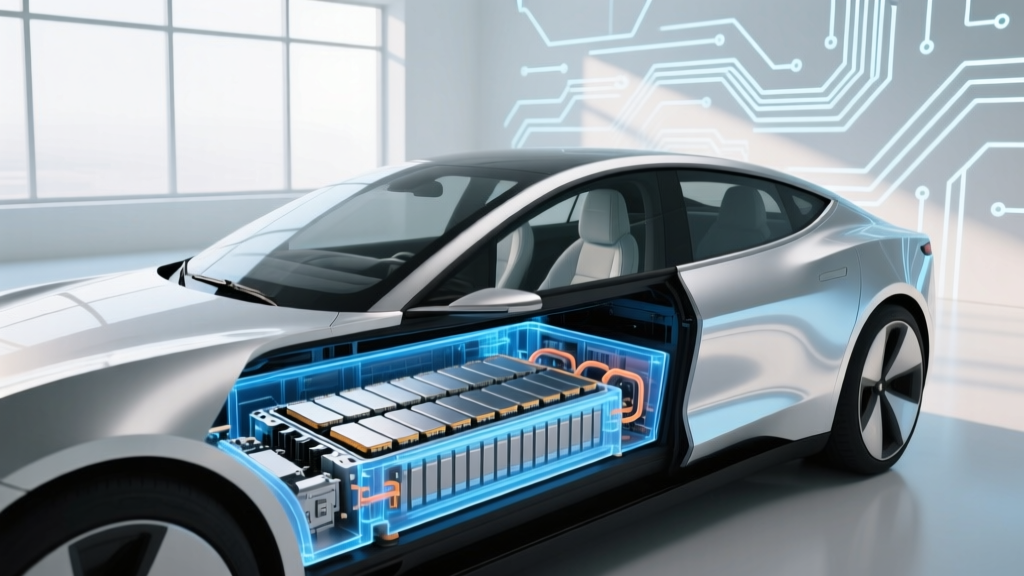
Every EV owner eventually confronts the same question: how long will the battery actually last? Industry analysts sometimes refer to the lithium valley — that period mid-lifecycle where an EV battery's degradation curve flattens after an initial drop, creating a long plateau of usable capacity before any steep decline. Understanding this curve, the chemistry inside your pack, and what warranties actually cover is the difference between confident EV ownership and expensive surprises.
This guide breaks down exactly what happens inside your high-voltage traction battery over 100,000+ miles, what it costs if something goes wrong, and how to keep your State of Health (SoH) as high as possible for as long as possible.
LFP vs NMC vs NCA: The Chemistry Inside Your Pack
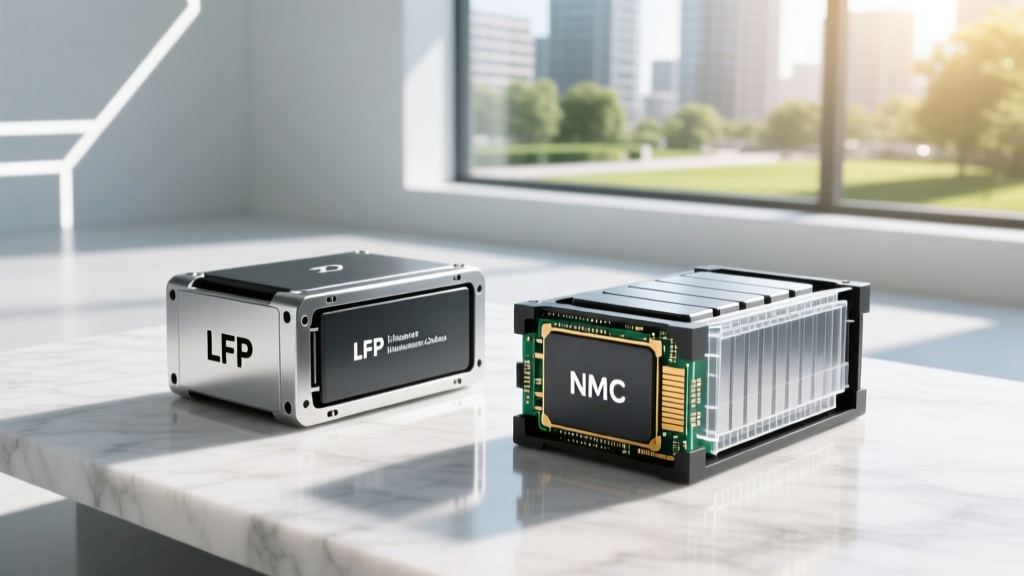
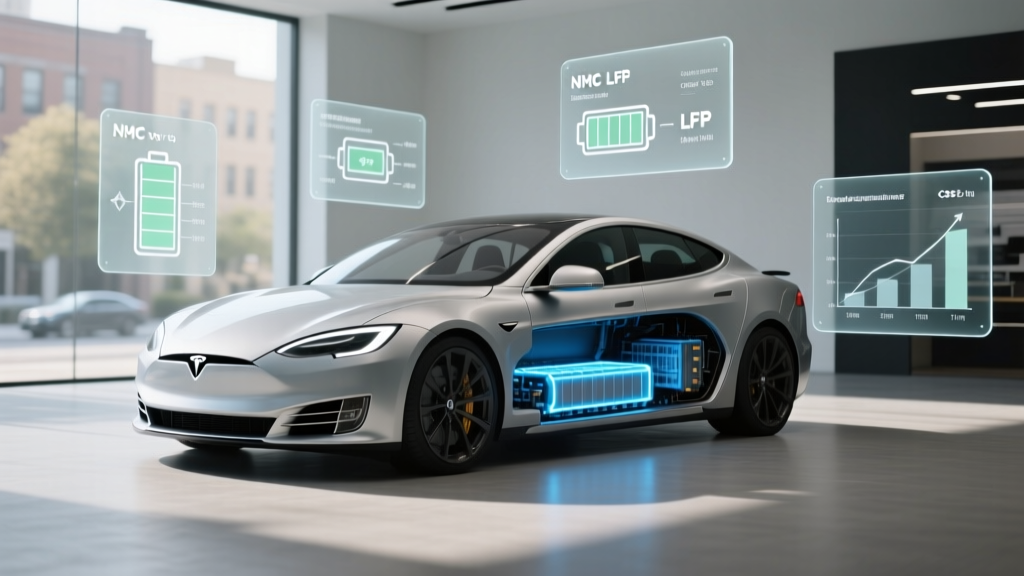
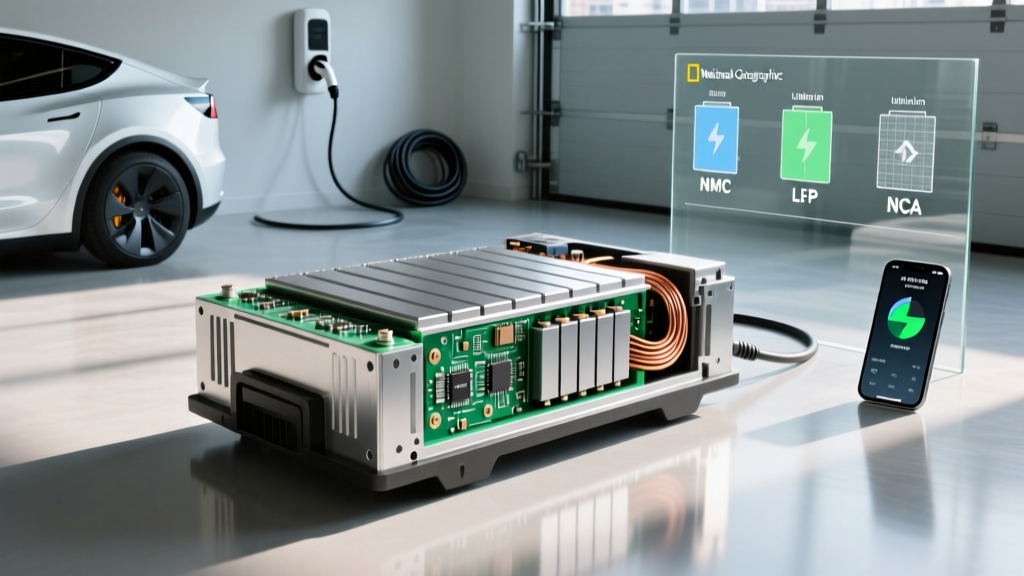
Not all EV batteries are built the same. The cathode chemistry determines energy density, longevity, cold-weather behavior, and cost. In 2026, three chemistries dominate the US market:
- NMC (Nickel Manganese Cobalt): The legacy standard. Higher energy density means more range in a smaller, lighter pack. Used in most long-range EVs (Hyundai Ioniq 5, Ford Mustang Mach-E Extended Range, VW ID.4). Trade-off: more sensitive to high State of Charge (SoC) stress and typically shorter cycle life than LFP.
- NCA (Nickel Cobalt Aluminum): Tesla's preferred chemistry for Long Range and Performance models. Very high energy density. Similar longevity profile to NMC with excellent thermal management offsetting some degradation risk.
- LFP (Lithium Iron Phosphate): The rising star for standard-range and fleet vehicles. Lower energy density (heavier pack for the same kWh), but far superior cycle life, thermal stability, and no cobalt. Tesla Model 3 RWD, Ford F-150 Lightning Standard Range, and several Chinese-market imports use LFP. Manufacturers generally recommend charging LFP to 100% regularly — a major operational difference from NMC/NCA.
| Attribute | LFP | NMC | NCA |
|---|---|---|---|
| Energy Density | Lower (~160 Wh/kg cell) | Higher (~220-260 Wh/kg cell) | Highest (~260-300 Wh/kg cell) |
| Cycle Life (to 80% SoH) | 3,000-5,000+ cycles | 1,000-2,000 cycles | 1,000-1,500 cycles |
| Cold-Weather Performance | Moderate loss, slower charge acceptance | Better low-temp conductivity | Good, aided by thermal mgmt |
| Recommended Daily SoC | 100% (periodic full charge required) | 80% (charge to 100% before trips) | 80% (charge to 100% before trips) |
| Cost per kWh (pack-level) | ~$90-$110 | ~$120-$150 | ~$130-$160 |
| Thermal Runaway Risk | Very low | Moderate | Moderate |
| Common Applications | Standard-range sedans, fleet, commercial | Long-range crossovers, SUVs | Tesla LR/Performance, premium EVs |
Which is better? It depends on your use case. If you drive 40 miles a day and charge at home nightly, LFP's cycle-life advantage and 100% charging tolerance make it ideal — you'll barely scratch its 3,000+ cycle lifespan over a decade. If you need 320+ miles of EPA range for frequent road trips, NMC or NCA gives you the energy density to carry that capacity without excessive weight. Neither is universally "better" — they're optimized for different ownership patterns.
Understanding the Lithium Valley: How Degradation Actually Works
Battery degradation is not linear. Data aggregated from fleet telematics and owner-reported State of Health readings shows a consistent pattern across chemistries:
The Degradation Curve — What "Lithium Valley" Means
- Phase 1 (Months 1-12 / ~0-15,000 miles): Initial capacity loss of 2-5%. This is the steepest part of the curve as the solid electrolyte interphase (SEI) layer forms and stabilizes on the anode.
- Phase 2 — The Lithium Valley (Years 2-7 / ~15,000-120,000 miles): Degradation flattens dramatically. Most packs lose only 0.5-1.5% per year during this long plateau. A well-maintained NMC pack might sit at 90-93% SoH for years. LFP packs often hold 95%+ through this phase.
- Phase 3 (Years 8+ / 120,000+ miles): Gradual acceleration as lithium plating, electrolyte decomposition, and cathode micro-cracking accumulate. Even here, most packs remain above the 70% warranty threshold.
Real-world data points from high-mileage EVs illustrate this:
| Vehicle / Chemistry | Mileage | Reported SoH | Source Context |
|---|---|---|---|
| Tesla Model 3 LR (NCA) | 100,000 mi | ~90-92% | Owner fleet data, Tesla Impact Report |
| Chevy Bolt EV (NMC, 60 kWh) | 80,000 mi | ~91-94% | Owner forums, OBD-II SoH readings |
| Hyundai Kona Electric (NMC, 64 kWh) | 75,000 mi | ~93-95% | Dealer diagnostics, European fleet data |
| Tesla Model 3 RWD (LFP, 60 kWh) | 60,000 mi | ~96-98% | Owner telematics, high-cycle taxi use |
| Nissan Leaf (NMC, passively cooled) | 90,000 mi | ~80-85% | Leaf Spy readings — note: no active thermal mgmt |
The Nissan Leaf data point is instructive: thermal management matters enormously. Packs with active liquid cooling (Tesla, Hyundai, Ford, GM Ultium) consistently outperform passively cooled packs by 5-10% SoH at equivalent mileage, particularly in hot climates.
What the Battery Warranty Actually Covers
Federal law mandates a minimum battery warranty of 8 years / 100,000 miles (whichever comes first) for EVs sold in the US. California Air Resources Board (CARB) states extend this to 10 years / 150,000 miles. Here's how major manufacturers structure their coverage in 2026:
| Manufacturer | Warranty Period | Capacity Threshold | Notes |
|---|---|---|---|
| Tesla (Model 3/Y) | 8 yr / 120,000 mi (LR); 8 yr / 100,000 mi (RWD) | 70% retention | LFP RWD covered separately; LR has higher mile cap |
| Hyundai / Kia | 10 yr / 100,000 mi | 70% retention | Among the longest time-based coverage |
| Ford (Mach-E, F-150 Lightning) | 8 yr / 100,000 mi | 70% retention | Covers battery and hybrid/electric components |
| GM (Ultium platform) | 8 yr / 100,000 mi | 70% retention | Modular pack design may allow partial replacement |
| Volkswagen (ID.4) | 8 yr / 100,000 mi | 70% retention | CARB states get extended coverage |
| Rivian | 8 yr / 175,000 mi | 70% retention | Highest mileage cap among mainstream OEMs |
Key details buyers miss:
- The warranty guarantees your pack will retain at least 70% of its original usable capacity. A 75 kWh pack warranted at 70% means you're covered if usable capacity drops below 52.5 kWh.
- Warranty replacement may use a remanufactured pack, not a brand-new one. This is standard practice and the replacement pack will meet the 70% threshold.
- Damage from accidents, flooding, or unauthorized modifications is excluded. So is degradation from consistently ignoring manufacturer charging guidelines (though this is extremely difficult for an OEM to prove).
- The warranty is transferable to subsequent owners, which supports EV resale values.
EV Battery Replacement Cost: What You'd Actually Pay
Here's the number that generates the most anxiety — and the most misinformation. Let's ground it in data.
| Vehicle | Pack Size (Usable) | Chemistry | Full Replacement Cost (Parts + Labor) | Typical Need Timeline |
|---|---|---|---|---|
| Tesla Model 3 RWD | ~57 kWh | LFP | $10,000 - $13,000 | Rarely needed within 150k mi |
| Tesla Model Y LR | ~75 kWh | NCA | $13,000 - $16,000 | Rarely needed within 150k mi |
| Hyundai Ioniq 5 | ~72.6 kWh | NMC | $12,000 - $15,000 | Rarely needed within 150k mi |
| Ford F-150 Lightning Ext. Range | ~113 kWh | NMC | $18,000 - $25,000 | Rarely needed within 150k mi |
| Chevrolet Equinox EV | ~85 kWh | NMC (Ultium) | $13,000 - $17,000 (module-level repair possible) | Rarely needed within 150k mi |
| Nissan Leaf (40 kWh) | ~38 kWh | NMC | $7,000 - $9,000 | Earlier degradation risk (passive cooling) |
When is replacement actually needed? For the vast majority of liquid-cooled EVs sold since 2019, the answer is: it usually isn't. Data from fueleconomy.gov and OEM warranty claims show that fewer than 2% of EV batteries require out-of-warranty replacement due to degradation alone. Catastrophic failures (manufacturing defects, physical damage) are covered under warranty. The most common scenario for an out-of-pocket replacement is a 10-15 year old EV with 150,000+ miles whose pack has gradually dropped below 70% SoH — at which point the vehicle's residual value often makes the economics questionable.
An emerging alternative: module-level repair. GM's Ultium platform and some Hyundai/Kia packs allow individual modules to be replaced rather than the entire pack, reducing costs to $3,000-$7,000 for a partial restoration. Third-party EV repair shops are increasingly offering this service for Tesla and Nissan packs as well.
Five Factors That Accelerate (or Preserve) Battery Life
Your habits matter — but perhaps less than you think for daily driving, and more than you think for extremes.
Battery Care Checklist — Maximize Your SoH
- Avoid sustained 100% SoC (NMC/NCA only): Set your daily charge limit to 80%. Charge to 100% only when you'll drive immediately. LFP owners: charge to 100% at least weekly for cell balancing — your chemistry tolerates it.
- Minimize DC fast charging above 150 kW when unnecessary: Occasional road-trip fast charging is fine. Daily use of 250-350 kW chargers generates sustained heat that accelerates electrolyte decomposition. Level 2 home charging (7-11.5 kW) is the gentlest method.
- Precondition before fast charging: Most EVs do this automatically when you navigate to a charger. Preconditioning warms the pack to ~30-35°C, enabling faster charging with less lithium plating risk. Never fast-charge a cold-soaked pack (below 0°C) without preconditioning.
- Avoid extreme SoC in extreme heat: A pack sitting at 100% SoC in 110°F Phoenix heat is under maximum calendar-aging stress. If you must park in heat, keep SoC around 50-60%.
- Don't baby it excessively: The difference between "perfect" battery care and "normal" care is typically 2-4% SoH over 100,000 miles. Drive your car. The lithium valley plateau is robust enough to handle real life.
Checking Your Battery's State of Health (SoH)
State of Health (SoH) is the percentage of your battery's original usable capacity that remains. A new pack is 100% SoH; a degraded pack at 88% SoH with a 75 kWh original capacity now holds ~66 kWh usable.
How to check SoH by brand:
- Tesla: No native SoH readout in the app. Use third-party OBD-II tools like Scan My Tesla (Android) with a Bluetooth OBD adapter, or request a battery health report from a Tesla Service Center. Some Tesla service menus show SoH directly.
- Hyundai / Kia: Available through dealer diagnostic tools. Third-party apps like Car Scanner ELM OBD2 can read SoH via the OBD-II port on many models.
- GM (Ultium): The myChevrolet / myCadillac app provides a battery health indicator. Dealer diagnostics give exact SoH percentage.
- Ford: FordPass app shows a battery health status. Exact SoH percentage available through dealer IDS diagnostic tool.
- Nissan Leaf: The dashboard "capacity bars" (out of 12) give a rough indicator. Leaf Spy Pro via OBD-II provides precise SoH, Hx (health index), and individual cell voltage data — the gold standard for Leaf owners.
- Volkswagen: Car-Net / VW ID app provides battery health status. Exact SoH available via dealer ODIS diagnostics.
What SoH number should concern you? If you're buying a used EV, anything above 90% SoH is excellent for a vehicle with under 60,000 miles. Between 85-90% at 60,000-100,000 miles is normal and healthy. Below 80% before 80,000 miles warrants investigation — it may indicate excessive fast charging, thermal abuse, or a defective module that could be warrantied.
What's Next: Solid-State, Silicon Anodes, and Realistic Timelines
Next-generation battery technology is always "five years away" — and in 2026, that's starting to change, but slowly.
Solid-state batteries replace the liquid electrolyte with a solid ceramic or polymer layer, promising higher energy density (potentially 400+ Wh/kg at the cell level), faster charging, and near-zero fire risk. Toyota has announced limited solid-state production for 2027-2028 in Japan-market vehicles, with US availability likely 2029+. Samsung SDI and QuantumScape are supplying prototype cells to OEMs for testing. No solid-state EV is currently available for purchase in the US market. Expect initial applications in premium, low-volume vehicles with pack costs above $200/kWh — mass-market solid-state is realistically a 2030+ proposition.
Silicon anode technology is closer. Companies like Sila Nanotechnologies and Group14 are supplying silicon-dominant anode materials that boost energy density by 15-25% over graphite anodes. These are already appearing in some 2025-2026 model-year premium EVs as a blend (silicon-graphite composite), not a full replacement. The benefit: more kWh in the same physical pack size, translating to 20-40 additional miles of range without enlarging the battery.
Sodium-ion batteries are entering the conversation for entry-level and fleet EVs. CATL has begun shipping sodium-ion packs in Chinese-market vehicles. Energy density is lower than LFP (~120-140 Wh/kg), but raw material costs are dramatically lower and cold-weather performance is superior. US-market availability depends on tariff and sourcing dynamics under current IRS §30D critical mineral requirements.
The practical takeaway: if you're buying an EV in 2026, today's LFP and NMC/NCA packs are mature, well-understood technologies with proven longevity data. Waiting for solid-state means waiting 3-5+ years for mass-market availability at accessible prices.
Frequently Asked Questions
How long do EV batteries last in years and miles?
Most liquid-cooled EV batteries from 2020 onward will retain 80-90% of their original capacity at 150,000 miles and 10+ years of typical use. The lithium valley degradation plateau means capacity loss slows significantly after the first year. Many packs will outlast the vehicle's useful economic life. Passively cooled packs (early Nissan Leaf, some early Fiat 500e) degrade faster, particularly in hot climates.
How much does an EV battery cost to replace?
Full pack replacement ranges from roughly $7,000 for a small-pack Nissan Leaf to $25,000 for a large-pack Ford F-150 Lightning Extended Range. Most mainstream EVs (75-85 kWh packs) fall in the $12,000-$17,000 range including labor. However, out-of-pocket replacement is rarely needed — fewer than 2% of EV batteries are replaced due to degradation, and most failures occur within the 8-year/100,000-mile warranty window. Module-level repair can reduce costs to $3,000-$7,000 on compatible platforms.
What does the EV battery warranty cover?
Federal minimum: 8 years / 100,000 miles with a 70% capacity retention threshold. If your usable capacity drops below 70% of original within that window, the manufacturer replaces or remediates the pack at no cost. CARB states (California and adopting states) get extended coverage, often 10 years / 150,000 miles. The warranty covers degradation and manufacturing defects but not physical damage, accidents, or unauthorized modifications.
How do I check and maximize my EV battery health?
Check SoH via your vehicle's app, dealer diagnostics, or a third-party OBD-II reader (Leaf Spy, Scan My Tesla, Car Scanner). To maximize longevity: charge NMC/NCA to 80% daily, precondition before DC fast charging, avoid leaving the pack at 100% SoC in extreme heat, and use Level 2 home charging as your primary method. For LFP packs, charge to 100% at least weekly for cell balancing.
LFP vs NMC — which battery chemistry is better for me?
Choose LFP if: you have home charging, drive under 200 miles/day, want maximum cycle life and thermal safety, and don't need 300+ miles of EPA range. Choose NMC/NCA if: you frequently take road trips requiring 300+ mile range, you need the lightest possible pack for performance or towing, or you live in an extremely cold climate where NMC's better low-temperature charge acceptance matters. Both chemistries will comfortably outlast a typical ownership period with basic care.