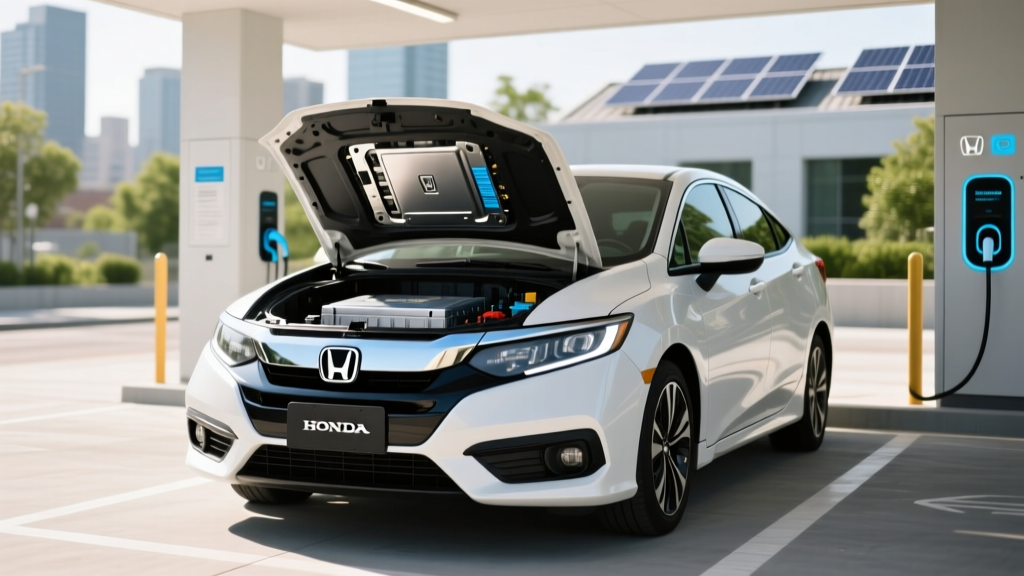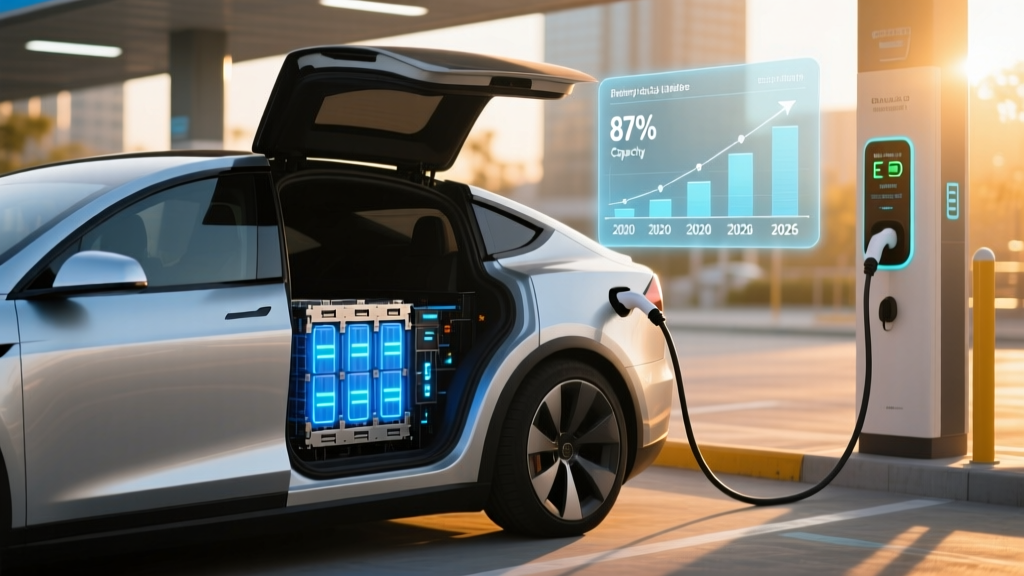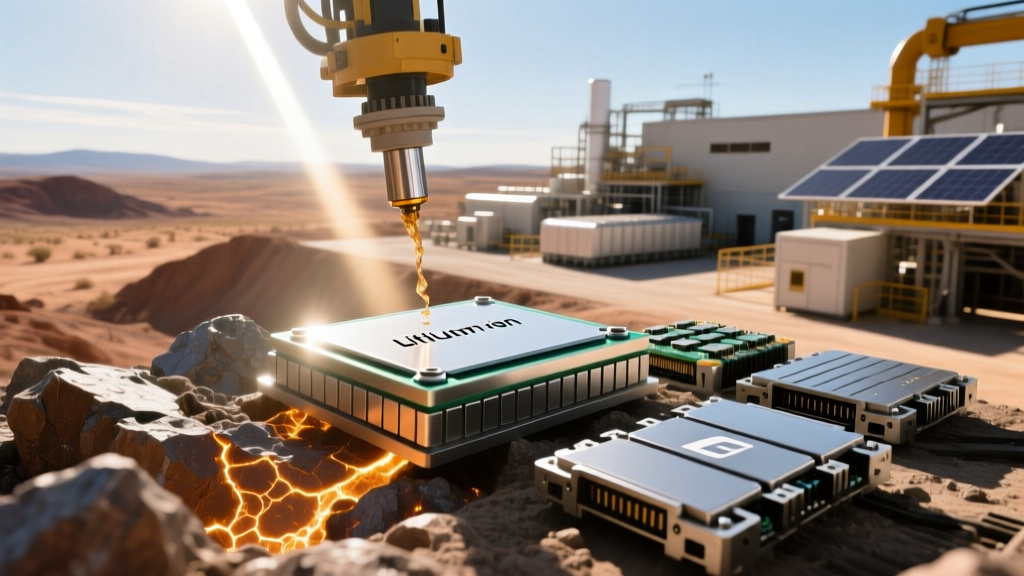
The electric vehicle battery conversation in 2026 is no longer just about chemistry — it is about geography. As the United States pushes to onshore critical mineral supply chains, lithium in Texas has emerged as a focal point for domestic battery production. Projects like Piedmont Lithium's Tennessee lithium hydroxide refinery and ongoing exploration of brine and hard-rock deposits across the Gulf Coast region are reshaping where the raw materials for your EV's battery pack come from — and, increasingly, whether you qualify for the federal §30D tax credit.
But supply chain origin is only one piece of the puzzle. Whether your next EV uses lithium iron phosphate (LFP) cells sourced from a Texas-adjacent refinery or nickel-manganese-cobalt (NMC) cells from a South Korean plant, the fundamentals of battery longevity, degradation, warranty coverage, and replacement cost remain the same. This guide covers everything you need to know about the high-voltage traction battery in your EV — from chemistry trade-offs to real-world degradation data.
Why Lithium in Texas Matters for EV Buyers
Texas sits at the intersection of several forces reshaping the EV battery landscape. The state's Permian Basin and Gulf Coast regions host significant lithium-bearing formations, including smectite clay deposits and oilfield brine that contains dissolved lithium. Companies such as Standard Lithium (operating in the Smackover Formation that extends from Arkansas into East Texas) and EnergySource Minerals have been advancing direct lithium extraction (DLE) technologies that can pull lithium from brine without traditional evaporation ponds.
For EV buyers, this matters because of the §30D federal tax credit. Under current IRS rules, a portion of the up-to-$7,500 credit depends on critical minerals being sourced from the U.S. or a free-trade-agreement partner. Domestically produced lithium helps automakers satisfy those sourcing thresholds, which in turn keeps more EV models eligible for the credit at the point of sale. You can review the latest sourcing requirements on the IRS clean vehicle credit page.
That said, Texas lithium production in 2026 is still scaling. Most lithium in current EV battery packs sold in the U.S. still originates from Australia (hard-rock spodumene), Chile and Argentina (brine), or China (refining). The Texas supply chain is a growing piece — not yet the dominant one.
LFP vs NMC: The Two Chemistries Powering Modern EVs
Almost every EV sold in the U.S. in 2026 uses one of two lithium-ion cathode chemistries: LFP (lithium iron phosphate) or NMC/NCA (nickel-manganese-cobalt / nickel-cobalt-aluminum). The chemistry in your pack determines your range, charging behavior, longevity, and even how you should charge at home.
| Attribute | LFP (Lithium Iron Phosphate) | NMC / NCA (Nickel-Based) |
|---|---|---|
| Energy Density (cell-level) | ~160–200 Wh/kg | ~230–300 Wh/kg |
| Typical Cycle Life | 3,000–5,000+ cycles | 1,000–2,500 cycles |
| Calendar Life | Excellent (slower degradation) | Good (moderate degradation) |
| Cold-Weather Performance | Weaker (slower charging below 32°F) | Better (more tolerant of cold) |
| Cost per kWh (cell) | Lower (~$70–90/kWh in 2026) | Higher (~$100–130/kWh in 2026) |
| Cobalt / Nickel Content | None (iron + phosphate) | Contains cobalt and/or nickel |
| Recommended Daily Charge Limit | 100% SoC is fine | 80% SoC for daily; 100% for trips |
| Notable Vehicles Using | Tesla Model 3 RWD, Model Y RWD, Ford Mustang Mach-E Select (LFP option) | Hyundai Ioniq 5, Kia EV6, Chevrolet Equinox EV, BMW i4, most long-range AWD trims |
What this means practically: If you prioritize maximum range and all-weather DC fast-charging speed, NMC packs (like the 77.4 kWh usable pack in the Hyundai Ioniq 5) deliver higher energy density and better cold-weather preconditioning. If you want a battery that can handle daily 100% charging with minimal degradation over 15+ years and costs less upfront, LFP is the stronger choice — provided you can accept roughly 10–15% less range per kilogram of battery weight.
How Long Do EV Batteries Actually Last?
The short answer: most EV traction batteries outlast the vehicle they are installed in. But the data tells a more nuanced story than marketing claims.
Based on aggregated fleet data and studies from sources including Geotab's long-term EV battery health research, here is what real-world degradation looks like across chemistries:
Typical Capacity Retention Over Time
| Timeframe | NMC/NCA Avg. Capacity Retention | LFP Avg. Capacity Retention | Notes |
|---|---|---|---|
| Year 1 / ~15,000 mi | 96–98% | 97–99% | Initial calibration loss |
| Year 3 / ~45,000 mi | 92–95% | 95–97% | Linear degradation phase |
| Year 5 / ~75,000 mi | 88–93% | 93–96% | Still well within warranty threshold |
| Year 8 / ~120,000 mi | 84–90% | 90–94% | Warranty period ends for most brands |
| Year 10 / ~150,000 mi | 80–88% | 88–93% | Still functional; noticeable range reduction |
| Year 15 / ~225,000 mi | 75–84% | 85–90% | Many vehicles retired before reaching this |
Key insight: Battery degradation is not linear. Most packs experience a steeper drop in the first year (2–4%), then settle into a slow, linear decline of roughly 1–2% per year. LFP packs tend to show a flatter curve, which is why Tesla offers LFP-equipped Model 3 RWD vehicles with the confidence of 100% daily charging recommendations.
A 2026 Hyundai Ioniq 5 SEL with a 77.4 kWh NMC pack, for example, might deliver 303 miles of EPA range when new. After five years and 75,000 miles, expect roughly 267–288 miles of usable range — a reduction most drivers barely notice day-to-day.
EV Battery Warranty Coverage: What's Protected
Federal law mandates a minimum battery warranty of 8 years / 100,000 miles for all EVs sold in the U.S., with a capacity retention threshold. Most automakers set that threshold at 70% of original capacity, though some are more generous. California and states that follow CARB rules require 10 years / 150,000 miles for certain components.
| Automaker | Warranty Term | Capacity Threshold | Chemistry Notes |
|---|---|---|---|
| Tesla (Model 3/Y RWD — LFP) | 8 yr / 100,000 mi | 70% | CATL LFP cells |
| Tesla (Model 3/Y LR — NMC) | 8 yr / 120,000 mi | 70% | Panasonic/LG NMC |
| Hyundai / Kia | 10 yr / 100,000 mi | 70% | SK On / LG NMC |
| Chevrolet (Equinox EV, Blazer EV) | 8 yr / 100,000 mi | 60% | Ultium NMC |
| Ford (Mustang Mach-E, F-150 Lightning) | 8 yr / 100,000 mi | 70% | SK On NMC / LFP options |
| BMW (i4, iX) | 8 yr / 100,000 mi | 70% | Samsung SDI NMC |
| Rivian (R1T, R1S) | 8 yr / 175,000 mi | 70% | Samsung SDI NMC |
What triggers a warranty claim: If your battery's State of Health (SoH) drops below the stated threshold within the warranty period, the manufacturer must repair or replace the pack — typically by swapping in a refurbished unit with capacity above the threshold. Complete failure (a dead pack) is rare but also covered. Note that the warranty covers capacity degradation, not cosmetic issues or damage from accidents, flooding, or unauthorized modifications.
EV Battery Replacement Cost: What to Expect
This is the question that generates the most anxiety — and the most misinformation. Here are the real numbers in 2026:
| Vehicle / Pack Size | Chemistry | Replacement Cost (Parts + Labor) | Likelihood of Needing It |
|---|---|---|---|
| Tesla Model 3 RWD (~60 kWh) | LFP | $10,000–$13,000 | Very low within 15 years |
| Hyundai Ioniq 5 (~77.4 kWh) | NMC | $14,000–$18,000 | Very low within 15 years |
| Ford F-150 Lightning Ext. Range (~131 kWh) | NMC | $22,000–$30,000 | Very low within 15 years |
| Chevrolet Silverado EV (~200 kWh) | NMC (Ultium) | $30,000–$40,000 | Very low within 15 years |
| BMW iX xDrive50 (~111.5 kWh) | NMC | $20,000–$26,000 | Very low within 15 years |
The honest context: According to data aggregated by Consumer Reports and warranty claim rates published by major automakers, fewer than 2–3% of EV battery packs require full replacement under warranty. The vast majority of packs retain 80%+ capacity well past 150,000 miles. When replacement is needed outside warranty, costs are declining roughly 8–12% per year as cell prices fall and the refurbished-pack market matures.
Also worth noting: module-level repair is increasingly common. Instead of replacing an entire pack, specialized shops can identify and swap a single degraded module for $2,000–$5,000 — a fraction of a full pack replacement. This is particularly viable for packs with modular architectures like the GM Ultium platform and older Nissan Leaf designs.
What Degrades an EV Battery — and How to Maximize Longevity
Battery degradation is driven by five primary factors. Understanding them lets you add years of useful life to your pack:
Battery Longevity Checklist
- State of Charge (SoC) habits: For NMC packs, keep daily charging between 20–80%. Reserve 100% charges for road trips and depart shortly after reaching full. LFP packs are an exception — manufacturers recommend charging to 100% at least weekly for accurate SoC calibration.
- DC fast-charging frequency: Occasional DC fast charging (50–350 kW) is fine. Daily fast charging accelerates degradation by roughly 0.5–1% additional capacity loss per year compared to Level 2 home charging. The heat generated during high-power charging is the primary stressor.
- Extreme temperature exposure: Sustained exposure to ambient temperatures above 95°F or below 10°F accelerates calendar degradation. Garage parking helps. Preconditioning your battery before fast charging (most EVs do this automatically when a Supercharger or DCFC is set as a navigation destination) reduces thermal stress.
- Depth of discharge: Frequently draining the pack below 10% SoC stresses cells. Try to plug in before hitting single-digit percentages.
- Storage conditions: If storing an EV for weeks, set the charge limit to ~50% SoC and keep the vehicle plugged in (the BMS will manage trickle maintenance). Never store at 100% or 0% for extended periods.
The single most impactful habit? Avoiding sustained high SoC on NMC packs. A 2024 study by battery analytics firm Recurrent Auto found that NMC packs routinely charged to 100% degraded roughly 2–3 percentage points faster over three years compared to those kept at 80% daily. For LFP, this effect is negligible.
Monitoring Your Battery's State of Health (SoH)
State of Health (SoH) is the percentage of your battery's original capacity that remains usable. A new EV starts at 100% SoH; a pack at 85% SoH holds 85% of its original kWh.
How to check SoH in 2026:
- In-vehicle displays: Tesla offers a battery health estimate in the service menu (Settings → Service → Battery Health Test). Hyundai/Kia provides SoH data through the dealer diagnostic tool, accessible on request. BMW's iDrive shows estimated range that adjusts with degradation but does not display a raw SoH percentage directly.
- OBD-II apps: Third-party apps like LeafSpy (Nissan), Scan My Tesla, and Car Scanner ELM OBD2 can pull SoH data from the battery management system (BMS) via the OBD-II port. Accuracy varies by vehicle.
- Dealer diagnostics: Any authorized dealer can run a full battery health report, usually during routine service visits. Request this if you are approaching a warranty threshold.
- Third-party services: Companies like Recurrent and Geotab offer fleet and individual battery health reports based on telematics data — increasingly used for pre-purchase inspections on used EVs.
If your SoH drops below the warranty threshold (typically 70%) within the covered period, contact the manufacturer or dealer immediately. Document your mileage, charging history, and any range-reduction observations.
Emerging Battery Technology: What's Next After Lithium-Ion
Two technologies dominate the forward-looking conversation — but neither is available in a production EV you can buy today:
Solid-state batteries: These replace the liquid electrolyte in current lithium-ion cells with a solid conductor (ceramic, sulfide, or polymer). The promise is 30–50% higher energy density, faster charging, and improved safety (no flammable electrolyte). Toyota has announced a solid-state battery targeting 2027–2028 production, initially in limited volumes for luxury models. Samsung SDI and QuantumScape are also advancing prototypes. Realistic timeline for mass-market availability: 2029–2032.
Silicon anode batteries: Current lithium-ion cells use graphite anodes. Replacing graphite with silicon can increase energy density by 20–40%. Companies like Sila Nanotechnologies and Group14 are already shipping silicon-dominant anode materials to battery manufacturers. Expect to see silicon-anode cells in premium EVs by 2027–2028, with broader adoption by 2030.
Both technologies still rely on lithium as a core element — which is exactly why domestic lithium sourcing, including lithium in Texas and the broader Smackover Formation, remains strategically important regardless of which chemistry wins the next decade.
Frequently Asked Questions
How long do EV batteries last in years and miles?
Most EV batteries retain 80–90% of their original capacity after 10 years or 150,000 miles. LFP packs tend to last longer on a cycle-life basis (3,000–5,000 cycles vs 1,000–2,500 for NMC). In practical terms, the battery will likely outlast the rest of the vehicle's useful life. Full replacements within the first 15 years are rare — fewer than 3% of packs require it based on warranty claim data.
How much does an EV battery cost to replace in 2026?
Replacement costs range from roughly $10,000 for a smaller LFP pack (e.g., Tesla Model 3 RWD, ~60 kWh) to $30,000–$40,000 for large packs like the Chevrolet Silverado EV's ~200 kWh Ultium battery. However, the vast majority of EV owners never need a full replacement. Module-level repairs ($2,000–$5,000) are an increasingly common alternative. Costs are declining 8–12% annually.
What does the EV battery warranty actually cover?
Federal law requires a minimum 8-year/100,000-mile warranty on EV batteries with a capacity retention threshold (usually 70% of original capacity). This covers degradation below the threshold and complete failures. It does not cover damage from accidents, flooding, or unauthorized modifications. Hyundai/Kia and Rivian offer extended terms (10 yr/100,000 mi and 8 yr/175,000 mi respectively).
How do I check and maximize my EV battery health?
Check SoH through your vehicle's service menu, an OBD-II diagnostic app, or a dealer health report. To maximize longevity: for NMC packs, charge to 80% daily and avoid sustained 100% SoC; for LFP packs, charge to 100% weekly for calibration. Minimize daily DC fast charging, precondition before fast charging, avoid extreme SoC during long storage, and park in shade or a garage when possible.
LFP vs NMC — which battery chemistry is better for me?
Choose LFP if you want the longest cycle life, lower cost, no-cobalt sourcing, and the convenience of daily 100% charging — and you can accept ~10–15% less range per kWh of battery weight and slightly slower cold-weather charging. Choose NMC if you need maximum range in a lighter pack, better cold-weather fast-charging performance, and you are willing to manage daily charge limits around 80%. Both chemistries are proven and reliable; the right choice depends on your driving pattern.
Does lithium sourced from Texas affect my EV tax credit eligibility?
Potentially, yes. The §30D federal tax credit includes a critical minerals requirement that is phased up through 2026 and beyond. Domestically extracted lithium counts toward the U.S.-sourced threshold. As Texas and Gulf Coast lithium production scales, more battery packs may qualify. However, eligibility also depends on MSRP caps, buyer income limits, and battery component sourcing rules. Always check the latest requirements on IRS.gov and consult a tax professional for your specific situation.