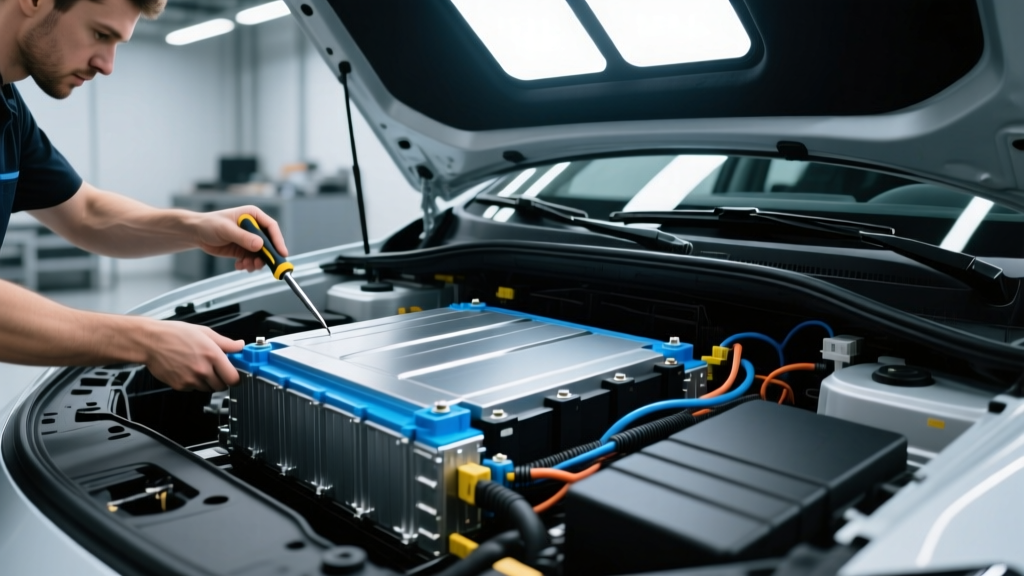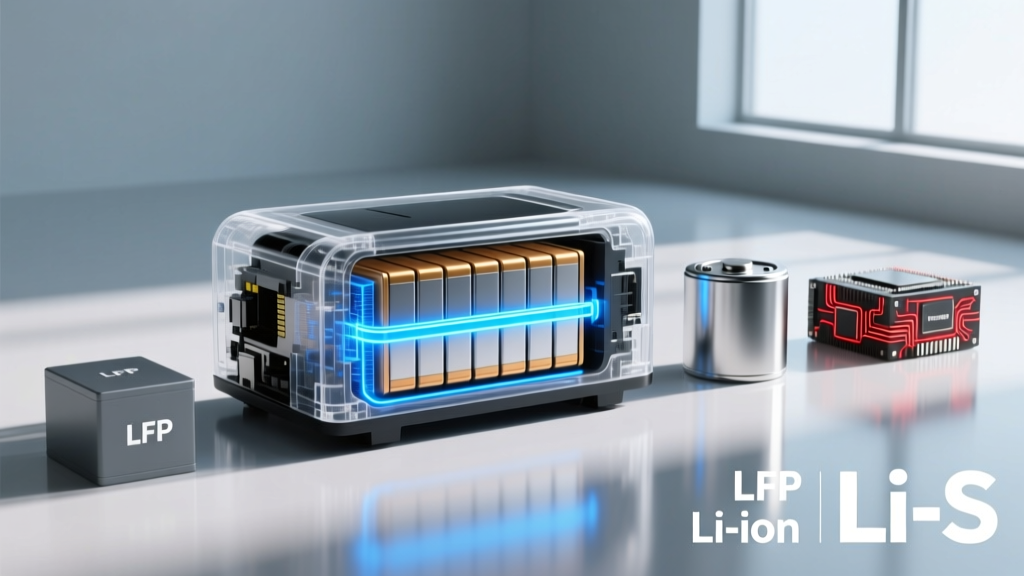
Every few months, a headline promises that lithium sulfur (Li-S) batteries will revolutionize electric vehicles. The theoretical numbers are staggering: up to five times the energy density of today's lithium-ion cells, lighter packs, cheaper raw materials, and 600+ mile ranges from compact vehicles. But for EV buyers shopping in 2026, the question isn't what might exist in a lab — it's what's actually powering cars on dealer lots and how long it will last.
This guide breaks down where lithium sulfur technology actually stands, how it compares to the chemistries you can buy today (LFP and NMC/NCA), and what every current or prospective EV owner needs to know about battery degradation, warranties, replacement costs, and health monitoring.
Today's EV Battery Chemistries: LFP vs. NMC/NCA
Before evaluating lithium sulfur, you need to understand the two dominant chemistries in the current EV market. Nearly every EV sold in the US in 2026 uses either Lithium Iron Phosphate (LFP) or Nickel Manganese Cobalt (NMC) / Nickel Cobalt Aluminum (NCA) cathode chemistry.
LFP powers the standard-range Tesla Model 3 and Model Y, base Ford Mustang Mach-E Select, many Rivian EDV delivery vans, and a growing list of Chinese-market vehicles entering global supply chains. NMC and NCA dominate extended-range and performance trims — think the Chevy Silverado EV, Hyundai Ioniq 5, BMW iX, and Tesla's long-range and performance variants.
| Attribute | LFP (Lithium Iron Phosphate) | NMC/NCA (Nickel-based) |
|---|---|---|
| Energy Density (cell-level) | 160–200 Wh/kg | 250–300 Wh/kg |
| Cycle Life (to 80% SoH) | 3,000–6,000+ cycles | 1,000–2,500 cycles |
| Cold-Weather Performance | Moderate — greater range loss below 20°F | Better low-temperature discharge capability |
| Cost (per kWh, cell-level) | ~$75–$95/kWh (2026 estimates) | ~$100–$130/kWh (2026 estimates) |
| Thermal Stability | Excellent — less prone to thermal runaway | Good, but requires more active thermal management |
| Cobalt/Nickel Content | None — iron and phosphate only | Contains nickel, cobalt, and/or aluminum |
| Recommended SoC Range | Can charge to 100% daily (Tesla recommends it) | Best kept 20–80% for daily use |
| Typical Use Case | Standard range, fleet, budget-oriented EVs | Long range, performance, premium EVs |
The trade-off is straightforward: LFP gives you longer lifespan, lower cost, and better safety at the expense of range per pound. NMC/NCA gives you more miles per kilogram of battery but degrades faster under heavy cycling and costs more due to nickel and cobalt sourcing.
For most buyers who charge at home nightly and drive under 40 miles a day, LFP is the pragmatic pick. For road-trippers and those in cold climates who need maximum range from the smallest possible pack, NMC/NCA remains the better choice in 2026.
Where Lithium Sulfur Stands in 2026
Lithium sulfur replaces the nickel/cobalt/manganese/iron cathode with elemental sulfur, paired with a lithium-metal or lithium-alloy anode. The theoretical energy density exceeds 500 Wh/kg at the cell level — roughly double the best NMC cells and nearly triple LFP.
The raw-materials story is compelling: sulfur is abundant, cheap (a byproduct of petroleum refining), and geopolitically unconcentrated. A viable Li-S cell could slash battery pack costs below $60/kWh, a threshold that would make EVs cheaper than ICE vehicles at every segment without subsidies.
So why can't you buy a Li-S EV today? Three persistent engineering challenges:
- Cycle life: The "polysulfide shuttle" effect causes sulfur to dissolve into the electrolyte during cycling, leading to rapid capacity fade. Lab prototypes have historically managed 100–300 cycles before significant degradation — far short of the 1,000+ cycles needed for automotive use.
- Lithium metal anode stability: Dendrite formation on the lithium-metal anode during charging creates short-circuit risks and consumes lithium inventory, further reducing cycle life.
- Low Coulombic efficiency: Each charge-discharge cycle loses a small percentage of active material, compounding over hundreds of cycles.
Companies like Oxis Energy (now defunct after entering administration in 2021) and Sion Power demonstrated prototype cells with improving metrics, and research groups at Stanford, Monash, and various Chinese universities have published promising results with sulfur-car composite cathodes and protective anode coatings. As of 2026, however, no automaker has announced a production vehicle with Li-S cells. The technology remains in the advanced R&D and early prototype-validation stage, with credible automotive commercialization timelines pointing to the 2030s at the earliest.
If Li-S matures, its first automotive applications will likely be in weight-sensitive segments: long-range luxury sedans, electric aircraft, and heavy-duty trucks where the energy-density advantage justifies the engineering complexity.
How Long Do EV Batteries Actually Last?
This is the single most common question from prospective EV buyers, and the answer is better than most expect. Modern EV batteries are designed to outlast the vehicles they're installed in — not in every case, but in the vast majority.
Real-World Degradation Data Points (aggregated from fleet studies and owner reports):
- Tesla Model 3/Y (NMC/NCA, 2018–2023): Average ~10–12% capacity loss at 100,000 miles. Tesla's 2023 Impact Report cited an average of 12% degradation at 200,000 miles for Model S/X packs.
- Tesla Model 3 RWD (LFP, 2021–present): Early data suggests under 5% loss at 60,000 miles, though longer-term data is still accumulating.
- Chevy Bolt EV (NMC, 2017–2023): Recalled for fire risk (manufacturing defect, not normal degradation). Non-recalled packs show ~8–10% loss at 80,000 miles.
- Nissan LEAF (passively cooled NMC/LMO, 2011–present): Earlier generations showed 20–25% loss at 80,000 miles due to lack of active thermal management. Newer LEAF models with improved thermal protocols fare better.
- Hyundai/Kia E-GMP platform (Ioniq 5, EV6, NMC): Limited long-term data (introduced 2022), but early reports indicate under 5% loss at 40,000 miles with active liquid cooling.
The pattern is clear: liquid-cooled packs with active thermal management degrade far more slowly than passively cooled designs. Most modern EVs from 2020 onward fall into the liquid-cooled category, and the industry consensus is that a well-maintained pack should retain 80–90% of its original capacity at 150,000 miles.
For context, the average American drives about 14,000 miles per year according to the Federal Highway Administration. At that rate, reaching 150,000 miles takes roughly 11 years — well within the expected service life of most modern EV batteries.
Battery Warranty Terms: What's Actually Covered
Federal law mandates that EV batteries carry a minimum warranty of 8 years / 100,000 miles (extended to 10 years / 150,000 miles in California Air Resources Board states). Most automakers meet or exceed this baseline. Here's how the major brands stack up in 2026:
| Manufacturer | Warranty Period | Capacity Retention Threshold | Notes |
|---|---|---|---|
| Tesla (Model 3/Y RWD — LFP) | 8 yr / 100,000 mi | 70% minimum | Standard range coverage |
| Tesla (Model 3/Y LR & Performance) | 8 yr / 120,000 mi | 70% minimum | Higher mileage threshold |
| Tesla (Model S/X) | 8 yr / 150,000 mi | 70% minimum | Longest Tesla coverage |
| Hyundai (Ioniq 5/6) | 10 yr / 100,000 mi | 70% minimum | Among the longest time periods |
| Kia (EV6/EV9) | 10 yr / 100,000 mi | 70% minimum | Matches Hyundai terms |
| Ford (Mach-E, F-150 Lightning) | 8 yr / 100,000 mi | 70% minimum | Standard across Ford EVs |
| GM (Chevy, Cadillac EVs) | 8 yr / 100,000 mi | 70% minimum | Ultium platform coverage |
| Rivian (R1T/R1S) | 8 yr / 175,000 mi | 70% minimum | Highest mileage threshold in industry |
| BMW (iX/i4) | 8 yr / 80,000 mi | 70% minimum | Lower mileage limit than most |
The critical detail: warranties cover capacity below the threshold, not any degradation at all. If your 300-mile EPA-rated EV drops to 215 miles (roughly 72% retention) after six years, you're above the 70% floor and the warranty won't trigger. In practice, very few modern liquid-cooled EVs fall below 70% within the warranty period under normal use.
Warranties typically exclude damage from accidents, flooding, unauthorized modifications, or using the vehicle as a stationary power source beyond manufacturer-approved V2H/V2L functions. Always read the fine print in your owner's manual.
EV Battery Replacement Cost: What You'll Actually Pay
Battery replacement is the nightmare scenario most EV skeptics point to. The costs are real, but context matters enormously. Here's what replacement actually looks like in 2026:
| Vehicle / Pack Size | Battery Capacity | Replacement Cost (parts + labor) | When Typically Needed |
|---|---|---|---|
| Tesla Model 3 RWD (LFP) | ~57 kWh usable | $12,000–$16,000 | Rarely before 200,000+ mi |
| Tesla Model Y Long Range | ~75 kWh usable | $16,000–$22,000 | Rarely before 200,000+ mi |
| Ford F-150 Lightning Ext. Range | ~131 kWh usable | $25,000–$35,000 | Rarely before 150,000+ mi |
| Chevy Bolt EV (2017–2022) | ~60–65 kWh usable | $14,000–$18,000 (post-recall) | Varies — recall replacements covered |
| Hyundai Ioniq 5 | ~77 kWh usable | $18,000–$24,000 | Rarely before 150,000+ mi |
| Nissan LEAF (40 kWh pack) | ~38 kWh usable | $8,000–$12,000 | 80,000–120,000 mi (older passively cooled) |
| BMW iX xDrive50 | ~105 kWh usable | $25,000–$32,000 | Rarely before 150,000+ mi |
Several important caveats:
- Most packs never need full replacement. Module-level repair (replacing individual degraded modules within the pack) is increasingly available and costs $2,000–$6,000 depending on the vehicle and number of modules replaced.
- Used and refurbished packs are becoming available as early EVs reach end-of-life. A refurbished Bolt pack might cost $6,000–$9,000 installed vs. $14,000+ for new.
- Cell-level battery costs continue to decline. BloombergNEF data shows pack-level prices falling from ~$1,200/kWh in 2010 to roughly $120–$140/kWh by 2025–2026. Replacement costs will follow this trend.
- If the failure occurs within the warranty period and meets the capacity threshold, replacement is covered at no cost to the owner.
The bottom line: battery replacement is a real expense, but it's comparable to an engine or transmission replacement on an ICE vehicle — something that can happen but rarely does on a well-maintained modern car. The vast majority of EV owners will sell or trade their vehicle long before the battery needs replacement.
Factors That Accelerate (or Slow) Battery Degradation
Not all miles are created equal when it comes to battery wear. Understanding what stresses your pack helps you make informed choices about charging habits and driving patterns.
Factors That Accelerate Degradation:
- Frequent DC fast charging above 150 kW: High-current charging generates internal heat and accelerates electrolyte decomposition. Occasional road-trip fast charging is fine; daily DCFC sessions will measurably increase degradation over years.
- Sustained high State of Charge: Storing an NMC/NCA battery at 100% SoC for days or weeks stresses the cathode. LFP is more tolerant of 100% SoC storage, which is why Tesla recommends periodic full charges for LFP packs (for cell-balancing).
- Deep discharges to 0%: Dropping below ~5% SoC stresses the anode copper current collector. The built-in buffer (most EVs have 2–5 kWh of hidden capacity below the displayed 0%) provides some protection, but regularly running the battery to near-empty is not ideal.
- Extreme heat exposure: Sustained ambient temperatures above 95°F, combined with high SoC, accelerate calendar degradation. This is why hot-climate LEAFs degraded faster than those in temperate regions.
- Extreme cold charging without preconditioning: Charging a frozen battery (below ~32°F) without warming it first can cause lithium plating on the anode, permanently reducing capacity. Most modern EVs with preconditioning (Tesla, Hyundai E-GMP, Ford) mitigate this automatically.
Habits That Maximize Battery Life:
- Charge to 80% daily for NMC/NCA; 100% is fine for LFP (follow your manufacturer's guidance).
- Use Level 2 home charging as your primary charging method — the slower charge rate is gentler on cells.
- Enable battery preconditioning when navigating to a DC fast charger.
- Avoid leaving the vehicle at 100% SoC for extended periods (multiple days) unless it's an LFP pack.
- Park in shade or a garage during hot summers when possible.
- Don't stress about occasional 100% charges for road trips — the impact of one full charge is negligible. It's sustained high SoC storage that matters.
How to Check and Monitor Your Battery's State of Health
State of Health (SoH) is the percentage of your battery's original usable capacity that remains available. A new EV starts at 100% SoH; a pack with 85% SoH that originally delivered 300 EPA miles will now deliver roughly 255 miles.
Here's how owners can monitor SoH in 2026:
- Native vehicle displays: Tesla shows battery health indirectly through range estimates. The Hyundai Ioniq 5 and Kia EV6 display battery health percentage in the EV settings menu. Ford's Sync 4 includes a battery health indicator on the F-150 Lightning.
- OBD-II diagnostic apps: Tools like Leaf Spy (Nissan LEAF), Scan My Tesla, and Carista can read detailed battery telemetry including individual cell voltages, pack temperature, and estimated SoH. These connect via Bluetooth OBD-II dongles (~$25–$40 for the hardware).
- Dealer diagnostic reports: Request a battery health report during service visits. Most dealerships can pull a detailed SoH reading, though they may charge a diagnostic fee ($50–$150) outside of warranty work.
- Third-party services: Companies like Geotab (fleet-focused) and Recurrent (consumer-facing, free for many EV models) provide battery health tracking based on telematics data. Recurrent's database of over 15,000 EVs is a valuable benchmarking tool.
A useful rule of thumb: if your vehicle's displayed range at 100% SoC (for LFP) or at your typical charge limit (for NMC/NCA) has dropped more than 10% from its original value within the first three years, schedule a dealer diagnostic. That rate of degradation is above normal and may indicate a defective module or thermal management issue.
Beyond Lithium Sulfur: Solid-State, Silicon Anode, and What's Next
Li-S isn't the only advanced chemistry vying to replace today's lithium-ion cells. Here's where the other major contenders stand as of 2026:
Solid-state batteries replace the liquid electrolyte with a solid ceramic, polymer, or sulfide-based conductor. This enables the use of lithium-metal anodes (boosting energy density) while reducing fire risk. Toyota has announced solid-state EV prototypes targeting 2027–2028 production, and Samsung SDI is building a pilot production line. However, manufacturing scalability and cost remain major hurdles. Realistic mass-market availability: 2029–2032.
Silicon anode batteries replace graphite anodes with silicon, which can store roughly 10 times more lithium ions per gram. Companies like Sila Nanotechnologies (supplying Mercedes-Benz for the G-Class EV) and Group14 (supplying Porsche) have begun limited commercial production. The current implementation uses silicon-carbon composites to manage silicon's tendency to swell during charging. Expect silicon-dominant anodes to incrementally increase energy density by 15–25% over the next 3–5 years rather than delivering a single breakthrough moment.
Sodium-ion batteries use abundant sodium instead of lithium. CATL began shipping sodium-ion packs for small Chinese-market EVs in 2024–2025. Energy density is lower than LFP (~140–160 Wh/kg), making Na-ion best suited for budget city cars and stationary storage. US-market adoption remains uncertain due to the limited range these packs currently enable.
For buyers shopping today, none of these technologies are available in production vehicles sold in the US. Waiting for a breakthrough chemistry means waiting years — and missing out on the fuel savings, performance, and incentives available right now with mature LFP and NMC technology.
Frequently Asked Questions
How long do EV batteries last in years and miles?
Most modern liquid-cooled EV batteries (2020 and newer) are designed to retain 70–90% of their original capacity at 150,000–200,000 miles, which translates to roughly 11–15 years of average American driving. LFP packs generally outlast NMC/NCA packs in cycle-life terms, though real-world longevity depends heavily on charging habits, climate, and thermal management quality.
How much does an EV battery cost to replace?
Full pack replacement ranges from approximately $8,000 for a small pack (Nissan LEAF 40 kWh) to $35,000 for a large pack (Ford F-150 Lightning 131 kWh), including labor. However, most modern EV batteries never require full replacement within the vehicle's useful life. Module-level repairs ($2,000–$6,000) are increasingly available, and costs continue to decline as cell prices fall and refurbished packs enter the market.
What does the EV battery warranty actually cover?
Federally mandated minimum coverage is 8 years / 100,000 miles (10 years / 150,000 miles in CARB states). The warranty guarantees that the battery will retain at least 70% of its original capacity. If it falls below that threshold within the warranty period, the manufacturer will repair or replace it at no cost. Warranties typically exclude accident damage, flooding, unauthorized modifications, and misuse.
How do I check my EV battery's health?
Many 2026 EVs display battery health percentage directly in the vehicle's settings menu. For more detailed data, OBD-II diagnostic apps like Leaf Spy, Scan My Tesla, or Carista can read cell-level voltages and estimated State of Health. You can also request a battery health report from your dealer during service visits, or use free services like Recurrent to track your battery over time.
LFP vs NMC — which battery chemistry is better?
Neither is universally better; they serve different needs. Choose LFP if you want maximum cycle life, lower cost, the ability to charge to 100% daily, and don't need maximum range (standard-range trims, city commuting, fleet use). Choose NMC/NCA if you need the longest possible range per charge, better cold-weather performance, or are buying a performance/long-range trim. Both chemistries are proven and reliable in 2026.
Will lithium sulfur batteries be available in EVs soon?
Not in the near term. As of 2026, lithium sulfur remains in the advanced research and prototype stage, with cycle life and anode stability challenges yet to be fully solved at automotive scale. Credible commercialization timelines point to the 2030s at the earliest. Current buyers should focus on the mature, proven LFP and NMC/NMC chemistries available today.
Does fast charging damage my EV battery?
Occasional DC fast charging (road trips, a few times per month) has a minimal impact on battery health. However, daily use of high-power DC fast charging (150+ kW) will measurably accelerate degradation over years compared to primarily using Level 2 home charging. Modern EVs with active thermal management and preconditioning mitigate much of the stress, but slower charging is always gentler on cells.
For authoritative data on EV efficiency and range, refer to the EPA's fueleconomy.gov database. For current federal EV tax credit eligibility rules under IRS §30D, consult the IRS clean vehicle credits page — note that income caps, MSRP limits, and battery sourcing requirements apply and rules may change annually.