The Promise of Lithium Sulfur — and Where It Stands Today
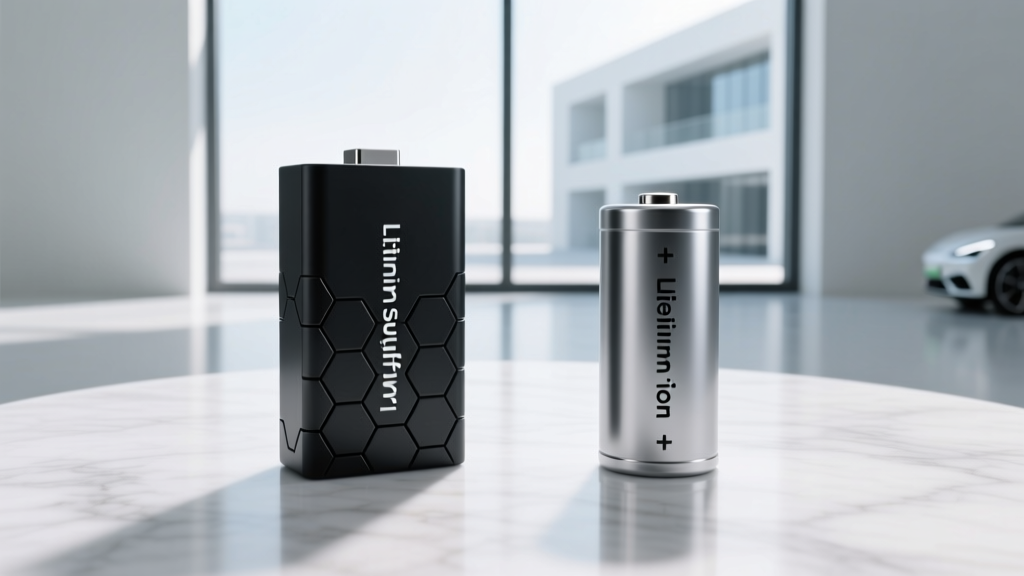
If you have been following EV battery headlines, you have likely encountered the term lithium sulfur battery (Li-S). Promising theoretical energy densities up to five times greater than today's lithium-ion cells, Li-S chemistry has been touted as the next leap for electric vehicles. But as of 2026, no production EV uses a lithium sulfur battery pack, and commercialization timelines remain uncertain.
What does this mean for buyers deciding on an EV today? Understanding how Li-S compares to the chemistries actually powering the vehicles you can buy right now — LFP (lithium iron phosphate) and NMC/NCA (nickel manganese cobalt / nickel cobalt aluminum) — is essential for making a grounded purchase decision rather than waiting on a technology that may not arrive in showrooms for years.
This guide breaks down current battery chemistries with hard data, real degradation figures, warranty coverage, replacement costs, and care practices — then puts lithium sulfur in context as an emerging technology worth watching but not waiting for.
LFP vs NMC/NCA: The Chemistries You Can Actually Buy
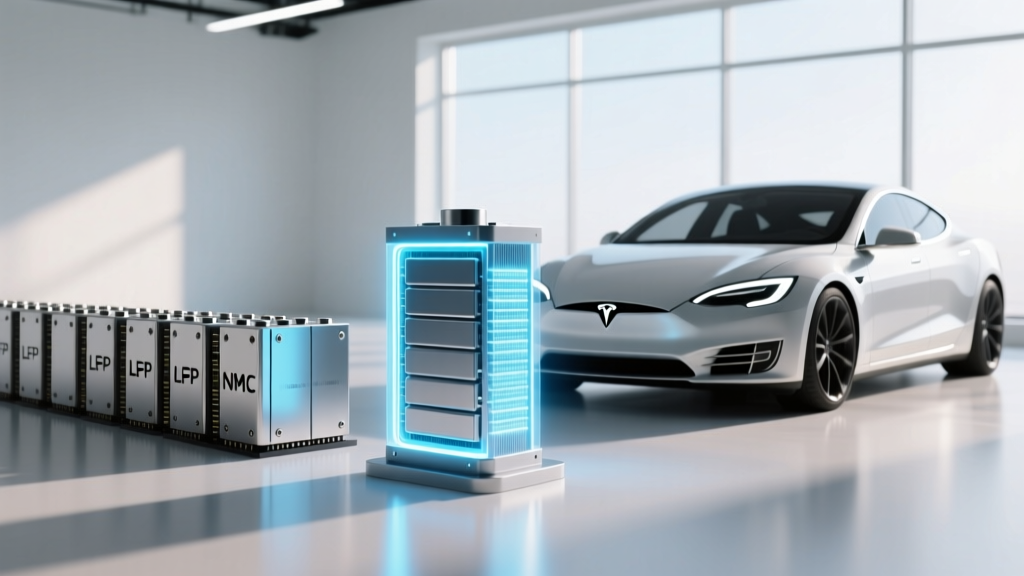
Every EV sold in the U.S. in 2026 uses one of two dominant cathode chemistries: LFP or NMC (sometimes NCA in Tesla and select Hyundai/Kia applications). The differences are significant and affect range, longevity, cold-weather behavior, and price.
| Attribute | LFP (Lithium Iron Phosphate) | NMC / NCA (Nickel-based) |
|---|---|---|
| Energy Density (cell-level) | ~160–180 Wh/kg | ~220–300 Wh/kg |
| Typical Pack Sizes (2026 EVs) | 50–77 kWh (Tesla Model 3 RWD, BYD, base Ford Mustang Mach-E) | 75–130+ kWh (Model Y LR, Rivian, Hyundai Ioniq 5 LR, GMC Hummer EV) |
| Cycle Life (to 80% SoH) | 3,000–5,000+ cycles | 1,000–2,000 cycles |
| Cold-Weather Range Loss (20°F) | ~30–40% reduction | ~20–30% reduction |
| DC Fast Charge Tolerance | Excellent — handles frequent 100% SoC and high-rate charging well | Good — manufacturers recommend 80% daily cap; high-rate charging accelerates degradation slightly |
| Cobalt / Nickel Content | None — zero cobalt, zero nickel | Contains nickel and often cobalt (reduced in newer formulations) |
| Cost (cell-level, $/kWh) | ~$65–85/kWh (2026 estimates) | ~$95–130/kWh (2026 estimates) |
| Best For | Standard-range models, fleet/high-mileage use, budget-conscious buyers, hot climates | Long-range models, cold-climate drivers, performance trims, towing-heavy use |
Where Lithium Sulfur Battery Technology Stands in 2026
Lithium sulfur cells use a sulfur-based cathode and a lithium metal anode, theoretically achieving 500–600 Wh/kg at the cell level — roughly double the best NMC cells and triple LFP. In laboratory settings, researchers have demonstrated Li-S cells exceeding 400 Wh/kg.
The barriers to commercialization, however, remain substantial:
- Polysulfide shuttle effect: Sulfur dissolves into the electrolyte during cycling, causing rapid capacity fade. Current lab cells typically achieve 100–300 cycles before significant degradation — far below the 1,000+ minimum needed for automotive use.
- Lithium metal anode instability: Dendrite formation on the lithium anode poses safety risks and reduces cycle life.
- Low volumetric energy density: While gravimetric density (Wh/kg) is excellent, sulfur cathodes are bulky, partially offsetting weight advantages in pack-level packaging.
- Manufacturing scale: No gigafactory currently produces Li-S cells at automotive scale. Companies like Oxis Energy (now defunct) and Sion Power have pivoted toward aerospace and defense applications where cost-per-cycle matters less than weight savings.
How Long Do EV Batteries Actually Last?
The most common fear among prospective EV buyers is premature battery failure. Real-world data consistently shows this fear is overstated for modern packs.
According to long-term fleet data published by Recurrent Auto and manufacturer-reported figures, here is what degradation looks like in practice:
| Mileage | LFP Pack (e.g., Tesla Model 3 RWD) | NMC Pack (e.g., Model Y LR, Ioniq 5) | Early-Gen NMC (2013–2017 Leaf, Bolt) |
|---|---|---|---|
| 30,000 mi / 3 years | ~2–4% loss | ~4–7% loss | ~8–12% loss |
| 60,000 mi / 5 years | ~4–7% loss | ~7–11% loss | ~14–20% loss |
| 100,000 mi / 8 years | ~6–10% loss | ~10–15% loss | ~20–30% loss (passive-cooled packs) |
| 150,000 mi / 10+ years | ~10–15% loss (projected) | ~15–22% loss (projected) | Many replaced under warranty |
Key context: a 10% loss on a 75 kWh NMC pack with an EPA 320-mile range means roughly 288 miles of range at 100,000 miles — still entirely practical for daily driving and road trips. Most modern liquid-cooled packs (standard on all 2026-model EVs except the Nissan Leaf) are engineered to retain 70–80% capacity well beyond 150,000 miles.
Early-generation EVs like the 2011–2017 Nissan Leaf suffered accelerated degradation because they used passive air cooling rather than liquid thermal management. This is no longer representative of the market. Every major 2026 EV — from the Chevy Equinox EV to the Rivian R1T — uses active liquid cooling and heating to keep cells within optimal temperature ranges.
Battery Warranty Coverage: What Is Actually Protected?
Federal law mandates a minimum 8-year / 100,000-mile battery warranty for all EVs sold in the U.S., with California Air Resources Board (CARB) states requiring 10 years / 150,000 miles. Most manufacturers exceed the federal floor.
| Manufacturer | Warranty Term | Capacity Retention Threshold | Notes |
|---|---|---|---|
| Tesla (Model 3 / Y RWD — LFP) | 8 yr / 100,000 mi | 70% | Includes drive unit; CARB states get 10/150k |
| Tesla (Model Y LR / Performance — NMC) | 8 yr / 120,000 mi | 70% | Longer mileage cap on LR/Performance trims |
| Hyundai / Kia (Ioniq 5, EV6, EV9) | 10 yr / 100,000 mi | 70% | Among the longest term in the industry |
| Ford (Mustang Mach-E, F-150 Lightning) | 8 yr / 100,000 mi | 70% | Transferable to second owner |
| GM (Equinox EV, Blazer EV, Silverado EV) | 8 yr / 100,000 mi | 70% | Ultium platform; covers battery and drive components |
| Rivian (R1T, R1S) | 8 yr / 175,000 mi | 70% | Highest mileage cap among mainstream OEMs |
| Volkswagen (ID.4, ID.7) | 8 yr / 100,000 mi | 70% | Standard federal coverage |
The 70% capacity retention threshold is critical: the warranty replaces or repairs the battery only if measured State of Health drops below 70% within the term. A pack at 72% SoH at year 7 is functioning within warranty spec, even though you have lost roughly 8–10% of your original range. In practice, very few liquid-cooled packs from major OEMs have breached the 70% threshold within the warranty period.
EV Battery Replacement Cost: Numbers and Context
When a battery does need replacement — typically due to a manufacturing defect, physical damage, or (rarely) degradation beyond the warranty threshold — costs remain significant but are trending downward.
| Vehicle | Pack Size | Chemistry | Estimated Replacement Cost (Parts + Labor) |
|---|---|---|---|
| Tesla Model 3 RWD | ~60 kWh | LFP | $12,000–$16,000 |
| Tesla Model Y Long Range | ~82 kWh | NMC | $16,000–$22,000 |
| Hyundai Ioniq 5 Long Range | 77.4 kWh | NMC | $14,000–$19,000 |
| Ford F-150 Lightning Extended Range | ~131 kWh | NMC | $25,000–$35,000 |
| Chevy Equinox EV | ~85 kWh | NMC (Ultium) | $15,000–$20,000 |
| Rivian R1T (Dual-Motor Max Pack) | ~149 kWh | NMC | $28,000–$38,000 |
Important context: most EV owners never pay for a battery replacement. According to data from Consumer Reports and Recurrent, the vast majority of EV battery replacements occur under warranty. Out-of-warranty replacements are most common on early-generation vehicles (2011–2017 Leafs, early Bolts with recall-affected LG cells) rather than modern liquid-cooled packs.
Additionally, module-level repair is increasingly available. Rather than replacing an entire pack, specialized EV shops can identify and swap degraded modules for $3,000–$8,000, depending on the vehicle.
Factors That Accelerate — or Preserve — Battery Life
Not all miles are equal when it comes to battery wear. The following factors have the largest measurable impact on long-term State of Health:
- Daily charging limit: Set to 80% for NMC packs; LFP packs can (and should) be charged to 100% regularly per Tesla and BYD guidance to maintain cell balancing.
- DC fast charging frequency: Occasional road-trip use is fine. Daily reliance on 150+ kW DCFC without preconditioning accelerates degradation by an estimated 1–3% additional over 5 years vs. Level 2 home charging (NREL research).
- Preconditioning: Always enable battery preconditioning before DC fast charging (automatic when using the car's built-in navigation to a charger on most 2026 models). Charging a cold battery at high power causes lithium plating.
- Extreme heat exposure: Avoid leaving the car parked at 100% SoC in 95°F+ heat for extended periods. If you must park in heat, keep SoC around 50–60%.
- Storage: For long-term parking (2+ weeks), leave the pack at ~50% SoC. Avoid both 100% and near-0% storage.
- Regenerative braking: Standard regen settings have negligible impact on battery life. No need to limit regen to "protect" the pack.
How to Check Your Battery's State of Health
Monitoring your EV's State of Health (SoH) is easier than many owners realize. Here are the primary methods available in 2026:
- In-car displays: Tesla, Hyundai/Kia, and Rivian show battery health metrics directly in the vehicle settings menu. Tesla's service mode (accessible via a hidden tap sequence) provides detailed SoH percentages and individual module voltage data.
- OBD-II diagnostic apps: Apps like Scan My Tesla, Leaf Spy (for Nissan), and ABRP OBD read battery management system (BMS) data via a Bluetooth OBD-II dongle ($30–$60 hardware). These provide SoH percentage, cell voltage spread, and charge/discharge cycle counts.
- Manufacturer service centers: Any dealership or mobile service visit includes a battery health report. Request one at each annual service — it is typically free and documents capacity for warranty purposes.
- Third-party platforms: Services like Recurrent offer free battery health reports by connecting to your vehicle's telematics data (with permission). These reports compare your pack's degradation against a fleet of identical vehicles.
A healthy SoH reading shows cell voltage spread under 30 mV at rest and capacity within 2–3% of the BMS-reported figure. If you see cell spread exceeding 100 mV or sudden range drops that don't correlate with temperature, schedule a diagnostic visit.
Beyond Lithium Sulfur: Other Emerging Battery Technologies
Lithium sulfur is not the only next-generation chemistry in development. A realistic timeline for the technologies most likely to reach production EVs:
- Solid-state batteries: Toyota, Samsung SDI, and QuantumScape are targeting limited production in 2027–2029, initially in premium models. Solid-state cells promise 350–500 Wh/kg, faster charging (10–80% in under 10 minutes), and improved safety. Volume production for mainstream EVs is a 2030+ proposition.
- Silicon-dominant anodes: Already in limited use (GM Ultium cells incorporate silicon in the anode). Companies like Sila Nanotechnologies and Group14 are scaling production. Expect 10–20% energy density improvements in NMC cells by 2027–2028 as silicon anode content increases.
- Sodium-ion batteries: CATL and BYD have begun production of sodium-ion cells for low-cost, short-range EVs in China. Energy density (~140–160 Wh/kg) is below LFP, but raw material costs are dramatically lower. U.S. availability remains uncertain and likely 2028+ at earliest.
None of these technologies are available in a 2026-model EV you can purchase today. The LFP and NMC cells in current vehicles represent mature, well-understood chemistries with proven track records spanning hundreds of billions of miles of real-world operation.
Frequently Asked Questions
How long do EV batteries last in years and miles?
Modern liquid-cooled EV batteries (LFP or NMC) are designed to retain 70–80% of original capacity for 150,000–200,000+ miles and 10–15+ years. Most packs will outlast the vehicle's body, interior, and suspension components. Early-generation passively cooled packs (2011–2017 Nissan Leaf) degraded faster, but this is not representative of current technology.
How much does an EV battery cost to replace?
Out-of-warranty replacement costs range from approximately $12,000 for a 60 kWh LFP pack (Tesla Model 3 RWD) to $35,000+ for a 130+ kWh pack (F-150 Lightning Extended Range, Rivian Max Pack). However, the vast majority of replacements occur under the 8-year/100,000-mile federal warranty at no cost to the owner. Module-level repair can reduce costs to $3,000–$8,000.
What does the EV battery warranty actually cover?
Federal law requires 8 years / 100,000 miles of battery coverage (10 years / 150,000 miles in CARB states). The warranty covers defects and degradation below a specified threshold — typically 70% of original capacity. It does not cover damage from accidents, flooding, or unauthorized modifications. Check your specific manufacturer's terms, as some (like Rivian at 8/175,000 mi) exceed the standard.
LFP vs NMC — which chemistry is better for me?
Neither is universally "better." Choose LFP if you want maximum cycle life, lower cost, don't need 300+ miles of range, live in a moderate-to-warm climate, and are comfortable charging to 100% daily. Choose NMC/NCA if you need long EPA range (320+ miles), regularly drive in cold weather, tow frequently, or want the lightest possible pack for performance applications.
Should I wait for lithium sulfur or solid-state batteries before buying an EV?
No. Lithium sulfur remains in the research stage with no announced production vehicle. Solid-state batteries may appear in limited premium models by 2028–2029 but will carry significant price premiums for years. Current LFP and NMC chemistries are mature, reliable, and backed by strong warranties. The cost of waiting — continued fuel expenses, missed tax credits, and deferred savings — typically outweighs any hypothetical future advantage.
How do I check my EV battery health at home?
Use your car's built-in battery health display (available on most 2026 models), connect an OBD-II Bluetooth dongle with an app like Scan My Tesla or Leaf Spy for detailed SoH data, or request a battery health report from your dealer at each service visit. Third-party services like Recurrent also provide free fleet-comparison reports via telematics data.