Current EV Battery Chemistries: LFP vs. NMC vs. NCA
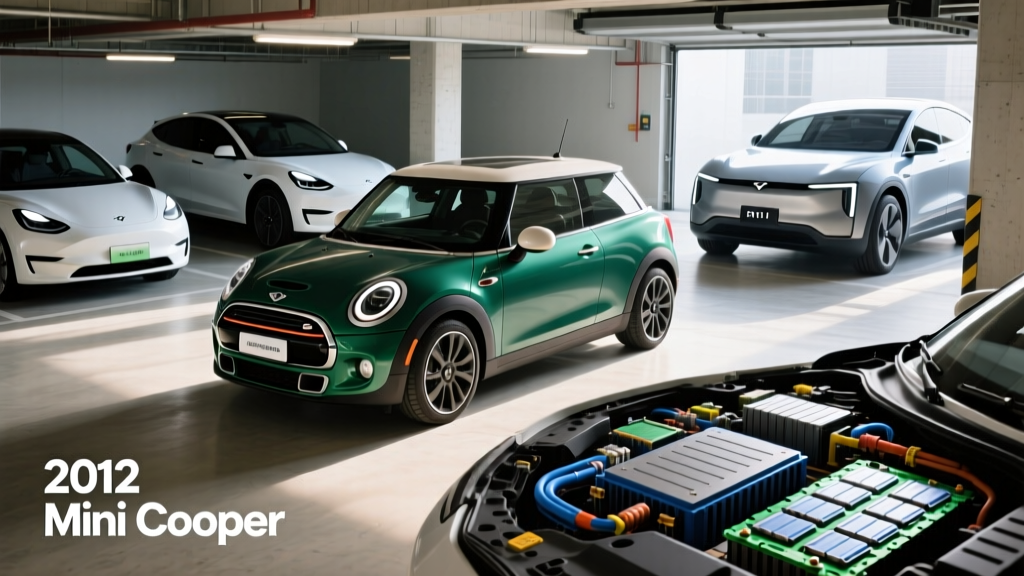
Before evaluating any next-generation chemistry, it helps to ground yourself in what's actually powering EVs on dealer lots today. The vast majority of battery electric vehicles sold in the United States use one of three lithium-ion cathode chemistries: lithium iron phosphate (LFP), nickel manganese cobalt (NMC), or nickel cobalt aluminum (NCA). Each carries distinct trade-offs in energy density, cycle life, cold-weather performance, and manufacturing cost — and those trade-offs directly shape the vehicle's range, price, and long-term ownership experience.
LFP cells, used in the standard-range Tesla Model 3 and Model Y, the base Ford Mustang Mach-E Select, and several BYD models, sacrifice some energy density for exceptional cycle life and lower material cost. They tolerate repeated full charges (100% State of Charge) better than nickel-based chemistries and carry virtually no fire risk from thermal runaway. The trade-off: lower energy density means heavier packs for the same kWh capacity, and LFP cells lose more usable range in freezing temperatures — often 30-40% range reduction at 20°F compared to the EPA sticker, versus 20-30% for NMC.
NMC and NCA chemistries dominate the long-range and performance segments. The Hyundai Ioniq 5 (84 kWh usable, NMC), the Ford F-150 Lightning Extended Range (131 kWh, NMC), and the Tesla Model S (NCA) all rely on nickel-rich cathodes to pack more energy into fewer kilograms. The downside: nickel and cobalt are costlier and more supply-chain-constrained, and these cells degrade faster if routinely charged to 100% or exposed to sustained high temperatures.
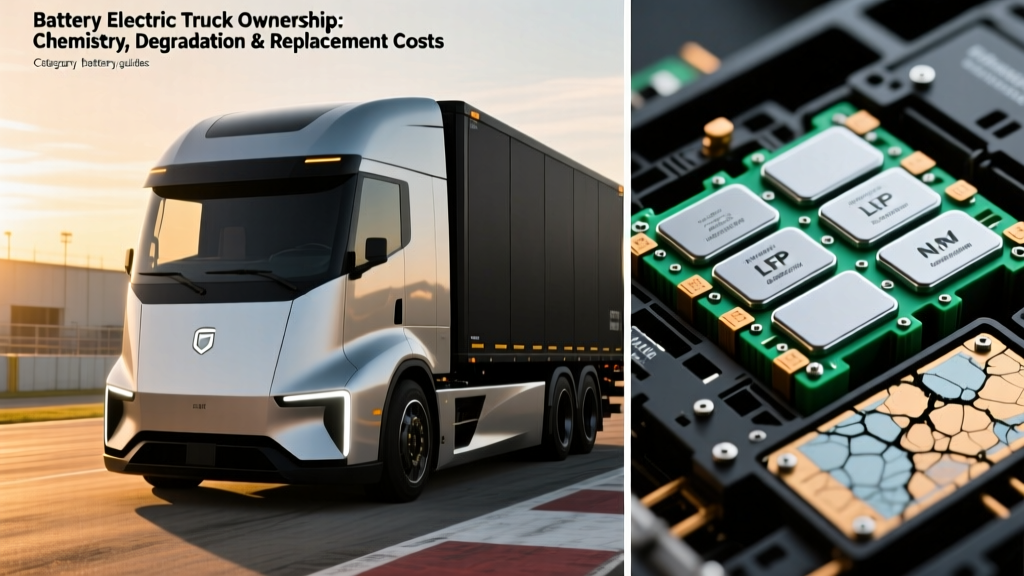
| Attribute | LFP (LiFePO₄) | NMC (Nickel Manganese Cobalt) | NCA (Nickel Cobalt Aluminum) |
|---|---|---|---|
| Energy Density (cell-level) | 160–180 Wh/kg | 220–260 Wh/kg | 250–280 Wh/kg |
| Typical Cycle Life | 3,000–5,000+ cycles | 1,000–2,000 cycles | 800–1,500 cycles |
| Cold Performance (range loss at 20°F) | 30–40% | 20–30% | 20–28% |
| 100% SoC Tolerance | Excellent (daily 100% OK) | Poor (80% daily recommended) | Poor (80% daily recommended) |
| Thermal Runaway Risk | Very low | Moderate | Moderate |
| Cost per kWh (pack-level, 2026) | ~$95–$115 | ~$125–$155 | ~$130–$160 |
| Example Vehicles (2026 MY) | Tesla Model 3 RWD, BYD Seal | Hyundai Ioniq 5, F-150 Lightning ER | Tesla Model S, Rivian R1T (Dual) |
What Is a Lithium Sulfide Battery — and Is It Available Yet?
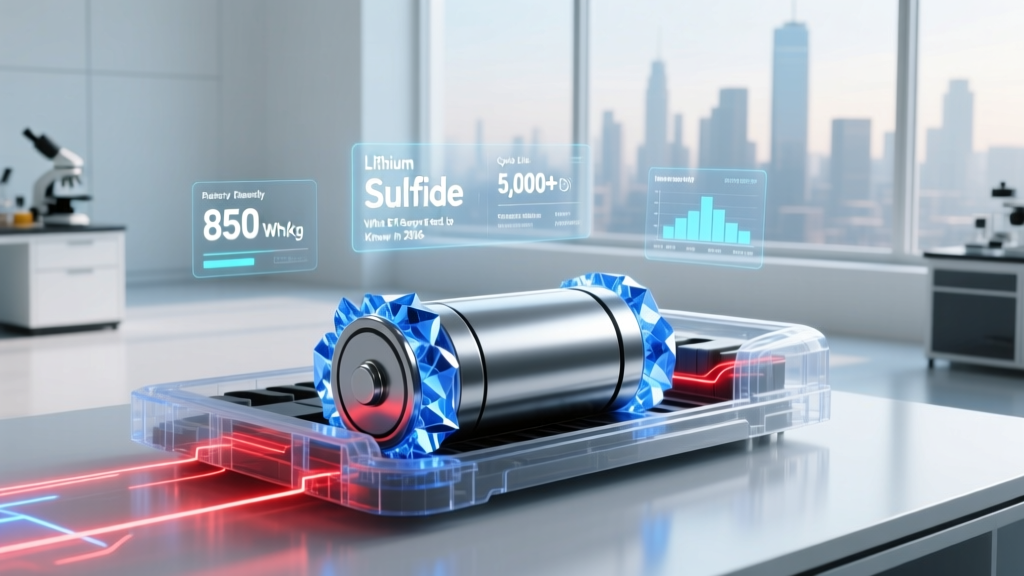
The term "lithium sulfide battery" refers to a family of next-generation cell chemistries that use sulfur-based cathode materials — most commonly lithium sulfide (Li₂S) or lithium-sulfur (Li-S) configurations — in place of the nickel, cobalt, or iron phosphate used in conventional lithium-ion cells. The theoretical appeal is substantial: sulfur is abundant, cheap, and lightweight, and lithium-sulfur cells have demonstrated laboratory energy densities exceeding 400–500 Wh/kg at the cell level. That's roughly double the best NMC cells available today, which could translate to EVs with 500+ miles of EPA range without increasing pack weight.
However, as of early 2026, lithium sulfide battery technology remains in the research and pilot-production stage. No mass-produced vehicle currently on sale in the U.S. uses a lithium sulfide or lithium-sulfur cell. The core engineering challenges are well-documented:
- Polysulfide shuttle effect: During charge and discharge cycles, intermediate lithium polysulfide compounds dissolve into the electrolyte and migrate between electrodes, causing rapid capacity loss. This is the primary reason Li-S cells historically degraded to 50% capacity within 100–200 cycles — far below the 1,000+ cycles needed for automotive use.
- Low cycle life: Even with advanced cathode encapsulation and electrolyte additives demonstrated in 2024–2025 research, published cycle-life data for Li-S cells typically shows 300–600 cycles before reaching 80% capacity retention. For an EV driven 12,000 miles per year with a 300-mile range, that equates to roughly 4–5 years of use before significant degradation — not yet competitive with LFP's 15+ year practical lifespan.
- Low Coulombic efficiency: Charge-discharge energy round-trip efficiency in Li-S cells remains below 90%, compared to 95–98% for mature NMC and LFP cells, meaning more energy is wasted as heat during each cycle.
- Manufacturing scale: Sulfur cathode production requires different slurry processes and dry-room conditions than existing gigafactory lines, representing billions in retooling investment.
Several companies — including Lyten (San Jose, CA), Oxis Energy (now defunct, assets acquired), and academic labs at Stanford and the University of Adelaide — have published promising results using carbon-sulfur composite cathodes and protective lithium-metal anodes. Lyten has announced prototype A-sample cells with claimed 800+ cycle life, but these remain pre-commercial as of 2026. Realistic industry timelines place lithium sulfide and lithium-sulfur cells in potential low-volume automotive production no earlier than 2029–2031, with mainstream adoption likely in the 2032–2035 window, assuming cycle-life and manufacturing hurdles are resolved.
How Long Do Current EV Batteries Actually Last?
This is the question that dominates EV buyer research, and the data from the past decade of real-world ownership is genuinely reassuring. Based on fleet data from Tesla's 2025 Impact Report, EPA longevity studies, and independent analyses by Recurrent Auto (which tracks over 15,000 EVs in real-world service), the typical modern EV battery retains 88–94% of its original capacity after 100,000 miles and 82–90% after 150,000 miles.
Here's what the degradation data looks like across popular chemistries and models:
Observed Capacity Retention by Mileage (2024–2025 Fleet Data)
| Vehicle / Chemistry | At 50,000 mi | At 100,000 mi | At 150,000 mi | Source |
|---|---|---|---|---|
| Tesla Model 3 RWD (LFP) | 97–99% | 94–97% | 90–95% | Recurrent Auto, Tesla Impact Report 2025 |
| Tesla Model Y LR (NMC/NCA) | 95–97% | 90–94% | 85–90% | Recurrent Auto |
| Hyundai Ioniq 5 (NMC) | 95–98% | 90–94% | 84–89% | Hyundai fleet data, owner surveys |
| Chevrolet Bolt EV (NMC) | 93–96% | 88–92% | 82–87% | Recurrent Auto |
| Ford Mustang Mach-E ER (NMC) | 95–97% | 90–93% | 85–89% | Ford warranty data, owner tracking |
Note: Degradation is non-linear. Most capacity loss occurs in the first 20,000–30,000 miles (typically 3–5%), after which the curve flattens significantly. A battery that retains 92% at 60,000 miles is statistically likely to retain 85–88% at 150,000 miles.
The practical takeaway: for a vehicle with a 300-mile EPA range, even 12% degradation at 150,000 miles means 264 miles of real-world range — still more than adequate for daily driving and most road trips. The vast majority of EV batteries will outlast the vehicle's body, suspension, and interior. Full battery replacements due to end-of-life degradation remain rare; when they occur, it's typically beyond 200,000 miles or in vehicles subjected to extreme abuse (repeated daily DC fast charging in desert heat, for example).
What Does the EV Battery Warranty Actually Cover?
Federal law mandates that all EV batteries sold in the U.S. carry a minimum warranty of 8 years or 100,000 miles (whichever comes first). In California and states that have adopted CARB emissions standards — including Colorado, Maine, Massachusetts, New York, Oregon, Vermont, and Washington — the requirement extends to 10 years or 150,000 miles. Most automakers meet or exceed these thresholds.
| Manufacturer | Warranty Term | Capacity Retention Threshold | What's Covered |
|---|---|---|---|
| Tesla (Model 3/Y RWD, LFP) | 8 yr / 100,000 mi | 70% | Defects, excessive degradation below threshold |
| Tesla (Model 3/Y LR, Model S/X) | 8 yr / 120,000 mi (LR) or 150,000 mi (S/X) | 70% | Defects, excessive degradation below threshold |
| Hyundai / Kia | 10 yr / 100,000 mi | 70% | Defects, degradation below threshold |
| Ford (Mach-E, F-150 Lightning) | 8 yr / 100,000 mi | 70% | Defects, excessive degradation below threshold |
| Chevrolet (Equinox EV, Blazer EV) | 8 yr / 100,000 mi | 60% (Bolt); 70% (Ultium) | Defects, degradation below threshold |
| Rivian (R1T, R1S) | 8 yr / 120,000 mi | 70% | Defects, excessive degradation below threshold |
| BMW (i4, iX) | 8 yr / 80,000 mi | 70% | Defects, degradation below threshold |
The critical detail most buyers miss: the warranty threshold is not a guarantee your battery will retain exactly 70% — it's the floor below which the manufacturer must repair or replace the pack. A battery at 71% capacity at 99,000 miles is functioning within warranty spec, even though you've lost 29% of your original range. In practice, very few batteries actually fall below the 70% threshold within the warranty period under normal use. The warranty primarily protects against manufacturing defects (bad cell batches, BMS failures, coolant leaks into the pack) rather than gradual wear.
EV Battery Replacement Costs: What the Numbers Actually Show
Replacement cost is the most commonly cited fear among prospective EV buyers, and it deserves an honest, data-grounded answer. Yes, EV battery packs are expensive. But the context matters enormously: most packs never need replacement during the vehicle's useful life, costs have declined roughly 80% since 2013, and out-of-warranty replacements remain rare.
| Vehicle | Battery Size (usable kWh) | Chemistry | Estimated Pack + Labor Cost | Typical Replacement Trigger |
|---|---|---|---|---|
| Tesla Model 3 RWD | 57.5 kWh | LFP | $12,000–$15,000 | Rare before 200k mi; collision damage |
| Tesla Model Y Long Range | 75 kWh | NMC | $14,000–$18,000 | Rare before 200k mi; defect |
| Hyundai Ioniq 5 | 77.4 kWh | NMC | $15,000–$20,000 | Rare before 180k mi; defect |
| Ford F-150 Lightning ER | 131 kWh | NMC | $22,000–$30,000 | Rare before 150k mi; defect or collision |
| Chevrolet Equinox EV | 85 kWh | NMC (Ultium) | $14,000–$18,000 | Rare before 180k mi |
| Rivian R1T (Dual Motor Max) | 141 kWh | NMC | $24,000–$32,000 | Rare before 150k mi |
For context, a Recurrent Auto analysis of over 15,000 vehicles found that fewer than 1.5% of EV batteries required replacement outside of recall campaigns. When replacements do occur, they're typically due to manufacturing defects (covered under warranty), collision damage (covered by insurance), or coolant system failures — not simple end-of-life wear. The vehicles most likely to need an out-of-warranty replacement are high-mileage fleet vehicles (ride-share, delivery) that accumulate 40,000+ miles per year and rely heavily on DC fast charging.
Five Factors That Accelerate EV Battery Degradation
Battery longevity isn't just about mileage — it's about how the battery is used and what conditions it endures. Based on data from the National Renewable Energy Laboratory (NREL) and fleet telemetry, these five factors have the most measurable impact on long-term State of Health (SoH):
Battery Care Checklist: Maximize Your Pack's Lifespan
- 1. Limit DC fast charging to road trips. Repeated use of 150+ kW DC fast chargers generates sustained high temperatures inside the cells. Fleet data shows vehicles that DC fast charge more than 3 times per week degrade 2–4% faster over 100,000 miles compared to vehicles that primarily use Level 2 home charging. Occasional fast charging (a few times per month) has negligible impact.
- 2. Avoid sustained 100% or 0% State of Charge. For NMC and NCA batteries, storing the vehicle at 100% SoC for days at a time accelerates calendar degradation. Set your daily charge limit to 80% and only charge to 100% when you'll be driving immediately. LFP batteries are the exception — Tesla and BYD recommend periodic 100% charges to recalibrate the battery management system (BMS).
- 3. Precondition before fast charging. Most modern EVs (Tesla, Hyundai/Kia, Ford, Rivian) automatically precondition the battery when you navigate to a DC fast charger. This warms or cools the cells to the optimal 30–40°C range, enabling faster charging and reducing thermal stress. If your EV doesn't auto-precondition, allow 15–20 minutes of driving before plugging into a fast charger in cold weather.
- 4. Park in shade or a garage in extreme heat. Sustained ambient temperatures above 95°F with a high State of Charge is the single worst condition for lithium-ion longevity. A battery sitting at 90% SoC in a 110°F Phoenix parking lot for 8 hours will degrade measurably faster than one stored at 50% SoC in a 70°F garage. If you live in a hot climate, charge to 60–70% for daily parking and use scheduled charging to reach 80% just before departure.
- 5. Don't leave the vehicle at 0% for extended periods. Deep discharge below the BMS buffer (the hidden reserve below the "0%" displayed on your dash) can cause copper dendrite growth on the anode, leading to internal short circuits. If storing an EV for more than 2 weeks, leave it at 40–60% SoC and plugged in if possible so the BMS can maintain the 12V system without drawing the traction pack below safe limits.
How to Check Your EV Battery's State of Health (SoH)
State of Health is the percentage of original capacity your battery can still hold relative to its factory specification. A new 75 kWh battery at 93% SoH can store approximately 69.75 kWh of usable energy. Monitoring SoH helps you track degradation trends, plan for warranty claims if needed, and assess value when buying or selling a used EV.
Built-in vehicle tools: Tesla provides a battery health estimate in the Service menu (Settings → Service → Battery Health Test), which runs a controlled discharge cycle and reports SoH as a percentage. Hyundai and Kia's Bluelink app reports estimated battery health for connected vehicles. BMW's iDrive system includes a battery health indicator in the vehicle status menu. Ford's Pass app provides a battery health check for Mach-E and F-150 Lightning owners.
OBD-II diagnostic tools: For more granular data, third-party OBD-II readers like the OBDeleven (for VW/Audi/Porsche EVs) or the Car Scanner app paired with a Bluetooth OBD-II dongle can read the BMS-reported SoH, individual cell voltages, and total energy throughput (lifetime kWh cycled through the pack). This data is more precise than dashboard estimates and can reveal cell imbalance issues before they trigger a warning.
Third-party services: Recurrent Auto offers a free battery health report for participating owners, using connected-car telemetry to compare your degradation curve against a fleet of identical vehicles. Several used-EV marketplaces, including Carvana and CarGurus, have begun including battery health reports in listings — a trend likely to accelerate as battery condition becomes a standard used-car valuation factor.
Emerging Battery Technologies: Solid-State, Silicon Anode, and Beyond
While lithium sulfide batteries remain in the laboratory stage, several other next-generation technologies are closer to commercialization — though "closer" in battery manufacturing still means years, not months.
Solid-state batteries replace the liquid electrolyte in conventional lithium-ion cells with a solid ceramic, glass, or polymer separator. The theoretical benefits are significant: higher energy density (potentially 350–400 Wh/kg), faster charging (some prototypes have demonstrated 10–80% in under 10 minutes), and reduced fire risk. Toyota has announced plans for a solid-state-equipped EV by 2027–2028, though initial production will be limited to low volumes at premium price points. Samsung SDI and QuantumScape (backed by Volkswagen) are targeting similar timelines. Realistic mainstream availability remains in the 2030–2033 window.
Silicon-dominant anodes are the most commercially advanced next-gen technology. Companies like Sila Nanotechnologies and Group14 Technologies are already supplying silicon-carbon composite anode materials to battery manufacturers, enabling 10–20% energy density improvements over conventional graphite anodes. The Mercedes-Benz G-Class EV (expected 2026–2027) and several upcoming models from GM's Ultium platform are expected to incorporate silicon-anode cells. This technology is an evolution rather than a revolution — it works within existing manufacturing lines and improves incrementally.
Sodium-ion batteries are emerging as a low-cost alternative for budget EVs and stationary storage. CATL began mass-producing sodium-ion cells in 2025, and several Chinese-market EVs (BYD Seagull, Chery iCAR) now offer sodium-ion variants with lower energy density but significantly lower cost (~$50–$65/kWh at the pack level). U.S. availability of sodium-ion EVs is not expected before 2028 at the earliest, pending supply chain development and UL safety certification.
None of these technologies invalidate current EV purchases. Today's LFP and NMC batteries, properly cared for, will provide 150,000–250,000+ miles of service with gradual, manageable degradation — and the next generation of chemistries will complement, not obsolete, the vehicles already on the road.
Frequently Asked Questions
How long do EV batteries last in years and miles?
Based on fleet data from 2024–2025, the typical modern EV battery retains 85–92% of its original capacity at 150,000 miles and can reasonably be expected to provide 200,000–300,000+ miles of service before degradation makes the vehicle impractical for daily use. In years, that translates to 15–25 years at average U.S. driving rates of 12,000–15,000 miles per year. LFP chemistries tend toward the higher end of this range; NMC and NCA toward the lower end.
How much does it cost to replace an EV battery?
Out-of-warranty replacement costs range from approximately $12,000 for a Tesla Model 3 RWD (57.5 kWh LFP) to $30,000+ for a Ford F-150 Lightning Extended Range (131 kWh NMC) or Rivian R1T Max Pack (141 kWh NMC), including parts and labor. However, fewer than 1.5% of EV batteries require replacement outside of warranty-covered defects or collision damage. Most batteries outlast the vehicle itself.
What does the EV battery warranty cover?
Federal law requires a minimum 8-year/100,000-mile battery warranty (10 years/150,000 miles in CARB states). The warranty covers manufacturing defects and excessive degradation — typically defined as falling below 70% of original capacity within the warranty term. It does not cover damage from collisions, flooding, or unauthorized modifications. Warranty claims for degradation are rare; most claims involve BMS faults, coolant leaks, or cell manufacturing defects.
How do I check and maximize my EV battery health?
Check State of Health through your vehicle's built-in battery health test (Tesla, BMW, Ford), a connected-car app (Hyundai Bluelink, Ford Pass), or an OBD-II diagnostic reader. To maximize longevity: limit DC fast charging to road trips, set daily charge limits to 80% for NMC/NCA (100% is fine for LFP), precondition before fast charging, avoid parking at high SoC in extreme heat, and never store the vehicle at 0% SoC for extended periods.
LFP vs NMC — which battery chemistry is better?
Neither is universally better; the right choice depends on your use case. Choose LFP if you prioritize long cycle life, want the simplicity of daily 100% charging, live in a moderate climate, and can accept slightly lower range for a given pack weight. Choose NMC if you need maximum range in a lighter package, regularly drive in cold weather, or want the longest single-charge road-trip capability. For most urban and suburban drivers, LFP's durability and lower cost make it the pragmatic choice. For long-distance commuters and frequent road-trippers, NMC's energy density advantage is worth the slightly more careful charging habits.
Will lithium sulfide or solid-state batteries make my current EV obsolete?
No. Lithium sulfide batteries are not expected in production vehicles before 2029–2031 at the earliest, and solid-state batteries will initially appear only in limited-production premium models around 2027–2028. Current LFP and NMC batteries provide excellent longevity and performance, and the charging infrastructure, software updates, and ownership ecosystem around today's EVs will continue to develop regardless of future chemistry advances. The best EV to buy is the one that meets your needs today — not the one that might exist in five years.