Why Lithium Strip Mining Matters to Every EV Buyer
Every kilowatt-hour of EV battery capacity traces back to raw-material extraction — and lithium strip mining sits at the center of that chain. Whether the lithium in your pack came from hard-rock spodumene mines in Australia or brine operations in Chile's Atacama Desert, the economics and ethics of extraction directly influence what you pay at the dealership, which battery chemistries automakers choose, and how long your high-voltage traction battery will last.
This guide connects the upstream supply chain to the practical questions EV owners actually ask: How long will my battery last? What does replacement cost? And does choosing LFP over NMC chemistry matter for longevity and ethics? We'll ground every answer in real degradation data, current warranty terms, and 2026 pricing — not marketing claims.
Where EV Battery Lithium Actually Comes From
Lithium is not rare in the Earth's crust, but economically viable deposits concentrate in a handful of regions. Two extraction methods dominate global supply:
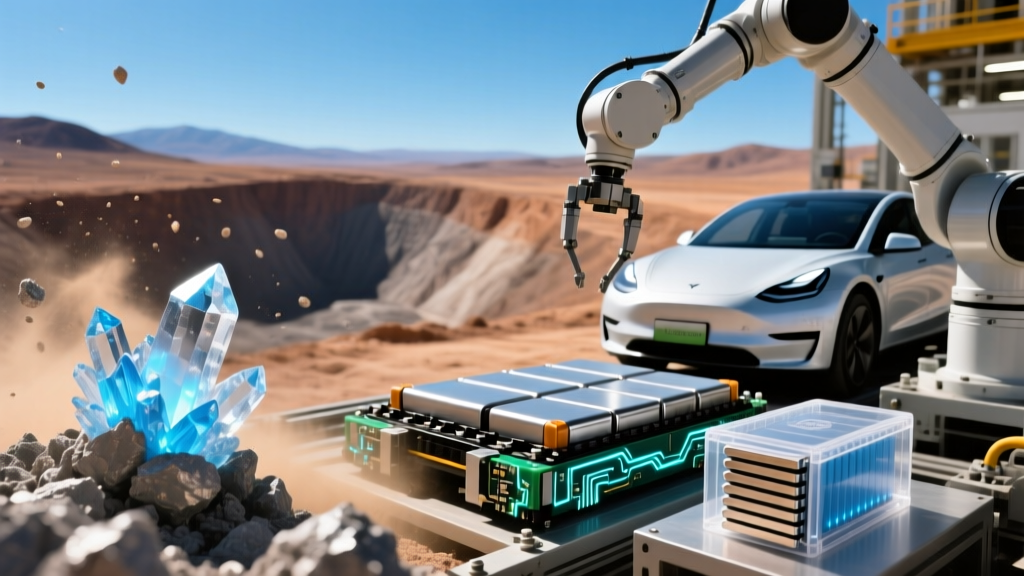
- Hard-rock (spodumene) strip mining: Open-pit mines — primarily in Australia, the world's largest lithium producer — blast and crush lithium-bearing rock, then process it into spodumene concentrate. This method yields lithium faster (months vs. years) but demands significant energy for crushing, roasting, and chemical conversion to lithium hydroxide or carbonate.
- Brine extraction: In Chile, Argentina, and China, lithium-rich salar brine is pumped to evaporation ponds where solar concentration over 12–24 months produces lithium carbonate. Lower energy intensity per ton, but enormous water consumption in already arid regions — a well-documented concern from the U.S. Geological Survey.
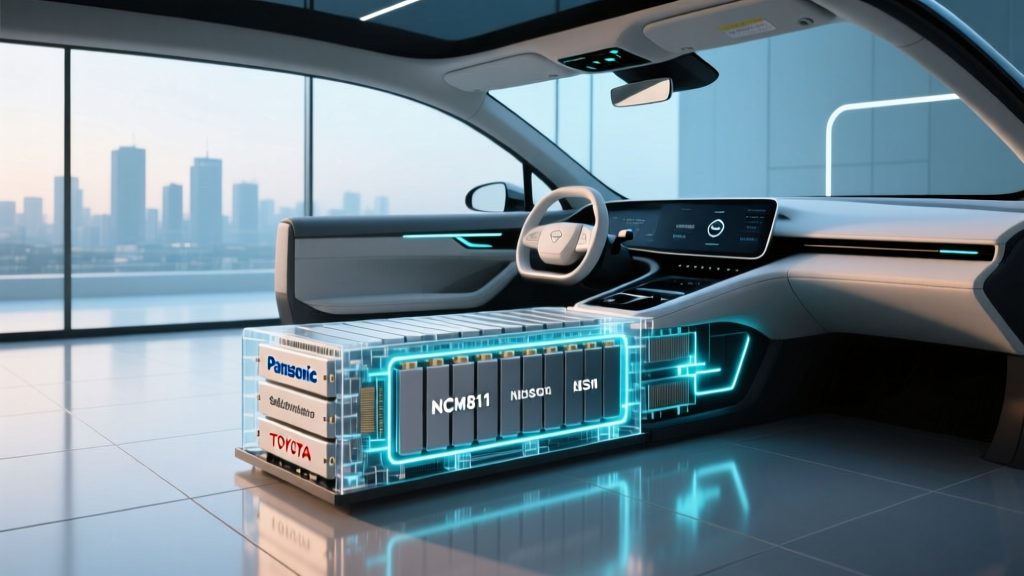
Both methods feed the same downstream supply chain: cathode-active-material manufacturers who produce either NMC (nickel-manganese-cobalt) or LFP (lithium iron phosphate) cathode powders, which cell makers like CATL, LG Energy Solution, Panasonic, and SK On form into prismatic or pouch cells, which automakers integrate into structural battery packs.
The strip-mining connection matters to buyers because it shapes two things you can control: chemistry choice and price trajectory. When spodumene prices spiked above $6,000/metric ton in late 2022, EV pack prices climbed and automakers accelerated LFP adoption — a chemistry that uses no nickel or cobalt and tolerates lower-purity (cheaper) lithium feedstock.
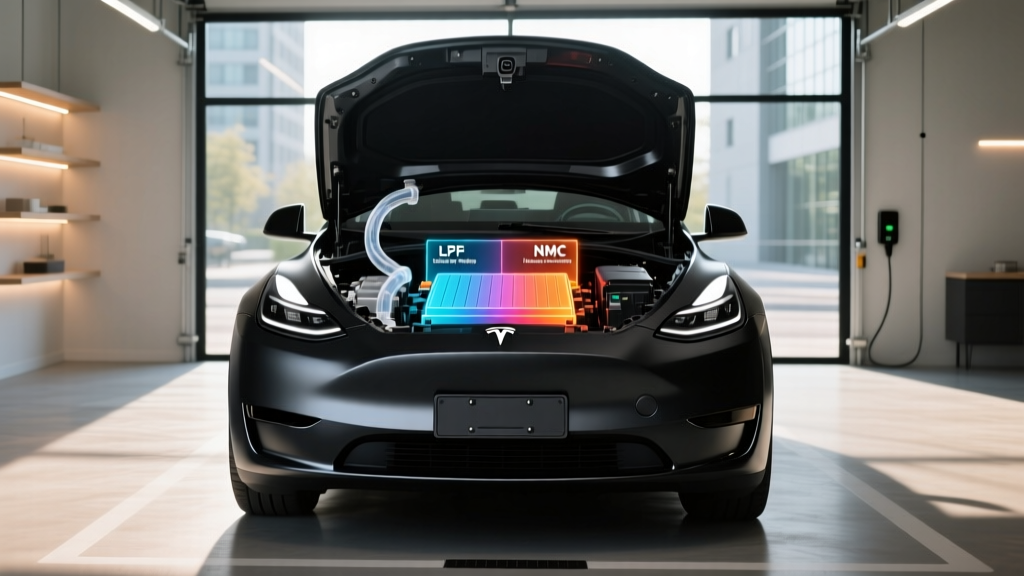
LFP vs NMC: The Chemistry Trade-Off Table
Your choice of battery chemistry affects range, longevity, cold-weather behavior, and — indirectly — how much lithium strip mining impacts your purchase. Here's the direct comparison:
| Attribute | LFP (Lithium Iron Phosphate) | NMC / NCA (Nickel-based) |
|---|---|---|
| Energy density (cell-level) | ~160–180 Wh/kg | ~230–280 Wh/kg |
| Typical pack size | 60–82 kWh (heavier for same range) | 75–100+ kWh (lighter, more range) |
| Cycle life | 3,000–5,000+ cycles to 80% SoH | 1,000–2,000 cycles to 80% SoH |
| Cold-weather performance | Weaker — ~15–25% range loss at 20°F | Better — ~10–18% range loss at 20°F |
| Fast-charge tolerance | Excellent — handles frequent DCFC well | Moderate — degrades faster with frequent DCFC |
| Recommended daily SoC | 100% (LFP benefits from full charges) | 80% (prolongs NMC life) |
| Cobalt / nickel content | None | Yes (cobalt reduced, not eliminated in NMC 811) |
| Cost per kWh (2026 pack-level) | ~$90–$110/kWh | ~$120–$145/kWh |
| Lithium sourcing sensitivity | Tolerates lower-purity lithium carbonate | Requires battery-grade lithium hydroxide |
Which is better? It depends on your use case. If you drive moderate daily distances (under 200 miles), charge at home nightly, and live in a mild climate, LFP offers dramatically longer cycle life and lower cost — a Standard Range Tesla Model 3 (LFP, 60 kWh, EPA 272 mi) or base Chevrolet Equinox EV (LFP, ~85 kWh, EPA 319 mi) will likely outlast the car's body. If you need maximum range per charge, tow frequently, or live in sub-freezing climates, NMC packs in vehicles like the Hyundai Ioniq 5 Long Range (84 kWh NMC, EPA 303 mi) or Ford F-150 Lightning Extended Range (131 kWh NMC, EPA 320 mi) deliver more energy density and better cold performance.
How Long Do EV Batteries Actually Last?
The short answer: far longer than most buyers fear. Real-world fleet data consistently shows modern EV batteries losing roughly 1–2% capacity per year under normal use — not the 5–10% annual loss seen in early-2010s packs like the original Nissan Leaf.
Typical degradation trajectory (NMC and LFP packs, 2020–2026 vehicles):
- Year 1: 1–3% loss (initial formation settling)
- Years 2–5: ~1–1.5% per year (linear phase)
- Years 6–10: ~0.5–1% per year (plateau phase)
- 10-year expectation: 85–92% State of Health for NMC; 90–96% for LFP
Geotab's fleet study of over 10,000 EVs found an average annualized degradation rate of 1.8% across all chemistries, with LFP packs and liquid-cooled NMC packs performing at the better end. Recurrent Auto's 2025 data on 15,000+ vehicles confirmed that 95% of EVs retained above 85% capacity at 100,000 miles.
The critical distinction: calendar aging (time-based chemical degradation) often matters more than cycle aging (charge-discharge wear) for typical drivers who cover 10,000–15,000 miles annually. A 10-year-old EV with 80,000 miles may show similar degradation to one with 150,000 miles if both were stored and charged similarly.
Battery Warranty Terms: What's Actually Covered
Federal law mandates a minimum 8-year/100,000-mile warranty on EV battery packs for emissions-related compliance, and nearly every automaker meets or exceeds this baseline. Here's how the major warranties compare:
| Automaker | Warranty Period | Capacity Retention Threshold | Notes |
|---|---|---|---|
| Tesla (Model 3/Y NMC) | 8 yr / 120,000 mi | 70% | Long Range & Performance trims |
| Tesla (Model 3/Y LFP) | 8 yr / 100,000 mi | 70% | RWD Standard Range |
| Hyundai / Kia | 10 yr / 100,000 mi | 70% | Ioniq 5, Ioniq 6, EV6, EV9 |
| Ford | 8 yr / 100,000 mi | 70% | Mustang Mach-E, F-150 Lightning |
| General Motors | 8 yr / 100,000 mi | 70% | Equinox EV, Blazer EV, Silverado EV |
| Volkswagen | 8 yr / 100,000 mi | 70% | ID.4 |
| BMW | 8 yr / 100,000 mi | 70% | i4, i5, iX |
| Rivian | 8 yr / 175,000 mi | 70% | R1T, R1S (highest mileage cap) |
The 70% threshold is the industry standard trigger: if your pack drops below 70% of original capacity within the warranty window, the manufacturer will repair or replace modules (or the full pack) at no cost. In practice, warranty claims remain rare — Recurrent Auto reports that under 2% of EVs in their dataset have required warranty battery replacements.
What's not covered: physical damage from collisions, flooding, or aftermarket modifications. And the warranty applies to the high-voltage traction battery only — not the 12V auxiliary battery, which is a separate, conventional component that powers accessories and boots the vehicle's computers.
EV Battery Replacement Cost: The Real Numbers
If your battery degrades past warranty or suffers physical damage, replacement costs depend on pack size, chemistry, and whether you need a full pack or just failed modules.
| Vehicle / Pack | Battery Size | Chemistry | Full Pack Replacement (2026) | Module Repair |
|---|---|---|---|---|
| Tesla Model 3 RWD | 60 kWh | LFP | $8,000–$12,000 | $2,500–$4,000 |
| Tesla Model Y Long Range | 82 kWh | NMC | $12,000–$16,000 | $3,000–$5,500 |
| Hyundai Ioniq 5 | 84 kWh | NMC | $13,000–$18,000 | $3,500–$6,000 |
| Ford F-150 Lightning Ext. | 131 kWh | NMC | $20,000–$28,000 | $5,000–$9,000 |
| Chevrolet Equinox EV | 85 kWh | LFP (Ultium) | $10,000–$14,000 | $3,000–$5,000 |
| Rivian R1T (Large Pack) | 135 kWh | NMC | $22,000–$30,000 | $6,000–$10,000 |
Context that matters: most EV batteries will never need full replacement during the vehicle's useful life. The vehicles above will likely be retired for collision damage, body rust, or electronics obsolescence before their packs fall below 70% capacity. Module-level repair — replacing a single degraded cell group rather than the entire pack — has become the standard service approach for out-of-warranty vehicles, cutting costs by 60–75%.
Pack prices continue declining. BloombergNEF's 2025 battery price survey reported average pack-level costs at $115/kWh for NMC and $89/kWh for LFP — down from $150+/kWh just three years prior, partly because lithium carbonate prices normalized after the 2022–2023 spike driven by spodumene strip-mining supply constraints.
Factors That Accelerate (or Protect) Battery Life
Battery longevity isn't random — it responds predictably to how you charge, drive, and store the vehicle.
Maximize battery health with these evidence-based practices:
- Limit NMC daily charge to 80%: Keeping NMC packs between 20–80% SoC reduces stress on cathode structure. LFP packs are the exception — charge to 100% regularly, as LFP needs full-charge calibration for accurate SoC readings and doesn't suffer the same high-SoC degradation.
- Minimize DC fast charging when possible: Occasional DCFC (road trips) is fine. Daily DCFC on NMC packs accelerates degradation by ~0.5–1% per year vs. Level 2 home charging. LFP tolerates frequent DCFC better due to its more stable olivine crystal structure.
- Precondition before fast charging: Cold batteries resist accepting high kW rates, causing lithium plating on the anode. Use your vehicle's navigation-to-charger preconditioning (Tesla, Hyundai, Ford all offer this) to warm the pack to 25–35°C before arriving at a DCFC station.
- Avoid prolonged storage at extremes: Don't leave an NMC pack at 100% SoC for weeks in summer heat, and don't store at 0% SoC in winter. Aim for 50–60% SoC if parking for 2+ weeks.
- Use regenerative braking moderately in cold weather: Below 32°F, aggressive regen into a cold pack stresses cells. Most modern BMS systems limit regen automatically, but gentle driving for the first 10–15 minutes in freezing temps helps.
- Keep the thermal management system serviced: EV battery coolant should be flushed per the manufacturer's schedule (typically every 4–5 years). Degraded coolant reduces cooling efficiency, raising pack temperatures during charging.
How to Monitor Your Battery's State of Health
State of Health (SoH) is the percentage of original capacity your pack currently holds. Most 2024–2026 EVs don't display SoH directly on the dash, but several methods exist:
- Manufacturer apps: Tesla's app shows estimated range at 100% — compare this to the original EPA rating (adjusted for your typical conditions) for a rough SoH proxy. Hyundai's Bluelink and FordPass offer similar range-estimate data.
- OBD-II diagnostic tools: Devices like the OBDLink SX paired with apps such as ABRP (A Better Route Planner) or Car Scanner can read the BMS-reported SoH percentage directly from the vehicle's CAN bus — typically accurate within ±2%.
- Third-party fleet services: Recurrent and Geotab offer SoH reports by analyzing your charging data over time, comparing actual energy accepted vs. original pack capacity.
- Dealer diagnostic check: Any authorized service center can pull a full BMS health report showing per-module voltage variance, internal resistance, and SoH — often free during routine service visits.
If your SoH drops below 90% within the first three years or below 80% before year six, that's faster than the fleet-data norm and warrants a warranty evaluation.
Beyond Strip Mining: Emerging Battery Technologies
The lithium supply chain's environmental footprint — strip mining's land disruption, brine extraction's water use — is driving serious R&D into next-generation chemistries. Here's what's realistic versus hype:
- Solid-state batteries: Replace the liquid electrolyte with a solid ceramic or polymer, enabling lithium-metal anodes and ~40–50% higher energy density. Toyota has announced a 2027–2028 production timeline for a limited solid-state EV; Samsung SDI targets 2027 for pilot production. Expect early adoption in premium vehicles at significant cost premiums. These still require lithium — just less per kWh — so strip mining remains relevant.
- Silicon-dominant anodes: Companies like Sila Nanotechnologies and Group14 are replacing graphite anodes with silicon composites, boosting energy density 15–25% without changing cathode chemistry. Mercedes-Benz's next-gen G-Class EV (announced for 2028) will use Sila's silicon anode cells. This is closer to production than solid-state and compatible with existing NMC cathodes.
- Sodium-ion batteries: CATL and BYD have begun producing sodium-ion cells for low-cost, short-range EVs in China. Sodium is abundant and requires no lithium mining at all. However, energy density (~120–140 Wh/kg) limits these to city cars and micro-EVs — unlikely to appear in US-market vehicles before 2029 at the earliest.
- Direct lithium extraction (DLE): New brine-processing technology from companies like EnergySource Minerals and Lilac Solutions extracts lithium from brine in hours rather than months, with 80%+ recovery rates and far less water evaporation. Several DLE pilot plants are operational in California's Salton Sea region as of 2025, potentially providing a domestic, lower-impact lithium source for North American battery production.
All of these are forward-looking. For any EV you can buy today, lithium — whether from strip-mined spodumene or evaporated brine — remains the essential input.
Frequently Asked Questions
Does lithium strip mining make EVs worse for the environment than gas cars?
Life-cycle analyses from Argonne National Laboratory and the ICCT consistently show that even accounting for lithium mining's environmental impact, EVs produce 50–70% fewer lifetime greenhouse gas emissions than comparable gasoline vehicles across the US electricity grid mix. The mining footprint is real but is amortized over 150,000+ miles of zero-tailpipe-emission driving. As grids decarbonize and DLE technology scales, that advantage grows.
Will my EV battery need replacing before 100,000 miles?
Statistically, no. Fleet data from Geotab and Recurrent shows fewer than 2% of modern EVs (2020+) require battery replacement before 100,000 miles. The 8-year/100,000-mile federal warranty minimum covers the rare early failures. Most packs reach 200,000 miles with 80–88% capacity remaining.
Is LFP chemistry more ethical than NMC because it avoids cobalt?
LFP eliminates cobalt entirely, which addresses documented labor concerns in DRC cobalt mining. However, LFP still requires lithium (from strip mining or brine) and iron phosphate processing. NMC 811 formulations have reduced cobalt to under 5% of cathode weight. Neither chemistry is impact-free — LFP shifts the environmental burden toward iron and phosphate mining and higher pack weight (more raw material per kWh).
How does the federal tax credit relate to battery sourcing and mining?
The IRS §30D clean vehicle credit (up to $7,500) includes critical-mineral sourcing requirements that directly tie to lithium mining. For 2026, a qualifying percentage of the battery's critical minerals — including lithium — must be extracted or processed in the US or a free-trade-agreement country, or recycled in North America. This is designed to shift supply chains away from Chinese-processed lithium. Always verify current-year eligibility on IRS.gov, as sourcing thresholds tighten annually and vary by vehicle and buyer income.
Can I recycle my EV battery when it reaches end of life?
Yes. Companies like Redwood Materials, Li-Cycle, and Cirba Solutions recover 90–95% of lithium, nickel, cobalt, and copper from spent EV packs through hydrometallurgical recycling. Recycled material increasingly feeds back into new battery production — Redwood supplies recycled cathode material to Panasonic for Tesla's US-made cells. End-of-life EV batteries also find second-life use in stationary grid storage before recycling, extending their useful life by another 5–10 years.