From Lithium Strip Mines to Your Driveway: Understanding EV Battery Chemistry
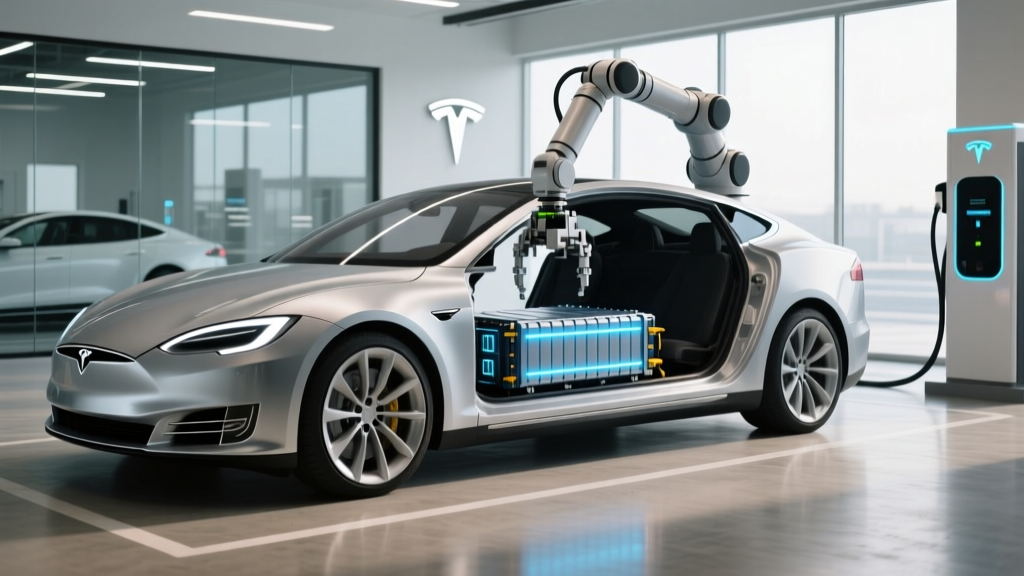
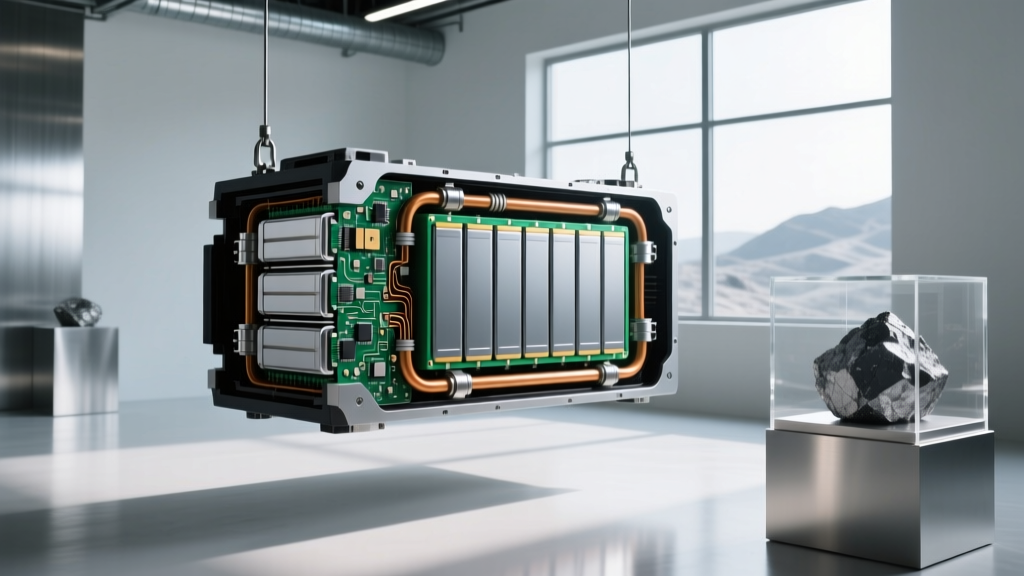
The lithium-ion battery is the single most expensive component in any electric vehicle, often representing 25–40% of the total manufacturing cost. Yet most buyers focus on range and horsepower while glossing over the chemistry that determines how that range holds up over a decade of ownership. Whether the lithium in your pack was extracted from lithium strip mines in Nevada's Clayton Valley, evaporated from brine operations in Chile's Atacama Desert, or sourced from hard-rock spodumene mines in Australia, the refined material ends up in one of two dominant cathode chemistries: NMC (nickel-manganese-cobalt) or LFP (lithium iron phosphate).
Understanding the difference isn't academic. It dictates your real-world range in January, how aggressively you should fast-charge, whether you can safely store at 100% state of charge, and ultimately what your vehicle will be worth at year eight. This guide breaks down the chemistry, the degradation data, the warranty fine print, and the ownership habits that separate a battery lasting 200,000 miles from one needing a $14,000 replacement at 120,000.
LFP vs NMC/NCA: The Chemistry Trade-Off Matrix
Every EV sold in the US in 2026 uses one of three cathode chemistries. NMC (nickel-manganese-cobalt) and NCA (nickel-cobalt-aluminum) dominate long-range and performance models. LFP (lithium iron phosphate) powers standard-range trims and is expanding rapidly thanks to lower cost and longer cycle life. Here's how they compare on the metrics that matter to owners:
| Attribute | LFP (LiFePO₄) | NMC / NCA |
|---|---|---|
| Energy density (cell-level) | 160–180 Wh/kg | 220–300 Wh/kg |
| Typical cycle life | 3,000–5,000+ cycles | 1,000–2,000 cycles |
| Cold-weather range retention (20°F) | ~65–70% of rated | ~70–78% of rated |
| Recommended daily SoC | 100% is fine | 80% for daily use |
| Cost per kWh (pack-level, 2026) | ~$90–$110 | ~$120–$150 |
| Cobalt / nickel content | None | Significant (supply-chain risk) |
| Thermal runaway threshold | ~270°C (more stable) | ~210°C |
| Common in (2026 models) | Tesla Model 3/Y RWD, Ford Mustang Mach-E Select, Rivian Standard | Tesla Long Range, Hyundai Ioniq 5/6, BMW iX, most 300+ mi models |
The bottom line: If you need maximum range in a single charge and regularly drive in sub-freezing weather, NMC/NCA still wins on energy density and cold performance. If you commute daily, can charge at home, and want a battery that will likely outlast the car's body, LFP is the more durable, lower-cost choice. Tesla's shift to LFP for all standard-range vehicles globally was a market signal, not a compromise.
How Long Do EV Batteries Actually Last? Degradation Data
The fear that EV batteries "wear out like phone batteries" persists, but fleet data tells a different story. Modern thermal management systems (liquid cooling and heating) keep cells in their optimal temperature window, dramatically slowing degradation compared to passively cooled packs.
Typical degradation trajectory (fleet averages, NMC and LFP combined):
- Year 1 / 15,000 mi: 2–4% capacity loss (initial formation loss, steepest part of the curve)
- Year 3 / 45,000 mi: 5–8% total loss
- Year 5 / 75,000 mi: 7–10% total loss
- Year 8 / 120,000 mi: 10–15% total loss
- Year 10+ / 150,000+ mi: 12–20% total loss (highly variable by usage)
Data from Geotab's fleet study of over 10,000 EVs shows an average annual degradation rate of roughly 1.8% per year across all chemistries, with the curve flattening significantly after year three. Tesla's own 2025 Impact Report showed Model S/X packs retaining an average of 85% capacity at 200,000 miles. Recurrent Auto's 2025 dataset of 15,000+ vehicles found that 96% of EV batteries still in service had not required replacement.
Real-world translation: An EV with an EPA-rated 310 miles when new will realistically deliver roughly 265–280 miles at year five, and around 250 miles at year eight — assuming normal usage patterns. That's still more range than most drivers use in a day.
What the Battery Warranty Actually Covers (and What It Doesn't)
Federal law mandates that EV battery warranties cover a minimum of 8 years / 100,000 miles (10 years / 150,000 miles in California and states that follow CARB standards). But the details vary significantly between manufacturers, and the fine print matters when you're filing a claim.
| Manufacturer (2026) | Warranty Period | Capacity Threshold | Notes |
|---|---|---|---|
| Tesla (Model 3/Y LFP) | 8 yr / 120,000 mi | 70% retention | Long Range/Performance: 8yr/120k mi, 70% |
| Hyundai / Kia | 10 yr / 100,000 mi | 70% retention | Among the longest coverage in the US |
| Ford (Mustang Mach-E) | 8 yr / 100,000 mi | 70% retention | Covers battery and hybrid/EV components |
| BMW | 8 yr / 100,000 mi | 70% retention | Transferable to second owner |
| Rivian | 8 yr / 175,000 mi | 70% retention | Higher mileage cap reflects adventure-use positioning |
| GM (Ultium platform) | 8 yr / 100,000 mi | 70% retention | Module-level replacement when possible |
Critical detail: The 70% threshold means a manufacturer is only obligated to repair or replace your battery if its usable capacity drops below 70% of its original value within the warranty period. A battery at 72% capacity — meaning you've lost 28% of your range — is technically "within spec" and the manufacturer can deny a warranty claim. In practice, very few packs degrade this quickly under normal use. If yours does, document everything: charging logs, service records, and diagnostic readouts.
EV Battery Replacement Costs: What to Budget and When
The dread of a $20,000 battery swap is the single biggest psychological barrier to EV adoption. Here's what the data actually shows about when replacements happen and what they cost in 2026.
| Vehicle / Battery Size | Chemistry | Full Pack Replacement (2026 est.) | Module-Level Repair |
|---|---|---|---|
| Tesla Model 3 RWD (~60 kWh) | LFP | $10,000–$13,000 | $2,500–$4,500 (per module) |
| Tesla Model Y LR (~82 kWh) | NMC | $14,000–$18,000 | $3,000–$5,500 |
| Hyundai Ioniq 5 (~77.4 kWh) | NMC | $13,000–$16,000 | $2,800–$5,000 |
| Ford F-150 Lightning Ext. (~131 kWh) | NMC | $20,000–$28,000 | $4,000–$7,000 |
| Chevy Equinox EV (~85 kWh) | NMC (Ultium) | $12,000–$15,000 | $2,500–$4,500 |
When is replacement actually needed? Based on current fleet data, the median time to a traction battery replacement for non-defect failures is beyond 150,000 miles — well past the point where most vehicles have been traded, sold, or retired. The vast majority of battery replacements under warranty are due to manufacturing defects (bad cells, BMS faults, coolant leaks) caught in the first 2–3 years, not gradual wear-out.
Costs are also declining. Pack-level prices have fallen from over $1,200/kWh in 2010 to roughly $110–130/kWh in 2026, according to BloombergNEF. Module-level repairs, where a technician swaps only the degraded cell groups rather than the entire pack, are increasingly common and dramatically cheaper.
Factors That Accelerate (or Slow) Battery Degradation
Not all miles are equal when it comes to battery wear. A 100,000-mile pack that was gently cycled between 20–80% SoC with Level 2 home charging will have measurably more capacity remaining than one repeatedly DC fast-charged to 100% in Arizona summers. Here are the variables you can control:
- State of charge habits: For NMC/NCA batteries, keep daily SoC between 20–80%. LFP batteries tolerate (and benefit from) regular 100% charges — Tesla recommends 100% at least weekly for LFP to allow the BMS to recalibrate.
- DC fast-charging frequency: Occasional road-trip DC fast charging is fine. Daily DC fast charging (especially at 150+ kW) accelerates degradation by an estimated 1–3% extra over 5 years due to elevated cell temperatures and lithium plating risk.
- Extreme heat exposure: Sustained ambient temperatures above 95°F with a high SoC is the worst-case scenario. If you live in Phoenix or Dallas, avoid parking at 100% SoC in direct sun for extended periods. Precondition the battery before fast charging.
- Extreme cold charging: Charging a cold battery (below 32°F) without preconditioning forces lithium ions to plate on the anode surface rather than intercalate — this causes permanent capacity loss. Always use your vehicle's preconditioning feature before charging in cold weather.
- Depth of discharge: Shallow cycles (e.g., 30–70%) cause less wear than deep cycles (5–95%). You don't need to baby it, but avoid routinely draining below 10% unless necessary.
- Storage: If storing an EV for weeks, leave it at ~50% SoC in a cool, shaded location. Never store at 100% or below 10% for extended periods.
Monitoring Battery Health: Checking Your State of Health (SoH)
State of Health (SoH) is the percentage of your battery's current maximum capacity compared to its original capacity when new. A SoH of 92% means your battery holds 92% of its original kWh — and your range has decreased proportionally.
How to check SoH in 2026:
- In-vehicle displays: Tesla offers a battery health readout in the service menu (added via OTA in 2024). BMW and Hyundai provide estimated SoH in their companion apps. GM's Ultium vehicles display battery health in the myChevrolet/myCadillac app.
- OBD-II dongles + apps: Tools like OBDLink SX paired with apps such as EV Health Check or Leaf Spy (for Nissan) can read the BMS-reported SoH directly. Cost: $40–$80 for the hardware.
- Dealer diagnostics: Any authorized service center can pull a full battery health report. Request this during routine service visits, especially before a warranty expires.
- Third-party services: Companies like Recurrent and Geotab offer fleet-level and individual battery health reports using telematics data, increasingly used in the certified pre-owned EV market.
What to watch for: A sudden drop in SoH (more than 2–3% in a single month) or a significant discrepancy between displayed range and actual range can indicate a cell imbalance or BMS calibration issue rather than normal degradation. Both are usually fixable without a full pack replacement.
Where the Lithium Comes From: Mining, Sourcing, and the §30D Credit
The phrase lithium strip mines conjures images of vast open-pit operations, and that's partly accurate. Lithium is extracted through three primary methods: hard-rock mining (spodumene ore, primarily in Australia, processed in China), brine evaporation (Chile, Argentina, and emerging US operations in Nevada), and direct lithium extraction (DLE, a newer technology with commercial-scale plants coming online in 2025–2026).
For US EV buyers, the source of lithium matters beyond environmental concerns — it directly affects your federal tax credit eligibility. Under IRS §30D rules for 2026, the $7,500 new clean vehicle credit requires that a specified percentage of critical minerals (including lithium) be extracted or processed in the US or a free-trade-agreement partner country. This percentage increases annually. Vehicles that don't meet the critical-minerals threshold may qualify for only $3,750 or nothing at all.
This is why automakers are racing to secure North American lithium supply. Projects like Lithium Americas' Thacker Pass in Nevada and Piedmont Lithium's Tennessee operations exist partly because of this credit requirement. When you see a manufacturer advertising "US-sourced battery materials," it's as much about your tax credit as it is about supply-chain resilience. Always verify credit eligibility on the IRS's official list before purchasing — rules and qualifying models update frequently, and income caps ($150K single / $300K joint for new vehicles) and MSRP caps ($55K sedans / $80K SUVs and trucks) also apply.
What's Next: Solid-State, Silicon Anodes, and Realistic Timelines
The next generation of battery technology promises step-change improvements, but timeline realism is essential. Here's where things stand as of 2026:
Solid-state batteries: These replace the liquid electrolyte with a solid ceramic or polymer, potentially offering 30–50% higher energy density, faster charging, and improved safety. Toyota has announced limited production in select 2027–2028 models (preliminary, not yet available for purchase). QuantumScape's cells are in validation with VW Group. Samsung SDI targets 2027 production. Widespread, affordable solid-state EVs are realistically a 2029–2032 prospect.
Silicon-dominant anodes: Replacing graphite anodes with silicon can increase energy density by 20–40%. Sila Nanotechnologies and Group14 are shipping silicon-anode materials to cell manufacturers now, with vehicles using partial-silicon anodes (5–15% silicon content) already on the road. Full silicon-dominant anodes in mass-market EVs are expected around 2028–2030.
Sodium-ion batteries: CATL and BYD are producing sodium-ion cells for lower-cost, shorter-range EVs in China. These use no lithium, cobalt, or nickel. US-market availability is uncertain and likely limited to fleet/commercial applications initially. Energy density is roughly 30% lower than LFP.
Practical advice: Don't delay a 2026 EV purchase waiting for solid-state. Current NMC and LFP batteries, properly cared for, will last the life of the vehicle for the vast majority of owners. The next chemistry revolution will arrive in premium models first, at premium prices.
Frequently Asked Questions
How long do EV batteries last in years and miles?
Based on fleet data from Geotab and Recurrent, the average EV battery retains 85–90% of its original capacity at 150,000 miles (roughly 10 years of average US driving). Most batteries will outlast the vehicle's body, suspension, and interior. Complete failure before 200,000 miles is rare outside of manufacturing defects covered under warranty.
How much does an EV battery cost to replace?
Full pack replacement ranges from roughly $10,000 for a 60 kWh LFP pack (Tesla Model 3 RWD) to $28,000 for a 131 kWh NMC pack (F-150 Lightning Extended Range). Module-level repairs — replacing only the degraded cell groups — cost $2,500–$7,000 depending on the vehicle. Prices continue to decline as pack-level costs fall.
What does the EV battery warranty cover?
Federal law requires a minimum of 8 years / 100,000 miles of battery coverage (10 years / 150,000 miles in CARB states). Coverage applies if the battery's usable capacity drops below a specified threshold — typically 70% of original capacity. It covers defects in materials and workmanship, including cell failures, BMS faults, and coolant system leaks that damage the pack. It does not cover damage from accidents, flooding, or unauthorized modifications.
How do I check and maximize my battery's health?
Check SoH via your vehicle's app, an OBD-II reader, or a dealer diagnostic. Maximize longevity by: keeping NMC batteries between 20–80% SoC for daily use (100% is fine for LFP), minimizing DC fast charging to road trips, preconditioning before charging in cold weather, avoiding prolonged storage at extreme SoC levels, and parking in shade during hot summers.
LFP vs NMC — which battery chemistry is better?
Neither is universally "better." LFP wins on cost ($90–110/kWh vs $120–150), cycle life (3,000–5,000 vs 1,000–2,000 cycles), safety (higher thermal runaway threshold), and convenience (100% daily charging is safe). NMC wins on energy density (220–300 Wh/kg vs 160–180), cold-weather performance, and total range per charge. Choose LFP for commuting and daily driving; choose NMC if you need 300+ miles of range and regularly drive in cold climates.
Sources: IRS §30D Clean Vehicle Credit, Geotab EV Battery Health Study, BloombergNEF Battery Price Survey.