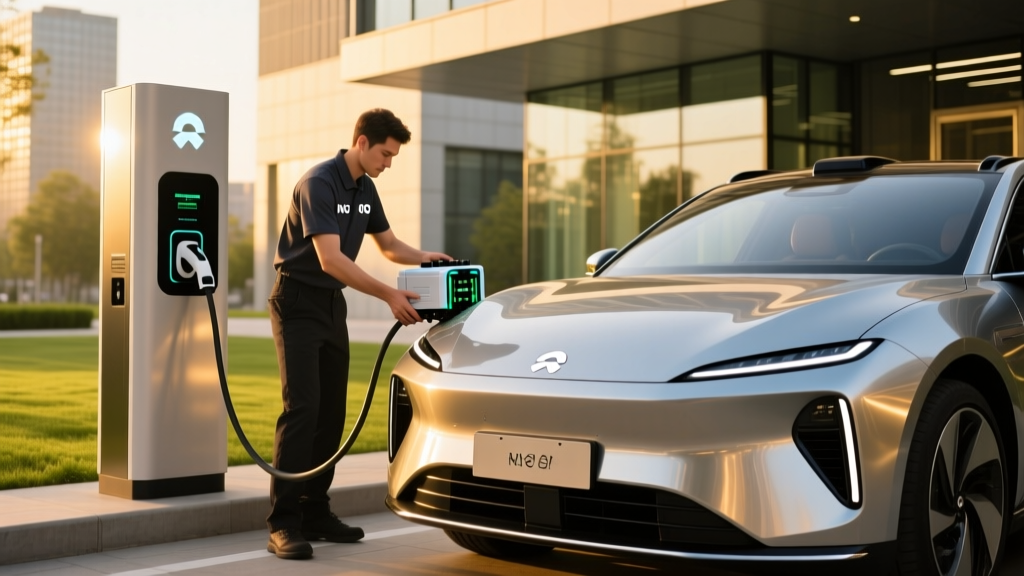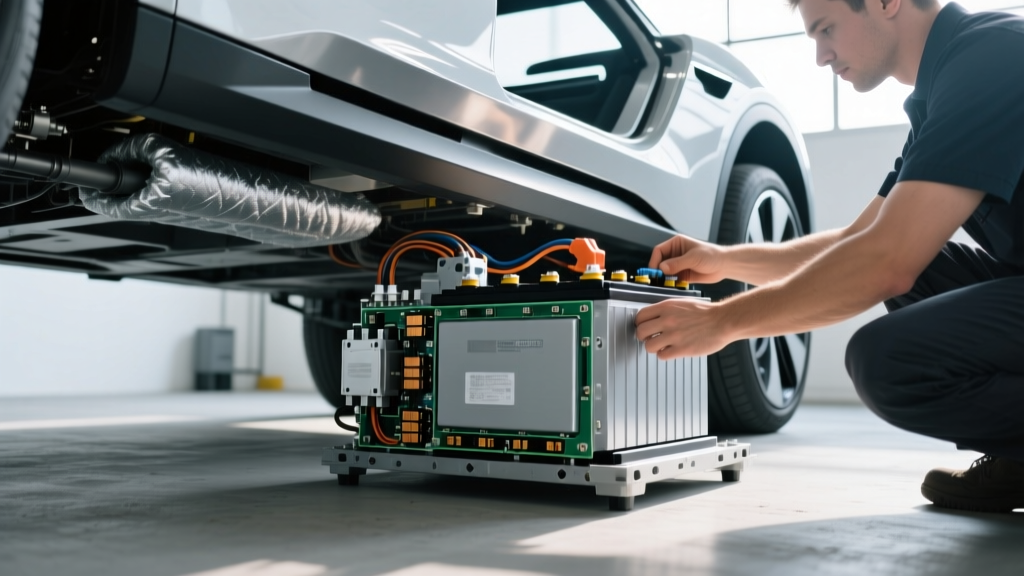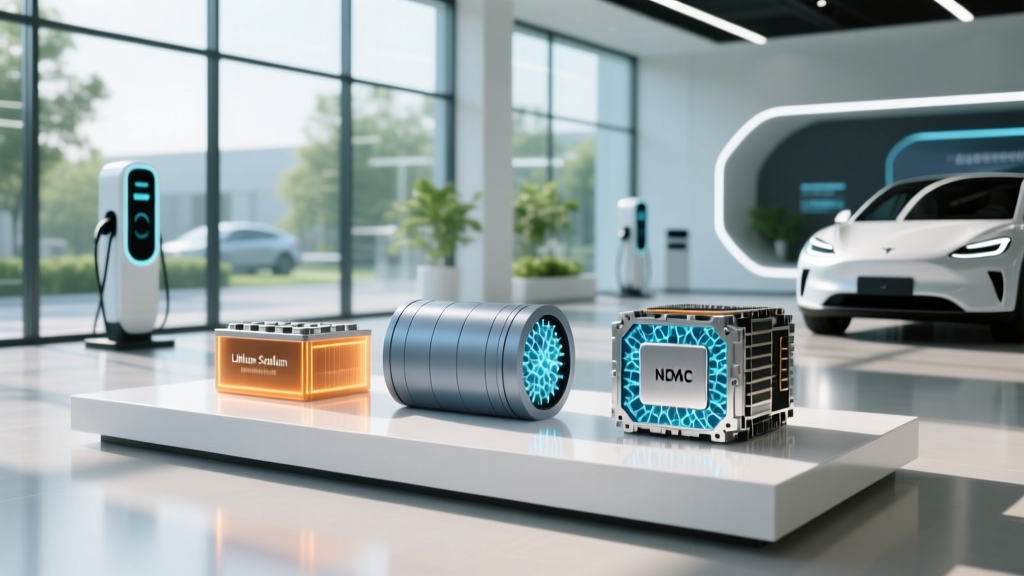
If you've been following EV battery news, you've likely seen the term lithium sodium batteries surface in research headlines and manufacturer roadmaps. Also referred to as sodium-ion (Na-ion) or lithium-sodium hybrid chemistries, these cells promise cheaper raw materials and improved cold-weather performance. But in 2026, the batteries actually powering the EVs on dealer lots still come in two dominant flavors: LFP (lithium iron phosphate) and NMC/NCA (nickel manganese cobalt / nickel cobalt aluminum).
This guide cuts through the hype. We'll compare today's production chemistries, show real degradation data, explain what your warranty actually covers, and contextualize where lithium sodium batteries fit into the near-future EV landscape — with exact numbers, not marketing fluff.
LFP vs NMC vs NCA: The Chemistry Breakdown
Every EV sold in the US in 2026 uses a lithium-ion variant. The cathode chemistry determines energy density, cycle life, thermal stability, and cost. Here's how the three production chemistries stack up:
| Attribute | LFP (LiFePO₄) | NMC (LiNiMnCoO₂) | NCA (LiNiCoAlO₂) |
|---|---|---|---|
| Energy Density (cell-level) | 160–200 Wh/kg | 220–300 Wh/kg | 250–300 Wh/kg |
| Typical Cycle Life | 3,000–6,000+ cycles | 1,000–2,500 cycles | 1,000–2,000 cycles |
| Cold-Weather Performance | Moderate (15–25% range loss at 20°F) | Better (10–20% range loss at 20°F) | Better (10–20% range loss at 20°F) |
| Thermal Stability | Excellent — very low thermal runaway risk | Good — requires active thermal management | Good — requires active thermal management |
| Cost per kWh (pack-level, 2026) | ~$90–$110 | ~$120–$145 | ~$115–$140 |
| Typical Use Case | Standard-range / value models (Tesla Model 3 RWD, BYD, base Chevy Equinox EV) | Long-range / performance models (Hyundai Ioniq 5, Ford Mustang Mach-E Extended Range) | Tesla Long Range / Performance, high-output applications |
| Recommended Charge Habit | Can charge to 100% regularly | Best kept 20–80% daily; 100% for trips only | Best kept 20–80% daily; 100% for trips only |
Key takeaway: LFP trades energy density for longevity and cost. NMC/NCA trades cycle life for more range per pound. Neither is universally "better" — the right choice depends on your driving pattern and budget.
Choose LFP if: You want maximum cycle life, plan to keep the car 10+ years, mostly charge at home, and don't need the absolute longest EPA range.
Choose NMC/NCA if: You need maximum range per charge, frequently road-trip, live in a cold climate where energy density matters for winter range, or want a performance-oriented model.
Where Do Lithium Sodium Batteries Fit In?
Sodium-ion and lithium-sodium hybrid batteries replace some or all of the lithium in the cathode with sodium — an element that's orders of magnitude more abundant and cheaper to source. Companies like CATL, HiNa Battery, and Northvolt have demonstrated production cells with energy densities reaching 140–175 Wh/kg as of late 2025, with roadmap targets of 200+ Wh/kg by 2028.
The advantages are clear:
- Lower material cost: Sodium carbonate trades at roughly 1/10th the price of lithium carbonate.
- Superior cold performance: Na-ion cells retain ~90% capacity at -4°F (-20°C), outperforming both LFP and NMC.
- No cobalt or nickel: Eliminates supply-chain and ethical sourcing concerns.
- Fast-charge tolerance: Some Na-ion cells accept 5C+ charge rates without accelerated degradation.
The trade-off: lower energy density means a sodium-ion pack delivering the same range as an NMC pack would be heavier and bulkier. That makes Na-ion best suited for compact EVs, urban runabouts, and energy storage — not long-range highway cruisers or heavy trucks.
Current availability (2026): Sodium-ion batteries are in limited production in China (BYD Seagull, certain JAC models) and in grid-storage applications. No mass-market EV sold in the US currently uses a sodium-ion traction battery. Expect early US-market vehicles with Na-ion or lithium-sodium hybrid packs in the 2028–2030 timeframe, likely in entry-level models priced under $30,000.
Real-World Battery Degradation: What the Data Shows
Battery degradation — the gradual loss of usable capacity over time — is the top concern for EV buyers. Here's what real-world fleet data tells us:
Typical Capacity Retention by Mileage (Aggregated Fleet Data):
- 50,000 miles: 95–98% capacity retained (all chemistries)
- 100,000 miles: 90–95% retained (LFP typically higher end; NMC mid-range)
- 150,000 miles: 85–92% retained (LFP cells often above 90%; NMC closer to 85–88%)
- 200,000 miles: 80–88% retained (LFP shows strong advantage here)
Sources: Geotab fleet battery health study, Recurrent Auto battery data reports, manufacturer warranty filings.
Several patterns emerge from this data:
- Most degradation happens early. The steepest capacity loss occurs in the first 10,000–20,000 miles (typically 2–4%), after which the curve flattens significantly.
- LFP degrades more slowly. Tesla Model 3 RWD (LFP) fleets show measurably better retention at 100k+ miles than Long Range (NMC/NCA) variants.
- Thermal management is critical. Vehicles with active liquid cooling (virtually all modern EVs) degrade far less than early passively-cooled models like the first-gen Nissan Leaf.
- Most batteries outlive the car. At an average degradation rate of ~0.5% per year after the initial settling period, a modern EV battery will retain 80%+ capacity at 200,000 miles — well beyond the typical US vehicle lifespan of ~12 years / ~150,000 miles per BTS data.
What the Battery Warranty Actually Covers
Federal law mandates that EV batteries carry a minimum warranty of 8 years / 100,000 miles (10 years / 150,000 miles in California and states that follow CARB standards). But the details matter:
| Vehicle | Warranty Period | Capacity Threshold | Chemistry |
|---|---|---|---|
| Tesla Model 3 RWD | 8 yr / 100,000 mi | ≥70% retention | LFP |
| Tesla Model 3 Long Range | 8 yr / 120,000 mi | ≥70% retention | NCA/NMC |
| Hyundai Ioniq 5 | 10 yr / 100,000 mi | ≥70% retention | NMC |
| Ford Mustang Mach-E | 8 yr / 100,000 mi | ≥70% retention | NMC |
| Chevy Equinox EV | 8 yr / 100,000 mi | ≥60% retention | NMC |
| BMW i4 | 8 yr / 100,000 mi | ≥70% retention | NMC |
What triggers a warranty claim: If your battery's State of Health (SoH) drops below the stated threshold within the warranty period, the manufacturer must repair or replace modules (or the full pack) to bring it above that threshold. In practice, warranty replacements are rare — most degradation stays well above 70% within the covered period.
What's NOT covered: Damage from accidents, flooding, improper modifications, or using the vehicle as a stationary power source beyond manufacturer-specified V2H/V2L limits. Normal degradation above the threshold is also not a warranty event.
EV Battery Replacement Cost: The Real Numbers
If your battery does fail outside warranty — or you're buying a used EV and planning long-term ownership — here's what replacement looks like in 2026:
| Vehicle / Pack Size | Battery kWh | Replacement Cost (Parts + Labor) | Typical Need Timeline |
|---|---|---|---|
| Tesla Model 3 RWD (LFP) | ~60 kWh | $10,000–$13,000 | 200,000+ mi (if ever) |
| Tesla Model Y Long Range | ~75 kWh | $12,000–$16,000 | 200,000+ mi (if ever) |
| Hyundai Ioniq 5 | 77.4 kWh | $14,000–$18,000 | 200,000+ mi (if ever) |
| Ford F-150 Lightning Extended Range | ~131 kWh | $22,000–$30,000 | 200,000+ mi (if ever) |
| Chevy Bolt EV (older, NMC) | 65 kWh | $13,000–$16,000 | 150,000–200,000 mi |
Context that matters:
- Module-level repair is increasingly common. Many shops can replace individual degraded modules rather than the entire pack, reducing costs to $2,000–$5,000.
- Refurbished packs are available. Third-party suppliers offer remanufactured packs at 40–60% of new-pack cost.
- Most owners never pay for a replacement. Given typical degradation curves and the 8–10 year warranty window, the vast majority of EV batteries are never replaced during original ownership. Per Recurrent Auto, fewer than 1.5% of EVs in their monitored fleet required a battery replacement under or out of warranty.
- Costs are falling. Pack-level prices have dropped from ~$400/kWh in 2015 to ~$110–$130/kWh in 2026, and the trend continues as manufacturing scales.
How to Check and Maximize Battery Health
Monitoring your EV's State of Health (SoH) and adopting smart charging habits can meaningfully extend pack life.
Checking Battery Health
- In-car displays: Tesla shows battery health in the service menu. Hyundai/Kia provides SoH via the dealer diagnostic tool (request a printout at service visits). BMW iDrive shows estimated range vs. original as a proxy.
- OBD-II apps: Tools like LeafSpy (Nissan), Scan My Tesla, and ABRP + OBD dongle combinations can read cell-level voltage data and estimate SoH.
- Third-party services: Recurrent Auto offers free battery health reports for enrolled vehicles, comparing your degradation to fleet averages.
- Dealer pre-purchase inspection: If buying a used EV, request a battery health report from the dealer — they can pull the official SoH percentage from the BMS (Battery Management System).
Battery Care Best Practices
- For NMC/NCA: Set daily charge limit to 80%. Charge to 100% only before long trips, and don't let it sit at 100% for extended periods.
- For LFP: Tesla and BYD recommend charging to 100% at least once per week to allow the BMS to calibrate cell balancing.
- Minimize DC fast charging when possible. Occasional fast charging is fine, but daily use of 150+ kW chargers accelerates degradation. Studies show a measurable difference: fleets that fast-charge >3x/week show ~2–3% additional capacity loss at 100k miles vs. primarily Level 2 charging.
- Avoid extreme SoC in extreme temps. Don't leave the car at 100% SoC in 100°F+ heat, and avoid storing at near-0% in freezing conditions for weeks.
- Use preconditioning. If your EV supports it (Tesla, Hyundai, Ford, BMW all do), precondition the battery before fast charging. This heats or cools the cells to the optimal temperature window, reducing stress and improving charge speed.
- Don't baby it too much. Modern BMS systems are sophisticated. The biggest longevity factors are avoiding sustained 100% SoC in heat and minimizing exclusive fast-charging. Normal driving and charging won't meaningfully harm the pack.
Factors That Accelerate Battery Degradation
Understanding the physics helps you make better decisions:
1. High temperatures + high SoC. This is the single worst combination for lithium-ion cells. Storing an EV at 100% charge in a hot garage (95°F+) for weeks causes electrolyte decomposition and SEI (solid electrolyte interphase) layer growth, permanently reducing capacity.
2. Frequent DC fast charging. High C-rates (charging at 2C+ repeatedly) generate internal heat and can cause lithium plating on the anode, especially in cold weather. Modern thermal management mitigates this, but physics still applies.
3. Deep discharge cycles. Regularly running the battery to 0% stresses the cells. The BMS maintains a buffer (typically 2–5 kWh below displayed 0%), but habitually draining to zero still accelerates wear.
4. Calendar aging. Even a parked EV loses capacity over time. At 70°F and 50% SoC, expect ~1–2% calendar aging per year. At 100°F and 100% SoC, that can double.
Emerging Battery Tech: What's Next (and When)
Beyond lithium sodium batteries, several next-gen technologies are in development. Here's a realistic timeline — none of these are available in US-market production EVs as of 2026:
- Solid-state batteries: Toyota, Samsung SDI, and QuantumScape target 2028–2030 for limited production. Promises: 30–50% more energy density, faster charging, improved safety. Challenge: manufacturing cost and scaling.
- Silicon-dominant anodes: Companies like Sila Nanotechnologies and Group14 are replacing graphite anodes with silicon, boosting energy density 10–20%. Early adoption in luxury/performance models expected 2027–2028.
- Sodium-ion (standalone): As noted above, likely in US-market entry-level EVs by 2028–2030. Best for urban/short-range vehicles and stationary storage.
- Lithium-sulfur: Still in lab/prototype stage. Very high theoretical energy density (~500 Wh/kg) but severe cycle-life challenges. Not expected in production vehicles before 2032+.
For buyers shopping today, LFP and NMC/NCA remain proven, well-understood chemistries with robust supply chains and extensive real-world track records.
Frequently Asked Questions
How long do EV batteries last in years and miles?
Modern EV batteries (2020+ production) are designed to last 15–20 years or 200,000+ miles while retaining 70–85% of original capacity. Fleet data from Geotab and Recurrent Auto confirms that the majority of EV batteries outlast the vehicle itself. The average US vehicle is scrapped at ~12 years / 150,000 miles, well within the battery's useful life.
How much does it cost to replace an EV battery?
Full pack replacement costs range from ~$10,000 for a 60 kWh pack (Tesla Model 3 RWD) to ~$30,000 for a 131 kWh pack (F-150 Lightning Extended Range), including labor. However, module-level repairs ($2,000–$5,000) are increasingly available, and fewer than 1.5% of EVs require any battery replacement during their lifetime.
What does the EV battery warranty cover?
Federal law requires a minimum 8-year/100,000-mile battery warranty (10/150,000 in CARB states). Coverage triggers if capacity drops below the stated threshold (typically 70% for most brands, 60% for GM) within the warranty period. The manufacturer then repairs or replaces modules/pack to restore capacity above the threshold. Physical damage, flooding, and unauthorized modifications are excluded.
How do I check my EV battery's State of Health?
Check via the vehicle's built-in diagnostics (Tesla service menu, dealer scan tools for Hyundai/Kia/BMW), OBD-II apps like Scan My Tesla or LeafSpy, or third-party services like Recurrent Auto. For used EV purchases, always request a dealer-pulled SoH report before buying.
LFP vs NMC — which battery chemistry is better for me?
LFP is better if you prioritize longevity (3,000–6,000+ cycles), lower cost, and can accept slightly less range. It also tolerates daily 100% charging. NMC/NCA is better if you need maximum range per charge, frequently drive in cold weather, or want a performance model. Both are proven and reliable — the choice depends on your driving needs, not which is objectively superior.
Will lithium sodium batteries be available in US EVs soon?
Not in 2026. Sodium-ion and lithium-sodium hybrid batteries are in limited production in China and in energy storage applications. Expect the first US-market EVs with Na-ion packs around 2028–2030, most likely in affordable compact models under $30,000. They won't replace NMC in long-range vehicles due to lower energy density, but they could make entry-level EVs significantly cheaper.