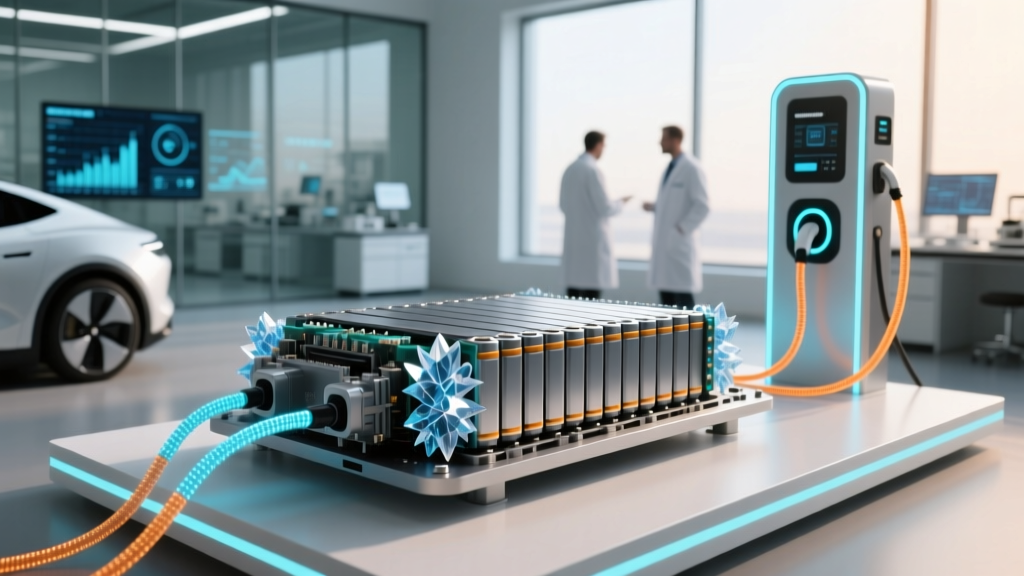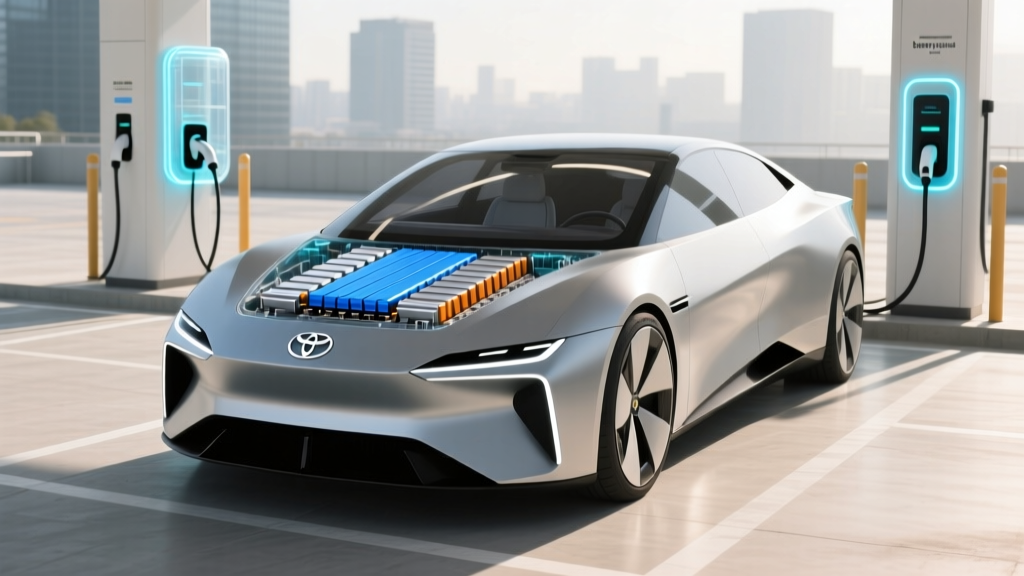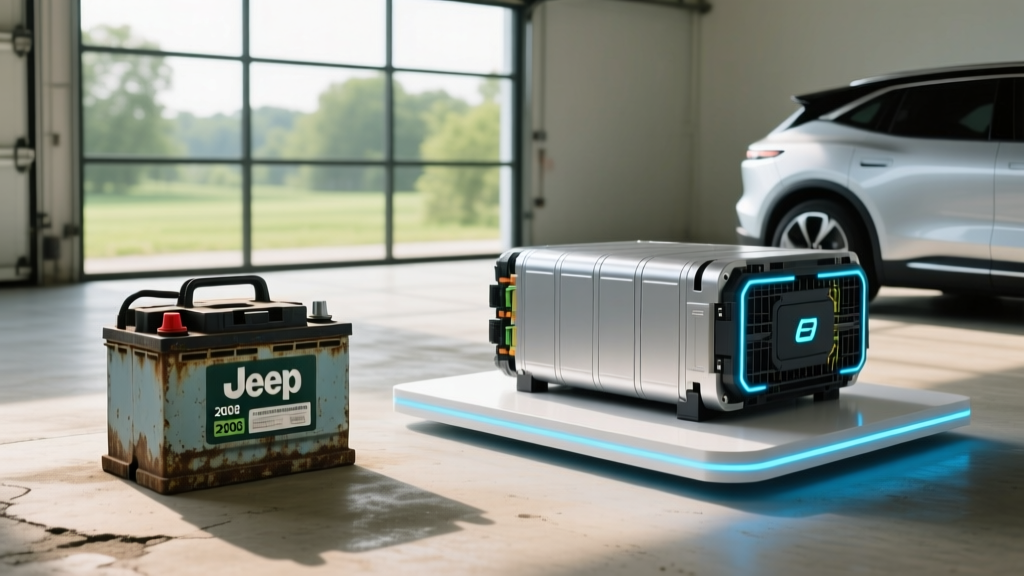
Every electric vehicle on the road is ultimately a product of what happens underground and in refineries thousands of miles from the dealership. Lithium mining — the extraction and processing of lithium from brine deposits and hard-rock spodumene ore — determines not just the price of the battery pack in your EV, but its chemistry, its energy density, its lifespan, and even its eligibility for the federal tax credit under §30D sourcing rules.
This guide connects the upstream supply chain to the practical questions every EV buyer and owner actually asks: How long will my battery last? What does it cost to replace? Should I choose LFP or NMC? And what can I do today to maximize battery health over 150,000+ miles?
Why Lithium Mining Matters for Your EV Battery
Lithium is the common thread in every modern EV traction battery, regardless of chemistry. A typical 75 kWh battery pack contains roughly 8–10 kg of lithium, though the exact amount depends on cell chemistry and energy density. Global lithium production reached approximately 180,000 metric tons in 2024 (per the U.S. Geological Survey), with Australia (hard-rock mining) and Chile (brine extraction) leading supply.
For EV buyers, lithium mining matters in three concrete ways:
- Cost. Lithium carbonate prices directly influence pack-level pricing. The 2022–2023 price spike (briefly exceeding $80,000/metric ton) pushed EV MSRP upward; the subsequent correction to roughly $13,000–$15,000/ton by early 2026 has helped bring base-model pricing back down.
- Chemistry availability. The mining and refining pipeline determines whether automakers source nickel-manganese-cobalt (NMC) or lithium iron phosphate (LFP) cells. LFP requires no nickel or cobalt — reducing reliance on those supply chains — but still depends entirely on lithium supply.
- Tax credit eligibility. Under current IRS §30D rules, the federal clean vehicle credit requires that a growing percentage of critical minerals (including lithium) be sourced from the U.S. or a free-trade-agreement partner. This directly ties your $3,750 critical-minerals credit half to where the lithium was mined and refined.
LFP vs NMC/NCA: The Chemistry Decision That Shapes Battery Life
Not all lithium-ion batteries are the same. The cathode chemistry — the positive electrode material — defines the trade-offs between energy density, cycle life, cost, and cold-weather performance. The two dominant chemistries in 2026-model EVs are NMC (nickel-manganese-cobalt) / NCA (nickel-cobalt-aluminum) and LFP (lithium iron phosphate).
| Attribute | NMC / NCA | LFP |
|---|---|---|
| Energy density (cell-level) | 250–300 Wh/kg | 160–200 Wh/kg |
| Typical cycle life (to 80% SoH) | 1,000–2,000 cycles | 3,000–5,000+ cycles |
| Cold-weather performance | Better at -10°C and below | More range loss in deep cold |
| Cost per kWh (pack-level, 2026) | ~$110–$135/kWh | ~$75–$100/kWh |
| Nickel / cobalt required | Yes | No |
| Recommended max daily SoC | 80% for longevity | 100% is acceptable |
| Thermal stability | Good (requires active management) | Excellent (inherently stable) |
| Common in 2026 models | Tesla Model Y LR, Hyundai Ioniq 5, Ford F-150 Lightning Ext Range | Tesla Model 3 RWD, Tesla Model Y RWD, Ford Mustang Mach-E Select (base) |
The practical takeaway: If you plan to own your EV for 10+ years and 150,000+ miles and live in a moderate climate, LFP's superior cycle life and lower cost are compelling. If you need maximum range in a single charge, regularly drive in sub-freezing temperatures, or tow heavy loads, NMC/NCA's energy density and cold performance edge it ahead. Neither chemistry is universally "better" — the right choice depends on your driving profile.
How Long Do EV Batteries Last? Real Degradation Data
The single most common fear among prospective EV buyers is battery failure. The data tells a reassuring story: modern EV batteries are engineered to outlast the vehicles they power.
Based on fleet data, manufacturer disclosures, and independent testing from sources like Recurrent Auto, here are observed degradation benchmarks:
| Milestone | Typical Capacity Retained (NMC) | Typical Capacity Retained (LFP) | Notes |
|---|---|---|---|
| 1 year / 15,000 mi | 95–98% | 97–99% | Initial drop is steepest, then curve flattens |
| 3 years / 45,000 mi | 90–95% | 93–97% | Most owners notice minimal real-world difference |
| 5 years / 75,000 mi | 86–92% | 90–96% | Range loss roughly proportional to capacity loss |
| 8 years / 120,000 mi | 80–88% | 87–94% | NMC may approach warranty threshold; LFP typically well above |
| 10 years / 150,000 mi | 75–85% | 84–92% | Battery still functional; range reduced but usable |
Key context: a 10% capacity loss on a 320-mile EPA-rated EV means ~288 miles of range — still far more than most daily commutes require. Catastrophic battery failure (sudden, total loss) is rare and almost always covered under warranty. Gradual degradation is the norm, and it is slow.
What the Battery Warranty Actually Covers
Federal law mandates that EV batteries carry a minimum warranty of 8 years or 100,000 miles (whichever comes first). In California Air Resources Board (CARB) states, that extends to 10 years / 150,000 miles. Most manufacturers meet or exceed these thresholds.
| Manufacturer (2026 Models) | Battery Warranty | Capacity Retention Threshold |
|---|---|---|
| Tesla (Model 3/Y RWD — LFP) | 8 yr / 100,000 mi | 70% |
| Tesla (Model Y LR/AWD — NMC) | 8 yr / 120,000 mi | 70% |
| Hyundai / Kia (Ioniq 5, EV6, EV9) | 10 yr / 100,000 mi | 70% |
| Ford (Mustang Mach-E, F-150 Lightning) | 8 yr / 100,000 mi | 70% |
| Chevrolet (Equinox EV, Blazer EV) | 8 yr / 100,000 mi | 60–70% (varies by model) |
| Rivian (R1T, R1S) | 8 yr / 120,000 mi | 70% |
| BMW (i4, iX) | 8 yr / 100,000 mi | 70% |
What triggers a warranty claim: If your battery's State of Health (SoH) drops below the stated threshold within the warranty period, the manufacturer will repair or replace the battery modules or full pack at no cost. Some manufacturers replace only degraded modules (restoring capacity above the threshold), while others replace the entire pack. The warranty covers defects and abnormal degradation — not damage from accidents, flooding, or improper modification.
EV Battery Replacement Cost: What You'd Actually Pay
If your battery degrades below usable capacity outside the warranty window — typically well past 150,000 miles — replacement is the fallback. Costs have fallen steadily as pack prices decline, but this remains a significant expense.
| Vehicle Class / Example | Battery Size | Estimated Replacement Cost (Parts + Labor) | Typical Replacement Timeline |
|---|---|---|---|
| Compact (Tesla Model 3 RWD) | 60 kWh (LFP) | $7,000–$10,000 | 15+ years / 200,000+ mi |
| Mid-size SUV (Hyundai Ioniq 5) | 77.4 kWh (NMC) | $10,000–$14,000 | 15+ years / 200,000+ mi |
| Full-size truck (F-150 Lightning) | 131 kWh (NMC) | $15,000–$22,000 | 15+ years / 200,000+ mi |
| Luxury sedan (BMW iX) | 111.5 kWh (NMC) | $16,000–$20,000 | 15+ years / 200,000+ mi |
Important context: Most EV batteries never need full replacement during the vehicle's usable life. The U.S. Department of Energy and independent fleet studies consistently show that batteries retain 75–90% capacity at 150,000 miles. When replacement does occur, refurbished or remanufactured packs are increasingly available at 30–50% below new-pack pricing. Additionally, module-level repair (replacing only the degraded cells) can cost $2,000–$5,000 instead of a full pack swap.
Factors That Accelerate — or Preserve — Battery Life
Battery degradation is not purely a function of time. How you charge, drive, and store your EV has a measurable impact on long-term State of Health.
Habits That Preserve Battery Health
- Charge to 80% daily (NMC/NCA). Sustained high SoC stresses NMC cathodes. Set your charge limit to 80% for routine use and 100% only when you need full range for a road trip. LFP owners can charge to 100% regularly without significant penalty — in fact, Tesla recommends periodic 100% charges for LFP to allow the BMS to recalibrate.
- Use DC fast charging sparingly. Occasional fast charging on road trips is fine. Daily reliance on 150+ kW DC fast charging accelerates degradation by ~1–3% over the battery's life compared to Level 2 home charging. The heat generated at high charge rates is the primary stressor.
- Precondition before fast charging. Most modern EVs automatically precondition the battery when a Supercharger or DC fast station is set as the navigation destination. This brings the battery to optimal temperature (roughly 30–40°C), enabling faster charging and reducing lithium plating risk.
- Avoid prolonged storage at extreme SoC. If storing your EV for weeks, aim for 50% SoC. Sitting at 100% or near 0% for extended periods accelerates calendar degradation.
- Park in shade or a garage in extreme heat. Sustained battery temperatures above 40°C (104°F) — common in Phoenix or Las Vegas summers — measurably increase degradation. Active thermal management helps, but reducing heat soak matters.
Habits That Accelerate Degradation
- Daily DC fast charging without battery preconditioning
- Routinely charging NMC to 100% and letting it sit for hours
- Frequent deep discharges below 10% SoC
- Aggressive track driving or sustained high-speed towing in hot weather without cooling breaks
- Ignoring firmware/software updates that optimize battery management
How to Check Your Battery's State of Health (SoH)
State of Health (SoH) is the percentage of original capacity your battery currently holds. A new EV starts at 100% SoH; a battery at 85% SoH holds 85% of its original kWh.
Here's how to monitor it across major brands:
- Tesla: No native SoH display in the app, but third-party tools like Tessie or the TeslaFi app calculate SoH from charge logs. You can also manually check: charge to 100% and compare the displayed range to the original EPA rating (adjusted for known variables).
- Hyundai / Kia: The infotainment system's EV diagnostics page shows battery SoH as a percentage, accessible through the engineering menu or dealer scan tool.
- Ford: The FordPass app provides a battery health indicator, and dealerships can pull a detailed SoH report via the diagnostic port.
- OBD-II scanners: Devices like the OBDLink SX or BLE, paired with apps like ABRP (A Better Route Planner) or Leaf Spy (for Nissan), can read SoH data directly from the BMS.
- Dealer diagnostic check: Any authorized service center can pull a formal battery health report, often required for warranty claims. Request this during routine service visits.
Track your SoH every 6–12 months. If you observe a sudden drop (more than 2–3% in a short period), schedule a dealer diagnostic — it may indicate a faulty module rather than normal degradation.
Looking Ahead: Solid-State, Silicon Anodes, and What's Realistic
Emerging battery technologies promise step-change improvements, but timelines matter. Here's where things stand as of 2026:
- Solid-state batteries: Toyota, Samsung SDI, and QuantumScape have demonstrated prototype cells with energy densities exceeding 400 Wh/kg and faster charging capability. However, mass production at automotive scale remains announced for 2027–2030 with limited initial volumes. Expect solid-state cells in premium, low-volume models first — not mainstream EVs — and anticipate a 3–5 year ramp before pricing reaches parity with current lithium-ion.
- Silicon-dominant anodes: Companies like Sila Nanotechnologies and Group14 are shipping silicon-carbon composite anode materials that boost energy density by 20–40% compared to graphite anodes. These are entering production in 2026–2027 model-year vehicles (Mercedes-Benz has confirmed adoption for the G-Class EV). This is a near-term, real improvement — not a distant promise.
- Sodium-ion batteries: CATL and BYD are producing sodium-ion cells for lower-cost, shorter-range applications. These use no lithium at all, reducing mining dependency, but offer lower energy density (~120–160 Wh/kg). Expect them in urban-focused, budget EVs — not long-range models.
None of these technologies make current EV batteries obsolete. Today's NMC and LFP packs, with proper care, are engineered for 200,000+ mile lifespans. The improvements coming will expand the envelope, not invalidate what's on sale now.
Frequently Asked Questions
How long do EV batteries last in years and miles?
Modern EV batteries (2020 and later) are designed to retain 70–85% of original capacity at 150,000–200,000 miles, which typically translates to 12–18 years of average use. LFP chemistries trend toward the higher end of that range. Full failure before 150,000 miles is uncommon and typically covered under the 8-year / 100,000-mile federal warranty minimum.
How much does an EV battery cost to replace?
Replacement costs range from approximately $7,000 for a compact LFP pack (60 kWh) to $22,000 for a large NMC truck pack (130+ kWh), including parts and labor. However, most batteries never require replacement during the vehicle's life. Module-level repair, when applicable, costs $2,000–$5,000. Refurbished packs are increasingly available at 30–50% below new pricing.
What does the EV battery warranty cover?
The federal minimum is 8 years / 100,000 miles (10 yr / 150,000 mi in CARB states). Coverage applies if capacity drops below the manufacturer's threshold — typically 70% of original capacity. The warranty covers defects and abnormal degradation, not accident damage, flood damage, or unauthorized modifications. Some manufacturers replace individual modules rather than the full pack.
How do I check and maximize my EV battery health?
Check SoH through your vehicle's infotainment diagnostics, the manufacturer's app (FordPass, Tesla app with third-party tools), or an OBD-II scanner. To maximize health: charge NMC to 80% daily (LFP to 100% is fine), minimize DC fast charging, precondition before fast charges, avoid storing at extreme SoC levels, and park in shade during extreme heat.
LFP vs NMC — which battery chemistry is better for me?
Choose LFP if you prioritize longevity (3,000–5,000 cycle life), lower cost, and can accept slightly less range and more cold-weather range loss. Choose NMC/NCA if you need maximum range per charge, regularly drive in sub-freezing temperatures, or tow heavy loads. Both chemistries will reliably last 150,000+ miles with proper care.
Does lithium mining affect whether I get the federal tax credit?
Yes. Under IRS §30D rules, the critical-minerals portion of the clean vehicle credit (currently $3,750 of the total $7,500) requires that a specified percentage of critical minerals — including lithium — be extracted or processed in the United States or a country with which the U.S. has a free trade agreement. This percentage increases annually. Eligibility also depends on buyer income caps, vehicle MSRP caps, and final assembly in North America. Always verify current-year requirements at irs.gov before purchasing.