Search for "lithium mining before and after" and you'll find satellite images of brine pools in Chile's Atacama Desert and aerial shots of Australian hard-rock mines. Those images tell part of the story — the extraction phase — but they leave out what happens across the 15 to 20 years that lithium actually spends inside your electric vehicle's battery pack. As an EV owner and analyst who has tracked degradation curves across multiple vehicles, I want to close that gap: here's the full lifecycle of lithium in an EV battery, from mine to module to recycling facility, anchored in real degradation data, warranty terms, and replacement economics.
Lithium Mining Before and After: What Extraction Actually Looks Like
Lithium enters the EV supply chain through two primary extraction methods, and the "before and after" transformation differs dramatically between them.
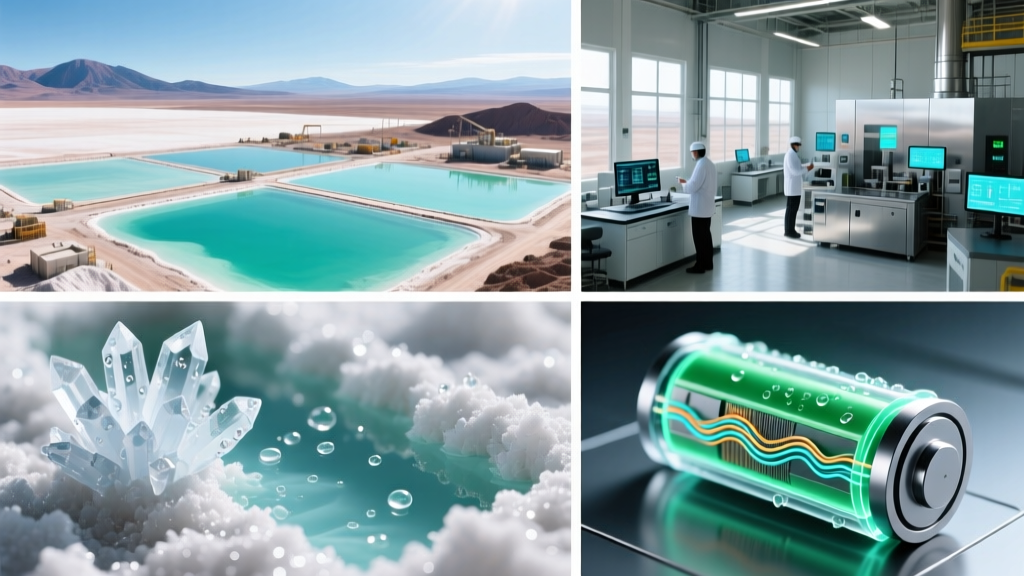
Brine extraction (South America): Lithium-rich saltwater is pumped from underground aquifers into evaporation ponds in Chile, Argentina, and Bolivia. The "before" is arid desert terrain; the "after" is a grid of mineral-concentrated pools spanning thousands of acres over 12 to 18 months of solar evaporation. Companies like SQM and Albemarle operate the largest sites. Water consumption is the primary environmental concern — brine extraction uses an estimated 500,000 gallons per metric ton of lithium carbonate equivalent (LCE), though newer direct lithium extraction (DLE) technologies aim to reduce this by up to 90%.
Hard-rock mining (Australia, primarily): Spodumene ore is extracted via conventional open-pit mining, crushed, and roasted at roughly 1,050°C to convert the mineral from alpha to beta phase before acid roasting yields lithium hydroxide. The "before" is undisturbed bushland; the "after" is a terraced pit with tailings dams. Australia's Greenbushes mine, operated by Tianqi Lithium and Albemarle, is the world's largest hard-rock lithium source. Energy intensity is higher than brine, but extraction is faster — weeks versus months.
Once refined to battery-grade purity (99.5%+), lithium is converted into cathode precursor materials. For NMC (nickel-manganese-cobalt) chemistries, lithium hydroxide is combined with nickel, manganese, and cobalt sulfates. For LFP (lithium iron phosphate), lithium carbonate is combined with iron phosphate — eliminating nickel and cobalt entirely, which has reshaped the economics and ethics of the supply chain since 2022.
LFP vs NMC/NCA: Chemistry Trade-Offs That Define Your Battery
The choice between LFP and NMC/NCA (nickel-manganese-cobalt / nickel-cobalt-aluminum) chemistry is the single most consequential battery decision in a 2026 EV purchase. Here's how they compare across the metrics that matter:
| Attribute | LFP (Lithium Iron Phosphate) | NMC/NCA (Nickel-Based) |
|---|---|---|
| Energy density (cell-level) | 160–180 Wh/kg | 250–300 Wh/kg |
| Cycle life (to 80% SoH) | 3,000–5,000+ cycles | 1,000–2,000 cycles |
| Cold-weather performance | Greater range loss below 20°F; slower charge acceptance | Better low-temp conductivity; preconditioning helps |
| Thermal stability | Excellent — higher runaway threshold (~270°C) | Good — requires more active thermal management |
| Cost (per kWh, pack-level) | ~$95–$110 | ~$120–$145 |
| Critical mineral exposure | No cobalt or nickel | Nickel + cobalt supply chain risk |
| Recommended SoC range | Can charge to 100% regularly | 80% daily max recommended for longevity |
| Common 2026 applications | Tesla Model 3/Y RWD, Ford Mustang Mach-E Select (LFP option), BYD, Rivian Standard | Long-range/performance trims, Hyundai Ioniq 5/6, BMW iX, Lucid, Porsche Taycan |
The practical takeaway: If your daily commute is under 200 miles and you can charge to 100% at home overnight, LFP offers superior longevity and lower lifetime cost. If you need maximum range for road trips or live in a cold climate where every mile of buffer matters, NMC/NCA's higher energy density justifies the trade-off in cycle life. Many automakers now offer both chemistries across their lineup — Tesla's RWD trims use CATL-sourced LFP, while Long Range and Performance models use NMC.
How Long Do EV Batteries Actually Last? Degradation Data
This is where fear-mongering meets reality. The data consistently shows that modern EV battery packs degrade far more slowly than early adopters feared — but the curve is not linear.
Typical degradation pattern:
- Year 1 / 10,000–15,000 miles: 2–4% capacity loss. This initial "break-in" drop reflects solid electrolyte interphase (SEI) layer formation and is the steepest part of the curve.
- Years 2–5 / 15,000–75,000 miles: Roughly 1–2% loss per year. A 2023 Tesla Model 3 at 60,000 miles typically retains 90–94% of original capacity.
- Years 6–10 / 75,000–150,000 miles: Degradation continues to slow. Fleet data from Geotab's analysis of 10,000+ EVs shows an average of 82–88% State of Health at the 8-year mark across chemistries.
- Years 10–15+ / 150,000–250,000 miles: Most NMC packs retain 70–80% capacity; LFP packs often still hold 80–90%. At this point, the vehicle is more likely to be retired for non-battery reasons.
Real-world data points:
- Tesla's 2025 Impact Report states that Model 3/Y battery packs retain approximately 85% of original capacity at 150,000 miles — and most vehicles are scrapped before reaching that mileage.
- The Hyundai/Kia 8-year/100,000-mile warranty guarantees 70% capacity retention, but independent testing by Recurrent Auto shows most Ioniq 5 owners retain 88–92% at the warranty boundary.
- High-mileage Tesla Model S vehicles (300,000+ miles) have demonstrated 70–75% SoH — functional but noticeably reduced range.
The bottom line: the vast majority of EV batteries will outlast their vehicles. Full pack replacement before 150,000 miles is uncommon unless a manufacturing defect triggers a warranty claim.
Battery Warranty Terms: What's Covered and What Isn't
Federal law mandates a minimum 8-year/100,000-mile warranty on EV battery packs (10 years/150,000 miles in California and states that follow CARB standards). But the details matter enormously:
| Manufacturer | Warranty Period | Capacity Threshold | Notes |
|---|---|---|---|
| Tesla | 8 yr / 120,000 mi (Model 3/Y); 8 yr / 150,000 mi (S/X) | 70% retention | Module-level replacement permitted |
| Hyundai / Kia | 8 yr / 100,000 mi (federal); 10 yr / 150,000 mi (CARB states) | 70% retention | Full pack or module replacement at dealer discretion |
| Ford | 8 yr / 100,000 mi | 70% retention | Covers Lightning, Mach-E; module service available |
| GM (Chevrolet, Cadillac) | 8 yr / 100,000 mi | 60% retention (some trims 70%) | Ultium platform; verify trim-specific terms |
| Rivian | 8 yr / 175,000 mi | 70% retention | Longest mileage coverage among mainstream brands |
| BMW | 8 yr / 100,000 mi | 70% retention | iX, i4, i7 covered; module-level service |
What's covered: Capacity degradation below the stated threshold, manufacturing defects, thermal management system failures, and cell imbalance issues.
What's typically excluded: Damage from accidents, flooding, or improper aftermarket modifications; degradation from consistent DC fast charging at maximum rates (though this is difficult for manufacturers to prove); and cosmetic corrosion on battery enclosures that doesn't affect function.
Pro tip: Document your State of Health readings at regular intervals using your vehicle's built-in diagnostics or an OBD-II scanner. If you believe you've crossed the warranty threshold, having a historical log strengthens your claim.
EV Battery Replacement Cost: Numbers, Context, and When It's Needed
Replacement cost is the most-cited fear in EV ownership discussions. Here's what the numbers actually look like in 2026:
| Vehicle / Pack Size | Battery Capacity | Full Pack Cost (Parts + Labor) | Module-Level Repair |
|---|---|---|---|
| Tesla Model 3 RWD (LFP) | ~60 kWh | $12,000–$16,000 | $2,500–$4,500 per module |
| Tesla Model Y Long Range (NMC) | ~82 kWh | $16,000–$22,000 | $3,000–$5,000 per module |
| Hyundai Ioniq 5 (NMC) | ~77.4 kWh | $14,000–$19,000 | $2,800–$4,200 per module |
| Ford F-150 Lightning Extended Range | ~131 kWh | $22,000–$32,000 | $4,000–$7,000 per module |
| Chevrolet Silverado EV | ~200 kWh | $30,000–$42,000 | $5,000–$8,500 per module |
| BMW iX xDrive50 | ~111.5 kWh | $20,000–$28,000 | $3,500–$6,000 per module |
When replacement is actually needed: The overwhelming majority of EV owners will never pay out of pocket for a full pack replacement. Battery packs that fail catastrophically (cell shorts, coolant intrusion) almost always do so within the warranty period. Packs that degrade gradually remain usable well past 70% SoH — a 300-mile EPA vehicle at 70% health still delivers 210 miles of range, adequate for most daily driving.
The module-level revolution: Modern packs like the Ultium platform, Hyundai's E-GMP, and Tesla's structural packs increasingly allow module-level or cell-group-level replacement rather than full-pack swaps. A single failed module can be replaced for $2,500–$7,000 instead of $15,000–$30,000. This is a critical development that reduces worst-case ownership costs substantially.
Factors That Accelerate (or Preserve) Battery Health
Battery degradation is driven by electrochemical stress. The following factors have the most measurable impact on long-term State of Health:
- Avoid sustained 100% SoC (NMC/NCA only): For nickel-based chemistries, daily charging to 80% and reserving 100% for road trips reduces cathode stress. LFP owners can safely charge to 100% daily — in fact, periodic full charges help the BMS calibrate.
- Minimize DC fast charging when possible: Occasional Supercharging or Electrify America stops are fine, but daily DCFC sessions above 150 kW accelerate degradation by roughly 1–2% over the pack's life compared to Level 2 home charging. The charge curve tapers significantly above 80% SoC, so charging to 100% on DCFC is both slow and stressful for cells.
- Precondition before fast charging: Battery preconditioning (available on Tesla, Hyundai/Kia E-GMP, Ford, and most modern platforms) warms cells to ~30–35°C before accepting high-power DC. This reduces lithium plating risk and improves charge acceptance. Always navigate to a charger using the car's built-in routing to trigger preconditioning automatically.
- Avoid extreme SoC storage: If storing a vehicle for 2+ weeks, set SoC to 50–60%. Storing at 100% accelerates calendar degradation; storing below 10% risks cell damage from over-discharge.
- Park in shade or a garage during extreme heat: Sustained ambient temperatures above 95°F with high SoC is the worst combination for calendar aging. Thermal management systems mitigate this, but reducing exposure is free insurance.
- Cold-weather expectations: Below 20°F, expect 20–30% temporary range loss (heating loads + reduced regen). This is not degradation — capacity returns when temperatures normalize. Using seat heaters and a heat pump (standard on most 2026 EVs) rather than cabin resistance heating preserves range.
How to Check Your EV Battery's State of Health
Monitoring SoH gives you early warning of abnormal degradation and documentation for warranty claims. Here are the primary methods:
1. Built-in vehicle diagnostics: Tesla's service menu (accessible via the software screen) displays battery health percentage. Hyundai/Kia vehicles show SoH through the dealer diagnostic tool, though some 2025+ models have added an owner-facing SoH indicator in the infotainment system. Ford's MyFordPass app provides estimated range vs. original, which can be used to infer SoH.
2. OBD-II scanner + app: Devices like the OBDLink MX+ paired with apps such as EV Health or Car Scanner ELM OBD2 can read the battery management system's reported SoH, cell voltage spread, and isolation resistance. This works on most 2020+ EVs and provides data comparable to dealer tools.
3. Third-party testing services: Companies like Recurrent Auto and Geotab offer fleet and individual battery health reports based on telematics data. Some used-EV marketplaces (Carvana, CarMax) now include battery health certificates.
4. Dealer diagnostic check: Request a battery health report during routine service. Most dealerships will provide this at no charge, and it creates an official record useful for warranty claims.
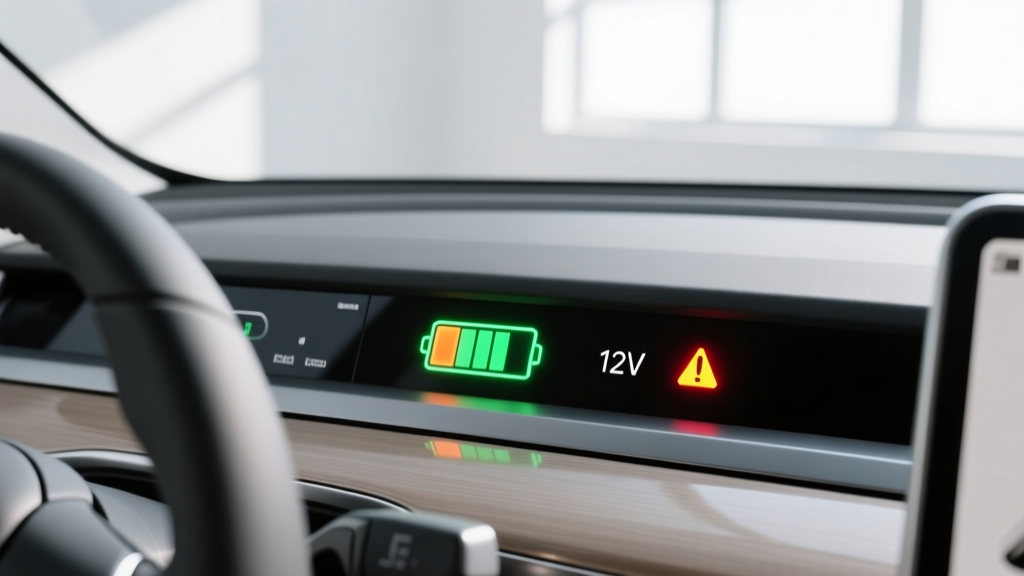
What to watch for: Cell voltage spread greater than 50 mV at rest may indicate an imbalanced pack. A sudden SoH drop of more than 3–5% over a single month warrants a dealer visit. Gradual, linear decline is normal.
Beyond Lithium: Solid-State and Emerging Battery Tech
The "after" in lithium's lifecycle is being reshaped by next-generation technologies that aim to reduce mining intensity while improving performance. Here's where things stand in 2026 — with realistic timelines, not concept-car promises:
Solid-state batteries: Toyota, Samsung SDI, and QuantumScape have demonstrated solid-state cells with energy densities exceeding 400 Wh/kg — roughly double current NMC. Toyota has announced limited production in select 2027–2028 models, but these will be low-volume, premium applications. Widespread solid-state adoption at scale is realistically a 2029–2032 timeline. The lithium requirement actually increases in some solid-state designs that use lithium metal anodes, though total material per kWh drops due to higher energy density.
Silicon-dominant anodes: Companies like Sila Nanotechnologies and Group14 are replacing graphite anodes with silicon composites, boosting energy density by 20–40% at the cell level. These are already shipping in limited applications (the Mercedes G-Class 580e uses a Sila anode) and will become more common through 2027–2028. This reduces the lithium-per-kWh ratio modestly.
Sodium-ion batteries: CATL and BYD have begun shipping sodium-ion packs in Chinese-market vehicles. Sodium is vastly more abundant than lithium, but energy density (~120–150 Wh/kg) limits these to urban runabouts and energy storage. In the US, sodium-ion is unlikely to appear in passenger vehicles before 2028–2029 at the earliest.
Battery recycling — the true "after": Companies like Redwood Materials (founded by Tesla co-founder JB Straubel) and Li-Cycle recover 95%+ of lithium, nickel, cobalt, and copper from spent packs. Redwood's Nevada campus is producing enough recycled cathode material to supply 1 million EVs annually by 2027. This means the lithium mined today will likely cycle through multiple vehicle lifetimes before reaching end of life — a critical nuance missing from most "before and after" mining narratives.
The Complete Lifecycle: Putting Lithium Mining in Context
The "before and after" framing of lithium mining often implies a linear story: pristine land, then scarred earth. The reality is more circular. A single metric ton of battery-grade lithium powers roughly 70–90 EV battery packs over its first life. Through recycling, that same lithium can be recovered and re-enter the supply chain at 95%+ purity, reducing the need for virgin extraction. Over 15–20 years of combined use across multiple vehicles, the environmental impact per mile driven drops substantially.
For context, the Union of Concerned Scientists estimates that even on the dirtiest US electrical grids, an EV produces fewer lifetime emissions than a comparable gasoline vehicle — and the gap widens every year as the grid decarbonizes. The lithium mining phase is a real environmental cost, but it is a front-loaded, one-time extraction that powers 200,000+ miles of driving, not a recurring consumption like gasoline.
Frequently Asked Questions
How long do EV batteries last in years and miles?
Most modern EV battery packs retain 80–90% of original capacity at the 8-year/100,000-mile mark and remain functional well beyond 200,000 miles. LFP chemistry packs often exceed 3,000 charge cycles before reaching 80% SoH, which translates to 500,000+ miles in a 300-mile-range vehicle. Full failure requiring replacement is rare within the first 10 years of ownership.
How much does it cost to replace an EV battery?
Full pack replacement ranges from $12,000–$42,000 depending on pack size and vehicle, but most repairs are module-level at $2,500–$8,500 per module. The vast majority of owners never pay for replacement — packs either remain functional for the vehicle's life or are replaced under the federally mandated 8-year/100,000-mile warranty.
What does the EV battery warranty actually cover?
Federal law requires coverage for capacity loss below a specified threshold (typically 70% retention) over 8 years/100,000 miles, plus defects in materials and workmanship. It does not cover damage from accidents, flooding, or unauthorized modifications. CARB states (California and adopters) extend coverage to 10 years/150,000 miles.
How can I check and maximize my EV battery health?
Use built-in diagnostics, an OBD-II scanner with an EV-compatible app, or request a dealer health report. To maximize longevity: charge NMC/NCA packs to 80% daily (LFP to 100%), precondition before DC fast charging, avoid storing at extreme SoC levels, and minimize daily DCFC use when Level 2 home charging is available.
Is LFP or NMC better for my EV?
LFP wins on longevity (3,000–5,000+ cycles), cost, and thermal safety, making it ideal for daily commuting and home charging. NMC/NCA wins on energy density (250–300 Wh/kg vs. 160–180 Wh/kg) and cold-weather performance, making it better for long-range needs and cold climates. Many 2026 EVs offer both — choose based on your driving pattern, not marketing.
Does lithium mining get recycled or reused?
Yes. Battery recyclers like Redwood Materials and Li-Cycle recover 95%+ of lithium from spent packs. Recycled lithium meets battery-grade purity standards and is already entering new cell production. As the first generation of EVs reaches end of life (2026–2030), recycled lithium will increasingly supplement virgin mining, reducing the per-vehicle extraction footprint.