Why Argentina's Lithium Triangle Matters for Your EV
If you've ever wondered where the lithium in your EV battery comes from, the answer increasingly points to South America. Argentina sits on the so-called "Lithium Triangle" — a region shared with Chile and Bolivia that holds roughly 58% of the world's identified lithium resources, according to the U.S. Geological Survey. In 2025, Argentina surpassed Australia as a top-three global lithium producer, with projects like Olaroz, Cauchari-Olaroz, and Sal de Vida ramping output to feed the insatiable demand from EV battery manufacturers.
For EV buyers and owners, this matters more than you might think. The source and chemistry of lithium directly influence which batteries end up in which vehicles, how much they cost, and how they perform over a decade of driving. Argentina's brine-extraction lithium primarily feeds into NMC (nickel-manganese-cobalt) and LFP (lithium iron phosphate) cathode supply chains — the two dominant chemistries in every EV sold today.
This guide connects the supply chain dots and then gives you the practical battery knowledge every EV owner needs: chemistry trade-offs, real degradation numbers, warranty coverage, replacement costs, and how to maximize your pack's lifespan.
From Argentine Salt Flats to Your Battery Pack: The Supply Chain
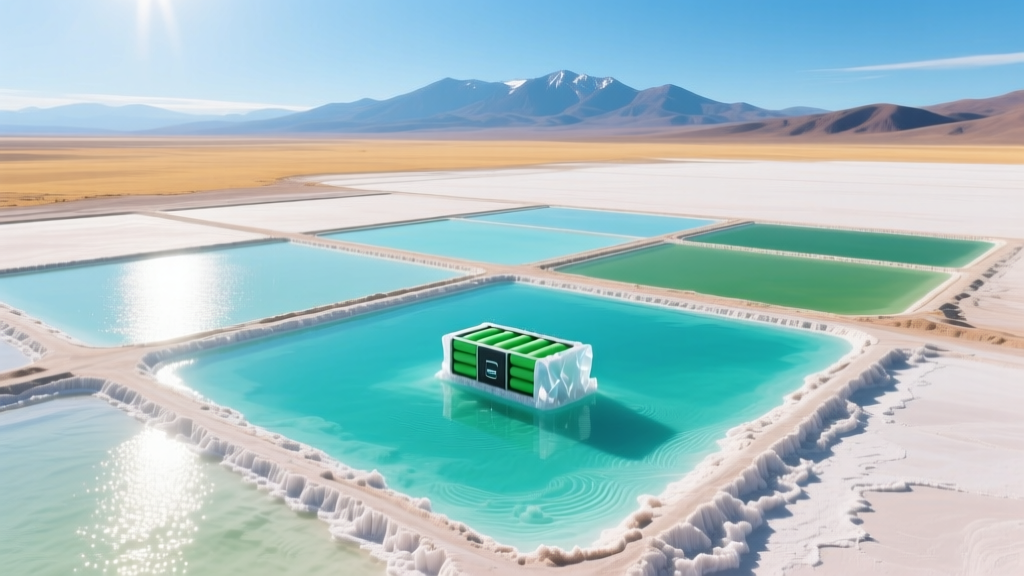
Lithium extraction in Argentina's Jujuy, Salta, and Catamarca provinces relies on evaporative brine processing — pumping lithium-rich saltwater from underground reservoirs into solar evaporation ponds. The process takes 12–18 months but produces lithium carbonate at lower cost than hard-rock mining in Australia. That cost advantage flows through to battery cell manufacturers like CATL, LG Energy Solution, and Panasonic, and ultimately to automakers.
The relevance to U.S. buyers extends beyond pricing. Under the IRS §30D clean vehicle credit rules, at least a portion of critical minerals in the battery must be sourced from the U.S. or a free-trade-agreement partner to qualify for the $3,750 critical-minerals half of the $7,500 maximum credit. Argentina does not currently have a comprehensive FTA with the United States, which means vehicles relying heavily on Argentine lithium carbonate may face eligibility challenges — though supply chains are complex and automakers blend sources. Always verify eligibility on a per-vehicle basis at the point of sale.
LFP vs NMC: The Two Chemistries Dominating EVs
Every mainstream EV battery in 2026 uses one of two cathode chemistries. Understanding the difference is the single most important battery decision you'll make.
| Attribute | LFP (Lithium Iron Phosphate) | NMC (Nickel-Manganese-Cobalt) |
|---|---|---|
| Energy Density | Lower (~160 Wh/kg cell-level) | Higher (~230–280 Wh/kg cell-level) |
| Cycle Life | 3,000–5,000+ cycles | 1,000–2,000 cycles |
| Cold-Weather Performance | Weaker; ~15–25% range loss below 32°F | Better; ~10–18% range loss below 32°F |
| Cost per kWh | ~$85–100 (2026 cell pricing) | ~$110–135 (2026 cell pricing) |
| State of Charge Habit | Can charge to 100% daily without harm | Best kept 20–80% daily; 100% for trips only |
| Thermal Stability | Superior; less prone to thermal runaway | Good, but requires more robust thermal management |
| Common in | Tesla Model 3 RWD, Model Y RWD, Ford Mustang Mach-E Select, Rivian Standard | Tesla Long Range, Hyundai Ioniq 5/6, BMW i4/iX, Lucid Air, Rivian Max |
| Cobalt Content | None | Reduced but present (~5–10% of cathode) |
The practical takeaway: If you want maximum range per charge and drive in cold climates, NMC delivers. If you prioritize longevity, lower cost, and plan to keep the car 10+ years, LFP is increasingly compelling. Neither is universally "better" — it depends on your driving pattern.
How Long Do EV Batteries Actually Last?
The fear that EV batteries need replacing every few years is not supported by fleet data. Modern liquid-cooled battery packs are engineered for the life of the vehicle. Here's what the numbers show:
Typical Degradation Curve (Fleet & Owner Data, 2020–2025 Vehicles)
| Time / Mileage | Average Capacity Retention (NMC) | Average Capacity Retention (LFP) |
|---|---|---|
| Year 1 / 15,000 mi | 96–98% | 97–99% |
| Year 3 / 45,000 mi | 92–95% | 94–97% |
| Year 5 / 75,000 mi | 88–93% | 91–95% |
| Year 8 / 120,000 mi | 82–88% | 87–92% |
| Year 10 / 150,000 mi | 78–85% | 84–90% |
Sources: Recurrent Auto fleet data (2024–2025), Geotab longitudinal study, owner-reported data from TeslaFi and A Better Routeplanner. Individual results vary based on climate, charging habits, and thermal management.
Most EV batteries lose roughly 1–2% capacity per year in the first few years, then the degradation curve flattens. At the 8-year / 100,000-mile mark — the federal minimum warranty threshold — the vast majority of packs retain well above 70% of original capacity. Full battery replacement before 150,000 miles is uncommon for liquid-cooled packs.
What the Battery Warranty Actually Covers
Federal law mandates a minimum battery warranty of 8 years / 100,000 miles (whichever comes first) for EVs sold in the U.S. California Air Resources Board (CARB) states extend this to 10 years / 150,000 miles. Here's how major manufacturers structure their coverage:
| Manufacturer | Warranty Period | Capacity Threshold | Notes |
|---|---|---|---|
| Tesla (Model 3/Y RWD — LFP) | 8 yr / 100,000 mi | 70% retention | Shorter miles due to RWD trim |
| Tesla (Model 3/Y Long Range) | 8 yr / 120,000 mi | 70% retention | Higher mileage threshold |
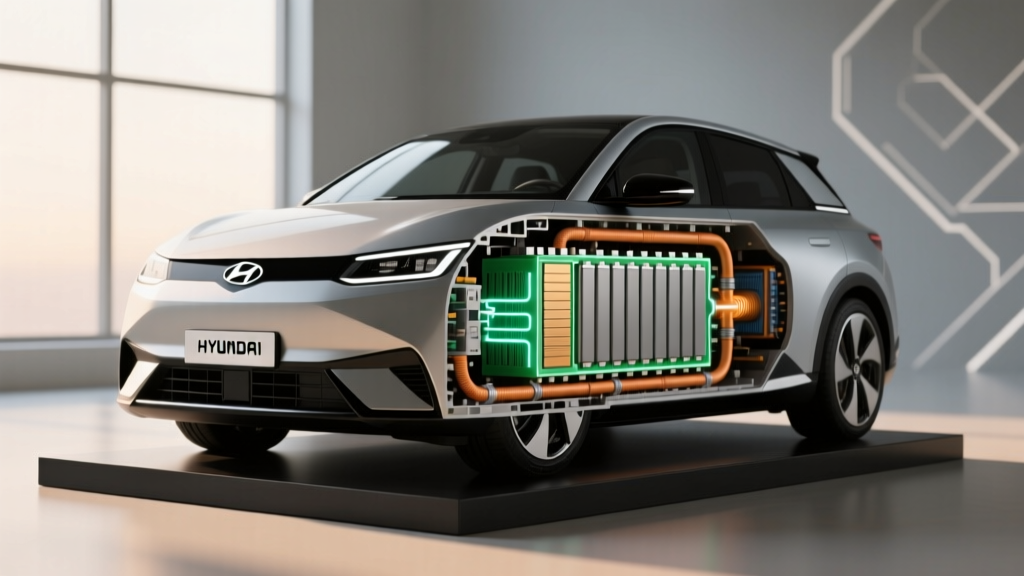
| Hyundai / Kia | 10 yr / 100,000 mi | 70% retention | Among the longest coverage |
| Ford (Mustang Mach-E) | 8 yr / 100,000 mi | 70% retention | Transferable to second owner |
| Rivian | 8 yr / 175,000 mi | 70% retention | High mileage cap for adventure use |
| BMW (i4 / iX) | 8 yr / 100,000 mi | 70% retention | Includes battery management system |
Key detail: The warranty covers capacity below the threshold — typically 70% of original usable capacity. If your 75 kWh pack drops to 50 kWh (67%) at year 6, you'd have a warranty claim. If it drops to 54 kWh (72%), you would not. The warranty does not cover cosmetic issues or 12V auxiliary battery failures.
EV Battery Replacement Costs: The Real Numbers
Replacement cost is the most anxiety-inducing topic in EV ownership. Here's the reality: most packs outlive the car. But if a replacement is needed — due to physical damage, manufacturing defect outside warranty, or extreme degradation — here's what it costs:
| Vehicle / Battery Size | Usable Capacity | Estimated Replacement Cost (2026) | When Typically Needed |
|---|---|---|---|
| Tesla Model 3 RWD (LFP) | 57.5 kWh | $10,000–$13,000 | Rare before 200,000 mi |
| Tesla Model Y Long Range (NMC) | 75 kWh | $13,000–$16,000 | Rare before 180,000 mi |
| Hyundai Ioniq 5 (NMC) | 77.4 kWh | $14,000–$18,000 | Rare before 175,000 mi |
| Ford F-150 Lightning Extended (NMC) | 131 kWh | $22,000–$28,000 | Rare before 150,000 mi |
| Chevrolet Equinox EV (NMC) | 85 kWh | $14,000–$17,000 | Rare before 175,000 mi |
| Rivian R1T Max Pack (NMC) | 149 kWh | $25,000–$32,000 | Rare before 150,000 mi |
These are full-pack replacement figures including labor. Costs have been declining roughly 8–12% per year as cell prices fall and third-party refurbishment services expand. Module-level repairs (replacing individual cell modules rather than the entire pack) can cut costs by 40–60% and are increasingly available through independent EV shops.
What Kills an EV Battery — and How to Prevent It
Battery degradation is driven by a handful of well-understood stress factors. Here's your care checklist, ranked by impact:
Battery Longevity Checklist
- Avoid sustained high State of Charge (NMC only): Daily charging to 100% on NMC accelerates degradation. Set your charge limit to 80% for daily use; charge to 100% only before long trips. LFP owners can safely charge to 100% daily — in fact, Tesla recommends periodic 100% charges for LFP calibration.
- Minimize DC fast charging frequency: Occasional DC fast charging (50–350 kW) is fine. Daily reliance on it generates cumulative heat stress. If you have Level 2 home charging (7–11.5 kW), use it as your primary method. Data from Recurrent Auto shows vehicles that fast-charge more than 3x/week degrade ~1–3% faster over 5 years than those primarily using Level 2.
- Precondition before fast charging: Most EVs automatically precondition the battery when you navigate to a DC fast charger. This warms or cools the pack to the optimal temperature window (roughly 77–95°F / 25–35°C), enabling faster charging and reducing thermal stress. If your EV has a manual preconditioning toggle, use it in cold weather.
- Avoid extreme SoC storage: Don't leave the car parked at 100% or below 10% for days or weeks. For extended storage, aim for 50% SoC.
- Park in shade or a garage when possible: Sustained high ambient temperatures (above 95°F / 35°C) accelerate calendar degradation. Liquid-cooled packs handle this better than passively cooled ones, but heat is the universal enemy of lithium-ion chemistry.
- Don't baby it too much: Driving the car regularly and using a moderate mix of charge speeds is better than over-cautious storage. Batteries degrade whether you use them or not (calendar aging). Regular use with sensible habits is the optimal strategy.
Monitoring Your Battery's State of Health (SoH)
State of Health (SoH) is the percentage of original capacity your battery can still hold. Here's how to check it:
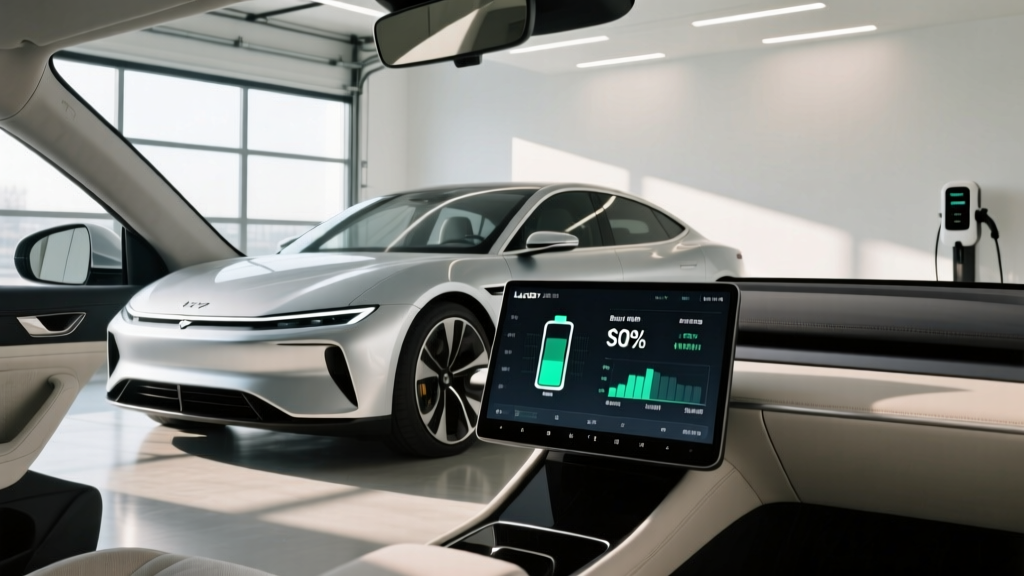
- In-vehicle displays: Tesla shows estimated range at 100% charge, which you can compare to the original EPA figure. Hyundai/Kia's infotainment includes a battery health readout in the EV settings menu.
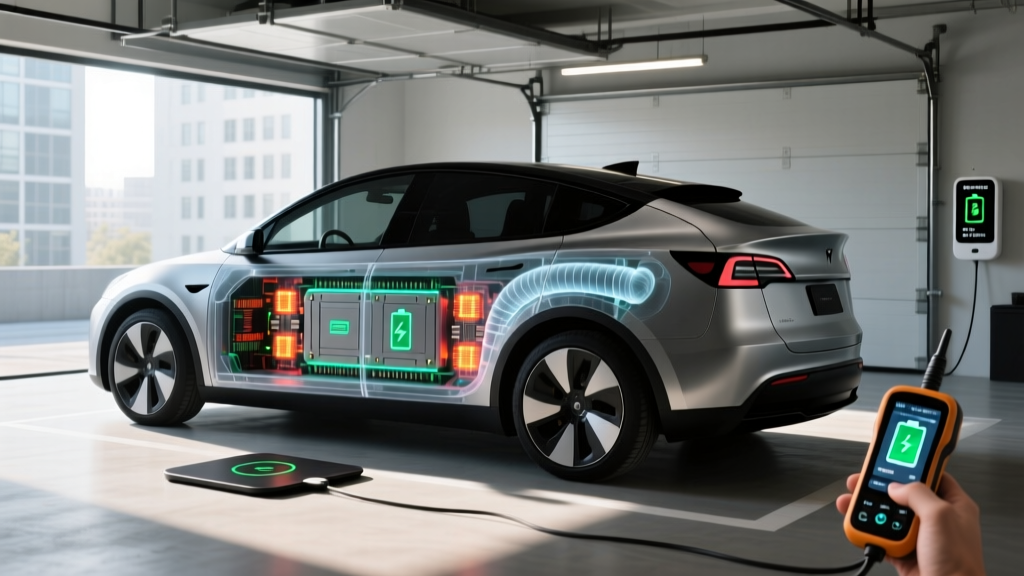
- OBD-II diagnostic tools: Devices like the OBDLink SX paired with apps such as Leaf Spy (Nissan), Scan My Tesla, or Car Scanner can read the battery management system's (BMS) internal SoH estimate. Expect readings within ±2% of actual capacity.
- Third-party services: Companies like Recurrent and Geotab offer fleet and individual battery health reports using telematics data. Some dealerships can run a certified SoH test during service visits.
- DIY calculation: Charge to 100%, note the displayed range, and compare to the EPA-rated range when new. Adjust for temperature. If your Ioniq 5 originally showed 303 miles at 100% and now shows 272, that's roughly 90% SoH.
What's Next: Solid-State, Silicon Anodes, and Argentina's Role
Several next-generation battery technologies are in development, though none are commercially available in production EVs as of early 2026:
- Solid-state batteries: Toyota, Samsung SDI, and QuantumScape are targeting limited production in 2027–2029 vehicles. Promised benefits include 50% higher energy density, 10-minute fast charging, and improved safety. Realistic mass-market availability is 2029–2031.
- Silicon-dominant anodes: Companies like Sila Nanotechnologies and Group14 are replacing graphite anodes with silicon composites, boosting energy density 20–40%. Mercedes-Benz's EQG (G-Wagen EV) is expected to use silicon anode cells from Sila. Limited rollout in 2026–2027 models.
- Sodium-ion batteries: CATL and BYD have begun producing sodium-ion cells for lower-cost, shorter-range EVs in China. These eliminate lithium entirely but offer ~30% lower energy density. U.S. availability is unlikely before 2028.
Argentina's lithium production will remain critical through at least 2030, as NMC and LFP chemistries continue to dominate global EV production. The country's expanding output is one reason cell prices have fallen from ~$140/kWh in 2022 to roughly $95–110/kWh in 2026 — a trend that directly reduces the cost of the EV you buy and the battery you might one day replace.
Frequently Asked Questions
How long do EV batteries last in years and miles?
Modern liquid-cooled EV batteries are designed to last the life of the vehicle. Fleet data shows most packs retain 80–90% capacity at 100,000 miles and 78–90% at 150,000 miles, depending on chemistry and usage. Full replacement before 150,000 miles is uncommon. Many taxis and high-mileage fleet Teslas have exceeded 300,000 miles on original packs.
How much does an EV battery cost to replace?
Full pack replacement ranges from roughly $10,000 for a Tesla Model 3 RWD (57.5 kWh LFP) to $28,000+ for an F-150 Lightning Extended Range (131 kWh NMC). Module-level repairs can reduce costs by 40–60%. However, most batteries outlive the vehicle, and replacement is rarely needed within the warranty period.
What does the EV battery warranty cover?
Federal minimum is 8 years / 100,000 miles with a 70% capacity retention threshold. CARB states extend to 10 years / 150,000 miles. The warranty covers degradation below the threshold, manufacturing defects, and BMS failures. It does not cover damage from accidents, flooding, or unauthorized modifications.
How do I check and maximize my battery's health?
Monitor SoH through your vehicle's display, OBD-II apps, or dealer diagnostics. To maximize lifespan: charge NMC to 80% daily (LFP to 100%), minimize frequent DC fast charging, precondition before fast charging, avoid long-term storage at extreme SoC levels, and park in shade when possible in hot climates.
LFP vs NMC — which battery chemistry is better?
Neither is universally better. LFP offers longer cycle life (3,000–5,000+ cycles), lower cost, cobalt-free sourcing, and the convenience of daily 100% charging — but has lower energy density and worse cold-weather performance. NMC delivers more range per kWh and better winter performance, but requires more careful SoC management and has a shorter cycle life. Choose LFP for longevity and value; choose NMC for maximum range and cold-climate driving.
Does Argentine lithium affect my EV tax credit eligibility?
Possibly. The §30D credit's critical-minerals component ($3,750) requires sourcing from the U.S. or FTA partners. Argentina lacks a comprehensive U.S. FTA, so vehicles whose supply chains rely heavily on Argentine lithium may not qualify for that half of the credit. However, automakers blend sources across multiple countries, and supply chain details are not always public. Check the fueleconomy.gov listing for your specific vehicle and model year, and confirm with the dealer at point of sale.