Every kilowatt-hour in a Tesla battery begins as raw material pulled from the earth. The path from lithium mines to the battery pack under your Model 3 or Model Y determines not just the sticker price, but how far you can drive on a charge, how the pack ages over a decade, and whether you qualify for the federal EV tax credit. This guide traces that supply chain into the engineering choices Tesla makes—LFP versus NMC chemistry, thermal management, and warranty structure—and gives you the data to understand what your battery will actually do over 150,000 miles.
Where Tesla Gets Its Lithium (And Why Chemistry Matters)
Tesla sources lithium from multiple global suppliers, including operations in Australia (hard-rock spodumene mines), Chile and Argentina (brine extraction), and increasingly from North American projects. In 2023, Tesla signed a supply agreement with Piedmont Lithium for spodumene concentrate from a mine in North Carolina, and the company has invested in refining capacity in Corpus Christi, Texas. These sourcing decisions directly affect which battery chemistries Tesla can build and whether its vehicles meet the IRS §30D critical-mineral requirements for the federal tax credit.
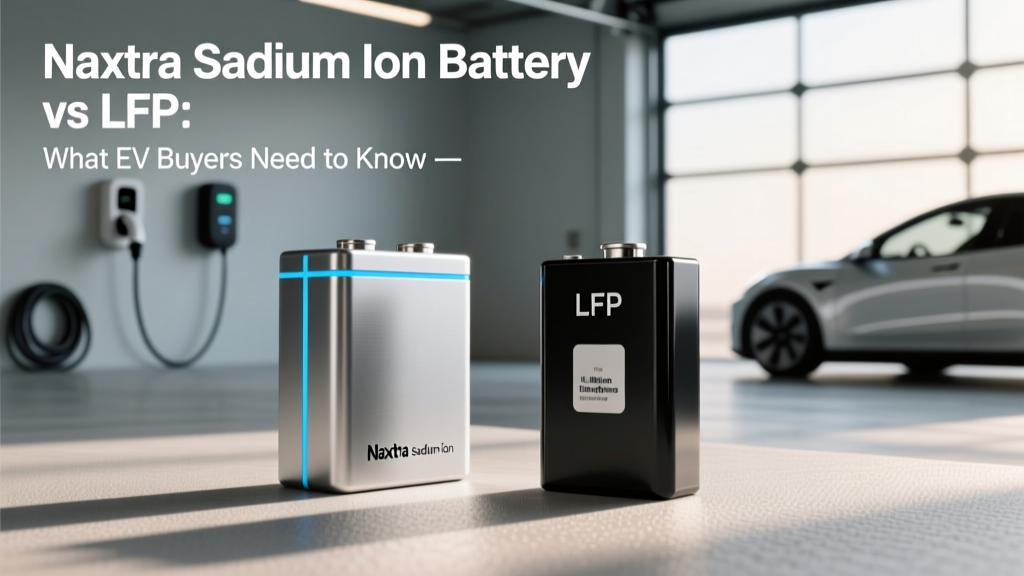
But raw lithium is just one input. The cathode chemistry—how lithium is combined with nickel, manganese, cobalt, or iron and phosphate—defines the pack's energy density, cycle life, cold-weather behavior, and cost. Tesla currently uses two primary chemistries across its fleet:
- LFP (Lithium Iron Phosphate): Used in standard-range Model 3 and Model Y vehicles. No nickel or cobalt.
- NMC/NCA (Nickel Manganese Cobalt / Nickel Cobalt Aluminum): Used in Long Range and Performance variants. Higher energy density, higher cost.
| Attribute | LFP (LiFePO₄) | NMC / NCA |
|---|---|---|
| Energy Density | ~160 Wh/kg (cell level) | ~250–300 Wh/kg (cell level) |
| Cycle Life | 3,000–5,000+ cycles to 80% SoH | 1,000–2,000 cycles to 80% SoH |
| Cold Performance | Greater range loss below 32°F; slower charge acceptance | Better low-temp conductivity; less range penalty |
| Cost | ~$80–100/kWh (pack level, 2025–2026) | ~$120–150/kWh (pack level) |
| Critical Minerals | No nickel or cobalt; simpler §30D sourcing | Requires nickel, cobalt—sourcing scrutiny higher |
| Tesla Models | Model 3 RWD, Model Y RWD (Standard Range) | Model 3 Long Range, Model Y Long Range/Performance, Model S/X |
| Charging Habit | Tesla recommends charging to 100% regularly | Tesla recommends 80% daily; 100% for trips only |
The takeaway: LFP sacrifices range per kilogram but lasts longer, costs less, and avoids ethically complex supply chains. NMC/NCA gives you the 330-mile EPA range on the Model 3 Long Range but ages faster under aggressive use. Neither is universally "better"—the right choice depends on your driving pattern.
How Long Do EV Batteries Last? Real Degradation Data
The short answer: most Tesla battery packs outlast the car's useful economic life. But "outlast" doesn't mean "no degradation." Every lithium-ion cell loses capacity over time and charge cycles.
Tesla's own Impact Reports have shown that Model 3 and Model Y battery packs retain approximately 85–90% of their original capacity after 150,000 miles. Independent data from fleet operators and owner surveys (compiled by sources like Teslanomics and Recurrent Auto) show similar patterns:
| Mileage | Average Capacity Retained | Notes |
|---|---|---|
| 0–10,000 mi | ~97–99% | Initial break-in; minimal loss |
| 30,000 mi | ~94–96% | Steeper early curve, then flattens |
| 60,000 mi | ~91–94% | Noticeable but not operationally limiting |
| 100,000 mi | ~88–92% | NMC packs trend lower; LFP holds better |
| 150,000 mi | ~85–90% | Tesla's published fleet average |
| 200,000+ mi | ~80–87% | Data sparser; high-mileage fleet vehicles |
Two things to notice. First, degradation is nonlinear: the steepest loss happens in the first 20,000–30,000 miles, then the curve flattens considerably. Second, LFP packs consistently show slower degradation than NMC packs at equivalent mileage, thanks to the inherent stability of iron-phosphate cathode chemistry.
For a Model 3 Long Range with a 330-mile EPA rating, 90% retention at 150,000 miles means roughly 297 miles of range remaining. For a Model 3 RWD (LFP) with a 272-mile EPA rating, 92% retention yields about 250 miles. In both cases, the vehicle remains fully functional for daily use.
Tesla Battery Warranty: What's Covered and What Isn't
Tesla's battery and drive unit warranty is one of the stronger guarantees in the EV market, but the details matter. The warranty covers the high-voltage traction battery (not the 12V auxiliary battery) against defects and excessive capacity loss.
| Model | Warranty Period | Mileage Limit | Capacity Retention Threshold |
|---|---|---|---|
| Model 3 RWD (LFP) | 8 years | 100,000 miles | 70% minimum |
| Model 3 Long Range / Performance | 8 years | 120,000 miles | 70% minimum |
| Model Y RWD (LFP) | 8 years | 100,000 miles | 70% minimum |
| Model Y Long Range / Performance | 8 years | 120,000 miles | 70% minimum |
| Model S / Model X | 8 years | 150,000 miles | 70% minimum |
The 70% threshold means Tesla will replace or repair the battery if its usable capacity drops below 70% of the original value within the warranty period. In practice, very few packs hit this threshold under normal use—the degradation data above shows most packs retain 85%+ even at 150,000 miles. The warranty is a backstop for manufacturing defects (bad cells, BMS failures, coolant leaks into the pack) more than a guarantee against normal aging.
What's not covered: cosmetic issues, range loss from software updates that don't affect actual capacity, damage from accidents or flooding, and degradation from ignoring Tesla's charging recommendations (e.g., habitually leaving an NMC pack at 100% for extended periods). The 12V auxiliary battery—which powers lights, screens, and computers—has a separate, shorter warranty (typically 4 years/50,000 miles) and is a different component entirely.
EV Battery Replacement Cost: When and How Much
Battery replacement is the single biggest fear for prospective EV buyers. Let's put actual numbers to it.
| Model / Pack Size | Battery Capacity | Replacement Cost (Parts + Labor) | Typical Replacement Trigger |
|---|---|---|---|
| Model 3 RWD (LFP) | ~60 kWh | $10,000–$14,000 | Cell/module failure; rare before 200k mi |
| Model 3 Long Range (NMC) | ~75–82 kWh | $14,000–$18,000 | Cell/module failure; rare before 200k mi |
| Model Y Long Range (NMC) | ~75–82 kWh | $14,000–$18,000 | Cell/module failure; rare before 200k mi |
| Model S (NMC/NCA) | ~100 kWh | $18,000–$25,000 | Aging fleet; some replacements at 150k–200k mi |
| Model X (NMC/NCA) | ~100 kWh | $18,000–$25,000 | Aging fleet; some replacements at 150k–200k mi |
Context matters here. The vast majority of Tesla owners will never need a full pack replacement. Tesla's architecture uses modular battery construction—when a single module fails, a service center can often replace just that module for $2,000–$5,000 rather than the entire pack. Full pack replacements are most common in early Model S and Model X vehicles (2012–2016 production) that experienced manufacturing defects or coolant-related failures. Modern packs (post-2018, and especially the 4680-cell architecture introduced in 2022) have shown significantly lower failure rates.
Also consider that battery costs have declined roughly 90% since 2010 on a per-kWh basis. By the time a 2026 Model Y might need a replacement in 2038–2040, pack prices will likely be substantially lower than today's figures.
What Affects Battery Life: Habits That Matter
Not all miles age a battery equally. The following factors have the most measurable impact on long-term State of Health (SoH):
Charging Habits
- NMC/NCA packs: Keep daily charging between 20–80%. Reserve 100% charges for road trips, and don't let the car sit at 100% for more than a few hours.
- LFP packs: Tesla explicitly recommends charging to 100% at least once per week for accurate BMS calibration. LFP chemistry tolerates full-state storage far better than NMC.
- Avoid frequent DC fast charging above 150 kW when Level 2 home charging is available. Occasional Supercharging is fine (Tesla's thermal management is excellent), but daily 250 kW sessions accelerate degradation by an estimated 2–5% over 100,000 miles compared to Level 2-only charging.
Temperature Management
- Extreme heat (sustained ambient above 95°F) is more damaging to lithium-ion cells than extreme cold. Tesla's liquid cooling system mitigates this, but parking in shade and using Scheduled Departure preconditioning helps.
- Extreme cold (below 20°F) temporarily reduces range by 20–30% and slows charge acceptance, but doesn't cause permanent damage if the pack is preconditioned before charging.
- Always use preconditioning (Navigation to a Supercharger triggers this automatically) before fast charging in cold weather—it warms the cells to optimal charge-acceptance temperature (~35–40°C).
State of Charge Storage
- If storing the vehicle for more than two weeks, Tesla recommends leaving the battery at ~50% SoC and plugged in (the car's vampire drain management will maintain this level).
- Never store an NMC pack at 100% SoC for extended periods—this accelerates cathode degradation and electrolyte breakdown.
- Never let any pack sit at 0% SoC for days—deep discharge can trigger cell-level copper dissolution, which is irreversible.
How to Check and Monitor Battery Health (SoH)
Tesla doesn't expose a direct "State of Health" percentage in the vehicle UI, but owners have several methods to estimate it:
1. Range-at-100% Method: Charge to 100% (or calculate from a partial charge). If your Model 3 Long Range showed 330 miles at 100% when new and now shows 300 miles, that's roughly 91% SoH. Note: Tesla's displayed range is an EPA-based calculation, not a direct capacity measurement, and software updates can shift this number.
2. Energy Screen (Trip Tracker): Under Controls → Trip, you can track average energy consumption (Wh/mi) over custom distances. Comparing your lifetime average to the EPA-rated efficiency (e.g., 253 Wh/mi for the Model 3 LR) gives an indirect SoH signal.
3. Third-Party Apps: Tools like TeslaFi, Tessie, and Stats (iOS) log detailed charge data including energy-in vs. SoC change, which allows calculated SoH estimation. Fleet operators use platforms like Recurrent for institutional SoH tracking.
4. Service Center Diagnostic: A Tesla service center can run a full pack diagnostic that reports actual usable kWh capacity vs. original spec. This is the most accurate method but requires a service appointment.
Emerging Battery Technology: What's Next (And When)
The lithium-ion batteries in today's Teslas are mature, proven technology. But the pipeline includes several advances that could reshape the economics of EV ownership:
4680 Cells (Current Production): Tesla's in-house 4680 cylindrical cells, now in production at Giga Texas for Model Y, offer ~16% energy density improvement over the 2170 cells used in Model 3. The tabless electrode design reduces internal resistance, improving charge acceptance and thermal management. These are shipping now, not future technology.
Silicon Anode Cells: Replacing graphite anodes with silicon can increase energy density by 20–40%. Multiple suppliers (Sila Nanotechnologies, Group14) are in low-volume production, and Tesla has signaled interest. Expect limited adoption in production vehicles by 2027–2028, with mainstream scale by 2030.
Solid-State Batteries: These replace the liquid electrolyte with a solid ceramic or polymer layer, promising higher energy density (~400+ Wh/kg), faster charging, and improved safety (no flammable electrolyte). Toyota, Samsung SDI, and QuantumScape have demonstrated prototype cells, but manufacturing scale remains the bottleneck. Realistic timeline for consumer vehicle availability: 2029–2032 at earliest, with meaningful cost parity not until the mid-2030s. No currently available Tesla uses solid-state cells.
Sodium-Ion Batteries: CATL has begun commercial production of sodium-ion cells (no lithium required), which offer lower energy density (~140 Wh/kg) but dramatically lower cost and excellent cold performance. These are likely destined for budget EV segments and stationary storage rather than Tesla's current lineup, but they represent a potential disruption to lithium demand long-term.
The Supply Chain Connection: Why Lithium Sourcing Affects Your Wallet
The link between lithium mines and your tax credit eligibility is more direct than most buyers realize. Under current IRS §30D rules, the $7,500 federal EV tax credit splits into two halves:
- $3,750 for critical minerals: A percentage of the battery's critical minerals (including lithium) must be extracted or processed in the US or a free-trade-agreement country, or recycled in North America. This percentage increases annually.
- $3,750 for battery components: A percentage of battery components must be manufactured or assembled in North America, also increasing annually.
Tesla's investment in North American lithium refining (Corpus Christi) and its sourcing from FTA-partner countries like Australia and Chile are direct responses to these requirements. Model 3 and Model Y vehicles built at Giga Texas and Giga Nevada have generally qualified for the full or partial credit, but eligibility shifts as sourcing percentages change and Treasury Department guidance updates. Always verify current eligibility on the IRS qualified vehicles list before purchasing, and confirm your household income falls within the §30D caps ($150,000 single / $300,000 joint for new vehicles). Consult a tax professional for your specific situation.
Frequently Asked Questions
How long do Tesla batteries last in real-world use?
Based on fleet data, Tesla battery packs typically retain 85–90% of original capacity at 150,000 miles. Most packs will exceed 200,000 miles before dropping to the 70% warranty threshold. LFP-equipped vehicles (Model 3 RWD, Model Y RWD) tend to degrade more slowly than NMC variants. In calendar years, expect 15–20+ years of usable service life under normal driving patterns.
How much does it cost to replace a Tesla battery?
Full pack replacement ranges from approximately $10,000–$14,000 for a Model 3 RWD (LFP, ~60 kWh) to $18,000–$25,000 for a Model S or Model X (~100 kWh). However, most failures involve individual modules, which can be replaced for $2,000–$5,000. The vast majority of Tesla owners never need a battery replacement during their ownership period.
What does the Tesla battery warranty actually cover?
Tesla covers the high-voltage traction battery for 8 years and 100,000–150,000 miles (depending on model) against defects and capacity loss below 70% of original capacity. It does not cover the 12V auxiliary battery, accident damage, or degradation from improper charging habits. The warranty transfers to subsequent owners for the remaining term.
LFP vs NMC — which Tesla battery chemistry should I choose?
Choose LFP (Model 3 RWD / Model Y RWD) if you prioritize longevity, lower cost, and simpler charging habits (100% daily is fine). Accept ~250–272 miles EPA range and slightly worse cold-weather performance. Choose NMC (Long Range / Performance) if you need 310–340+ miles of range, better highway/cold-weather performance, and faster peak charging—and you're willing to manage daily SoC to 80% and accept higher replacement cost if needed.
Does frequent Supercharging damage the battery?
Tesla's thermal management system actively cools the pack during DC fast charging, which significantly reduces heat-related stress. Occasional Supercharging has negligible impact on long-term SoH. However, exclusive reliance on 250 kW DC fast charging (never using Level 2) may accelerate degradation by an estimated 2–5% over 100,000 miles. For daily use, Level 2 home charging at 7–11 kW is optimal for longevity.
Can I check my Tesla's battery health myself?
Yes, indirectly. Charge to 100% and note the displayed range versus the original EPA rating. Use third-party apps like TeslaFi or Tessie to track energy-in vs. SoC change over multiple charges for a calculated SoH estimate. For a definitive reading, request a battery diagnostic at a Tesla service center.
Will solid-state batteries make my current Tesla obsolete?
Not for many years. Solid-state batteries remain in prototype and limited pilot production as of 2026. Realistic consumer availability in mainstream vehicles is 2029–2032, with cost parity likely not until the mid-2030s. Current lithium-ion packs (especially LFP) already offer 200,000+ mile lifespans, making the "wait for solid-state" argument impractical for most buyers.