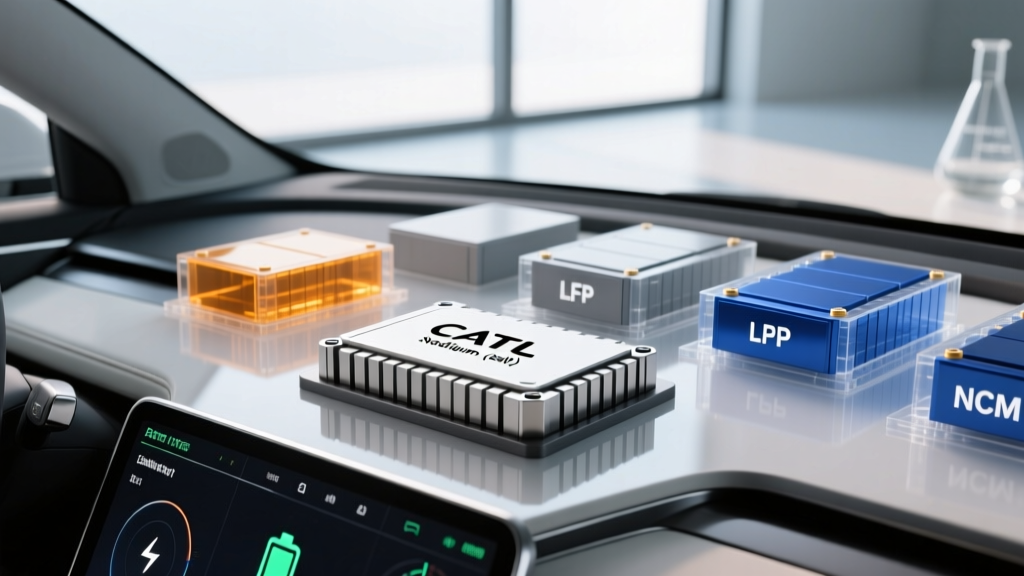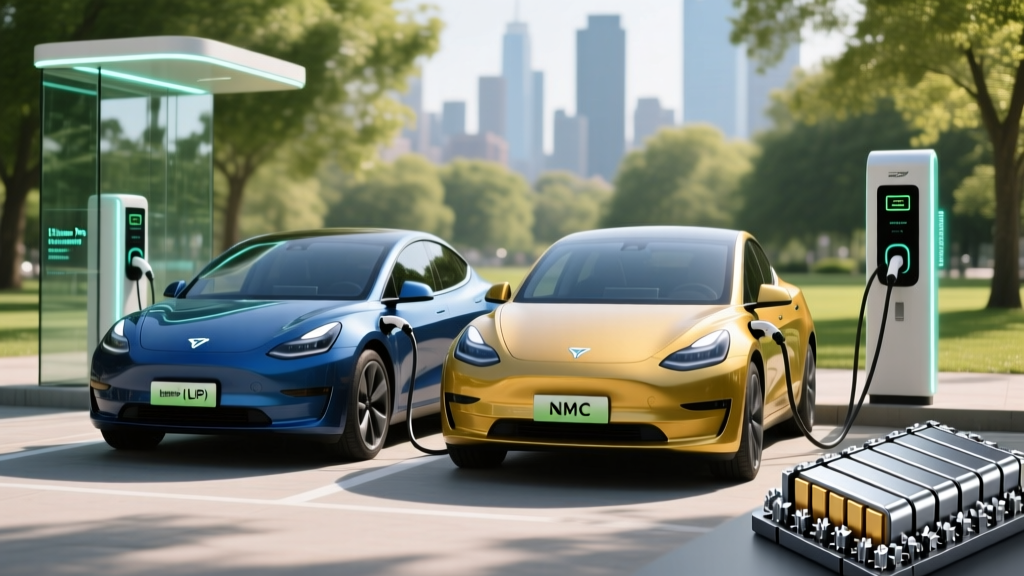
If you've shopped for an EV in the last two years, you've likely seen the term "lithium iron battery" — more formally known as LFP (lithium iron phosphate, or LiFePO4) — appear on spec sheets from Tesla, Ford, Hyundai, and Rivian. Once confined to Chinese-market vehicles and commercial fleets, LFP chemistry has become a mainstream option in the U.S. market, sitting alongside the nickel-manganese-cobalt (NMC) and nickel-cobalt-aluminum (NCA) chemistries that have powered most long-range EVs for the past decade.
The question for buyers isn't which chemistry is universally "better." It's which one aligns with how you drive, where you live, and how long you plan to keep the vehicle. This guide breaks down the hard data on energy density, degradation curves, warranty coverage, replacement costs, and daily ownership practicality for both chemistries — so you can make a spec-driven decision rather than a marketing-driven one.
LFP vs NMC/NCA: The Chemistry Breakdown
Every EV traction battery uses lithium-ion cells, but the cathode material — the positive electrode where lithium ions are stored during discharge — defines the battery's fundamental characteristics. The three dominant cathode chemistries in the U.S. market are:
- LFP (Lithium Iron Phosphate): Iron and phosphate cathode. No nickel or cobalt. Used in Tesla Model 3/Y Standard Range, Ford Mustang Mach-E Select (2025+), Rivian Standard battery, and many BYD models.
- NMC (Nickel Manganese Cobalt): Varying nickel-manganese-cobalt ratios (e.g., NMC 811 = 80% nickel). Used in most long-range and performance EVs: Hyundai Ioniq 5, BMW iX, VW ID.4 (some trims), Chevrolet Equinox EV.
- NCA (Nickel Cobalt Aluminum): High nickel content with aluminum doping. Primarily used in Tesla Long Range and Performance variants and some Panasonic-supplied applications.
Here's how the two main families — LFP (the "iron battery") and NMC/NCA — stack up across the metrics that matter:
| Attribute | LFP (Iron Phosphate) | NMC / NCA |
|---|---|---|
| Energy Density (cell-level) | 160–200 Wh/kg | 220–300 Wh/kg |
| Typical Pack Size (U.S. models) | 50–82 kWh usable | 72–100+ kWh usable |
| Cycle Life (to 80% SoH) | 3,000–6,000+ cycles | 1,000–2,500 cycles |
| Calendar Life Expectancy | 15–20+ years | 12–15 years |
| Cold-Weather Performance | More range loss below 32°F; slower cold charging | Better low-temp conductivity; less range penalty |
| Recommended Daily SoC | 100% (regular full charges are fine) | 80–90% for daily; 100% for trips only |
| Thermal Stability / Safety | Excellent — higher thermal runaway threshold (~270°C) | Good — lower thermal runaway threshold (~210°C) |
| Raw Material Cost | Lower (no nickel or cobalt) | Higher (nickel/cobalt price exposure) |
| Typical Vehicle Price Impact | Enables lower-MSRP trims ($35K–$45K) | Found in mid-to-high trims ($45K–$80K+) |
| Weight (for equivalent kWh) | Heavier pack for same capacity | Lighter pack for same capacity |
The key trade-off in plain terms: NMC/NCA packs store more energy per kilogram, which translates to longer EPA range in the same physical package — or a smaller, lighter pack for a given range target. LFP packs are heavier and less energy-dense, but they tolerate far more charge cycles, handle 100% state-of-charge without accelerated wear, cost less to produce, and carry a stronger safety profile. For a driver who charges at home nightly and doesn't need 350+ miles of range, the iron battery's longevity advantages often outweigh its density disadvantage.
Real-World Degradation: What the Data Shows
Battery degradation — the gradual loss of usable capacity over time — remains the single biggest long-term ownership concern. Here's what actual fleet and testing data reveals for each chemistry.
NMC/NCA Degradation Data
According to Recurrent Auto's fleet data (covering over 15,000 EVs in real-world use), the average NMC-based EV battery shows:
- Year 1: ~2–4% capacity loss (initial "formation" drop, common to all lithium-ion)
- Year 3: ~6–9% total loss (SoH ~91–94%)
- Year 5: ~10–14% total loss (SoH ~86–90%)
- Year 8: ~14–18% total loss (SoH ~82–86%)
- Year 10+: Degradation curve flattens; many packs stabilize around 80–85% SoH
Tesla's own 2024 Impact Report stated that Model S/X vehicles (NCA/NMC) retained approximately 85% of original range at 150,000 miles. The Chevrolet Bolt EV (NMC), now discontinued but widely represented in used-EV data, showed a median SoH of ~91% at 60,000 miles in Recurrent's dataset — a strong result partly attributable to GM's robust thermal management system.
LFP Degradation Data
LFP's cycle-life advantage is substantial. Tesla's LFP-equipped Model 3 Standard Range vehicles have shown:
- Year 1: ~1–3% capacity loss
- Year 3: ~4–7% total loss (SoH ~93–96%)
- Year 5: ~7–10% total loss (SoH ~90–93%)
- Year 8: ~10–14% total loss (SoH ~86–90%)
- Projected Year 15: ~15–20% total loss, still above the 70% warranty threshold
CATL, the world's largest LFP cell supplier, rates its prismatic LFP cells at 6,000+ cycles to 80% SoH under standard test conditions. In real-world driving, that translates to well over 500,000 miles of cumulative charge-discharge cycling before reaching the 80% threshold — far beyond the typical lifespan of the vehicle itself.
What Drives Degradation Differences
The gap between LFP and NMC degradation widens under stress. Frequent DC fast charging, sustained high SoC (sitting at 100% for days), and extreme heat accelerate wear in both chemistries — but NMC/NCA degrades faster under these conditions. LFP's olivine crystal structure is more mechanically stable during lithium intercalation, meaning the cathode physically deteriorates more slowly with each cycle.
How Long Do EV Batteries Actually Last?
The short answer: most EV batteries will outlast the vehicle they're installed in. The average U.S. vehicle age is 12.6 years (per S&P Global Mobility). An EV battery that loses 1.5–2% capacity per year on average will still retain 75–82% SoH at year 12 — above the threshold where most owners would consider replacement.
Realistic lifespan expectations by chemistry:
- LFP: 15–20+ years / 300,000–500,000+ miles before dropping below 70% SoH
- NMC/NCA: 12–15 years / 200,000–300,000 miles before dropping below 70% SoH
Outlier cases do exist. Some early Nissan Leaf models (passively air-cooled NMC packs) experienced accelerated degradation in hot climates, dropping to 70–75% SoH within 5–7 years. Modern liquid-cooled thermal management systems — now standard on virtually every major-brand EV — have largely eliminated this failure mode. The lesson: thermal management matters as much as chemistry.
Battery Warranty Terms: What's Actually Covered
Federal law mandates a minimum 8-year / 100,000-mile warranty on EV battery packs (10 years / 150,000 miles in California and states that follow CARB standards). Most manufacturers meet or exceed this baseline. Here's a snapshot of current warranty terms:
| Manufacturer | Warranty Period | Mileage Limit | Capacity Retention Threshold | Chemistry |
|---|---|---|---|---|
| Tesla (Model 3/Y RWD – LFP) | 8 years | 100,000 mi | 70% SoH | LFP |
| Tesla (Model 3/Y LR – NCA/NMC) | 8 years | 120,000 mi | 70% SoH | NCA/NMC |
| Hyundai (Ioniq 5/6) | 10 years | 100,000 mi | 70% SoH | NMC |
| Ford (Mach-E, F-150 Lightning) | 8 years | 100,000 mi | 70% SoH | NMC / LFP (varies by trim) |
| Rivian (R1T/R1S) | 8 years | 175,000 mi | 70% SoH | NMC (Max) / LFP (Standard) |
| Chevrolet (Equinox EV, Blazer EV) | 8 years | 100,000 mi | 60% SoH (some models 70%) | NMC |
| BMW (i4, iX, i7) | 8 years | 100,000 mi | 70% SoH | NMC |
Critical warranty nuance: The warranty covers the battery dropping below the stated SoH threshold — not gradual range loss above that line. If your 82 kWh NMC pack degrades to 75% SoH (61.5 kWh usable), you've lost roughly 20 miles of EPA range but have no warranty claim. Most owners find the 70–80% SoH range still perfectly livable for daily driving.
Some warranties also exclude damage from improper charging, aftermarket modifications, or using the vehicle as a stationary power source (V2H/V2G) beyond manufacturer-approved limits. Read the specific warranty booklet for your model — terms vary.
EV Battery Replacement Cost: The Real Numbers
This is where fear-mongering tends to outpace reality. Yes, EV battery packs are expensive. But the context matters: most packs never need replacement during the vehicle's usable life, and costs have declined significantly.
| Vehicle / Pack Size | Chemistry | Pack Cost (Parts) | Labor | Estimated Total |
|---|---|---|---|---|
| Tesla Model 3 RWD (~60 kWh) | LFP | $8,000–$12,000 | $1,500–$2,500 | $9,500–$14,500 |
| Tesla Model Y LR (~82 kWh) | NMC/NCA | $12,000–$16,000 | $1,500–$3,000 | $13,500–$19,000 |
| Hyundai Ioniq 5 (~77.4 kWh) | NMC | $11,000–$15,000 | $2,000–$3,000 | $13,000–$18,000 |
| Ford F-150 Lightning Ext. (~131 kWh) | NMC | $20,000–$30,000 | $3,000–$5,000 | $23,000–$35,000 |
| Chevrolet Bolt EV (~65 kWh) | NMC | $9,000–$14,000 | $2,000–$3,000 | $11,000–$17,000 |
| Rivian R1T Max Pack (~149 kWh) | NMC | $22,000–$32,000 | $3,000–$5,000 | $25,000–$37,000 |
Industry-wide, the average cost per kWh at the pack level has fallen from roughly $400/kWh in 2015 to approximately $130–$160/kWh in 2025 for NMC, and $90–$110/kWh for LFP, per BloombergNEF data. LFP's cost advantage is one of the primary reasons automakers are adopting it for standard-range trims — it makes the vehicle cheaper to build and cheaper to replace if the unlikely need arises.
When is replacement actually needed? Outside of warranty-covered degradation claims (rare), replacements typically occur after collision damage, manufacturing defects discovered in the first 1–3 years, or — in the longest-term cases — when a 15–20-year-old pack drops below 60–65% SoH and the owner wants to extend the vehicle's life. For the vast majority of EV owners, the car will be retired, sold, or traded before the battery needs replacement.
Factors That Affect Battery Lifespan
Chemistry sets the ceiling, but your habits determine how close you get to it. Here are the primary factors that accelerate or slow degradation:
1. State of Charge Habits
For NMC/NCA packs, the most impactful daily habit is avoiding sustained high SoC. Storing the vehicle at 100% for extended periods (days to weeks) stresses the cathode. The practical guideline: charge to 80–90% for daily use, and reserve 100% charges for road-trip departures. LFP packs are fundamentally different here — Tesla, Ford, and other automakers explicitly recommend charging LFP vehicles to 100% at least once per week for battery calibration, and daily 100% charging does not accelerate wear the way it does with NMC.
2. DC Fast Charging Frequency
DC fast charging (Level 3, typically 50–350 kW) generates significant heat inside the cells. Occasional fast charging on road trips is fine — modern thermal management systems precondition the battery and manage temperatures actively. But daily reliance on DC fast charging (e.g., if you lack home or workplace Level 2 access) has been correlated with 1–3% additional degradation over 5 years compared to primarily Level 2 charging, per Recurrent's analysis. This effect is slightly less pronounced in LFP packs due to their structural stability, but the thermal physics still apply.
3. Extreme Temperatures
Heat is the enemy of lithium-ion longevity. Sustained ambient temperatures above 95°F — particularly when combined with high SoC — accelerate calendar degradation. If you live in Phoenix, Las Vegas, or Houston, parking in shade or a garage and avoiding 100% SoC during summer months are meaningful longevity strategies. Cold temperatures, meanwhile, don't cause permanent degradation but do temporarily reduce range (15–30% loss below 20°F is typical) and slow charging speeds until the battery warms via preconditioning.
4. Depth of Discharge
Shallow cycling (e.g., using 30–40% of the pack daily and recharging) is gentler than deep cycling (using 80–90% daily). This favors commuters with home charging who plug in nightly over drivers who run the battery nearly empty before recharging. LFP's superior cycle life makes this factor less critical than with NMC, but the principle holds for both.
- ✓ NMC/NCA: Set daily charge limit to 80–90%. Charge to 100% only before long trips.
- ✓ LFP: Charge to 100% regularly (at least weekly) for BMS calibration.
- ✓ Use Level 2 home charging as your primary method; reserve DCFC for road trips.
- ✓ Enable battery preconditioning when navigating to a fast charger (Tesla, Hyundai, Ford all offer this).
- ✓ Avoid leaving the vehicle at 100% SoC for more than 24 hours, especially in hot weather.
- ✓ In extreme cold, plug in when parked — the vehicle will use grid power for thermal management instead of pack energy.
- ✓ If storing the vehicle for 2+ weeks, leave SoC at 50–60% (both chemistries).
How to Check and Monitor Battery Health
Unlike a gas car where you can't easily measure engine wear, EV batteries provide quantifiable health data. Here's how to access it:
Manufacturer Apps and In-Car Displays
Some automakers display SoH directly in the vehicle settings or companion app. Hyundai/Kia, for example, shows battery health percentage in the infotainment system's EV diagnostics menu on the Ioniq 5 and EV6. BMW provides SoH data through the iDrive system. Tesla does not natively display SoH percentage in the app, but you can estimate it by comparing your current maximum rated range (at 100% charge) to the original EPA-rated range.
Third-Party Tools
For Tesla owners, apps like Tessie and Stats pull detailed battery data from the vehicle's API, including estimated SoH, charge curve analysis, and degradation trends over time. For OBD-II-accessible EVs, devices like the OBDLink SX paired with apps such as EV Bat Mon (Android) can read cell-level voltage data from the BMS, giving a granular picture of pack health.
Manual Estimation Method
Charge to 100% and note the displayed rated range. Divide by the original EPA-rated range. A 2025 Tesla Model 3 RWD originally rated at 272 miles that now shows 255 miles at 100% has an approximate SoH of 93.7%. This method isn't perfectly precise (the BMS estimate can drift), but it's directionally accurate and requires no extra hardware.
Pre-Purchase Battery Reports
If you're buying a used EV, services like Recurrent and some dealer-certified programs provide battery health reports showing historical SoH trends. Always request this data before purchasing — it's the EV equivalent of a compression test on a used gas car.
What's Next: Solid-State and Beyond
The next major leap in battery technology is solid-state batteries, which replace the liquid electrolyte with a solid material (ceramic, sulfide, or polymer). The promised benefits are significant: 30–50% higher energy density, faster charging (potentially 10–80% in under 10 minutes), improved safety (no flammable liquid electrolyte), and longer cycle life.
However, the timeline remains forward-looking:
- Toyota has announced a solid-state battery targeting 2027–2028 production, initially in limited volumes for a single model. Independent verification of durability and cost targets is pending.
- Samsung SDI is piloting sulfide-based solid-state cells with a 2027 production target, supplying to unnamed automakers.
- QuantumScape (backed by Volkswagen) continues testing its anode-free lithium-metal cells, with pre-production samples delivered to OEM partners as of 2025. Commercial availability is not expected before 2028 at the earliest.
- Silicon anode technology (from companies like Sila Nanotechnologies and Group14) is closer to market, offering 10–20% energy density gains over graphite anodes. It's already appearing in limited applications and is expected in mainstream EV cells by 2026–2027.
The practical takeaway: Solid-state batteries will not be widely available in mainstream, affordably priced EVs before 2029–2030 at the earliest. If you're buying an EV today or in the next two years, the choice is between LFP and NMC/NCA — and both are mature, well-understood chemistries with proven track records.
Frequently Asked Questions
Is an LFP (iron) battery better than NMC for daily commuting?
For most daily commuters with home charging, yes. LFP's tolerance for 100% daily charging, superior cycle life (3,000–6,000 cycles vs. 1,000–2,500), and lower cost make it the pragmatic choice if your daily round-trip is under 80 miles and you don't regularly need 300+ miles of range. The trade-off is slightly less range in the same vehicle platform and greater cold-weather range loss.
Can I fast-charge an LFP battery without damaging it?
Yes, but the same thermal physics apply as with NMC. LFP handles high cycle counts better, but sustained high-power DC fast charging still generates heat, which is the primary degradation driver. Preconditioning helps — use it whenever navigating to a DC fast charger. For daily charging, Level 2 at 7–11 kW remains the gentlest option for any chemistry.
Why does my EV lose range in cold weather, and is it permanent?
Cold-weather range loss (typically 15–30% below 20°F) is temporary and reversible. It occurs because lithium-ion diffusion slows at low temperatures, reducing the battery's usable capacity and increasing internal resistance. LFP batteries tend to lose slightly more range in extreme cold than NMC due to lower ionic conductivity. Once the battery warms — either through driving, preconditioning, or ambient temperature rise — full capacity returns. No permanent damage occurs from normal winter operation.
Does the federal EV tax credit apply differently to LFP vs NMC vehicles?
The IRS §30D clean vehicle credit doesn't distinguish between chemistries directly, but the battery sourcing and critical mineral requirements can affect eligibility differently. LFP batteries use iron and phosphate — materials with different supply chain origins than the nickel, cobalt, and manganese in NMC packs. For 2025–2026, the critical minerals and battery component sourcing requirements have tightened annually, and eligibility varies by model and build date. Always verify current eligibility on the IRS website or with a tax professional before relying on the up-to-$7,500 credit. Point-of-sale transfer is available if you meet income caps ($150K single / $300K joint) and the vehicle's MSRP is under the cap ($55K for sedans, $80K for SUVs/trucks).
Will my EV battery need to be replaced before I sell the car?
Statistically, no. The data consistently shows that the majority of EV batteries retain 75–85% of original capacity at the 10–12 year mark. Given that the average vehicle ownership period is 6–8 years and the average U.S. vehicle is scrapped at around 15–17 years, most original batteries will still be functional (if somewhat range-reduced) for the vehicle's entire life. Replacement is the exception, not the expectation.
How do I know if my battery is degrading faster than normal?
Track your maximum rated range at 100% SoC quarterly and plot it against mileage. A degradation rate exceeding 3% per year (after the first year's initial drop) warrants attention. If your vehicle is under warranty and SoH drops below the stated threshold (typically 70%), contact the manufacturer for a warranty evaluation. Abnormal degradation can sometimes be traced to a defective module rather than the entire pack, and some manufacturers now replace individual modules rather than the full pack — reducing both cost and downtime.