Is a Lithium Ion Shortage Coming for Your EV?
Headlines about a looming lithium ion shortage have circulated for years, and the concern isn't baseless. Global lithium demand surged past 180,000 metric tons in 2025, driven overwhelmingly by electric vehicle production. But the narrative of scarcity deserves scrutiny: supply chains have diversified, new extraction methods are scaling, and — critically — the industry is shifting toward chemistries that reduce reliance on the most constrained materials. For EV buyers and owners, the real question isn't whether lithium will run out next year. It's whether today's batteries will last, what they'll cost to replace, and how emerging tech might reshape the equation.
This guide covers the data that matters: chemistry trade-offs, measured degradation curves, warranty fine print, replacement economics, and what you can do right now to protect your pack's State of Health (SoH).
LFP vs NMC vs NCA: The Chemistry Breakdown That Matters
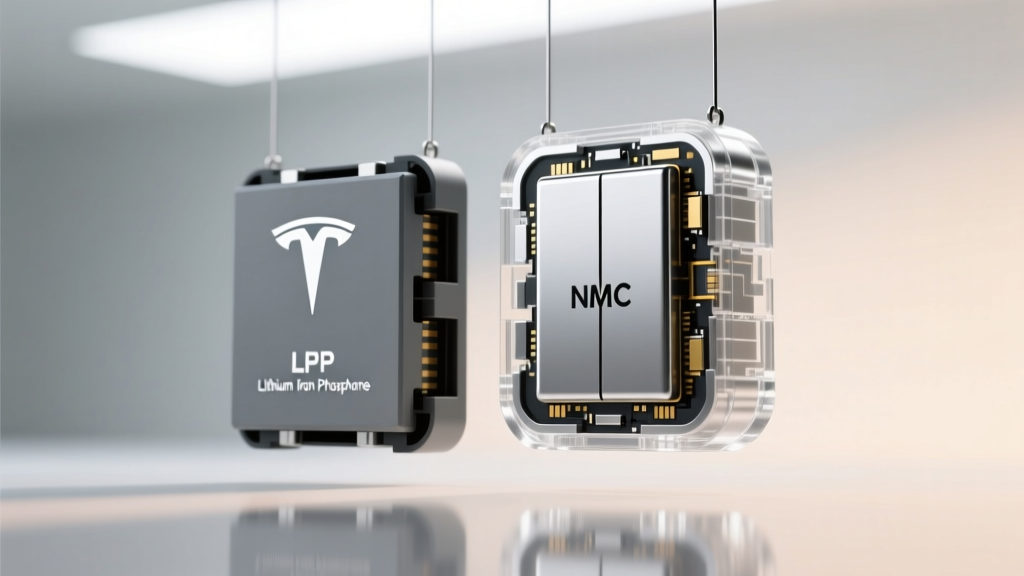
Not all lithium-ion batteries are the same. The three dominant chemistries in today's EVs differ substantially in energy density, lifespan, thermal behavior, and raw-material dependency — and that last factor is precisely why a lithium ion shortage hits each chemistry differently.
| Attribute | LFP (Lithium Iron Phosphate) | NMC (Nickel Manganese Cobalt) | NCA (Nickel Cobalt Aluminum) |
|---|---|---|---|
| Energy Density (Wh/kg) | 150–180 | 220–280 | 250–300 |
| Cycle Life (to 80% SoH) | 3,000–5,000+ | 1,000–2,000 | 800–1,500 |
| Cold-Weather Performance | Moderate — greater range loss below 20°F | Better — less efficiency drop in cold | Good — similar to NMC |
| Raw Material Risk | Low — iron and phosphate are abundant | High — nickel and cobalt supply-constrained | High — cobalt and nickel exposure |
| Cost per kWh (pack-level) | ~$100–$120 | ~$130–$160 | ~$140–$170 |
| Typical Applications | Tesla Model 3 RWD, Model Y RWD, BYD, Ford Mustang Mach-E Select | Hyundai Ioniq 5, Kia EV6, VW ID.4, most long-range models | Tesla Model S/X, some Lucid variants |
| Recommended Charge Habit | Can charge to 100% daily | Best kept 20–80% daily; 100% for trips only | Best kept 20–80% daily; 100% for trips only |
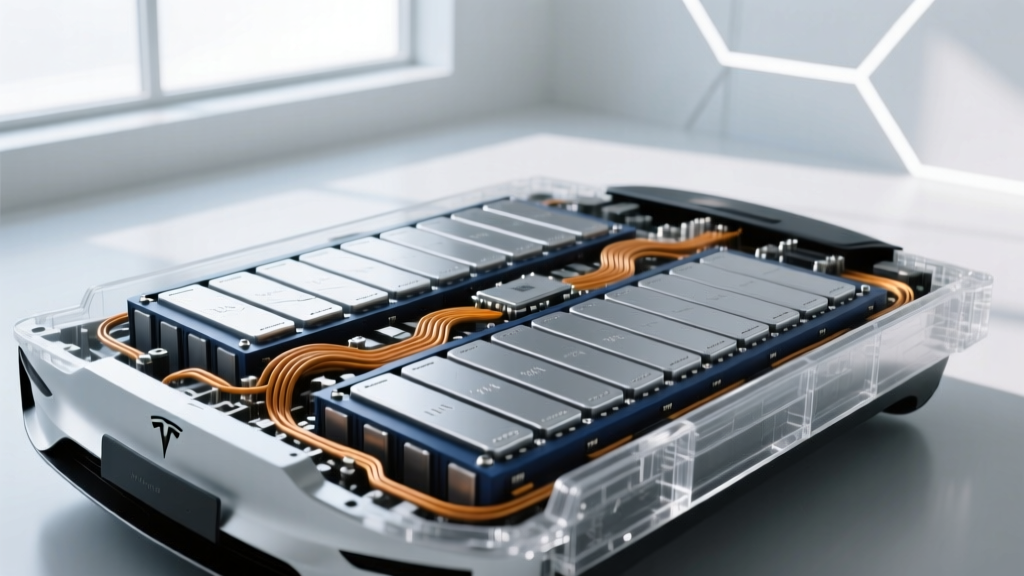
The shortage angle: LFP chemistry sidesteps the worst supply-chain risks. It uses zero cobalt and zero nickel — two materials with the most volatile pricing and geopolitical exposure. If a lithium ion shortage tightens supply, LFP-equipped vehicles are the least exposed to cost spikes and production delays. This is why Tesla shifted its standard-range vehicles to LFP globally, and why Ford, BYD, and others have followed.
The trade-off: LFP's lower energy density means a heavier, bulkier pack for the same range. A 75 kWh LFP pack weighs roughly 10–15% more than an equivalent NMC pack. For vehicles where maximum range or performance is the priority (long-range AWD models, luxury sedans), NMC and NCA remain dominant. But for daily commuters covering 30–60 miles, LFP's cycle-life advantage and supply-chain resilience make it the pragmatic pick.
How Long Do EV Batteries Actually Last?
The short answer: far longer than most buyers assume. Data from fleet operators, manufacturer warranty claims, and independent testing consistently show that modern EV battery packs lose roughly 5–10% of their original capacity over the first 100,000 miles — and then degradation slows considerably.
| Milestone | Average Capacity Retention (NMC) | Average Capacity Retention (LFP) | Source / Context |
|---|---|---|---|
| 1 year / 15,000 mi | ~96–98% | ~97–99% | Manufacturer fleet data, Geotab analysis |
| 3 years / 45,000 mi | ~91–94% | ~94–97% | Real-world fleet averages |
| 5 years / 75,000 mi | ~87–91% | ~91–95% | Warranty threshold period begins |
| 8 years / 100,000 mi | ~82–88% | ~88–93% | Federal warranty minimum compliance |
| 10 years / 150,000 mi | ~78–84% | ~85–90% | Projected; based on degradation curve extrapolation |
Key insight: Degradation is not linear. Most capacity loss occurs in the first 1–2 years (the "formation" period), after which the curve flattens significantly. A pack that retains 92% at year 3 is likely to retain 85%+ at year 8 — well above the warranty threshold. Tesla's own 2024 impact report showed its fleet averaging roughly 12% degradation at 200,000 miles, which translates to a Model 3 Long Range still holding about 275 miles of its original 310-mile EPA range.
Real-world caveat: These figures assume moderate climates and mixed driving. Vehicles in extreme heat (Phoenix, Las Vegas) or those subjected to frequent DC fast charging without preconditioning may see 2–5% additional loss over the same period. Cold climates alone don't permanently degrade batteries, but repeated fast charging in sub-freezing temperatures without thermal preconditioning can accelerate wear.
What Does the Battery Warranty Actually Cover?
Federal law mandates a minimum battery warranty of 8 years / 100,000 miles for EVs sold in the United States, with California Air Resources Board (CARB) states requiring 10 years / 150,000 miles. But the details vary significantly by manufacturer, and the threshold for a "covered" failure matters enormously.
| Manufacturer | Warranty Term | Capacity Threshold | What's Covered |
|---|---|---|---|
| Tesla (Model 3/Y) | 8 yr / 120,000 mi (LR/AWD); 8 yr / 100,000 mi (RWD) | 70% retention | Defects + capacity below threshold |
| Hyundai / Kia | 10 yr / 100,000 mi | 70% retention | Defects + capacity below threshold |
| Ford (Mach-E, F-150 Lightning) | 8 yr / 100,000 mi | 70% retention | Defects + capacity below threshold |
| Volkswagen (ID.4) | 8 yr / 100,000 mi | 70% retention | Defects + capacity below threshold |
| GM (Ultium-based) | 8 yr / 100,000 mi | 70% retention (60% on some commercial) | Defects + capacity below threshold |
| BMW | 8 yr / 100,000 mi | 70% retention | Defects + capacity below threshold |
What "70% retention" means in practice: If your EV originally had an EPA range of 300 miles, the warranty triggers only when usable range drops below 210 miles under normal conditions. Given the degradation data above, the vast majority of packs never hit this threshold within the warranty period. Warranty claims are statistically rare — most manufacturers report replacement rates well under 1% of vehicles sold.
What's NOT covered: Damage from accidents, flooding, improper modifications, or aftermarket charging equipment that causes electrical faults falls outside warranty coverage. Gradual capacity loss above the threshold (e.g., dropping from 100% to 72%) is considered normal wear, not a defect.
How Much Does an EV Battery Replacement Cost?
This is the number that generates the most anxiety, and it deserves honest context. Full battery pack replacement is expensive — but it's also extremely uncommon within a vehicle's first decade, and costs have been declining steadily.
| Vehicle | Battery Size (kWh) | Chemistry | Estimated Replacement Cost (Parts + Labor) | Typical Replacement Trigger |
|---|---|---|---|---|
| Tesla Model 3 RWD | 60 kWh | LFP | $12,000–$16,000 | Physical damage; rare degradation failure |
| Tesla Model Y Long Range | 75 kWh | NMC | $14,000–$20,000 | Same |
| Hyundai Ioniq 5 | 77.4 kWh | NMC | $15,000–$22,000 | Same |
| Ford Mustang Mach-E ER | 91 kWh | NMC | $18,000–$25,000 | Same |
| Ford F-150 Lightning ER | 131 kWh | NMC | $25,000–$35,000 | Same |
| Chevrolet Bolt EV | 65 kWh | NMC | $14,000–$16,000 | Recall-related; otherwise rare |
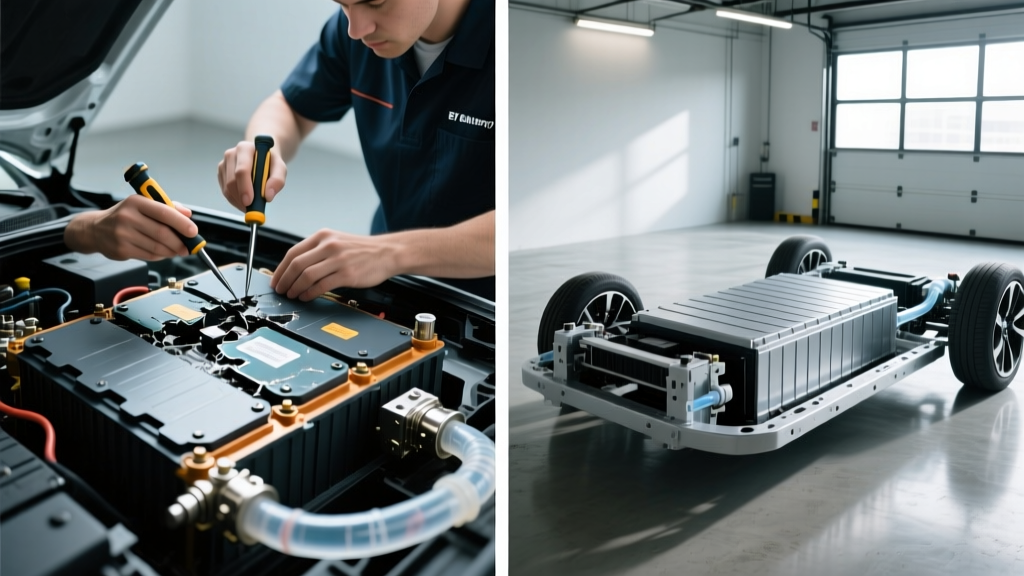
Critical context: These are full-pack replacement costs. In practice, many battery issues involve a single faulty module or a defective cell group. Module-level repair — replacing just the degraded section — typically costs $2,000–$6,000 and is increasingly the standard service approach. BMW, Hyundai, and Tesla all perform module-level diagnostics before recommending a full pack swap.
When is replacement actually needed? Almost never due to natural degradation within 10 years. The most common triggers are collision damage, manufacturing defects caught early under warranty, or — in rare cases — coolant system failures that damage the pack. The Chevrolet Bolt recall (2021–2022) was an outlier involving a specific manufacturing defect, not normal wear.
Factors That Accelerate Battery Degradation
Your battery's lifespan isn't just a function of time and miles. Specific habits and environmental factors meaningfully affect how quickly capacity declines.
Battery Care Checklist: What Hurts and What Helps
- DC fast charging frequency: Occasional road-trip fast charging (1–2x/month) has negligible impact. Daily DC fast charging without preconditioning can add 1–3% degradation per year versus Level 2 home charging. The issue isn't speed alone — it's the heat generated at high C-rates sustained over repeated sessions.
- State of Charge (SoC) habits: For NMC/NCA packs, routinely storing at 100% SoC accelerates calendar aging. Keeping daily charge between 20–80% extends pack life. LFP packs are an exception — manufacturers recommend charging to 100% at least weekly for accurate BMS calibration.
- Extreme heat exposure: Prolonged parking in 100°F+ ambient temperatures without thermal management active is the single largest environmental risk factor. Garage parking and preconditioning while plugged in mitigate this.
- Cold-weather fast charging: Charging at high power in sub-freezing temperatures without battery preconditioning can cause lithium plating — a permanent, irreversible degradation mechanism. Always precondition before fast charging in cold weather.
- Deep discharge: Regularly driving the pack to 0% (or leaving it at 0% for days) stresses the cells. Charge to at least 20% if the vehicle will sit unused.
- What does NOT hurt: Normal highway driving, regenerative braking use, Level 1 or Level 2 home charging, and moderate cold-weather range loss (this is temporary, not degradation).
How to Check Your Battery's State of Health (SoH)
State of Health (SoH) is the percentage of your battery's current maximum capacity relative to its original capacity. A new pack is at 100% SoH; a pack that held 75 kWh originally but now holds 67.5 kWh is at 90% SoH.
Methods Available to EV Owners
In-vehicle displays: Some manufacturers provide SoH estimates directly. Tesla's service menu (accessible via the software screen) shows estimated pack capacity. Hyundai's infotainment system in the Ioniq 5/EV6 provides a battery health indicator under the EV diagnostics menu.
OBD-II diagnostic tools: Devices like the OBDLink SX or Carista adapter, paired with apps such as EV Battery Health or Leaf Spy (for Nissan Leaf), can read the BMS-reported SoH directly. This is the most accurate consumer-accessible method and costs $30–$80 for the hardware.
Manual calculation: Charge to 100%, note the displayed range, and compare to the original EPA range adjusted for your known efficiency. If your 310-mile Model 3 shows 278 miles at 100% after three years, your SoH is approximately 89.7% — well within normal parameters.
Dealer/service center diagnostics: Most service centers can pull a detailed SoH report with cell-level voltage balance data during routine service. Request this at your annual inspection, especially if you're approaching the warranty mileage threshold.
Looking Ahead: Solid-State, Silicon Anodes, and Reduced Lithium Dependency
The lithium ion shortage conversation is inseparable from next-generation battery technology. Several advances are in development that could reduce per-vehicle lithium demand — or eliminate it entirely.
Solid-state batteries: Companies including Toyota, Samsung SDI, and QuantumScape are developing solid-state cells that replace the liquid electrolyte with a solid ceramic or polymer. These promise 30–50% higher energy density, faster charging, and improved safety. However, as of early 2026, no solid-state battery is in mass production for consumer EVs. Toyota has announced limited production for 2027–2028, and Samsung SDI targets 2027. Expect initial deployment in premium models at significant price premiums before any mainstream availability.
Silicon anode technology: Replacing graphite anodes with silicon can boost energy density by 20–40%. Sila Nanotechnologies and Group14 are supplying early production cells, with Mercedes-Benz's G-Class 580e among the first recipients. This technology still uses lithium but reduces the total material needed per kWh.
Sodium-ion batteries: CATL and BYD have begun limited deployment of sodium-ion packs in Chinese-market vehicles. Sodium-ion chemistry uses zero lithium, offering a true alternative for budget and urban-range EVs. Energy density remains 20–30% below LFP, making it unsuitable for long-range vehicles, but it represents a genuine supply-chain hedge. U.S. availability is not expected before 2028 at the earliest.
Recycling scale-up: Companies like Redwood Materials (founded by Tesla co-founder JB Straubel) and Li-Cycle are scaling lithium-ion battery recycling to recover 95%+ of critical minerals from end-of-life packs. As the first generation of EVs reaches retirement (2028–2032), recycled lithium, cobalt, and nickel will increasingly feed back into new battery production, easing primary mining demand.
According to the IRS §30D clean vehicle credit rules, battery sourcing requirements already incentivize manufacturers to diversify supply chains away from single-source dependencies — a policy driver that indirectly addresses shortage risk by broadening the supply base.
Frequently Asked Questions
Will a lithium ion shortage make EVs more expensive?
Potentially, but the impact is moderated by the industry's shift to LFP chemistry (which uses less lithium per kWh), expanded mining operations in Australia, Chile, and Nevada, and growing recycling capacity. If a supply crunch occurs, expect price pressure on NMC/NCA long-range models first, while LFP-equipped standard-range vehicles remain more insulated.
Should I avoid buying an EV because of battery replacement costs?
No. The data consistently shows that battery packs outlast most ownership periods. Fewer than 1% of EVs require out-of-warranty battery replacement due to degradation. The more relevant cost comparison is fuel savings versus upfront price — and for most buyers, the energy cost advantage of EVs (roughly $0.04–$0.06 per mile at home versus $0.12–$0.18 for gas) more than offsets any theoretical replacement risk over 8–10 years of ownership.
Is LFP or NMC better for my situation?
Choose LFP if: you charge at home, your daily driving is under 100 miles, you want the longest possible cycle life, and you prefer the simplicity of charging to 100% daily. Choose NMC/NCA if: you need maximum range (300+ miles), you regularly take long road trips, you live in a cold climate where NMC's better low-temperature efficiency matters, or you need the lightest possible pack for performance applications.
How often should I use DC fast charging?
For NMC/NCA packs, limit DC fast charging to road trips or occasions when Level 2 charging isn't available — ideally fewer than 2–3 sessions per month. For LFP packs, the chemistry is more tolerant of fast charging, but the heat management principle still applies: use preconditioning and avoid back-to-back fast charges when possible. The NHTSA has not issued specific guidance on charging frequency, but manufacturer recommendations consistently favor Level 2 for daily use.
Can extreme weather permanently damage my battery?
Extreme heat is the primary concern for permanent degradation — sustained ambient temperatures above 100°F with the vehicle parked unplugged (no active thermal management) can accelerate calendar aging. Extreme cold causes temporary range loss (20–40% in sub-20°F conditions) but does not permanently damage the battery unless you fast charge without preconditioning, which risks lithium plating. Modern thermal management systems in vehicles from Tesla, Hyundai, GM, and Ford actively protect the pack in both extremes when the vehicle is plugged in.
Do I need to worry about the 12V battery too?
Separately, yes — but it's a different system entirely. The 12V auxiliary battery powers electronics, lights, and the computer that manages the high-voltage traction battery. It's a conventional lead-acid or lithium 12V unit that typically lasts 3–5 years and costs $150–$300 to replace. It has no relationship to your EV's range or the lithium ion shortage dynamics discussed here. Many EVs (including newer Teslas and the Hyundai Ioniq 5) now use a 12V lithium-iron-phosphate auxiliary battery that lasts the life of the vehicle.