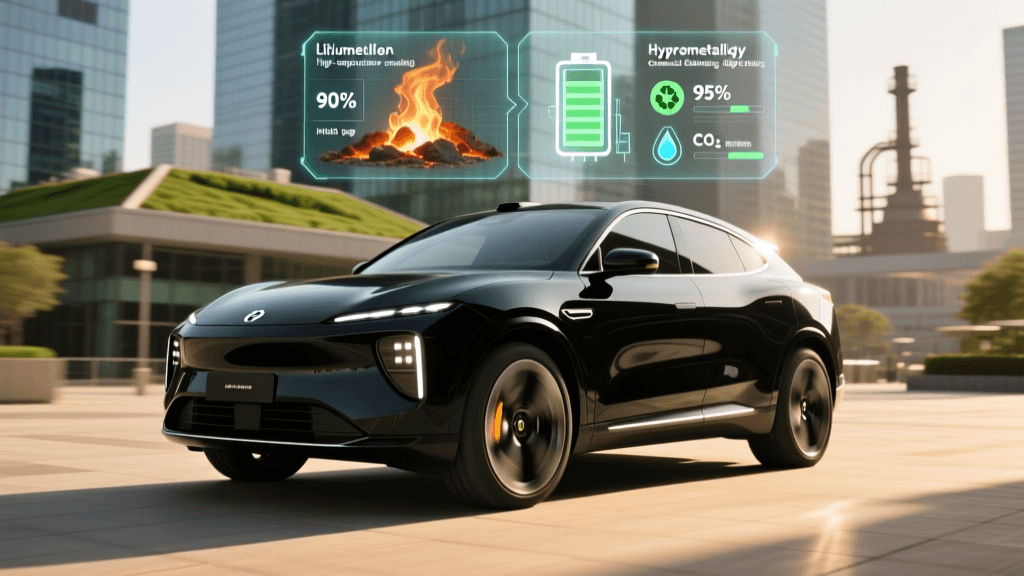
The Urgency of Lithium-Ion Battery Recycling
As the global fleet of electric vehicles (EVs) scales exponentially, the automotive industry is approaching a critical inflection point: the first massive wave of lithium-ion battery retirements. According to the International Energy Agency's Global EV Outlook 2024, the demand for critical minerals like lithium, nickel, and cobalt is projected to multiply over the next decade. However, the environmental and economic sustainability of this transition hinges entirely on our ability to close the loop through advanced battery recycling. When an EV battery degrades to 70% or 80% of its original capacity, it is no longer viable for automotive propulsion, but its constituent materials remain incredibly valuable. Understanding the deep technology behind EV battery recycling is essential for evaluating the true lifecycle cost and environmental footprint of modern electric mobility.
Deconstructing the Black Mass: Preparation and Shredding
Before any chemical or thermal separation can occur, end-of-life (EOL) battery packs must be safely dismantled. This is a highly volatile process. EV batteries retain significant electrical charge and contain flammable liquid electrolytes. Technicians first fully discharge the modules, often submerging them in specialized saltwater baths to safely bleed off residual voltage. Once inert, the packs are mechanically disassembled.
The core of the preparation phase is shredding, which must be conducted in an inert atmosphere (typically using argon or nitrogen gas) or under liquid cooling to prevent thermal runaway and the ignition of volatile organic compounds (VOCs). The mechanical shredding process reduces the battery cells into a granular mixture known as 'black mass.' This black mass is a highly concentrated ore containing lithium, cobalt, nickel, manganese, aluminum, copper, and carbon. From this point, the recycling industry diverges into three primary technological pathways: pyrometallurgy, hydrometallurgy, and direct recycling.
Pyrometallurgy vs. Hydrometallurgy: A Technical Comparison
For the past decade, pyrometallurgy has been the industry standard, but hydrometallurgy is rapidly overtaking it due to superior recovery rates and lower carbon emissions. Let us break down the chemistry and physics of both approaches.
Pyrometallurgy (Smelting)
Pyrometallurgy relies on extreme heat, typically operating between 1,000°C and 1,500°C. The black mass is fed into a smelting furnace where the organic components—such as the plastic separators, binders, and liquid electrolytes—are burned off as fuel. This thermal reduction melts the transition metals into a cobalt-nickel-copper alloy, which is later refined. While pyrometallurgy is robust and can handle mixed, unsorted battery chemistries without extensive preprocessing, it has severe drawbacks. The extreme heat destroys the lithium and aluminum components, trapping them in the furnace slag where they are economically unviable to recover. Furthermore, the carbon footprint of maintaining these temperatures is immense, and the burning of electrolytes requires advanced off-gas scrubbing systems to prevent the release of toxic fluorinated compounds.
Hydrometallurgy (Chemical Leaching)
Hydrometallurgy treats the black mass not with fire, but with aqueous chemistry. The process begins with 'leaching,' where the black mass is dissolved in strong acids, most commonly sulfuric acid (H2SO4) combined with a reducing agent like hydrogen peroxide (H2O2). The peroxide is crucial as it reduces insoluble cobalt and manganese oxides into soluble forms. Once the metals are dissolved into a liquid solution, engineers use solvent extraction and chemical precipitation to selectively isolate lithium, nickel, cobalt, and manganese with extreme precision. Hydrometallurgy operates at much lower temperatures (typically 60°C to 90°C), resulting in a fraction of the greenhouse gas emissions compared to smelting. More importantly, it achieves near-total recovery rates for lithium, which pyrometallurgy entirely misses.
Recovery and Environmental Metrics Comparison
| Metric | Pyrometallurgy | Hydrometallurgy | Direct Recycling |
|---|---|---|---|
| Operating Temperature | 1,000°C - 1,500°C | 60°C - 90°C | 150°C - 300°C |
| Lithium Recovery Rate | 0% - 20% (Lost to slag) | 90% - 98% | 85% - 95% (Relithiation) |
| Ni/Co/Mn Recovery | 95%+ (as alloy) | 98%+ (high purity salts) | Retained in cathode structure |
| Carbon Footprint | High (Energy intensive) | Moderate (Chemical synthesis) | Lowest (Preserves structure) |
| Waste Byproducts | Toxic off-gases, slag | Wastewater, spent acids | Minimal solvent waste |
Direct Recycling: The Next Frontier in Cathode Healing
While hydrometallurgy is currently the most efficient way to extract raw elemental salts, it completely destroys the complex crystalline structure of the battery cathode. The U.S. Department of Energy’s ReCell Center at Argonne National Laboratory is pioneering 'Direct Recycling,' a process designed to preserve the cathode's physical architecture. In direct recycling, the black mass is separated using non-destructive solvents or supercritical CO2 to recover the binder without dissolving the active metals. The recovered cathode powder is then 'healed' through a process called relithiation, where lithium is reintroduced into the crystal lattice via low-temperature hydrothermal or solid-state annealing methods. This allows the recycled material to be directly fed back into new battery manufacturing, bypassing the energy-intensive precursor synthesis steps required by traditional mining and hydrometallurgy.
Environmental Impact and Lifecycle Analysis (LCA)
When evaluating the environmental impact of EV batteries, Lifecycle Analysis (LCA) reveals that recycling fundamentally alters the carbon math of electric mobility. Mining and refining virgin lithium and nickel are incredibly water-intensive and ecologically disruptive processes. For example, extracting one metric ton of virgin lithium from hard rock mining generates roughly 15 tons of CO2 equivalent. By contrast, recovering lithium via hydrometallurgy generates less than half of that emissions profile. However, the environmental impact of recycling is not zero. Hydrometallurgy requires massive volumes of water and generates toxic wastewater that must be rigorously treated to prevent heavy metal contamination of local watersheds. Furthermore, the economics of recycling heavily depend on battery chemistry. Nickel-Manganese-Cobalt (NMC) batteries contain high-value transition metals that make recycling highly profitable. Conversely, Lithium Iron Phosphate (LFP) batteries contain abundant, cheap iron and no cobalt, making traditional recycling economically unviable without significant regulatory subsidies or breakthroughs in direct recycling technologies.
Actionable Advice for EV Owners: End-of-Life Protocols
As an EV owner, your actions at the end of the vehicle's life directly impact the efficacy of this recycling supply chain. Here is how you can ensure your battery is processed responsibly:
- Never Attempt DIY Disposal: The Environmental Protection Agency (EPA) strictly classifies damaged or end-of-life lithium-ion batteries as hazardous waste. Throwing an EV module in standard waste streams risks catastrophic sanitation truck fires and toxic leaching.
- Leverage Dealer Take-Back Programs: Most major automakers (including Tesla, Ford, and Hyundai) have contractual obligations with certified recycling partners like Redwood Materials or Li-Cycle. When trading in or scrapping an EV, ensure the dealership logs the battery for manufacturer take-back.
- Utilize Certified Aggregators: If you are salvaging a vehicle independently, use certified networks like Call2Recycle to locate specialized drop-off facilities equipped to handle high-voltage automotive traction batteries safely.
- Consider Second-Life Applications: Before recycling, explore if your degraded battery can be sold to energy storage integrators. A battery with 70% health is perfectly suited for stationary solar storage, extending its useful life by another decade before it ever reaches the shredder.
By understanding the intricate chemistry of hydrometallurgy and the promise of direct cathode healing, EV owners and industry stakeholders can look past the tailpipe and appreciate the complex, closed-loop engineering that makes sustainable electric mobility possible.