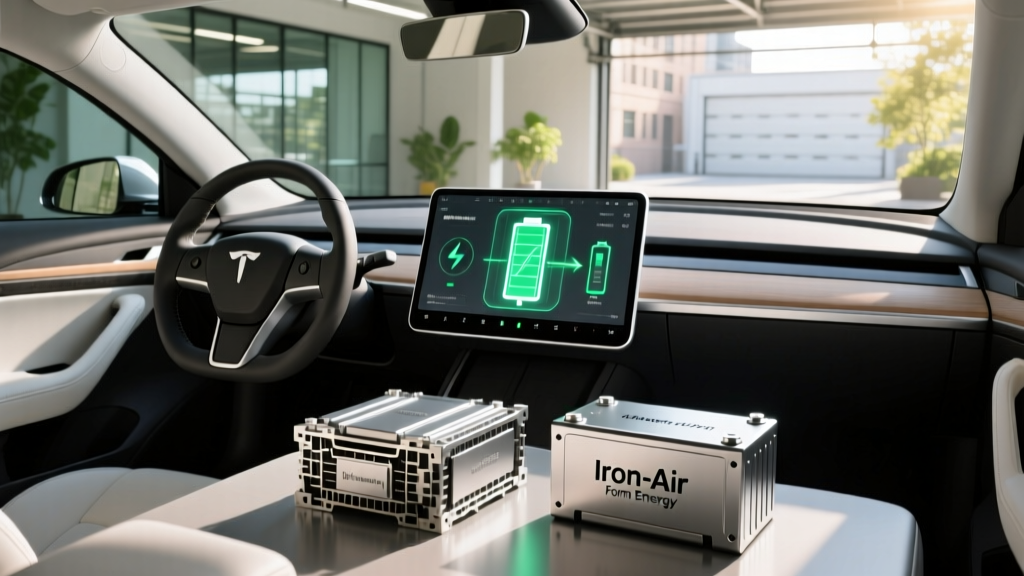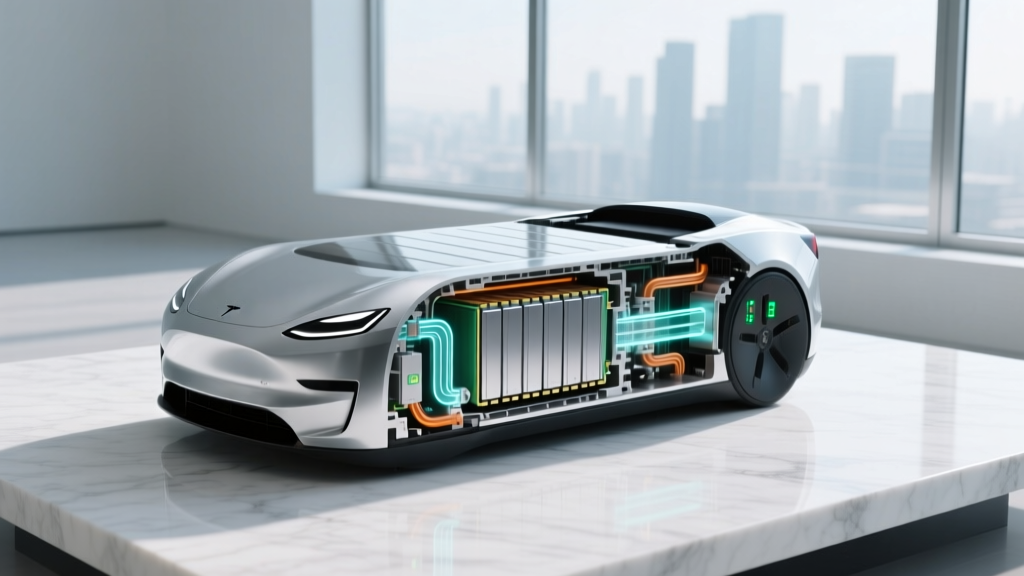
If you're researching a Tesla or already own one, the lithium-ion battery pack is the single most expensive component in the vehicle — and the one that generates the most anxiety. Will it last? What happens when it degrades? How much does a replacement cost? These are fair questions, and the answers are more nuanced than either the doom-scrolling forums or the marketing brochures suggest.
This guide breaks down Tesla's battery chemistry options, real-world degradation data pulled from fleet studies, warranty specifics, replacement economics, and the daily habits that meaningfully extend pack life. All figures reflect the 2025–2026 model-year lineup.
Tesla's Two Battery Chemistries: LFP vs NMC/NCA
Tesla currently uses two distinct lithium-ion chemistries across its lineup, and the one in your car determines your charging habits, range characteristics, and long-term durability profile.
Nickel Manganese Cobalt (NMC) / Nickel Cobalt Aluminum (NCA) packs are used in Long Range and Performance variants of the Model 3, Model Y, Model S, and Model X. These cells prioritize energy density — more kWh in a lighter, more compact pack — which translates to longer EPA range. Tesla sources these from Panasonic (primarily at the Nevada Gigafactory) and, for some builds, LG Energy Solution.
Lithium Iron Phosphate (LFP) packs are used in the Standard Range / rear-wheel-drive variants of the Model 3 and Model Y. CATL supplies these prismatic cells. LFP sacrifices some energy density for dramatically longer cycle life, lower cost, and a chemistry that is more tolerant of being held at 100% state of charge (SoC). Tesla explicitly recommends charging LFP vehicles to 100% at least weekly to keep the battery management system (BMS) calibration accurate.
| Attribute | LFP (Standard Range) | NMC / NCA (Long Range / Performance) |
|---|---|---|
| Energy Density | ~160 Wh/kg (cell-level) | ~250–260 Wh/kg (cell-level) |
| Typical Usable Capacity | 57–60 kWh | 75–82 kWh |
| Cycle Life (to 80% SoH) | 3,000–5,000+ cycles | 1,500–2,500 cycles |
| Cold-Weather Performance | More range loss (~35–40% at 20°F) | Better cold performance (~25–30% loss at 20°F) |
| Daily Charge Recommendation | 100% (weekly minimum) | 80% daily; 100% for trips only |
| Cost per kWh (pack-level) | Lower (~$100–120/kWh) | Higher (~$140–160/kWh) |
| Thermal Stability | Higher (less prone to thermal runaway) | Lower (requires more active management) |
| Used In | Model 3 RWD, Model Y RWD | Model 3 LR/Perf, Model Y LR/Perf, S, X |
Which is better? Neither is universally superior. If you want maximum range, faster acceleration, and better winter efficiency, NMC/NCA is the right call. If you prioritize longevity, lower cost, and plan to own the car for 10+ years or 200,000+ miles, LFP's cycle-life advantage becomes significant. Fleet data from high-mileage LFP packs shows remarkably flat degradation curves compared to NMC equivalents.
How Long Do Tesla Lithium-Ion Batteries Last?
Tesla's own 2024 Impact Report (published mid-2025) states that Model 3 and Model Y battery packs retain approximately 85% of original capacity after 200,000 miles. This aligns with independent fleet data collected by TeslaFi and Recurrent Auto, which track thousands of vehicles over time.
The degradation curve is not linear. Most packs lose roughly 5–7% capacity in the first 30,000–50,000 miles as the solid electrolyte interphase (SEI) layer stabilizes on the anode. After that, degradation slows to approximately 1–2% per year under normal use. A well-maintained NMC pack at 150,000 miles typically sits around 88–92% state of health (SoH). LFP packs at the same mileage often measure 92–96% SoH.
Typical Tesla Battery Degradation Curve (NMC Long Range)
| Mileage | Approximate SoH (%) | Notes |
|---|---|---|
| 0 (new) | 100% | Factory baseline |
| 25,000 mi | 94–96% | Initial SEI formation loss |
| 50,000 mi | 92–94% | Rapid-degradation phase ends |
| 100,000 mi | 89–92% | Linear slow-degradation phase |
| 150,000 mi | 87–91% | Still well above warranty threshold |
| 200,000 mi | 84–88% | Tesla fleet average ~85% |
| 300,000 mi | 78–84% | Approaching warranty threshold; high-mileage outlier data |
Sources: Tesla Impact Report 2024, Recurrent Auto fleet data, TeslaFi community aggregation. Individual results vary based on climate, charging habits, and Supercharging frequency.
In calendar years, most Tesla owners will not need a battery replacement during typical ownership. A 2026 Model 3 Long Range driven 12,000 miles per year would reach 200,000 miles in roughly 17 years — well beyond the average US vehicle ownership span of 8.4 years (per S&P Global Mobility).
Tesla Battery Warranty: What's Covered and for How Long
Tesla's high-voltage battery warranty is one of the strongest in the industry, but the specifics vary by model and trim. The warranty covers defects and capacity loss below a defined threshold — not cosmetic issues or damage from accidents, flooding, or unauthorized modifications.
| Model / Variant | Warranty Period | Mileage Limit | Capacity Retention Threshold |
|---|---|---|---|
| Model 3 RWD (LFP) | 8 years | 100,000 miles | 70% |
| Model 3 Long Range / Performance | 8 years | 120,000 miles | 70% |
| Model Y RWD (LFP) | 8 years | 100,000 miles | 70% |
| Model Y Long Range / Performance | 8 years | 120,000 miles | 70% |
| Model S / Model X | 8 years | 150,000 miles | 70% |
The 70% threshold is critical context: if your pack degrades to 69.5% SoH within the warranty window, Tesla will repair or replace it (at their discretion) to bring capacity back above 70%. In practice, Tesla typically replaces the entire pack rather than performing module-level repairs on 4680-cell vehicles, though older 2170-cell packs may receive module-level service.
One nuance often missed: the warranty covers the battery and drive unit together. If a drive motor or inverter fails within the warranty window, it is covered under the same terms. This is relevant because power electronics failures, while rare, are far more common than catastrophic battery failures.
How Much Does a Tesla Battery Replacement Cost?
Out-of-warranty battery replacement is the scenario that generates the most fear — and the most misinformation. Here are the real-world figures based on service invoices shared by owners and independent repair shops as of 2025–2026.
| Model | Battery Pack Type | Approximate Pack Cost | Labor + Total Estimate |
|---|---|---|---|
| Model 3 RWD (LFP, ~60 kWh) | CATL prismatic LFP | $7,000–$9,000 | $10,000–$13,000 |
| Model 3 LR / Model Y LR (~75–82 kWh) | Panasonic/LG 2170 NMC | $10,000–$14,000 | $14,000–$18,000 |
| Model Y RWD (LFP, ~60 kWh) | CATL prismatic LFP | $7,000–$9,000 | $10,000–$13,000 |
| Model S / Model X (~100 kWh) | Panasonic 18650/2170 NCA | $13,000–$18,000 | $17,000–$23,000 |
These costs have been trending downward. Five years ago, a Model S pack replacement routinely exceeded $22,000. Today, LFP cell pricing has dropped below $60/kWh at the cell level, and Tesla's 4680-cell manufacturing (ramping at the Texas Gigafactory) is expected to push pack-level costs further down by 2027–2028.
When is replacement actually needed? Catastrophic failure (a pack that won't hold charge or throws isolation faults) is rare and almost always occurs within the warranty period. Gradual degradation to 70% SoH — the point where you'd notice meaningful range reduction — typically takes 200,000–300,000 miles for NMC packs and 300,000+ miles for LFP packs. Most first and second owners will never face an out-of-warranty replacement bill.
Factors That Accelerate (or Slow) Battery Degradation
Not all miles are equal when it comes to battery wear. The following factors have the largest measurable impact on long-term state of health:
- State of charge habits: Regularly charging NMC packs to 100% and letting them sit accelerates calendar degradation. Tesla's own recommendation is 80% daily for NMC, 100% only before trips. LFP packs are the exception — they tolerate and benefit from regular 100% charges.
- DC fast charging frequency: Supercharging at 150–250 kW generates significant heat. Occasional Supercharging on road trips has minimal impact, but daily Supercharging (common among rideshare and fleet drivers) measurably increases degradation rate. A 2025 Recurrent Auto study found that vehicles that fast-charged more than 90% of the time showed approximately 2–3% additional degradation at 100,000 miles compared to primarily Level 2-charged vehicles.
- Extreme temperatures: Sustained exposure to ambient temperatures above 95°F accelerates chemical aging. Tesla's thermal management system actively cools the pack, but prolonged heat exposure still takes a toll. Extreme cold (below 20°F) does not cause permanent damage but temporarily reduces available capacity and increases charging time.
- Deep discharge cycles: Letting the pack sit at or near 0% SoC for extended periods (days or weeks) can cause copper dissolution on the anode current collector, leading to permanent capacity loss and potential internal shorts. Tesla's BMS maintains a small buffer below the displayed 0%, but this buffer is not infinite.
- Preconditioning: Using Tesla's scheduled departure feature to precondition the battery before driving (and before Supercharging) reduces stress by bringing cells to optimal temperature. This is especially important in cold weather, where charging a cold pack forces the BMS to limit charge rate and can cause lithium plating on the anode.
Battery Care Checklist for Maximum Longevity
- Set daily charge limit to 80% (NMC) or 100% (LFP)
- Charge to 100% only when departing on a trip — and drive soon after reaching 100%
- Use Level 2 home charging as your primary charging method
- Limit Supercharging to road trips when possible
- Enable scheduled departure preconditioning for morning drives
- Avoid leaving the car at 0% or near-0% SoC for more than a few hours
- In hot climates, park in shade or a garage when possible
- Keep the car plugged in during extreme cold so the BMS can maintain pack temperature
How to Check Your Tesla Battery's State of Health
Tesla does not display a direct State of Health (SoH) percentage in the vehicle's UI — unlike some competitors such as Hyundai (which shows SoH in the Ioniq 5's menu) or Nissan (which provides a 12-bar capacity gauge in the Leaf). However, there are several reliable methods to assess your pack's condition:
1. The range-at-100% method: Charge to 100% and note the displayed estimated range. Compare this to the EPA-rated range for your specific model and model year. For example, a 2026 Model 3 Long Range has an EPA range of 363 miles. If your 100% charge shows 325 miles, your approximate SoH is 325/363 = ~89.5%. This method is imprecise because the displayed range estimate is affected by recent driving efficiency, but it provides a useful trend line if checked monthly under consistent conditions.
2. Third-party apps via Tesla's Fleet API: Apps like Tessie, Stats for Tesla, and TeslaFi pull detailed battery telemetry through Tesla's official API. These can estimate SoH by analyzing energy consumed versus distance traveled over full charge cycles. Tessie, for instance, provides a "Battery Health" estimate based on aggregated charge-discharge data.
3. Service center diagnostic: If you suspect abnormal degradation (e.g., range dropping rapidly, or the car showing significantly less range than expected at 100%), you can request a battery health check at a Tesla Service Center. This runs a full cell-balance and capacity analysis and is typically free if performed during a scheduled service visit.
4. The OBD-II dongle method: Some owners use an OBD-II reader with Tesla-specific software (such as Scan My Tesla paired with a compatible Bluetooth OBD-II adapter) to read real-time pack voltage, cell imbalance, and estimated capacity. This is more technical but provides the most granular data outside of a factory diagnostic.
Looking Ahead: Solid-State, Silicon Anodes, and What's Realistic
The battery technology landscape is evolving rapidly, but it's important to separate announced milestones from production reality.
Silicon-dominant anodes: Companies like Sila Nanotechnologies and Group14 (a Tesla supplier partner) are commercializing silicon-carbon composite anode materials that increase energy density by 20–40% compared to graphite. Tesla's 4680 cells already incorporate incremental silicon content in the anode. Expect continued silicon content increases through 2027–2028, yielding modest range improvements (10–15 miles per generation) rather than step-change breakthroughs.
Solid-state batteries: Toyota, Samsung SDI, and QuantumScape have all announced solid-state battery prototypes with energy densities exceeding 400 Wh/kg and 10-minute fast-charge capability. However, none of these are in mass production for passenger vehicles as of 2026. Toyota's announced timeline targets limited production in 2027–2028, with meaningful volume not expected before 2030. Solid-state remains a legitimate long-term development, but buyers should not delay a purchase waiting for it.
4680 cell maturation: Tesla's in-house 4680 cells (produced at Giga Texas) are the most immediate technology shift. These cells use a tabless electrode design that reduces internal resistance, improving charge speed and thermal performance. As of early 2026, 4680 packs are used in the Cybertruck and select Model Y builds. Energy density and yield continue to improve each quarter, and broader rollout across the Model 3/Y lineup is expected through 2026–2027.
Frequently Asked Questions
How long do Tesla lithium-ion batteries last in real-world use?
Tesla's fleet data shows an average of ~85% capacity retention at 200,000 miles for Model 3 and Model Y NMC packs. LFP packs typically retain 90%+ at the same mileage. In calendar years, this translates to 15–20+ years of usable life at average US driving distances (12,000–15,000 miles/year). Most packs will outlive the vehicle they're installed in.
How much does it cost to replace a Tesla battery out of warranty?
Between $10,000 and $23,000 depending on the model and pack size, including labor. Model 3/Y LFP packs are at the lower end (~$10,000–$13,000 total), while Model S/X packs are at the higher end (~$17,000–$23,000). These costs have been declining and are expected to continue dropping as cell manufacturing scales.
What does Tesla's battery warranty actually cover?
Tesla covers battery defects and capacity loss below 70% for 8 years / 100,000–150,000 miles (depending on model and trim). The warranty also covers the drive unit (motor and inverter). It does not cover damage from accidents, flooding, unauthorized modifications, or use as a stationary power source.
Is it bad to Supercharge my Tesla every day?
Daily Supercharging is not catastrophic, but fleet data shows it adds approximately 2–3% more degradation at 100,000 miles compared to primarily Level 2 charging. If you can charge at home on a Level 2 (7–11 kW) charger overnight, that remains the best practice for long-term pack health. Reserve Supercharging for road trips when possible.
LFP or NMC — which Tesla battery should I choose?
Choose NMC (Long Range / Performance) if you need maximum range (330–402 miles EPA depending on model), faster acceleration, and better cold-weather efficiency. Choose LFP (Standard Range / RWD) if you prioritize lowest cost, longest cycle life, and plan to keep the vehicle for 10+ years. LFP is also the better choice if you prefer the simplicity of always charging to 100%.
Can I check my Tesla's battery health without going to a service center?
Yes. The simplest method is charging to 100% and comparing the displayed range to your model's EPA rating. For more detail, third-party apps like Tessie or TeslaFi use Tesla's Fleet API to estimate SoH from charge-discharge telemetry. An OBD-II reader with Tesla-compatible software provides the most granular cell-level data.
Will Tesla's battery warranty still be valid if I use third-party chargers?
Yes. Tesla's warranty is not voided by using non-Tesla charging equipment (Electrify America, ChargePoint, home Level 2 stations, etc.) as long as the equipment meets standard SAE J1772 / CCS / NACS specifications. Using uncertified or damaged charging equipment that causes electrical damage could be grounds for a warranty denial, but this is extremely rare.
Sources: Tesla Impact Report 2024, Recurrent Auto Battery Degradation Research, Tesla New Vehicle Limited Warranty.