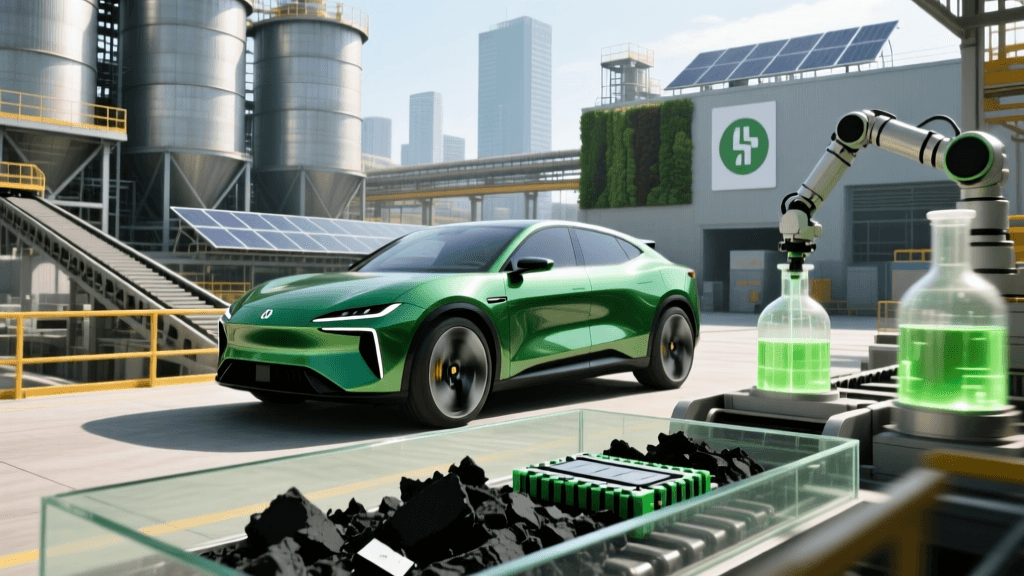
The Impending Wave of End-of-Life EV Batteries
As the global transition to electric vehicles accelerates, the automotive industry is approaching a critical inflection point. The first generation of mass-market EVs is nearing the end of its operational lifespan, bringing the challenge of end-of-life lithium-ion battery management to the forefront. According to the International Energy Agency (IEA), the sheer volume of retired EV batteries will grow exponentially over the next decade, transforming what was once a niche waste management issue into a massive industrial supply chain opportunity. Understanding the deep technology behind EV battery recycling is no longer just for chemical engineers; it is essential for eco-conscious consumers and automotive enthusiasts alike.
Unlike traditional lead-acid batteries, which boast a highly established and profitable recycling ecosystem, lithium-ion packs are complex, volatile, and chemically diverse. They contain valuable transition metals like cobalt, nickel, and manganese, alongside lithium, copper, and aluminum. Recovering these materials efficiently requires advanced technological interventions that go far beyond simple shredding. This deep dive explores the intricate processes of modern battery recycling, the environmental metrics that define its success, and how you can ensure your vehicle's battery contributes to a circular economy.
Inside the EV Battery Recycling Process
The journey of a retired EV battery from a decommissioned vehicle to raw, battery-grade materials is a multi-stage industrial process. It begins with safety protocols and ends with precise chemical engineering.
Step 1: Discharge, Dismantling, and Shredding
Before any chemical processing can occur, a battery pack must be safely neutralized. High-voltage EV batteries retain significant energy even at the end of their life. Recyclers first perform a deep discharge in controlled environments to prevent thermal runaway. Next, automated robotic arms or specialized technicians dismantle the pack, removing the steel casing, cooling systems, and battery management system (BMS) electronics.
The core battery modules are then fed into industrial shredders, often operating under an inert argon or nitrogen atmosphere to prevent fires caused by exposed reactive lithium. The output of this mechanical shredding is a heterogeneous mixture known in the industry as 'black mass.' This dark, powdery substance is highly valuable, containing the critical cathode materials (lithium, cobalt, nickel, manganese) mixed with graphite from the anode and trace amounts of plastics and foils.
Step 2: Pyrometallurgy vs. Hydrometallurgy vs. Direct Recycling
Once black mass is generated, facilities must choose a metallurgical pathway to extract the target elements. The industry currently relies on three primary technological approaches, each with distinct chemical mechanisms, energy requirements, and recovery rates.
Pyrometallurgy (Smelting): This is the oldest and most commercially mature method. Black mass is fed into a high-temperature furnace (often exceeding 1,500°C). The organic components, plastics, and graphite are burned off as fuel, while the metals melt and separate into an alloy phase and a slag phase. While highly effective at recovering cobalt, nickel, and copper, pyrometallurgy traditionally loses lithium and aluminum to the slag, which is often downcycled into construction materials rather than recovered for new batteries.
Hydrometallurgy (Leaching): This aqueous process is rapidly becoming the industry standard due to its superior recovery rates. Black mass is subjected to chemical leaching using strong acids (like sulfuric acid) and reducing agents (like hydrogen peroxide) to dissolve the metals into a liquid solution. Through a series of precise precipitation and solvent extraction steps, individual metals are separated and purified into battery-grade salts, such as lithium carbonate and cobalt sulfate. Hydrometallurgy operates at much lower temperatures than smelting and can achieve recovery rates exceeding 95% for all critical metals, including lithium.
Direct Recycling: Pioneered by institutions like the Argonne National Laboratory's ReCell Center, direct recycling represents the cutting edge of battery technology. Instead of breaking the cathode down to its elemental base, direct recycling aims to preserve the intact crystal structure of the cathode particles. The black mass is separated using non-destructive methods, and the degraded cathode material undergoes 'relithiation'—a process where missing lithium is reintroduced via hydrothermal or solid-state treatments. This method drastically reduces energy consumption and chemical waste, though it currently struggles with mixed-battery feeds and is still scaling toward commercial viability.
| Method | Operating Temp | Lithium Recovery | Co/Ni/Mn Recovery | Commercial Maturity |
|---|---|---|---|---|
| Pyrometallurgy | > 1,500°C | Low (Lost to slag) | High (>90%) | High |
| Hydrometallurgy | 20°C - 90°C | Very High (>95%) | Very High (>95%) | Medium-High |
| Direct Recycling | 100°C - 300°C | N/A (Structure kept) | N/A (Structure kept) | Low (Pilot stage) |
Environmental Impact: Is Recycling Really Greener?
The primary environmental argument for recycling is the displacement of virgin mining. Extracting lithium from hard-rock mines (spodumene) or brine evaporation ponds requires massive amounts of water, land disruption, and fossil-fuel-based energy. Similarly, cobalt and nickel mining are associated with severe ecological degradation and human rights concerns in regions like the Democratic Republic of Congo.
According to the Environmental Protection Agency (EPA), proper recycling of lithium-ion batteries prevents hazardous materials from entering landfills while significantly reducing the greenhouse gas emissions associated with raw material extraction. Studies indicate that producing cathode materials via hydrometallurgical recycling can reduce the carbon footprint by up to 50% compared to virgin mining. Furthermore, recycling keeps toxic heavy metals and fluorinated electrolytes out of local water tables, mitigating the long-term soil contamination risks associated with improper disposal.
However, the recycling process itself is not without environmental costs. Hydrometallurgy requires large volumes of water and generates toxic wastewater that must be meticulously treated. Pyrometallurgy is highly energy-intensive, and if the smelter is powered by a coal-heavy grid, the carbon offset benefits diminish. Therefore, the true 'green' credential of a recycling facility depends heavily on its local energy grid mix and its water-closure loop efficiency.
Actionable Guide: How to Ensure Your EV Battery is Recycled
While industrial recycling happens at a macro scale, consumers play a vital role in the first step of the reverse logistics chain. Here is how you can ensure your EV or PHEV battery is handled responsibly:
- Leverage OEM Take-Back Programs: Major automakers like Nissan, Tesla, and Ford have established closed-loop partnerships with recyclers like Redwood Materials and Li-Cycle. When your battery degrades below 70% capacity, contact your dealership to inquire about the manufacturer's official end-of-life take-back program.
- Utilize Certified Drop-Off Networks: If you are replacing a battery out-of-warranty or dealing with a salvaged EV, do not sell the pack to an uncertified scrap yard. Use the Call2Recycle locator tool to find certified lithium-ion battery collection sites in your region.
- Handle Damaged Batteries with Extreme Caution: If your EV has been in a collision or the battery casing is punctured, it poses a severe thermal runaway risk. Do not attempt to move or store a damaged high-voltage battery in a residential garage. Contact a certified hazardous materials towing and recovery service immediately.
- Verify the Recycler's Methodology: For fleet managers and commercial operators, audit your recycling partners. Prioritize facilities that utilize hydrometallurgy or direct recycling over pyrometallurgy to ensure maximum lithium recovery and lower Scope 3 emissions for your corporate sustainability reporting.
The Future of Closed-Loop Battery Supply Chains
The ultimate goal of the EV industry is a fully closed-loop supply chain, where the battery in your next electric vehicle is manufactured entirely from the recycled materials of your previous one. As battery designs evolve, automakers are increasingly adopting 'Design for Recycling' (DfR) principles. This includes using water-soluble binders in the cathode, standardizing module form factors, and eliminating toxic flame retardants, all of which make future dismantling and chemical separation vastly more efficient.
For the modern EV owner, understanding the lifecycle of your vehicle's most expensive and impactful component provides a deeper appreciation for the technology. By supporting OEMs that invest in closed-loop recycling and properly disposing of end-of-life lithium-ion cells, you actively participate in transforming a potential environmental hazard into the foundational bedrock of sustainable mobility.