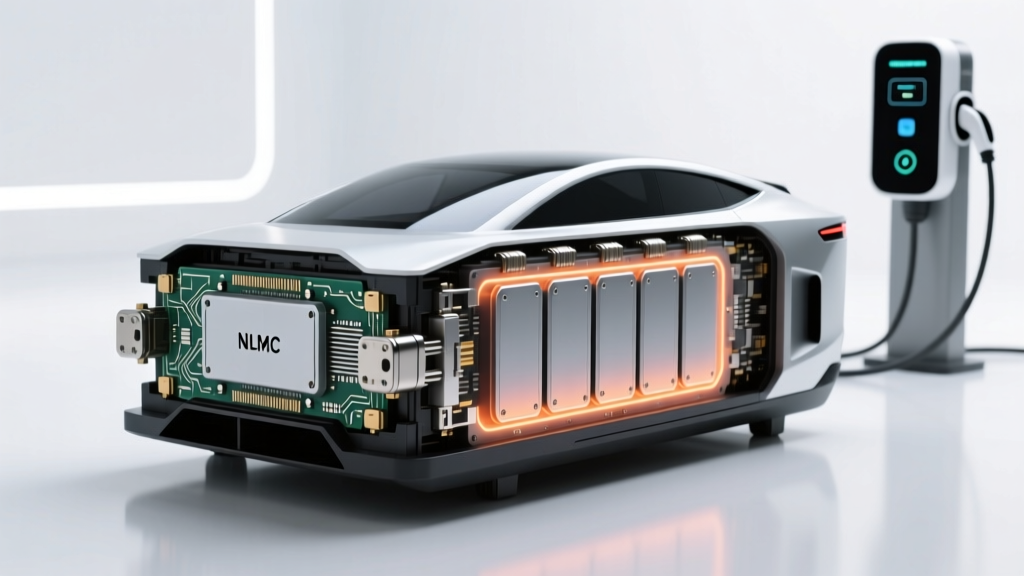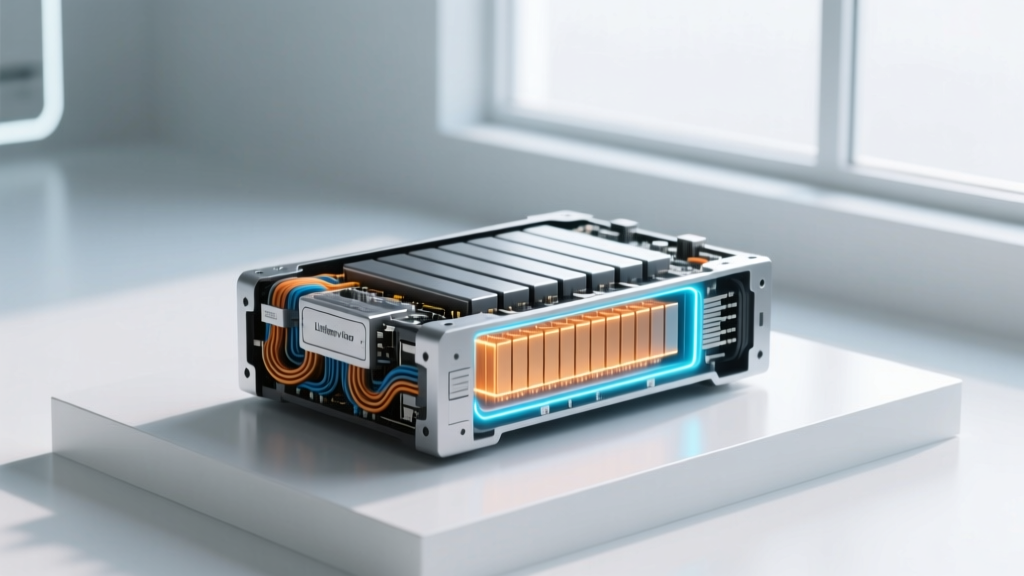
The single most consequential number on an EV spec sheet isn't horsepower or 0-60 time — it's the energy density of the battery pack, measured in watt-hours per kilogram (Wh/kg). That figure dictates how far you can drive on a charge, how heavy the vehicle is, how quickly the pack degrades, and ultimately how much you pay at the dealership. In 2026, lithium ion battery pack energy density (Wh/kg) varies dramatically depending on cell chemistry, from roughly 160 Wh/kg at the pack level for lithium iron phosphate (LFP) cells to over 250 Wh/kg for high-nickel NMC and NCA chemistries used in long-range sedans and performance SUVs.
This guide breaks down what energy density means for real-world ownership, how the two dominant chemistries compare, what degradation data actually shows, and what you'll pay if — decades down the road — your pack needs replacement.
What Energy Density (Wh/kg) Actually Means for Your EV
Energy density measures how much electrical energy a battery stores relative to its mass. A cell rated at 250 Wh/kg stores 250 watt-hours of energy in every kilogram of cell weight. But there's a critical distinction buyers should understand:
- Cell-level energy density — measured on the bare battery cell, typically 200–300 Wh/kg for modern EVs.
- Pack-level energy density — measured on the complete battery pack including cooling systems, wiring, structural housing, and battery management electronics. This number is always 30–50% lower than cell-level figures, typically 130–200 Wh/kg in 2026 production vehicles.
Pack-level Wh/kg is the number that matters for vehicle design. A 75 kWh pack at 160 Wh/kg weighs roughly 469 kg (1,034 lbs). That same 75 kWh at 200 Wh/kg drops to 375 kg (827 lbs) — a 94 kg difference that directly affects handling, tire wear, and efficiency.
Higher energy density also lets automakers fit more kWh into the same physical space, which is how vehicles like the Lucid Air achieve 112 kWh in a sedan footprint while maintaining EPA ranges above 500 miles.
LFP vs NMC/NCA: The Chemistry Trade-Off Matrix
Two lithium-ion chemistry families dominate the 2026 EV market. Understanding their trade-offs is essential before you pick a trim level.
| Attribute | LFP (Lithium Iron Phosphate) | NMC / NCA (Nickel-based) |
|---|---|---|
| Cell energy density | 170–210 Wh/kg | 230–300 Wh/kg |
| Pack energy density | 130–170 Wh/kg | 170–230 Wh/kg |
| Cycle life (to 80% capacity) | 3,000–5,000+ cycles | 1,000–2,500 cycles |
| Cold-weather performance | Weaker — 25–40% range loss below 20°F | Better — 15–30% range loss below 20°F |
| Recommended daily SoC | 100% (no degradation penalty) | 80% (charge to 100% only for trips) |
| Cost per kWh (pack level, 2026) | ~$85–$110 | ~$120–$160 |
| Cobalt/nickel content | None | Significant (supply-chain risk) |
| Typical use | Standard Range trims, fleet vehicles | Long Range, Performance trims |
The practical takeaway: If you commute 40 miles daily, charge at home, and live in a mild climate, LFP is the smarter buy — cheaper, longer-lasting, and you can charge to 100% every night without guilt. If you need 300+ miles of real-world range, tow frequently, or regularly drive in sub-freezing temperatures, NMC/NCA delivers the energy density and cold-weather performance you need.
Tesla's Standard Range Model 3 and Model Y use CATL-sourced LFP packs, while Long Range and Performance variants use NMC/NCA cells from Panasonic and LG. Ford, BYD, and Rivian also offer LFP options in select trims for 2026.
Real-World Degradation: What the Data Shows
Battery degradation is the top anxiety for EV shoppers — and the area with the most misinformation. Let's look at actual fleet data rather than worst-case anecdotes.
Typical capacity retention over time (fleet averages):
- Year 1: 2–4% loss (initial formation drop, then stabilizes)
- Year 3 / 45,000 miles: 5–8% total loss
- Year 5 / 75,000 miles: 7–12% total loss
- Year 8 / 120,000 miles: 10–18% total loss
- Year 10+ / 150,000+ miles: 15–25% total loss (varies heavily by chemistry and usage)
According to Recurrent Auto's 2025 fleet analysis of over 15,000 EVs, the median EV battery retains roughly 88–92% of original capacity after 5 years and 75,000 miles. LFP packs consistently outperform NMC in cycle-life retention, though NMC packs in vehicles with active liquid thermal management (Tesla, Hyundai E-GMP, BMW) show degradation curves nearly as flat.
Key finding: degradation is non-linear. Most capacity loss occurs in the first 20,000 miles, after which the curve flattens significantly. A battery that has lost 8% after three years is statistically unlikely to suddenly cliff-drop — it will typically lose another 4–8% over the next five years.
Outliers exist. Early Nissan Leaf models (passive air cooling) degraded far faster, losing 20–30% in five years. Modern liquid-cooled packs have largely solved this problem.
Battery Warranties: What's Covered and What's Not
Federal law mandates a minimum 8-year / 100,000-mile warranty on EV battery packs for emissions-related compliance, and most automakers match or exceed this baseline. The critical detail is the capacity retention threshold — the point at which the manufacturer must replace or repair the pack.
| Manufacturer | Warranty Period | Mileage Cap | Capacity Threshold |
|---|---|---|---|
| Tesla (Model 3/Y LFP) | 8 years | 100,000 mi | 70% retention |
| Tesla (Model 3/Y LR, S/X) | 8 years | 120,000–150,000 mi | 70% retention |
| Hyundai / Kia (E-GMP) | 10 years | 100,000 mi | 70% retention |
| Ford (Mustang Mach-E, F-150 Lightning) | 8 years | 100,000 mi | 70% retention |
| GM (Ultium-based) | 8 years | 100,000 mi | 70% retention |
| Rivian | 8 years | 175,000 mi | 70% retention |
| BMW | 8 years | 100,000 mi | 70% retention |
The 70% threshold means the warranty only triggers if your battery loses more than 30% of its original capacity within the warranty period. Based on current degradation data, the vast majority of EVs never reach this threshold under normal use. Battery replacements under warranty are rare — typically under 1% of vehicles according to manufacturer service bulletins.
What's not covered: Cosmetic damage, damage from collisions, flooding, or unauthorized modifications. Gradual degradation below the threshold after the warranty expires is the owner's responsibility, though as we'll see, this rarely becomes a practical issue.
Replacement Costs: The Number Everyone Fears (But Few Will Pay)
Here's the question that dominates EV forums: what does it cost to replace an EV battery? The answer in 2026 is less catastrophic than headlines suggest — and most owners will never face it.
| Vehicle / Pack Size | Chemistry | Replacement Cost (2026 est.) | When Typically Needed |
|---|---|---|---|
| Tesla Model 3 SR (60 kWh) | LFP | $8,000–$12,000 | 15+ years / 200,000+ mi |
| Tesla Model Y LR (75 kWh) | NMC | $12,000–$16,000 | 12–18 years / 180,000+ mi |
| Hyundai Ioniq 5 (77.4 kWh) | NMC | $11,000–$15,000 | 12–18 years / 180,000+ mi |
| Ford F-150 Lightning Ext. Range (131 kWh) | NMC | $18,000–$25,000 | 12–15 years / 150,000+ mi |
| Chevy Bolt EV (65 kWh) | NMC | $9,000–$13,000 | 12–15 years / 150,000+ mi |
| Lucid Air Grand Touring (112 kWh) | NMC | $20,000–$28,000 | 12–15 years / 150,000+ mi |
Several important context points:
- Most EVs are scrapped or sold before the battery needs replacement. The average US vehicle age is 12.6 years. An EV battery lasting 15+ years will outlive the car's economic life in most cases.
- Module-level repair is increasingly common. Many packs allow individual module replacement rather than full-pack swaps, reducing costs to $2,000–$5,000 for a partial repair.
- Pack costs continue declining. According to BloombergNEF, average pack prices fell below $130/kWh in 2025 and are projected to approach $100/kWh by 2027, meaning future replacement costs will be lower than today's.
- The used-EV market prices in battery health. A 10-year-old EV with 75% SoH sells for significantly less than one with 92% — so you're paying for degradation gradually through depreciation, not in a single catastrophic bill.
What Actually Kills a Battery: 5 Degradation Accelerators
Not all miles are equal. A battery charged at home on Level 2 in San Diego will degrade far less than one DC-fast-charged daily in Phoenix. Here are the factors that measurably accelerate capacity loss:
Factors that accelerate degradation:
- Frequent DC fast charging above 150 kW — Sustained high-current charging generates heat that stresses cell chemistry. Occasional road-trip fast charging is fine; daily 350 kW sessions are not. Data from IDTechEx shows vehicles that fast-charge more than 3 times per week degrade roughly 2–4% faster over 5 years than those that primarily use Level 2.
- Operating in extreme heat (above 95°F ambient) without preconditioning — Heat is the #1 enemy of lithium-ion cells. Packs consistently held above 40°C (104°F) degrade measurably faster. Vehicles with active liquid cooling (most modern EVs) handle this far better than passively cooled packs.
- Storing at 100% SoC for extended periods — Leaving an NMC vehicle plugged in at 100% for weeks accelerates calendar degradation. LFP chemistry is far more tolerant of high-SoC storage.
- Deep discharges to 0% or near-0% — Regularly draining below 10% stresses the anode. Most BMS systems maintain a bottom buffer (typically 2–5 kWh hidden below the "0%" display), but habitually running the pack to empty still accelerates wear.
- Sub-freezing charging without preconditioning — Charging a cold battery, especially at high power, causes lithium plating on the anode — an irreversible form of degradation. Always use your vehicle's preconditioning feature before winter fast charging.
Monitoring Your Battery's State of Health (SoH)
State of Health (SoH) is the percentage of your battery's current maximum capacity relative to its original capacity when new. A pack with 100 kWh original capacity that can now store 90 kWh has a 90% SoH.
How to check SoH in 2026:
- In-vehicle displays: Tesla, Hyundai/Kia, BMW, and Rivian now include SoH indicators in the vehicle settings menu or service mode. Tesla added a battery health percentage readout in its 2025 software update.
- OBD-II dongles + apps: Tools like OBDeleven, LeafSpy (Nissan), and Scan My Tesla pull real-time SoH data from the BMS via the OBD-II port.
- Manufacturer diagnostic reports: Any dealership service department can run a full battery health report. Request this during routine service or before buying a used EV.
- Third-party services: Recurrent Auto and Geotab offer fleet and individual battery health reports based on telematics data.
Best practices for maximizing SoH:
- Set daily charge limit to 80% for NMC/NCA packs; 100% is fine for LFP
- Use Level 2 home charging as your primary charging method
- Enable preconditioning before fast charging and in cold weather
- Avoid storing the vehicle above 90% or below 20% SoC for more than a few days
- Drive the vehicle regularly — calendar degradation is worse for vehicles that sit unused for months
How Long Do EV Batteries Actually Last?
The short answer: far longer than most buyers assume.
Based on current fleet data, a modern liquid-cooled EV battery pack will retain 75–85% of its original capacity after 150,000 miles and 10 years of typical use. That means a vehicle with an EPA-rated 300-mile range will still deliver roughly 225–255 miles of range at that age — still perfectly usable for daily driving.
The battery doesn't "die" at a specific mileage. It gradually loses capacity in a predictable curve. Most EV batteries will outlast 200,000 miles before dropping below 70% SoH, and many will reach 300,000+ miles with 60–70% capacity remaining — at which point the vehicle's other components (suspension, interior, electronics) typically dictate end-of-life, not the battery.
Tesla's 2024 Impact Report cited data showing Model S/X batteries retain approximately 88% capacity after 200,000 miles. Hyundai's E-GMP platform testing targets 80% retention at 160,000 miles. LFP packs in Tesla Model 3 Standard Range vehicles are engineered for 1 million km (620,000 miles) of cycle life before reaching 80% capacity — though real-world validation at that mileage is still ongoing.
Emerging Battery Tech: Solid-State and Beyond
If you've followed EV news, you've seen promises of solid-state batteries with energy densities above 400 Wh/kg, 10-minute charging, and zero degradation. Here's where these technologies actually stand in 2026:
Solid-state batteries: Toyota, Samsung SDI, and QuantumScape have demonstrated prototype cells exceeding 350 Wh/kg at the cell level. Toyota has announced limited production in select 2027–2028 models, but these will be low-volume, premium-priced vehicles. Mass-market solid-state EVs at competitive pricing are not expected before 2030. The engineering challenges — manufacturing yield, interface stability, cost reduction from current ~$500/kWh to under $150/kWh — remain significant.
Silicon-dominant anodes: Companies like Sila Nanotechnologies and Group14 are replacing graphite anodes with silicon-composite materials, boosting cell energy density by 20–40%. These are beginning to appear in 2026 production vehicles (notably the Mercedes G-Class EV) and represent the most commercially viable near-term energy density improvement. Expect pack-level densities of 200–240 Wh/kg from silicon-anode NMC cells by 2027–2028.
Sodium-ion batteries: CATL and BYD are producing sodium-ion cells for low-cost, short-range EVs in China. Energy density is low (~120–160 Wh/kg cell-level), but cost is significantly below LFP. US-market availability is limited but expected in budget segments by 2028.
Bottom line: Current lithium-ion technology — particularly LFP and NMC with silicon-enhanced anodes — will remain the dominant chemistry through at least 2030. Solid-state is real but still years from mass production. There is no reason to delay an EV purchase waiting for next-generation batteries.
Frequently Asked Questions
LFP vs NMC — which is better for my daily commute?
For a daily commute under 60 miles with home charging, LFP is the better choice. It costs less, lasts longer (3,000–5,000+ cycles vs. 1,000–2,500), and you can charge to 100% daily without degradation concerns. The trade-off is lower energy density (shorter maximum range) and worse cold-weather performance. If you need 300+ miles per charge or live in a cold climate, NMC/NCA is the right call.
How much does an EV battery cost to replace in 2026?
Full pack replacement costs range from roughly $8,000 for a 60 kWh LFP pack to $25,000+ for a 131 kWh NMC truck pack. However, most batteries outlive the vehicle, and module-level repairs ($2,000–$5,000) are increasingly available. Pack prices continue declining roughly 8–12% annually, so future replacements will cost less.
What does the battery warranty actually cover?
The standard warranty covers defects and excessive capacity loss — typically defined as dropping below 70% of original capacity within 8 years / 100,000 miles (some manufacturers extend to 10 years or higher mileage). It does not cover damage from accidents, flooding, or unauthorized modifications. Check your manufacturer's specific terms, as mileage caps and retention thresholds vary.
How do I check my EV's battery health?
Most 2026 EVs include a State of Health (SoH) readout in the vehicle settings or service menu. You can also use an OBD-II scanner with EV-specific software (Scan My Tesla, LeafSpy, OBDeleven) or request a diagnostic report from your dealership. Monitor SoH annually to track your degradation curve.
Does fast charging damage my battery?
Occasional DC fast charging — like on road trips — has minimal impact. However, data shows that vehicles fast-charging more than 3 times per week degrade 2–4% faster over 5 years compared to primarily Level 2 charging. The heat generated by high-power charging (150–350 kW) stresses cell chemistry. For daily charging, Level 2 at home (7–11 kW) is gentler and significantly cheaper.
Will my EV battery need replacing before 100,000 miles?
Statistically, no. Fleet data from fueleconomy.gov and Recurrent Auto shows fewer than 1.5% of modern EV batteries require replacement before 100,000 miles, and most of those are due to manufacturing defects covered under warranty. Capacity loss at 100,000 miles averages 8–12% — leaving you with 88–92% of your original range.