The sticker price of an electric vehicle tells only part of the ownership story. Beneath the floorpan sits a component that can represent 30–40% of the car's original MSRP: the high-voltage traction battery. For buyers weighing a new EV purchase or owners planning long-term holding costs, understanding the lithium ion battery cost per kWh is the single most useful metric for forecasting replacement risk, comparing chemistries, and evaluating whether a used EV is a smart buy.
As of 2026, pack-level lithium-ion battery costs have fallen to roughly $110–$135 per kWh at the manufacturer procurement level, according to BloombergNEF's annual lithium-ion battery price survey. But the price you pay at a dealership service bay for a replacement pack is a different number entirely — it includes labor, diagnostics, dealer markup, module integration, and sometimes ancillary component swaps. This guide breaks down what you'll actually pay, how long these batteries last, and which chemistry makes sense for your driving pattern.
Current Lithium Ion Battery Cost Per kWh: Pack Price vs. Replacement Price
There are two "cost per kWh" figures that matter, and conflating them is the most common mistake in EV ownership forums:
- Pack-level manufacturing cost: What automakers pay cell suppliers (CATL, LG Energy Solution, Panasonic, SK On, BYD). In 2026, this hovers around $110–$135/kWh for NMC packs and $80–$100/kWh for LFP packs at scale.
- Consumer replacement cost per kWh: What you pay at the dealer for a full pack swap, including parts, labor, and calibration. This typically runs $175–$300/kWh depending on the brand, model, and whether the pack is modular (allowing partial replacement) or a single sealed unit.
The gap exists because replacement packs involve dealership labor rates ($150–$250/hour for EV-certified technicians), high-voltage safety protocols, coolant system service, battery management system (BMS) recalibration, and OEM parts markup. A 75 kWh pack at the consumer rate translates to $13,000–$22,500 out of warranty — a real number, but one that almost no owner actually pays, for reasons we'll cover in the warranty and lifespan sections below.
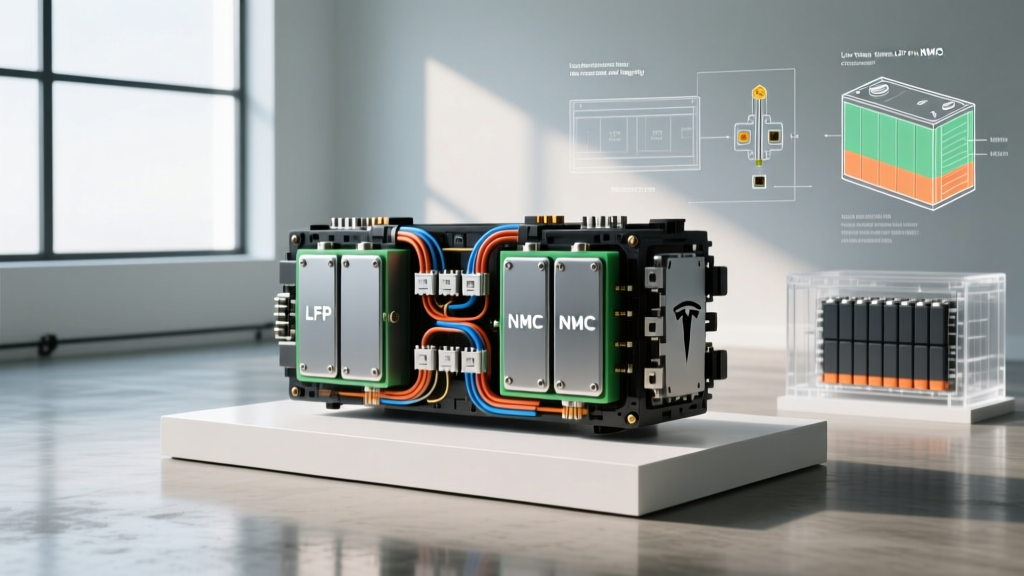
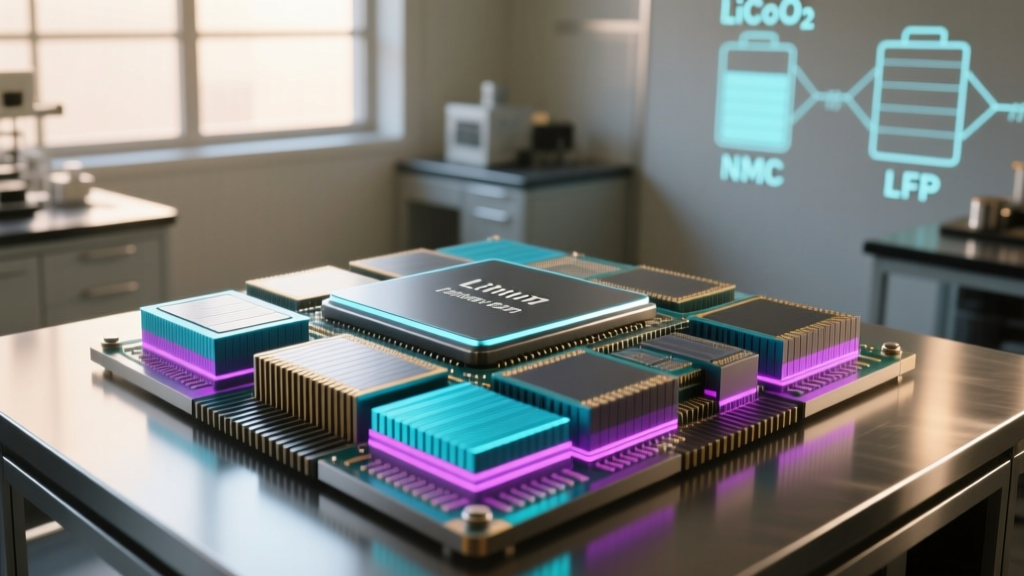
LFP vs. NMC/NCA: Chemistry Determines Cost and Longevity
Not all lithium-ion batteries are identical. The cathode chemistry dictates energy density, cycle life, cold-weather performance, and — critically — cost per kWh. In 2026, two families dominate the US market:
| Attribute | LFP (Lithium Iron Phosphate) | NMC / NCA (Nickel Manganese Cobalt / Nickel Cobalt Aluminum) |
|---|---|---|
| Energy density (cell-level) | 160–180 Wh/kg | 220–300 Wh/kg |
| Typical cycle life (to 80% SoH) | 3,000–6,000+ cycles | 1,000–2,500 cycles |
| Pack cost per kWh (2026 OEM) | $80–$100 | $110–$135 |
| Cold-weather range loss (20°F) | ~30–40% reduction | ~20–30% reduction |
| Optimal daily charge limit | 100% (recommended by most OEMs) | 80% for daily use; 100% for trips |
| Cobalt content | None | Yes (supply-chain/ethical concern) |
| Common 2026 models | Tesla Model 3/Y RWD, Ford Mustang Mach-E Select (base), BYD (non-US) | Hyundai Ioniq 5, Kia EV6, Tesla LR/Performance, BMW i4/iX, Rivian |
What this means for buyers: LFP packs are cheaper to manufacture, last significantly longer in cycle count, and tolerate daily 100% charging — making them ideal for commuters who charge at home every night and don't need maximum range. NMC/NCA packs offer more range per pound, perform better in freezing temperatures, and are the standard for long-range and performance trims. If you live in Minnesota and regularly drive 60+ miles in January, NMC's cold-weather advantage matters. If you're in Southern California with a 20-mile commute, LFP's longevity and lower cost per kWh win.
How Long Do EV Batteries Actually Last?
The short answer: almost always longer than you think, and usually longer than the rest of the car.
Modern EV battery packs are engineered with a buffer — a reserved portion of total capacity (typically 5–10%) that the BMS holds back to protect against overcharge and deep discharge. When you see "75 kWh usable" on a spec sheet, the gross capacity might be 79–82 kWh. This buffer is the primary reason degradation curves flatten out rather than dropping linearly.
Typical degradation trajectory (NMC packs, real-world fleet data):
- Year 1 / 15,000 miles: 2–5% capacity loss (initial "break-in" drop)
- Year 3 / 45,000 miles: 6–9% total loss
- Year 5 / 75,000 miles: 8–12% total loss
- Year 8 / 120,000 miles: 10–16% total loss
- Year 10+ / 150,000+ miles: 12–20% total loss
LFP packs typically show 2–5% less degradation at equivalent milestones due to superior cycle life, though their smaller buffers can make the loss feel slightly more noticeable in range.
Data from Geotab's fleet study of over 10,000 EVs shows an average annual degradation rate of approximately 1.8–2.3% after the first year, with significant variation based on climate and charging habits. Teslas tracked by Recurrent Auto show median degradation of roughly 12% at 150,000 miles for Model 3/Y NMC packs.
Real-world translation: A 2024 Hyundai Ioniq 5 Long Range with a 77.4 kWh usable battery and 305-mile EPA range will likely show 260–275 miles of range at 8 years and 100,000 miles. That's still a highly functional vehicle — not a dead battery.
Battery Warranty Coverage: What's Protected and for How Long
Federal law mandates a minimum 8-year / 100,000-mile warranty on EV battery packs for emissions-related compliance, and virtually every major automaker meets or exceeds this standard. California and states adopting CARB standards (now 17 states plus DC as of 2026) require 10-year / 150,000-mile coverage.
| Automaker | Warranty Term | Capacity Retention Threshold | Coverage Type |
|---|---|---|---|
| Tesla (Model 3/Y) | 8 yr / 120,000 mi (LR/AWD) | 70% of original capacity | Repair or replacement |
| Hyundai / Kia | 10 yr / 100,000 mi | 70% (some trims 65%) | Repair or replacement |
| Ford (Mach-E, F-150 Lightning) | 8 yr / 100,000 mi | 70% | Repair or replacement |
| GM (Ultium-based) | 8 yr / 100,000 mi | 70% (Blazer EV, Equinox EV) | Repair or replacement |
| BMW | 8 yr / 100,000 mi | 70% | Repair or replacement |
| Rivian | 8 yr / 175,000 mi (R1T/R1S) | 70% | Repair or replacement |
Key detail most buyers miss: The warranty threshold is typically 70% of original usable capacity, not 100%. This means your 77.4 kWh pack would need to drop below ~54 kWh of measured capacity — a loss you'd feel as roughly 80+ miles of range reduction — before a warranty claim is honored. In practice, very few packs reach this threshold within the warranty period. Warranty claims are overwhelmingly triggered by cell-level failures (a defective module causing voltage imbalance) rather than gradual degradation crossing the 70% line.
Also critical: the warranty covers the battery's capacity, not necessarily its ability to accept a fast charge. A pack that holds 72% of original energy but charges at reduced DC fast-charging speeds may not qualify as a warranty claim, depending on the OEM's specific terms.
EV Battery Replacement Costs: What You'll Actually Pay
If your battery fails outside of warranty — or if you're evaluating a high-mileage used EV — here's what replacement looks like in 2026:
| Vehicle (Example) | Battery Size (Usable) | Estimated Full Replacement Cost | Cost Per kWh (Consumer) |
|---|---|---|---|
| Tesla Model 3 RWD (LFP) | 57.5 kWh | $10,000–$14,000 | $174–$243 |
| Tesla Model Y Long Range | 75 kWh | $14,000–$20,000 | $187–$267 |
| Hyundai Ioniq 5 Long Range | 77.4 kWh | $15,000–$22,000 | $194–$284 |
| Ford F-150 Lightning Extended Range | 131 kWh | $25,000–$35,000 | $191–$267 |
| Chevrolet Equinox EV | 85 kWh | $16,000–$23,000 | $188–$271 |
| BMW i4 eDrive40 | 81.5 kWh | $18,000–$26,000 | $221–$319 |
Important context: These are worst-case, full-pack-replacement figures. In reality:
- Most EVs never need a full battery replacement. Data from service networks and fleet operators shows that fewer than 2–3% of EV battery packs require replacement before 200,000 miles, and the vast majority of those are covered under warranty.
- Modular packs allow partial replacement. Some architectures (notably older Nissan Leaf, BMW i3, and some GM Ultium configurations) allow individual modules to be swapped rather than the full pack, reducing costs to $2,000–$6,000 per module.
- The aftermarket is emerging. Independent EV shops and refurbished pack suppliers are beginning to offer remanufactured packs at 30–50% below OEM dealer pricing, though availability is still limited in 2026 and may affect remaining vehicle warranty.
- Battery cost per kWh continues to decline. A replacement that costs $20,000 in 2026 may cost $14,000–$16,000 by 2031 as cell prices fall and supply chains mature.
Factors That Accelerate Battery Degradation
Not all miles are created equal when it comes to battery wear. The following factors have the most measurable impact on long-term State of Health (SoH):
Battery longevity checklist — what hurts and what helps:
- ❌ Frequent DC fast charging to 100%: Sustained high-C-rate charging (150+ kW) generates significant heat. Doing this daily accelerates degradation by an estimated 1–3% additional per year vs. Level 2 home charging. Occasional road-trip fast charging is fine; daily dependence is the concern.
- ❌ Prolonged storage at 100% SoC in heat: Leaving an NMC pack at full charge in a 95°F driveway for weeks causes electrolyte decomposition. Store at 50–60% SoC if the car will sit for 2+ weeks.
- ❌ Repeated deep discharge below 10%: Consistently running the pack to near-zero stresses the anode. Try to charge before dropping below 15–20%.
- ❌ Extreme cold charging without preconditioning: Charging a frozen battery (below 32°F) without thermal preconditioning can cause lithium plating on the anode — permanent capacity loss. Most modern EVs precondition automatically when you navigate to a charger; let the system do its job.
- ✅ Daily Level 2 charging to 80% (NMC) or 100% (LFP): This is the single best habit for long-term battery health.
- ✅ Moderate climate or garage parking: Packs in temperate climates (60–80°F average) degrade measurably slower than those in Phoenix or International Falls.
- ✅ Using scheduled charging and departure preconditioning: Warming or cooling the battery on grid power before driving reduces stress during the first miles.
- ✅ Keeping software updated: OEM BMS updates often refine thermal management and charge curves to extend pack life.
Monitoring Your Battery's State of Health (SoH)
State of Health is the percentage of original usable capacity your pack currently holds. A new pack is 100% SoH; a pack that originally held 75 kWh and now holds 67.5 kWh is at 90% SoH.
How to check SoH in 2026:
- In-vehicle BMS readouts: Some manufacturers (Hyundai/Kia via the infotainment engineering menu, Tesla via third-party apps reading the CAN bus) provide a SoH percentage directly. This is the most convenient method but not always transparent.
- OBD-II dongle apps: Tools like OBDeleven, LeafSpy (for Nissan), or Scan My Tesla connect to the vehicle's OBD-II port and read BMS-reported capacity, cell voltage variance, and cycle count. Cost: $30–$60 for the dongle plus a free or low-cost app.
- Dealer diagnostic report: Any authorized service center can run a full battery health report, typically for $100–$200 if out of warranty. This is the most authoritative method and is recommended before purchasing a used EV.
- Third-party services: Companies like Recurrent and Geotab offer battery health reports based on connected-car telemetry data, sometimes available through the vehicle's telematics subscription.
What to look for in a used EV battery: Cell voltage variance (the spread between the highest and lowest cell in the pack) is often more telling than SoH alone. A pack at 92% SoH with tight cell variance (under 30 mV) is healthier than one at 94% SoH with 80+ mV spread — the latter indicates a weakening module that may trigger imbalance-related range loss or warranty issues.
Emerging Battery Technologies: What's Next and When
Several next-generation battery technologies are in development, but none are available in production US-market EVs as of 2026. Here's the realistic timeline:
- Silicon-dominant anodes: Replacing graphite anodes with silicon can boost energy density by 20–40%. Companies like Sila Nanotechnologies and Group14 are supplying early production cells. Expect limited availability in premium models by 2027–2028, with broader adoption by 2030. Benefit: more range in the same pack size, potentially lowering cost per kWh at the vehicle level.
- Semi-solid-state batteries: Using a gel or polymer electrolyte instead of liquid offers improved safety and slightly higher energy density. NIO (China) has deployed a 150 kWh semi-solid pack in limited fleet use. US-market availability is 2028–2030 at the earliest, likely starting in luxury segments.
- True solid-state batteries: The long-promised technology offering 2x energy density, faster charging, and improved safety. Toyota, Samsung SDI, and QuantumScape have all announced prototype cells, but manufacturing scale-up remains the primary barrier. Realistic mass-market timeline: 2030–2035. Do not delay a 2026 purchase waiting for solid-state.
- Sodium-ion batteries: Using abundant sodium instead of lithium, these offer lower cost per kWh ($50–$70 at pack level projected) but lower energy density (~120–150 Wh/kg). CATL and BYD are producing them for Chinese-market budget EVs. US availability is uncertain and likely limited to low-range urban vehicles post-2028.
The practical takeaway: current lithium-ion technology (both LFP and NMC) is mature, reliable, and cost-effective. The batteries in 2026 EVs will serve most owners for the full life of the vehicle without replacement.
Frequently Asked Questions
How long do EV batteries last in years and miles?
Most modern EV battery packs are designed to retain 70–85% of original capacity at 150,000–200,000 miles (roughly 10–15 years of average driving). Fleet data from Geotab and Recurrent Auto shows median degradation of 12–16% at 150,000 miles for NMC packs and 8–12% for LFP packs. Very few packs require replacement before 200,000 miles, and most outlast the vehicle's other major components.
How much does an EV battery cost to replace?
Full pack replacement ranges from approximately $10,000 for a 57 kWh LFP pack (Tesla Model 3 RWD) to $35,000 for a 131 kWh NMC pack (F-150 Lightning Extended Range), including parts and labor. The consumer cost per kWh typically falls between $175 and $300. However, fewer than 3% of packs require out-of-warranty replacement, and modular architectures can reduce costs to $2,000–$6,000 for individual module swaps.
What does the EV battery warranty actually cover?
Federal law mandates 8-year/100,000-mile battery coverage (10-year/150,000-mile in CARB states). The warranty guarantees the pack will retain a minimum percentage of original capacity — typically 70% — and covers defects, cell failures, and excessive degradation below that threshold. It covers repair or replacement at the manufacturer's discretion. It does not cover damage from accidents, flooding, or unauthorized modifications.
How do I check and maximize my EV battery health?
Check SoH via the vehicle's BMS readout (if available), an OBD-II diagnostic app, or a dealer battery health report. To maximize longevity: charge daily to 80% on Level 2 (100% for LFP), avoid frequent DC fast charging, don't store the vehicle at 100% SoC in hot weather, precondition the battery before cold-weather charging, and keep the pack between 15–85% SoC for routine use.
LFP vs. NMC — which battery chemistry is better?
Neither is universally better; the right choice depends on your driving pattern. LFP wins on cost per kWh ($80–$100 vs. $110–$135 at the pack level), cycle life (3,000–6,000 vs. 1,000–2,500 cycles), and daily charging convenience (100% SoC is fine). NMC/NCA wins on energy density (more range in a lighter pack), cold-weather performance (10–15 percentage points less range loss at 20°F), and fast-charging speed. Choose LFP for commuting and warm climates; choose NMC for long road trips and cold winters.
Is the lithium ion battery cost per kWh still dropping?
Yes, but the rate of decline has slowed. Pack-level costs fell roughly 90% between 2010 and 2023 (from ~$1,200/kWh to ~$140/kWh). In 2024–2026, prices have stabilized and even ticked up slightly due to raw material volatility (lithium carbonate, nickel). The long-term trajectory remains downward, with most analysts projecting $80–$100/kWh at the pack level by 2030, driven by LFP adoption, manufacturing scale, and incremental chemistry improvements.