When an electric vertical takeoff and landing (eVTOL) company or a regional electric-aircraft startup sources cells, they reach for the same fundamental lithium-ion technology that powers your EV—but the engineering priorities diverge sharply. Understanding what lithium ion battery aircraft applications demand versus what electric cars need illuminates the trade-offs that every EV buyer should grasp: energy density, cycle life, thermal stability, and cost.
This guide breaks down the battery chemistries, degradation realities, warranty protections, and replacement economics behind modern EV packs in 2026, using aviation-grade requirements as a comparison lens to show why the cells in your car are optimized the way they are.
Why Aircraft Batteries Push Different Limits Than EV Batteries
Aviation lithium-ion packs must meet extreme gravimetric energy density targets—often 250–300 Wh/kg at the cell level—because every kilogram of battery directly reduces payload and range. Companies developing electric aircraft, from Joby Aviation to Heart Aerospace, rely on high-nickel NMC or NCA chemistries optimized for weight savings above all else. The FAA and EASA certification processes demand rigorous thermal-runaway containment, adding structural mass that partially offsets cell-level gains.
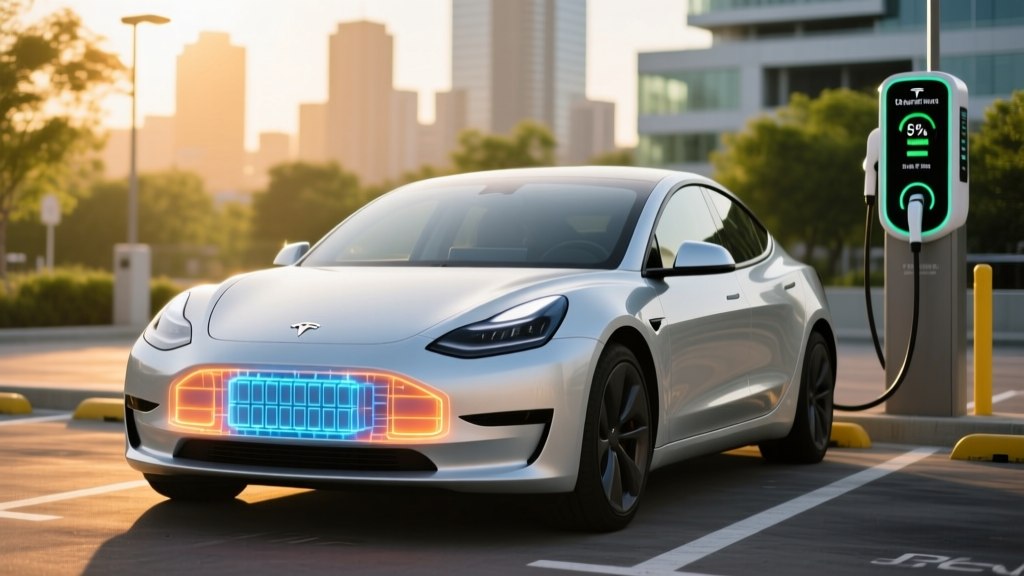
Ground vehicles tolerate heavier packs. A Tesla Model Y Long Range carries roughly 75 kWh of usable energy in a ~480 kg pack assembly, yielding a system-level energy density around 156 Wh/kg. That's acceptable because the vehicle rolls on wheels, not wings. This weight tolerance lets EV engineers balance longevity, cost, and safety alongside energy storage—trade-offs that aircraft designers simply cannot make.
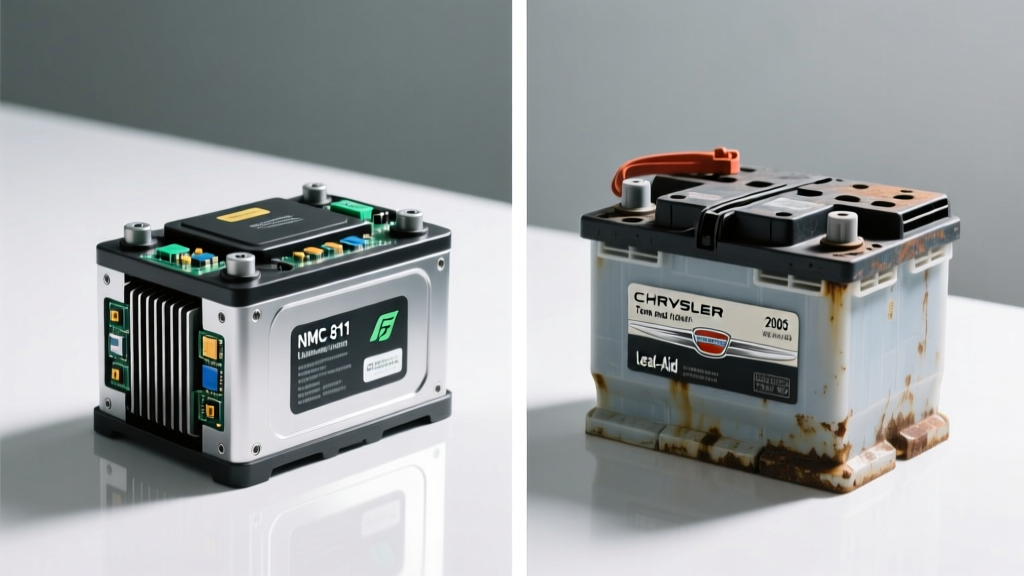
LFP vs NMC vs NCA: Chemistry Trade-Offs Explained
Three lithium-ion chemistries dominate the 2026 EV market, and understanding them is essential whether you're evaluating a commuter hatchback or comparing ground-transport cells to lithium ion battery aircraft systems.
| Attribute | LFP (Lithium Iron Phosphate) | NMC (Nickel Manganese Cobalt) | NCA (Nickel Cobalt Aluminum) |
|---|---|---|---|
| Cell Energy Density | 160–180 Wh/kg | 220–260 Wh/kg | 240–280 Wh/kg |
| Typical Cycle Life | 3,000–5,000 cycles | 1,000–2,000 cycles | 800–1,500 cycles |
| Cold-Weather Performance | Moderate (greater range loss below 32°F) | Good | Good |
| Thermal Stability | Excellent (higher runaway threshold ~270°C) | Moderate (~210°C onset) | Lower (~150–180°C onset) |
| Cost per kWh (2026) | ~$80–95 | ~$110–130 | ~$120–140 |
| Cobalt Content | None | Low–moderate | Low |
| Common 2026 EV Examples | Tesla Model 3 RWD, Ford Mustang Mach-E Select (base), BYD models | Hyundai Ioniq 5, VW ID.4, Chevrolet Equinox EV | Tesla Model S/X, Lucid Air |
Which is better for your EV? If you plan to keep the car 8–10+ years, charge at home regularly, and don't need maximum range, LFP is the durability champion. If you need 300+ miles of EPA range and accept a slightly shorter cycle life, NMC delivers the energy density that makes long road trips practical. NCA remains a niche high-performance choice. None of these chemistries match aviation-grade NMC variants on Wh/kg, but they dramatically outlast aircraft cells on cycle count.
How Long Do EV Batteries Actually Last?
The short answer: far longer than most buyers fear. Data aggregated from fleet studies and manufacturer reports through 2025 shows that the average EV battery retains approximately 88–92% of its original capacity after 100,000 miles, and around 80–85% after 150,000 miles. According to fueleconomy.gov, modern thermal management systems have significantly slowed degradation compared to early-generation packs from 2012–2016.
Typical Capacity Retention Curve (NMC, liquid-cooled pack)
- Year 1 / 15,000 mi: ~96–98% retained (initial formation loss)
- Year 3 / 45,000 mi: ~93–95% retained
- Year 5 / 75,000 mi: ~90–93% retained
- Year 8 / 120,000 mi: ~85–90% retained
- Year 10 / 150,000 mi: ~80–87% retained
- Year 15 / 200,000 mi: ~72–80% retained (model-dependent)
Note: LFP packs typically show slower mid-life degradation but may exhibit a steeper initial drop in the first 1,000 cycles before plateauing.
For context, lithium ion battery aircraft cells may see 5–8% capacity loss after just 500 charge cycles because they're cycled harder and operated at higher states of charge more frequently. EV battery management systems (BMS) protect longevity by buffering the top and bottom of the state-of-charge window—your "100%" on the dash is often only 95–97% of true cell capacity.
What the Battery Warranty Actually Covers
Federal law mandates that EV battery warranties cover a minimum of 8 years / 100,000 miles. Many automakers exceed this baseline. The warranty typically guarantees that the pack will retain a specified percentage of its original capacity—most commonly 70%—over the warranty period. If degradation exceeds that threshold, the manufacturer will repair or replace modules (not necessarily the full pack) to bring capacity back above the guarantee.
| Manufacturer (2026 Models) | Warranty Period | Capacity Retention Threshold | Notes |
|---|---|---|---|
| Tesla (Model 3/Y RWD – LFP) | 8 yr / 100,000 mi | 70% | Module-level replacement typical |
| Tesla (Model 3/Y LR/Perf – NMC) | 8 yr / 120,000 mi | 70% | Longer mileage on LR trims |
| Hyundai / Kia | 10 yr / 100,000 mi | 70% | Among the longest terms |
| Ford (Mach-E, F-150 Lightning) | 8 yr / 100,000 mi | 70% | Covers battery and EV components |
| Chevrolet (Equinox EV, Blazer EV) | 8 yr / 100,000 mi | 70% | Ultium platform packs |
| BMW (i4, iX) | 8 yr / 100,000 mi | 70% | Includes thermal management components |
Critical detail: Warranties cover defects and abnormal degradation. They do not cover damage from collisions, flooding, or aftermarket modifications. If you exclusively DC fast-charge and live in extreme heat, some manufacturers have historically scrutinized claims more closely, though outright denials for charging behavior remain rare.
EV Battery Replacement Costs: The Real Numbers
This is the concern that generates the most anxiety—and the most misinformation. Here are actual replacement cost ranges based on 2026 service data and manufacturer parts pricing:
| Vehicle / Pack Size | Battery Capacity | Full Pack Replacement Cost (2026) | When Typically Needed |
|---|---|---|---|
| Tesla Model 3 RWD (LFP) | ~60 kWh | $12,000–$15,000 | Rarely before 200k+ mi |
| Tesla Model Y Long Range (NMC) | ~75 kWh | $14,000–$18,000 | Rarely before 200k+ mi |
| Hyundai Ioniq 5 (NMC) | ~77.4 kWh | $15,000–$20,000 | Rarely before 180k+ mi |
| Ford F-150 Lightning Ext. Range | ~131 kWh | $22,000–$30,000 | Rarely before 150k+ mi |
| Chevrolet Equinox EV | ~85 kWh | $14,000–$18,000 | Rarely before 180k+ mi |
| Lucid Air Grand Touring | ~112 kWh | $20,000–$28,000 | Rarely before 150k+ mi |
Module-level repairs—replacing only the degraded segments of a pack—cost significantly less, typically $3,000–$8,000 depending on the vehicle. And the reality that most fear-mongering articles omit: the vast majority of EV batteries outlast the vehicle's economic life. A 2024 study by Recurrent Auto found that fewer than 1.5% of EV batteries across major brands required out-of-warranty replacement. You're statistically more likely to total the car in an accident than to need a full pack swap.
Factors That Accelerate (or Preserve) Battery Health
Whether your pack uses the same NMC cells found in lithium ion battery aircraft applications or a more durable LFP chemistry, the physics of degradation remain consistent. Here's what actually moves the needle:
Battery Care Checklist for Maximum Longevity
- Limit DC fast charging to road trips. Frequent 150+ kW sessions generate sustained heat that accelerates electrolyte breakdown. Occasional fast charging is fine; daily fast charging measurably increases degradation over 5+ years.
- Avoid prolonged storage above 90% or below 10% SoC. For NMC/NCA, the sweet spot for daily use is 20–80%. For LFP, manufacturers (including Tesla) actually recommend charging to 100% at least weekly because LFP's flat voltage curve makes SoC estimation difficult without full calibration.
- Precondition before fast charging. Most 2026 EVs do this automatically when you navigate to a charger. Cold batteries charged at high power experience lithium plating, a permanent capacity-loss mechanism.
- Park in shade or a garage in hot climates. Sustained battery temperatures above 95°F (35°C) accelerate calendar aging. Thermal management systems mitigate this but can't eliminate it entirely during prolonged parked exposure.
- Use Level 2 home charging as your primary method. 7–11 kW AC charging generates far less heat than DC fast charging and is the single best practice for long-term pack health.
- Don't obsess over avoiding 100% charges. Occasional full charges are fine. It's sitting at 100% for days in hot weather that causes harm. Charge to 100% when you need it and drive shortly after.
How to Monitor Your Battery's State of Health
State of Health (SoH) is the metric that tells you what percentage of original capacity your pack currently holds. In 2026, there are several reliable ways to check it:
- In-vehicle diagnostics: Tesla, Hyundai/Kia, BMW, and Mercedes now include SoH readouts in their service menus or companion apps. Tesla owners can access this via the Service menu in the app; Hyundai/Kia provides it through the vehicle settings or the connected-services app.
- OBD-II tools: Devices like the OBDLink SX paired with apps such as EV-BatMon or Scan My Tesla can read cell-level voltage data and estimate SoH from the BMS. Expect accuracy within ±2–3% of a dealer diagnostic.
- Dealer diagnostics: A service center can pull a full battery health report, including individual module voltage variance, internal resistance trends, and precise SoH. This is the gold standard, particularly useful before buying a used EV.
- Third-party services: Companies like Recurrent and Geotab offer fleet-level battery health monitoring that some individual owners can access through subscription services or insurance partnerships.
Track SoH every 3–6 months. A sudden drop of more than 2–3% in a short period warrants a dealer visit, as it may indicate a failing module rather than normal gradual degradation.
What's Next: Solid-State, Silicon Anodes, and Aviation Crossover
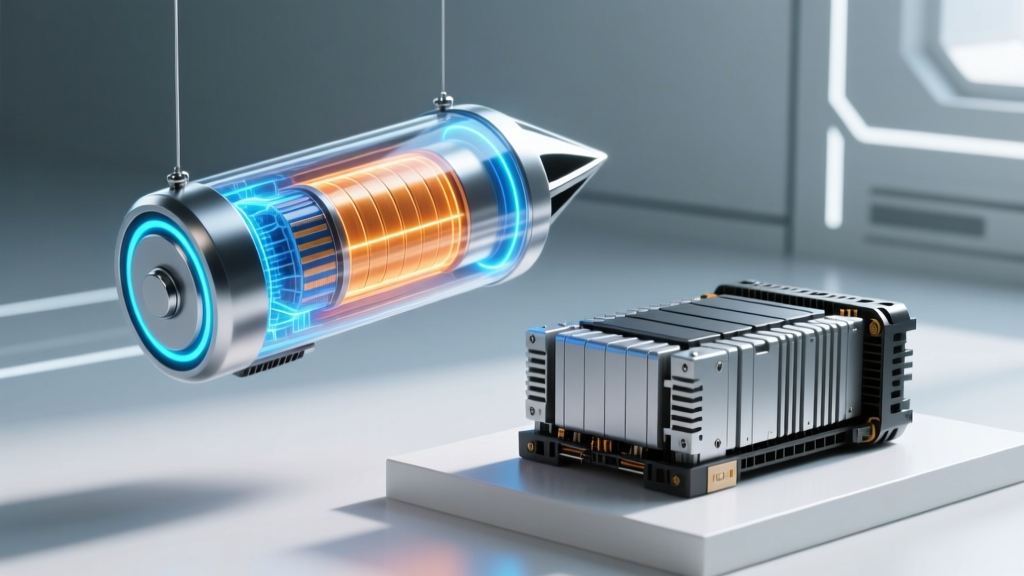
The battery technology most likely to bridge the gap between lithium ion battery aircraft requirements and ground-vehicle needs is solid-state batteries. By replacing the liquid electrolyte with a solid ceramic or polymer conductor, these cells promise 350–500 Wh/kg at the cell level, faster charging, and inherent thermal stability.
As of early 2026, Toyota has announced limited production of solid-state-equipped vehicles for 2027–2028, targeting 750 km (~466 mi) of range with 10-minute 10–80% charging. Samsung SDI and QuantumScape are supplying prototype cells to multiple automakers. However, manufacturing yield challenges and cost remain significant barriers. Expect solid-state packs to appear first in premium vehicles at $80,000+ MSRP before trickling down to mainstream models by 2030–2032.
Silicon-dominant anodes are nearer to market. Companies like Sila Nanotechnologies and Group14 are already supplying silicon-composite anode materials that boost cell energy density by 15–20% over conventional graphite. Several 2026 model-year EVs incorporate partial silicon anode blends. This is the incremental technology most likely to appear in both next-generation EVs and near-term electric aircraft.
Neither technology is commercially available in volume today. Any article or advertisement presenting solid-state EVs as currently purchasable is misleading. Treat all announced timelines as preliminary and verify against manufacturer press releases and NHTSA filings.
Frequently Asked Questions
How long do EV batteries last in years and miles?
Most modern liquid-cooled EV batteries retain 80–87% capacity after 150,000 miles or 10 years of typical use. With proper care (predominant Level 2 charging, avoiding extreme SoC storage), many packs reach 200,000+ miles before dropping below the 70% threshold that triggers a warranty claim. LFP chemistries often exceed 300,000 miles before reaching that point.
How much does an EV battery cost to replace in 2026?
Full pack replacements range from approximately $12,000 for a ~60 kWh LFP pack (Tesla Model 3 RWD) to $30,000 for a ~131 kWh NMC pack (F-150 Lightning Extended Range). Module-level repairs cost $3,000–$8,000. The vast majority of owners never need either, as packs typically outlast the vehicle's useful economic life.
What does the EV battery warranty cover?
Federal law requires a minimum of 8 years / 100,000 miles. The warranty guarantees the battery will retain at least 70% of its original capacity during that period. Coverage includes defects in materials, manufacturing, and abnormal degradation. It does not cover physical damage from accidents, environmental events, or unauthorized modifications. Consult your specific manufacturer's warranty document and the IRS for related tax implications if a replacement is needed.
How do I check and maximize my battery's health?
Check SoH through your vehicle's app, OBD-II diagnostic tools, or dealer service reports every 3–6 months. Maximize longevity by favoring Level 2 home charging, limiting DC fast charging to road trips, keeping daily SoC between 20–80% for NMC/NCA (100% weekly is fine for LFP), preconditioning before fast charging, and avoiding prolonged high-SoC storage in hot weather.
LFP vs NMC — which chemistry is better for my EV?
LFP wins on longevity (3,000–5,000 cycles), cost (~$80–95/kWh), safety (higher thermal runaway threshold), and ethical sourcing (no cobalt). NMC wins on energy density (220–260 Wh/kg), enabling 300+ mile ranges in smaller, lighter packs, and performs better in sustained cold weather. If you're a daily commuter with home charging who plans to keep the car 10+ years, LFP is the pragmatic pick. If you regularly drive 200+ miles between charges or tow, NMC's density advantage matters.
Do lithium ion battery aircraft use the same cells as EVs?
They use the same fundamental lithium-ion technology, but aviation cells are optimized for maximum gravimetric energy density (250–300 Wh/kg) at the expense of cycle life and cost. EV cells are optimized for longevity, safety margins, and affordability. Some cell formats (like 2170 or 4680 cylindrical cells) may be used in both applications, but the cathode chemistry, electrolyte formulation, and BMS strategies differ substantially.