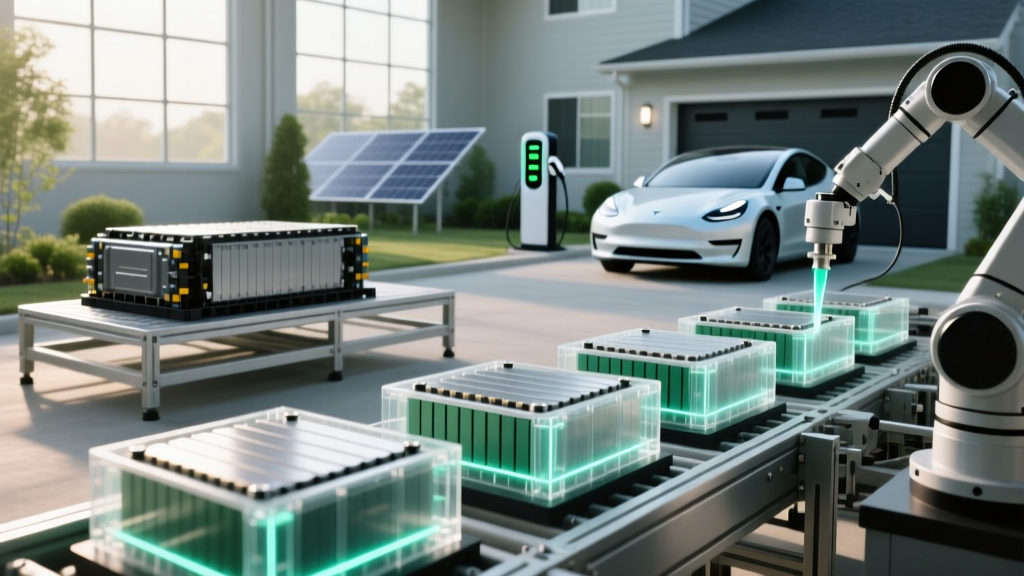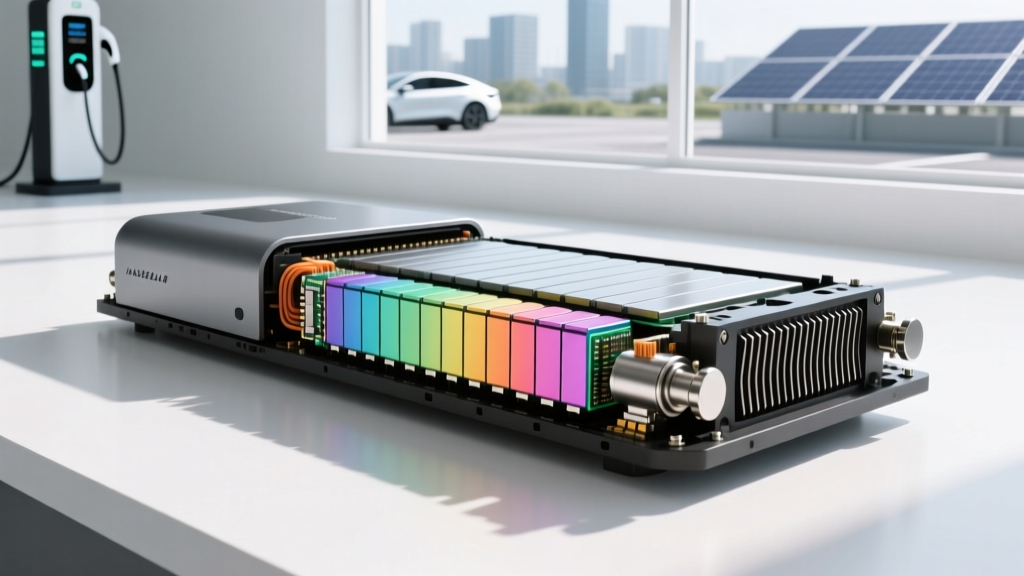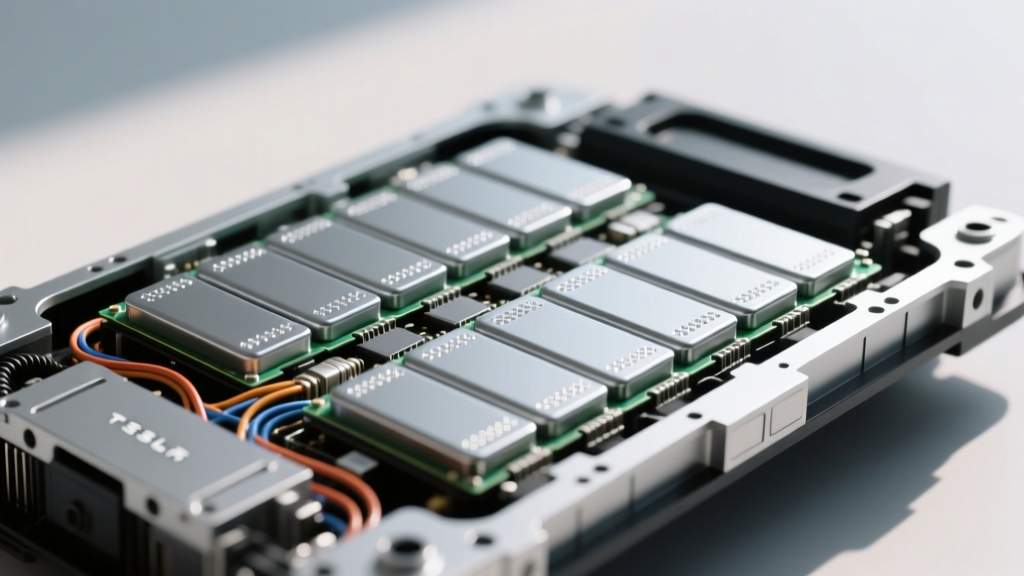
If you've ever wondered how much lithium is in a Tesla battery, the short answer is roughly 0.08 to 0.10 kilograms of lithium per kilowatt-hour (kWh) of usable battery capacity for nickel-based chemistries, and slightly less for lithium iron phosphate (LFP) packs. For a Tesla Model Y Long Range with a ~75 kWh usable NMC/NCA battery, that translates to approximately 6–8 kg (13–18 lbs) of elemental lithium. For a Model 3 RWD with an LFP pack (~57.5 kWh usable), the figure sits closer to 4.5–5.5 kg.
But raw lithium weight only tells part of the story. What actually matters for buyers and owners is how that chemistry affects range, longevity, charging behavior, and eventual replacement cost. This guide breaks down the numbers behind Tesla's two primary battery chemistries, real-world degradation data, warranty coverage, and what emerging technology could change the equation.
Tesla's Two Battery Chemistries: LFP vs NMC/NCA
Tesla currently uses two distinct cathode chemistries across its lineup. Understanding which one is in your vehicle (or the one you're considering) is critical because it affects daily charging habits, cold-weather range, and long-term degradation behavior.
| Attribute | LFP (Lithium Iron Phosphate) | NMC/NCA (Nickel Manganese Cobalt / Nickel Cobalt Aluminum) |
|---|---|---|
| Typical Tesla Trims | Model 3 RWD, Model Y RWD (Standard Range) | Model 3 Long Range, Model Y Long Range/Performance, Model S, Model X, Cybertruck |
| Energy Density | ~160–180 Wh/kg (cell level) | ~230–260 Wh/kg (cell level) |
| Lithium per kWh | ~0.08–0.09 kg | ~0.09–0.11 kg |
| Cycle Life | 3,000–5,000+ cycles to 80% SoH | 1,000–2,000 cycles to 80% SoH |
| Cold-Weather Performance | Moderate — more range loss below 32°F | Better low-temp conductivity, ~10–15% less cold loss vs LFP |
| Daily Charging Recommendation | Charge to 100% regularly (Tesla recommends at least weekly) | 80–90% daily; 100% only for trips |
| Cost per kWh (pack level) | ~$100–$115 | ~$125–$145 |
| Cobalt Content | None | Low but present (~5% cathode weight) |
The trade-off is straightforward: LFP gives you longer cycle life, lower cost, and no cobalt, but at the expense of energy density (meaning a heavier, slightly lower-range pack for the same physical size) and weaker cold-weather performance. NMC/NCA delivers more range per kilogram and better winter efficiency but degrades faster if routinely charged to 100%.
How Much Lithium Is in Each Tesla Model's Battery?
Here's a model-by-model breakdown of approximate battery capacity, chemistry, and estimated elemental lithium content. These figures are based on teardown analyses, Tesla's battery compliance documentation, and industry cell-level chemistry data.
| Model (2025–2026) | Usable Capacity (kWh) | Chemistry | Est. Lithium Content | EPA Range |
|---|---|---|---|---|
| Model 3 RWD | ~57.5 | LFP (CATL) | ~4.6–5.2 kg (10–11 lbs) | 272 mi |
| Model 3 Long Range AWD | ~75 | NMC (Panasonic/LG) | ~6.8–8.3 kg (15–18 lbs) | 363 mi |
| Model Y RWD | ~57.5 | LFP (CATL) | ~4.6–5.2 kg | 270 mi (est.) |
| Model Y Long Range AWD | ~75 | NMC/NCA | ~6.8–8.3 kg | 330 mi |
| Model S Long Range | ~95 | NCA (Panasonic 4680/2170) | ~8.6–10.5 kg (19–23 lbs) | 402 mi |
| Cybertruck AWD | ~123 | NMC (4680 cells) | ~11–13.5 kg (24–30 lbs) | 340 mi |
How Long Do Tesla Batteries Last? Degradation Data
Tesla's 2024 Impact Report (the most recent comprehensive dataset available) stated that Model 3 and Model Y batteries retain approximately 85% of original capacity after 200,000 miles. This aligns with independent data collected by Recurrent Auto, which tracks over 15,000 Tesla vehicles in real-world conditions.
- Year 1 / 15,000 mi: ~3–5% loss (initial formation loss)
- Year 3 / 45,000 mi: ~7–9% loss
- Year 5 / 75,000 mi: ~9–12% loss
- Year 8 / 120,000 mi: ~12–15% loss
- 200,000 mi: ~13–17% loss (85% retained per Tesla data)
LFP packs degrade more slowly — typically 5–8% loss at 100,000 miles — but show a steeper initial drop in the first 10,000 miles before stabilizing.
The degradation curve is not linear. Most lithium-ion packs lose 2–4% in the first year (calendar aging and initial SEI layer formation), then settle into a slower, roughly linear decline of 1–2% per year under normal use. The biggest accelerants of degradation are:
- Sustained high State of Charge: Storing an NMC pack at 100% for days or weeks accelerates electrolyte oxidation.
- Frequent DC fast charging above 150 kW: High C-rates generate heat that stresses the cathode structure. Tesla's battery management system (BMS) throttles charge rate when cells are hot, but habitual Supercharging still correlates with slightly faster degradation vs. Level 2-only charging.
- Extreme heat exposure: Prolonged ambient temperatures above 95°F without active thermal management (Tesla's system is robust, but a parked car in Phoenix summer still soaks).
- Deep discharge below 10%: Copper dissolution in the anode current collector accelerates below ~5% SoC.
Tesla Battery Warranty: What's Covered and for How Long
| Model | Warranty Period | Mileage Limit | Minimum Capacity Retention |
|---|---|---|---|
| Model 3 RWD (LFP) | 8 years | 100,000 miles | 70% |
| Model 3 Long Range / Performance | 8 years | 120,000 miles | 70% |
| Model Y (all trims) | 8 years | 120,000 miles | 70% |
| Model S / Model X | 8 years | 150,000 miles | 70% |
| Cybertruck | 8 years | 150,000 miles | 70% |
The warranty covers defects in materials or workmanship AND capacity loss below the 70% threshold within the stated period. If your Model Y Long Range battery drops to 68% State of Health (SoH) at year 6 and 95,000 miles, Tesla will repair or replace the pack at no cost. Critically, the warranty does not cover gradual degradation above 70% — that's considered normal wear.
Tesla's warranty terms are competitive within the industry. Hyundai and Kia offer 10-year/100,000-mile battery warranties; Ford matches Tesla at 8 years/100,000 miles for the Mustang Mach-E. The 70% retention threshold is the industry standard, though some manufacturers (like Rivian) use 70% over 8 years/175,000 miles for commercial vehicles.
EV Battery Replacement Cost: When and How Much
Most Tesla batteries outlast the vehicle itself. The average age of a scrapped car in the U.S. is roughly 12 years, and at 12,000 miles per year, that's ~144,000 miles — well within the battery's useful life based on degradation data. But out-of-warranty failures do happen, and costs are significant.
| Battery Pack | Capacity | Out-of-Warranty Replacement Cost (2025–2026) | Typical Replacement Trigger |
|---|---|---|---|
| Model 3 RWD (LFP) | ~57.5 kWh | $12,000–$15,000 | Cell imbalance, coolant intrusion, physical damage |
| Model 3/Y Long Range | ~75 kWh | $15,000–$20,000 | Module failure, BMS fault, age-related degradation past warranty |
| Model S/X | ~95 kWh | $20,000–$28,000 | Older 85/90 kWh packs most common; newer 100 kWh packs rare failures |
| Cybertruck | ~123 kWh | $25,000–$35,000 (est.) | Too new for real-world data; 4680 structural pack replacement |
These figures include the battery pack and labor but not ancillary components (contactors, BMS modules, cooling lines) which may add $1,000–$3,000. Tesla has increasingly moved toward module-level repairs rather than full pack replacement, which can reduce out-of-warranty costs to $3,000–$7,000 if only one or two modules are degraded.
For context, a complete engine and transmission replacement on a comparable gas vehicle runs $5,000–$9,000. The EV battery costs more, but it's needed far less frequently — most owners never face this expense.
How to Check and Maximize Tesla Battery Health
Tesla doesn't expose a direct State of Health (SoH) percentage in the vehicle's touchscreen, but there are several ways to assess your battery's condition:
- Range test method: Charge to 100% (LFP) or your normal daily limit (NMC), note the displayed range, and compare to the EPA sticker adjusted for your SoC. If your Model 3 LR shows 280 miles at 100% vs. the 363-mile EPA figure, that's roughly 77% SoH — time for a warranty claim if within 8 years/120k miles.
- Tesla Service diagnostic: Request a battery health report during any service visit. Tesla technicians can pull cell-level voltage delta and internal resistance data.
- Third-party apps: Tools like Tessie, Teslamate (self-hosted), or Scan My Tesla (via OBD-II adapter) can estimate SoH by comparing energy consumed vs. SoC change over a full charge cycle.
- For LFP owners: Charge to 100% at least once per week. LFP cells have a very flat voltage curve, and the BMS needs regular full charges to recalibrate its SoC estimate. Skipping this leads to phantom range loss (the BMS thinks the battery is emptier than it is).
- For NMC/NCA owners: Set daily charge limit to 80%. Use Scheduled Departure to time charging so the car reaches your target SoC just before you leave — this minimizes time spent at high voltage.
- Avoid letting the car sit below 10% SoC for more than a few hours, especially in hot weather.
- Use preconditioning before DC fast charging (navigate to a Supercharger in the Tesla nav and the car will warm the battery automatically, enabling faster charging and less stress).
- Minimize cabin preheating on battery power in extreme cold when possible — use shore power preconditioning instead.
Beyond Lithium: What's Next for Tesla Battery Tech
Tesla's current 4680 cell format (used in Cybertruck and some Model Y vehicles built at Giga Texas) already represents a significant engineering shift: a larger cylindrical cell with a dry-coated cathode that reduces manufacturing energy and cost. But the industry is pursuing several next-generation technologies that could arrive later this decade.
Silicon-dominant anodes: Companies like Sila Nanotechnologies and Group14 are replacing graphite anodes with silicon composites, which can store roughly 10x more lithium ions per gram. Tesla has indicated interest in silicon anode adoption, but cycle-life and swelling challenges remain. Realistic timeline: limited production integration by 2027–2028.
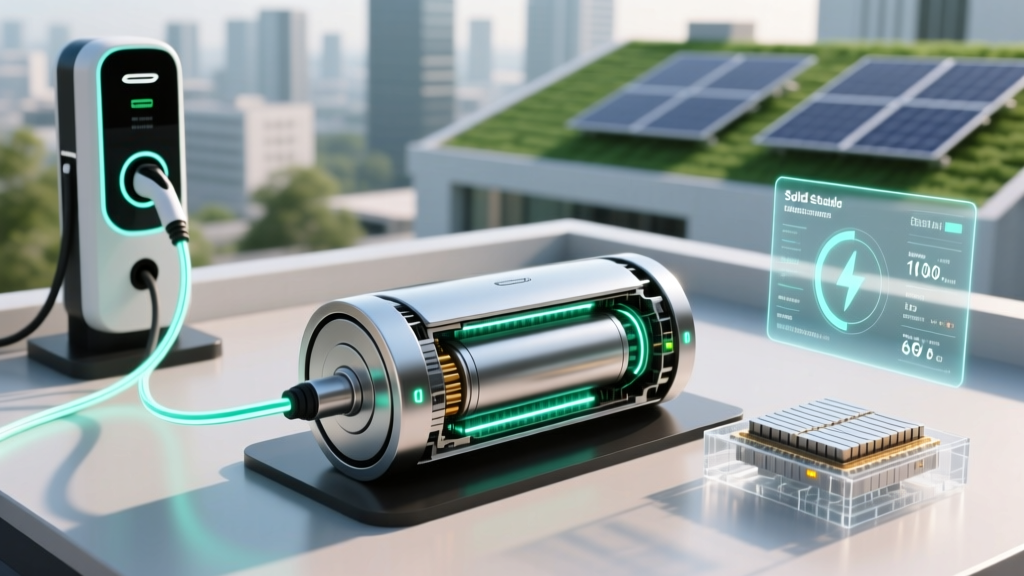
Solid-state batteries: These replace the liquid electrolyte with a solid ceramic or polymer, enabling lithium-metal anodes and potentially doubling energy density. Toyota, Samsung SDI, and QuantumScape have all announced prototype cells, but manufacturing scalability is the bottleneck. Industry consensus places mass-production solid-state EVs no earlier than 2028–2030, with premium applications first.
Sodium-ion batteries: CATL (which supplies LFP cells to Tesla) has begun mass-producing sodium-ion cells that use no lithium at all. These are lower in energy density (~120–140 Wh/kg) but dramatically cheaper and better in cold weather. A Tesla model with sodium-ion cells is plausible for a future base-tier vehicle, but no announcements have been made.
Frequently Asked Questions
How much lithium is actually in a Tesla Model Y battery?
A Tesla Model Y Long Range AWD with a ~75 kWh NMC/NCA battery contains approximately 6.8–8.3 kg (15–18 lbs) of elemental lithium. The total battery pack weight is roughly 480 kg (1,058 lbs), meaning lithium makes up about 1.5–1.7% of the pack's mass. The rest is primarily nickel, aluminum or iron, graphite, copper, steel casing, electrolyte solvents, and cooling hardware.
How long do Tesla batteries last in real-world use?
Based on Recurrent Auto's fleet data and Tesla's own Impact Report, Tesla NMC/NCA batteries retain ~85% capacity at 200,000 miles. LFP packs degrade more slowly and are expected to retain 88–92% at the same mileage. In years, most Tesla batteries will function well beyond 15 years before dropping below 70% SoH — longer than most owners keep the vehicle.
Is LFP or NMC better for a Tesla?
Neither is universally better — it depends on your use case. Choose LFP (Model 3 RWD / Model Y RWD) if you want lower cost, longer cycle life, cobalt-free sourcing, and don't mind slightly less range and more cold-weather loss. Choose NMC/NCA (Long Range / Performance trims) if you need maximum range, better winter performance, and faster DC charging speeds. LFP is ideal for commuters who charge at home nightly; NMC suits road-trippers and cold-climate drivers.
Does frequent Supercharging damage a Tesla battery?
DC fast charging generates heat and stresses cells more than Level 2 charging. Data from Recurrent Auto shows a modest but measurable difference: vehicles that DC fast-charge more than 90% of the time show roughly 2–3 percentage points more degradation at 100,000 miles compared to vehicles that primarily use Level 2. Tesla's BMS actively manages thermal load and tapers charge speed to protect cells, so occasional Supercharging is not harmful — but exclusive reliance on it will slightly accelerate wear over 5+ years.
How much does it cost to replace a Tesla battery out of warranty?
Out-of-warranty Tesla battery replacement costs range from roughly $12,000 for a Model 3 RWD LFP pack to $28,000+ for a Model S/X 100 kWh pack. Module-level repairs (replacing only the degraded sections) can cost $3,000–$7,000. These are rare events — the vast majority of Tesla batteries last the life of the vehicle without needing replacement.
Does the Tesla battery warranty cover normal degradation?
Only if degradation drops the battery below 70% of original capacity within the warranty period (8 years and 100,000–150,000 miles depending on model). Gradual capacity loss above 70% is considered normal wear and is not covered. Manufacturing defects, cell failures, and BMS faults are covered regardless of the retention percentage.