The Raw Numbers: How Much Lithium Is in a Tesla Battery?
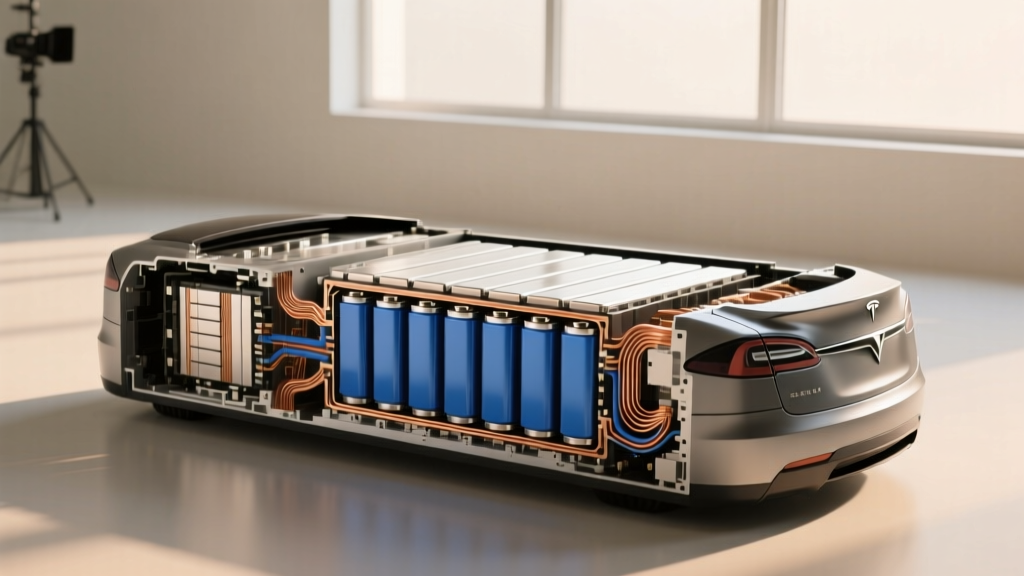
When EV shoppers ask how much lithium is in a Tesla battery, they're usually trying to gauge two things: supply-chain ethics and long-term replacement risk. The answer depends on the exact pack. A Model 3 Standard Range with a ~60 kWh lithium iron phosphate (LFP) battery contains roughly 8–10 kg of lithium. A Model S or Model X with a ~100 kWh nickel-manganese-cobalt (NMC/NCA) pack holds closer to 12–15 kg. For context, a single smartphone battery uses about 0.5 grams of lithium — so a Tesla pack contains the equivalent of roughly 20,000–30,000 phone batteries.
But raw lithium mass is only part of the picture. What actually determines range, longevity, and ownership cost is the chemistry inside the cells, how the battery management system (BMS) protects them, and how you charge day-to-day. Let's unpack each layer.
LFP vs NMC/NCA: Tesla's Two Chemistry Paths
Tesla currently uses two distinct cell chemistries across its lineup. Understanding the trade-offs is essential before you pick a trim.
| Attribute | LFP (Lithium Iron Phosphate) | NMC/NCA (Nickel Manganese Cobalt / Nickel Cobalt Aluminum) |
|---|---|---|
| Used In | Model 3 RWD, Model Y RWD (Standard Range) | Model 3 Long Range, Model Y LR/Performance, Model S, Model X |
| Typical Pack Size | ~60 kWh usable | ~75–100 kWh usable |
| Energy Density | Lower (~160 Wh/kg cell-level) | Higher (~250–270 Wh/kg cell-level) |
| Cycle Life | 3,000–5,000+ cycles | 1,000–2,000 cycles |
| Cold-Weather Performance | Weaker — range loss ~30-40% below 20°F | Better — range loss ~20-30% below 20°F |
| Recommended Daily Charge | 100% (Tesla recommends weekly full charge for calibration) | 80% daily, 100% only for trips |
| Cost | Lower — no cobalt or nickel | Higher — commodity-sensitive |
| Thermal Stability | Excellent — less prone to thermal runaway | Good — requires more active cooling |
The practical takeaway: LFP packs sacrifice some range per kilogram but gain dramatically longer cycle life and lower cost. That's why Tesla recommends charging LFP packs to 100% regularly — the chemistry tolerates it. NMC/NCA packs deliver more range in a lighter package but degrade faster if held at high states of charge (SoC) for extended periods.
How Long Do Tesla Batteries Actually Last?
Tesla publishes fleet degradation data periodically, and the numbers are reassuring for most buyers. According to Tesla's 2024 Impact Report, the average Model 3/Y battery retains approximately 85% of original capacity after 150,000 miles. Model S/X packs show similar curves, hovering around 88% at the same mileage.
Typical Tesla Battery Degradation Curve (Fleet Average):
- Year 1 / 15,000 mi: ~3–5% loss (initial formation drop)
- Year 3 / 45,000 mi: ~7–9% total loss
- Year 5 / 75,000 mi: ~10–12% total loss
- Year 8 / 120,000 mi: ~13–16% total loss
- Year 10 / 150,000 mi: ~15–18% total loss
Source: Tesla Impact Reports, aggregated fleet telemetry. Individual results vary with charging habits and climate.
Several factors accelerate or slow this curve:
- DC fast-charging frequency: Occasional Supercharging (1–2x/week) has minimal impact. Daily 250 kW V3/V4 Supercharging sessions generate sustained heat that marginally increases degradation — roughly 1–2% more loss over 100k miles versus home Level 2 charging, per fleet data.
- Extreme temperatures: Sustained operation above 100°F or below 10°F stresses cells. Tesla's thermal management system actively heats and cools the pack, but preconditioning matters.
- State of charge habits: For NMC/NCA, routinely holding the pack at 100% SoC for days accelerates calendar aging. For LFP, 100% is fine — but letting any pack sit below 10% for weeks risks cell imbalance.
- Depth of discharge: Shallow cycles (20–80%) produce less mechanical stress on electrodes than full 0–100% swings.
What Does the Tesla Battery Warranty Cover?
Tesla's battery and drive unit warranty is one of the more straightforward in the industry. It covers defects and capacity loss below a defined threshold during the warranty period.
| Model | Warranty Period | Mileage Cap | Minimum Capacity Retention |
|---|---|---|---|
| Model 3 RWD (LFP) | 8 years | 100,000 miles | 70% |
| Model 3 Long Range / Performance | 8 years | 120,000 miles | 70% |
| Model Y (all trims) | 8 years | 120,000 miles | 70% |
| Model S / Model X | 8 years | 150,000 miles | 70% |
If your battery drops below 70% State of Health (SoH) within these limits, Tesla replaces or remanufactures the pack at no cost. The warranty also covers drive unit (motor/inverter) failures. Note that the warranty does not cover damage from accidents, flooding, improper modifications, or use of non-approved charging equipment.
For reference, Tesla's official limited warranty page details the full terms. The 70% threshold is consistent with the broader industry — Hyundai, Ford, and GM use similar benchmarks under their 8-year/100k-mile warranties.
EV Battery Replacement Cost: When and How Much?
Here's the reality most fear-mongering headlines omit: the vast majority of Tesla batteries outlast the vehicle itself. Out-of-warranty replacements are rare, typically triggered by physical damage or isolated manufacturing defects rather than normal degradation.
| Model / Pack | Approximate Replacement Cost (2025–2026) | Typical Scenario |
|---|---|---|
| Model 3 RWD (~60 kWh LFP) | $12,000–$16,000 | Post-warranty failure or collision damage |
| Model 3/Y Long Range (~75–82 kWh NMC) | $14,000–$20,000 | Post-warranty module failure |
| Model S/X (~100 kWh NMC/NCA) | $18,000–$25,000 | Legacy pack replacement (some refurbished available) |
These figures include parts and labor at a Tesla Service Center. Independent EV shops and refurbished packs can reduce cost by 20–30%. In many cases, Tesla replaces only defective modules rather than the entire pack, which brings costs down significantly — sometimes to $5,000–$8,000 for a partial repair.
For perspective, at an average degradation rate of ~1.5% per year, a Tesla battery would need to reach 20 years before hitting the 70% warranty threshold purely from normal aging. Most vehicles are retired or sold long before that point.
How to Check and Maximize Your Battery's State of Health
Tesla doesn't expose a direct SoH percentage in the car's interface the way some competitors do. But owners have several ways to monitor pack condition:
- Tesla App / Energy Screen: Compare your current estimated range at 100% SoC against the original EPA-rated range. A Model 3 LR originally rated at 341 miles that now shows 300 miles at full charge suggests roughly 88% SoH.
- Third-party tools: Apps like Tessie or Teslalogger pull telemetry via Tesla's API and estimate SoH using voltage data and charge logs.
- Service mode diagnostic: Tesla service technicians can run a full pack health report that shows individual module balance, internal resistance, and precise capacity measurements.
Battery Longevity Checklist:
- Set daily charge limit to 80% for NMC/NCA; 100% is fine for LFP
- Enable scheduled departure preconditioning to warm the pack before driving in cold weather
- Limit DC fast charging to road trips when possible; use Level 2 home charging for daily needs
- Avoid leaving the car below 10% SoC for more than a few days
- Keep the vehicle plugged in during extreme heat so the thermal management system can actively cool the pack
- Update firmware regularly — Tesla periodically refines BMS algorithms for better longevity
Preconditioning deserves special emphasis. When you navigate to a Supercharger, Tesla's BMS begins heating the battery to approximately 95–105°F, which is the optimal temperature for fast lithium-ion intercalation. Skipping preconditioning (e.g., arriving at a charger without using the car's navigation) forces the pack to accept high current while cold, which can cause lithium plating — a permanent degradation mechanism. Always navigate to your charger or precondition manually in cold weather.
Beyond Lithium-Ion: Solid-State and Silicon Anode Timelines
The battery industry is investing heavily in next-generation chemistries, but it's critical to separate laboratory milestones from production reality.
Silicon anode cells — which replace graphite anodes with silicon to increase energy density by 20–40% — are entering limited production. Companies like Sila Nanotechnologies and Group14 are supplying materials for consumer electronics and are targeting automotive production in the 2027–2029 timeframe. Tesla's own 4680 cell roadmap includes incremental silicon integration, but current production 4680s still use primarily graphite anodes.
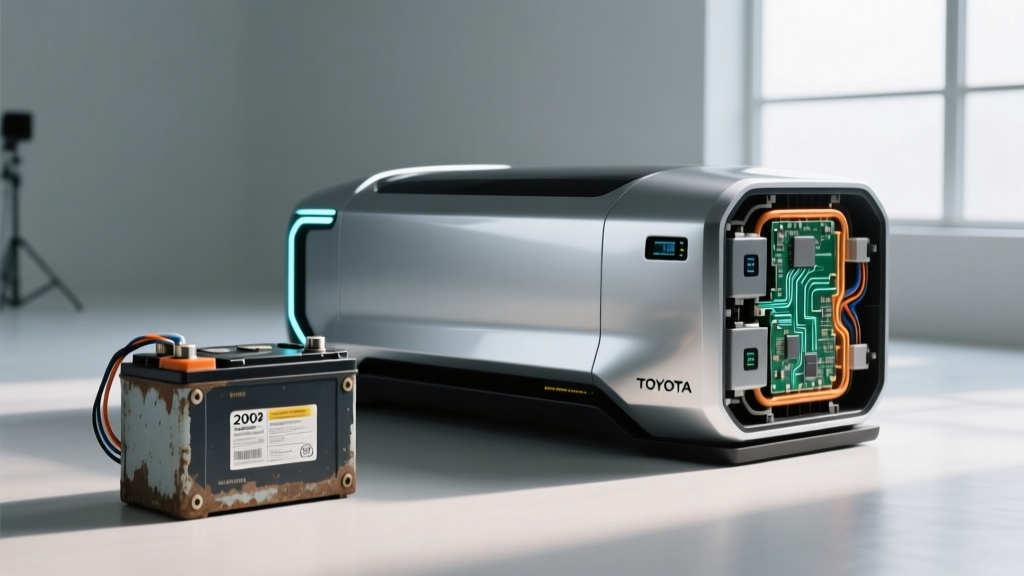
Solid-state batteries — which replace the liquid electrolyte with a solid ceramic or polymer — promise higher energy density, faster charging, and improved safety. Toyota, Samsung SDI, and QuantumScape have demonstrated working prototypes, but mass production at automotive scale remains elusive. Realistic industry consensus places widespread solid-state EV deployment in the 2030–2035 window. Early applications will likely appear in premium vehicles at significant cost premiums.
For buyers shopping today, modern lithium-ion packs (both LFP and NMC) offer proven longevity, extensive warranty coverage, and declining costs. Waiting for solid-state means waiting at least 5–8 years for mainstream availability.
Frequently Asked Questions
How much lithium is in a Tesla Model 3 battery?
A Tesla Model 3 Standard Range with a ~60 kWh LFP battery contains approximately 8–10 kg of lithium. The Long Range variant with an ~75–82 kWh NMC pack contains roughly 10–13 kg. The exact amount varies by cell supplier (CATL, Panasonic, LG Energy Solution) and specific cell chemistry revision.
How long do EV batteries last in years and miles?
Based on Tesla fleet data and independent analysis from sources like fueleconomy.gov, modern EV batteries retain 85–90% capacity at 150,000 miles. In terms of years, most packs will provide 15–20 years of usable service before dropping to 70% capacity. Cycle life varies: LFP packs can endure 3,000–5,000 full cycles, while NMC packs typically handle 1,000–2,000 cycles — both far exceeding most owners' total mileage.
How much does it cost to replace a Tesla battery?
Full out-of-warranty replacements range from $12,000 to $25,000 depending on the model and pack size. However, most replacements are partial (module-level) repairs costing $5,000–$8,000. Under warranty, replacements are free if capacity drops below 70% within 8 years / 100,000–150,000 miles depending on the model.
LFP vs NMC — which Tesla battery is better?
Neither is universally better — they serve different priorities. Choose LFP (Model 3/Y RWD) if you want lower cost, longer cycle life, and don't mind ~270 miles of EPA range. Choose NMC (Long Range/Performance) if you need maximum range (330+ miles), better cold-weather performance, and faster acceleration. For most daily commuters who charge at home, LFP is the more economical and durable choice.
Does frequent Supercharging damage my Tesla battery?
Modern Tesla packs handle Supercharging well thanks to active liquid cooling. Fleet data shows that owners who Supercharge 2–3 times per week experience only marginally higher degradation (~1–2% more over 100,000 miles) compared to exclusive Level 2 home charging. The key mitigations are always preconditioning before fast charging and avoiding repeated back-to-back Supercharging sessions that keep the pack at sustained high temperatures.
Can I check my Tesla battery health myself?
Yes, indirectly. Charge to 100% and compare the displayed estimated range to the original EPA rating. A meaningful drop (e.g., a 341-mile car showing 290 miles at full charge) indicates roughly 15% degradation. For a precise SoH measurement, request a battery health report at a Tesla Service Center or use third-party telemetry apps like Tessie that analyze charge data via Tesla's API.