The electric vehicle industry runs on lithium — and how we get that lithium matters more than most buyers realize. A newer extraction method called direct lithium extraction (DLE), sometimes described as extracting lithium from water (specifically, from geothermal brine), promises to reshape the supply chain. But what does that mean for the battery in your next EV? This guide connects the upstream supply story to the chemistry in your pack, the degradation you'll see over a decade, what warranties actually cover, and what replacement costs look like in 2026.
What 'Lithium From Water' Actually Means for EV Batteries
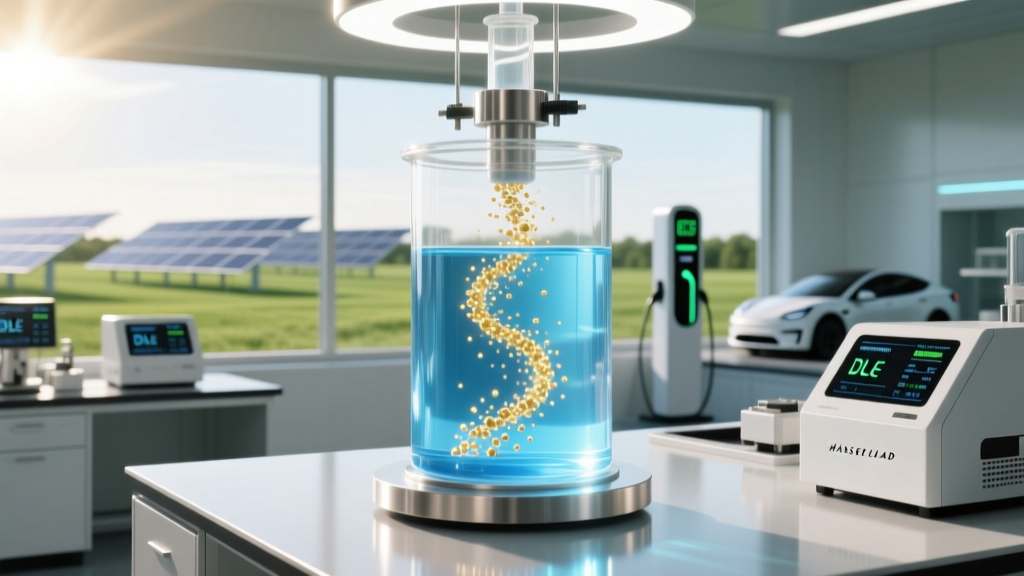
Direct lithium extraction pulls lithium ions directly from underground brine — saltwater trapped in geothermal formations — using selective filters, ion-exchange beads, or membranes. Unlike conventional evaporation ponds that take 12–18 months and recover 40–50% of the lithium present, DLE processes can recover 70–90% in hours or days, using a much smaller land footprint. Companies like EnergySource Minerals (Salton Sea, California), Controlled Thermal Resources, and others have been scaling pilot and early-commercial DLE operations through 2025–2026.
For EV buyers, the relevance is straightforward: more domestic lithium supply, extracted faster and with potentially lower environmental impact, can ease the critical-mineral sourcing constraints that currently limit federal tax credit eligibility under IRS §30D rules. If DLE-sourced lithium qualifies as U.S.-extracted, more vehicles could meet the critical-minerals requirement for the full credit — a meaningful shift in purchase economics.
But supply is only half the equation. The chemistry of the cells built from that lithium determines your range, charging speed, longevity, and cold-weather performance.
LFP vs NMC vs NCA: Chemistry Trade-Offs That Matter
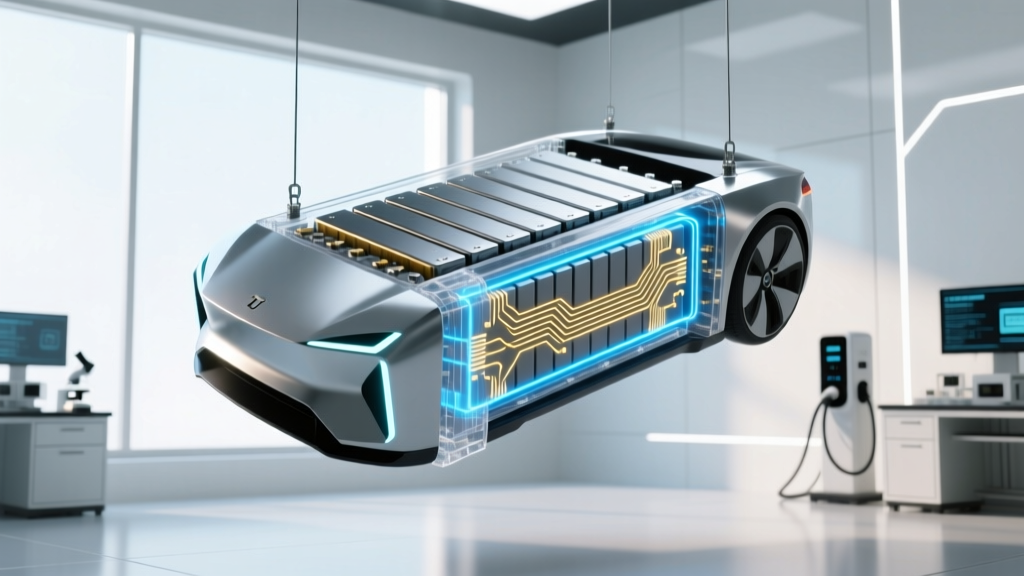
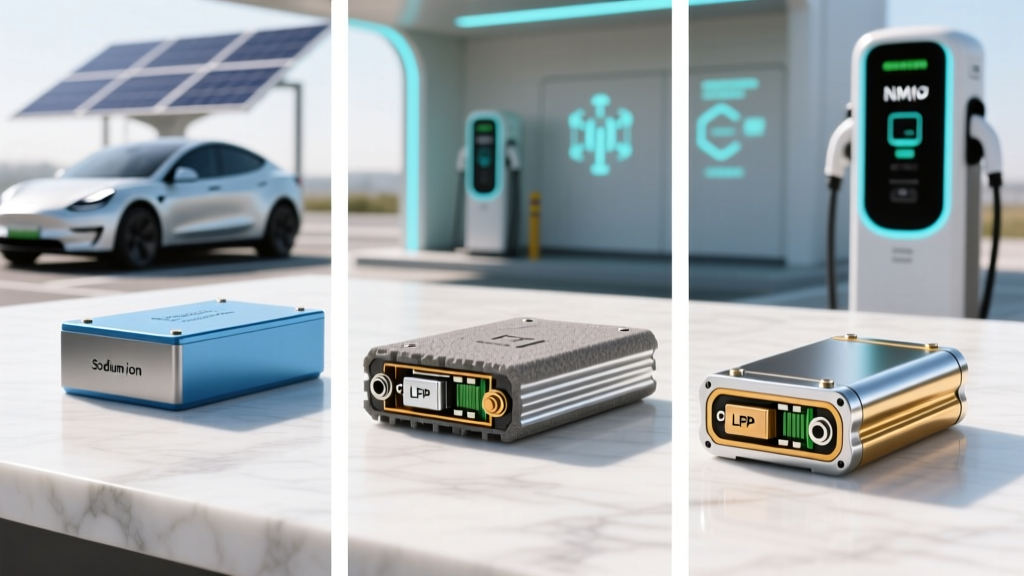
Two cathode chemistries dominate the 2026 EV market: lithium iron phosphate (LFP) and nickel manganese cobalt (NMC), with NCA (nickel cobalt aluminum) still used by Tesla in some long-range packs. The lithium sourced via DLE can feed into any of these chemistries — but the choice of cathode determines the pack's character.
| Attribute | LFP (LiFePO₄) | NMC / NCA |
|---|---|---|
| Energy density (cell-level) | ~160–180 Wh/kg | ~220–270 Wh/kg |
| Typical pack sizes (2026) | 50–77 kWh (Standard Range models) | 75–120 kWh (Long Range / Performance) |
| Cycle life (to 80% SoH) | 3,000–5,000+ cycles | 1,500–2,500 cycles |
| Cold-weather range loss | Greater (~35–45% at 20°F) | Moderate (~25–35% at 20°F) |
| Cost per kWh (pack-level, 2026 est.) | ~$90–$110 | ~$120–$150 |
| Recommended daily SoC limit | 100% (can charge to full daily) | 80% (for longevity) |
| Fast-charge tolerance | Good; less heat-sensitive | Good with preconditioning; taper above 80% |
| Cobalt / nickel content | None (iron + phosphate) | Significant (supply-chain and ethical considerations) |
| Common in (2026 models) | Tesla Model 3/Y RWD, Ford Mustang Mach-E Select, many Chinese-market EVs | Tesla LR/Performance, Hyundai Ioniq 5/6 LR, Rivian, BMW iX, most 300+ mi range models |
Which is better? It depends on your use case. If you commute daily, charge at home, and want a battery that will easily outlast the car's body, LFP is the pragmatic choice — lower cost, longer cycle life, and no penalty for charging to 100%. If you need 300+ miles of EPA range, tow, or frequently drive in freezing temperatures, NMC/NCA delivers the energy density and cold-weather performance you need, at the cost of slightly tighter care requirements.
How Long Do EV Batteries Actually Last?
The data from millions of EVs on the road through 2025–2026 tells a reassuring story: most EV traction batteries outlast the vehicles they power. Catastrophic failure is rare; gradual capacity loss is the norm.
Typical degradation trajectory (NMC/NCA packs, mixed use):
- Year 1 / 15,000 mi: ~2–4% capacity loss (initial formation settling)
- Year 3 / 45,000 mi: ~5–8% total loss
- Year 5 / 75,000 mi: ~8–12% total loss
- Year 8 / 120,000 mi: ~10–15% total loss (still above most warranty thresholds)
- Year 10+ / 150,000+ mi: ~12–20% total loss for well-maintained packs
Sources: Geotab fleet battery health data, Recurrent Auto battery studies, manufacturer warranty claims data.
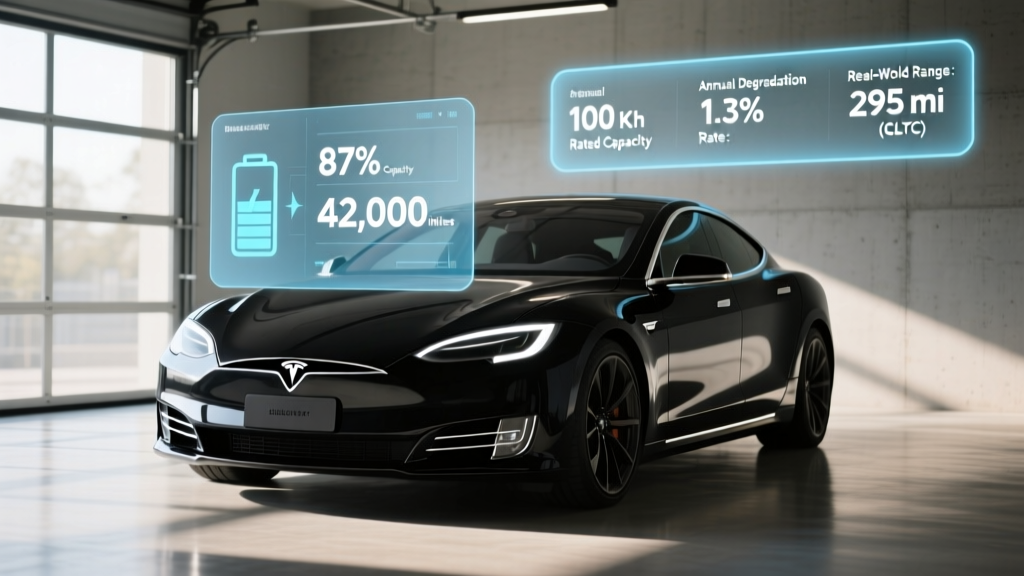
LFP packs degrade even more slowly in terms of cycle count, though calendar aging (time and temperature) still applies. A Tesla Model 3 RWD with its LFP pack, charged to 100% daily and garaged in moderate temperatures, may show only 8–10% loss at 150,000 miles.
The critical insight: degradation is non-linear. Most loss occurs in the first year or two, then the curve flattens significantly. A battery at 90% State of Health (SoH) at year three is likely to still be at 85%+ at year eight.
What the Battery Warranty Actually Covers
Federal law mandates a minimum 8-year / 100,000-mile warranty on EV battery packs for emissions-related components, and most manufacturers meet or exceed this baseline. California-emissions states (which include a dozen+ states adopting CARB rules) often see extended terms.
| Manufacturer (2026 MY) | Battery Warranty | Capacity Retention Threshold |
|---|---|---|
| Tesla (Model 3/Y) | 8 yr / 100,000 mi (RWD); 8 yr / 120,000 mi (LR/Perf) | 70% minimum |
| Hyundai / Kia (Ioniq 5/6, EV6/EV9) | 10 yr / 100,000 mi | 70% minimum |
| Ford (Mach-E, F-150 Lightning) | 8 yr / 100,000 mi | 70% minimum |
| GM (Blazer EV, Equinox EV, Silverado EV) | 8 yr / 100,000 mi | 70% minimum (some Ultium packs: 65% for certain commercial) |
| Rivian (R1T/R1S) | 8 yr / 175,000 mi | 70% minimum |
| BMW (i4, iX, i7) | 8 yr / 100,000 mi | 70% minimum |
What triggers a warranty claim? If your pack's usable capacity drops below the threshold (typically 70% of original) within the warranty period, the manufacturer must repair or replace it to bring capacity back above that level. This does not mean you get a brand-new battery — refurbished or reconditioned modules are standard practice. Note that the 12V auxiliary battery is a separate, conventional component not covered under the traction battery warranty.
EV Battery Replacement Cost: What It Actually Takes
Out-of-warranty battery replacement is the specter that haunts EV forums. The reality in 2026 is more nuanced — and generally less alarming than the headlines suggest.
| Vehicle Class / Example | Pack Size | Estimated Replacement Cost (2026) | Typical Need Timeline |
|---|---|---|---|
| Compact / sedan (Tesla Model 3 RWD, Chevy Bolt) | 50–65 kWh | $8,000–$14,000 | Rarely needed; 200,000+ mi pack life common |
| Mid-size crossover LR (Model Y LR, Ioniq 5 LR) | 75–84 kWh | $13,000–$20,000 | Rarely before 150,000 mi with proper care |
| Full-size truck / SUV (F-150 Lightning Ext, Rivian R1T Max) | 100–149 kWh | $18,000–$30,000 | Very early to have real-world data; projected 200,000+ mi |
| Luxury sedan (BMW i7, Mercedes EQS) | 100–108 kWh | $20,000–$35,000 | Low volume; insufficient long-term data |
These are full-pack replacement figures at OEM dealerships. In practice, many out-of-warranty failures involve individual module or cell-group replacements, which a qualified EV shop can perform for $3,000–$8,000 depending on the pack architecture. Third-party refurbishers and independent EV specialists are a growing market segment as first-generation EVs age past their warranty windows.
The honest context: based on current degradation data, the majority of EV batteries will never need replacement during original ownership. A well-cared-for NMC pack at 150,000 miles typically retains 85–90% capacity — still well above the 70% threshold and offering usable daily range.
Factors That Accelerate (or Preserve) Battery Health
Battery longevity isn't random. The physics of lithium-ion cells point to specific stressors, and managing them is within every owner's control.
What degrades a battery faster:
- Frequent DC fast charging to high SoC: Repeatedly charging above 200 kW to 90–100% generates sustained heat and high voltage stress. Occasional road-trip fast charges are fine; daily reliance on DCFC accelerates wear.
- Sustained high State of Charge: Sitting at 100% SoC for days (especially in heat) stresses NMC/NCA cathodes. LFP is more tolerant but not immune to calendar aging.
- Extreme heat exposure: Ambient temperatures above 95°F combined with high SoC are the worst-case scenario. Garage parking in summer matters.
- Deep discharges to 0%: Letting the pack sit at or near 0% for extended periods can cause copper dissolution in the anode current collector. Keep it above 10% if storing.
- Aggressive driving in cold weather without preconditioning: Drawing high current from a cold battery causes lithium plating on the anode — permanent capacity loss.
What preserves battery health:
- Home Level 2 charging as your daily routine: 7–11 kW charging is gentle on cells and generates minimal heat.
- SoC sweet spot of 20–80% for NMC/NCA: Set your charge limit to 80% for daily use; charge to 100% only before long trips.
- 100% daily is fine for LFP: LFP chemistry benefits from periodic full charges for BMS cell-balancing accuracy.
- Precondition the battery before DC fast charging: Most EVs do this automatically when you navigate to a charger. It warms the pack to ~95°F, enabling faster charging with less stress.
- Use timed charging to avoid sitting at high SoC: Schedule your Level 2 charger to finish just before you leave, not hours before.
How to Check Your Battery's State of Health (SoH)
State of Health (SoH) is the percentage of original usable capacity your pack currently holds. A new battery is 100% SoH; at 70% SoH, a 75 kWh pack holds roughly 52.5 kWh usable.
Methods to check SoH in 2026:
- In-vehicle battery health displays: Tesla, Hyundai/Kia, BMW, and GM now include battery health indicators in the vehicle settings or service menus. These use BMS (Battery Management System) coulomb counting and are reasonably accurate (±2–3%).
- OBD-II diagnostic tools: Devices like the OBDLink SX paired with apps such as EV-BatMon, LeafSpy (Nissan), or Scan My Tesla can read BMS-reported SoH, cell voltage deltas, and pack temperature. This is the most detailed owner-accessible method.
- Dealer diagnostic reports: Request a battery health printout during service visits. This provides an official SoH figure useful for warranty claims or resale documentation.
- Third-party services: Companies like Recurrent Auto offer free battery health reports that compare your pack's degradation to a fleet of identical vehicles, giving you context on whether your battery is degrading normally.
What to watch for: Cell voltage imbalance (one module group consistently 50+ mV lower than others) can signal a weak module. Sudden range drops that don't correlate with temperature or driving style warrant a diagnostic scan.
Emerging Battery Technology: Solid-State, Silicon Anode, and Beyond
While DLE-sourced lithium feeds today's LFP and NMC cells, next-generation chemistries are advancing — though not yet in production vehicles you can buy today.
Solid-state batteries replace the liquid electrolyte with a solid ceramic, polymer, or sulfide layer, enabling lithium-metal anodes and dramatically higher energy density (potentially 400–500 Wh/kg at the cell level). Toyota has announced a solid-state EV for 2027–2028 with a claimed 750+ km (~465 mi) range and 10-minute fast charging, but mass production at automotive scale remains unproven. Samsung SDI and QuantumScape are targeting 2027–2028 production timelines. These are announced/preliminary — no solid-state EV is currently available for purchase.
Silicon-dominant anodes (from companies like Sila Nanotechnologies and Group14) are already entering production in limited applications, offering 20–40% energy density improvement over graphite anodes. Expect to see these in premium EVs by 2027–2028 as part of advanced NMC cells.
Sodium-ion batteries (no lithium required) are entering low-cost, short-range EV production in China through CATL and BYD, with potential U.S. market entry in commercial/fleet applications by 2028+. These trade energy density (~120–150 Wh/kg) for extremely low cost and abundant materials.
The realistic timeline: today's LFP and NMC chemistries — increasingly sourced from DLE and other modern extraction methods — will remain dominant through at least 2030. Next-gen technologies will debut in premium segments first, trickling down over 5–7 years.
Frequently Asked Questions
How long do EV batteries last in years and miles?
Based on fleet data through 2026, most EV traction batteries retain 85–90% of original capacity at 150,000 miles and 8–10 years of use. With proper care (Level 2 home charging, moderate SoC habits, garage parking), many packs will reach 200,000+ miles before approaching the 70% warranty threshold. LFP packs generally outlast NMC in cycle count, though calendar aging affects all chemistries.
How much does an EV battery cost to replace?
Full pack replacement costs range from roughly $8,000 for a compact EV (50–65 kWh pack) to $20,000–$35,000 for large luxury or truck packs (100+ kWh). However, most out-of-warranty repairs involve individual module replacement at $3,000–$8,000. The majority of EV batteries never require replacement during original ownership based on current degradation data.
What does the battery warranty actually cover?
Federal minimum is 8 years / 100,000 miles with a capacity retention threshold (typically 70% of original). Hyundai/Kia and Rivian offer 10 years or higher mileage limits. The warranty covers the high-voltage traction battery pack — not the 12V auxiliary battery. If your pack drops below the threshold within the warranty period, the manufacturer repairs or replaces it to restore capacity above that level.
How do I check and maximize my battery's health?
Check SoH through your vehicle's built-in battery health display, an OBD-II diagnostic app (EV-BatMon, Scan My Tesla), or a dealer diagnostic report. Maximize longevity by relying on Level 2 home charging, keeping NMC/NCA packs between 20–80% SoC for daily use (LFP can be charged to 100% daily), preconditioning before DC fast charging, avoiding prolonged storage at extreme SoC levels, and parking in shade or a garage during hot weather.
LFP vs NMC — which battery chemistry is better and why?
Neither is universally better. LFP wins on cost (~$90–$110/kWh vs $120–$150), cycle life (3,000–5,000+ cycles vs 1,500–2,500), and daily convenience (charge to 100% freely). NMC/NCA wins on energy density (220–270 Wh/kg vs 160–180), which translates to longer range in the same pack volume, and better cold-weather performance (~10% less range loss at 20°F). Choose LFP for commuting and cost savings; choose NMC for maximum range, towing, and cold-climate driving.
Does 'lithium from water' (DLE) affect my EV battery quality?
No — DLE is an extraction method for raw lithium, not a cell manufacturing process. The lithium compound produced (lithium carbonate or lithium hydroxide) meets the same purity standards regardless of extraction method. The benefit is supply-chain: more domestic, faster-to-market lithium can improve tax credit eligibility and potentially reduce pack costs over time. Battery quality is determined by cell manufacturing (CATL, LG, Panasonic, SK On), not the lithium source.