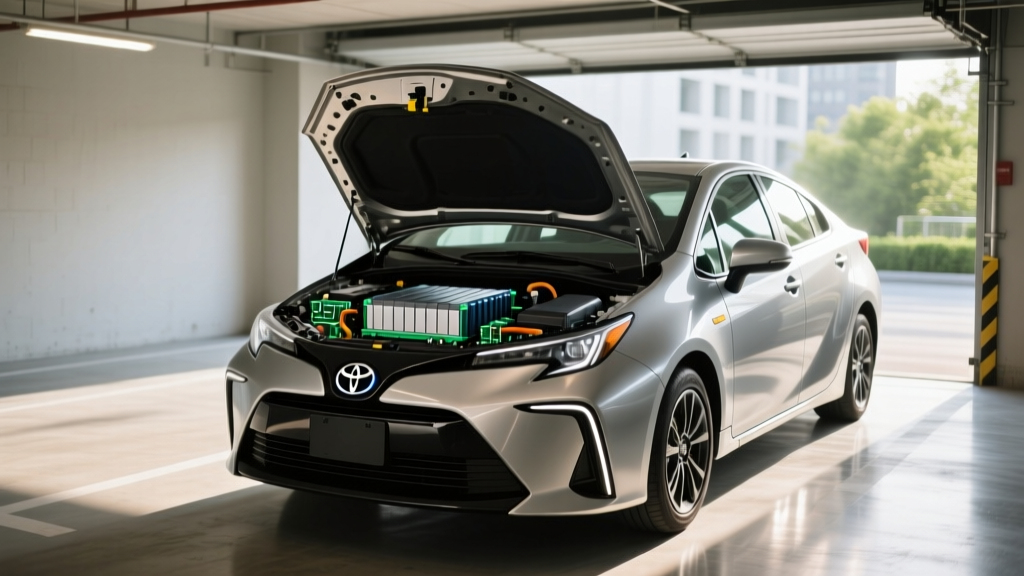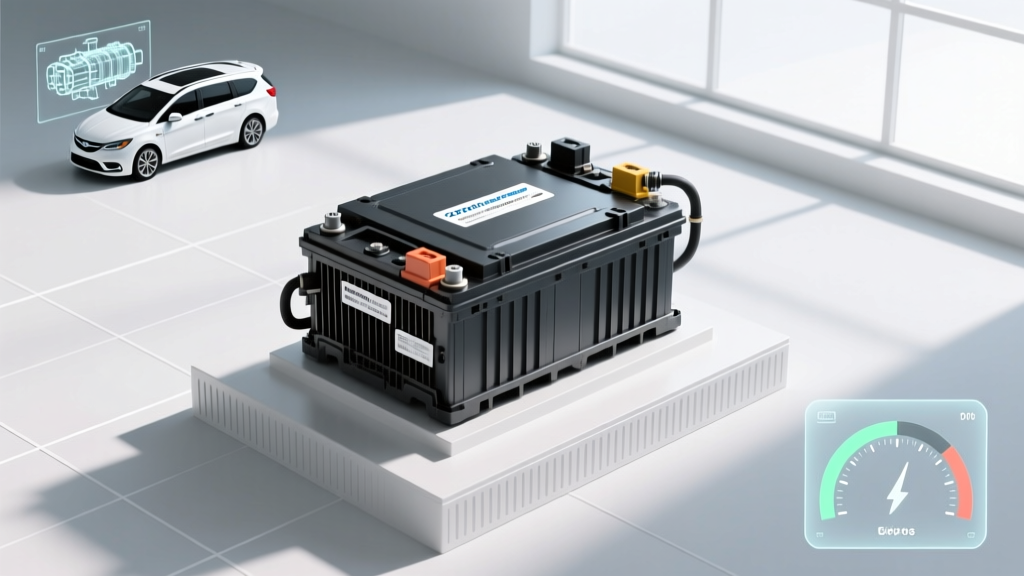
Understanding Lithium in EV Batteries
When prospective EV owners ask, "Is lithium found in electric vehicle batteries safe?" they're often concerned about two things: the thermal stability of the battery chemistry and the long-term reliability of the pack. The short answer is yes — lithium-ion battery packs in modern EVs are engineered with multiple layers of thermal management, structural protection, and chemical safeguards that make them extraordinarily safe in daily use.
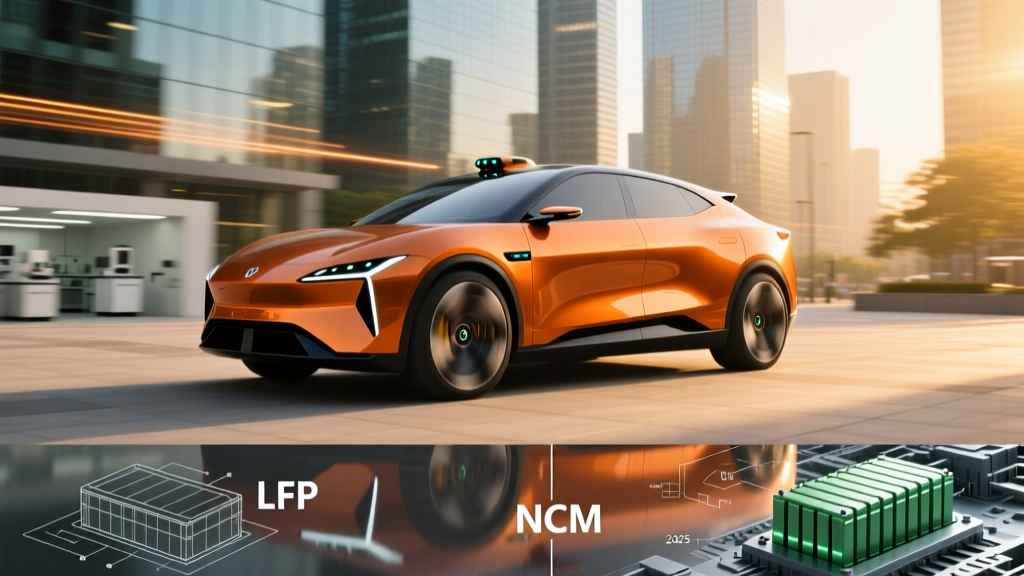
But lithium isn't one single thing. The lithium-based chemistry inside your EV's traction battery — whether it's a lithium iron phosphate (LFP) cell or a nickel manganese cobalt (NMC) cell — fundamentally shapes the vehicle's range, charging behavior, degradation trajectory, and even fire risk profile. Understanding these differences is the single most important thing an EV buyer can do before signing a purchase agreement.
This guide covers the chemistry, the real degradation data, the warranty protections, and the practical habits that determine whether your battery outlasts the car itself. Spoiler: in most cases, it does.
LFP vs NMC/NCA: The Chemistry Showdown
Every EV sold in the U.S. in 2026 uses one of two dominant lithium-ion chemistries in its high-voltage traction battery. The choice between them involves genuine trade-offs — there is no universally "better" option, only the right option for your driving pattern.
| Attribute | LFP (Lithium Iron Phosphate) | NMC/NCA (Nickel Manganese Cobalt / Nickel Cobalt Aluminum) |
|---|---|---|
| Energy Density | Lower (~160-180 Wh/kg cell-level) | Higher (~220-260 Wh/kg cell-level) |
| Typical Use Case | Standard-range trims, daily commuters | Long-range trims, performance models |
| Cycle Life | 3,000-5,000+ cycles to 80% SoH | 1,500-2,500 cycles to 80% SoH |
| Thermal Stability | Excellent — higher onset temp for thermal runaway (~270°C) | Good — lower onset temp (~210°C), requires robust BMS |
| Cold-Weather Performance | Greater range loss in freezing temps (15-30% reduction) | Better low-temp conductivity (10-20% reduction) |
| Charging to 100% Regularly | Recommended — no accelerated degradation | Not ideal — 80% daily limit recommended |
| Cost (cell-level) | ~$70-90/kWh | ~$100-130/kWh |
| State of Charge Estimation | Difficult — flat voltage curve requires periodic full charges for calibration | Easier — sloping voltage curve gives accurate SoC readings |
| Notable 2026 Vehicles | Tesla Model 3/Y RWD, Ford Mustang Mach-E Select, Rivian R1S Standard | Tesla Model 3/Y Long Range, Hyundai Ioniq 5, BMW iX, Rivian R1T Max |
Which Is Better — and Why?
If you drive fewer than 40 miles daily, charge at home, and want a battery that will likely outlast 300,000 miles with minimal degradation, LFP is the pragmatic choice. The flat voltage curve is a minor annoyance (your range estimator may jump around at low SoC), but the cycle life and thermal stability are unmatched.
If you need maximum range per charge for road trips, frequently drive in cold climates, or want a performance-oriented model, NMC/NCA delivers the energy density to make that possible. You'll just need to be more disciplined about not leaving it at 100% SoC overnight on a regular basis.
How Long Do EV Batteries Last?
The question "How long do EV batteries last?" deserves a data-driven answer, not a marketing slogan. Based on fleet data from Tesla's 2025 Impact Report, Recurrent Auto's battery health database, and independent testing by organizations like the Recurrent Auto community, here's what we know:
- Average degradation at 100,000 miles: 5-10% capacity loss (most packs retain 90-95% of original capacity)
- Average degradation at 150,000 miles: 8-15% capacity loss
- Average degradation at 200,000 miles: 10-18% capacity loss
- Failure rate requiring full replacement: Less than 1.5% of vehicles within the warranty period (excluding recalls)
Typical Degradation Curve: EV batteries lose capacity fastest in the first 1-2 years (roughly 2-5% loss), then degradation slows significantly to roughly 0.5-1% per year thereafter. This "hockey stick" pattern means a 2024 Tesla Model Y with an EPA-rated 330-mile range might show ~315 miles of range at 50,000 miles — but still show ~295 miles at 150,000 miles. The battery doesn't fall off a cliff; it plateaus.
Critically, the battery doesn't "die" at a specific mileage the way a timing belt fails. It gradually holds less energy. A pack at 80% State of Health (SoH) still functions perfectly — it just delivers 80% of the original EPA range. For a 300-mile EV, that's still 240 miles of range, which covers 95% of American daily driving needs.
Battery Warranty Terms: What's Actually Covered
Federal law mandates that EV batteries carry a minimum warranty of 8 years/100,000 miles (10 years/150,000 miles in California Air Resources Board states). But manufacturers exceed this baseline in various ways. Here's what the major brands commit to in 2026:
| Manufacturer | Warranty Term | Capacity Retention Threshold | Notes |
|---|---|---|---|
| Tesla (Model 3/Y) | 8 yr / 120,000 mi (LR), 8 yr / 100,000 mi (RWD) | 70% SoH minimum | LFP and NMC covered equally |
| Hyundai / Kia | 10 yr / 100,000 mi | 70% SoH minimum | Among the longest in the industry |
| Ford (Mach-E, F-150 Lightning) | 8 yr / 100,000 mi | 70% SoH minimum | Covers battery and hybrid/electric components |
| GM (Ultium platform) | 8 yr / 100,000 mi | 70% SoH minimum (60% for commercial) | Covers modules individually on some models |
| BMW | 8 yr / 100,000 mi | 70% SoH minimum | Modular replacement where possible |
| Rivian | 8 yr / 175,000 mi (Max Pack), 8 yr / 120,000 mi (Standard) | 70% SoH minimum | Longest mileage coverage on Max Pack |
What the warranty actually covers: If your battery's measured State of Health drops below the threshold (typically 70% of original capacity) within the warranty period, the manufacturer will repair or replace the battery at no cost. This covers defects and abnormal degradation — it does not cover damage from accidents, flooding, or unauthorized modifications.
What it doesn't cover: Normal range loss above the threshold. If your battery degrades to 72% SoH at year 9, you're outside coverage — but 72% of a 300-mile pack still gives you 216 miles, which is still highly usable.
EV Battery Replacement Cost: The Real Numbers
This is where fear-mongering runs rampant, so let's anchor this in actual service data. Full battery replacement is rare — the vast majority of EVs are retired, traded, or sold before the pack needs replacement. But if you're buying a used EV out of warranty or planning to keep a vehicle for 15+ years, here's the financial landscape:
| Vehicle | Battery Size (kWh usable) | Full Pack Replacement Cost | Module-Level Repair (where available) |
|---|---|---|---|
| Tesla Model 3 RWD (LFP) | 57.5 kWh | $12,000 - $15,000 | $2,500 - $4,000 per module group |
| Tesla Model Y Long Range (NMC) | 75 kWh | $14,000 - $18,000 | $3,000 - $5,000 per module group |
| Hyundai Ioniq 5 (77.4 kWh) | 77.4 kWh | $15,000 - $20,000 | Modular replacement supported |
| Ford F-150 Lightning Extended Range | 131 kWh | $22,000 - $30,000 | Modular replacement supported |
| Chevrolet Bolt EV/EUV (discontinued) | 65 kWh | $14,000 - $16,000 | Full pack swap typical |
| BMW iX xDrive50 | 105.2 kWh | $25,000 - $32,000 | Individual module replacement available |
Key context: Cell prices have dropped roughly 90% since 2010 (from ~$1,200/kWh to ~$80-100/kWh at the cell level in 2026). Replacement costs will continue declining. Additionally, a growing network of EV battery repair shops can diagnose and replace individual modules rather than the entire pack, cutting costs by 60-75%. According to fueleconomy.gov, the average EV battery retains usable capacity well past 200,000 miles.
Factors That Actually Affect Battery Lifespan
Not all miles are created equal when it comes to battery health. Here are the factors ranked by impact, based on fleet data and cell-level testing:
1. Sustained High State of Charge (Especially with NMC)
Leaving an NMC battery at 100% SoC for days at a time accelerates electrolyte decomposition and cathode degradation. Tesla, Ford, and BMW all recommend setting a daily charge limit of 80% for NMC packs. LFP packs are the exception — manufacturers recommend charging to 100% at least once weekly to recalibrate the battery management system (BMS).
2. Extreme Temperatures (Both Hot and Cold)
Batteries are happiest between 20°C and 35°C (68°F-95°F). Sustained exposure to ambient temperatures above 40°C (104°F) accelerates degradation. Extreme cold doesn't degrade the battery permanently but reduces available range temporarily by 15-30% and slows charging speeds unless the pack is preconditioned.
3. DC Fast Charging Frequency
Occasional DC fast charging (1-2 times per week) has a negligible impact on modern batteries with active liquid cooling. But daily reliance on 150+ kW DC fast charging without preconditioning can add 1-3% additional degradation over 100,000 miles compared to Level 2 home charging. The charge curve taper above 80% SoC exists partly to protect the cells — let it do its job.
4. Deep Discharge Cycles
Regularly running the battery to 0% or below 5% stresses the cells. The 20-80% rule of thumb for daily driving (for NMC) is the sweet spot. For LFP, 0-100% is acceptable, but avoid leaving it at 0% for extended periods.
5. Calendar Aging
Even a parked EV battery degrades over time — roughly 1-2% per year regardless of mileage. High SoC + high ambient temperature is the worst combination for calendar aging. If storing an EV for weeks, set SoC to 50% and keep it in a cool garage.
Battery Care Checklist for Maximum Longevity
- NMC daily limit: Set charge limit to 80% for daily use; charge to 100% only before road trips
- LFP weekly full charge: Charge to 100% at least once per week for BMS calibration
- Precondition before DC fast charging: Use the car's navigation to route to a charger — this triggers automatic thermal preconditioning
- Avoid 0% storage: Never leave the car unplugged at very low SoC for more than a few days
- Minimize sustained heat exposure: Park in shade or a garage during summer; avoid repeated back-to-back DC fast charges in hot weather
- Level 2 for daily charging: Home Level 2 (7-11.5 kW) is the gentlest charging method and ideal for battery longevity
How to Check Your Battery's State of Health
Most EVs don't display a simple "battery health percentage" on the dash the way an iPhone does. But there are several reliable ways to monitor your pack's SoH:
In-Vehicle Methods
- Tesla: The service menu (accessible via the software screen) shows a "Battery Health" test that runs over several days and reports a percentage.
- Hyundai/Kia: The EV app and dealer diagnostic tools report SoH when requested during service visits.
- GM Ultium vehicles: The myChevrolet/myCadillac app includes a battery health indicator.
- General method: Compare your current achievable range at 100% SoC (full charge, normal conditions) to the original EPA figure. A consistent 10% reduction over 50,000+ miles is normal.
Third-Party Tools
- OBD-II scanners with EV support: Devices like the OBDeleven or dedicated EV apps can read the BMS-reported SoH directly from the vehicle's CAN bus.
- Recurrent Auto: A free service that connects to your EV's telematics and provides a battery health score compared to similar vehicles in their fleet database.
- Dealer diagnostics: Request a battery health report at any scheduled service visit — most manufacturers provide this at no charge.
Used EV buyers: Always request a battery health report before purchase. A pack at 90%+ SoH at 50,000 miles is typical and healthy. Anything below 85% at that mileage warrants investigation — it may indicate frequent DC fast charging abuse, sustained high-temperature storage, or a defective module.
What's Next: Solid-State and Silicon Anode Batteries
The next generation of EV battery technology promises higher energy density, faster charging, and improved safety. But it's critical to separate laboratory announcements from production reality.
Solid-State Batteries
Solid-state cells replace the liquid electrolyte with a solid material (ceramic, sulfide, or polymer), potentially doubling energy density and virtually eliminating fire risk. Toyota has announced limited production in select 2027-2028 models, and Samsung SDI targets 2027 for commercial availability. However, manufacturing scale-up remains the primary bottleneck. Realistically, solid-state batteries will appear in limited, premium vehicles by 2028-2029 and won't reach mainstream price points until the early 2030s.
Silicon Anode Technology
Replacing graphite anodes with silicon can boost energy density by 20-40%. Companies like Sila Nanotechnologies and Group14 are already supplying silicon-dominant anode materials to manufacturers. Expect to see this technology in production vehicles from 2026-2027 onward — it's closer to commercialization than full solid-state. The Mercedes-Benz G-Class electric variant (announced) is one early adopter.
Sodium-Ion Batteries
Sodium-ion cells use no lithium, cobalt, or nickel, offering a lower-cost alternative for budget and city EVs. CATL has begun production in China, and we expect U.S.-market vehicles with sodium-ion packs (likely in smaller, urban-focused models) by 2027-2028. Energy density is 20-30% lower than LFP, so range will be modest — but cost could drop below $60/kWh at the cell level.
All of these technologies are forward-looking and not yet available in current 2026 production vehicles. If you're buying an EV today, LFP and NMC are mature, proven, and well-supported chemistries.
Frequently Asked Questions
Is lithium in EV batteries a fire risk?
Lithium-ion EV batteries have a fire rate significantly lower than internal combustion engine vehicles. According to NHTSA data and multiple insurance industry analyses, EV battery fires occur at roughly 25 per 100,000 vehicles, compared to approximately 1,500 per 100,000 for gasoline vehicles. Modern packs include cell-level thermal barriers, fire-retardant materials between modules, and sophisticated BMS monitoring that detects anomalies long before thermal runaway can occur.
How much does it cost to charge an EV battery vs. filling a gas tank?
At the U.S. average residential electricity rate of ~$0.17/kWh (EIA 2025 data), fully charging a 75 kWh battery costs about $12.75 for roughly 270-300 miles of range. An equivalent gas vehicle getting 28 MPG at $3.40/gallon would cost $36.43 for the same distance. That's roughly a 65% fuel cost reduction with home charging.
Will my EV battery need to be replaced during ownership?
Statistically, no. The average American keeps a vehicle for 8.4 years and drives ~13,500 miles annually (roughly 113,000 miles total). Fleet data shows that the average battery retains 88-92% of its original capacity at that point. Full pack replacement is typically only needed after 200,000+ miles or 15+ years — and even then, the pack usually still functions, just with reduced range.
Does fast charging damage my EV battery?
Modern EVs with active liquid-cooled thermal management (which includes virtually all 2026 models) handle DC fast charging well. The impact of weekly 150-250 kW fast charging versus exclusive Level 2 home charging is roughly 1-3% additional degradation over 100,000 miles. If you road-trip frequently and rely on fast chargers, expect slightly higher degradation — but not a catastrophic difference. The bigger risk is repeated back-to-back fast charges in extreme heat without preconditioning.
What is the federal tax credit situation for EV battery sourcing?
Under IRS §30D rules, the up-to-$7,500 federal clean vehicle credit requires that a percentage of battery critical minerals be sourced from the U.S. or free-trade-agreement partners, and that battery components be manufactured or assembled in North America. These percentages increase annually. For 2026, the critical minerals threshold is 80% and the battery components threshold is 100%. Additionally, MSRP caps ($55,000 for sedans, $80,000 for SUVs/trucks/vans), buyer income limits ($150K single / $300K joint AGI), and a point-of-sale transfer option apply. Always verify eligibility on irs.gov or with a tax professional before purchasing.
Can I check battery health on a used EV before buying?
Yes. Request a dealer battery health diagnostic, use a third-party service like Recurrent Auto, or connect an OBD-II EV-capable scanner. Compare the reported SoH percentage to the vehicle's mileage. A healthy pack at 60,000 miles should show 92-96% SoH. Also check the remaining warranty term — most 2020-2022 EVs will still have 3-5 years of battery warranty remaining.