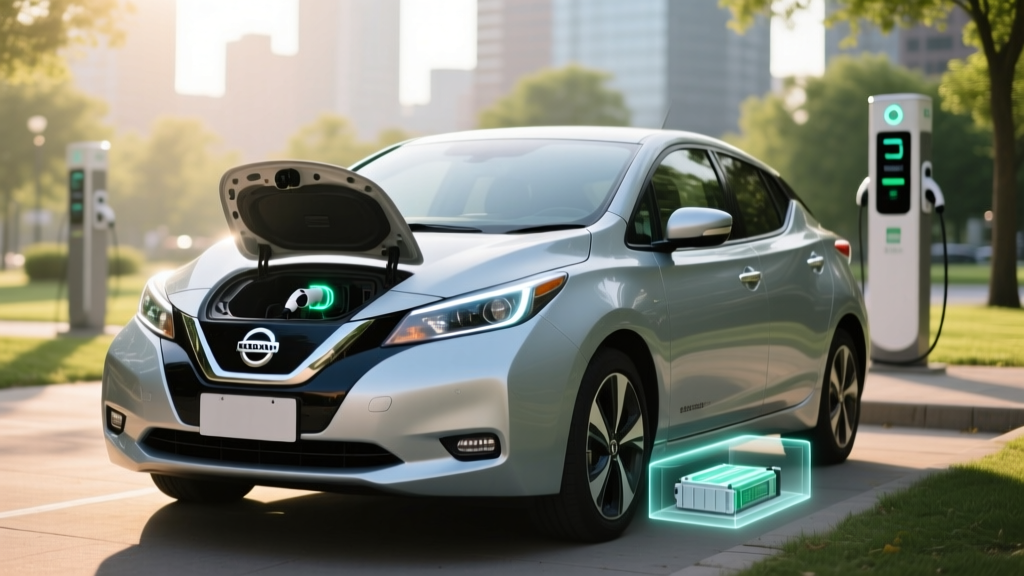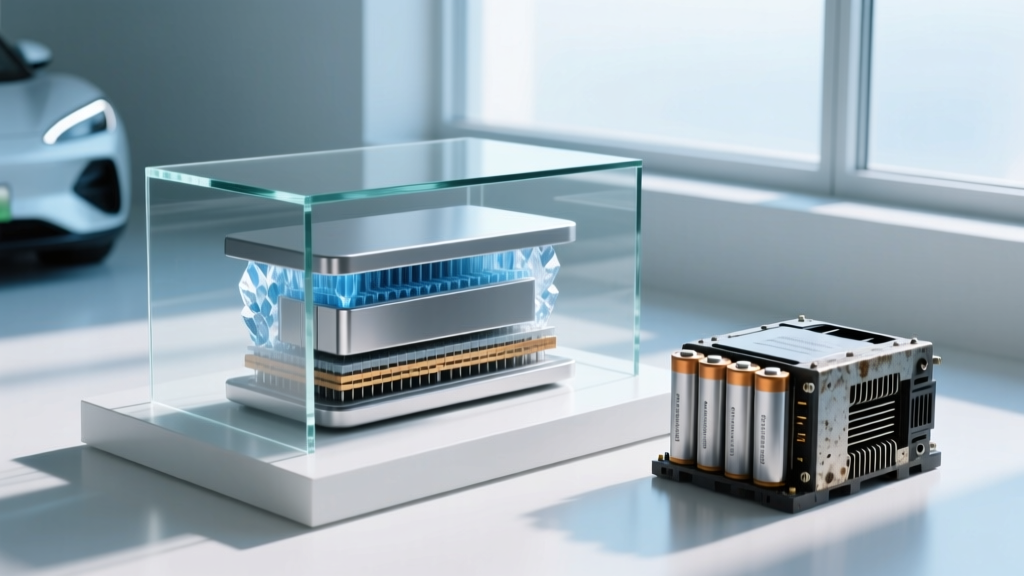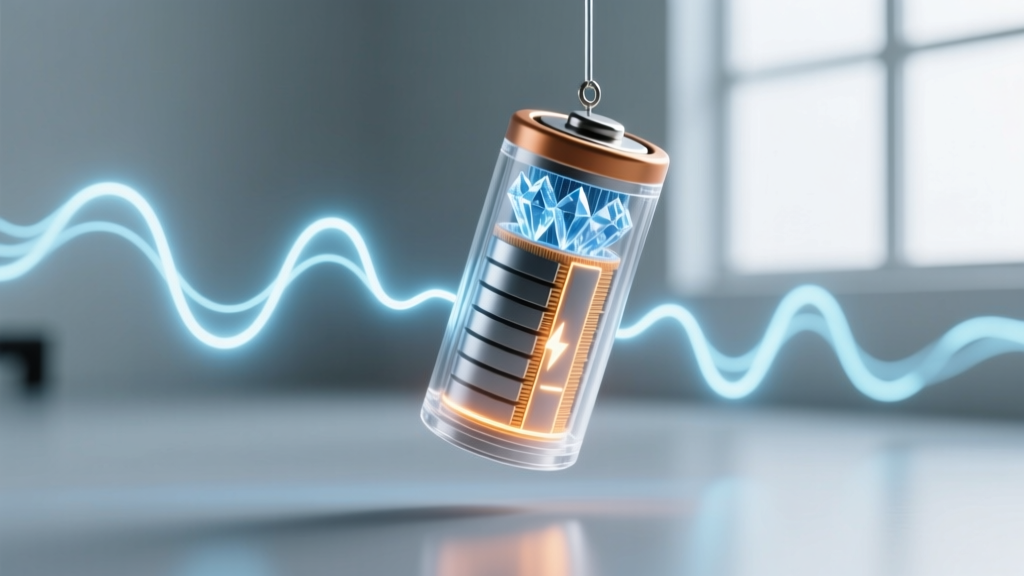
Every time you charge and discharge your electric vehicle, the battery completes a lithium cycle — a full equivalent of 100% energy throughput. These cycles are the fundamental measure of how hard a battery has worked, and they directly determine how much capacity your EV will retain over 100,000, 150,000, or 200,000 miles. Understanding lithium cycles isn't academic; it's the single most useful framework for predicting battery longevity, choosing the right chemistry, and avoiding costly degradation mistakes.
This guide breaks down the data behind lithium-ion cycle life, compares LFP and NMC chemistries with real degradation numbers, explains what your battery warranty actually covers, and gives you actionable steps to monitor and maximize State of Health (SoH) in 2026's EV market.
What Are Lithium Cycles and Why Do They Matter?
A lithium cycle is counted each time a battery delivers a cumulative 100% of its usable capacity — not necessarily in one session. If you drive from 80% down to 30% (using 50% of capacity) and then recharge, that's half a cycle. Do it again the next day, and you've completed one full lithium cycle.
Why this matters: battery manufacturers rate cells by cycle life — the number of full cycles before capacity drops to a specific threshold, typically 80% of original capacity. A cell rated for 1,500 cycles at 80% retention should, under its test conditions, still hold 80 kWh out of an original 100 kWh after 1,500 full charge-discharge events.
But real-world lithium cycles don't happen under lab conditions. Temperature, charge rate (kW), depth of discharge, and the upper/lower state-of-charge limits all alter how much degradation each cycle inflicts. A cycle from 90% to 10% at a 250 kW DC fast charger in 95°F heat causes far more wear than a cycle from 70% to 30% on a gentle Level 2 home charger in mild weather.
Key distinction — kW vs kWh: kW (kilowatts) measures power — the rate of energy flow during charging. kWh (kilowatt-hours) measures energy — the total capacity of the battery. A 75 kWh battery charged at 11 kW (Level 2) takes roughly 7 hours from empty. Lithium cycles are measured in kWh throughput, not kW charge rate.
LFP vs NMC: How Chemistry Determines Cycle Life
The two dominant lithium-ion chemistries in 2026 EVs are LFP (lithium iron phosphate) and NMC (nickel manganese cobalt), with NCA (nickel cobalt aluminum) appearing in some Tesla and Lucid applications. The chemistry you choose at purchase has a profound effect on lithium cycle endurance.
| Attribute | LFP (LiFePO4) | NMC / NCA |
|---|---|---|
| Typical cycle life to 80% retention | 3,000–5,000+ cycles | 1,000–2,500 cycles |
| Energy density (cell-level) | 160–180 Wh/kg | 220–300 Wh/kg |
| Cold-weather performance | Weaker; more range loss below 32°F | Better low-temp conductivity |
| Cost per kWh (2026) | ~$80–$100 | ~$110–$140 |
| Recommended daily charge limit | 100% (periodic full charges help BMS calibration) | 80–90% for daily; 100% for trips only |
| Thermal stability | Excellent; higher runaway threshold | Good; requires active thermal management |
| Typical 2026 applications | Tesla Model 3/Y RWD, BYD, Ford Mustang Mach-E Select (LFP option) | Hyundai Ioniq 5/6, Kia EV6/EV9, Chevy Equinox EV, BMW iX, Rivian, Lucid |
The trade-off is clear: LFP delivers dramatically more lithium cycles — often 2–3× the cycle life of NMC — at the cost of lower energy density. That means an LFP-equipped vehicle needs a slightly heavier, bulkier pack to achieve the same EPA range. For a daily commuter who charges at home and rarely road-trips, LFP's cycle-life advantage translates to a battery that could outlast the vehicle itself. For long-range buyers who need maximum miles per pound, NMC's energy density wins, but the owner must be more disciplined about charge habits to preserve longevity.
Real-World Degradation: What the Data Shows
Lab-rated lithium cycles are useful for comparison, but owners care about what happens on their driveway over 5, 8, or 12 years. Here's what aggregated fleet data and long-term owner reports show as of 2026:
Typical EV Battery Degradation Curve (Fleet Averages)
- Year 1 / ~15,000 mi: 1–3% capacity loss (initial formation loss)
- Year 3 / ~45,000 mi: 4–7% total loss
- Year 5 / ~75,000 mi: 6–10% total loss
- Year 8 / ~120,000 mi: 9–15% total loss
- Year 10+ / ~150,000+ mi: 12–20% total loss (highly variable by chemistry and habits)
According to data compiled by Recurrent Auto, which tracks over 15,000 EVs in real-world conditions, the median battery at 100,000 miles retains approximately 90% of original capacity. Tesla's own 2024 Impact Report (the most recent comprehensive OEM data published) showed Model 3/Y packs retaining roughly 85% capacity at 200,000 miles — well beyond the typical vehicle lifespan.
Critical context: these are median figures. Outliers exist in both directions. Vehicles that DC fast-charge daily in hot climates (Arizona, Texas) and regularly charge to 100% on NMC chemistry can see 15–20% loss by 80,000 miles. Conversely, LFP-equipped vehicles charged primarily on Level 2 with moderate state-of-charge habits have shown less than 5% loss at 100,000 miles.
The degradation curve is not linear. Most batteries experience a steeper initial drop (the first 10,000–20,000 miles) as the solid electrolyte interphase (SEI) layer forms, then settle into a slow, gradual decline. A second acceleration sometimes appears past 150,000–200,000 miles, but relatively few 2026-era EVs have reached that mileage yet.
Battery Warranty Coverage: What You're Actually Protected Against
Federal law mandates that EV batteries carry a minimum warranty of 8 years or 100,000 miles (whichever comes first). In California and states that have adopted CARB (California Air Resources Board) emissions standards, that minimum extends to 10 years or 150,000 miles. Most major automakers meet or exceed these floors.
| Manufacturer (2026 Models) | Battery Warranty | Capacity Retention Threshold |
|---|---|---|
| Tesla (Model 3/Y LFP RWD) | 8 yr / 100,000 mi | 70% |
| Tesla (Model 3/Y Long Range NMC) | 8 yr / 120,000 mi | 70% |
| Hyundai / Kia (Ioniq 5, EV6, EV9) | 10 yr / 100,000 mi | 70% |
| Ford (Mustang Mach-E, F-150 Lightning) | 8 yr / 100,000 mi | 70% |
| Chevrolet (Equinox EV, Blazer EV) | 8 yr / 100,000 mi | 70% |
| BMW (i4, iX) | 8 yr / 100,000 mi | 70% |
| Rivian (R1T, R1S) | 8 yr / 175,000 mi | 70% |
What the warranty covers: If your high-voltage traction battery drops below the stated retention threshold (typically 70% of original usable capacity) within the warranty period, the manufacturer must repair or replace it at no cost. This covers cell-level degradation, not just catastrophic failure.
What it does not cover: Damage from accidents, improper modifications, flooding, or using non-approved charging equipment. Importantly, gradual degradation that stays above the threshold (e.g., losing 25% over 8 years) is not a warranty claim — the battery is considered to be performing within spec.
The 70% threshold is significant. A 2026 Hyundai Ioniq 5 with a 77.4 kWh usable battery and a 303-mile EPA range would need to drop below approximately 212 miles of range (70% × 303) before qualifying for warranty service. In practice, very few modern EVs breach this threshold within the warranty window based on current fleet data.
EV Battery Replacement Cost: When and How Much
The most common question from prospective EV buyers: "What happens when the battery dies?" The honest answer is that most EV batteries never need replacement during the vehicle's usable life. But for the minority of cases where replacement is necessary — whether from defect, accident damage, or extreme degradation — here are the costs.
| Vehicle (2026) | Battery Size (usable kWh) | Chemistry | Estimated Replacement Cost |
|---|---|---|---|
| Tesla Model 3 RWD | 57.5 kWh | LFP | $10,000–$14,000 |
| Tesla Model Y Long Range | 75 kWh | NMC | $13,000–$17,000 |
| Hyundai Ioniq 5 | 77.4 kWh | NMC | $14,000–$18,000 |
| Ford F-150 Lightning Extended | 131 kWh | NMC | $20,000–$28,000 |
| Chevrolet Equinox EV | 85 kWh | NMC | $14,000–$18,000 |
| BMW iX xDrive50 | 105.2 kWh | NMC | $22,000–$30,000 |
These figures include the battery module pack and labor but can vary significantly by region, dealership vs. independent shop, and whether OEM or refurbished modules are used. Third-party battery refurbishment is an emerging market — shops can sometimes replace only the degraded modules within a pack for 40–60% of a full pack replacement.
When replacement is typically needed: Based on current degradation data, a replacement due purely to cycle-life exhaustion (not defect or damage) would most likely occur past 200,000–300,000 miles for NMC and well beyond 300,000 miles for LFP. Given that the average American vehicle is scrapped at roughly 170,000–200,000 miles (per BTS data), the battery in most EVs will outlive the rest of the vehicle.
Factors That Accelerate Lithium Cycle Wear
Not all lithium cycles are created equal. A cycle completed under harsh conditions causes more degradation than one completed gently. Here are the factors that matter most, ranked by impact:
High Impact
- Extreme heat exposure: Sustained battery temperatures above 95°F (35°C) accelerate SEI layer growth and electrolyte decomposition. Parking in direct sun in Phoenix without thermal management active is worse than any charging habit.
- Frequent DC fast charging above 150 kW: High C-rates generate internal heat and mechanical stress on electrode particles. Occasional road-trip fast charging is fine; daily 250 kW sessions compound damage.
- Sustained 100% state of charge on NMC: Holding NMC cells at maximum voltage (4.2V per cell) stresses the cathode. Charge to 100% only when you'll drive immediately.
Moderate Impact
- Deep discharges below 10%: Regularly draining to near-empty stresses the anode copper current collector. Try to plug in before hitting 15–20%.
- Cold-weather fast charging without preconditioning: Charging a cold NMC or LFP battery at high kW can cause lithium plating — metallic lithium deposits on the anode that permanently reduce capacity.
- High-mileage fast-charge commuting: If your daily commute requires 80%+ of battery capacity and you rely on DC fast charging, cycle wear accumulates faster than gentle Level 2 home charging.
Lower Impact
- Calendar aging: Batteries degrade even when parked. A vehicle sitting at 50% SoC in a cool garage loses roughly 1–2% per year to calendar aging alone.
- Regenerative braking intensity: Heavy regen sends high current back into the battery on short notice, but the effect is small compared to thermal and SoC factors.
How to Monitor and Maximize Battery Health
Most 2026 EVs provide at least basic battery health information through the infotainment system or companion app. Here's how to check State of Health (SoH) and what the numbers mean:
OEM tools: Tesla displays estimated range at full charge (which indirectly reflects SoH). Hyundai/Kia's Bluelink and FordPass provide battery health indicators. BMW's iDrive includes a battery health percentage in the service menu. These readings use the battery management system's (BMS) internal calculations and are generally reliable within ±2–3%.
Third-party diagnostics: Services like Recurrent (free for owners) compare your vehicle's range and efficiency against a fleet database, providing a more independent SoH estimate. Some OBD-II dongles and apps (such as LeafSpy for Nissan Leaf owners or Scan My Tesla for Tesla owners) can read detailed cell voltage data, internal resistance, and BMS-reported capacity.
Dealer battery health reports: Request a formal battery health check during scheduled service. Most OEMs can pull a detailed report showing individual module voltages, capacity measurements, and any cell imbalance — critical data if you're approaching the warranty threshold.
Practical steps to maximize SoH:
- Set NMC daily charge limit to 80–90% (LFP owners can charge to 100% regularly).
- Use Level 2 home charging as your primary method; reserve DC fast charging for road trips.
- Enable battery preconditioning when navigating to a DC fast charger — this warms the pack to optimal temperature, reducing stress and improving charge speed.
- Park in shade or a garage during hot months; plug in during extreme cold so the thermal management system can maintain pack temperature.
- Avoid leaving the vehicle at 100% SoC for extended periods — if you charge to full, drive within a few hours.
What's Next: Solid-State and Silicon Anode Batteries
Two emerging technologies promise to reshape lithium cycle life and energy density, but neither is ready for mass-market EVs in 2026.
Solid-state batteries replace the liquid electrolyte with a solid ceramic, polymer, or sulfide material. This eliminates flammability risk, enables lithium-metal anodes, and could deliver 400–500+ Wh/kg energy density with cycle life exceeding 5,000 cycles. Toyota has announced solid-state prototypes targeting 2027–2028 production, and Samsung SDI has shown samples to automakers. However, manufacturing yield, cost (currently 3–5× conventional cells), and interfacial stability challenges mean widespread availability in affordable EVs is realistically a 2029–2032 timeline.
Silicon-dominant anodes are closer to market. Companies like Sila Nanotechnologies and Group14 are supplying silicon-composite anode materials that boost energy density by 20–40% over graphite. Mercedes-Benz's upcoming EQG and certain 2027 model-year vehicles are expected to incorporate silicon-anode cells. Cycle life for early silicon-anode cells has historically been lower than graphite (500–800 cycles to 80%), but newer formulations claim 1,000+ cycles — still below LFP but competitive with NMC at higher energy density.
Bottom line on emerging tech: If you're buying an EV in 2026, LFP and NMC are mature, proven chemistries with well-understood cycle life. Waiting for solid-state means waiting at least 3–5 years for limited, premium-priced availability.
Frequently Asked Questions
How long do EV batteries last in years and miles?
Based on 2026 fleet data, most modern EV batteries retain 85–92% of original capacity at 100,000 miles and 80–88% at 150,000 miles. In calendar years, expect 12–20+ years of usable service life before capacity drops to a point where range becomes impractical. LFP batteries typically outlast NMC by a significant margin. Very few batteries require replacement before the vehicle is retired for other reasons.
How much does an EV battery cost to replace?
Full high-voltage traction battery replacement in 2026 ranges from approximately $10,000 for smaller LFP packs (Tesla Model 3 RWD) to $28,000+ for large NMC packs (Ford F-150 Lightning Extended Range). Most owners never pay this — battery replacement due to cycle-life degradation alone is rare before 200,000+ miles, and warranty covers defects and premature degradation (below 70% capacity) for 8–10 years.
What does the EV battery warranty cover?
Federal minimum: 8 years / 100,000 miles with a 70% capacity retention threshold. CARB states: 10 years / 150,000 miles. If your battery falls below 70% of original usable capacity within the warranty period due to normal use, the automaker must repair or replace it. Warranties do not cover accident damage, abuse, or modifications. Check your specific vehicle's warranty booklet for exact terms.
How do I check my EV's battery health?
Use your vehicle's built-in battery health display (varies by brand), the OEM companion app, or third-party services like Recurrent. For detailed diagnostics, an OBD-II reader with EV-specific software can pull BMS-reported capacity and cell-level data. Request a formal battery health report from your dealer during service visits, especially as you approach warranty mileage limits.
LFP vs NMC — which chemistry is better?
It depends on your use case. LFP offers 3,000–5,000+ lithium cycles, lower cost, and excellent thermal stability, but with lower energy density and weaker cold-weather range. NMC delivers higher range per pound and better cold performance but with 1,000–2,500 cycles and a requirement to avoid sustained 100% charges. Daily commuters and home-chargers benefit most from LFP. Long-range road-trippers and cold-climate drivers may prefer NMC's advantages.
Does DC fast charging really damage my battery?
Occasional DC fast charging — the kind you'd do on a road trip a few times per month — has a small, manageable impact on battery health. Daily DC fast charging at 150+ kW, especially without preconditioning and in hot weather, measurably accelerates degradation. The heat and high C-rate stress electrode materials. If fast charging is your only option, try to limit sessions to 80% SoC (where the charge curve tapers) and ensure preconditioning is active.
Can I extend my EV battery's life beyond 200,000 miles?
Yes. The highest-mileage EV batteries on record (some exceeding 300,000–500,000 miles) share common habits: primarily Level 2 charging, moderate state-of-charge ranges (20–80% for NMC), garage parking in hot climates, and avoiding repeated deep discharges. LFP chemistry gives you a structural advantage here — its inherent cycle-life headroom means even imperfect habits are less likely to cause problematic degradation.
Understanding lithium cycles gives you a framework for making smart decisions — from which chemistry to choose at purchase, to how you charge daily, to when it's worth requesting a warranty inspection. The data in 2026 is reassuring: modern EV batteries, treated with basic care, are lasting longer than most buyers initially feared, and the vast majority will never see the inside of a battery replacement shop.