The environmental footprint of an EV battery starts long before the first kilowatt-hour is charged. Lithium and cobalt mining water use is a growing concern as global EV adoption accelerates, with hard-rock lithium extraction in Australia and brine operations in South America's "Lithium Triangle" consuming millions of liters of water per ton of lithium carbonate equivalent. Cobalt mining in the Democratic Republic of Congo carries its own water and ecological burdens. For EV buyers, these upstream impacts intersect directly with a practical question: which battery chemistry delivers the best balance of longevity, cost, and reduced resource intensity?
This guide breaks down the two dominant chemistries on the road in 2026 — lithium iron phosphate (LFP) and nickel-manganese-cobalt (NMC/NCA) — with real degradation data, warranty terms, replacement costs, and actionable care tips. We'll also cover where solid-state and silicon-anode batteries stand as of 2026.
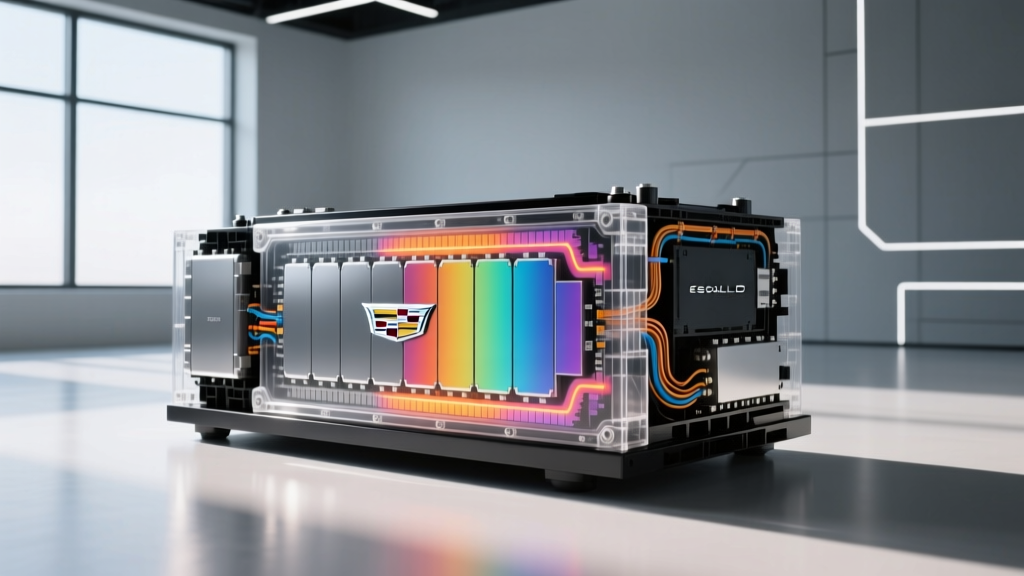
LFP vs NMC/NCA: Chemistry, Trade-Offs, and Mining Impact
The choice between LFP and NMC/NCA isn't just about range per charge — it's about how many cycles the pack will endure, how it performs in cold weather, and how much lithium, cobalt, and nickel were extracted to build it.
| Attribute | LFP (Lithium Iron Phosphate) | NMC/NCA (Nickel-Manganese-Cobalt / Nickel-Cobalt-Aluminum) |
|---|---|---|
| Cobalt content | None | 5–20% of cathode mass |
| Nickel content | None | 60–90% of cathode mass |
| Energy density (cell-level) | ~160–180 Wh/kg | ~220–300 Wh/kg |
| Typical cycle life | 3,000–5,000+ cycles | 1,000–2,000 cycles |
| Cold-weather performance | Moderate; ~20–30% range loss below freezing | Better; ~15–25% range loss below freezing |
| Cost per kWh (2026 pack-level) | ~$90–$110 | ~$120–$150 |
| Water-use intensity (upstream) | Lower per kWh over pack lifetime due to longer cycle life | Higher; cobalt and nickel extraction are water-intensive |
| Common 2026 applications | Tesla Model 3/Y RWD, Ford Mustang Mach-E Select, many Chinese-market EVs | Long-range AWD trims, trucks (F-150 Lightning, Rivian), performance models |
LFP's cobalt-free and nickel-free cathode is a key reason it's gained market share. Cobalt mining in the DRC has been linked to water contamination and artisanal labor concerns, while nickel processing (particularly HPAL refining for battery-grade nickel sulfate) is water- and energy-intensive. LFP sidesteps both metals, relying on abundant iron and phosphate — materials already produced at massive scale for fertilizers.
However, NMC/NCA's higher energy density means a smaller, lighter pack can deliver the same range. For a 300-mile EPA-rated vehicle, an NMC pack might weigh ~400 kg while an LFP pack could be ~500 kg. That extra mass slightly reduces efficiency (MPGe) and increases tire wear. The trade-off is real: LFP wins on cycle life and resource ethics; NMC wins on packaging efficiency and cold performance.
How Long Do EV Batteries Actually Last?
The short answer: longer than most buyers expect. Data from fleet operators, manufacturer reports, and independent testing consistently show that modern EV traction batteries retain 85–95% of original capacity after 100,000 miles under normal use.
Observed Degradation Benchmarks
- Tesla Model 3/Y (NMC, 2020–2024 fleet data): ~12% average capacity loss at 150,000 miles; median retention ~88%. Source: Tesla Impact Reports.
- Nissan Leaf (passive-cooled NMC, 2018–2023): ~15–20% loss at 80,000 miles in hot climates; active thermal management in newer Ariya improves this significantly.
- Hyundai Ioniq 5 / Kia EV6 (NMC, 800V architecture): ~5–8% loss reported at 60,000 miles in owner surveys; preconditioning and liquid cooling are effective.
- LFP packs (Tesla Model 3 RWD, BYD Blade): Early fleet data suggests <5% loss at 80,000 miles; LFP's flat voltage curve makes SoH estimation trickier but cycle-life advantage is measurable.
- Chevrolet Bolt EV/EUV (NMC, liquid-cooled): ~8–10% loss at 70,000 miles; post-recall replacement packs (2022+) show improved longevity.
A critical nuance: degradation is not linear. Most packs lose 2–5% in the first year (calendar aging and initial formation), then settle into a slower, roughly linear decline of ~0.5–1.5% per year or ~1% per 10,000–15,000 miles. Packs rarely "fall off a cliff" — they gradually reduce range until the owner decides the vehicle no longer meets their needs, often at 70–80% State of Health (SoH), which for a 300-mile EPA vehicle means ~210–240 miles of real-world range.
Battery Warranty Terms: What's Actually Covered
Federal law mandates a minimum 8-year / 100,000-mile warranty on EV battery packs (10 years / 150,000 miles in California and states adopting CARB standards). Most manufacturers exceed this baseline.
| Manufacturer / Model (2026) | Warranty Period | Capacity Retention Threshold | Notes |
|---|---|---|---|
| Tesla Model 3/Y (LFP & NMC) | 8 yr / 120,000 mi (LR/AWD: 120k) | 70% retention | Covers defects + capacity below threshold |
| Hyundai Ioniq 5 / Ioniq 6 | 10 yr / 100,000 mi | 70% retention | Among the longest coverage terms |
| Ford Mustang Mach-E / F-150 Lightning | 8 yr / 100,000 mi | 70% retention | Battery component coverage included |
| Rivian R1T / R1S | 8 yr / 175,000 mi | 70% retention | Higher mileage cap reflects truck use case |
| BMW i4 / iX | 8 yr / 100,000 mi | 70% retention | Extends to 80% in some EU markets |
| GM Ultium (Cadillac Lyriq, Chevy Equinox EV) | 8 yr / 100,000 mi | 70% retention | Modular pack allows partial replacement |
Key fine-print items: warranties cover defects and capacity falling below the stated threshold. Gradual degradation above 70% is considered normal wear. Physical damage (road debris, flooding), unauthorized modifications, and failure to follow manufacturer charging guidelines can void coverage. Always keep records of DC fast-charging sessions and service visits.
EV Battery Replacement Cost: When and How Much
Out-of-warranty battery replacement is the specter that haunts EV skeptics — but the data tells a more measured story. First, the vast majority of EV batteries outlast the vehicle's useful economic life. Second, pack-level prices have fallen from ~$1,200/kWh in 2010 to roughly $100–$150/kWh in 2026, according to BloombergNEF. Third, modular architectures (like GM's Ultium platform) allow individual module replacement rather than a full pack swap.
| Vehicle / Pack Size | Approximate Replacement Cost (2026) | Typical Replacement Trigger |
|---|---|---|
| Tesla Model 3 RWD (LFP, ~60 kWh) | $7,000–$10,000 | Rare before 250,000+ mi |
| Tesla Model Y LR (NMC, ~75 kWh) | $10,000–$14,000 | Rare before 200,000+ mi |
| Hyundai Ioniq 5 (NMC, 77.4 kWh) | $11,000–$15,000 | Uncommon under 150,000 mi |
| Ford F-150 Lightning Ext. Range (NMC, 131 kWh) | $18,000–$25,000 | Large pack; modular repair may reduce cost |
| Chevrolet Bolt EV (NMC, 65 kWh) | $8,000–$12,000 | Post-recall packs improved; older packs more at risk |
| Nissan Leaf (40–62 kWh) | $6,500–$9,000 | Passive cooling accelerated degradation in hot climates |
These figures include the pack and labor but not ancillary components (coolant, contactors, BMS reprogramming). Refurbished and remanufactured packs are increasingly available at 30–50% below new-pack pricing. For context, a $12,000 battery replacement at year 12 is comparable to the cumulative maintenance savings (no oil changes, fewer brake jobs, no transmission fluid) an EV delivers over the same period versus a comparable ICE vehicle.
Factors That Accelerate (or Preserve) Battery Health
Battery degradation is driven by four main stressors: temperature extremes, high state of charge, DC fast-charging frequency, and calendar aging. Understanding these lets you meaningfully extend pack life.
Battery Care Best Practices
- Daily charge limit: Set to 80% for NMC/NCA packs; LFP packs can (and should) be charged to 100% periodically for BMS cell-balancing. Tesla and Ford both recommend this in their owner manuals.
- Avoid prolonged 100% SoC: Sitting at full charge, especially in heat, accelerates electrolyte decomposition. Charge to 100% only when departing immediately for a long trip.
- DC fast-charging frequency: Occasional DCFC is fine; daily 150–250 kW sessions increase degradation by ~1–3% over the pack's life vs. primarily Level 2 charging. Preconditioning (navigating to a charger so the pack warms/optimizes) reduces stress.
- Cold-weather charging: Never fast-charge a cold pack (below ~32°F / 0°C) without preconditioning — lithium plating can occur, causing permanent capacity loss. Most 2026 EVs enforce this via software.
- Hot-weather parking: Avoid leaving the vehicle at high SoC in sustained 95°F+ heat for weeks. If storing, set charge limit to 50–60% and use a timed or scheduled charge.
- Regen braking settings: Moderate regen is fine; max regen in cold conditions can push high C-rates into a cold pack. Some vehicles auto-limit regen when the battery is cold.
- Software updates: Keep the vehicle updated — OEMs regularly refine thermal management and BMS algorithms based on fleet data.
Monitoring Battery State of Health (SoH)
State of Health (SoH) is the percentage of original usable capacity remaining in your pack. A new battery is 100% SoH; at 70%, you've hit most manufacturers' warranty threshold.
How to check SoH:
- In-vehicle displays: Some 2026 models (BMW iX, Mercedes EQS, newer Hyundai/Kia) show a battery health percentage or bar graph in the settings menu. Tesla does not natively display SoH but provides range estimates that reflect degradation.
- OBD-II diagnostic tools: Devices like the OBDLink MX+ paired with apps such as EVNotify, LeafSpy (Nissan), or Scan My Tesla can read BMS-reported SoH, cell voltage deltas, and pack temperature.
- Dealer diagnostic reports: Request a battery health printout during service visits. This is especially useful pre-purchase for used EVs.
- Third-party services: Companies like Recurrent Auto provide fleet benchmarking — you can compare your pack's degradation curve against thousands of identical vehicles.
A healthy pack should show cell voltage deltas (the spread between highest and lowest cell) under 30–50 mV at rest. Wider spreads suggest cell imbalance, which the BMS can sometimes correct through extended balancing at high SoC, or which may indicate a module needing attention.
Water Use in Context: Why Chemistry Choice Matters
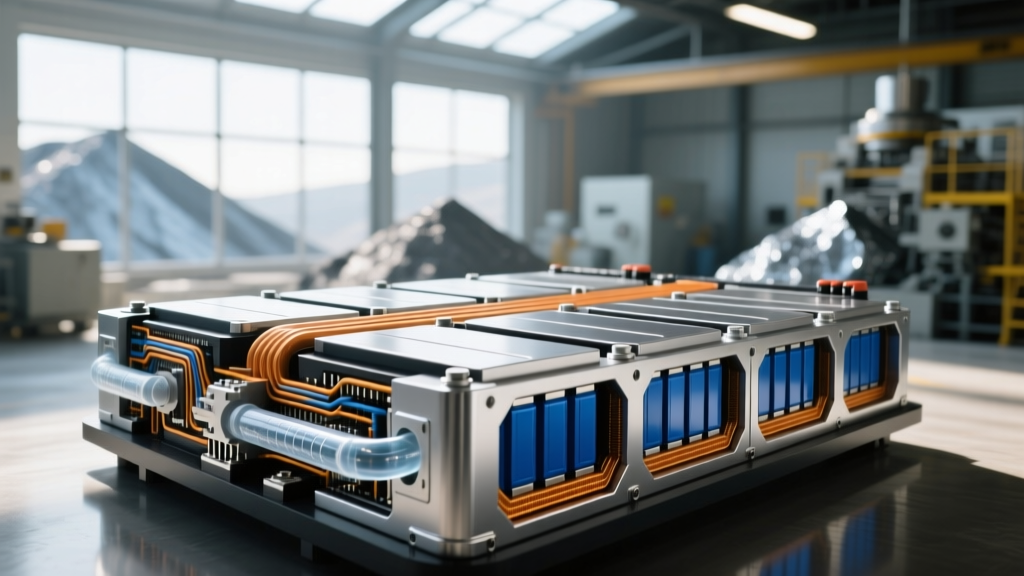
Returning to lithium and cobalt mining water use: the environmental calculus isn't just about the water consumed per kilogram of material — it's about how many useful kWh that material delivers over its lifetime.
An LFP pack rated for 4,000 cycles at 60 kWh delivers ~240,000 kWh over its life. An NMC pack rated for 1,500 cycles at 75 kWh delivers ~112,500 kWh. Even accounting for NMC's higher energy density reducing material per kWh at the cell level, the LFP pack's longer service life means less total mining per lifetime kWh delivered — and less water consumed per mile driven.
According to the Argonne National Laboratory GREET model, brine-based lithium extraction in Chile's Atacama Desert consumes approximately 500,000–1.9 million liters of water per metric ton of lithium carbonate equivalent, while hard-rock spodumene mining in Australia uses significantly less water but more energy. Cobalt mining water use is harder to isolate but contributes to watershed contamination in the DRC's copper belt. These upstream realities make the case for choosing chemistries and driving habits that maximize pack longevity.
Emerging Battery Technologies: Solid-State and Silicon Anodes
As of 2026, solid-state batteries remain in limited production. Toyota has announced solid-state packs for select 2027–2028 models with targeted energy densities of ~400 Wh/kg and 10-minute fast-charge capability — but these are preliminary and not yet available for consumer purchase. Samsung SDI and QuantumScape continue pilot production, with commercialization expected in low-volume luxury applications by 2028–2029 and broader availability post-2030.
Silicon-dominant anodes (from companies like Sila Nanotechnologies and Group14) are closer to market. They replace graphite with silicon-carbon composites, boosting energy density by 10–20% without changing cathode chemistry. Expect to see these in 2026–2027 model-year premium EVs first, paired with existing NMC cathodes. They reduce the amount of lithium needed per kWh but do not eliminate cobalt in NMC configurations.
Neither technology eliminates the need for lithium mining. Solid-state batteries still use lithium metal or lithium compounds in the anode and electrolyte. The water-use advantage will come from higher energy density (less material per kWh) and potentially longer cycle life — but verified data is still forthcoming.
How long do EV batteries last in years and miles?
Most modern liquid-cooled EV batteries last 150,000–250,000 miles before reaching 70–80% SoH, which translates to 12–20 years for average drivers (~12,000–15,000 miles/year). LFP packs are trending toward the higher end of that range based on early fleet data.
How much does an EV battery cost to replace in 2026?
Replacement costs range from ~$6,500 for a Nissan Leaf pack to ~$25,000 for a Ford F-150 Lightning extended-range pack. Most mainstream packs (60–80 kWh) fall in the $8,000–$15,000 range including labor. Refurbished packs are 30–50% cheaper. Most owners never need a replacement — the battery outlasts the vehicle's resale value.
What does the EV battery warranty cover?
Standard warranties cover manufacturing defects and capacity loss below a threshold (typically 70% retention) over 8 years / 100,000 miles (10/100k for Hyundai/Kia, 8/175k for Rivian). They do not cover gradual degradation above the threshold, physical damage, or unauthorized modifications. Check your specific owner's manual for exclusions.
How do I check and maximize my EV battery health?
Check SoH via in-vehicle displays, OBD-II tools (LeafSpy, Scan My Tesla, EVNotify), or dealer diagnostics. Maximize longevity by charging to 80% daily (NMC) or 100% with periodic balancing (LFP), avoiding frequent DC fast-charging, preconditioning before fast charges, and not leaving the vehicle at high SoC in extreme heat.
LFP vs NMC — which battery chemistry is better?
Neither is universally better. LFP offers longer cycle life (3,000–5,000 cycles), lower cost, no cobalt or nickel, and better thermal stability — but lower energy density and worse cold-weather range. NMC delivers more range per kg, better cold performance, and faster charging — but shorter cycle life, higher cost, and reliance on cobalt/nickel with associated mining impacts. Choose LFP for daily commuting and value; choose NMC for maximum range, AWD performance, and cold climates.
Does lithium and cobalt mining water use affect my EV purchase decision?
Indirectly, yes. Choosing an LFP-equipped vehicle eliminates cobalt entirely and reduces nickel demand. Maximizing your pack's lifespan (through proper charging habits) reduces the lifetime mining burden per mile driven. And supporting OEMs with transparent supply chains (via their annual sustainability reports) encourages responsible sourcing. The most impactful choice is keeping your EV on the road as long as possible — a 200,000-mile EV has a far lower per-mile resource footprint than one replaced at 80,000 miles.