Why the Lithium Brine Extraction Process Matters to EV Buyers
Most EV shoppers focus on range and horsepower, but the battery inside the pack — and where its raw materials come from — determines long-term ownership costs, charging behavior, and even federal tax-credit eligibility. The lithium brine extraction process is one of two primary methods (alongside hard-rock spodumene mining) used to source the lithium that ends up in every EV battery on the road today.
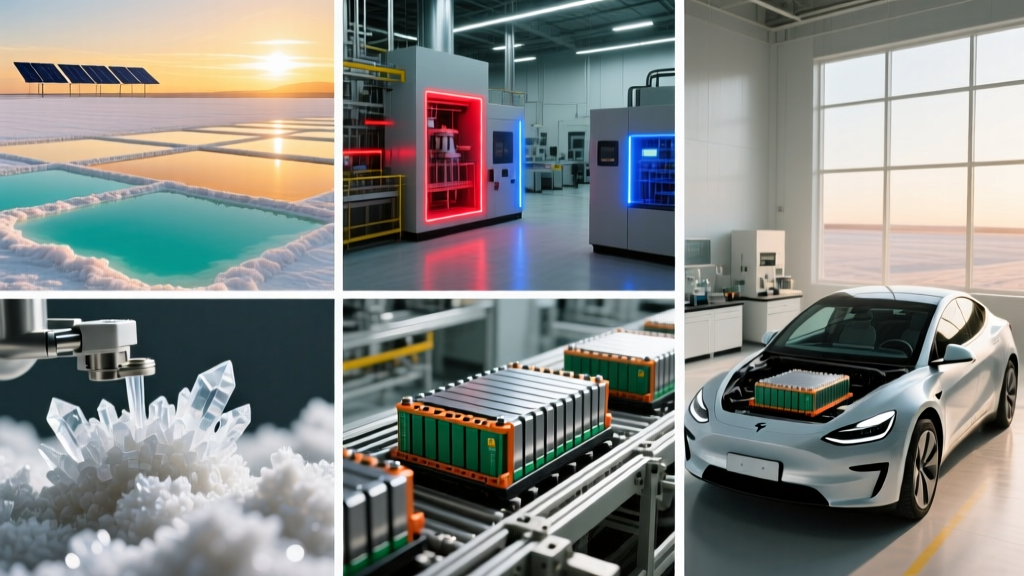
Brine extraction pumps lithium-rich saltwater from underground aquifers, primarily in South America's "Lithium Triangle" (Chile, Argentina, Bolivia). The brine is pumped into evaporation ponds where solar energy concentrates the lithium over 12–24 months. Once concentrated, chemical processing isolates lithium carbonate or lithium hydroxide — the feedstock for cathode materials like NMC (nickel-manganese-cobalt) and LFP (lithium iron phosphate).
This matters to you as a buyer for three reasons:
- Cost: Brine extraction is generally cheaper per ton than hard-rock mining, but the 12–24 month evaporation timeline creates supply lag that affects battery pricing.
- Credit eligibility: The IRS §30D tax credit includes critical-mineral sourcing requirements. Lithium from free-trade-agreement partners (Chile, Australia) counts differently than lithium from non-FTA countries, directly affecting whether a vehicle qualifies for up to $3,750 of the credit's critical-minerals half.
- Chemistry choice: Brine-sourced lithium carbonate is more commonly used in LFP cathodes, while lithium hydroxide (often from spodumene) is preferred for high-nickel NMC/NCA chemistries. Your choice between LFP and NMC is indirectly tied to extraction method.
Understanding the supply chain is useful context, but the practical questions most buyers have are about the battery pack itself: which chemistry to choose, how long it lasts, what the warranty covers, and what replacement costs look like. Let's work through each of those.
LFP vs NMC/NCA: Which Battery Chemistry Fits Your Driving?
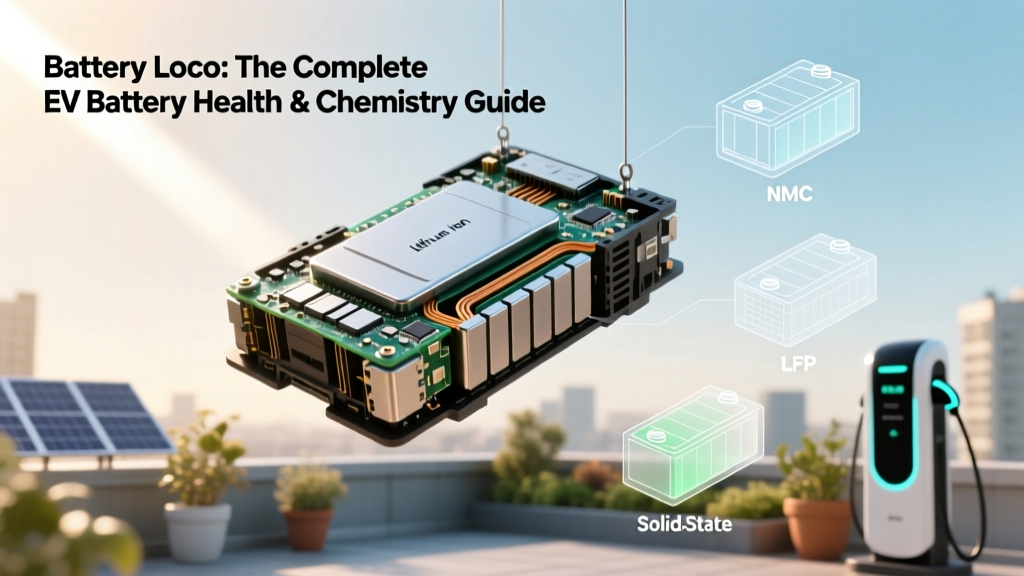
Every EV sold in the US in 2026 uses one of two dominant lithium-ion chemistries: LFP (lithium iron phosphate) or NMC/NCA (nickel-manganese-cobalt / nickel-cobalt-aluminum). The chemistry determines energy density, cycle life, cold-weather behavior, and cost. Neither is universally "better" — the right choice depends on how you drive.
| Attribute | LFP (Lithium Iron Phosphate) | NMC / NCA (Nickel-Based) |
|---|---|---|
| Energy density (cell-level) | ~160–180 Wh/kg | ~220–270 Wh/kg |
| Typical cycle life | 3,000–5,000+ cycles to 80% SoH | 1,000–2,000 cycles to 80% SoH |
| Cold-weather range loss | Higher (~35–40% at 20°F without heat pump) | Moderate (~25–35% at 20°F without heat pump) |
| Recommended daily SoC | 100% (no degradation penalty) | 80% (daily), 100% only for trips |
| Cobalt/nickel content | None | Yes (supply-chain and ethical considerations) |
| Cost per kWh (pack-level, 2026) | ~$85–$100 | ~$110–$135 |
| Common in | Tesla Model 3/Y RWD, Ford Mustang Mach-E Select (LFP trims), BYD, Rivian Standard | Tesla Long Range/Performance, Hyundai Ioniq 5/6, BMW iX, most premium EVs |
LFP: The Durability and Value Play
LFP batteries sacrifice energy density for longevity and cost. A Tesla Model 3 RWD with a ~57.5 kWh LFP pack delivers an EPA-estimated 272 miles of range — less than the Long Range's 363 miles on a ~79 kWh NMC pack. But the LFP pack tolerates daily 100% charging without accelerated degradation, meaning you can use the full battery every day. For a commuter who drives 30–50 miles daily and charges at home, the usable daily range is nearly identical, and the LFP pack will likely outlast the vehicle.
LFP's weakness is cold-weather performance. Without a heat pump (standard on most 2026 models but not all), expect 35–40% range loss at 20°F versus ~25–35% for NMC. LFP's flatter voltage curve also makes state-of-charge estimation slightly less precise, though manufacturer BMS (battery management system) calibration has largely addressed this in recent model years.
NMC/NCA: The Range and Performance Play
If you need maximum range per charge — for road trips, towing, or cold-climate driving — NMC/NCA is the stronger choice. Higher energy density means more kWh in the same physical space, translating to 300+ mile EPA ratings in vehicles like the Hyundai Ioniq 6 (361 mi EPA) and Tesla Model Y Long Range (330 mi EPA). NMC also handles cold better and charges slightly faster at DC fast chargers due to better thermal characteristics at high C-rates.
The trade-off: NMC degrades faster if routinely charged to 100% or drained to near-zero. Most manufacturers recommend an 80% daily charge limit, which means a 330-mile EPA vehicle effectively delivers ~264 daily usable miles. For most drivers, that's still plenty — but it's a real consideration if you assumed you'd use the full sticker range every day.
How Long Do EV Batteries Last? Real Degradation Data
The most common fear among prospective EV buyers is that the battery will fail catastrophically and require a $15,000+ replacement. The data tells a different story: the vast majority of EV batteries outlast the vehicles they're installed in.
Based on fleet data from sources like Recurrent Auto and manufacturer-reported warranty claims, here's what degradation actually looks like:
Typical Degradation Curve (NMC and LFP Combined Fleet Data)
- Year 1 / 15,000 mi: 2–5% capacity loss (initial formation loss)
- Year 3 / 45,000 mi: 5–8% total loss
- Year 5 / 75,000 mi: 7–12% total loss
- Year 8 / 120,000 mi: 10–15% total loss (still above warranty threshold)
- Year 10+ / 150,000+ mi: 12–20% total loss (varies heavily by use pattern)
Source: Aggregated fleet telematics data; individual results vary by chemistry, climate, and charging habits.
The degradation curve is not linear. Most loss occurs in the first 12–18 months (the "formation" phase where the solid electrolyte interphase layer stabilizes), after which degradation slows significantly. A Tesla Model 3 fleet study showed vehicles retaining an average of 88% capacity at 100,000 miles — well above the 70% warranty threshold.
LFP packs tend to degrade even more slowly. Tesla's LFP-equipped Model 3 RWD fleet data suggests ~90%+ capacity retention at 100,000 miles under normal use. Some LFP packs in Chinese fleet service have surpassed 300,000 miles with 80%+ SoH — though these are high-cycle commercial use cases with optimized charging protocols.
What Actually Kills a Battery Early?
Catastrophic battery failure (a cell short or module fault) is rare — typically well under 1% of packs. The factors that accelerate normal degradation are behavioral and environmental:
- Frequent DC fast charging above 150 kW without preconditioning: High C-rates generate heat, which accelerates electrolyte decomposition. Occasional fast charging is fine; daily 250 kW sessions will measurably increase degradation over 5+ years.
- Storing at 100% SoC for extended periods: Particularly harmful for NMC. A fully charged pack sitting in a hot garage for weeks loses more capacity than one stored at 50–60%.
- Regular deep discharges below 10% SoC: Low voltage stresses the anode. Occasional low-SoC events are fine; habitual near-zero driving is not.
- Extreme ambient heat without thermal management: Liquid-cooled packs (standard on virtually all 2026 EVs) handle this well, but passive-cooled older models suffered in hot climates.
EV Battery Warranty Terms: What's Actually Covered
Federal law mandates a minimum battery warranty of 8 years / 100,000 miles for all EVs sold in the US (10 years / 150,000 miles in California and states that follow CARB standards). Most manufacturers meet or exceed this baseline. The warranty covers capacity loss below a specified threshold — typically 70% of original capacity — as well as defects and catastrophic failures.
| Manufacturer / Model | Warranty Period | Mileage Cap | Capacity Retention Threshold |
|---|---|---|---|
| Tesla Model 3 / Model Y (LFP RWD) | 8 years | 100,000 mi | 70% |
| Tesla Model 3 / Y Long Range & Performance | 8 years | 120,000 mi | 70% |
| Hyundai Ioniq 5 / Ioniq 6 | 10 years | 100,000 mi | 70% |
| Ford Mustang Mach-E | 8 years | 100,000 mi | 70% |
| Rivian R1T / R1S | 8 years | 175,000 mi | 70% |
| BMW iX / i4 | 8 years | 100,000 mi | 70% |
| Chevrolet Equinox EV / Blazer EV | 8 years | 100,000 mi | 60% (module-level replacement) |
Key nuance: The warranty does not cover normal degradation above the threshold. If your 8-year-old battery retains 72% capacity, it's functioning within spec — even though you've lost 28% of your original range. Also, warranties typically require proof of proper maintenance and may be voided by unauthorized modifications or salvage titles.
In practice, warranty claims are rare. Most degradation stays well above the 70% line within the warranty period, and batteries that do fall below are often replaced with refurbished or newer modules rather than entirely new packs — reducing cost for the manufacturer and downtime for the owner.
EV Battery Replacement Cost: When and How Much
If your battery degrades below the warranty threshold or suffers a physical defect outside of warranty coverage, replacement is the remedy. Costs vary dramatically by battery size, chemistry, and whether you're replacing the full pack or individual modules.
| Vehicle / Pack Size | Chemistry | Full Pack Replacement | Module-Level Repair | Typical Need Timeline |
|---|---|---|---|---|
| Tesla Model 3 RWD (~57.5 kWh) | LFP | $10,000–$13,000 | $2,500–$4,500 | Rarely needed before 200,000+ mi |
| Tesla Model Y LR (~79 kWh) | NMC | $13,000–$16,000 | $3,000–$5,500 | 150,000–200,000+ mi (if at all) |
| Hyundai Ioniq 5 (~77.4 kWh) | NMC | $14,000–$18,000 | $3,500–$6,000 | 150,000+ mi |
| Ford F-150 Lightning Ext. Range (~131 kWh) | NMC | $22,000–$28,000 | $5,000–$9,000 | 150,000+ mi (large pack = high cost) |
| Chevrolet Bolt EV (~65 kWh) | NMC | $9,000–$14,000 | $2,000–$4,000 | 100,000–150,000 mi (older pack design) |
Critical context: These costs are almost never incurred by first owners. The combination of 8–10 year warranties and gradual degradation curves means most batteries are still functional well past 150,000 miles. According to data aggregated by fueleconomy.gov and third-party fleet studies, fewer than 2% of EVs require a battery replacement within the first 10 years. Many packs are retired with the vehicle when it's scrapped for collision damage or simply reaches end-of-life for non-battery reasons.
Module-level repair is increasingly common. Instead of swapping the entire pack, a technician identifies and replaces degraded or faulty modules (a pack may contain 4–16 modules). This reduces cost by 60–75% and is the standard approach for out-of-warranty service at most manufacturers.
Maximizing Battery Health: Practical Care Checklist
EV batteries require far less maintenance than internal combustion engines — no oil changes, no coolant flushes on the same schedule, no spark plugs. But a few habits meaningfully extend pack life and preserve range over a decade or more of ownership.
Battery Care Checklist for Daily Ownership
- Set a daily charge limit of 80% for NMC/NCA packs. Use 100% only when you need the full range for a trip. LFP owners can charge to 100% daily without penalty — in fact, Tesla recommends periodic 100% charges for LFP to recalibrate the BMS.
- Precondition before DC fast charging. Most EVs do this automatically when you navigate to a charger. Preconditioning warms the battery to the optimal temperature (~95–105°F) for fast charging, reducing stress and improving charge speed. A cold battery forced to accept 150+ kW degrades faster.
- Minimize repeated deep discharges below 10%. Plan routes so you arrive at chargers with 15–20% remaining. Occasional low-SoC events are harmless; habitual near-zero driving is not.
- Avoid leaving the vehicle at 100% SoC for days or weeks. If you're going on vacation, set the charge limit to 50–60% before leaving. This is especially important for NMC packs in hot climates.
- Use Level 2 home charging as your primary method. Level 2 (7–11 kW) generates far less heat than DC fast charging and is the gentlest way to charge daily. Reserve DCFC for road trips.
- Keep thermal management active. Don't disable preconditioning or cabin-overheat features. In extreme cold, plug in when parked to let the thermal system maintain battery temperature using grid power rather than battery power.
- Update firmware regularly. Manufacturers release BMS updates that improve charge algorithms, thermal management, and SoC estimation accuracy. These updates measurably extend pack life.
Monitoring Battery Health: How to Check State of Health (SoH)
State of Health (SoH) is the percentage of original battery capacity remaining. A new pack is 100% SoH; a pack that has degraded to hold only 85 kWh out of its original 100 kWh is at 85% SoH. Monitoring SoH helps you track degradation, plan for warranty claims, and assess value if buying or selling a used EV.
How to Check SoH
- In-vehicle display: Some manufacturers (BMW, Mercedes, Hyundai/Kia on select 2026 models) show a battery health percentage in the infotainment system or service menu. This is the easiest method but not universally available.
- OBD-II diagnostic tools: Devices like the OBDLink MX+ paired with apps such as EV Bat Health or Car Scanner can read the BMS-reported SoH directly. This works on most EVs and costs $50–$120 for the hardware.
- Dealer diagnostic report: Any authorized service center can pull a full battery health report. Request this during routine service or before a warranty claim. Some dealers charge $100–$150 for a standalone diagnostic.
- Third-party services: Companies like Recurrent Auto offer free SoH reports that aggregate your telematics data over time, providing a degradation curve and comparison to similar vehicles. This is the best option for tracking long-term trends.
What SoH number should concern you? If SoH drops below 75% within the warranty period, you likely have a valid warranty claim. If you're buying a used EV, a SoH above 85% at 50,000–80,000 miles indicates healthy degradation. Below 80% at that mileage warrants a closer look at the vehicle's charging history and climate exposure.
The Supply Chain Connection: Brine, Spodumene, and the §30D Tax Credit
Returning to where lithium comes from — the lithium brine extraction process and its alternatives directly affect whether the EV you buy qualifies for the federal §30D tax credit. Under current IRS rules, the credit is split into two $3,750 halves:
- Critical minerals requirement: A percentage of the battery's critical minerals (including lithium) must be extracted or processed in the US or a free-trade-agreement country, or recycled in North America. The required percentage increases annually (80% for vehicles placed in service in 2026).
- Battery components requirement: A percentage of battery components must be manufactured or assembled in North America (100% for 2026).
Brine-extracted lithium from Chile (a US FTA partner) counts toward the critical-minerals threshold. Lithium from Argentina (no FTA with the US) does not, even though Argentina is a major brine producer. Hard-rock lithium from Australia (FTA partner) also qualifies. This is why two seemingly identical EVs can differ in credit eligibility — the supply chain behind the battery determines the answer.
Always verify current-year eligibility on the IRS website or with a tax professional before relying on the credit in your purchase decision. Rules change, and manufacturer sourcing shifts model year to model year.
Emerging Battery Technologies: What's Next (and When)
Several next-generation battery technologies are in development, each promising improvements in energy density, charging speed, or safety. Here's a realistic assessment of their timelines — none of these are available in production vehicles as of 2026.
Solid-State Batteries
Solid-state batteries replace the liquid electrolyte with a solid ceramic, glass, or polymer material. The theoretical benefits are substantial: 2–3x energy density improvement, faster charging (potentially 10–80% in under 10 minutes), and reduced fire risk. Toyota, Samsung SDI, and QuantumScape are leading development.
Realistic timeline: Limited production in premium vehicles is expected around 2028–2030. Mass-market availability at competitive pricing is unlikely before 2032+. Current challenges include manufacturing yield, cost (estimated 3–5x current lithium-ion per kWh), and cycle-life durability at scale.
Silicon Anode Batteries
Replacing graphite anodes with silicon can increase energy density by 20–40%. Companies like Sila Nanotechnologies and Group14 are supplying early silicon-anode materials to manufacturers. The Mercedes-Benz G-Class EV (announced) is expected to use silicon-anode cells.
Realistic timeline: Partial silicon anodes (silicon-graphite blends) are already in limited production. Full silicon anodes at scale are expected around 2028–2029. This is an incremental improvement, not a revolution — but it meaningfully extends range without increasing pack size.
Sodium-Ion Batteries
Sodium-ion chemistry uses abundant, cheap sodium instead of lithium. Energy density is lower (~120–150 Wh/kg), making it suitable for budget and urban EVs rather than long-range vehicles. CATL and BYD are producing sodium-ion cells for Chinese-market vehicles.
Realistic timeline: Available now in China for low-cost city cars. US-market adoption is uncertain and likely limited to entry-level models if it arrives, possibly 2027–2028. Not relevant for buyers seeking 300+ mile range.
Frequently Asked Questions
How long do EV batteries last in years and miles?
Most EV batteries retain 85–90% of original capacity at 100,000 miles and 80–88% at 150,000 miles. In practical terms, the battery will likely outlast other vehicle components. Catastrophic failure rates are under 1–2%. LFP chemistries tend to last longer than NMC, with some fleet data showing 80%+ retention past 200,000 miles.
How much does an EV battery cost to replace?
Full pack replacement ranges from ~$9,000 for a smaller pack (Chevrolet Bolt, ~65 kWh) to $22,000–$28,000 for a large pack (Ford F-150 Lightning Extended Range, ~131 kWh). Module-level repairs cost $2,000–$9,000 depending on the fault. However, fewer than 2% of EVs need a battery replacement within the first 10 years, and warranty coverage handles most cases that do arise.
What does the EV battery warranty cover?
All US-market EVs carry a minimum 8-year/100,000-mile battery warranty (10 years/150,000 miles in CARB states). The warranty covers capacity loss below a threshold (typically 70% of original capacity) and manufacturing defects. It does not cover normal gradual degradation above the threshold, damage from accidents, or modifications. Some manufacturers like Hyundai offer 10 years/100,000 miles, and Rivian covers 8 years/175,000 miles.
How do I check and maximize my EV battery health?
Check SoH through your vehicle's infotainment system (if supported), an OBD-II diagnostic tool, a dealer service report, or a third-party service like Recurrent Auto. To maximize health: charge NMC to 80% daily (100% for LFP), precondition before DC fast charging, avoid prolonged storage at 100% SoC, minimize deep discharges below 10%, and rely on Level 2 home charging as your primary method.
LFP vs NMC — which is better and why?
LFP is better for daily commuting, long-term durability, and budget-conscious buyers. It offers 3,000–5,000+ cycle life, tolerates 100% daily charging, and costs ~$85–$100/kWh. The trade-off is lower energy density (less range per pack size) and worse cold-weather performance. NMC is better for maximum range, cold climates, and road-trip-heavy drivers. It offers ~220–270 Wh/kg energy density and better cold performance, but degrades faster if routinely charged to 100% and costs ~$110–$135/kWh. Choose LFP if you commute under 60 miles daily and charge at home. Choose NMC if you regularly drive 200+ miles between charges or live in a cold climate.
Does the lithium brine extraction process affect my EV's tax credit?
Indirectly, yes. The §30D federal tax credit's critical-minerals requirement considers where lithium is extracted and processed. Brine-extracted lithium from FTA-partner countries like Chile qualifies; lithium from non-FTA countries may not. The specific supply chain for your vehicle's battery determines eligibility. Always check the current-year rules on IRS.gov and confirm with your dealer or tax professional before purchasing.