Why Lithium Brine Extraction Matters for Your EV Battery
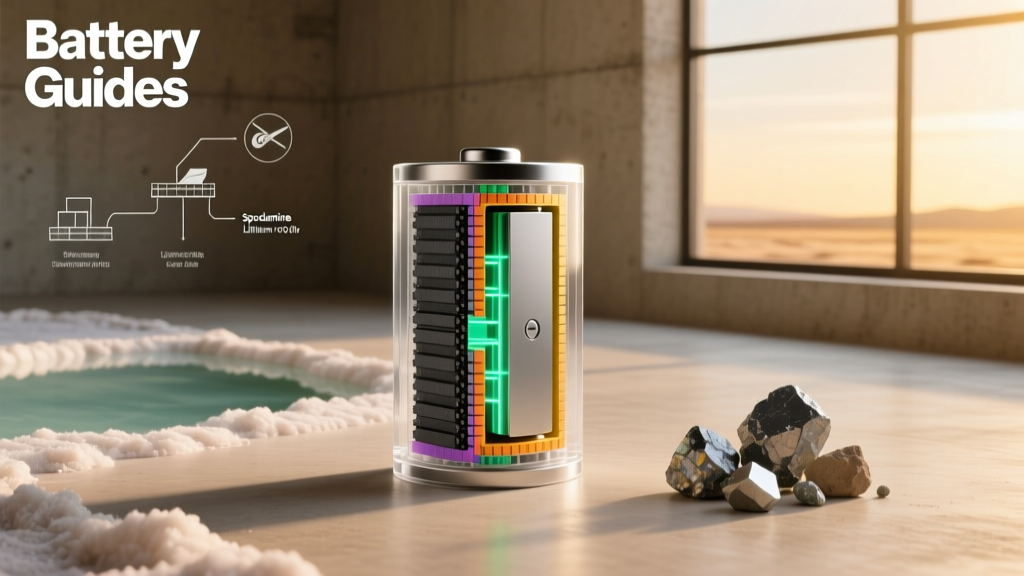
The lithium inside your EV's high-voltage traction battery didn't appear out of nowhere. A significant and growing share of global lithium supply comes from lithium brine extraction — a process that pumps mineral-rich underground brine to the surface, evaporates the water over months, and concentrates lithium salts for battery-grade refining. In 2026, brine operations in Chile's Atacama Desert, Argentina's Hombre Muerto basin, and emerging direct lithium extraction (DLE) projects in the United States collectively supply a large portion of the lithium carbonate and lithium hydroxide that cathode manufacturers need.
For EV buyers and owners, the relevance is direct: the chemistry of your battery — whether it uses a lithium iron phosphate (LFP) cathode or a nickel manganese cobalt (NMC) cathode — traces back to which raw materials were sourced, how they were processed, and at what cost. Understanding this supply chain context helps explain why LFP batteries are cheaper, why NMC packs deliver more range per kilogram, and how federal tax credit battery-sourcing rules under IRS §30D affect the vehicle you buy.
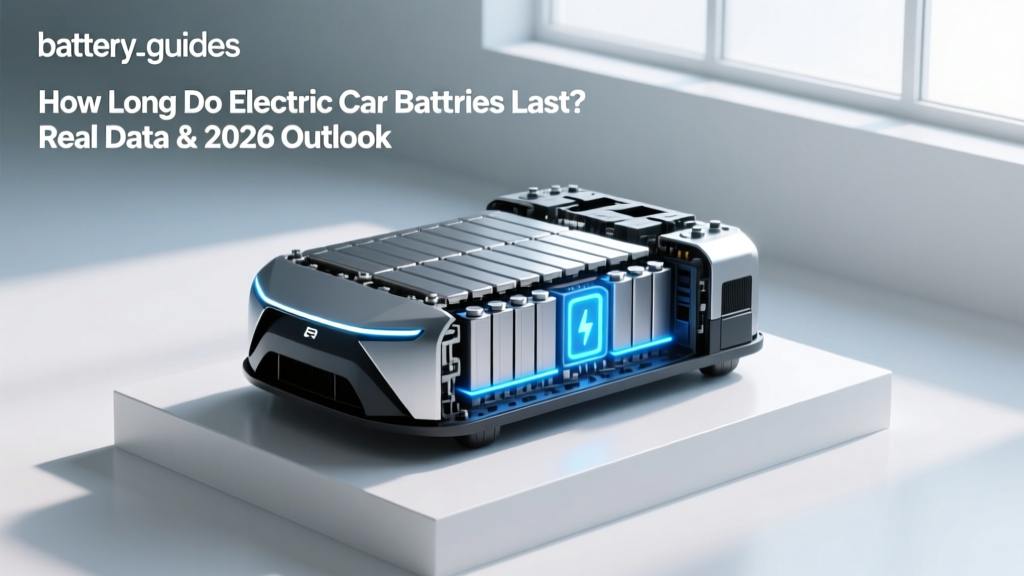
This guide covers the battery chemistries that dominate today's EV market, real degradation data, warranty protections, replacement economics, and the emerging technologies that may reshape the landscape later this decade.
LFP vs NMC/NCA: The Chemistry Showdown
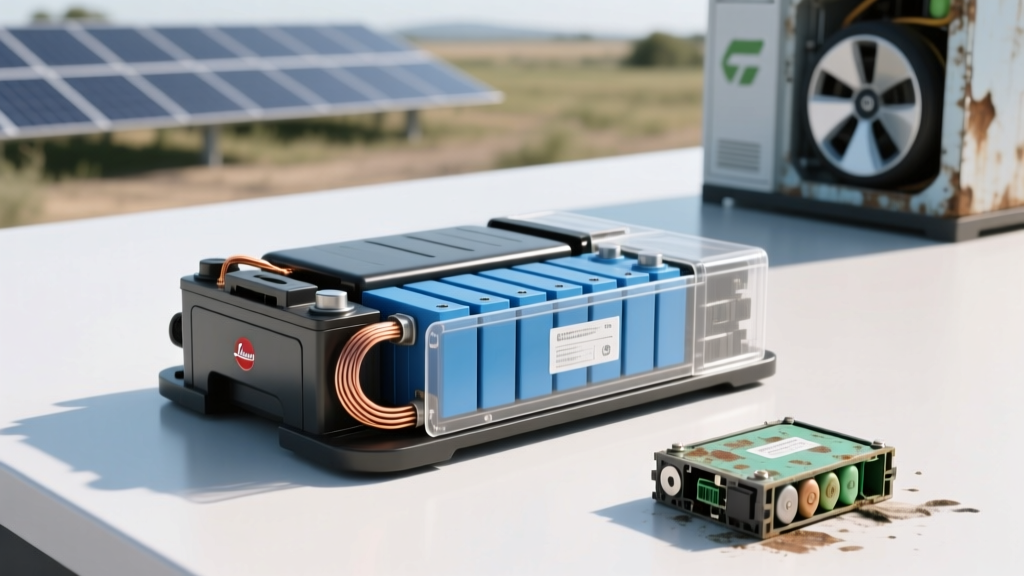
Two cathode families power nearly every mainstream EV sold in the U.S. in 2026. Each carries distinct trade-offs in energy density, longevity, cold-weather behavior, and cost.
| Attribute | LFP (Lithium Iron Phosphate) | NMC / NCA (Nickel-Based) |
|---|---|---|
| Energy Density (cell-level) | ~160–180 Wh/kg | ~230–300 Wh/kg |
| Typical Cycle Life | 3,000–5,000+ full cycles | 1,000–2,000 full cycles |
| Cold-Weather Performance | Greater range loss below 32°F; slower charge acceptance | Better low-temp conductivity; less range penalty |
| Cost per kWh (pack-level, 2026) | ~$80–$100 | ~$110–$140 |
| Cobalt Content | None | Varies; NCA low-cobalt, NMC mid-cobalt |
| State-of-Charge Recommendation | Can charge to 100% daily; periodic 100% calibrations help BMS | Best kept 20–80% daily; 100% only for trips |
| Notable 2026 Vehicles | Tesla Model 3 RWD, Tesla Model Y RWD, Ford Mustang Mach-E Select (LFP option) | Hyundai Ioniq 5, Kia EV6, Chevrolet Silverado EV, BMW iX, Rivian R1S/R1T |
The lithium brine connection: LFP cathodes require lithium carbonate, which is the primary output of traditional brine evaporation operations. NMC and NCA cathodes typically require lithium hydroxide, produced either by converting brine-derived carbonate or through hard-rock (spodumene) mining. As DLE technology matures — companies like EnergySource Minerals and Standard Lithium are piloting U.S. projects targeting 2027–2028 production — the cost and environmental footprint of brine-sourced lithium may shift meaningfully.
Which Is Better for You?
If you drive mostly in moderate climates, charge at home nightly, and prioritize long-term durability over maximum range, LFP is the stronger pick. The ability to charge to 100% daily without accelerated degradation simplifies ownership, and the 3,000+ cycle life means the pack will likely outlast the vehicle.
If you need maximum range per charge, regularly drive in freezing temperatures, or tow heavy loads, NMC/NCA delivers better real-world utility. The higher energy density translates to 270–350+ EPA miles in vehicles like the Ioniq 5 Long Range (318 mi EPA) or the Rivian R1S Dual-Motor Max (350+ mi EPA), while LFP-equipped variants typically land in the 240–270 mi range.
How Long Do EV Batteries Last? Real Degradation Data
Modern EV traction batteries are engineered to outlast the functional lifespan of the vehicle. Data aggregated from fleet operators, owner surveys, and manufacturer reports consistently shows that degradation follows a curve: steeper in the first year or two, then flattening into a slow, linear decline.
Typical Degradation Trajectory (NMC and LFP Packs, 2020–2026 Model Years):
- Year 1 / 15,000 mi: 2–4% capacity loss (initial formation losses)
- Year 3 / 45,000 mi: 5–8% total loss
- Year 5 / 75,000 mi: 7–10% total loss
- Year 8 / 120,000 mi: 10–15% total loss (NMC); 6–10% total loss (LFP)
- Year 10 / 150,000 mi: 12–18% total loss (NMC); 8–12% total loss (LFP)
Sources: Recurrent Auto battery health data (2025 fleet report), Geotab longitudinal EV battery study, manufacturer warranty thresholds.
A Tesla Model 3 Long Range (NMC, ~75 kWh usable) retaining 85% of its original capacity at 120,000 miles still delivers roughly 275 EPA-equivalent miles — well within usable daily range. An LFP-equipped Model 3 RWD (~57 kWh usable) at the same mileage and 92% retention still provides around 235 miles.
The key insight: most EV batteries will never need replacement during typical first-owner use. The fear of a $20,000 battery swap at 100,000 miles is not supported by current data. Failures that do occur tend to be isolated cell or module faults covered under warranty, not wholesale capacity collapse.
What Does the Battery Warranty Cover?
Federal regulation mandates a minimum 8-year / 100,000-mile warranty on EV battery packs (10 years / 150,000 miles in California Air Resources Board states). Most manufacturers exceed this baseline.
| Manufacturer | Duration | Mileage | Capacity Retention Threshold |
|---|---|---|---|
| Tesla (Model 3/Y LFP) | 8 years | 120,000 mi | 70% |
| Tesla (Model 3/Y Long Range/Perf.) | 8 years | 120,000 mi | 70% |
| Hyundai / Kia | 10 years | 100,000 mi | 70% |
| Ford (Mustang Mach-E, F-150 Lightning) | 8 years | 100,000 mi | 70% |
| General Motors (Ultium platform) | 8 years | 100,000 mi | 70% |
| Rivian | 8 years | 175,000 mi | 70% |
| BMW | 8 years | 100,000 mi | 70% |
The 70% capacity retention threshold is the industry-standard trigger: if your battery falls below 70% of its original capacity within the warranty period, the manufacturer must repair or replace it at no cost. In practice, claims are rare. According to Recurrent Auto's 2025 analysis, fewer than 1.5% of EVs in their dataset of 15,000+ vehicles required battery warranty service.
Warranties typically cover defects in materials and workmanship, excessive degradation beyond the stated threshold, and failure of the battery management system (BMS). They generally do not cover damage from collisions, flooding, improper modifications, or use of non-approved charging equipment.
EV Battery Replacement Cost: When and How Much
Out-of-warranty battery replacement remains expensive, but the scenarios where it's necessary are uncommon. Most replacements occur after collision damage, extreme abuse, or on vehicles well past the warranty period with very high mileage.
| Vehicle / Pack Size | Battery kWh (Usable) | Estimated Part Cost | Labor + Total Estimate |
|---|---|---|---|
| Tesla Model 3 RWD (LFP) | ~57 kWh | $7,000–$9,000 | $9,000–$12,000 |
| Tesla Model Y Long Range (NMC) | ~75 kWh | $10,000–$14,000 | $13,000–$17,000 |
| Hyundai Ioniq 5 Long Range | ~77.4 kWh | $11,000–$15,000 | $14,000–$18,000 |
| Ford F-150 Lightning Extended Range | ~131 kWh | $18,000–$25,000 | $22,000–$30,000 |
| Chevrolet Silverado EV (Max Range) | ~200 kWh | $25,000–$35,000 | $30,000–$42,000 |
Pack-level battery prices have declined from roughly $1,200/kWh in 2010 to approximately $90–$130/kWh in 2026, according to BloombergNEF. This downward trend continues, driven by manufacturing scale, LFP adoption, and improved cell designs. By the time a 2026 EV actually needs an out-of-warranty replacement (likely 2038+), replacement costs are expected to be substantially lower.
Some manufacturers now offer module-level replacement — swapping only the degraded or failed modules within a pack rather than the entire assembly. Hyundai and Tesla have used this approach in certain service cases, cutting costs by 40–60% compared to a full pack swap.
Factors That Accelerate (or Slow) Battery Degradation
Battery longevity is not purely a function of time and mileage. How you charge, drive, and store your EV meaningfully affects the rate of capacity loss.
Battery Care Best Practices
- Limit DC fast charging to road trips. Frequent use of 150+ kW DC fast charging generates sustained high temperatures inside cells. Occasional use is fine; daily reliance accelerates degradation. For NMC packs, studies show exclusive DCFC use can add 2–4% additional capacity loss over 5 years compared to Level 2 home charging.
- Keep NMC packs between 20–80% SoC for daily use. Set your charge limit to 80% and only raise to 100% when departing on a trip. LFP owners can charge to 100% daily without concern.
- Precondition before fast charging. Using your EV's navigation to route to a DC fast charger triggers battery preconditioning — warming or cooling the pack to the optimal temperature window (roughly 86–104°F / 30–40°C). This improves charge speed and reduces thermal stress. Skipping preconditioning in cold weather can double charge times and increase cell wear.
- Avoid prolonged storage at extreme SoC. If leaving your EV unused for weeks, set the charge level to ~50%. Storing at 100% in hot weather or below 10% in cold weather stresses the cells.
- Use regenerative braking wisely in extreme cold. In sub-freezing temperatures, many EVs limit regen to protect the battery. Don't force high regen settings until the pack has warmed through driving.
- Park in shade or a garage when possible. Sustained exposure to ambient temperatures above 95°F accelerates electrolyte decomposition. A garage or shaded spot meaningfully reduces calendar degradation in hot climates.
How to Monitor Your Battery's State of Health (SoH)
State of Health (SoH) is the percentage of your battery's original capacity that remains available. A new EV starts at 100% SoH; a pack at 88% SoH has lost 12% of its original capacity.
Built-In Tools
Most 2026 EVs display estimated range and energy consumption, but not all show SoH directly. Tesla's service menu (accessible via the software screen) includes a battery health test that runs over several days and returns a percentage. Hyundai and Kia provide battery health status in the infotainment system's EV diagnostics submenu on 2024+ models.
Third-Party Monitoring
Recurrent Auto offers a free service that connects to your EV's telematics (with permission) and tracks SoH over time, comparing your pack against a database of identical vehicles. TeslaFi and Scan My Tesla (via OBD-II dongle) provide cell-level voltage data and detailed SoH estimates for Tesla owners. For non-Tesla EVs, apps like ABRP (A Better Routeplanner) now integrate battery health estimation based on your charging and driving data.
Dealer Diagnostics
Any authorized dealer can pull a full battery health report during a service visit. Request this if you're approaching the warranty's mileage limit and want a baseline record. This documentation is also valuable for resale — a verified SoH report from a dealer or third-party service adds buyer confidence and can improve trade-in value.
The Lithium Supply Chain: Brine, Hard Rock, and DLE
Understanding lithium sourcing illuminates why battery prices behave the way they do and how federal incentive rules interact with your purchase.
Traditional brine extraction — dominant in South America — involves pumping lithium-rich brine from underground reservoirs into evaporation ponds. Over 12–24 months, solar evaporation concentrates the brine, which is then processed into lithium carbonate. This method has low energy input but high water consumption (estimated 500,000+ gallons per metric ton of lithium carbonate in the Atacama), raising sustainability concerns.
Hard-rock (spodumene) mining — dominant in Australia — involves conventional open-pit mining, crushing, and roasting of spodumene ore to produce lithium concentrate. It's faster than brine evaporation but more energy-intensive.
Direct Lithium Extraction (DLE) — the emerging third path — uses selective absorption membranes or ion-exchange beads to pull lithium directly from brine without evaporation ponds. DLE promises higher recovery rates (70–90% vs. 40–50% for evaporation), dramatically lower water consumption, and a production timeline of hours instead of months. Pilot projects in California's Salton Sea region, Arkansas's Smackover Formation, and Nevada are targeting commercial-scale output by 2027–2029.
Under the IRS §30D clean vehicle credit, eligible EVs must meet critical mineral and battery component sourcing thresholds that increase annually. For 2026, the critical minerals requirement mandates that a specified percentage of applicable critical minerals (including lithium) be extracted or processed in the U.S. or a free-trade-agreement country, or recycled in North America. Vehicles using lithium from Chile or Argentina (both FTA partners) typically qualify; those sourcing from China-controlled supply chains may not. Always verify eligibility on the fueleconomy.gov tax credit lookup and consult a tax professional before relying on the credit.
What Comes Next: Solid-State, Silicon Anodes, and Beyond
Several next-generation battery technologies are in advanced development, but none are available in production EVs sold in the U.S. as of 2026.
Solid-state batteries replace the liquid electrolyte with a solid ceramic, polymer, or sulfide material. The theoretical benefits are substantial: higher energy density (potentially 400–500 Wh/kg at the cell level), faster charging without lithium-plating risk, and improved safety (no flammable electrolyte). Toyota has announced a solid-state EV targeting 2027–2028 with a claimed 750 km (~465 mi) range, while QuantumScape continues validation testing with Volkswagen. Realistic mass-market availability remains 2029–2032 based on current manufacturing readiness assessments.
Silicon-dominant anodes are closer to reality. Companies like Sila Nanotechnologies and Group14 Technologies are supplying silicon-carbon composite anode materials that increase energy density by 15–25% over conventional graphite anodes. Mercedes-Benz's next-generation EQ platform and several 2027-model-year vehicles are expected to incorporate silicon-anode cells. This is an incremental but meaningful improvement, not a paradigm shift.
Sodium-ion batteries are entering the market for low-cost, short-range EVs — primarily in China (BYD, CATL). Sodium is far more abundant than lithium, and Na-ion cells cost roughly 30–40% less. However, their lower energy density (~120–150 Wh/kg) limits them to city cars and commercial fleet vehicles. U.S. availability is not expected before 2028–2029.
These technologies will eventually reshape the economics and capabilities of EV ownership. For now, LFP and NMC remain the proven, well-understood chemistries backing every mainstream EV you can buy today.
Frequently Asked Questions
How long do EV batteries last in years and miles?
Most modern EV batteries (2022+ model years) retain 85–92% of their original capacity after 8 years and 100,000–120,000 miles. Based on current degradation curves, a well-maintained pack should deliver usable range for 15–20 years or 200,000+ miles before falling below the 70% threshold. LFP packs generally show slower degradation than NMC over equivalent mileage.
How much does an EV battery cost to replace?
Out-of-warranty replacement costs range from roughly $9,000–$12,000 for a smaller pack (Tesla Model 3 RWD, ~57 kWh) to $22,000–$30,000 for a large pack (Ford F-150 Lightning Extended Range, ~131 kWh). However, the vast majority of EV batteries never require replacement during typical ownership. Module-level repairs, when available, can cut costs by 40–60%.
What does the EV battery warranty actually cover?
Federal law requires a minimum 8-year/100,000-mile battery warranty (10/150,000 in CARB states). Coverage includes defects, BMS failures, and capacity loss below 70% of the original rated capacity. It does not cover collision damage, environmental abuse, or unauthorized modifications. Check your specific manufacturer's warranty documentation for exact terms.
How do I check and maximize my battery's health?
Use built-in diagnostics (Tesla's battery health test, Hyundai/Kia EV diagnostics), third-party services like Recurrent Auto, or dealer health reports. To maximize longevity: limit DC fast charging to road trips, keep NMC packs at 20–80% SoC daily (LFP can go to 100%), precondition before fast charging, avoid prolonged storage at extreme SoC levels, and park in shade or a garage in hot climates.
LFP vs NMC — which battery chemistry is better?
Neither is universally superior. LFP offers longer cycle life (3,000–5,000+ cycles), lower cost (~$80–100/kWh), no cobalt, and the convenience of daily 100% charging. NMC provides higher energy density (230–300 Wh/kg), better cold-weather performance, and more range per charge. Choose LFP for affordability and longevity in moderate climates; choose NMC for maximum range and cold-weather capability.
Does lithium brine extraction affect which EV I can buy with a tax credit?
Indirectly, yes. The IRS §30D clean vehicle credit requires that a growing percentage of critical minerals (including lithium) be sourced from the U.S. or FTA-partner countries. Lithium extracted from Chilean or Argentine brine operations generally qualifies, while lithium from Chinese-controlled supply chains may disqualify a vehicle. The specific thresholds change annually. Verify your vehicle's eligibility on fueleconomy.gov and consult a tax professional.