Which Lithium Battery Does Your Tesla Actually Have?
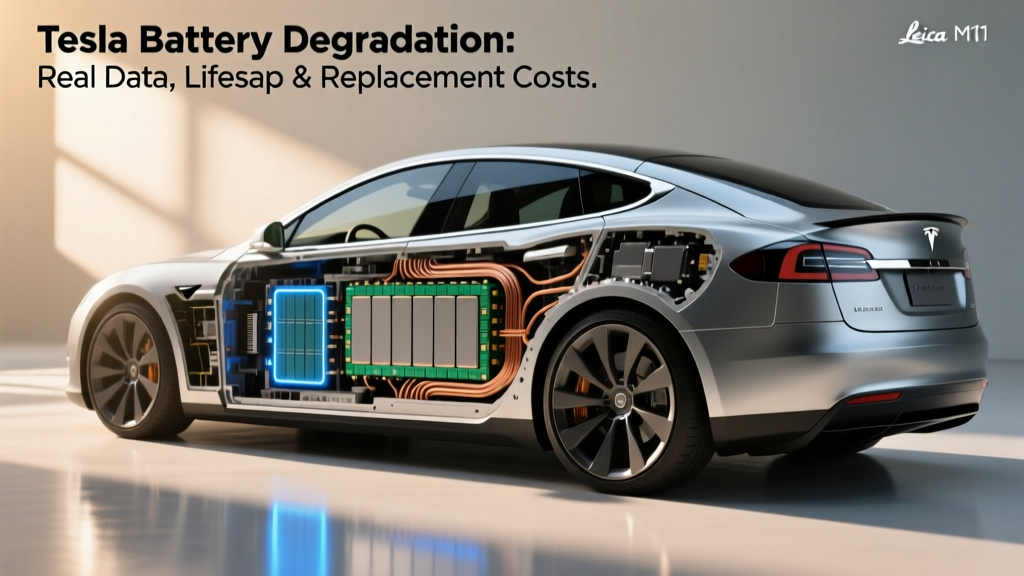
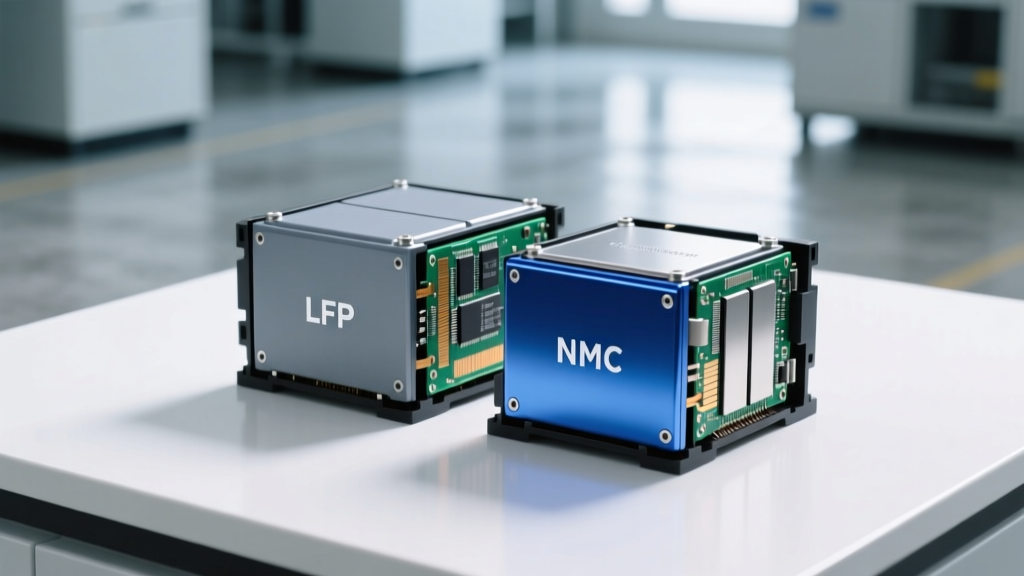
Not every Tesla rolling off the Fremont or Austin line carries the same battery chemistry. Since 2021, Tesla has split its lineup between two fundamentally different lithium-ion chemistries: lithium iron phosphate (LFP) and nickel-based chemistries (NMC/NCA). The chemistry inside your pack dictates everything from how you should charge it daily to how it performs on a freezing January morning in Minnesota.
As of the 2026 model year, the breakdown is straightforward:
- Model 3 Rear-Wheel Drive and Model Y Rear-Wheel Drive — LFP prismatic cells (primarily CATL-supplied, ~60 kWh usable)
- Model 3 Long Range, Model Y Long Range, and all Performance variants — NMC/NCA cylindrical cells (Panasonic 4680 and LG Energy Solution 2170, ~75–82 kWh usable)
- Model S and Model X — NMC/NCA packs (~95–100 kWh usable)
- Cybertruck (AWD and Cyberbeast) — Panasonic 4680 NMC structural pack (~123 kWh usable)
If you're shopping for a new Tesla or evaluating a used one, knowing which lithium battery your Tesla has is the single most important factor in understanding long-term ownership costs, charging habits, and real-world range retention.
LFP vs NMC/NCA: The Chemistry Trade-Offs Explained
Both chemistries are lithium-ion, but the cathode material creates a fundamentally different ownership experience. Here's how they stack up across the metrics that matter to daily drivers:
| Attribute | LFP (LiFePO₄) | NMC / NCA (Nickel-based) |
|---|---|---|
| Energy Density (cell-level) | ~160–180 Wh/kg | ~250–300 Wh/kg |
| Typical Pack Size in Tesla | ~60 kWh usable | 75–123 kWh usable |
| Cycle Life (to 80% SoH) | 3,000–5,000+ cycles | 1,500–2,500 cycles |
| Daily Charge Recommendation | 100% (charge to full regularly) | 80–90% daily; 100% for trips only |
| Cold-Weather Performance | Noticeable range loss below 32°F; slower DC charge rates in cold | Better low-temp conductivity; preconditioning highly effective |
| Cost (cell-level) | ~$80–100/kWh | ~$120–150/kWh |
| Thermal Stability | Excellent — higher runaway threshold (~270°C) | Good — requires robust BMS thermal management |
| Used In | Model 3 RWD, Model Y RWD | Long Range, Performance, Model S/X, Cybertruck |
Bottom line: LFP wins on longevity, safety margin, and cost. NMC wins on energy density and cold-weather usability. Neither is universally "better" — the right choice depends on your climate, commute, and whether you need 330+ miles of EPA range.
How Long Do Tesla Lithium Batteries Actually Last?
The short answer: almost certainly longer than you'll own the car. But the data is more nuanced than marketing claims.
Tesla's 2024 Impact Report (the most recent comprehensive dataset published) showed that Model 3 and Model Y packs retained an average of 88% of original capacity after 200,000 miles — meaning roughly 12% degradation over a distance that exceeds what most owners drive in 13–15 years. Model S and Model X packs averaged about 85% retention at 200,000 miles, reflecting older pack designs and higher-power duty cycles.
Independent data from fleet operators and owner-tracking communities (notably TeslaFi user submissions) paint a consistent picture:
- Year 1 / 15,000 mi: ~3–5% initial drop (formation loss — normal for all Li-ion)
- Year 3 / 45,000 mi: ~6–9% total degradation
- Year 5 / 75,000 mi: ~8–12% total degradation
- Year 8 / 120,000 mi: ~10–15% total degradation
- Year 10+ / 150,000–200,000 mi: ~12–18% total degradation
LFP packs generally show a flatter degradation curve — less initial drop and a longer plateau before any notable decline. NMC packs tend to lose 2–4% faster in the first year but then stabilize. Neither chemistry shows a "cliff" in normal use; degradation is a slow, linear-to-asymptotic process.
According to fueleconomy.gov, even a 15% range loss on a 341-mile EPA Model 3 Long Range still yields ~290 miles — more than adequate for the vast majority of drivers.
Tesla Battery Warranty: What's Covered and What Isn't
Tesla's high-voltage traction battery warranty is one of the stronger guarantees in the EV industry, but the details matter — especially the capacity-retention threshold.
| Model | Warranty Period | Mileage Limit | Minimum Capacity Retention |
|---|---|---|---|
| Model 3 RWD (LFP) | 8 years | 100,000 miles | 70% |
| Model 3 Long Range / Performance | 8 years | 120,000 miles | 70% |
| Model Y RWD (LFP) | 8 years | 100,000 miles | 70% |
| Model Y Long Range / Performance | 8 years | 120,000 miles | 70% |
| Model S / Model X | 8 years | 150,000 miles | 70% |
| Cybertruck | 8 years | 120,000 miles | 70% |
What's covered: If your pack drops below 70% of its original usable capacity within the warranty window, Tesla will repair or replace it at no cost. The warranty also covers manufacturing defects, BMS failures, and drive unit malfunctions.
What's NOT covered: Cosmetic issues, damage from accidents or flooding, modifications to the high-voltage system, or capacity loss from consistently ignoring Tesla's published charge-limit recommendations (though this is extremely difficult for Tesla to prove and rarely contested in practice).
The reality check: Based on every major degradation dataset available, hitting sub-70% capacity within 8 years or even 150,000 miles is extraordinarily rare under normal use. The warranty is a floor, not an expectation. Most Tesla packs will never see a warranty claim.
Tesla Battery Replacement Cost: What You'd Actually Pay
This is the number that generates the most anxiety — and the most misinformation. Let's ground it in real figures.
| Model / Pack | Battery Size | Estimated Replacement Cost | Typical Replacement Timeline |
|---|---|---|---|
| Model 3 RWD (LFP) | ~60 kWh | $10,000–$13,000 | Rarely needed before 300,000+ mi |
| Model 3 LR / Model Y LR (NMC) | ~75–82 kWh | $13,000–$16,000 | Rarely needed before 250,000+ mi |
| Model S / Model X (NMC) | ~95–100 kWh | $15,000–$22,000 | Some early packs replaced at 150k–200k mi |
| Cybertruck (4680 NMC) | ~123 kWh | $18,000–$25,000 | Too new for meaningful data |
These figures include the pack and labor at a Tesla Service Center. Independent EV shops are beginning to offer module-level repairs (replacing individual bad modules rather than the full pack) for $3,000–$7,000, though this is more applicable to older Model S/X packs with modular designs.
Context that matters: The average age of a vehicle scrapped in the U.S. is about 12.5 years, per the Department of Transportation. At 13,500 miles/year (the U.S. average), that's ~169,000 miles. Most Tesla batteries will still hold 82–88% of original capacity at that point. A full pack replacement is a late-life, high-mileage event — not a mid-ownership surprise.
For comparison, a gasoline vehicle's transmission replacement ($4,000–$8,000) or engine rebuild ($5,000–$10,000) at similar mileage is financially analogous — and far more common.
Factors That Accelerate (or Preserve) Battery Health
Lithium-ion degradation is driven by three primary stressors: temperature extremes, high state of charge (SoC) dwell time, and charge/discharge rate. Here's how each applies to Tesla ownership:
Fast-Charging Frequency
DC fast charging at 150–250 kW generates significant cell heat. Occasional Supercharging (road trips, 1–2 times per month) has a negligible long-term effect. But daily DC fast charging — particularly without preconditioning — accelerates degradation by roughly 1–3% over a 5-year period compared to exclusive Level 2 home charging, per analysis from battery-testing firm Recurrent Auto.
Tesla's navigation system automatically preconditioning the battery when a Supercharger is set as your destination is one of the most effective built-in mitigations. It warms the cells to ~95°F (35°C) before you arrive, reducing internal resistance and heat generation during the charge session.
State of Charge Habits
This is where chemistry matters most:
- NMC/NCA owners: Set your daily charge limit to 80% (or 90% if your commute demands it). Reserve 100% for road trips. Prolonged storage at 100% SoC accelerates cathode degradation and electrolyte oxidation.
- LFP owners: Tesla explicitly recommends charging to 100% at least once per week. LFP cells have a very flat voltage curve, and the BMS needs regular full charges to accurately calibrate SoC estimation. Storing an LFP pack at 100% is also far less damaging than it is for NMC — the chemistry is inherently stable at high SoC.
Temperature Exposure
Prolonged exposure to ambient temperatures above 95°F (35°C) — think a Phoenix driveway in July — causes calendar degradation even when the car isn't driven. Tesla's thermal management system mitigates this when plugged in (the system will cool the pack using shore power), so plugging in during extreme heat is strongly recommended.
Cold weather doesn't cause permanent degradation but does temporarily reduce usable capacity and increase charging times. An LFP pack at 15°F may accept DC charge at only 30–50 kW until the cells warm — compared to its peak of ~170 kW at optimal temperature.
- Use Level 2 home charging as your daily routine (7.7–11.5 kW via Tesla Wall Connector on a 60A circuit)
- Set charge limit to 80% for NMC; 100% for LFP (with weekly full-charge calibration)
- Precondition via the Tesla app before departure in cold weather
- Plug in during extreme heat so thermal management can run on grid power
- Avoid letting SoC sit below 10% for extended periods (days or weeks)
- Use Superchargers freely on road trips — just don't rely on them as your only charging source
- Keep Sentry Mode off when parked for extended periods (it draws ~200–300W continuously)
How to Check Your Tesla's Battery State of Health
Tesla does not display a simple "battery health percentage" in the vehicle's UI the way some competitors do. But there are reliable methods to monitor degradation:
Method 1: The Range Calculation
Charge your Tesla to 100% (or to your known daily limit) and note the displayed rated range. Compare this to the EPA-rated range for your model when new. For example, if your 2023 Model 3 Long Range (EPA 341 mi) shows 305 rated miles at 100% SoC, that's approximately 89.4% capacity retention — or about 10.6% degradation.
Caveat: The displayed range is a BMS estimate and can fluctuate. It becomes more accurate after a full charge-to-100% cycle followed by a drive-down to ~10%.
Method 2: Third-Party Apps
TeslaFi, Tessie, and Stats (iOS) log detailed charge data via the Tesla API and can estimate SoH by comparing energy added during a known charge session against expected pack capacity. These are generally accurate within ±2%.
Method 3: Tesla Service Diagnostic
You can request a battery health check at any Tesla Service Center. They run a diagnostic that reads the pack's actual measured capacity vs. its original design capacity. This is the most authoritative number and is the one used for warranty claims.
Method 4: OBD-II Tools (Advanced)
Tools like Scan My Tesla (Android) paired with an OBD-II adapter can read real-time pack data including individual module voltages, pack current, and calculated capacity. This is the enthusiast route but provides granular visibility.
What's Next: Solid-State and Silicon-Anode Batteries
The next major leap in lithium battery technology for Tesla — and the broader EV industry — centers on two advances:
Solid-state batteries replace the liquid electrolyte with a solid ceramic or polymer layer, enabling lithium-metal anodes and energy densities of 400–500 Wh/kg (roughly double current NMC). Toyota has announced limited solid-state production for 2027–2028, and QuantumScape continues to ship prototype cells to Volkswagen for testing. However, manufacturing scale-up remains the critical bottleneck. No solid-state pack is currently available in any production vehicle sold in the U.S., and realistic mass-market availability is 2029–2031 at the earliest.
Silicon-dominant anodes (used in limited form in current cells as silicon-carbon composites) promise 20–40% energy-density gains over graphite anodes. Companies like Sila Nanotechnologies and Group14 are scaling production, and incremental silicon content increases are expected in Tesla's next-generation 4680 cells. This is a nearer-term evolution, not a revolution — likely appearing in meaningful volume by 2027–2028.
For anyone buying a Tesla today, these technologies are forward-looking context, not purchase-delay reasons. Current LFP and NMC packs already deliver 200,000+ mile lifespans with manageable degradation. The next generation will be better, but the current generation is already good enough for the vast majority of use cases.
Frequently Asked Questions
How long do Tesla lithium batteries last in years and miles?
Based on fleet data, most Tesla battery packs retain 85–90% of original capacity at 200,000 miles (~15 years of average driving). LFP packs in Model 3 RWD and Model Y RWD may last even longer due to the chemistry's superior cycle life. Catastrophic failure requiring replacement before 250,000 miles is statistically rare.
How much does it cost to replace a Tesla battery?
Full pack replacement at a Tesla Service Center ranges from approximately $10,000 (Model 3 RWD LFP) to $25,000 (Cybertruck). Most owners will never need a replacement — the battery typically outlasts the vehicle's economic life. Independent shops offering module-level repairs can reduce costs to $3,000–$7,000 for applicable pack designs.
What does the Tesla battery warranty actually cover?
Tesla warrants the high-voltage battery for 8 years and 100,000–150,000 miles (depending on model) against defects and capacity loss below 70% of original capacity. This covers manufacturing defects, BMS failures, and excessive degradation. It does not cover accident damage, flooding, or unauthorized modifications.
How do I check my Tesla battery health?
The simplest method: charge to 100%, note the displayed rated range, and compare it to the original EPA range for your model. For more precision, use third-party apps like TeslaFi or Tessie, or request a diagnostic health check at a Tesla Service Center. OBD-II tools like Scan My Tesla offer the most granular data for technically inclined owners.
LFP vs NMC — which Tesla battery is better?
It depends on your priorities. LFP offers a longer cycle life (3,000–5,000 cycles), lower cost, better thermal stability, and the convenience of daily 100% charging. NMC delivers higher energy density (more range in the same physical pack), better cold-weather performance, and faster DC charging in low temperatures. If you live in a mild climate and want maximum longevity at the lowest price, LFP (Model 3/Y RWD) is the pragmatic pick. If you need 330+ miles of range or regularly drive in freezing conditions, NMC (Long Range/Performance) is the better fit.
Does frequent Supercharging damage my Tesla battery?
Occasional Supercharging has a minimal effect on long-term health. Daily DC fast charging without preconditioning can add 1–3% extra degradation over 5 years compared to Level 2 charging. Always set the Supercharger as your navigation destination so the car can precondition the pack — this significantly reduces thermal stress during the charge session.
Can I upgrade my Tesla to a larger or newer battery later?
No. Tesla does not offer battery upgrades for existing vehicles. The pack you purchase is the pack the car keeps for life. This makes choosing the right capacity and chemistry at purchase time especially important.