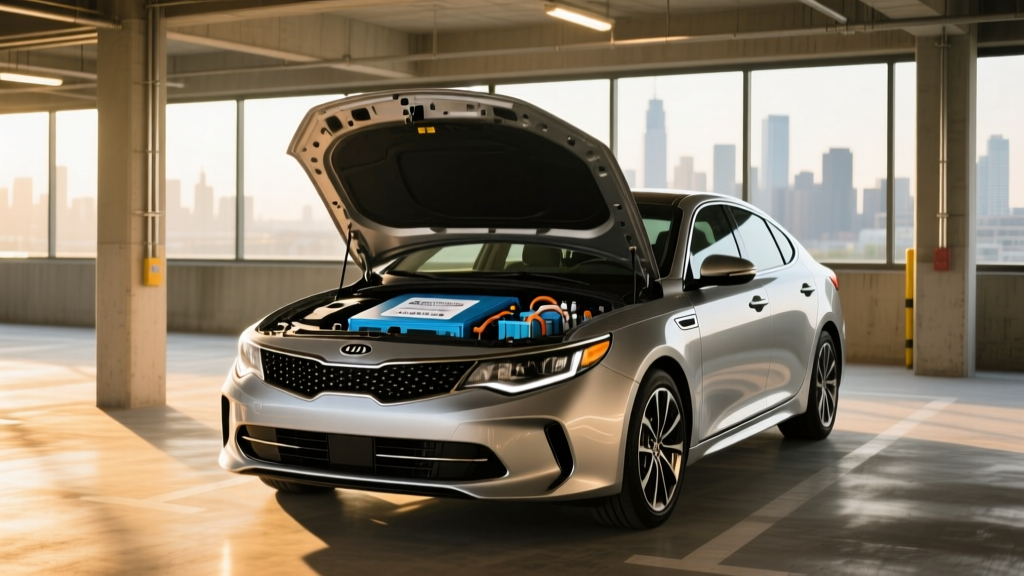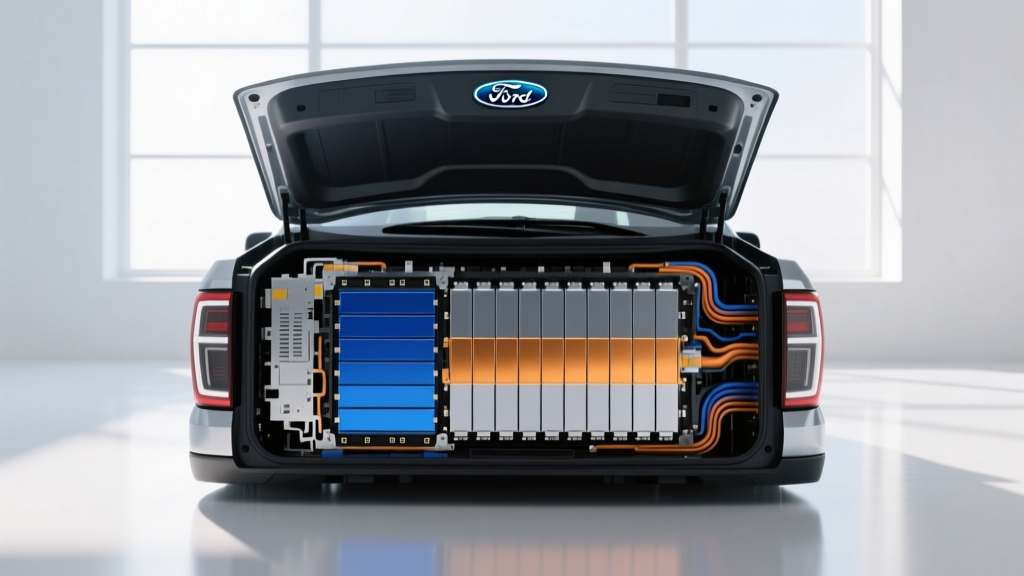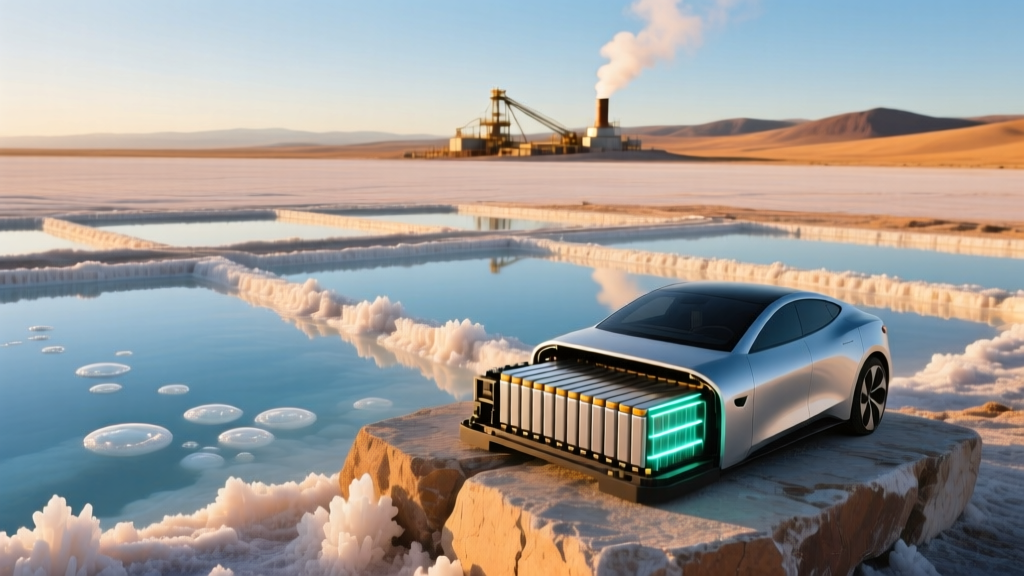
Argentina sits on one of the world's largest lithium reserves — the salt flats of Jujuy, Salta, and Catamarca provinces form the southern apex of the so-called Lithium Triangle, alongside Chile and Bolivia. For EV buyers in the United States, that geological fact has real-world consequences: the lithium extracted from Argentine brine operations increasingly ends up in the cathode chemistry of the battery pack beneath your car's floor. Understanding where your battery's raw materials come from, how the chemistry works, and what it means for longevity is essential before you sign a purchase order.
This guide connects the supply chain — from lithium in Argentina to your driveway — with the practical ownership data you need: chemistry trade-offs, degradation curves, warranty coverage, replacement costs, and daily habits that preserve battery health over a decade or more of driving.
Why Argentine Lithium Matters to EV Buyers
Argentina is the world's fourth-largest lithium producer as of 2025, with projects like Olaroz (Allkem/Livent), Cauchari-Olaroz (Ganfeng/Lithium Americas), and Sal de Vida ramping output. Unlike Australian hard-rock spodumene mining, Argentine extraction uses evaporation ponds on high-altitude salt flats — a slower but lower-energy process that yields lithium carbonate, a direct input for cathode manufacturing.
For US buyers, the relevance goes beyond geopolitics. Under the IRS §30D clean vehicle credit, battery sourcing matters: a percentage of critical minerals must be extracted or processed in the US or a free-trade-agreement partner to qualify for the full credit. Argentina does not currently have a comprehensive FTA with the US, which means vehicles using Argentine-sourced lithium may face partial credit disqualification depending on the model year's sourcing thresholds. Always verify eligibility on a per-vehicle basis at the point of sale — the rules tighten annually through 2030.
Battery Chemistry Explained: LFP vs NMC vs NCA
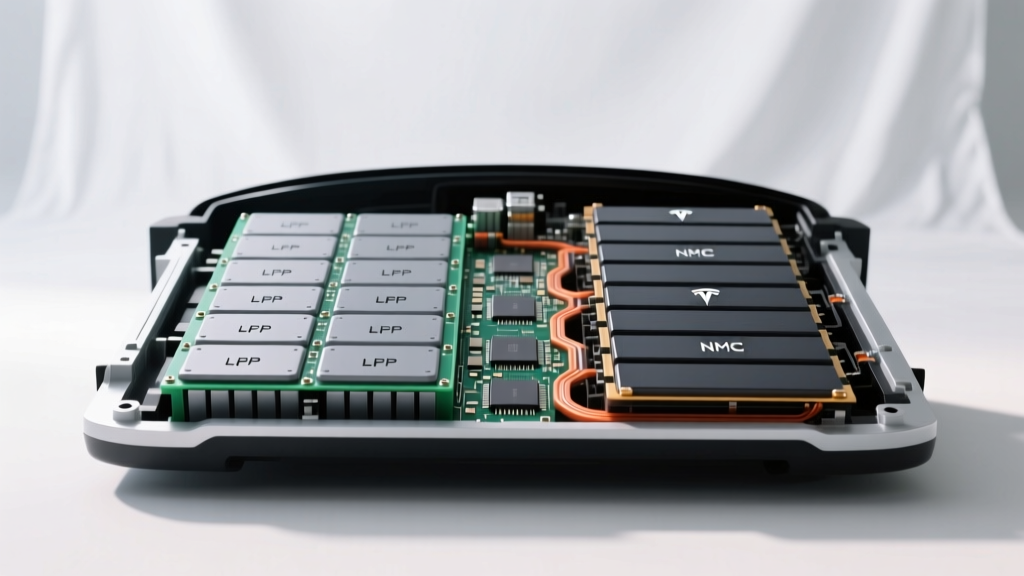
The two dominant lithium-ion chemistries in 2026 EVs are LFP (lithium iron phosphate) and NMC/NCA (nickel manganese cobalt / nickel cobalt aluminum). Both use lithium ions shuttling between anode and cathode, but the cathode material determines energy density, cycle life, thermal stability, and cost.
| Attribute | LFP (LiFePO₄) | NMC / NCA |
|---|---|---|
| Energy density (cell-level) | ~160–180 Wh/kg | ~220–300 Wh/kg |
| Typical cycle life | 3,000–5,000+ cycles | 1,000–2,500 cycles |
| Cold-weather performance | Weaker below 32°F; slower charging | Better low-temp conductivity |
| Thermal runaway risk | Very low | Low but higher than LFP |
| Cobalt/nickel content | None | Significant (supply-chain/cost risk) |
| Cost per kWh (pack-level) | ~$95–$110 | ~$120–$145 |
| Typical use in 2026 | Tesla Model 3 RWD, BYD, Ford Mustang Mach-E Select | Long-range/performance trims, Hyundai Ioniq 5, Rivian |
The takeaway: LFP is better for buyers who prioritize longevity and cost and who can charge to 100% regularly without penalty (LFP tolerates full-SoC storage better than NMC). NMC/NCA is better for maximum range and cold-climate drivers who need the energy density and faster cold-weather charging. Neither is universally superior — the right choice depends on your driving pattern and climate.
How Long Do EV Batteries Actually Last?
The short answer: longer than most buyers expect. Modern liquid-cooled battery packs routinely outlast the vehicles they power. Data aggregated from fleet operators, manufacturer warranty claims, and third-party studies (including fueleconomy.gov's EV technology resources) shows the following degradation pattern for typical 2022–2026 model-year EVs:
Typical EV Battery Degradation Curve (NMC, liquid-cooled):
- Year 1 / 15,000 mi: ~2–3% capacity loss (initial formation loss)
- Year 3 / 45,000 mi: ~5–7% total loss
- Year 5 / 75,000 mi: ~7–10% total loss
- Year 8 / 120,000 mi: ~10–15% total loss
- Year 10+ / 150,000+ mi: ~15–20% total loss (varies widely)
LFP packs typically show slower linear degradation after the first year, often retaining 90%+ capacity past 150,000 miles. Tesla's 2025 Impact Report noted that Model 3/Y packs retained an average of 85% capacity at 200,000 miles — well below the threshold where most owners would consider replacement.
The critical insight: most EV batteries will never need replacement during typical ownership. A 15% capacity loss on a 350-mile EPA-rated vehicle still leaves ~297 miles of range — more than adequate for daily driving. Replacement becomes a consideration only when degradation accelerates due to abuse (chronic fast-charging, extreme-heat storage at high SoC) or a cell/module failure.
Battery Warranty Coverage: What's Protected and for How Long
Federal law mandates a minimum 8-year / 100,000-mile warranty on EV battery packs for emissions-related compliance, but most manufacturers exceed this baseline. Here's how major brands structure coverage in 2026:
| Manufacturer | Duration | Mileage | Capacity Retention Threshold |
|---|---|---|---|
| Tesla (Model 3/Y LFP) | 8 years | 120,000 mi | 70% |
| Tesla (Model 3/Y Long Range/Perf) | 8 years | 120,000 mi | 70% |
| Hyundai / Kia | 10 years | 100,000 mi | 70% |
| Ford (Mustang Mach-E) | 8 years | 100,000 mi | 70% |
| GM (Ultium platform) | 8 years | 100,000 mi | 70% |
| Rivian | 8 years | 120,000 mi | 70% |
| BMW | 8 years | 100,000 mi | 70% |
The 70% retention threshold is standard across the industry. If your pack drops below 70% of original capacity within the warranty window, the manufacturer will repair or replace modules (or the full pack) at no cost. In practice, warranty claims for gradual degradation are rare — most claims involve manufacturing defects in individual modules or BMS (battery management system) faults.
EV Battery Replacement Cost: What to Budget For
Out-of-warranty battery replacement is the scenario that generates the most anxiety. Here are real-world cost ranges based on 2025–2026 service data:
| Vehicle / Pack Size | Battery Capacity | Estimated Replacement Cost |
|---|---|---|
| Tesla Model 3 RWD (LFP) | ~60 kWh | $8,000–$12,000 |
| Tesla Model Y Long Range | ~75 kWh | $12,000–$16,000 |
| Hyundai Ioniq 5 | 77.4 kWh | $11,000–$15,000 |
| Ford Mustang Mach-E Extended Range | 91 kWh | $14,000–$20,000 |
| Rivian R1T / R1S (Large Pack) | ~128 kWh | $18,000–$25,000 |
| GMC Hummer EV | ~212 kWh | $30,000–$40,000+ |
Context matters: these costs are comparable to a major engine or transmission replacement on a gas vehicle. More importantly, full pack replacement is rarely needed. Most degradation-related service involves replacing individual modules ($1,500–$4,000 per module) rather than the entire assembly. And pack costs continue to decline — cell-level pricing has fallen from over $1,000/kWh in 2010 to roughly $100–$130/kWh in 2026, with further reductions expected as Argentine and other global lithium supply scales.
Factors That Accelerate Battery Degradation
Not all miles are created equal. The following habits and conditions measurably shorten pack life:
- Chronic DC fast charging above 150 kW: Occasional road-trip fast charging is fine, but daily reliance on 250–350 kW chargers increases thermal stress. Data from GeoTab fleet studies shows vehicles that fast-charge more than 3x per week degrade ~1–2% faster over 5 years than those primarily using Level 2.
- Storing at 100% SoC in high heat: A full battery at 95°F+ accelerates electrolyte decomposition. If you must store at high SoC, park in shade or a garage.
- Repeated deep discharges to 0%: Dropping below 5% regularly stresses the anode. Most BMS systems include a buffer (~2–5% hidden reserve), but habitually running the pack dry is still harmful.
- Extreme cold charging without preconditioning: Charging a cold NMC or LFP pack at high power can cause lithium plating on the anode — permanent capacity loss. Always use your vehicle's preconditioning feature before fast charging in sub-40°F weather.
- Towing at max capacity in heat: Sustained high-C-rate discharge (towing a 5,000 lb trailer uphill in July) generates significant internal heat. Liquid cooling mitigates this, but it's the hardest use case for any pack.
The flip side: Level 2 home charging to 80% daily, with occasional 100% charges for road trips, is the gold standard for NMC longevity. LFP owners can charge to 100% daily without penalty — in fact, Tesla and BYD recommend periodic full charges for LFP to allow the BMS to recalibrate cell balancing.
Monitoring Battery Health: How to Check State of Health (SoH)
State of Health (SoH) is expressed as a percentage of original capacity. A new pack is 100% SoH; a pack with 12% degradation reads 88%. Here's how to monitor it:
- In-vehicle displays: Tesla does not natively show SoH percentage, but you can estimate it by comparing your current max range at 100% charge to the original EPA figure. Hyundai/Kia provides a battery health indicator in the EV settings menu on newer models.
- OBD-II apps: Tools like LeafSpy (Nissan), TeslaFi, or OBDeleven (VW/Hyundai) can read BMS-reported SoH, cell voltage deltas, and pack temperature. A $30–$50 OBD-II dongle plus a free or low-cost app gives you dealer-level data.
- Dealer diagnostic reports: Request a battery health printout during service visits. Most manufacturers can provide a cell-by-cell voltage report that identifies weak modules before they trigger a warranty claim.
- Third-party certifications: Services like Recurrent offer battery health reports for used EV purchases — increasingly important as the secondhand EV market grows.
If your SoH drops more than ~3% in a single year after the initial break-in period, investigate: it may indicate a failing module, a coolant leak in the pack, or a BMS calibration error — all addressable under warranty if caught early.
What Comes After Lithium-Ion? Emerging Battery Technologies
The battery landscape is shifting, but timelines matter. Here's where next-generation technologies actually stand in 2026:
- Silicon-dominant anodes: Companies like Sila Nanotechnologies and Group14 are shipping silicon-blend anodes that increase energy density 15–25% over graphite. These are appearing in limited production (e.g., Mercedes G-Class 580e, select Panasonic cells) but won't reach mass-market EVs until 2027–2028 at scale.
- Solid-state batteries: Toyota has announced a 2027–2028 production timeline for solid-state packs promising 750+ km WLTP range and 10-minute fast charging. QuantumScape's cells are in VW validation testing. However, manufacturing yield and cost remain significant hurdles — expect solid-state in premium, low-volume models first, not mainstream EVs, before 2030.
- Sodium-ion batteries: CATL and BYD are producing sodium-ion packs for Chinese-market micro-EVs and energy storage. Sodium is abundant and cheap but offers ~30% lower energy density than LFP — viable for city cars and grid storage, unlikely for US long-range EVs in the near term.
- LMFP (lithium manganese iron phosphate): A bridge chemistry that adds manganese to LFP for ~15–20% higher energy density while retaining cobalt-free, low-cost advantages. CATL and Gotion are shipping LMFP cells in 2025–2026; expect US-market vehicles adopting LMFP by 2027.
None of these technologies are available in a US-market EV you can buy today. For buyers deciding now, current LFP and NMC packs are mature, well-understood, and backed by extensive warranty coverage. Waiting for solid-state means waiting at minimum 3–5 years for limited availability at premium pricing.
Connecting the Supply Chain: From Argentine Salt Flats to Your Garage
The lithium carbonate produced in Jujuy and Salta provinces is refined, converted to cathode precursor material, and shipped to cell factories in China, South Korea, Japan, and increasingly North America (LG Energy Solution in Michigan, SK On in Georgia, Panasonic in Kansas). By the time it reaches your EV, it has crossed multiple borders and passed through at least three industrial transformations.
This supply chain reality has two practical implications for buyers:
- Tax credit eligibility is chemistry- and sourcing-dependent. Vehicles using LFP cathodes (which require lithium but no nickel or cobalt) may have different critical-mineral sourcing profiles than NMC vehicles. Under 2026 §30D rules, the critical minerals threshold requires 80% of minerals by value to be extracted/processed in the US or FTA partners — a bar that excludes some Argentine-sourced supply chains. Always confirm credit eligibility on the specific VIN with your dealer and cross-reference with the IRS clean vehicle credit page.
- Supply diversification is improving pack pricing. As Argentine, Chilean, and Australian lithium production scales, cell costs continue declining. Pack-level pricing below $100/kWh — long considered the tipping point for EV price parity with gas vehicles — is now achievable for LFP packs, which is why sub-$35,000 EVs like the updated Chevrolet Equinox EV and Tesla Model 3 RWD exist in 2026.
Frequently Asked Questions
How long do EV batteries last in years and miles?
Most modern liquid-cooled EV batteries retain 85–90% of original capacity at 150,000 miles and 8–10 years of use. LFP packs often exceed 90% retention at that mileage. Complete failure requiring replacement is rare — most packs outlast the vehicle's useful life or are retired with the car due to collision damage or other unrelated issues.
How much does an EV battery cost to replace?
Full pack replacement ranges from ~$8,000 for a 60 kWh LFP pack (Tesla Model 3 RWD) to $25,000+ for large packs (Rivian, Hummer EV). However, most out-of-warranty service involves individual module replacement at $1,500–$4,000 per module, not the full pack. Costs continue declining as cell prices fall.
What does the EV battery warranty cover?
Manufacturer warranties cover capacity loss below a threshold (typically 70% of original capacity) and defects in materials or workmanship for 8–10 years / 100,000–120,000 miles. This includes cell failures, BMS faults, and coolant leaks within the pack. Damage from accidents, modifications, or improper charging equipment is excluded.
How do I check and maximize my EV battery health?
Monitor SoH via your vehicle's settings menu, an OBD-II app like TeslaFi or OBDeleven, or dealer diagnostic reports. Maximize longevity by favoring Level 2 home charging, keeping NMC packs between 20–80% SoC for daily use, preconditioning before fast charging in cold weather, and avoiding prolonged storage at 100% SoC in high heat.
LFP vs NMC — which battery chemistry is better?
Neither is universally better. Choose LFP if you prioritize cycle life, lower cost, and can charge to 100% regularly (ideal for daily commuters with home charging). Choose NMC/NCA if you need maximum range per charge, better cold-weather charging performance, or are buying a long-range/performance trim. Both chemistries are proven and well-supported by manufacturer warranties.
Does lithium from Argentina affect my federal EV tax credit?
Potentially. Under 2026 §30D rules, critical minerals must meet escalating US/FTA-partner sourcing thresholds. Argentina lacks a comprehensive FTA with the US, so vehicles heavily reliant on Argentine lithium may not meet the critical minerals requirement for the full $3,750 half of the credit. Eligibility is determined per-vehicle — consult the IRS guidance and your dealer for VIN-specific confirmation.