Why Lithium-Air Keeps Making Headlines
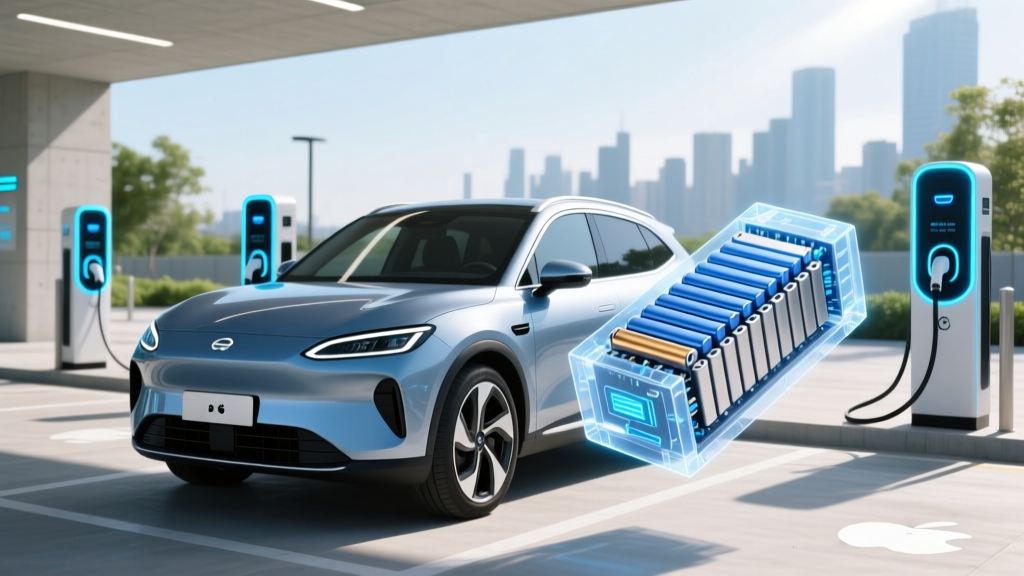
If you follow battery research, you have likely seen the term lithium-air (sometimes called lithium-oxygen) described as a potential revolution in energy storage. The theoretical appeal is genuine: a lithium-air cell draws oxygen from the ambient air as its cathode reactant, which means it does not need to carry heavy metal-oxide cathode materials. In laboratory settings, this translates to a theoretical specific energy approaching 3,500 Wh/kg — roughly ten times the energy density of today's best lithium-ion cells at around 250–300 Wh/kg at the cell level.
But theory and showroom are very different places. As of 2026, no production vehicle uses a lithium-air battery. The chemistry faces persistent challenges with cycle life (often fewer than 100 full cycles in lab conditions), moisture sensitivity, and recharge efficiency. Meanwhile, today's EV buyers are choosing between mature, proven chemistries — primarily LFP (lithium iron phosphate) and NMC/NCA (nickel manganese cobalt / nickel cobalt aluminum) — that deliver 200,000+ mile lifespans with manageable degradation.
This guide explains what lithium-air actually is, how it compares to the batteries you can buy today, and what real ownership data tells us about longevity, cost, and care.
Today's EV Battery Chemistries: LFP vs. NMC vs. NCA
Before evaluating any future technology, it helps to understand the baseline. Nearly every EV sold in the US in 2026 uses one of two cathode chemistries, each with distinct trade-offs that affect range, longevity, charging speed, and price.
| Attribute | LFP (LiFePO₄) | NMC / NCA |
|---|---|---|
| Energy Density (cell-level) | 160–200 Wh/kg | 250–300 Wh/kg |
| Typical Cycle Life | 3,000–6,000+ cycles | 1,000–2,500 cycles |
| Cold-Weather Performance | Moderate (15–25% range loss at 20°F) | Better (10–20% range loss at 20°F) |
| Thermal Stability | Excellent (resistant to thermal runaway) | Good (requires robust BMS/cooling) |
| Cost per kWh (pack-level) | ~$90–$110 | ~$120–$150 |
| Optimal Daily Charge Limit | 100% (can sit fully charged) | 80–90% (for daily use) |
| Common In-Vehicle Examples | Tesla Model 3 RWD, Ford Mustang Mach-E Select (LFP option), BYD Blade | Hyundai Ioniq 5, Chevy Equinox EV, Tesla Model Y Long Range |
| Cobalt Content | None | Yes (NMC) / Minimal (NCA) |
The practical takeaway: If you prioritize maximum range in a compact package and regularly drive in cold climates, NMC/NCA still holds an edge. If you want a battery that tolerates daily 100% charging, offers a longer cycle life, and costs less upfront, LFP is increasingly the smart choice — particularly for standard-range trims and commuter-focused vehicles.
Lithium-Air vs. Lithium-Ion: The Energy Density Promise
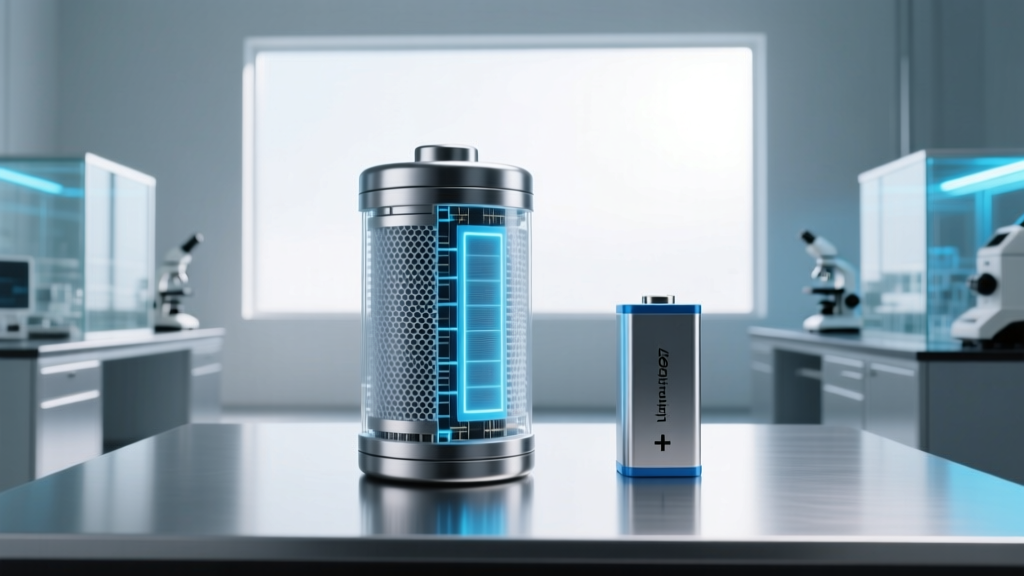
Lithium-air cells generate electricity through the reaction of lithium at the anode with oxygen from the air at the cathode, producing lithium peroxide (Li₂O₂) during discharge. Because oxygen is not stored onboard, the cell can theoretically achieve energy densities rivaling gasoline on a per-weight basis.
Here is the problem: the lithium peroxide byproduct is an electrical insulator. It clogs the porous cathode, increases internal resistance, and makes recharging inefficient. Researchers have experimented with catalysts, protective membranes, and alternative electrolytes, but as of 2026, published cycle-life results for rechargeable lithium-air cells remain in the low hundreds — compared to the thousands of cycles demanded for automotive use.
Moisture is another dealbreaker. Lithium metal anodes react violently with water, requiring hermetically sealed air-management systems that add weight and complexity, partially negating the energy-density advantage.
Realistic timeline: Most battery researchers project that lithium-air is at minimum 10–15 years away from automotive viability, and many consider it more likely to find initial applications in grid storage or aerospace before reaching consumer vehicles. It is not a reason to delay an EV purchase today.
How Long Do EV Batteries Actually Last?
The fear that EV batteries need frequent, expensive replacement is one of the most persistent myths in electrification. Real-world data tells a different story. According to data aggregated by fueleconomy.gov and long-term fleet studies, the average modern EV battery loses approximately 5–10% of its original capacity over the first 100,000 miles, with degradation slowing considerably after the initial break-in period.
Typical EV Battery Degradation Curve (NMC and LFP)
| Mileage | Avg. Capacity Retained (NMC) | Avg. Capacity Retained (LFP) |
|---|---|---|
| New | 100% | 100% |
| 25,000 mi | 95–97% | 97–99% |
| 50,000 mi | 92–95% | 95–98% |
| 100,000 mi | 88–93% | 92–97% |
| 150,000 mi | 85–90% | 90–95% |
| 200,000 mi | 80–88% | 88–94% |
Note: These figures represent fleet averages. Individual results vary based on climate, charging habits, and thermal management system quality. Data synthesized from Recurrent Auto, Geotab fleet studies, and manufacturer warranty thresholds.
Most EVs on the road today will see their batteries outlast the vehicle itself. The average American car is scrapped at around 200,000 miles; a well-maintained EV battery in 2026 should still hold 80%+ of its original capacity at that mileage, particularly with LFP chemistry.
What the Battery Warranty Actually Covers
Federal law mandates that EV batteries carry a minimum warranty of 8 years / 100,000 miles (10 years / 150,000 miles in California Air Resources Board states). Most manufacturers exceed these minimums or match them with clear capacity-retention thresholds.
| Vehicle | Warranty Term | Capacity Threshold | Chemistry |
|---|---|---|---|
| Tesla Model 3 RWD | 8 yr / 100,000 mi | 70% retention | LFP |
| Tesla Model Y Long Range | 8 yr / 120,000 mi | 70% retention | NMC |
| Hyundai Ioniq 5 | 10 yr / 100,000 mi | 70% retention | NMC |
| Chevrolet Equinox EV | 8 yr / 100,000 mi | 60% retention | NMC |
| Ford Mustang Mach-E (LFP) | 8 yr / 100,000 mi | 70% retention | LFP |
| Rivian R1T / R1S | 8 yr / 175,000 mi | 70% retention | NMC |
Key detail: A warranty claim is triggered only when the battery's State of Health (SoH) falls below the stated threshold within the warranty period. If your Ioniq 5's battery reads 71% capacity at year 9, it is not a warranty case. In practice, very few EV batteries fall below 70% within the warranty window — degradation data shows most remain well above that line.
EV Battery Replacement Cost: The Real Numbers
Out-of-warranty battery replacement remains expensive, but it is also rare. Most EVs are retired or traded in before a full pack replacement becomes necessary. When it is needed — typically due to physical damage, manufacturing defect outside warranty, or extreme high-mileage use — here is what it costs:
| Vehicle | Battery Size (usable kWh) | Estimated Replacement Cost | Typical Replacement Trigger |
|---|---|---|---|
| Tesla Model 3 RWD | 57.5 kWh (LFP) | $8,000–$12,000 | Damage, 300,000+ mi |
| Hyundai Ioniq 5 | 77.4 kWh (NMC) | $12,000–$18,000 | Damage, 250,000+ mi |
| Ford F-150 Lightning Ext. Range | 131 kWh (NMC) | $20,000–$30,000 | Damage, fleet use |
| Chevy Bolt EV (2023) | 65 kWh (NMC) | $9,000–$14,000 | Recall-related, high mi |
| Rivian R1T (Large Pack) | 135 kWh (NMC) | $22,000–$28,000 | Damage, extreme use |
These figures include the battery pack and labor but not potential ancillary repairs. It is worth noting that pack prices have fallen roughly 10–15% per year over the last decade, and module-level repair (replacing individual cell groups rather than the entire pack) is becoming more common at specialized EV service centers, often cutting costs by 40–60%.
Five Factors That Accelerate Battery Degradation
Not all miles are equal when it comes to battery wear. These five factors have the largest measurable impact on long-term State of Health:
Battery Care Checklist: Maximize Your Battery's Lifespan
- 1. Minimize DC fast charging above 150 kW for daily use. Occasional road-trip fast charging is fine, but making 250–350 kW charging your daily routine accelerates electrolyte decomposition. Studies from Geotab show vehicles that DC fast-charge more than 3 times per week degrade approximately 1.5–2x faster than those that primarily use Level 2.
- 2. Avoid sustained high State of Charge (SoC) with NMC/NCA. If your vehicle has NMC chemistry, set the daily charge limit to 80–90%. Storing the battery at 100% for days at a time increases stress. LFP batteries, by contrast, tolerate and even benefit from periodic 100% charges to recalibrate the BMS.
- 3. Precondition before fast charging in cold weather. Charging a cold battery (below 40°F / 4°C) at high power causes lithium plating on the anode, a form of permanent damage. Always use your vehicle's preconditioning feature — most EVs activate this automatically when you navigate to a charger.
- 4. Avoid deep discharges below 10% SoC. Regularly running the battery to near-empty stresses the cells. Try to keep the battery between 20–80% for daily driving (NMC) or 10–100% (LFP), and plug in rather than letting the car sit at very low SoC for extended periods.
- 5. Park in shade or a garage during extreme heat. Battery degradation roughly doubles for every 18°F (10°C) increase in sustained temperature above 77°F (25°C). A vehicle regularly parked in 100°F+ ambient heat without thermal management running will degrade faster.
How to Monitor Your Battery's State of Health
State of Health (SoH) is the percentage of a battery's original capacity that remains usable. A new battery is 100% SoH; one that holds 78 kWh of its original 84 kWh is at roughly 93% SoH. Here is how to check it:
- In-vehicle displays: Tesla provides a rated-range comparison (current max range vs. original). Some Hyundai/Kia models show SoH percentage in the service menu. Nissan Leaf includes a 12-bar capacity gauge.
- OBD-II dongles + apps: Devices like the OBDLink SX or Vgate iCar paired with apps such as EVNotify, LeafSpy (Nissan), or Scan My Tesla can read the BMS directly for precise SoH figures.
- Dealer diagnostics: Any authorized service center can pull a full battery health report. This is recommended before purchasing a used EV.
- Third-party services: Companies like Recurrent Auto offer free battery health reports that compare your vehicle's degradation to a fleet of identical models.
When to worry: If your SoH drops more than 3% in a single year (beyond the first year, where a 2–4% initial drop is normal), or if you notice sudden range losses that don't correlate with temperature, schedule a diagnostic. Sudden drops can indicate a failing cell module rather than normal degradation.
Beyond Lithium-Air: Solid-State and Silicon Anode Timelines
Lithium-air is not the only advanced chemistry in development. Two technologies are closer to production and more relevant for near-term EV buyers:
Solid-state batteries replace the liquid electrolyte with a solid ceramic, polymer, or sulfide material, enabling the use of lithium-metal anodes and offering projected energy densities of 400–500 Wh/kg at the cell level. Toyota has announced limited solid-state production for 2027–2028, initially in low volumes and likely in premium models. Samsung SDI and QuantumScape are targeting similar timelines. Expect solid-state to reach mainstream, affordable EVs no earlier than 2030–2032.
Silicon anode technology is already here in limited form. Companies like Sila Nanotechnologies and Group14 supply silicon-dominant anode materials that boost energy density by 10–20% over conventional graphite anodes. The Mercedes-Benz G-Class EV (2025) uses silicon-anode cells, and broader adoption is expected through 2027–2028 model years across multiple manufacturers.
Neither technology is a reason to wait. Today's LFP and NMC batteries already deliver 250–350+ miles of EPA range, 200,000+ mile lifespans, and 15–25 minute fast-charging sessions. The improvements coming from solid-state and silicon anodes will be incremental for most buyers, not transformational.
Frequently Asked Questions
How long do EV batteries last in years and miles?
Most modern EV batteries (2023 and newer) are designed to last 15–20 years or 200,000–300,000 miles before falling below 70–80% of their original capacity. LFP batteries tend to last longer in terms of cycle life (3,000–6,000+ cycles vs. 1,000–2,500 for NMC). Very few EV owners ever need a battery replacement during typical ownership.
How much does it cost to replace an EV battery?
Out-of-warranty replacement costs range from approximately $8,000 for a standard-range Tesla Model 3 LFP pack to $30,000 for a large Ford F-150 Lightning pack. However, most batteries never need replacement during the vehicle's life, and module-level repairs (replacing only the degraded cell groups) can reduce costs by 40–60% at specialized shops.
What does the EV battery warranty cover?
Federal law requires a minimum 8-year/100,000-mile battery warranty (10 years/150,000 miles in CARB states). The warranty covers capacity loss below a stated threshold — typically 70% of original capacity — as well as manufacturing defects. It does not cover damage from accidents, flooding, or unauthorized modifications. See IRS.gov for related tax credit information on new EV purchases.
How do I check my EV battery's State of Health?
Use your vehicle's built-in range comparison display, an OBD-II diagnostic app (like LeafSpy, Scan My Tesla, or EVNotify), or request a battery health report from your dealer. Third-party services like Recurrent Auto also provide free fleet-comparison reports.
LFP vs. NMC — which battery chemistry is better?
Neither is universally better. LFP wins on cycle life, cost, safety, and daily-charge convenience (100% OK). NMC/NCA wins on energy density (more range per pound), cold-weather performance, and fast-charge speed. For commuters who charge at home and don't need 350+ miles of range, LFP is the pragmatic choice. For road-trippers and cold-climate drivers, NMC remains the stronger option.
Will lithium-air batteries be in EVs soon?
No. Lithium-air remains a laboratory-stage technology with cycle life measured in hundreds, not thousands. Commercial automotive lithium-air cells are estimated to be at least 10–15 years away, and many researchers believe the technology will reach grid storage or specialty applications before consumer vehicles. Today's EVs use proven LFP and NMC chemistries that already deliver excellent longevity and performance.