Addressing Lincoln Corsair Hybrid Battery Issues Head-On
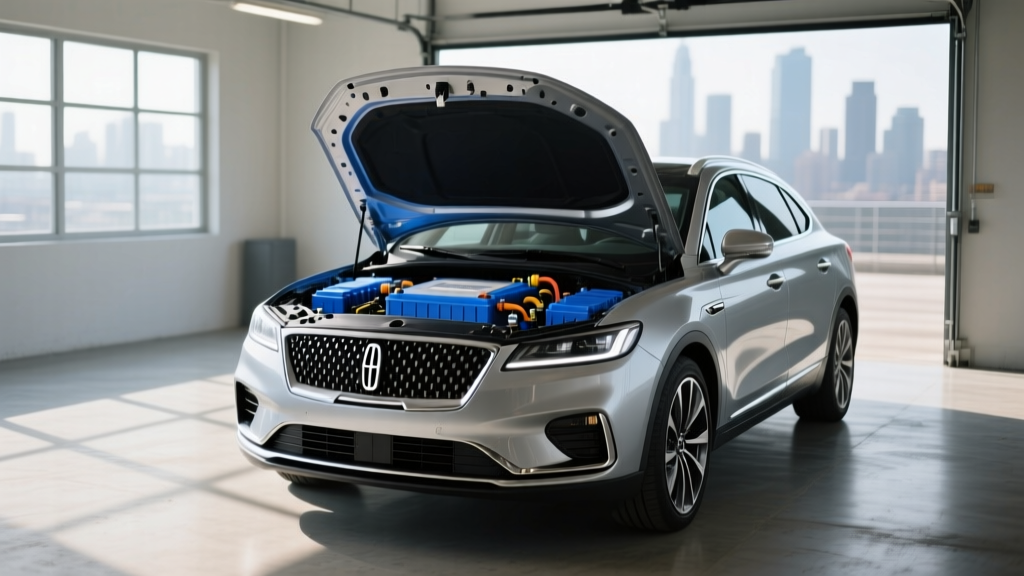
Searches for "Lincoln Corsair hybrid battery issue" tend to spike whenever an owner sees a check-engine light or notices reduced electric-only range. Before panic sets in, it's critical to understand exactly what sits under the Corsair's floor, how it differs from a full EV battery, and what the real failure data shows. The Corsair Grand Touring plug-in hybrid (PHEV) uses a 14.4 kWh lithium-ion pack (roughly 11.5 kWh usable), while the standard Corsair hybrid relies on a much smaller ~1.1 kWh nickel-metal hydride (NiMH) battery for start-stop and regenerative braking assist. Neither is the same beast as the 75–100 kWh NMC packs in a full battery-electric vehicle, and the failure modes are different.
This guide covers the chemistry behind these packs, real degradation data, what Lincoln's warranty actually covers, replacement costs if you're out of warranty, and practical steps to maximize pack longevity — whether you drive a Corsair PHEV or are cross-shopping it against a pure EV.
Battery Chemistry Explained: LFP vs NMC vs NiMH
Understanding battery chemistry is the fastest way to separate marketing from reality. Three chemistries matter for today's buyers:
- NMC (Nickel Manganese Cobalt) — Used in the Lincoln Corsair Grand Touring PHEV and most long-range EVs (Tesla Model Y Long Range, Ford Mustang Mach-E Extended Range). High energy density (~250 Wh/kg at the cell level), good cold-weather performance, but more expensive and thermally sensitive than LFP.
- LFP (Lithium Iron Phosphate) — Found in the Tesla Model 3 RWD, standard-range Model Y, and Ford F-150 Lightning standard range. Lower energy density (~160 Wh/kg), but far superior cycle life (3,000–5,000+ cycles vs. ~1,500–2,500 for NMC), safer thermal profile, and cheaper per kWh. Trade-off: reduced range in sub-freezing temperatures and heavier pack weight for equivalent kWh.
- NiMH (Nickel Metal Hydride) — Legacy chemistry still used in many conventional hybrids (including the standard Lincoln Corsair HEV and several Toyota hybrids) for small buffer batteries. Robust, tolerant of abuse, but low energy density (~70 Wh/kg) and not suitable for meaningful electric-only driving.
| Attribute | LFP | NMC | NiMH |
|---|---|---|---|
| Energy density (cell-level) | ~160 Wh/kg | ~250 Wh/kg | ~70 Wh/kg |
| Typical cycle life | 3,000–5,000+ | 1,500–2,500 | 1,000–2,000 |
| Cold-weather range loss | Higher (~30–40% at 20°F) | Moderate (~20–30% at 20°F) | Moderate |
| Thermal runaway risk | Very low | Low (with BMS management) | Very low |
| Cost per kWh (2026) | ~$90–$110 | ~$120–$150 | N/A (small packs) |
| Common applications | Standard-range EVs | Long-range EVs, PHEVs | Conventional HEVs |
Which is better? There's no universal winner. If you need maximum range in a cold climate and don't mind paying more, NMC delivers. If you charge daily at home, want a pack that will outlast the car, and live in a moderate climate, LFP is the durability champion. For a PHEV like the Corsair Grand Touring, NMC is the right call — you need energy density in a compact package to hit that 28-mile EPA electric-only range.
How Long Do EV and Hybrid Batteries Actually Last?
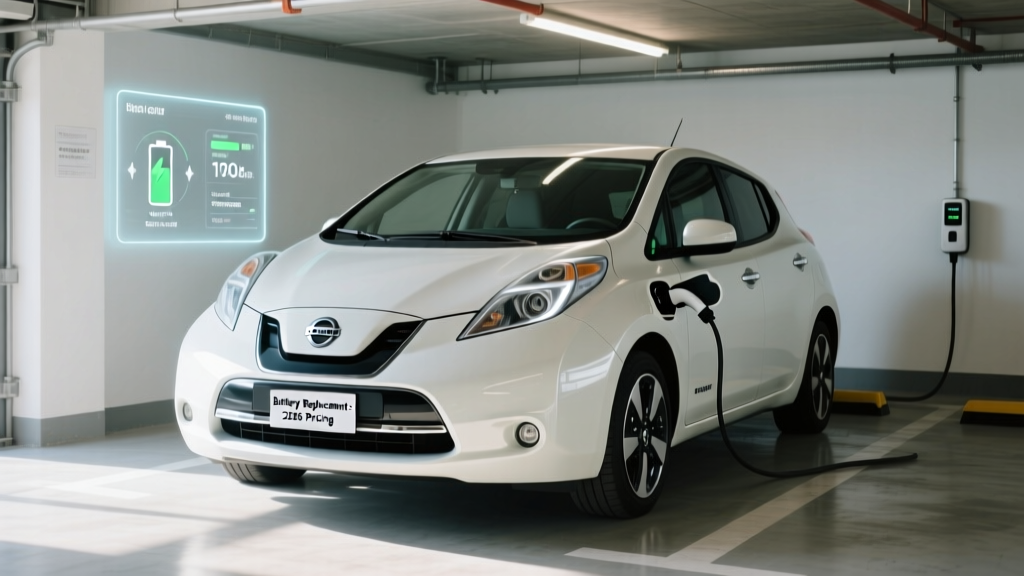
The fear that an EV or PHEV battery will need replacement at 80,000 miles is largely a myth inherited from early Nissan Leafs (which had no active thermal management). Modern liquid-cooled packs tell a very different story.
Typical Degradation Data Points (sourced from manufacturer reports, Recurrent Auto, and owner fleet data):
- Year 1–2: 1–3% capacity loss (initial "formation" drop, then plateau)
- Year 5 / 75,000 miles: ~5–8% loss for liquid-cooled NMC packs; ~3–5% for LFP
- Year 8 / 100,000 miles: ~8–12% loss for NMC; ~5–8% for LFP
- Year 10 / 150,000 miles: ~12–18% loss for NMC; ~8–12% for LFP
- 200,000+ miles: Many Tesla Model 3/Y packs still report 80–85% State of Health (SoH); Recurrent Auto's 2024 fleet study of 15,000 vehicles confirmed median degradation well within warranty thresholds at 100k miles.
For the Lincoln Corsair Grand Touring PHEV specifically, the 14.4 kWh pack is liquid-cooled and managed by a sophisticated battery management system (BMS) that buffers the top and bottom of the charge window — you never actually use 100% or 0% of the cells. This buffer strategy (typically ~10–15% top + bottom) dramatically slows calendar and cycle degradation.
The standard Corsair HEV's small NiMH battery sees even less stress because it operates in a narrow 40–60% state-of-charge window at all times. Failures on these small packs are rare and usually tied to extreme heat exposure or 12V system issues that get misdiagnosed as traction battery faults.
Lincoln's Hybrid Battery Warranty: What's Covered
Federal law (EPA emissions warranty requirements) mandates that hybrid and EV battery packs be covered for a minimum of 8 years / 80,000 miles. In California Air Resources Board (CARB) states — which include CA, CO, CT, ME, MD, MA, NJ, NY, OR, RI, VT, WA, and others adopting CARB rules — that extends to 10 years / 150,000 miles.
| Coverage | Federal (most states) | CARB States |
|---|---|---|
| High-voltage battery | 8 yr / 80,000 mi | 10 yr / 150,000 mi |
| Capacity retention threshold | ~70% of original capacity | ~70% of original capacity |
| Hybrid system components | 8 yr / 80,000 mi | 10 yr / 150,000 mi |
| Powertrain (engine, transmission) | 6 yr / 70,000 mi | 6 yr / 70,000 mi |
What triggers a warranty claim? If your battery's State of Health drops below approximately 70% of its original capacity within the warranty period, Lincoln will repair or replace the pack at no cost. In practice, most dealers perform a capacity test using Ford/Lincoln's IDS (Integrated Diagnostic Software) tool, which reads the pack's learned capacity vs. its original as-built value. A dashboard warning ("Check Hybrid System" or a reduced-ev-range indicator) typically accompanies significant degradation.
Note: The warranty covers defects and abnormal degradation — not damage from accidents, flooding, or unauthorized modifications. It also does not cover the 12V auxiliary battery, which is a separate component with its own typical 3-year warranty.
Replacement Cost: What You'll Actually Pay (If Out of Warranty)
This is where most "Lincoln Corsair hybrid battery issue" anxiety concentrates. Let's put real numbers on it.
| Vehicle Type | Battery Size | Part Cost (OEM) | Labor | Total Estimate |
|---|---|---|---|---|
| Lincoln Corsair HEV (NiMH buffer) | ~1.1 kWh | $2,000–$3,500 | $500–$900 | $2,500–$4,400 |
| Lincoln Corsair Grand Touring PHEV | 14.4 kWh | $8,000–$12,000 | $1,000–$2,000 | $9,000–$14,000 |
| Typical mid-size BEV (e.g., Model Y, Ioniq 5) | 75–84 kWh | $12,000–$18,000 | $1,500–$3,000 | $13,500–$21,000 |
| Large BEV (e.g., F-150 Lightning Ext. Range) | 131 kWh | $20,000–$28,000 | $2,000–$3,500 | $22,000–$31,500 |
Context that matters: The vast majority of modern hybrid and EV batteries never need replacement during original ownership. A 2025 study by Consumer Reports found that fewer than 5% of hybrid battery packs required replacement before 150,000 miles, and most of those were covered under warranty. For the Corsair specifically, the small NiMH pack in the HEV is an extraordinarily low-stress component, and the Grand Touring's liquid-cooled NMC pack is engineered for the vehicle's full lifecycle.
If you do face an out-of-warranty replacement, refurbished and remanufactured packs are increasingly available at 40–60% of OEM pricing. Independent hybrid specialists (not just dealerships) can often perform the swap, and individual module replacement (rather than a full pack) is sometimes possible on NiMH packs for as little as $800–$1,500.
Factors That Accelerate Battery Degradation
Not all miles are created equal. The following habits and conditions measurably shorten battery life:
Do:
- Keep daily charge between 20–80% for NMC packs (set a charge limit in the Lincoln Way app)
- Use Level 2 (240V, 7–11 kW) home charging as your primary method
- Precondition the battery before DC fast charging (the Corsair PHEV does this automatically when a charge station is set in navigation)
- Park in shade or a garage during extreme heat — battery temperature matters more than ambient
- Drive it regularly; calendar degradation is worse on batteries that sit at 100% SoC for weeks
Avoid:
- Daily DC fast charging (DCFC) — occasional road-trip use is fine, but daily 50+ kW sessions accelerate degradation by ~1–2% per year vs. Level 2 only
- Leaving the pack at 100% SoC for extended periods (especially in heat above 90°F)
- Deep discharges to 0% — the BMS buffer protects against true zero, but repeatedly running the pack to "empty" still stresses cells
- Aftermarket battery modifications or unapproved charging equipment
For PHEV owners specifically, one underappreciated factor is charge-deplete / charge-sustain cycling. If you regularly drive the Corsair Grand Touring past its 28-mile electric range and into hybrid mode, the battery undergoes rapid shallow cycling in charge-sustain mode. This is normal and the BMS handles it well, but it's another reason the thermal management system matters — air-cooled PHEV packs (like some older competitors) degrade faster under this pattern.
How to Check Your Battery's State of Health
Most Corsair owners never see a State of Health (SoH) number on their dashboard, but the data is accessible:
- Dealer diagnostic scan: Any Lincoln dealer can pull a battery health report using the IDS tool during a service visit. Ask specifically for "traction battery capacity test" — it takes about 15 minutes and is often free during scheduled maintenance.
- OBD-II readers with EV/PHEV support: Devices like the OBDLink SX paired with apps such as FORScan (Ford/Lincoln-specific) or Hybrid Assistant can read battery SoH, cell voltages, and pack temperature in real time. FORScan is particularly powerful for Ford/Lincoln vehicles and costs under $50 for a basic license.
- Lincoln Way app: The app shows estimated electric range and charging status but does not currently display a raw SoH percentage. Ford has indicated this feature may come via future OTA updates.
- Real-world range tracking: The simplest owner-level check: track your electric-only range over time. If your Corsair Grand Touring consistently delivered 27–28 miles when new and now delivers 22–23, that's roughly a 15–20% degradation signal — time to schedule a dealer diagnostic.
Emerging Battery Tech: Solid-State and Silicon Anodes
If you're researching a Corsair hybrid battery issue today, you've likely encountered headlines about solid-state batteries promising 600-mile range and 10-minute charging. Here's the grounded reality:
- Solid-state batteries (using a solid electrolyte instead of liquid) are in limited production for select 2025–2026 vehicles in Japan and China (Toyota bZ-series prototypes, NIO ET7 semi-solid-state pack). Mass-market US availability is not expected before 2028–2030, and initial costs will be premium. They promise ~2x energy density and improved safety but face manufacturing scale challenges.
- Silicon anode technology (replacing graphite anodes with silicon to boost capacity) is closer — Sila Nanotechnologies and Group14 are supplying silicon-composite anodes for the 2026 Mercedes G-Class EV and select Panasonic cells. Expect ~15–20% energy density gains in the near term, with broader adoption by 2027–2028.
- Sodium-ion batteries are emerging as a low-cost alternative for entry-level EVs (CATL's sodium-ion cells entered production in 2025 for Chinese-market vehicles), but energy density is ~30% below LFP, limiting US applications to urban runabouts.
None of these technologies are available in the Lincoln Corsair lineup today, and Lincoln has not announced a next-generation PHEV or BEV Corsair with solid-state packs. If you're buying now, current NMC and LFP chemistries are mature, well-understood, and backed by robust warranties.
Frequently Asked Questions
How long do Lincoln Corsair hybrid batteries last in real-world use?
Based on fleet data for similar Ford/Lincoln hybrid and PHEV systems, expect the standard Corsair HEV NiMH battery to last 150,000+ miles with minimal degradation (these packs are barely stressed). The Grand Touring PHEV's 14.4 kWh NMC pack should retain 80–85% of its capacity at 100,000 miles under normal use — well within the 70% warranty threshold over 8 years / 80,000 miles (or 10/150k in CARB states).
How much does a Lincoln Corsair hybrid battery cost to replace?
For the standard Corsair HEV's small NiMH pack, expect $2,500–$4,400 total (parts + labor). For the Grand Touring PHEV's 14.4 kWh lithium-ion pack, $9,000–$14,000 at OEM pricing. However, the vast majority of these packs never need replacement during typical ownership, and most failures within the warranty period are covered at no cost.
What does the Lincoln hybrid battery warranty cover?
Lincoln covers the high-voltage battery and hybrid system components for 8 years / 80,000 miles under federal EPA requirements, or 10 years / 150,000 miles in CARB-adopting states. Coverage triggers when the battery's State of Health drops below approximately 70% of original capacity. The warranty covers defects and abnormal degradation but excludes accident damage, flooding, and the separate 12V auxiliary battery.
How can I check and maximize my Corsair's battery health?
Request a traction battery capacity test at your Lincoln dealer, or use an OBD-II reader with FORScan software to monitor SoH at home. To maximize longevity: charge to 80% for daily use (set via Lincoln Way app), rely on Level 2 home charging over DC fast charging, precondition before fast charges, avoid prolonged 100% SoC in hot weather, and drive the vehicle regularly rather than letting it sit.
LFP vs NMC — which battery chemistry is better for me?
If you prioritize longevity and lower cost and live in a moderate climate, LFP wins (3,000–5,000+ cycle life, ~$90–$110/kWh). If you need maximum range, live in a cold climate, or drive a PHEV where energy density matters in a small package, NMC is the right choice (~250 Wh/kg, better cold performance). The Lincoln Corsair Grand Touring PHEV uses NMC — the correct engineering call for its form factor and 28-mile EV range target.
Is a "Check Hybrid System" warning always a battery failure?
No. This warning can be triggered by inverter faults, cooling system issues, sensor failures, 12V battery problems, or even a loose fuel cap on some model years. A proper OBD-II diagnostic scan will return specific trouble codes (e.g., P0A80 for hybrid battery system, P0A0F for inverter performance) that pinpoint the actual fault. Don't assume a full battery replacement is needed until a dealer or qualified hybrid technician has read the codes.
Sources: EPA Fuel Economy Guide (Corsair Grand Touring specs), Recurrent Auto Battery Degradation Study, Lincoln Owner's Manual & Warranty Guide (2025–2026 model year).