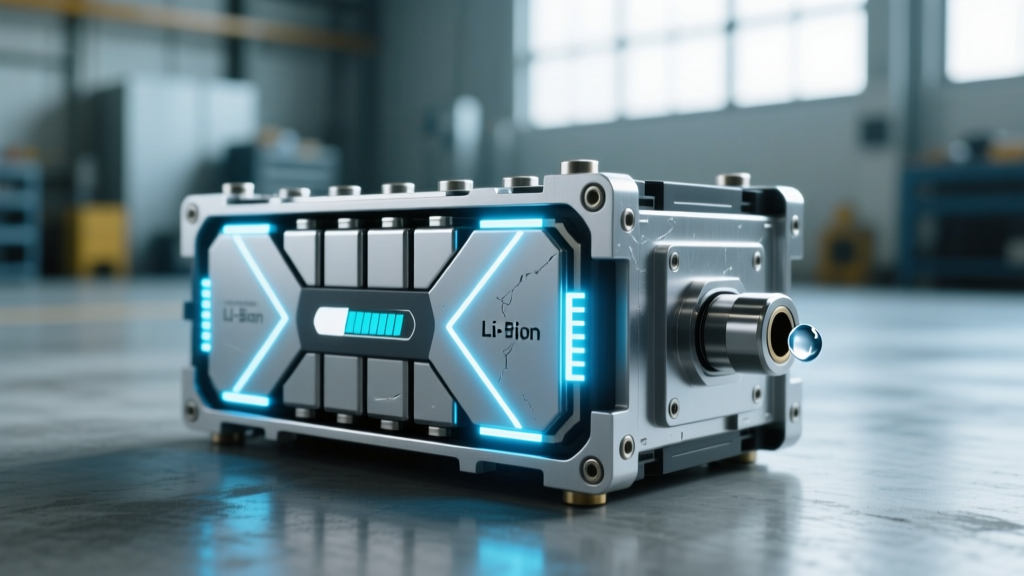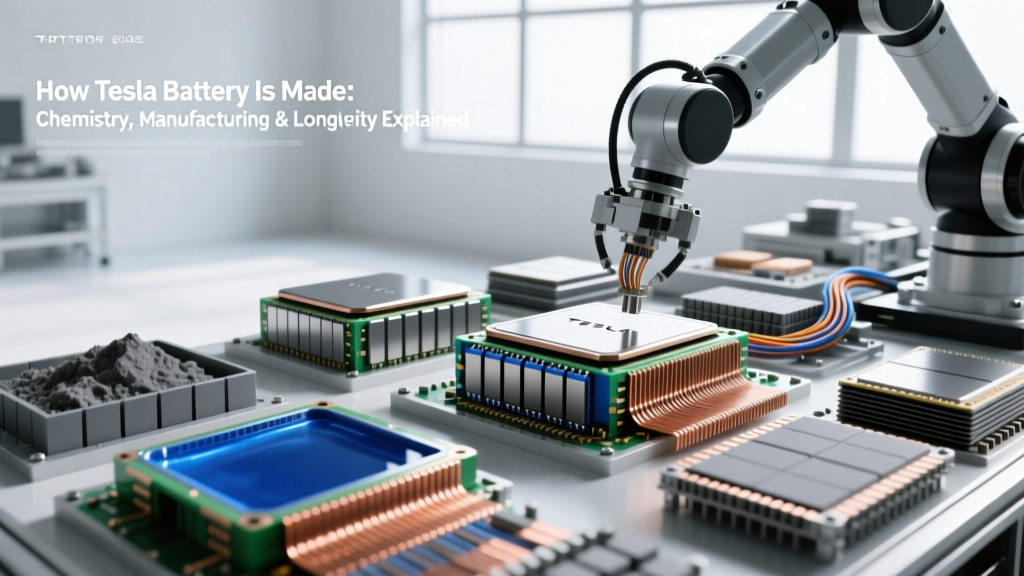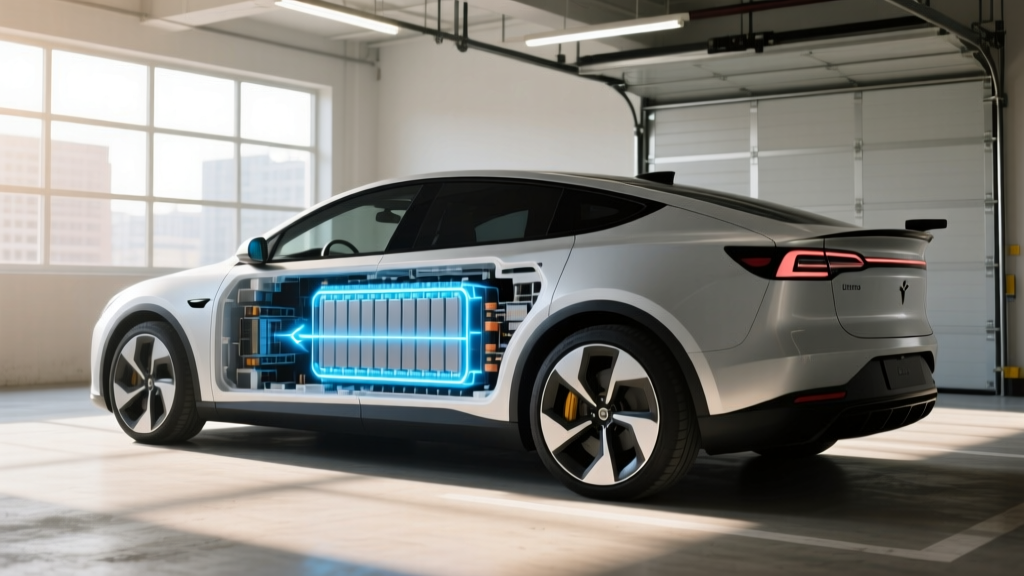
If you've been researching electric vehicles in 2026, you've almost certainly encountered the term LiFePO4 battery — often shortened to LFP (lithium iron phosphate). Tesla uses them in standard-range Model 3 and Model Y vehicles. Ford has adopted them for the base Mustang Mach-E. BYD builds its entire lineup around a proprietary LFP variant called the Blade Battery. And legacy automakers from Volkswagen to Hyundai are adding LFP options to trim entry-level prices.
But what actually makes an LFP cell different from the nickel-manganese-cobalt (NMC) or nickel-cobalt-aluminum (NCA) packs in most long-range EVs? And more importantly, should it influence your purchase decision?
This guide breaks down the chemistry, the real-world degradation data, warranty protections, replacement economics, and daily care practices every EV buyer or owner needs to evaluate — whether your next car packs an LFP, NMC, or something still on the horizon.
What Is a LiFePO4 (LFP) Battery and How Does It Work?
A LiFePO4 battery uses lithium iron phosphate as its cathode material. The "Li" is lithium, "Fe" is iron, "PO4" is the phosphate group. Compare that to an NMC cell, whose cathode blends nickel, manganese, and cobalt — or an NCA cell using nickel, cobalt, and aluminum.
The cathode chemistry determines nearly everything about how a battery behaves: how much energy it stores per kilogram (energy density), how many charge cycles it survives before degrading (cycle life), how it performs in freezing temperatures, how fast it can safely charge, and how much it costs to manufacture.
LFP cells trade raw energy density for exceptional longevity, thermal stability, and lower material cost. Iron and phosphate are abundant and inexpensive. Nickel and cobalt are not — and cobalt sourcing carries well-documented ethical and geopolitical concerns that have pushed automakers toward LFP as a responsible alternative.
In practical terms: an LFP pack will typically be heavier and slightly larger than an NMC pack storing the same amount of energy. That's why LFP has historically appeared in standard-range or city-focused EVs rather than 350+ mile flagship models. But the gap has narrowed significantly. BYD's structural Blade Battery and Tesla's cell-to-pack engineering have pushed LFP energy density high enough to deliver 270+ EPA miles in vehicles like the 2026 Model 3 RWD.
LFP vs NMC vs NCA: Chemistry Trade-Offs Compared
Choosing between chemistries isn't about finding the "best" battery — it's about matching the chemistry to your driving pattern. Here's how the three dominant EV chemistries stack up across the metrics that matter most.
| Attribute | LFP (LiFePO4) | NMC (Nickel Manganese Cobalt) | NCA (Nickel Cobalt Aluminum) |
|---|---|---|---|
| Energy Density (cell-level) | ~160–180 Wh/kg | ~220–260 Wh/kg | ~250–270 Wh/kg |
| Typical Cycle Life (to 80% SoH) | 3,000–5,000+ cycles | 1,000–2,000 cycles | 800–1,500 cycles |
| Calendar Life Expectancy | 15–20+ years | 10–15 years | 10–15 years |
| Thermal Runaway Risk | Very low (~270°C onset) | Moderate (~210°C onset) | Moderate (~150°C onset) |
| Cold-Weather Performance | Reduced — slower charge below 0°C | Better low-temp charge acceptance | Better low-temp charge acceptance |
| Recommended Daily SoC | Up to 100% (no degradation penalty) | 80–90% daily; 100% only when needed | |
| Cost per kWh (cell) | ~$70–$90 | ~$100–$130 | ~$110–$140 |
| Cobalt Content | None | Yes (5–15%) | Yes (5–10%) |
| Common Applications (2026) | Tesla Model 3/Y RWD, Ford Mach-E Select, BYD full lineup, base trims | Most long-range EVs, Hyundai Ioniq 5/6, VW ID.4, Rivian | Tesla Long Range/Performance, some premium EVs |
The key takeaway: If you charge at home nightly, drive under 250 miles daily, and plan to keep your EV for 8–10+ years, LFP is arguably the superior chemistry. If you need maximum range in a single charge, frequently road-trip in freezing weather, or prioritize the lightest possible pack, NMC/NCA still holds advantages.
How Long Do EV Batteries Actually Last? Real Degradation Data
This is the question that drives more EV hesitation than any other. The good news, backed by fleet data: the vast majority of EV batteries outlast the vehicles they're installed in.
Battery degradation is measured as loss of State of Health (SoH) — the percentage of original capacity remaining. A new battery is 100% SoH. When it drops to roughly 70–80% SoH, range becomes noticeably reduced, and many warranties define that threshold as the replacement trigger.
Here's what real-world data shows for degradation across chemistries and use patterns:
| Data Source / Fleet | Chemistry | Time / Mileage | Average Degradation | Projected SoH at 200k mi |
|---|---|---|---|---|
| Tesla Impact Report 2024 (Model 3/Y fleet) | NCA / NMC / LFP mixed | 200,000 miles | ~12–15% capacity loss | ~85–88% SoH |
| Recurrent Auto fleet data (12,000+ EVs) | Mixed chemistries | 4 years / ~60,000 mi | ~5–8% capacity loss | ~84–90% SoH (extrapolated) |
| BYD Blade Battery (LFP) lab testing | LFP | 3,000 full cycles | <10% capacity loss | ~90%+ SoH equivalent |
| CATL LFP cells (industry test data) | LFP | 5,000 full cycles | ~15% capacity loss | ~85% SoH equivalent |
| Nissan Leaf (early air-cooled NMC) | NMC (no thermal mgmt) | 8 years / 80,000 mi | ~20–25% in hot climates | ~65–75% SoH |
Several patterns emerge from this data:
- LFP cells demonstrably outlast NMC/NCA in cycle-life testing, often by 2–3x. In real-world EV use, the gap narrows because thermal management systems protect all chemistries, but LFP still holds a meaningful longevity edge.
- Modern liquid-cooled battery packs degrade far more slowly than early air-cooled designs. The Nissan Leaf's early degradation problems were largely a thermal management failure, not an inherent chemistry flaw.
- Most degradation occurs in the first 1–2 years (roughly 2–5%), then the curve flattens significantly. This "break-in" degradation is normal and expected.
- A 2026 EV battery reaching 200,000 miles with 80%+ SoH is the norm, not the exception, for liquid-cooled packs.
What Does the EV Battery Warranty Actually Cover?
Federal law mandates that EV battery warranties cover a minimum of 8 years or 100,000 miles (whichever comes first) in most states, and 10 years or 150,000 miles in California Air Resources Board (CARB) states. But the details — especially the capacity retention threshold — vary by manufacturer and matter enormously.
| Manufacturer (2026 Models) | Warranty Period | Capacity Threshold | Chemistry (Base Trim) | Notes |
|---|---|---|---|---|
| Tesla (Model 3 RWD) | 8 yr / 100,000 mi | 70% SoH | LFP | Long Range/Performance: 8yr/120k mi |
| Ford (Mach-E) | 8 yr / 100,000 mi | 70% SoH | LFP (Select) / NMC (GT) | Transferable to second owner |
| Hyundai (Ioniq 5) | 10 yr / 100,000 mi | 70% SoH | NMC | Among the longest coverage terms |
| BYD (Atto 3 / Seal) | 8 yr / 160,000 km | 70% SoH | LFP (Blade) | Varies by market; US availability limited |
| Volkswagen (ID.4) | 8 yr / 100,000 mi | 70% SoH | NMC (LFP option in 2026) | SoH verified via dealer diagnostic |
| Rivian (R1T / R1S) | 8 yr / 175,000 mi | 70% SoH | NMC (Samsung SDI) | Higher mileage cap than most competitors |
What the warranty covers: If your battery's State of Health drops below the stated threshold within the warranty period due to normal use, the manufacturer will repair or replace it — typically with a refurbished pack that meets the threshold, not necessarily a brand-new one.
What it does NOT cover: Damage from accidents, flooding, improper modifications, or using the battery as a stationary power source beyond the vehicle's intended V2L/V2H capabilities (check your owner's manual). Cosmetic issues and minor capacity loss above the threshold are also excluded.
For the latest federal warranty requirements and consumer protections, see the EPA's green vehicles guidance and your state's consumer protection office.
How Much Does an EV Battery Replacement Cost?
This is where fear-mongering thrives — so let's anchor the discussion in context. Most EV owners will never need a battery replacement. The data above shows modern packs routinely lasting 200,000+ miles with usable capacity. Out-of-warranty replacements are rare, but if you plan to keep your EV for 15+ years or buy a high-mileage used EV, the numbers matter.
| Vehicle / Pack Size | Chemistry | Battery Replacement Cost (parts + labor) | Typical When Needed |
|---|---|---|---|
| Tesla Model 3 RWD (~60 kWh) | LFP | $10,000 – $14,000 | Rarely before 250,000+ mi |
| Tesla Model Y LR (~75 kWh) | NCA | $13,000 – $18,000 | Rarely before 200,000+ mi |
| Hyundai Ioniq 5 (~77.4 kWh) | NMC | $14,000 – $20,000 | Rarely before 200,000+ mi |
| Ford F-150 Lightning Ext. Range (~131 kWh) | NMC | $22,000 – $32,000 | Rarely before 200,000+ mi |
| Chevrolet Bolt EV (~65 kWh) | NMC | $10,000 – $15,000 | Post-recall replacement; LFP swap available |
| Nissan Leaf (40–62 kWh) | NMC | $7,000 – $12,000 | More likely in hot climates, 100k–150k mi |
Several important factors shape these numbers:
- LFP packs are generally cheaper to replace than NMC/NCA packs of equivalent capacity, reflecting lower raw material costs.
- Prices are declining. Battery pack prices fell from ~$140/kWh in 2023 to roughly $95–$110/kWh by 2026 for LFP and $110–$130/kWh for NMC, per BloombergNEF tracking. Replacement costs follow this trend downward.
- Module-level repair is increasingly an option. Rather than replacing the entire pack, specialized EV shops can diagnose and swap individual failed modules for $2,000–$6,000, depending on the failure.
- Refurbished packs from totaled EVs offer a lower-cost replacement path, typically 40–60% of new-pack pricing.
What Affects EV Battery Life? Five Factors You Can Control
Battery degradation is driven by chemistry, temperature, charge patterns, and time. You can't change the chemistry after purchase, but you can significantly influence how slowly or quickly your pack ages.
1. State of Charge (SoC) Habits
NMC/NCA: Store and charge between 20–80% for daily use. Charge to 100% only when you'll drive immediately (road trips). Prolonged storage at 100% SoC accelerates calendar degradation through electrolyte oxidation at high voltage.
LFP: Tesla and BYD explicitly recommend charging to 100% at least once per week. LFP's voltage curve is so flat that the battery management system (BMS) needs full-charge calibration to accurately estimate remaining range. Storing LFP at 100% causes far less degradation than it would in NMC.
2. Temperature Exposure
Batteries degrade fastest when held at extreme temperatures — especially heat. Parking in shade or a garage during summer is genuinely beneficial. In winter, preconditioning your battery (heating it before fast charging) is critical: a cold LFP battery at -10°C may accept DC fast charging at just 20–30 kW instead of its rated 150+ kW peak. Most 2026 EVs precondition automatically when you navigate to a charger.
3. DC Fast-Charging Frequency
Occasional DC fast charging (1–2 sessions per week) has minimal impact on modern battery health. Daily exclusive use of 150–350 kW DC fast charging does accelerate degradation modestly — studies suggest 1–3% additional loss over 100,000 miles compared to Level 2 charging. The heat generated during high-power charging is the primary culprit, and liquid-cooled packs manage this well. If you have home Level 2 access, use it as your primary charging method.
4. Driving and Discharge Patterns
Consistently draining the battery to near 0% and then letting it sit uncharged stresses cells more than partial discharge cycles. Try to plug in before dropping below 10–15% SoC. Aggressive driving (repeated hard acceleration) generates more heat than moderate driving, but the effect on degradation is smaller than temperature and SoC factors.
5. Software Updates and BMS Calibration
Over-the-air updates from Tesla, Ford, Rivian, and others periodically refine the battery management system's charge algorithms. These updates can improve estimated range accuracy, optimize thermal management, and even recover a small amount of apparent capacity by adjusting the buffer. Keep your vehicle's software current.
How to Check Your EV Battery's State of Health (SoH)
Unlike a gas car's engine, you can't "feel" battery degradation day to day — it happens gradually over months and years. But several methods let you monitor it:
In-vehicle displays: Some 2026 EVs (notably Tesla, Hyundai/Kia, and Mercedes-Benz) show battery health or degradation percentage in the settings menu. Tesla's "Battery Health" screen shows estimated range at 100% SoC compared to when new, which effectively reveals SoH.
OBD-II diagnostic tools: Devices like the OBDeleven, Carista, or dedicated EV tools such as the LeafSpy app (for Nissan Leaf) or Scan My Tesla can read detailed battery data from the BMS, including individual cell voltages, pack SoH percentage, and total energy throughput.
Dealer diagnostics: Any authorized service center can run a battery health report. Request one before purchasing a used EV — it's the single most important data point for a high-mileage electric car. If the SoH is above 90% at 50,000+ miles, the pack is aging well.
Third-party services: Companies like Recurrent Auto offer free battery health monitoring by connecting to your vehicle's telematics. They compare your pack's degradation curve against thousands of identical vehicles and flag anomalies early.
The manual method: Charge to 100%, note the displayed range, and compare it to the original EPA-rated range. A 2026 Model 3 RWD (LFP) rated at 272 EPA miles showing 250 miles at 100% SoH after 30,000 miles suggests roughly 8% degradation — well within normal parameters.
What's Next? Solid-State, Silicon Anodes, and Beyond
While LFP and NMC dominate today's EV market, several next-generation technologies are advancing through pilot production:
Solid-state batteries replace the liquid electrolyte with a solid ceramic, polymer, or sulfide material, promising higher energy density (~400+ Wh/kg), faster charging, and near-zero fire risk. Toyota, Samsung SDI, and QuantumScape are the most publicized developers. Toyota has announced solid-state EVs for limited production in 2027–2028, but volumes will be extremely small and pricing will be premium. Widespread, affordable solid-state EVs are realistically a 2030+ prospect.
Silicon-dominant anodes (replacing graphite) can increase cell energy density by 20–40%. Sila Nanotechnologies and Group14 Technologies are supplying early production cells. Expect silicon-anode NMC cells to appear in premium 2027–2028 model-year EVs, gradually trickling down to mainstream vehicles by the early 2030s.
Sodium-ion batteries use abundant sodium instead of lithium, offering lower cost and good cold-weather performance at the expense of lower energy density. CATL and BYD are producing sodium-ion cells for budget city EVs in China. US-market applications remain announced but not yet available as of 2026, likely arriving in fleet and entry-level vehicles by 2028–2029.
None of these technologies invalidate an LFP or NMC purchase today. Battery chemistries improve incrementally, and the packs in 2026 EVs are already durable enough to outlast most ownership cycles.
Frequently Asked Questions About LiFePO4 EV Batteries
Is a LiFePO4 battery better than NMC for my EV?
It depends on your use case. LFP is better if you want maximum cycle life (3,000–5,000+ cycles), can charge to 100% daily without worry, prioritize lower cost, and don't need 350+ miles of range. NMC is better if you need the longest single-charge range, frequently drive in very cold climates where charge acceptance matters, or want the lightest possible pack. For most daily commuters with home charging, LFP is the pragmatic choice in 2026.
How long do LiFePO4 EV batteries last?
LFP cells are rated for 3,000–5,000+ full charge cycles to 80% State of Health. In real-world EV use with partial cycles and thermal management, that translates to 300,000–500,000+ miles of driving before reaching 80% SoH — far more than most vehicles will accumulate. Calendar life is estimated at 15–20+ years.
Can I charge an LFP battery to 100% every day?
Yes — and in fact, Tesla and BYD recommend it. LFP's flat voltage curve means the BMS needs regular full charges to calibrate its range estimate accurately. Unlike NMC, LFP does not suffer significant degradation from sustained high SoC, making daily 100% charging a non-issue.
Do LFP batteries perform poorly in cold weather?
LFP cells have somewhat reduced charge acceptance in freezing temperatures compared to NMC. Below 0°C (32°F), DC fast charging speeds may be limited until the battery warms via preconditioning. Driving range loss in cold weather affects all chemistries similarly (~20–30% reduction at 20°F), primarily due to cabin heating demand rather than chemistry alone. A heat pump-equipped LFP EV mitigates this substantially.
What happens if my EV battery degrades below the warranty threshold?
If your battery's SoH drops below the manufacturer's stated threshold (typically 70%) within the warranty period (usually 8 years/100,000 miles), the manufacturer will repair or replace the pack at no cost to you. The replacement may be a refurbished unit that meets the threshold. File a claim through your authorized dealer, who will run a diagnostic to verify SoH.
Are LiFePO4 batteries safer than other lithium-ion chemistries?
Yes, measurably so. LFP's thermal runaway onset temperature is approximately 270°C, compared to roughly 210°C for NMC and 150°C for NCA. LFP cells also release less oxygen during thermal events, reducing fire intensity. This inherent stability is a key reason LFP is increasingly preferred for applications where safety margins matter — including residential energy storage and entry-level EVs.
Does the federal EV tax credit apply to LFP battery vehicles?
The IRS §30D clean vehicle credit applies based on battery component sourcing and critical mineral requirements, not chemistry type. However, because LFP batteries contain no cobalt or nickel and use iron/phosphate (abundant materials), some LFP vehicles more easily meet the critical-mineral sourcing thresholds. That said, many LFP cells are manufactured in China, which can disqualify them under the foreign entity of concern (FEOC) rules. Always verify current-year eligibility on fueleconomy.gov before purchasing, as sourcing rules change frequently.
The Bottom Line on LiFePO4 EV Batteries
LFP batteries have moved from niche chemistry to mainstream standard — and for good reason. They offer exceptional cycle life, inherent safety, zero cobalt dependency, and declining costs. The trade-offs — lower energy density and reduced cold-weather charge acceptance — matter less with every passing year as pack engineering improves and heat pumps become standard.
If you're buying an EV in 2026 and your daily driving falls under 200 miles, you have access to home Level 2 charging, and you plan to keep the vehicle for 8+ years, an LFP-equipped model deserves serious consideration. The battery will almost certainly outlast your ownership — and if it doesn't, the warranty has you covered.