If you're researching an electric vehicle, the high-voltage lithium-ion pack is the single most expensive component in the car — and the one buyers worry about most. Will it last? What happens when it degrades? How much does replacement actually cost? These are fair questions, and the answers are more encouraging than the headlines suggest.
This guide covers everything a current or prospective EV owner needs to know about the li-ion battery for electric car applications: the two dominant chemistries on the market today, real-world degradation data pulled from fleet studies and owner reports, what federal warranty mandates actually cover, realistic replacement costs, and the daily habits that meaningfully extend pack life.
LFP vs. NMC/NCA: The Two Chemistries Powering Today's EVs
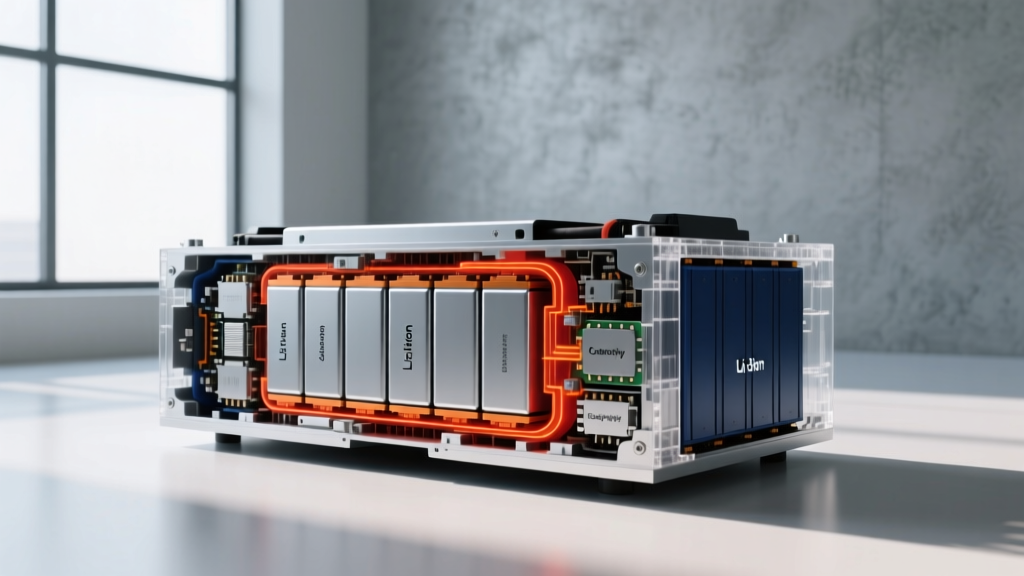
Not all lithium-ion batteries are the same. The cathode chemistry determines energy density, cycle life, cold-weather behavior, cost, and even how you should charge the pack daily. In 2026, virtually every EV sold in the U.S. uses one of two families:
- NMC (Nickel Manganese Cobalt) / NCA (Nickel Cobalt Aluminum): Higher energy density, better cold-weather performance, but more expensive and typically rated for fewer charge cycles before measurable degradation.
- LFP (Lithium Iron Phosphate): Lower energy density and heavier per kWh, but significantly longer cycle life, lower cost, no cobalt, and the ability to charge to 100% daily without accelerated wear.
| Attribute | NMC / NCA | LFP |
|---|---|---|
| Energy Density (cell-level) | ~220–300 Wh/kg | ~140–180 Wh/kg |
| Typical Cycle Life (to 80% SoH) | 1,000–2,000 cycles | 3,000–5,000+ cycles |
| Daily Charge Recommendation | 80% (100% for trips only) | 100% OK daily |
| Cold-Weather Performance | Better at low temps | More range loss below 32°F |
| Cost per kWh (pack-level) | ~$130–$160 | ~$90–$120 |
| Cobalt Content | Yes (supply-chain concern) | None |
| Common In 2026 Models | Tesla Model S/X, Hyundai Ioniq 5 (Long Range), BMW iX, Rivian R1S/R1T | Tesla Model 3/Y RWD, Ford Mustang Mach-E Select, base Hyundai Kona Electric |
Which is better? Neither is universally superior. If you want maximum range in a lighter package, drive in cold climates, or don't mind managing charge limits, NMC/NCA is the right call. If you prioritize longevity, plan to keep the car 10+ years, want the simplicity of charging to 100% every night, and can accept slightly less range per pound, LFP is the stronger pick. Tesla's standard-range Model 3 and Model Y have used LFP since 2021, and the chemistry's market share in the U.S. continues to grow as more automakers adopt it for base trims.
How Long Do EV Batteries Actually Last?
The short answer: almost certainly longer than you'll own the car. The long answer requires looking at real degradation data rather than manufacturer marketing.
A 2025 analysis by Geotab, tracking over 10,000 EVs in fleet service, found that the average lithium-ion battery pack loses approximately 1.8% of its original capacity per year under typical use. That projects to roughly 82–85% State of Health (SoH) after 10 years — well above the 70% threshold that most warranties use to define "failure."
But averages mask important variation. Here's what the data actually shows across different scenarios:
| Scenario | Annual Degradation | Projected SoH at 150k Miles |
|---|---|---|
| Level 2 home charging, moderate climate, 80% daily limit | ~1.0–1.5% | ~88–92% |
| Mixed charging (home + occasional DC fast), temperate climate | ~1.8–2.3% | ~82–86% |
| Frequent DC fast charging, hot climate (AZ/TX), high SoC habits | ~2.5–3.5% | ~72–78% |
| LFP pack, daily 100% charge, Level 2 only, moderate climate | ~0.8–1.2% | ~92–95% |
The takeaway: heat, high state of charge, and frequent DC fast charging are the three accelerants of degradation. A garage-kept EV in Portland charged nightly on Level 2 to 80% will age far more gracefully than one parked in a Phoenix driveway and DC-fast-charged to 100% daily. This isn't speculation — it's electrochemistry.
What Does the EV Battery Warranty Actually Cover?
Federal law mandates that EV batteries carry a minimum warranty of 8 years or 100,000 miles (whichever comes first), and in California Air Resources Board (CARB) states, that extends to 10 years or 150,000 miles. But the details matter enormously.
| Manufacturer (2026 Models) | Battery Warranty | Capacity Threshold | Notes |
|---|---|---|---|
| Tesla (Model 3/Y RWD — LFP) | 8 yr / 100,000 mi | 70% retention | Long Range/Performance (NMC): 8 yr / 120,000 mi |
| Hyundai / Kia | 10 yr / 100,000 mi | 70% retention | Among the longest coverage in the industry |
| Ford (Mach-E, F-150 Lightning) | 8 yr / 100,000 mi | 70% retention | Covers battery and electric powertrain components |
| BMW (iX, i4) | 8 yr / 100,000 mi | 70% retention | Includes thermal management system |
| Rivian (R1S / R1T) | 8 yr / 175,000 mi | 70% retention | Highest mileage threshold among major OEMs |
What "70% retention" means in practice: If your 75 kWh pack can only hold 52 kWh or less (70% of original) within the warranty period, the manufacturer must repair or replace it — typically with a refurbished or remanufactured unit that meets the threshold, not necessarily a brand-new pack. Most warranties cover defects and excessive degradation but exclude damage from accidents, flooding, or unauthorized modifications. Read the fine print in your owner's manual; the U.S. Department of Energy's EV technology overview also summarizes federal requirements.
EV Battery Replacement Cost: What Owners Actually Pay
This is where fear-mongering runs rampant, so let's anchor to real numbers. A full pack replacement outside of warranty is expensive — but it's also rare, and getting less so as the supply chain matures.
| Vehicle / Pack Size | Chemistry | Estimated Replacement Cost (Parts + Labor) | Typical Need Timeline |
|---|---|---|---|
| Tesla Model 3 RWD (~60 kWh) | LFP | $12,000–$16,000 | Rarely before 200k+ mi |
| Tesla Model Y Long Range (~82 kWh) | NMC | $16,000–$22,000 | Rarely before 180k+ mi |
| Hyundai Ioniq 5 (~77.4 kWh) | NMC | $14,000–$20,000 | Rarely before 180k+ mi |
| Ford F-150 Lightning Extended (~131 kWh) | NMC | $22,000–$32,000 | Rarely before 150k+ mi |
| Chevrolet Bolt EV (~65 kWh) | NMC | $14,000–$17,000 | Recall-replaced packs; post-recall packs performing well |
Critical context: The vast majority of EVs will never need a full battery replacement. Geotab's fleet data shows that at the current average degradation rate, a typical pack will retain 80%+ capacity at 200,000 miles. Many early Nissan Leafs (with far less sophisticated thermal management) are still running on original packs past 150,000 miles — albeit with noticeable range loss. Modern packs with active liquid cooling and advanced BMS (battery management systems) are substantially more durable.
Also worth noting: module-level repair is increasingly available. Rather than replacing the entire pack, a specialist can swap individual degraded modules for $2,000–$6,000 depending on the vehicle. This option is growing as independent EV shops expand.
Five Factors That Accelerate (or Slow) Battery Degradation
Degradation isn't random. It's driven by specific, controllable variables. Here's what actually moves the needle, ranked by impact:
- 1. Heat exposure (highest impact): Sustained battery temperatures above 95°F accelerate chemical breakdown. Park in shade or a garage when possible. Precondition the cabin while plugged in so the thermal management system doesn't draw from the pack in extreme heat. Packs in Arizona and Texas degrade measurably faster than those in Oregon or Minnesota — data from Recurrent Auto confirms a roughly 0.5–1.0% per-year penalty for hot-climate vehicles.
- 2. High State of Charge (SoC) storage: For NMC/NCA packs, sitting at 100% SoC for extended periods stresses the cathode. Charge to 80% for daily use and only hit 100% when you need the full range for a trip. LFP packs are the exception — manufacturers recommend periodic 100% charges to help the BMS calibrate cell balancing.
- 3. DC fast charging frequency: Occasional DC fast charging (road trips, a few times a month) has minimal impact. Daily DC fast charging at 150+ kW, especially in hot weather, does measurably accelerate wear. If you rely on public charging daily, prioritize Level 2 (7–19 kW) where possible and use DC fast chargers for the 10–80% window only — charging slows dramatically above 80% anyway due to the charge curve taper.
- 4. Deep discharges (below 10% SoC): Routinely running the pack to near-zero stresses the anode. Most modern EVs have a bottom buffer (typically 2–5 kWh of reserve capacity below "0%" displayed) to protect against this, but it's still wise to plug in before you drop below 15–20%.
- 5. Cold-weather charging without preconditioning: Charging a cold battery — especially at DC fast-charging speeds — can cause lithium plating on the anode, a form of permanent damage. Always use your vehicle's preconditioning feature (most EVs activate this automatically when you navigate to a charger) to warm the pack before high-speed charging sessions.
Monitoring Your Battery's State of Health (SoH)
State of Health (SoH) is a percentage representing your pack's current maximum capacity relative to its original capacity. A new pack is 100% SoH; a pack that originally held 75 kWh but now holds 67.5 kWh is at 90% SoH.
How to check SoH in 2026:
- In-vehicle displays: Tesla shows battery health in the service menu (software 2025.24+). Hyundai/Kia displays SoH in the EV settings panel. BMW includes it in the iDrive battery management screen.
- OBD-II diagnostic tools: Devices like the OBDLink SX paired with apps such as EV Battery Health or LeafSpy (for Nissan) can read SoH directly from the BMS. Cost: $40–$120 for the adapter.
- Dealer diagnostic reports: Any authorized service center can pull a full battery health report. Request one during routine service — most will provide it at no charge.
- Third-party services: Companies like Recurrent and Geotab offer battery health reports based on telematics data, often used for resale valuation.
A good rule: check SoH every 6–12 months, or before purchasing a used EV. A pack showing less than 90% SoH at under 50,000 miles warrants investigation — it may indicate heavy DC fast charging, hot-climate use, or a defective module.
What's Next: Solid-State, Silicon Anodes, and Realistic Timelines
The next generation of EV battery technology is real — but it's not in your driveway yet. Here's an honest status check as of 2026:
- Solid-state batteries: These replace the liquid electrolyte with a solid material, promising higher energy density (~400–500 Wh/kg at the cell level), faster charging, and improved safety (no flammable electrolyte). Toyota has announced a solid-state EV for 2027–2028 with a claimed 600+ mile range and 10-minute fast charging. Samsung SDI and QuantumScape are also in advanced testing. Reality check: Production volumes will be extremely limited initially, costs will be high, and broad availability in mainstream vehicles is unlikely before 2030. These are announced timelines, not guarantees.
- Silicon-dominant anodes: Replacing graphite anodes with silicon can boost energy density by 20–40%. Companies like Sila Nanotechnologies and Group14 are supplying early production cells. The Mercedes-Benz G-Class electric (announced) is expected to use silicon-anode cells. Timeline: Limited production vehicles in 2026–2027; wider adoption by 2028–2029 as manufacturing scales.
- Sodium-ion batteries: CATL and BYD are producing sodium-ion packs for lower-cost, shorter-range vehicles (primarily in China). These eliminate lithium entirely but sacrifice energy density (~120–150 Wh/kg). U.S. availability is not expected before 2028 at the earliest, and likely in budget city cars rather than long-range models.
For buyers deciding today: current li-ion battery for electric car applications — both LFP and NMC — are mature, well-understood, and backed by extensive warranty coverage. Waiting for solid-state means waiting years and paying a premium when it arrives. The packs available now are genuinely good enough for the vast majority of drivers.
Frequently Asked Questions
How long do EV batteries last in years and miles?
Based on fleet data from Geotab and Recurrent Auto, the average EV battery retains 82–88% of its original capacity after 10 years or 150,000 miles. Many packs exceed 200,000 miles before falling below the 70% warranty threshold. LFP packs generally outlast NMC packs by a significant margin under similar conditions.
How much does it cost to replace an EV battery?
Full pack replacement ranges from roughly $12,000 for a smaller LFP pack (Tesla Model 3 RWD) to $32,000 for a large NMC pack (F-150 Lightning Extended Range), including parts and labor. Module-level repairs cost $2,000–$6,000. However, most EVs will never need a replacement — degradation data shows the majority of packs outlive the vehicle's useful life.
What does the EV battery warranty cover?
Federal law requires a minimum of 8 years / 100,000 miles (10 years / 150,000 miles in CARB states). Coverage applies if the pack falls below a defined capacity threshold — typically 70% of original capacity. Warranties cover defects and excessive degradation but not accident damage, flooding, or unauthorized modifications. Always check your specific manufacturer's terms.
How do I check and maximize my EV battery health?
Check SoH via your vehicle's built-in display, an OBD-II scanner with an EV app, or a dealer diagnostic report. To maximize longevity: charge NMC packs to 80% daily (100% for LFP), minimize DC fast charging frequency, avoid prolonged exposure to extreme heat, precondition before fast charging in cold weather, and avoid routinely discharging below 15%.
LFP vs. NMC — which battery chemistry should I choose?
Choose LFP if you want maximum cycle life, plan to keep the car 10+ years, prefer the simplicity of 100% daily charging, and can accept slightly less range. Choose NMC/NCA if you need maximum range in a lighter pack, frequently drive in cold weather, or want the fastest DC fast-charging speeds. Both chemistries are proven and reliable in 2026 — the right choice depends on your ownership horizon and driving patterns.