If you follow EV battery news, you've probably seen headlines about the li-air battery (lithium-air) promising energy densities that rival gasoline. The appeal is obvious: a cell that breathes oxygen from the atmosphere as its cathode reactant could theoretically store 5 to 10 times the energy per kilogram of today's lithium-ion packs. For EV buyers wondering whether to wait for a breakthrough or buy now, the honest answer requires separating laboratory potential from driveway reality.
This guide puts li-air in context with the batteries actually powering 2026 EVs — NMC, NCA, and LFP — and covers the data every EV owner or shopper needs: degradation curves, warranty terms, replacement costs, and the daily habits that determine whether your pack lasts 150,000 miles or 300,000.
What Is a Li-Air Battery, and Why Isn't It in Your EV Yet?
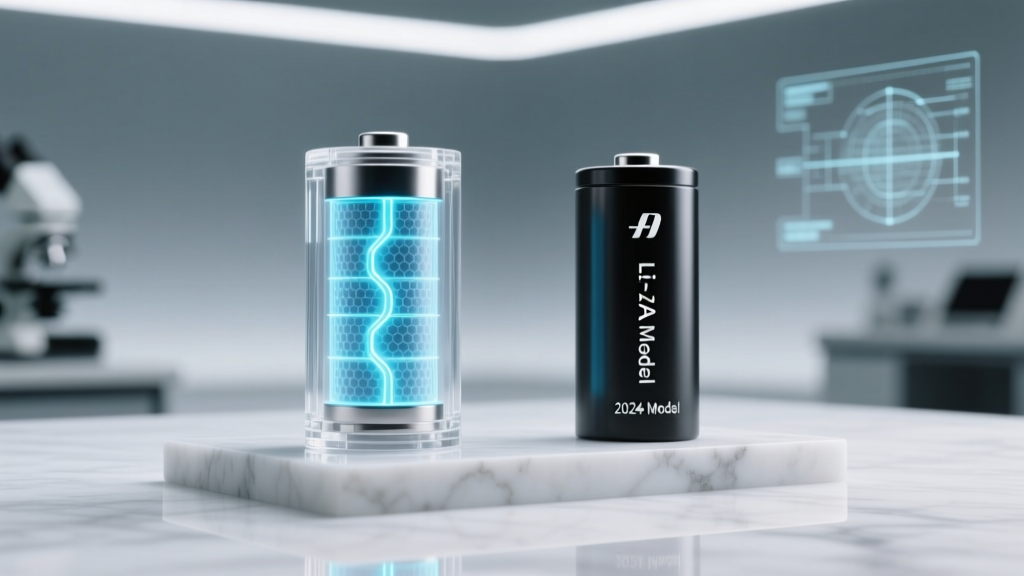
A lithium-air (Li-O₂) cell uses a lithium metal anode and draws oxygen from ambient air as the cathode reactant, forming lithium peroxide (Li₂O₂) during discharge. Because oxygen isn't carried inside the cell, the theoretical specific energy is extraordinary — roughly 3,500 Wh/kg at the cell level, compared to about 250–300 Wh/kg for the best current NMC cells.
The engineering barriers, however, remain formidable as of 2026:
- Rechargeability: Li₂O₂ is an electrical insulator. Breaking it down on recharge requires high overpotentials that degrade the carbon cathode and liquid electrolyte.
- Cycle life: Research cells typically manage tens to low hundreds of cycles — far short of the 1,000–2,000+ cycles required for automotive duty.
- Moisture and CO₂ sensitivity: Ambient air contains water vapor and carbon dioxide, both of which react destructively with lithium metal, demanding complex filtration membranes.
- Lithium metal dendrites: The anode grows needle-like structures during charging that can penetrate the separator and cause internal shorts.
No automaker has announced a production vehicle with a li-air battery. The technology remains in the fundamental-research stage at institutions like MIT, the University of Cambridge, and Argonne National Laboratory. Realistic commercialization timelines, if the chemistry hurdles are solved, point to the mid-to-late 2030s at the earliest, and likely initially in niche applications before passenger vehicles.
Today's Real EV Chemistries: LFP vs. NMC vs. NCA
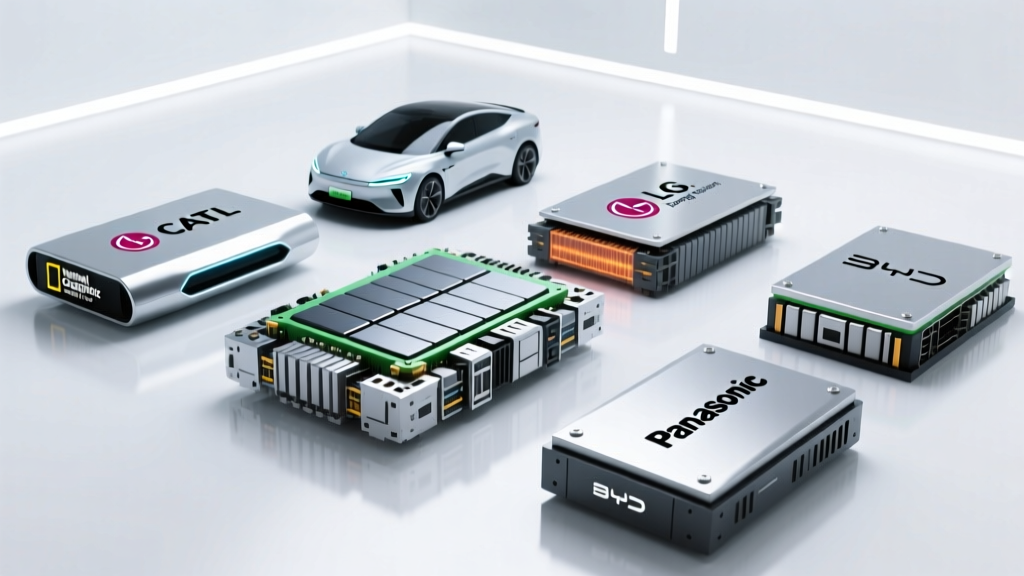
While li-air is a lab curiosity, three chemistries dominate 2026 EV packs. Understanding their trade-offs matters far more for your next purchase.
| Attribute | LFP (LiFePO₄) | NMC (Ni-Mn-Co) | NCA (Ni-Co-Al) |
|---|---|---|---|
| Energy density (cell-level) | ~160–180 Wh/kg | ~220–300 Wh/kg | ~250–290 Wh/kg |
| Cycle life | 3,000–5,000+ cycles | 1,000–2,000 cycles | 1,000–1,500 cycles |
| Cold-weather performance | Moderate (greater range loss below 32°F) | Better (heat-pump systems help) | Better |
| Thermal stability / safety | Excellent (resistant to thermal runaway) | Good (requires robust BMS) | Good (requires robust BMS) |
| Cost ($/kWh at pack level) | ~$85–105 | ~$110–135 | ~$115–140 |
| Cobalt content | None | Low–moderate | Low |
| Typical 2026 applications | Tesla Model 3 RWD, Model Y RWD, Ford Mustang Mach-E Select, BYD models | Hyundai Ioniq 5/6, VW ID.4, Chevy Equinox EV, Ford extended-range | Tesla Model S/X, Rivian R1T/R1S |
Which is better? There is no universal winner. LFP is the pragmatic choice for buyers who prioritize longevity, lower cost, and cobalt-free sourcing — and who can accept a slightly heavier pack for a given range. NMC/NCA suits buyers who need maximum range from a lighter, more compact pack, especially in larger vehicles like trucks and performance sedans. Tesla's split — LFP in Standard Range, NMC/NCA in Long Range and Performance trims — is a textbook example of matching chemistry to use case.
How Long Do EV Batteries Actually Last?
The fear of a $20,000 battery swap at year six is the single biggest myth in EV ownership. Real-world fleet data tells a different story.
Typical degradation trajectory (NMC packs, fleet averages):
- Year 1 / 15,000 mi: ~2–3% capacity loss (initial formation settling)
- Year 4 / 60,000 mi: ~6–8% cumulative loss
- Year 8 / 120,000 mi: ~10–13% cumulative loss
- Year 12 / 180,000 mi: ~15–20% cumulative loss (modeling from Geotab fleet data)
LFP packs degrade more slowly, often showing 5–8% loss at 100,000 miles. Tesla's 2025 Impact Report indicated Model 3/Y packs retained roughly 85% capacity at 150,000 miles. The vast majority of EV batteries outlast the vehicle's body, suspension, and electronics.
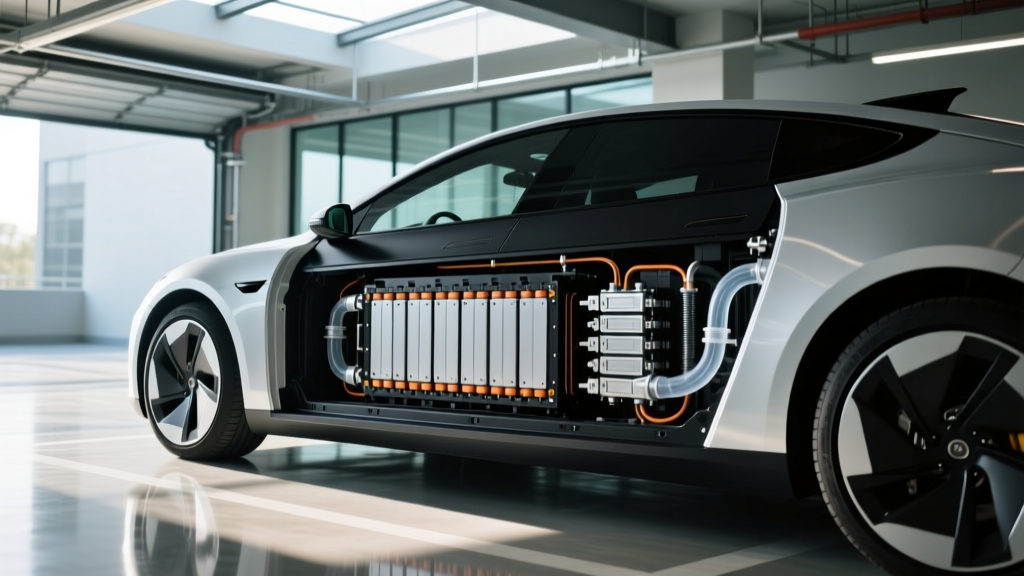
Most owners will never need a full pack replacement. Outliers — early Nissan LEAFs with passive air-cooled packs, some early Chevy Bolts with manufacturing-defective cells (recalled and replaced under warranty) — shaped public perception, but modern liquid-cooled packs with sophisticated Battery Management Systems (BMS) have largely eliminated those failure modes.
What the Battery Warranty Actually Covers
Federal law mandates a minimum 8-year / 100,000-mile warranty on EV battery packs (10 years / 150,000 miles in CARB states like California). Most automakers meet or exceed this floor. Here's what the fine print actually means.
| Vehicle | Warranty Term | Capacity Threshold | Notes |
|---|---|---|---|
| Tesla Model 3 RWD (LFP) | 8 yr / 120,000 mi | 70% retention | Long Range/Perf: 8yr/120k |
| Hyundai Ioniq 5 (NMC) | 10 yr / 100,000 mi | 70% retention | Among the longest terms |
| Ford Mustang Mach-E | 8 yr / 100,000 mi | 70% retention | Extended-range: same terms |
| Chevrolet Equinox EV | 8 yr / 100,000 mi | 70% retention | Ultium platform standard |
| Rivian R1T / R1S | 8 yr / 175,000 mi | 70% retention | Higher mileage cap for truck use |
| BMW i4 / iX | 8 yr / 100,000 mi | 70% retention | Transferable to second owner |
Critical detail: Warranties cover capacity loss below the threshold (typically 70% of original), not just total failure. If your 80 kWh pack degrades to 54 kWh within the warranty window, the manufacturer must repair or replace it — often with a refurbished pack, not a brand-new one. Warranties do not cover damage from collisions, flooding, improper charging equipment, or unauthorized modifications.
EV Battery Replacement Cost: What the Numbers Actually Show
Out-of-warranty replacement is rare but real. Costs depend heavily on pack size, chemistry, and whether the manufacturer offers module-level repair versus full-pack swap.
| Vehicle / Pack Size | Chemistry | Full Pack (parts + labor) | Module Repair |
|---|---|---|---|
| Tesla Model 3 RWD (~60 kWh) | LFP | $12,000–$15,000 | $2,500–$5,000 (per module) |
| Hyundai Ioniq 5 (~77 kWh) | NMC | $14,000–$18,000 | $3,000–$6,000 |
| Ford F-150 Lightning Ext. Range (~131 kWh) | NMC | $22,000–$30,000 | $4,000–$8,000 |
| Chevy Equinox EV (~85 kWh) | NMC (Ultium) | $15,000–$19,000 | $3,500–$6,500 |
| Rivian R1T Max Pack (~149 kWh) | NMC | $25,000–$32,000 | $5,000–$9,000 |
Module-level repair is increasingly common on Ultium, Hyundai E-GMP, and Tesla 4680-architecture packs: technicians replace only the degraded or failed modules rather than the entire pack, dramatically reducing cost. Independent EV shops are also emerging as a lower-cost alternative to dealer service. Still, most EVs will be retired or sold before an out-of-warranty replacement is needed — the median EV age at scrappage is now projected to exceed 15 years given pack durability.
What Kills an EV Battery Early — and What Doesn't
Not all miles are equal. The following factors have measurable, data-backed impacts on pack longevity.
Fast-Charging Frequency
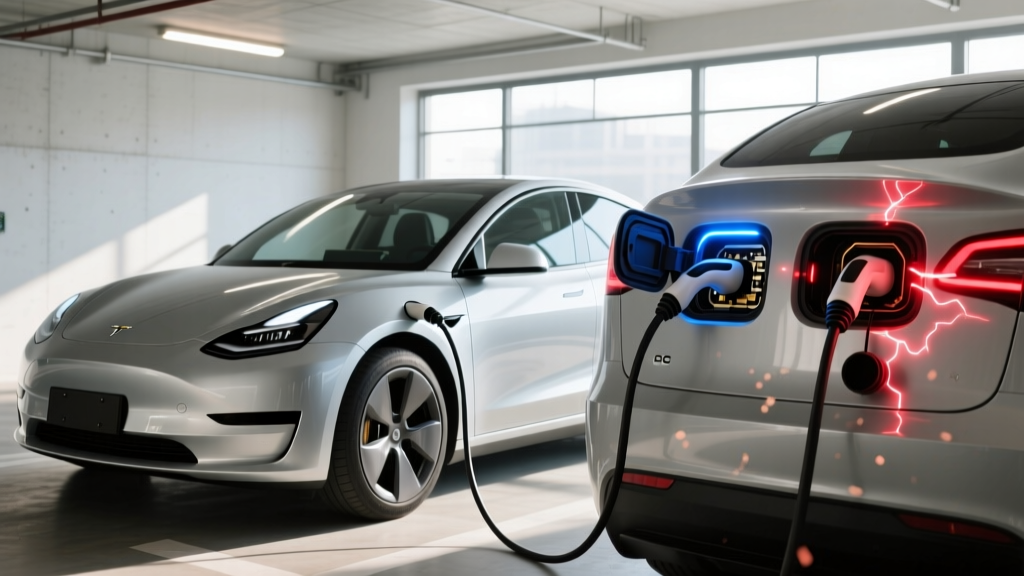
DC fast charging (150–350 kW) generates significant heat. Occasional road-trip use is harmless, but daily DCFC sessions accelerate degradation. Geotab's analysis of thousands of fleet vehicles found that EVs fast-charged more than three times per week showed roughly 1.5–2x the degradation rate of those primarily Level-2 charged. Rule of thumb: use Level 2 at home or work as your default, and reserve DC fast charging for trips.
State of Charge (SoC) Habits
NMC and NCA cells are stressed by prolonged storage at 100% or below 10%. For daily driving, a 20–80% SoC window is ideal. LFP is an exception: Tesla and BYD recommend charging LFP packs to 100% at least weekly because the flat voltage curve makes SoC estimation difficult without full-charge calibration.
Extreme Temperatures
Battery degradation accelerates above ~95°F (35°C) pack temperature and below ~15°F (-9°C). Liquid thermal management has made this far less of an issue than in early air-cooled LEAFs, but parking in shade during desert summers and preconditioning during winter both help. Cold weather also causes temporary range loss (15–30% at 20°F) — this is not degradation; capacity returns when the pack warms.
What Does NOT Harm the Battery
- Regenerative braking: The charge pulses are mild and well within cell specifications.
- One-pedal driving: Same regen mechanism, no added stress.
- Leaving the car plugged in: Modern BMS stops charging at the set limit; leaving it connected at a Level 2 charger is fine.
Battery Care Checklist for Maximum Longevity
- Default to Level 2 home/work charging; limit DCFC to road trips
- Set daily charge limit to 80% (NMC/NCA) or 100% weekly (LFP)
- Precondition the pack before fast charging (most EVs do this automatically when a charger is in the nav route)
- Avoid letting SoC sit below 10% for more than a day
- Park in shade or a garage during sustained heat waves
- Use the vehicle's scheduled-departure feature to finish charging just before you leave, rather than sitting at 100% overnight
- Update BMS firmware when the automaker releases it — updates often refine thermal and SoC management
How to Check Your Battery's State of Health (SoH)
State of Health (SoH) is the percentage of original capacity your pack currently holds. A new pack is 100% SoH; a pack that has degraded to 68 kWh out of 80 kWh original is at 85% SoH.
In-vehicle methods:
- Tesla: Service menu (hold model name on About screen for 3 seconds, enter "service") shows detailed SoH and cell balance data.
- Hyundai/Kia: The EV-specific cluster screen shows estimated range vs. original; dealer diagnostic tools report precise SoH.
- GM (Ultium): myChevrolet/myCadillac app shows a battery health indicator; the Energy Assist screen provides efficiency trends.
- Universal OBD-II: Third-party apps like LeafSpy (Nissan), Scan My Tesla, or ABRP OBD dongles read BMS-reported SoH, cell voltages, and pack temperature directly.
For a used EV purchase, always request a dealer SoH printout or bring an OBD-II reader. A pack below 85% SoH on a vehicle under 80,000 miles warrants scrutiny and may signal a warranty claim.
Beyond Li-Air: Solid-State, Silicon Anodes, and What's Actually Coming
While the li-air battery grabs headlines, nearer-term advances are more relevant to 2026–2030 EV buyers:
- Solid-state batteries: Toyota, Samsung SDI, and QuantumScape are targeting limited production in the 2027–2029 window. Solid-state replaces the liquid electrolyte with a ceramic or polymer solid, enabling lithium metal anodes with higher energy density (~400–500 Wh/kg cell-level) and faster charging. Initial deployments will likely be in low-volume or premium models before scaling.
- Silicon-dominant anodes: Companies like Sila Nanotechnologies and Group14 are shipping silicon-carbon anode materials that boost energy density 15–25% within existing NMC form factors. These are already appearing in premium cells and will proliferate through 2027–2028.
- Sodium-ion (Na-ion): CATL and BYD are producing Na-ion cells for budget EVs in China. Lower energy density (~140 Wh/kg) but no lithium, cobalt, or nickel — a cost and supply-chain play for city cars and energy storage.
None of these are currently available in U.S.-market EVs as of early 2026, and volume-pricing effects will take years to reach mainstream models. For today's buyer, optimizing the chemistry you can actually purchase — LFP or NMC — is a far more productive strategy than waiting for a breakthrough cell.
Frequently Asked Questions
Will a li-air battery be in a production EV this decade?
Almost certainly not. Li-air remains in fundamental research with cycle-life and rechargeability barriers that have not been solved at scale. Commercialization, if achievable, is a 2035+ prospect. Solid-state and silicon-anode cells are far closer to production.
How long do EV batteries last in years and miles?
Modern liquid-cooled NMC and LFP packs are designed to retain 70–85% of original capacity at 150,000–200,000 miles (roughly 12–15 years of average U.S. driving). Fleet data from Geotab and OEM reports consistently show the vast majority of packs outlast the vehicle itself.
How much does it cost to replace an EV battery?
Full pack replacement ranges from roughly $12,000 for a compact LFP pack to $30,000+ for a large truck NMC pack, including labor. Module-level repair — replacing only the failed section — typically costs $2,500–$9,000. Most owners never face this expense because the pack outlasts the car or is covered under warranty.
What does the EV battery warranty cover?
Federal minimum is 8 years / 100,000 miles (10/150k in CARB states). Coverage applies when the pack falls below a stated capacity threshold — usually 70% of original. It does not cover collision damage, flooding, abuse, or unauthorized modifications. Always read the specific warranty booklet for your model year.
LFP vs. NMC — which should I choose?
Choose LFP if you prioritize longevity (4,000+ cycles), lower cost, cobalt-free sourcing, and can accept slightly less range per pound. Choose NMC if you need maximum range in a lighter pack, frequently drive in very cold climates, or are buying a larger vehicle where weight savings matter. Both are proven, safe chemistries with robust warranties.
Does fast charging damage my EV battery?
Occasional DC fast charging on road trips has negligible impact. Frequent daily DCFC (3+ times per week) does measurably accelerate degradation — roughly 1.5–2x the rate of Level-2-only charging per fleet data. Preconditioning the pack and avoiding fast-charging above 80% SoC mitigate the effect.
How do I check my EV battery's State of Health?
Use the vehicle's built-in battery health screen (Tesla service menu, GM Energy Assist), request a dealer diagnostic report, or plug in an OBD-II reader with an EV-compatible app like LeafSpy or Scan My Tesla. For a used-EV purchase, an SoH reading is as important as a vehicle history report.
Sources: U.S. Department of Energy / fueleconomy.gov; Geotab EV Battery Degradation Study; manufacturer warranty documentation (Tesla, Hyundai, GM, Rivian, BMW); IRS §30D Clean Vehicle Credit guidance.