In early 2026, industry reports confirmed that LG Energy Solution (LGES) and Tesla reduced the scope of their battery supply contract — a move that sent ripples through the EV sector. The headline, often searched as the "L&F Tesla battery contract reduction" (a reference to LG Energy Solution's ticker and partnership with Tesla), reflects a broader recalibration in how automakers source lithium-ion cells. Rather than signaling trouble, this shift highlights a maturing EV supply chain where chemistry choices, cost structures, and vertical integration are reshaping what ends up under your car's floor.
This guide breaks down exactly what the contract reduction means, how Tesla's evolving battery strategy affects buyers, and what you need to know about LFP vs NMC chemistry, degradation, warranties, replacement costs, and how to maximize your EV battery's lifespan — whether you drive a Tesla or any other battery-electric vehicle.
What the LG-Tesla Battery Contract Reduction Actually Means
LG Energy Solution has supplied NMC (nickel-manganese-cobalt) and NCMA (nickel-cobalt-manganese-aluminum) cylindrical and pouch cells to Tesla for several model years, primarily for Long Range and Performance variants. The contract reduction, widely reported in early 2026, does not mean LG is exiting Tesla's supply chain entirely. Instead, it reflects several converging factors:
- Tesla's LFP pivot: Standard Range Model 3 and Model Y variants now predominantly use LFP (lithium iron phosphate) cells sourced from CATL and BYD. These cells are cheaper, longer-lasting, and don't require cobalt or nickel — reducing Tesla's dependence on NMC suppliers like LGES and Panasonic.
- In-house cell production: Tesla's 4680 cell lines in Texas and California are ramping, with the company targeting greater self-sufficiency in high-nickel NMC cells for its performance and Cybertruck lines.
- Demand recalibration: Global EV demand growth has moderated from 2022-2023 peaks, leading automakers to right-size supply agreements rather than over-commit to volume.
- Cost pressure: Battery pack prices fell below $120/kWh at the cell level in late 2025, squeezing supplier margins and prompting contract renegotiations across the industry.
For buyers, the practical takeaway is this: Tesla's battery supply chain is diversifying, not contracting. The chemistry in your Tesla — and its associated range, longevity, and charging behavior — depends more on which trim you buy than on which supplier made the cells.
LFP vs NMC: The Chemistry That Defines Your EV
The LG-Tesla contract reduction is fundamentally a chemistry story. Understanding the trade-offs between LFP and NMC/NCA is the single most important factor in choosing an EV.
| Attribute | LFP (Lithium Iron Phosphate) | NMC/NCA (Nickel-based) |
|---|---|---|
| Energy Density | ~160-180 Wh/kg (lower) | ~250-300 Wh/kg (higher) |
| Typical Range (same pack size) | ~10-15% less range | Maximum range per kWh |
| Cycle Life | 3,000-5,000+ cycles | 1,000-2,000 cycles |
| Cold-Weather Performance | More range loss in freezing temps (~15-25% reduction) | Better cold-weather retention (~10-15% reduction) |
| Charging to 100% | Recommended regularly for calibration | Best kept at 80% daily; 100% for trips only |
| Cost (cell level) | ~$80-100/kWh (2026) | ~$110-130/kWh (2026) |
| Thermal Stability | Excellent — lower thermal runaway risk | Good — requires more active cooling |
| Cobalt/Nickel Content | None | Contains nickel and/or cobalt |
| Typical Applications | Tesla Model 3/Y RWD, base trims across industry | Long Range, Performance, luxury EVs |
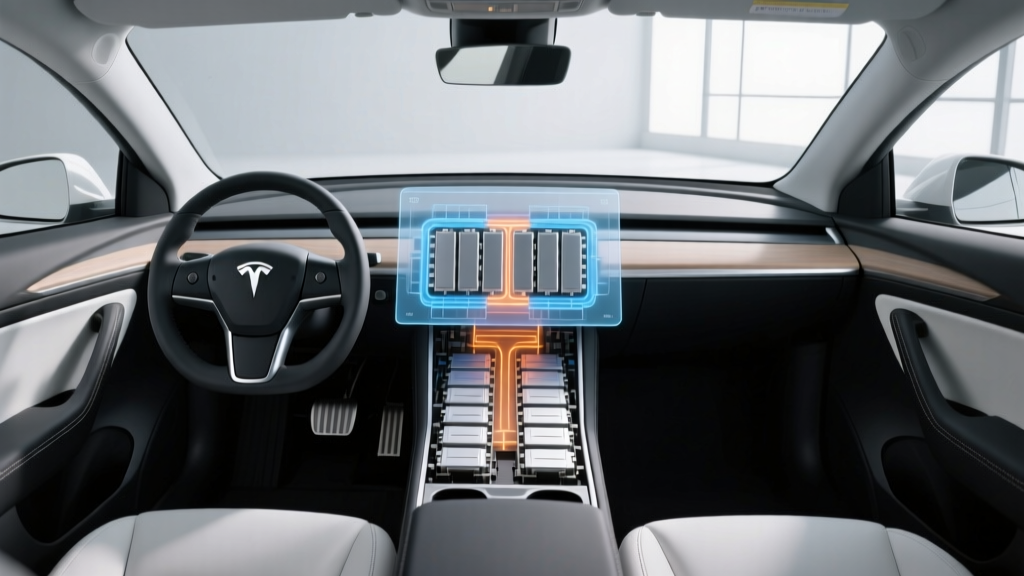
Which is better? Neither is universally superior. LFP wins on cost, longevity, and safety. NMC wins on energy density and cold-weather range. If you buy a Tesla Model 3 Rear-Wheel Drive in 2026, you're getting an LFP pack (~60 kWh usable, EPA 272 miles). If you buy a Model 3 Long Range, you're getting NMC/NCMA (~75 kWh usable, EPA 363 miles). The contract reduction with LGES simply means Tesla is leaning harder into LFP for volume models and reserving NMC for range-critical trims.
How Long Do EV Batteries Actually Last?
The fear that EV batteries need replacing every few years is not supported by data. Modern lithium-ion traction batteries are engineered to outlast most owners' time with the vehicle.
Real-world degradation data points:
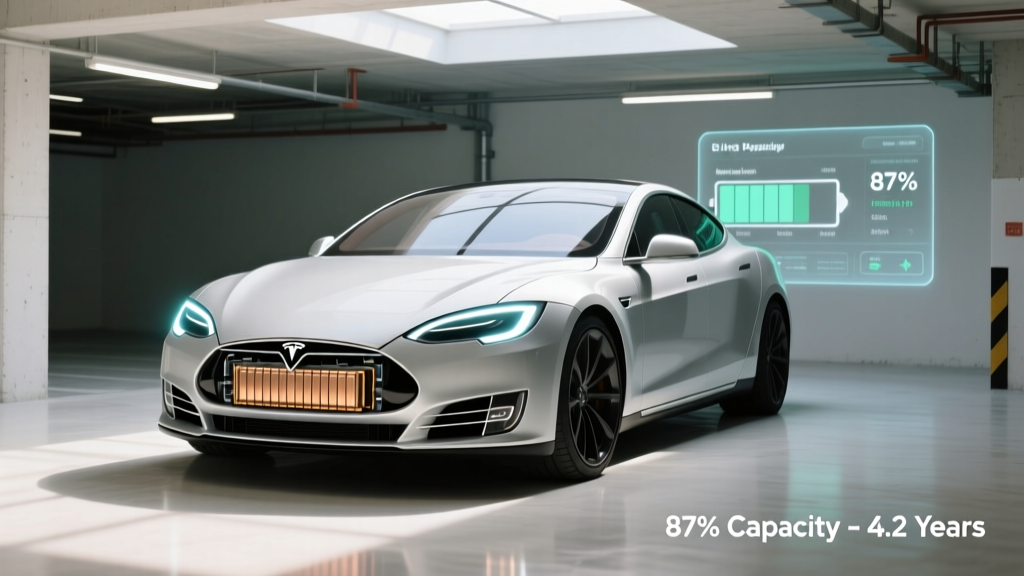
- Tesla fleet data (2025 Impact Report): Model 3/Y batteries retain approximately 85% of original capacity after 200,000 miles. NMC Long Range packs show ~12-15% loss at 150,000 miles; LFP packs show ~8-10% loss at the same mileage due to superior cycle life.
- Geotab fleet study (2024, ~10,000 EVs): Average annual degradation across all brands was 1.8% per year, meaning a typical EV retains ~82% capacity after 10 years.
- Nissan Leaf (early passive-cooled models): Higher degradation of 3-5% annually in hot climates — a cautionary tale that thermal management matters. Modern liquid-cooled packs (virtually all 2020+ EVs) avoid this issue.
- Hyundai/Kia E-GMP platform: Owner-reported degradation of ~5-7% over 60,000 miles for Ioniq 5 and EV6 models with NMC packs.
Typical lifespan expectation: A modern liquid-cooled EV battery should deliver 200,000-300,000 miles before reaching 70-80% of original capacity — the threshold where range reduction becomes noticeable in daily driving. In years, that translates to 15-20+ years for most drivers. The vast majority of EV batteries will never need replacement during the vehicle's useful life.
EV Battery Warranty: What's Covered and for How Long
Federal law mandates a minimum 8-year/100,000-mile warranty on EV battery packs. Most manufacturers exceed this baseline. Here's how major brands compare as of the 2026 model year:
| Manufacturer | Warranty Period | Mileage Cap | Capacity Retention Threshold |
|---|---|---|---|
| Tesla (Model 3/Y RWD — LFP) | 8 years | 100,000 miles | 70% |
| Tesla (Model 3/Y LR/Perf — NMC) | 8 years | 120,000 miles | 70% |
| Tesla (Model S/X) | 8 years | 150,000 miles | 70% |
| Hyundai/Kia (E-GMP) | 10 years | 100,000 miles | 70% |
| Ford (Mustang Mach-E) | 8 years | 100,000 miles | 70% |
| GM (Ultium platform) | 8 years | 100,000 miles | 70% |
| Volkswagen (MEB platform) | 8 years | 100,000 miles | 70% |
| BMW (i4/iX/Neue Klasse) | 8 years | 100,000 miles | 70% |
What the warranty covers: If your battery's usable capacity drops below the stated threshold (typically 70%) within the warranty period, the manufacturer will repair or replace the pack — or individual modules — at no cost. This covers defects and abnormal degradation. It does not cover damage from accidents, flooding, or unauthorized modifications.
What it doesn't cover: Normal degradation above the threshold. If your battery retains 72% after 8 years, that's considered within spec. Also note: the warranty applies to the traction battery (the high-voltage pack that propels the car), not the 12V auxiliary battery that powers electronics — which is covered under a separate, typically shorter warranty.
For full warranty terms, always consult the official Tesla New Vehicle Limited Warranty or your manufacturer's warranty documentation.
EV Battery Replacement Cost: The Numbers
While most EV batteries will never need replacement during the vehicle's life, it's worth understanding the cost if you plan to keep your EV for 15+ years or buy a high-mileage used EV.
| Vehicle / Platform | Battery Size (usable kWh) | Estimated Replacement Cost (2026) | When Typically Needed |
|---|---|---|---|
| Tesla Model 3 RWD (LFP) | ~60 kWh | $8,000 - $12,000 | Rarely; 250,000+ miles if ever |
| Tesla Model 3/Y Long Range (NMC) | ~75 kWh | $12,000 - $16,000 | Rarely; 200,000+ miles if ever |
| Tesla Model S/X | ~95-100 kWh | $15,000 - $22,000 | 200,000+ miles; some early packs replaced under warranty |
| Hyundai Ioniq 5 / Kia EV6 | ~77 kWh | $11,000 - $15,000 | Rarely; 200,000+ miles |
| Ford Mustang Mach-E | ~70-91 kWh | $12,000 - $18,000 | Rarely; 200,000+ miles |
| Chevrolet Equinox EV / Blazer EV | ~85-102 kWh | $13,000 - $19,000 | Rarely; 200,000+ miles |
Several important caveats:
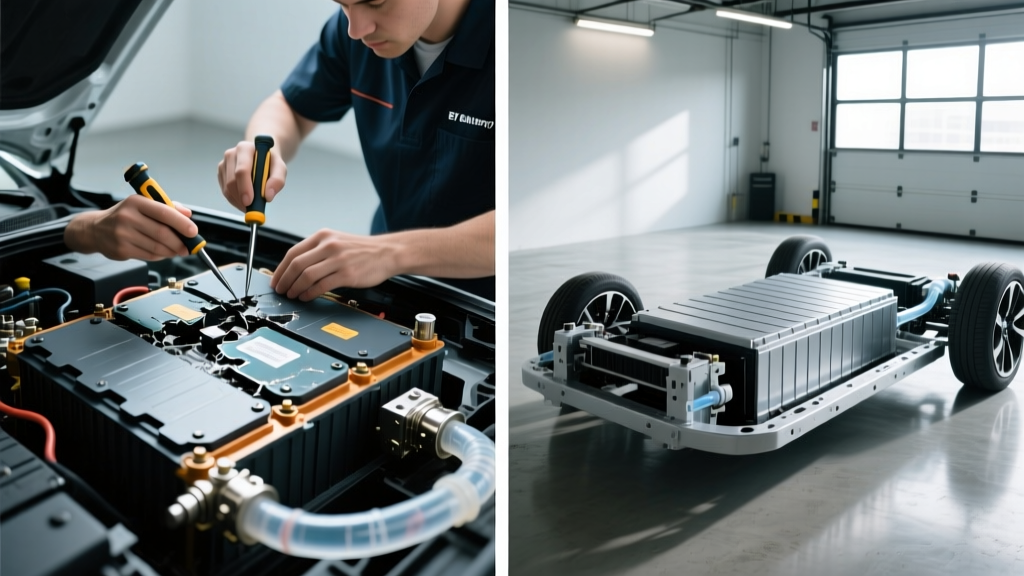
- Module-level repair: Many modern packs (Tesla, Hyundai, GM Ultium) allow individual module replacement rather than full-pack swaps, reducing costs to $2,000-$5,000 per module.
- Refurbished packs: Third-party shops and manufacturer-certified refurbishers offer remanufactured packs at 40-60% of new-pack cost.
- Prices are falling: Battery replacement costs have declined roughly 10-15% annually as cell prices drop and recycling infrastructure matures. By 2030, expect replacement costs to be significantly lower than today's figures.
- Insurance coverage: If battery damage results from a collision or covered event, your auto insurance typically covers replacement.
Factors That Affect Battery Life — and How to Maximize It
Battery degradation isn't random. Specific habits and conditions accelerate or slow capacity loss. Here's what the data shows:
Do:
- Keep daily charge between 20-80% for NMC/NCA packs. This is the single highest-impact habit. Charging to 100% and leaving the car parked for days accelerates calendar degradation.
- Charge LFP packs to 100% at least once a week. LFP cells have a very flat voltage curve, and the BMS (battery management system) needs full charges to accurately calibrate state of charge. Tesla explicitly recommends this for LFP vehicles.
- Use Level 2 (home) charging as your primary method. Slow, steady charging at 7-11 kW generates far less heat than DC fast charging and is gentler on cells.
- Precondition the battery before fast charging. Most EVs do this automatically when you navigate to a charger. A warm battery (30-40°C) charges faster and with less stress.
- Park in shade or a garage during extreme heat. Sustained battery temperatures above 35°C (95°F) accelerate calendar aging. If you live in Arizona or Texas, a garage is a battery investment.
Avoid:
- Frequent DC fast charging as your primary method. Occasional road-trip fast charging is fine. But daily use of 150+ kW chargers adds thermal stress. Studies show vehicles that DC fast charge more than 3x per week degrade ~1-2% faster over 5 years.
- Letting the battery sit at 0% or 100% for extended periods. If storing the vehicle, set the charge limit to ~50% and leave it plugged in if possible.
- Aggressive launch habits in extreme cold. Cold batteries have higher internal resistance. Hard acceleration on a sub-freezing battery without preconditioning stresses cells.
How to Check Your EV's Battery Health (State of Health)
State of Health (SoH) is the percentage of original battery capacity that remains usable. Here's how to monitor it:
Tesla:
- Navigate to Controls > Service > Battery Health Test (available on 2023+ software versions). This runs a diagnostic and displays estimated SoH.
- Alternatively, use the Tesla app's service section to request a battery health report.
- Third-party tools like Tessie or TeslaFi can estimate SoH by comparing energy added during a full charge to the pack's original rated capacity.
Other brands:
- Hyundai/Kia: The infotainment system's EV diagnostics menu shows battery health. Dealerships can run a full BMS diagnostic.
- GM (Ultium): The myChevrolet/myCadillac app includes a battery health indicator. OnStar diagnostics can provide detailed reports.
- OBD-II tools: Devices like the OBDLink SX paired with apps such as ABRP (A Better Routeplanner) or Car Scanner can read BMS data including SoH, cell voltage variance, and pack temperature.
What to look for: A healthy battery should show less than 5% degradation in the first 20,000 miles and settle into a gradual ~1-2% annual decline. If you see sudden capacity drops or significant cell voltage variance (more than 0.1V between cells), schedule a service appointment.
Emerging Battery Tech: What's Coming and When
The battery landscape is evolving rapidly, but separating marketing from reality is critical.
Solid-state batteries: These replace the liquid electrolyte with a solid material, promising higher energy density (~400-500 Wh/kg) and faster charging. Toyota has announced a solid-state EV for 2027-2028 (preliminary, limited production). Samsung SDI and QuantumScape are targeting 2028-2030 for broader commercialization. These are not available in any production vehicle today.
Silicon-anode batteries: Companies like Sila Nanotechnologies and Group14 are replacing graphite anodes with silicon, boosting energy density by 20-30%. Mercedes-Benz's G-Class EV (announced for 2027) is expected to use silicon-anode cells. Early production volumes are limited.
Sodium-ion batteries: CATL and BYD are producing sodium-ion cells for low-cost, shorter-range EVs (150-200 miles). These are entering the Chinese market in 2026 and could reach US-market budget EVs by 2028-2029. They trade range for dramatically lower cost and zero lithium/cobalt/nickel content.
LMFP (lithium manganese iron phosphate): An evolution of LFP that adds manganese for ~15-20% higher energy density while retaining LFP's cost and longevity advantages. Tesla and other automakers are expected to adopt LMFP cells for mid-range trims starting in 2027-2028.
The LG-Tesla contract reduction, viewed through this lens, makes strategic sense: Tesla is optimizing its current NMC/LFP mix while positioning for next-generation chemistries that may reduce its reliance on any single external supplier.
Frequently Asked Questions
How long do EV batteries last in years and miles?
Modern liquid-cooled EV batteries typically last 200,000-300,000 miles before dropping below 80% capacity. In years, that's 15-20+ years for average drivers (12,000-15,000 miles/year). Fleet data from Tesla, Geotab, and others consistently shows 1-2% annual degradation for well-maintained packs.
How much does an EV battery cost to replace in 2026?
Full pack replacement ranges from $8,000 for a 60 kWh LFP pack (Tesla Model 3 RWD) to $22,000 for a 100 kWh NMC pack (Tesla Model S). However, most modern packs allow module-level repair at $2,000-$5,000. The vast majority of EVs will never need a battery replacement during their useful life.
What does the EV battery warranty actually cover?
Federal law mandates 8 years/100,000 miles minimum. Most manufacturers cover the battery if capacity drops below 70% within the warranty period. This covers defects and abnormal degradation but not accident damage or normal wear above the threshold. Always check your specific manufacturer's terms.
How do I check my EV battery's State of Health?
Tesla owners can run a Battery Health Test via Controls > Service. Other brands offer diagnostics through infotainment menus or dealer visits. OBD-II tools paired with apps like Car Scanner can read BMS data on most EVs. Look for less than 5% loss in the first 20,000 miles and ~1-2% annually after that.
LFP vs NMC — which battery chemistry should I choose?
Choose LFP if you prioritize lower cost, longer cycle life, and don't mind slightly less range and more cold-weather range loss. Choose NMC if you need maximum range, live in a cold climate, or frequently take long road trips. LFP owners should charge to 100% weekly; NMC owners should keep daily charges at 80%.
Does the LG-Tesla contract reduction affect my Tesla's battery?
No. Tesla's battery supply chain is diversifying, not shrinking. The contract adjustment reflects Tesla's shift toward LFP for standard trims and in-house 4680 cell production for performance trims. Your battery's chemistry, warranty, and longevity are determined by which trim you purchase, not by supplier contract volumes.