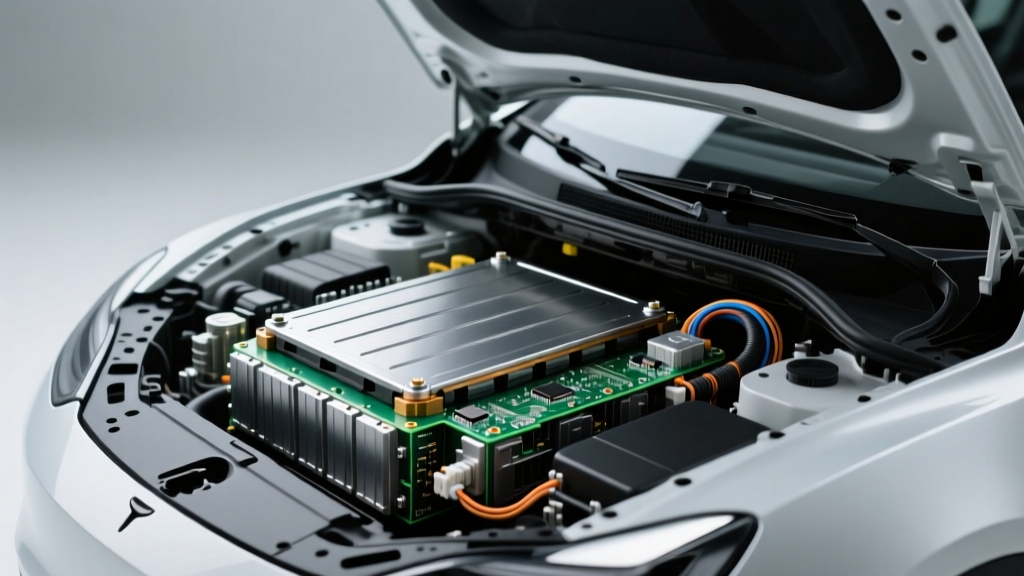
For years, the EV battery conversation has been dominated by nickel-based chemistries — NMC (nickel manganese cobalt) and NCA (nickel cobalt aluminum). But a major shift is underway. LG Energy Solution's expansion of LFP (lithium iron phosphate) battery production at its Michigan facilities represents one of the most significant supply-chain moves in the North American EV market. As of 2026, LG Energy's Lansing and Holland, Michigan plants are ramping LFP cell output aimed at reducing reliance on cobalt and nickel while lowering pack costs for automakers.
But what does this mean for you as a buyer or owner? LFP batteries behave differently than the NMC packs most EVs have used for the past decade. This guide breaks down the chemistry, the real-world degradation data, warranty coverage, replacement economics, and how to maximize the lifespan of whichever chemistry is under your floor.
LFP vs NMC: The Chemistry Trade-Offs That Matter
Before diving into LG Energy's Michigan production specifics, it's critical to understand what LFP and NMC actually are and why the distinction affects your ownership experience. Both are lithium-ion chemistries, but the cathode material determines energy density, cycle life, thermal stability, and cost.
kW vs kWh refresher: kW (kilowatts) measures power — how fast energy flows in or out. kWh (kilowatt-hours) measures energy capacity — how much the battery stores. A 75 kWh battery charged at 150 kW peaks at that rate only briefly; the charge curve tapers as state of charge rises.
| Attribute | LFP (LiFePO₄) | NMC / NCA |
|---|---|---|
| Energy Density | ~160–180 Wh/kg (cell level) | ~230–280 Wh/kg (cell level) |
| Cycle Life | 3,000–5,000+ cycles to 80% SoH | 1,000–2,500 cycles to 80% SoH |
| Thermal Stability | Excellent — higher onset temp for thermal runaway (~270°C) | Good — lower onset (~210°C for NMC811) |
| Cold-Weather Performance | Weaker — more range loss below 32°F / 0°C | Better low-temp discharge efficiency |
| Cost (cell-level, 2026) | ~$80–$100/kWh | ~$110–$140/kWh |
| Cobalt/Nickel Content | None — iron and phosphate only | Contains nickel, cobalt (supply-chain risk) |
| Recommended Daily Charge Limit | 100% SoC is fine regularly | 80% SoC recommended for daily use |
| Typical Use Cases (2026) | Tesla Model 3/Y RWD, Ford Mustang Mach-E Select, Chevy Equinox EV, standard-range models | Long-range, performance trims, high-capacity packs |
The bottom line: LFP sacrifices energy density (meaning heavier packs for the same range, or shorter range in the same package) in exchange for dramatically longer cycle life, better safety margins, lower cost, and freedom from cobalt/nickel supply constraints. For most daily-driving scenarios, LFP's trade-offs are a net positive — which is exactly why LG Energy is investing heavily in Michigan LFP production.
LG Energy's Michigan LFP Production: Supply-Chain Context
LG Energy Solution operates some of the largest EV battery manufacturing footprints in North America. Its Michigan facilities — including cell and pack plants in Holland and Lansing — have historically produced NMC cells for GM's Ultium platform and other OEM partners. The 2025–2026 pivot to adding LFP production lines in Michigan serves several strategic purposes:
- IRA compliance: The Inflation Reduction Act's §30D tax credit requires battery components and critical minerals to be sourced from the US or free-trade-agreement partners. Michigan-manufactured LFP cells help automakers meet domestic-content thresholds.
- Cobalt-free supply chain: LFP chemistry eliminates cobalt and nickel entirely, sidestepping both ethical sourcing concerns and volatile commodity pricing.
- Cost-down for affordable EVs: As automakers push toward $30,000–$35,000 EVs, LFP's lower cell cost is essential. LG Energy's Michigan LFP output is expected to supply multiple OEM platforms in the standard-range and commercial-vehicle segments.
According to LG Energy Solution's official North American operations page, the company's US manufacturing capacity is expanding toward 200+ GWh annually across all chemistries by the end of 2026, with LFP representing a growing share.
How Long Do EV Batteries Actually Last?
The fear of a dead EV battery is the single biggest purchase barrier after range anxiety. The data, however, tells a reassuring story: most modern EV batteries will outlast the vehicle they're installed in.
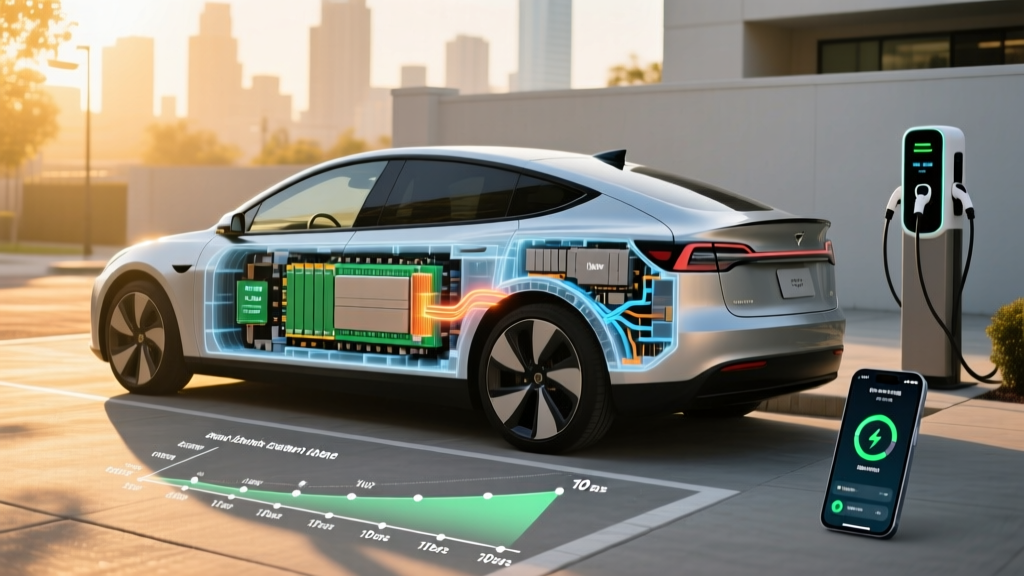
Typical Degradation Curve (Real-World Fleet Data):
- Year 1–2: ~2–5% capacity loss (initial formation loss, steepest part of the curve)
- Year 3–5: ~1–2% loss per year (linear degradation phase)
- Year 6–10: ~0.5–1.5% loss per year (plateau phase)
- At 150,000 miles / 8 years: Most NMC packs retain 85–92% State of Health (SoH); LFP packs often retain 90–95%+ SoH
- At 200,000 miles: NMC packs typically at 80–88% SoH; LFP packs frequently above 88% SoH
Sources: Geotab fleet battery health study, Recurrent Auto battery degradation reports.
The key insight: LFP batteries degrade more slowly and more linearly than NMC, and they don't exhibit the same early-formation capacity drop. A 2026 Tesla Model 3 RWD with its 60 kWh LFP pack, driven 15,000 miles per year, can reasonably be expected to retain 92%+ of its original capacity after 8 years and 120,000 miles.
What "end of life" actually means: An EV battery is considered at end-of-life for automotive use when it drops to 70–80% of original capacity. At that point, it still holds substantial energy — just not enough for the vehicle's original EPA-rated range. Most batteries reaching this threshold are repurposed for stationary storage before recycling.
Battery Warranty Terms: What's Covered and What Isn't
Federal law mandates a minimum 8-year/100,000-mile warranty on EV battery packs (10 years/150,000 miles in CARB states like California, New York, and others). But the details matter enormously.
| Manufacturer | Warranty Period | Mileage Cap | Capacity Retention Threshold | Chemistry Notes |
|---|---|---|---|---|
| Tesla (Model 3/Y RWD — LFP) | 8 years | 100,000 mi | 70% SoH | LFP — longer cycle life may mean fewer claims |
| Tesla (Model 3/Y LR/Perf — NMC) | 8 years | 120,000 mi | 70% SoH | NMC pack |
| GM (Ultium platform) | 8 years | 100,000 mi | 70% SoH (60% on some commercial) | NMC-based Ultium |
| Hyundai/Kia (E-GMP) | 10 years | 100,000 mi | 70% SoH | NMC; 10-yr in all states for Hyundai |
| Ford (Mach-E, F-150 Lightning) | 8 years | 100,000 mi | 70% SoH | NMC and LFP variants |
| Rivian | 8 years | 175,000 mi (R1T/R1S) | 70% SoH | NMC; higher mileage cap |
What's covered: Capacity loss below the stated threshold, manufacturing defects, cell imbalance, and BMS (battery management system) failures.
What's typically NOT covered: Damage from accidents, flooding, or improper modifications; gradual capacity loss that stays above the threshold (e.g., dropping from 100% to 75% is "normal" and not a warranty claim if the threshold is 70%).
Critical nuance: The 70% threshold means a vehicle with an original EPA range of 310 miles would need to drop below 217 miles of range before the warranty kicks in. Most packs never reach this point under normal use.
EV Battery Replacement Cost: The Honest Numbers
This is the question every prospective EV buyer asks, and it deserves a data-driven answer rather than fear-mongering.
| Vehicle / Pack Size | Chemistry | New OEM Pack (Parts + Labor) | Refurbished/Remanufactured | Typical Replacement Trigger |
|---|---|---|---|---|
| Tesla Model 3 RWD (~60 kWh) | LFP | $10,000–$13,000 | $6,500–$9,000 | Rarely needed before 250,000+ mi |
| Tesla Model Y LR (~82 kWh) | NMC | $13,000–$16,000 | $8,000–$12,000 | 200,000–300,000 mi |
| Hyundai Ioniq 5 (~77.4 kWh) | NMC | $14,000–$18,000 | $9,000–$13,000 | 200,000+ mi |
| Ford F-150 Lightning Ext. (~131 kWh) | NMC | $22,000–$30,000 | $15,000–$22,000 | 200,000+ mi; large pack = high cost |
| Chevy Equinox EV (~85 kWh) | NMC/LFP | $12,000–$16,000 | $7,500–$11,000 | 200,000+ mi |
Context that matters: According to data from fueleconomy.gov and warranty claim rates published by major automakers, fewer than 2–3% of EV battery packs require full replacement within the first 10 years. The vast majority of EVs are scrapped, sold, or traded in with their original battery pack still functional. Battery replacement is a real cost, but it's statistically unlikely to affect most first or even second owners.
Costs are also declining. LFP packs from LG Energy's Michigan production lines are expected to push cell-level pricing below $80/kWh by late 2026, which translates to lower replacement pack costs over time. A 60 kWh LFP pack at $80/kWh is ~$4,800 at the cell level; add pack integration, labor, and markup and you land in the $8,000–$12,000 range — and falling.
Factors That Accelerate (or Preserve) Battery Life
Not all miles are equal when it comes to battery degradation. Here's what the data shows about the factors that matter most:
EV Battery Care — Evidence-Based Best Practices:
✅ Do: Maximize These Habits
- Charge to 80% daily (NMC/NCA): Keeping state of charge between 20–80% dramatically reduces calendar degradation on nickel-based chemistries. Most EVs let you set a charge limit in the app or infotainment.
- Charge to 100% freely (LFP): LFP chemistry does not suffer the same high-SoC stress. In fact, Tesla and Ford recommend periodic 100% charges on LFP packs so the BMS can accurately calibrate cell balance.
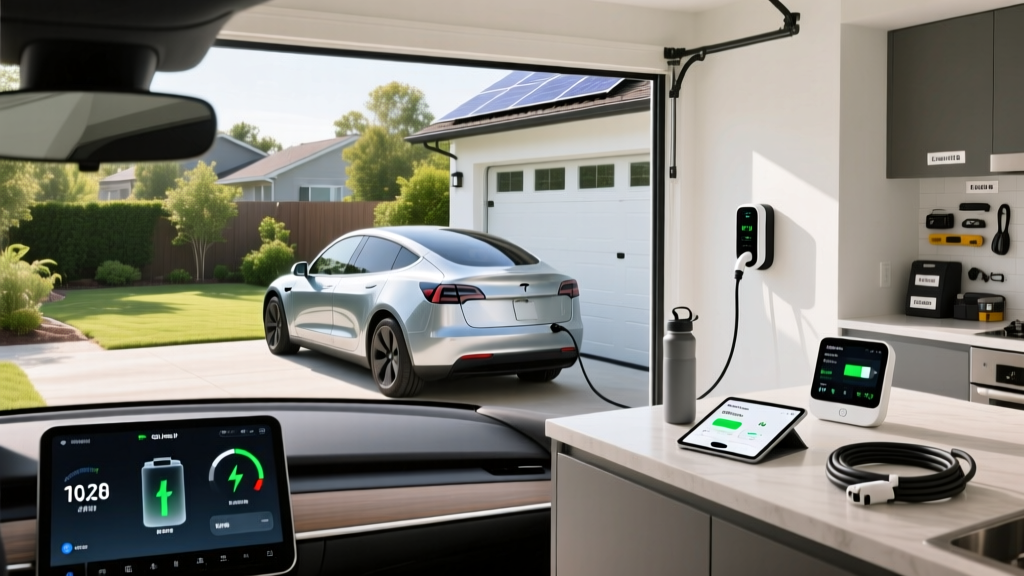
- Use Level 2 (home) charging as your primary method: Slow, steady AC charging at 7–11 kW generates far less heat than DC fast charging and is gentler on cells.
- Precondition before fast charging: Most modern EVs automatically precondition the battery when you navigate to a DC fast charger. This warms or cools the pack to the optimal temperature window (typically 25–40°C), enabling faster charging and reducing lithium plating risk.
- Drive it regularly: Batteries prefer regular cycling over sitting idle at high SoC for weeks.
❌ Avoid: These Accelerate Degradation
- Exclusive DC fast charging: Vehicles that rely almost entirely on DCFC (150–350 kW) show measurably higher degradation — approximately 1–3% additional loss over 100,000 miles compared to primarily Level 2 charging (per Recurrent Auto data).
- Prolonged storage at 100% SoC: Leaving an NMC vehicle plugged in at 100% for days or weeks accelerates calendar degradation. If storing, set to 50% SoC.
- Extreme heat exposure: Consistently operating in 100°F+ ambient without thermal management (older vehicles) degrades cells faster. Modern liquid-cooled packs handle this well, but parking in shade still helps.
- Deep discharges to 0%: Regularly running the battery to true zero stresses cells. The displayed 0% on your dash still has a buffer (typically 2–5 kWh below the floor), but habitually arriving at 0% isn't ideal.
Cold Weather Realities
In sub-freezing temperatures, expect 15–30% range reduction depending on severity (20°F vs. -10°F), use of cabin heating, and whether the vehicle has a heat pump. This range loss is temporary — it's not degradation. The battery's capacity returns when temperatures normalize. LFP packs tend to lose slightly more range in cold weather than NMC due to higher internal resistance at low temperatures, but preconditioning mitigates much of this.
How to Check and Monitor Your Battery's State of Health
State of Health (SoH) is a percentage representing your battery's current maximum capacity relative to its original capacity when new. A brand-new pack is at 100% SoH; a pack that can only store 90% of its original kWh is at 90% SoH.
Methods to Check SoH
- In-vehicle display: Some manufacturers (Tesla via the service menu, Hyundai/Kia via the infotainment EV diagnostics page) show SoH directly. Others do not expose this to the driver.
- OBD-II diagnostic tools: Devices like the OBDLink SX paired with apps such as Leaf Spy (Nissan), Scan My Tesla, or ABRP's OBD integration can read SoH directly from the BMS. Cost: $30–$80 for the dongle.
- Dealer diagnostic report: Request a battery health printout during service visits. Most dealerships can pull a detailed SoH report showing individual module voltages and balance status.
- Third-party services: Companies like Recurrent Auto offer free battery health reports that benchmark your pack against a fleet of identical vehicles. You share anonymized telematics data; they provide a personalized degradation curve.
What to Watch For
A sudden drop in displayed range (more than 5% in a short period) or a significant increase in cell voltage imbalance (visible via OBD tools) can indicate a module-level issue that may be covered under warranty. Gradual, steady decline is normal and expected.
Looking Ahead: Solid-State, Silicon Anodes, and What's Next
While LG Energy's Michigan LFP production addresses today's market, the industry is actively developing next-generation chemistries. It's important to separate what's available now from what's on the horizon:
- Silicon-anode batteries: Companies like Sila Nanotechnologies and Group14 are shipping silicon-dominant anode materials that boost energy density by 15–25% over graphite anodes. These are entering production in limited applications (2025–2026) but are not yet in mainstream EV packs at scale.
- Solid-state batteries: Toyota, Samsung SDI, and QuantumScape have demonstrated prototype solid-state cells with 400–500+ Wh/kg energy density and 10-minute fast-charge capability. However, manufacturing yield, cost, and durability challenges remain. Realistic timeline for volume EV production: 2028–2032, starting in premium/low-volume applications.
- Sodium-ion batteries: CATL has begun mass-producing sodium-ion cells for low-cost, short-range EVs (primarily in China). Energy density is lower than LFP (~120–150 Wh/kg), but cost is even lower and cold performance is excellent. US-market availability is uncertain and likely post-2027.
For buyers making decisions today, LFP and NMC are the two chemistries that matter. LG Energy's Michigan LFP expansion ensures that North American–built, cobalt-free, cost-competitive packs will be available for the next generation of affordable EVs — and the IRA §30D tax credit rules (see IRS guidance on new clean vehicle credits) increasingly favor domestically manufactured battery components.
FAQ: EV Battery Questions Answered
How long do EV batteries last in years and miles?
Based on fleet data from Geotab and Recurrent Auto, the average modern EV battery retains 85–95% of its original capacity at 150,000 miles / 8–10 years. LFP chemistries generally outlast NMC in cycle life. Most batteries will remain functional (above 70% SoH) for 200,000–300,000+ miles. Full replacement within the first 10 years is statistically rare (fewer than 2–3% of packs).
How much does an EV battery cost to replace?
Replacement costs in 2026 range from approximately $10,000 for a 60 kWh LFP pack to $25,000–$30,000 for a 130+ kWh NMC pack (like the F-150 Lightning Extended Range). Refurbished packs are typically 30–40% cheaper. Costs continue to decline as cell pricing drops — LG Energy's LFP production in Michigan is part of that cost-reduction trend.
What does the EV battery warranty cover?
Federal law requires a minimum 8-year/100,000-mile battery warranty (10 years/150,000 miles in CARB states). Coverage includes capacity loss below the manufacturer's threshold (typically 70% SoH), manufacturing defects, and BMS failures. It does not cover accident damage, improper modifications, or normal degradation above the threshold.
How do I check my EV battery's health?
Use your vehicle's built-in diagnostics (if available), an OBD-II scanner with an EV-compatible app (like Scan My Tesla or Leaf Spy), request a dealer diagnostic report, or enroll in a free service like Recurrent Auto for fleet-benchmarked SoH tracking.
LFP vs NMC — which is better for me?
Choose LFP if: you want maximum longevity, lower cost, don't need the absolute longest range, primarily charge at home, and live in a moderate climate. Choose NMC if: you need maximum range in a lighter pack, frequently drive in very cold climates, or want the longest single-charge road-trip capability. Neither is universally "better" — the right choice depends on your driving pattern and priorities.
Does frequent DC fast charging damage my battery?
Exclusively relying on DC fast charging adds approximately 1–3% additional degradation over 100,000 miles compared to primarily Level 2 home charging. It's not catastrophic, but if you have home charging access, using Level 2 as your daily method and reserving DCFC for road trips is the optimal strategy for long-term SoH.
Will LG Energy's Michigan LFP batteries qualify for the federal tax credit?
Battery cells manufactured in Michigan contribute to the domestic-content requirements under the IRA's §30D tax credit rules. However, full credit eligibility depends on multiple factors including the vehicle's MSRP (caps: $55,000 for sedans, $80,000 for SUVs/trucks), the buyer's adjusted gross income, and critical-mineral sourcing requirements. Check the current IRS §30D guidance and consult a tax professional for your specific situation.