LFP vs NMC: The Chemistry Decision Behind Every Modern EV
Every electric vehicle on the road in 2026 runs on one of two dominant lithium-ion chemistries: lithium iron phosphate (LFP) or nickel manganese cobalt / nickel cobalt aluminum (NMC/NCA). The chemistry inside your battery pack determines your real-world range, how fast you can charge, how the car performs in a Minnesota January, and how much capacity you'll retain after 150,000 miles. Yet most buyers never check which chemistry their prospective EV uses before signing the paperwork.
This guide breaks down LFP and NMC/NCA with hard data — degradation curves, warranty thresholds, replacement costs, and daily-use trade-offs — so you can match battery chemistry to how you actually drive.
LFP vs NMC/NCA Chemistry: How They Differ
Both chemistries store lithium ions between a cathode and an anode, but the cathode materials define the trade-offs.
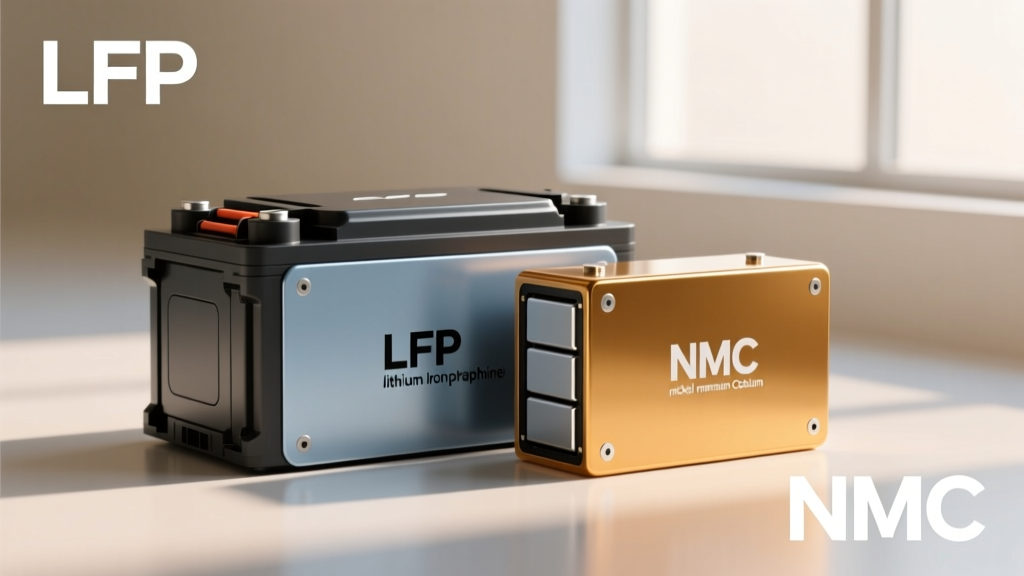
LFP (LiFePO₄) uses an iron-phosphate cathode. It contains zero nickel and zero cobalt, which makes it cheaper to produce, more ethically straightforward to source, and inherently more thermally stable. The trade-off is lower energy density — roughly 160–180 Wh/kg at the cell level versus 230–280 Wh/kg for NMC. That means an LFP pack needs to be physically larger and heavier to store the same kWh.
NMC (LiNiMnCoO₂) and NCA (LiNiCoAlO₂) use nickel-rich cathodes. More nickel means higher energy density, which translates to more range in a lighter, more compact pack. The trade-offs are higher material cost, greater supply-chain complexity (cobalt and nickel sourcing), and a chemistry that is more sensitive to high states of charge and elevated temperatures over long periods.
| Attribute | LFP (Lithium Iron Phosphate) | NMC / NCA (Nickel-based) |
|---|---|---|
| Cell-level energy density | 160–180 Wh/kg | 230–280 Wh/kg |
| Typical pack-level energy density | 120–150 Wh/kg | 150–190 Wh/kg |
| Cycle life (to 80% capacity) | 3,000–5,000+ cycles | 1,000–2,500 cycles |
| Calendar life expectancy | 15–20+ years | 10–15 years |
| Cold-weather performance (−10°C / 14°F) | Greater range loss (~35–45%) | Moderate range loss (~25–35%) |
| Recommended daily SoC ceiling | 100% (regular full charges are fine) | 80% (charge to 100% only for trips) |
| Thermal runaway risk | Very low | Low but higher than LFP |
| Relative cell cost (2026) | ~$70–90/kWh | ~$100–130/kWh |
| Cobalt / nickel content | None | Yes — supply chain and cost factor |
| Common in (2026 US models) | Tesla Model 3/Y RWD, Ford Mustang Mach-E Select (LFP variant), Rivian R1S/R1T Standard, BYD (global) | Tesla Model 3/Y Long Range & Performance, Hyundai Ioniq 5/6, Kia EV6/EV9, GM Ultium vehicles, BMW iX, Lucid Air |
The bottom line: NMC/NCA gives you more range per pound and handles cold weather better. LFP gives you a longer-lasting, cheaper, and more abuse-tolerant battery — at the cost of some range and cold-weather efficiency.
How Long Do EV Batteries Last? Real Degradation Data
EV battery degradation is not a cliff — it's a curve. Most packs lose capacity quickly in the first 12–18 months (roughly 2–5%), then the rate flattens into a slow, linear decline for the rest of the pack's life. The question isn't whether your battery will degrade, but how much and how fast.
- Year 1 / 15,000 mi: 2–5% capacity loss (initial formation loss)
- Year 3 / 45,000 mi: 5–8% total loss
- Year 5 / 75,000 mi: 7–12% total loss
- Year 8 / 120,000 mi: 10–18% total loss (varies heavily by chemistry and use)
- Year 10+ / 150,000+ mi: 12–25% total loss
Sources: Geotab fleet data, Tesla Impact Reports, Recurrent Auto battery studies. Individual results vary by climate, charging habits, and chemistry.
LFP packs tend to degrade more slowly over high cycle counts. Tesla's 2023 Impact Report noted that Model 3/Y vehicles with LFP packs retained approximately 92% of capacity after 200,000 miles — roughly 8% loss. NMC-equipped Long Range variants showed approximately 88% retention (12% loss) at the same mileage. Both figures represent real-world fleet averages, not lab conditions.
For context, the average US driver covers about 13,500 miles per year (FHWA data). At that rate, even an NMC pack losing 12% over 200,000 miles will likely outlast 14 years of driving before hitting the 80% capacity threshold that most warranties use as the replacement trigger.
What Does the Battery Warranty Cover?
Federal law mandates that EV manufacturers warranty the high-voltage traction battery for a minimum of 8 years or 100,000 miles (whichever comes first) in most states, and 10 years or 150,000 miles in California Air Resources Board (CARB) states. This is separate from the 12V auxiliary battery, which carries its own shorter warranty and is not the focus here.
The warranty trigger is typically a capacity retention threshold of 70% — meaning the manufacturer will repair or replace the pack if its usable capacity drops below 70% of the original value within the warranty period. Some manufacturers set this at 65% or define it slightly differently, so reading the specific warranty booklet matters.
| Manufacturer | Warranty Period | Mileage Limit | Capacity Threshold | Chemistry (typical US models) |
|---|---|---|---|---|
| Tesla (Model 3/Y RWD) | 8 years | 100,000 mi | 70% | LFP |
| Tesla (Model 3/Y LR & Perf.) | 8 years | 120,000 mi | 70% | NMC/NCA |
| Hyundai / Kia | 10 years | 100,000 mi | 70% | NMC |
| GM (Ultium platform) | 8 years | 100,000 mi | 60–70% (varies) | NMC |
| Ford (Mach-E, F-150 Lightning) | 8 years | 100,000 mi | 70% | NMC / LFP (Select) |
| Rivian | 8 years | 175,000 mi | 70% | LFP (Standard) / NMC (Max) |
| BMW | 8 years | 100,000 mi | 70% | NMC |
A critical nuance: the warranty covers defects and abnormal degradation, not range loss from normal aging within the threshold. If your 300-mile EPA-rated NMC pack drops to 240 miles (80% retention) at year seven, you won't qualify for a replacement — the pack is performing within expected parameters. Only if it falls below the stated threshold (typically 70%, or 210 miles in this example) within the warranty window would a claim apply.
How Much Does an EV Battery Cost to Replace?
Out-of-warranty battery replacement is the number-one fear among prospective EV buyers. Let's put it in perspective with real numbers.
| Vehicle | Pack Size (usable kWh) | Chemistry | Estimated Replacement Cost |
|---|---|---|---|
| Tesla Model 3 RWD | ~57 kWh | LFP | $8,000–$12,000 |
| Tesla Model Y Long Range | ~75 kWh | NMC | $12,000–$16,000 |
| Hyundai Ioniq 5 (Long Range) | ~77.4 kWh | NMC | $12,000–$18,000 |
| Ford F-150 Lightning (Extended) | ~131 kWh | NMC | $20,000–$30,000 |
| Chevrolet Silverado EV (Max Range) | ~200 kWh | NMC | $30,000–$40,000+ |
| BMW iX xDrive50 | ~105 kWh | NMC | $20,000–$28,000 |
Those numbers look alarming until you consider two facts:
- Most EV batteries never need replacement during ownership. Data from Recurrent Auto and Geotab's fleet studies show that the vast majority of packs retain well above 80% capacity at 150,000 miles. Catastrophic failures (sudden cell death, not gradual degradation) are rare and typically covered under warranty.
- Cell prices continue to fall. BloombergNEF's 2025 lithium-ion battery price survey placed average pack-level prices below $120/kWh and falling. By the time a 2026 EV actually needs a new pack — likely in the 2038–2042 timeframe — replacement costs will be significantly lower, and aftermarket/refurbished packs will be widely available.
For most owners, the battery will outlast the vehicle's body, suspension, and interior. The replacement-cost fear is real but statistically unlikely to materialize during a typical ownership cycle.
Factors That Accelerate (or Preserve) Battery Life
Chemistry sets the ceiling, but your habits determine where you land on the degradation curve. Here's what the data shows:
- Avoid sustained 100% SoC (NMC only): If your EV has NMC/NCA, set the daily charge limit to 80%. Charge to 100% only when you need the full range for a trip. LFP owners can (and should) charge to 100% regularly — Tesla and Ford recommend this for LFP packs to keep the battery management system calibrated.
- Minimize DC fast charging when possible: Occasional DCFC is fine. But if you fast-charge daily instead of using Level 2 at home, expect 2–4% additional degradation over 100,000 miles. The heat generated at 150–350 kW charge rates stresses cells more than gentle Level 2 charging at 7–19 kW.
- Precondition before fast charging: Most modern EVs do this automatically when you navigate to a charger. A cold battery charged at high power suffers lithium plating, which permanently reduces capacity. Always use the car's built-in preconditioning.
- Avoid extreme SoC + extreme heat: A fully charged NMC pack sitting in a 100°F+ parking lot for days accelerates calendar degradation. If you must park in heat, keep SoC around 50%.
- Don't baby it excessively: The difference between "perfect" battery care and "normal" care is typically 3–5% capacity over 150,000 miles. Drive the car; the BMS is doing a lot of protection behind the scenes.
Cold weather doesn't permanently damage the battery, but it does temporarily reduce range (35–45% loss for LFP, 25–35% for NMC at around 14°F / −10°C) and slows charging speeds due to the battery's thermal management system limiting charge rate until the pack warms up. This is a performance effect, not degradation — range returns when temperatures rise.
How to Check Your EV's Battery State of Health (SoH)
State of Health (SoH) is the percentage of original capacity your pack currently holds. A new battery is 100% SoH; one that has degraded to 85 kWh from its original 100 kWh is at 85% SoH.
Built-in methods:
- Tesla: The app and service menu don't expose SoH directly, but you can estimate it by comparing your current "100% projected range" to the EPA-rated range when new. Third-party apps like Tessie or TeslaFi log this over time.
- Hyundai/Kia: The infotainment system's EV diagnostics page shows a battery health percentage in some model years. The dealership can pull a detailed SoH report via the diagnostic scanner.
- GM (Ultium): The myChevrolet / myCadillac app includes a battery health indicator, and OnStar can provide detailed diagnostics.
- Ford: FordPass shows battery health status. Dealers can run a full SoH diagnostic.
- Universal OBD-II approach: An OBD-II dongle paired with apps like ABRP (A Better Routeplanner), Car Scanner, or LeafSpy (Nissan) can read the battery management system's reported SoH value. This is the most reliable owner-accessible method across brands.
For a formal SoH assessment — useful when buying a used EV — request a battery health certificate from the dealer or an independent EV service center. Some services, like Recurrent, provide battery health reports that compare your pack's degradation to a fleet of identical vehicles.
LFP vs NMC: Which Should You Choose?
There's no universally "better" chemistry — only the right chemistry for your driving pattern.
Choose LFP If:
- You charge at home daily and want to set it to 100% without guilt
- You plan to keep the car 10+ years and want maximum cycle life
- You prioritize lower purchase price (LFP trims are typically $3,000–$7,000 cheaper)
- You live in a mild or warm climate where cold-weather range loss is less impactful
- You value supply-chain ethics (no cobalt or nickel)
- Your daily driving is under 200 miles and you don't need maximum single-charge range
Choose NMC/NCA If:
- You need maximum range per charge (350+ miles) for frequent road trips
- You live in a cold climate where winter range loss compounds the shorter-range penalty
- You want the fastest DC fast-charge speeds (NMC packs generally sustain higher kW rates)
- Weight matters (towing, performance driving) — NMC packs are lighter per kWh
- You're buying a larger vehicle (truck, large SUV) where LFP's weight penalty becomes significant
What's Next: Solid-State, Silicon Anodes, and Beyond
Several next-generation battery technologies are in development, but none are available in production EVs sold in the US as of 2026. Here's a realistic timeline:
Silicon-dominant anodes: Companies like Sila Nanotechnologies and Group14 are replacing graphite anodes with silicon to boost energy density by 20–40%. Early production applications are appearing in limited runs (Mercedes G-Class electric prototype, Panasonic 4680 cells with incremental silicon content). Expect meaningful market presence by 2028–2030.
Solid-state batteries: Toyota, Samsung SDI, and QuantumScape are the most vocal proponents. Toyota has announced a 2027–2028 production target for a solid-state EV with ~600 miles of range and 10-minute fast charging. QuantumScape's cells have demonstrated impressive lab results but face manufacturing scale-up challenges. Realistic widespread availability: 2030–2033. These remain forward-looking and should not factor into a 2026 purchase decision.
Sodium-ion batteries: CATL and BYD are producing sodium-ion cells for low-cost, short-range applications (city cars, energy storage). Sodium-ion avoids lithium entirely but offers lower energy density (~140 Wh/kg). US-market availability in passenger EVs is unlikely before 2028–2029.
For buyers shopping today, the LFP vs NMC decision is the one that matters. Future chemistries will eventually arrive, but current-generation packs are already durable enough to outlast most ownership cycles.
Frequently Asked Questions
How long do EV batteries last in years and miles?
Most modern EV batteries (both LFP and NMC) retain 80–90% of their original capacity after 150,000 miles or 10–12 years of typical use. LFP packs generally last longer by cycle count (3,000–5,000+ cycles to 80% capacity) compared to NMC (1,000–2,500 cycles). In practice, the battery will usually outlast the rest of the vehicle.
How much does an EV battery cost to replace?
Out-of-warranty replacement costs range from approximately $8,000 for a small LFP pack (Tesla Model 3 RWD, ~57 kWh) to $30,000+ for a large NMC pack (Ford F-150 Lightning Extended Range, ~131 kWh). However, the vast majority of EV batteries never require full replacement during typical ownership. Cell prices are falling, and aftermarket options will become available as early EVs age out of warranty.
What does the EV battery warranty actually cover?
Federal law requires a minimum 8-year/100,000-mile warranty on the high-voltage traction battery (10 years/150,000 miles in CARB states). The warranty covers defects and abnormal degradation below a capacity threshold — typically 70% of original capacity. Normal gradual degradation within that threshold is not covered. This is separate from the 12V auxiliary battery.
How do I check and maximize my EV's battery health?
Check SoH via your car's built-in diagnostics, the manufacturer app, or an OBD-II scanner with EV-compatible software. To maximize longevity: charge NMC to 80% daily (100% is fine for LFP), use Level 2 charging at home when possible, precondition before DC fast charging, and avoid leaving the car at 100% SoC in extreme heat for extended periods.
LFP vs NMC — which battery chemistry is better?
Neither is universally better. LFP wins on longevity (more cycles, longer calendar life), cost ($20–40/kWh cheaper), safety (lower thermal runaway risk), and daily charging convenience (100% SoC is fine). NMC wins on energy density (more range in a lighter pack), cold-weather performance (10–15% less range loss in freezing temps), and DC fast-charge speed. Choose LFP for daily commuting and long ownership; choose NMC for maximum range, cold climates, and road-trip-heavy driving.
Does frequent DC fast charging damage my battery?
Occasional DC fast charging has minimal impact. However, exclusive reliance on DCFC (daily fast charging with no Level 2 use) can add 2–4% extra degradation over 100,000 miles compared to predominantly Level 2 charging. The heat generated at high charge rates (150–350 kW) is the primary stressor. Modern battery management systems actively limit charge speed to protect cells, so the damage is incremental, not catastrophic.
Will my EV battery need to be replaced before I sell the car?
Statistically, no. Fleet data from Geotab and Recurrent shows that the average EV battery loses 1–2% capacity per year after the initial settling period. At that rate, a 2026 EV will retain roughly 82–88% of its capacity after 10 years / 135,000 miles — well above the 70% warranty threshold and well within functional usability. The battery is one of the most durable components in an electric vehicle.