Why Tesla's Shift to LFP Batteries Matters for Owners
Since late 2021, Tesla has equipped most Standard Range (now simply "Rear-Wheel Drive" and base "Long Range") Model 3 and Model Y vehicles with lithium iron phosphate (LFP) battery packs, primarily sourced from CATL. The higher-trim Long Range and Performance variants continue using nickel-based chemistries — NMC (nickel manganese cobalt) or NCA (nickel cobalt aluminum). This isn't a minor footnote in the spec sheet; it fundamentally changes how you should charge, care for, and think about your battery over a decade of ownership.
LFP chemistry trades some energy density for dramatically longer cycle life, lower material cost, and a cobalt-free supply chain. For a Model 3 RWD buyer in 2026, that means a pack rated for thousands of full charge cycles with minimal degradation — but also a vehicle with somewhat less range in freezing temperatures and a slightly heavier battery for the same kWh capacity. Understanding these trade-offs is the difference between an owner who maximizes their pack's lifespan and one who unknowingly accelerates wear.
LFP vs NMC/NCA: The Chemistry Breakdown
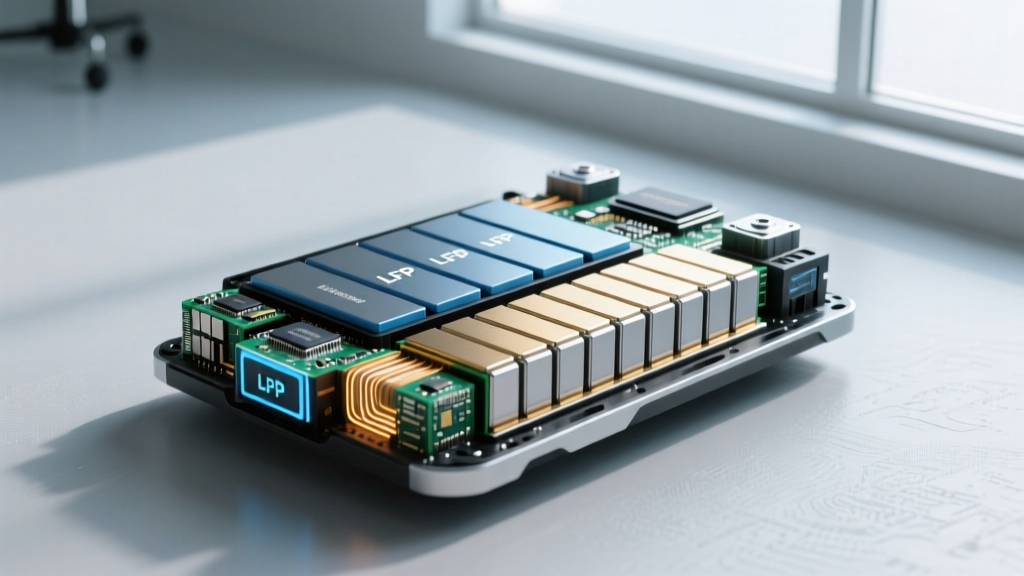
Every lithium-ion cell has a cathode material that defines its characteristics. Tesla uses two broad families across its lineup:
- LFP (Lithium Iron Phosphate — LiFePO4): Used in Model 3 RWD, Model Y RWD (base trims). Cobalt-free, lower energy density, exceptional cycle life.
- NMC / NCA (Nickel-based): Used in Model 3 Long Range/Performance, Model Y Long Range/Performance, Model S, Model X, Cybertruck. Higher energy density, faster charging in cold weather, but more expensive and with shorter total cycle life.
| Attribute | LFP (Tesla RWD trims) | NMC/NCA (Tesla LR/Performance) |
|---|---|---|
| Energy Density (cell-level) | ~160–180 Wh/kg | ~230–260 Wh/kg |
| Typical Usable Pack Size | ~57–60 kWh (Model 3 RWD) | ~75–82 kWh (Model 3/Y LR) |
| Cycle Life (to 80% SoH) | 3,000–5,000+ cycles | 1,000–2,000 cycles |
| Cold-Weather Range Loss (20°F) | ~30–40% reduction | ~20–30% reduction |
| Recommended Daily Charge Limit | 100% (Tesla recommends weekly 100% calibration) | 80% daily; 100% only for trips |
| Peak DC Fast Charge Rate | ~170 kW (Model 3 RWD) | ~250 kW (Model 3/Y LR at V3 Supercharger) |
| 10–80% DC Fast Charge Time | ~25–28 minutes | ~18–22 minutes |
| Cobalt Content | None | Yes (NMC) / minimal (NCA) |
| Relative Pack Cost | Lower | Higher |
The most practical takeaway: LFP packs tolerate — and actually benefit from — being charged to 100% regularly. Tesla's own manual for LFP-equipped vehicles instructs owners to charge to 100% at least once per week so the battery management system (BMS) can accurately calibrate state of charge. With NMC/NCA, routinely charging to 100% and letting the car sit accelerates degradation. This single difference reshapes daily ownership habits.
Real-World Degradation: What the Data Shows
Battery degradation isn't linear. Most lithium-ion packs lose capacity fastest in the first year or two (a phenomenon called "calendar aging" combined with early-cycle settling), then the curve flattens considerably. Here's what aggregated fleet data and owner-reported measurements show for Tesla packs:
Typical Degradation Trajectory (Tesla Fleet Averages):
- Year 1 / ~15,000 miles: 2–4% capacity loss (both LFP and NMC)
- Year 3 / ~45,000 miles: NMC/NCA ~6–9% loss; LFP ~3–5% loss
- Year 5 / ~75,000 miles: NMC/NCA ~9–13% loss; LFP ~5–8% loss
- Year 8 / ~120,000 miles: NMC/NCA ~12–17% loss; LFP ~7–10% loss
Sources: Tesla Impact Report fleet data, Recurrent Auto battery degradation studies, owner-reported data on TeslaFi and Teslamate platforms.
A key nuance: LFP's degradation curve is flatter overall, but its BMS estimation can drift if you never charge to 100%. Owners who keep daily limits at 80% on an LFP Tesla sometimes report "sudden" range drops that are actually calibration errors, not true cell degradation. The fix is simple — charge to 100% and let the car sit plugged in for a few hours to rebalance.
Tesla's Battery Warranty: What's Actually Covered
Tesla's battery and drive unit warranty is one of the more straightforward in the industry, but the details matter. Coverage varies by model and trim:
| Model / Trim | Warranty Period | Mileage Limit | Minimum Capacity Retention |
|---|---|---|---|
| Model 3 RWD (LFP) | 8 years | 100,000 miles | 70% |
| Model 3 Long Range / Performance (NMC/NCA) | 8 years | 120,000 miles | 70% |
| Model Y RWD (LFP) | 8 years | 100,000 miles | 70% |
| Model Y Long Range / Performance | 8 years | 120,000 miles | 70% |
| Model S / Model X | 8 years | 150,000 miles | 70% |
| Cybertruck (AWD / Cyberbeast) | 8 years | 120,000 miles | 70% |
The warranty covers defects and capacity loss below the 70% threshold. If your pack drops to 68% state of health (SoH) at year 6 and 95,000 miles on a Model 3 RWD, Tesla will replace or refurbish the pack at no cost. However, normal degradation above 70% is not covered — a pack at 75% SoH at year 8 is considered within spec, even though you've lost 25% of original range.
Importantly, Tesla's warranty has historically honored claims even in edge cases, and the company often replaces packs with refurbished units that meet or exceed the 70% threshold rather than installing brand-new packs. The warranty is also fully transferable to subsequent owners, which supports resale value.
Battery Replacement Costs: Reality vs. Headlines
Headlines about "$20,000 EV battery replacements" generate fear, but context is essential. According to NHTSA data and industry reports, the vast majority of EV batteries outlast the vehicles they're installed in. Outright replacement is rare — most warranty claims involve module-level repairs or partial pack refurbishment.
| Scenario | Estimated Cost (2026) | Likelihood |
|---|---|---|
| Full pack replacement (out of warranty, Model 3/Y) | $12,000–$16,000 | Very low — <2% of vehicles |
| Full pack replacement (Model S/X, out of warranty) | $15,000–$22,000 | Very low |
| Module-level repair (partial pack, in or out of warranty) | $3,000–$7,000 | Moderate — most common repair type |
| Warranty-covered replacement (below 70% SoH) | $0 to owner | Covered within 8 yr / mileage limit |
| No replacement needed (pack outlasts vehicle) | $0 | Most common outcome by far |
LFP packs make the replacement scenario even less likely. With cycle-life ratings of 3,000–5,000+ full cycles, an LFP pack could theoretically endure 170,000–285,000+ miles of full-cycle use before reaching 80% SoH. For most owners driving 12,000–15,000 miles annually, the battery will still hold 85–90%+ of its original capacity at the 15-year mark.
How to Check and Maximize Your Tesla's Battery Health
Tesla doesn't expose a direct "State of Health" percentage in the vehicle UI the way some competitors do. But there are reliable methods to estimate and monitor your pack's condition:
Method 1: Tesla App Energy Graph
Navigate to your Tesla app's energy tracking section. Over time, compare your rated range at 100% charge against the original EPA-rated range for your model. A Model 3 RWD that originally displayed 272 EPA miles at 100% but now shows 255 miles has experienced roughly 6% degradation.
Method 2: Third-Party Telematics
Platforms like TeslaFi, Teslamate (self-hosted), and Recurrent Auto log detailed charge data over time, including estimated pack capacity calculated from energy-in vs. SoC change during charging sessions. These tools provide the closest thing to a real SoH percentage.
Method 3: Service Mode (Advanced)
Tesla's hidden Service Mode (accessible via the software screen) includes battery health diagnostics, including nominal full-pack energy (kWh) and individual module voltage variance. Comparing the nominal kWh reading to the pack's original usable capacity gives a precise degradation figure.
Battery Care Best Practices by Chemistry:
| Practice | LFP (RWD trims) | NMC/NCA (LR/Performance) |
|---|---|---|
| Daily charge limit | 100% recommended weekly minimum | 80% (set to 100% only before trips) |
| Sitting at high SoC | Tolerant — 100% is fine for days | Avoid sitting above 90% for >24 hours |
| DC fast charging frequency | Moderate use fine; excessive daily Supercharging adds heat stress | Same — preconditioning helps; vary charge speeds |
| Cold-weather preconditioning | Always use — navigate to Supercharger to warm pack | Always use — critical for charge speed and regen |
| Storage (weeks unused) | ~50–70% SoC, plugged in if possible | ~50% SoC, plugged in; avoid >80% or <20% |
| Low-mileage calibration | Charge to 100% and let sit plugged in 2–4 hours monthly | Not typically needed; occasional 100% trip charge suffices |
Factors That Accelerate Degradation (All Chemistries)
- Extreme heat exposure: Parking in 100°F+ ambient for extended periods without thermal management active. Tesla's BMS runs cooling even when parked, but a hot-soaked pack degrades faster.
- Frequent 0% SoC: Running the battery to near-empty repeatedly stresses cells. The bottom buffer (~2–3 kWh hidden reserve) protects against true zero, but habitual deep discharges add wear.
- Exclusive DC fast charging: While modern Tesla packs handle Supercharging well, owners who exclusively DC fast charge (no Level 2 home charging) see slightly higher degradation — roughly 1–3% more over 5 years versus predominantly Level 2 charging.
- Track use / sustained high discharge: Performance driving generates sustained high C-rates and heat, accelerating wear on NMC/NCA packs especially.
What's Next: Solid-State, Silicon Anodes, and Realistic Timelines
The battery technology pipeline is active, but timelines for consumer availability remain measured:
- Silicon-dominant anodes: Companies like Sila Nanotechnologies and Group14 are shipping silicon-carbon composite anode materials that boost energy density 10–20% over conventional graphite. Tesla's 4680 cells already incorporate incremental silicon content. Expect gradual adoption through 2026–2028 model years — this is evolution, not revolution.
- Semi-solid-state cells: Manufacturers like NIO (150 kWh semi-solid pack) and Samsung SDI have demonstrated prototypes, but mass production at automotive scale remains constrained by manufacturing yield and cost. Realistic mass-market availability: 2028–2030+.
- True solid-state batteries: Toyota, QuantumScape, and others target 2027–2030 for limited production vehicles. These promise 30–50% energy density gains and faster charging, but cost parity with current lithium-ion is unlikely before the early 2030s.
- Sodium-ion batteries: CATL and others are producing sodium-ion cells for lower-cost, lower-range applications. These could appear in future Tesla base trims or energy storage products, offering even lower cost than LFP with further reduced energy density.
Note: All forward-looking technologies listed above are announced or in limited production as of 2026. None are currently available in Tesla vehicles sold in the U.S. market. Specifications are preliminary and subject to change.
Frequently Asked Questions
How long do Tesla LFP batteries last in real-world use?
Based on cycle-life ratings of 3,000–5,000+ cycles and real-world fleet data, an LFP-equipped Tesla Model 3 or Model Y can reasonably be expected to retain 85–90%+ of original capacity at 150,000 miles and 10–12 years of typical use. The pack will likely outlast the vehicle's useful life for most owners. Calendar aging (degradation from time, not use) does occur, but LFP's chemistry is more resistant to it than NMC/NCA.
How much does it cost to replace a Tesla battery out of warranty?
A full pack replacement for a Model 3 or Model Y runs $12,000–$16,000 out of warranty at a Tesla Service Center (2026 pricing). Model S and Model X packs cost $15,000–$22,000. However, full replacements are rare — module-level repairs cost $3,000–$7,000 and address most issues. The 8-year / 100,000–150,000-mile warranty covers replacements below 70% capacity retention at no cost.
What does the Tesla battery warranty actually cover?
Tesla's battery warranty covers manufacturing defects and capacity loss below 70% of original capacity within the warranty period (8 years / 100,000 miles for RWD LFP trims, 8 years / 120,000 miles for Long Range and Performance, 8 years / 150,000 miles for Model S/X). The warranty is transferable to subsequent owners. Normal degradation above the 70% threshold is not covered.
How do I check my Tesla's battery health (State of Health)?
Tesla doesn't display a direct SoH percentage, but you can estimate it by comparing your current rated range at 100% charge to the original EPA-rated range. For more precision, use third-party tools like TeslaFi or Teslamate, which calculate SoH from charge session data. Tesla's Service Mode also shows nominal full-pack kWh, which can be compared to the pack's original specification for an accurate measurement.
Is LFP or NMC better for a Tesla buyer?
It depends on your priorities. Choose LFP (Model 3/Y RWD) if you want maximum longevity, lower cost, a simpler charging routine (charge to 100% freely), and don't need the extra 50–70 miles of range. Choose NMC/NCA (Model 3/Y Long Range or Performance) if you need maximum range for road trips, faster DC charging speeds (~250 kW peak vs ~170 kW), better cold-weather performance, or higher power output. For most daily commuters who charge at home, LFP is the more practical long-term choice.
Does frequent Supercharging damage a Tesla LFP battery?
Not significantly, provided you use Tesla's built-in preconditioning (navigate to the Supercharger before arriving). Tesla's thermal management system keeps cell temperatures in a safe range during DC fast charging. Fleet data shows that owners who Supercharge frequently see only 1–3% additional degradation over 5 years compared to predominantly Level 2 home charging. The bigger degradation risk is heat from non-preconditioned fast charging in hot climates.
Why does my LFP Tesla show less range in winter?
LFP cells experience greater internal resistance increase at low temperatures compared to NMC/NCA. At 20°F, expect roughly 30–40% range reduction versus the EPA sticker on an LFP Tesla — a Model 3 RWD rated at 272 miles may show 165–190 miles of real range in deep cold. This is temporary and reverses as temperatures rise. Using seat heaters instead of cabin heat, preconditioning while plugged in, and keeping the car garaged all help mitigate cold-weather losses.