What Are LFP Iron Batteries and Why Are They in Your EV?
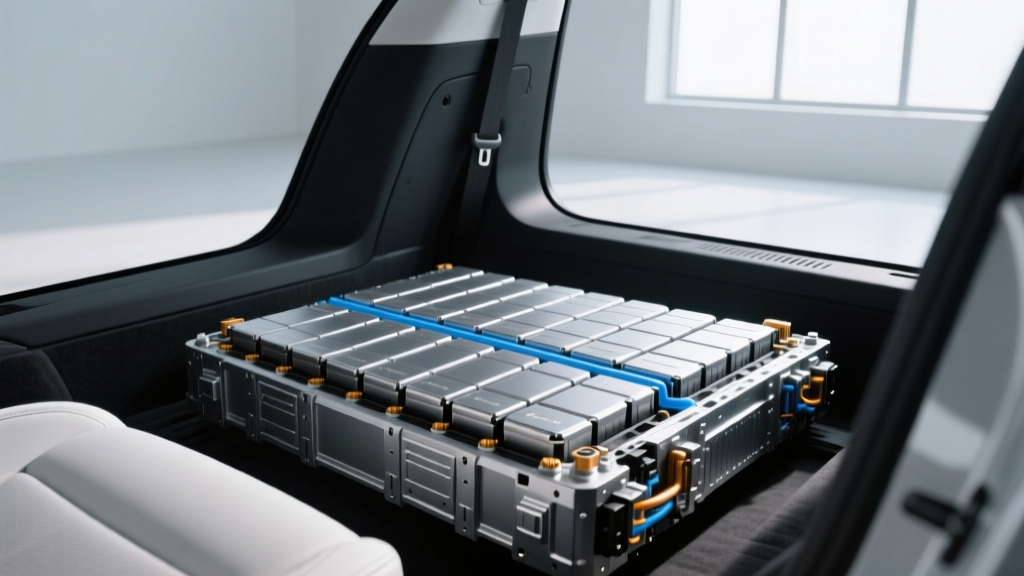
When shoppers hear "iron batteries" in an EV context, they're hearing about lithium iron phosphate cells — abbreviated LFP for the chemical formula LiFePO₄. Unlike the nickel-manganese-cobalt (NMC) or nickel-cobalt-aluminum (NCA) chemistries that powered the first wave of long-range EVs, LFP cells use iron and phosphate in the cathode, trading some energy density for dramatically longer cycle life, lower cost, and superior thermal stability.
As of the 2026 model year, LFP iron batteries are factory equipment in the Tesla Model 3 and Model Y Standard Range variants, the Ford Mustang Mach-E Select, the Chevrolet Equinox EV, and the Rivian R1S and R1T Standard Range packs. They've moved from a budget compromise to a deliberate engineering choice for buyers who prioritize longevity over maximum single-charge range.
| Attribute | LFP (Iron Phosphate) | NMC / NCA (Nickel-based) |
|---|---|---|
| Energy Density (cell-level) | 160–180 Wh/kg | 220–300 Wh/kg |
| Typical Cycle Life | 3,000–5,000+ cycles | 1,000–2,000 cycles |
| Calendar Lifespan Expectancy | 15–20+ years | 10–15 years |
| Cost per kWh (cell) | ~$75–$95 | ~$110–$140 |
| Cold-Weather Performance | More range loss below 20°F | Better low-temp conductivity |
| Recommended Charge Habit | Can charge to 100% daily | 80% daily; 100% for trips only |
| Thermal Runaway Risk | Very low | Moderate (mitigated by pack design) |
| Cobalt Content | None | Varies (NCA low, NMC moderate) |
The trade-off is straightforward: an LFP pack stores roughly 25–35% less energy per kilogram than an NMC pack of equivalent size. That means a vehicle needs either a heavier pack or must accept a shorter EPA range. The 2026 Tesla Model 3 RWD (LFP, ~60 kWh usable) carries an EPA range of 272 miles, while the Long Range AWD variant (NMC, ~82 kWh usable) achieves 363 miles. The iron-battery car is cheaper, lasts longer, and weighs a bit less overall — but it doesn't go as far on a single charge.
How Long Do EV Batteries Actually Last?
Real-world degradation data has matured enough to answer this with numbers, not marketing. According to aggregated fleet data from Recurrent Auto and owner-reported databases like Tesla's Battery Care documentation, the average modern EV battery pack loses roughly 5–8% of its original capacity in the first two years, then settles into a slow, near-linear decline of about 1–2% per year thereafter.
Typical Degradation Curve (LFP vs NMC, fleet averages):
- Year 1: LFP ~4% loss / NMC ~5% loss
- Year 2: LFP ~6% loss / NMC ~7% loss
- Year 5: LFP ~8–10% loss / NMC ~10–13% loss
- Year 8: LFP ~10–13% loss / NMC ~13–17% loss
- Year 10: LFP ~12–15% loss / NMC ~15–20% loss
LFP iron batteries consistently degrade slower than NMC cells, particularly when owners follow the manufacturer's recommendation to charge to 100% regularly — a practice that would accelerate NMC wear but actually helps LFP cells balance their cell voltages.
For context, the average American driver covers about 13,500 miles per year according to FHWA data. A 272-mile EPA range vehicle with 12% degradation at year 8 still delivers roughly 239 miles of real-world range — more than adequate for daily driving and most road trips with a single DC fast-charge stop. The overwhelming majority of EV batteries outlast the vehicle's body and interior. Catastrophic failure (sudden death of the pack) is extremely rare in liquid-cooled packs from major manufacturers.
What Does the Battery Warranty Actually Cover?
Federal law mandates a minimum 8-year/100,000-mile battery warranty for EVs sold in the United States, with California Air Resources Board (CARB) states requiring 10 years/150,000 miles. Most manufacturers exceed the federal floor. Here's how major 2026 warranties stack up:
| Manufacturer | Coverage Period | Mileage Cap | Capacity Threshold | Chemistry Covered |
|---|---|---|---|---|
| Tesla (Model 3/Y RWD) | 8 years | 100,000 mi | Below 70% | LFP |
| Tesla (Model 3/Y LR) | 8 years | 120,000 mi | Below 70% | NMC |
| Hyundai/Kia (E-GMP) | 10 years | 100,000 mi | Below 70% | NMC |
| Ford (Mach-E) | 8 years | 100,000 mi | Below 70% | LFP & NMC |
| Chevrolet (Equinox EV) | 8 years | 100,000 mi | Below 60% | NMC |
| Rivian | 8 years | 120,000 mi | Below 70% | LFP & NMC |
| BMW (iX/i4) | 8 years | 100,000 mi | Below 70% | NMC |
The critical detail is the capacity retention threshold. Most warranties guarantee the pack will retain at least 70% of its original capacity. If you bought a 60 kWh LFP pack new and it drops below 42 kWh of usable capacity within the warranty window, the manufacturer must repair or replace it at no cost. In practice, very few packs hit this threshold under normal use — which is precisely why manufacturers can afford to offer it.
Warranty exclusions typically include: damage from collisions, flooding, or unauthorized modifications; capacity loss from using non-approved chargers; and packs in vehicles used for commercial ride-hailing beyond a certain mileage. Always read the specific warranty booklet for your model year.
EV Battery Replacement Cost: What You'd Actually Pay
This is the number that generates the most anxiety, so let's ground it in real figures. Replacement costs vary enormously by pack size, chemistry, and whether the manufacturer offers module-level repair (replacing individual cell groups) versus full-pack swaps.
| Vehicle | Pack Size | Chemistry | Full-Pack Cost (parts + labor) | Module Repair Option |
|---|---|---|---|---|
| Tesla Model 3 RWD | ~60 kWh | LFP | $12,000–$15,000 | Limited |
| Tesla Model Y LR | ~82 kWh | NMC | $16,000–$20,000 | Available |
| Hyundai Ioniq 5 | ~77.4 kWh | NMC | $14,000–$18,000 | Available |
| Ford Mach-E Extended | ~91 kWh | NMC | $18,000–$22,000 | Available |
| Chevrolet Equinox EV | ~85 kWh | NMC | $15,000–$19,000 | Available |
| Rivian R1T (Standard) | ~95 kWh | LFP | $17,000–$21,000 | Limited |
Several factors are working in buyers' favor here. First, LFP iron batteries are inherently cheaper to produce — roughly $75–95 per kWh at the cell level versus $110–140 for NMC — which translates to lower replacement costs for the smaller LFP packs. Second, many manufacturers now offer module-level repairs, where a technician replaces only the degraded cell modules rather than the entire pack, cutting costs by 40–60%.
Third, and most importantly: the typical EV battery does not need replacement during the vehicle's useful life. A 2024 study by the National Renewable Energy Laboratory (NREL) found that median battery pack lifespan across current-generation EVs exceeds 200,000 miles before dropping below 80% capacity. For the average driver, that's roughly 15 years. Most EVs will be retired for collision damage, body rust, or technology obsolescence long before the pack fails.
LFP vs NMC: Which Chemistry Should You Choose?
There is no universally "better" chemistry — only the better chemistry for your driving pattern. Here's a practical decision framework:
Choose an LFP iron battery EV if:
- You charge primarily at home (Level 2) and can top up to 100% regularly
- Your daily driving is under 150 miles round-trip
- You plan to keep the vehicle 8+ years and want maximum longevity
- You want the lowest purchase price and lowest cost per kWh over the vehicle's life
- You live in a moderate climate (winters rarely below 15°F)
- You value cobalt-free, ethically simpler supply chains
Choose an NMC/NCA battery EV if:
- You regularly drive 250+ miles between charges (road trips, rural routes)
- You live in a cold climate and need better low-temperature range retention
- You need maximum towing range (heavier loads drain packs faster)
- You want the highest EPA range available in a given model
- You're comfortable charging to 80% daily and only going to 100% for trips
One nuance that catches new LFP owners off guard: the battery management system (BMS) in LFP packs has a harder time estimating state of charge (SoC) at partial charge levels because the voltage curve of LFP cells is extremely flat between 20% and 80%. This is why Tesla, Ford, and Rivian all recommend charging LFP vehicles to 100% at least once a week — it allows the BMS to recalibrate. Skipping this can lead to range-estimate inaccuracy, not battery damage.
Factors That Accelerate (or Protect) Battery Health
EV batteries are not monolithic — their lifespan is shaped by how you use them. The five biggest factors, ranked by impact:
- State of Charge (SoC) Habits: For NMC packs, regularly sitting at 100% SoC accelerates electrolyte decomposition. Keep daily charges at 80% and reserve 100% for trips. For LFP packs, regular 100% charges are recommended for BMS calibration and do not meaningfully harm cycle life.
- DC Fast-Charging Frequency: Occasional DC fast charging (1–2 times per week) has minimal impact on modern liquid-cooled packs. However, daily 250+ kW sessions — especially without preconditioning — generate sustained heat that degrades cells faster. A 2025 study from Geotab found that vehicles fast-charging more than 3 times per week showed roughly 1.5–2% additional degradation over 4 years versus those primarily using Level 2.
- Temperature Extremes: Battery chemistry degrades fastest when cells sit above 104°F (40°C) or below -4°F (-20°C) for extended periods. Park in shade during summer, use preconditioning in winter. Most packs have active liquid thermal management, but it draws energy and works harder in extremes.
- Depth of Discharge: Routinely draining the pack below 10% stresses cells more than shallow cycles. Try to keep the floor around 15–20% for daily driving.
- Calendar Aging: Even a garage-kept EV with zero miles will lose capacity over time due to chemical processes. Storing a pack at 50% SoC in a cool environment minimizes calendar aging. This is why buying a low-mileage 5-year-old EV is usually a strong value play.
How to Monitor Your Battery's State of Health
State of Health (SoH) is the metric that tells you how much capacity your pack retains compared to its original spec. Most 2026 EVs surface this data through the vehicle's infotainment system or companion app, though the level of detail varies:
- Tesla: The mobile app shows estimated range at 100% charge. Compare this to the original EPA range and account for known pack size to estimate SoH. Third-party tools like Tessie or TeslaFi provide more granular cell-level data via the vehicle API.
- Hyundai/Kia: The EV menu in the infotainment system displays battery health percentage directly on 2024+ models with the latest software.
- Ford: The FordPass app provides a battery health indicator, though it's less granular than independent OBD-II readings.
- OBD-II Scanners: Devices like the OBDLink MX+ paired with apps such as EVNotify or Car Scanner can read the battery's reported SoH directly from the BMS. This is the most reliable independent method.
- Dealer Diagnostics: Any authorized service center can run a full battery health report, typically as part of a scheduled service visit.
If your SoH drops below the warranty threshold (typically 70%) within the warranty period, contact the manufacturer's service department with your health report in hand. Documentation matters — keep records of your charging habits and any diagnostic readings.
Beyond LFP and NMC: What's Coming Next
Several next-generation battery technologies are in advanced development, though none are available in production vehicles as of 2026:
Solid-State Batteries: Toyota, Samsung SDI, and QuantumScape have all demonstrated solid-state cells in lab and limited fleet testing, promising 30–40% higher energy density and faster charging. Toyota has announced a target of limited production in 2027–2028, but cost and manufacturing scale remain significant hurdles. Expect solid-state to debut in premium, low-volume models before reaching mainstream pricing.
Silicon-Anode Cells: Companies like Sila Nanotechnologies and Amprius are replacing graphite anodes with silicon-dominant compositions, boosting energy density by 20–40%. These cells are beginning to appear in consumer electronics and are expected in limited EV applications by 2027–2028.
Sodium-Ion Batteries: CATL and BYD have begun producing sodium-ion cells for light EVs and energy storage. While energy density is lower than LFP (roughly 140–160 Wh/kg), sodium is abundant and cheap, making these cells promising for budget urban EVs. No US-market vehicles use sodium-ion packs as of 2026.
For buyers shopping today, the practical choice remains LFP iron batteries or NMC/NCA. Both are proven, well-warrantied, and backed by extensive real-world data. The emerging technologies are worth monitoring but should not delay a purchase decision — today's packs are already engineered to outlast the vehicles they power.
How long do LFP iron batteries last compared to NMC?
LFP cells typically sustain 3,000–5,000+ full charge cycles before reaching 80% capacity, compared to 1,000–2,000 cycles for NMC. In real-world driving terms, an LFP pack can reasonably be expected to retain 85–90% of its original capacity at 10 years, while NMC packs typically retain 80–85%. Both chemistries are expected to last the useful life of the vehicle.
Can I charge an LFP iron battery to 100% every day?
Yes — and manufacturers recommend it. Tesla, Ford, and Rivian all advise LFP owners to set their charge limit to 100% and plug in regularly. This is because LFP cells have a very flat voltage curve, making it difficult for the battery management system to estimate charge level accurately without a full charge to recalibrate. Daily 100% charging does not meaningfully reduce LFP cycle life the way it would for NMC.
How much does it cost to replace an EV battery out of warranty?
Full-pack replacements range from roughly $12,000 for a 60 kWh LFP pack to $22,000 for a 90+ kWh NMC pack, including labor. Module-level repairs — where only degraded cell groups are replaced — can reduce this to $5,000–$10,000. However, out-of-warranty replacements are rare; the vast majority of packs remain functional well beyond 150,000 miles.
Does frequent DC fast charging damage LFP iron batteries?
Modern LFP packs with liquid cooling handle DC fast charging well, but heat is the primary degradation driver. Occasional fast charging (1–2 sessions per week) has minimal measurable impact. Daily fast charging without proper preconditioning can add 1–2% additional degradation over several years. Use Level 2 home charging as your primary method and precondition the battery before DC fast sessions when possible.
Do LFP iron batteries perform worse in cold weather?
Yes, measurably so. LFP cells have higher internal resistance at low temperatures compared to NMC. In testing below 20°F (-7°C), LFP-equipped EVs can see 30–40% range reduction versus the EPA estimate, compared to 20–30% for NMC vehicles. Active thermal preconditioning mitigates some of this loss, and range recovers as the pack warms during driving. For cold-climate buyers who regularly face sub-zero temperatures, NMC remains the stronger choice for winter range.
Are LFP iron batteries eligible for the federal EV tax credit?
Eligibility depends on the vehicle's final assembly location, battery component sourcing, and critical mineral requirements under IRS §30D — not on the chemistry itself. Several 2026 LFP-equipped models (including certain Tesla and Ford variants) qualify for partial or full credits depending on the buyer's income, the vehicle's MSRP relative to the cap ($55,000 for sedans, $80,000 for SUVs/trucks), and the battery's supply-chain compliance. Check the latest IRS guidance on clean vehicle credits and confirm eligibility at the point of sale, as sourcing rules are updated periodically.