The LFP Battery Shift: Why Chemistry Matters in Your Next EV
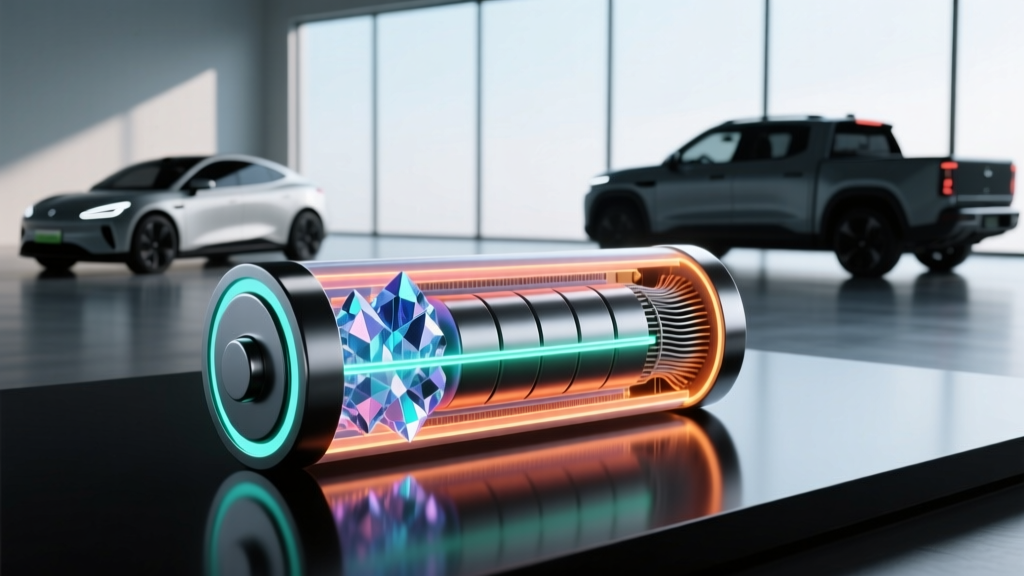
Not all EV batteries are built the same. The cathode chemistry inside the high-voltage traction pack dictates how far you can drive, how fast you can charge, how the battery holds up over a decade, and ultimately how much you'll pay. In 2026, the two dominant chemistries in passenger EVs are LFP (lithium iron phosphate, or LiFePO₄) and NMC/NCA (nickel manganese cobalt / nickel cobalt aluminum). Understanding the difference is one of the highest-leverage things you can do before signing a purchase agreement.
LFP batteries have moved from a niche option to a mainstream staple. Tesla equips the Model 3 and Model Y Standard Range with LFP packs. Ford uses LFP in the base Mustang Mach-E and F-150 Lightning Pro. BYD, the world's second-largest EV maker, builds almost exclusively with its blade-style LFP cells. The chemistry isn't just cheaper—it fundamentally behaves differently in daily use, and those differences matter whether you're a commuter, a road-tripper, or a fleet buyer.
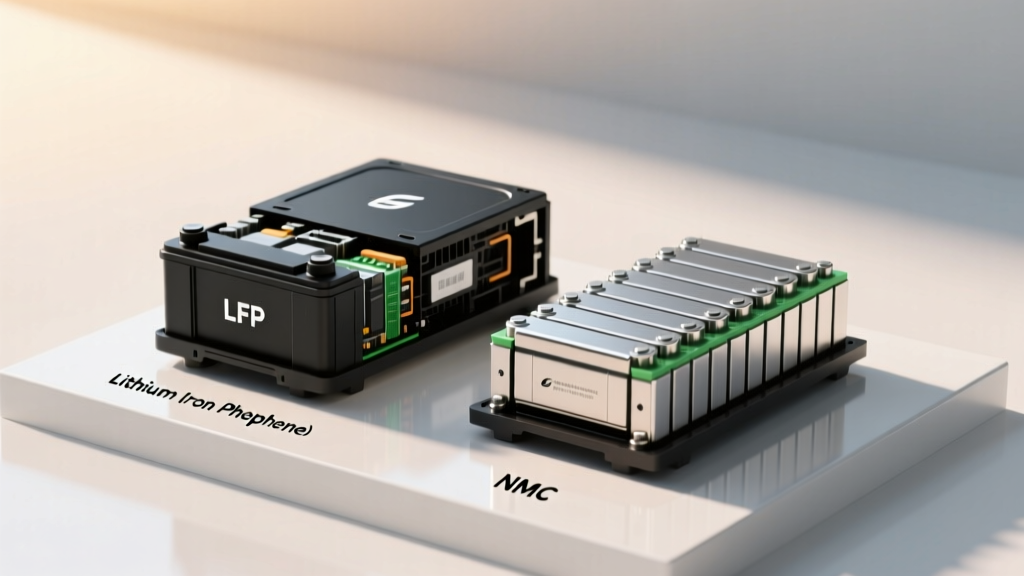
LFP vs NMC/NCA: Chemistry at a Glance
| Attribute | LFP (LiFePO₄) | NMC / NCA |
|---|---|---|
| Energy Density (cell-level) | ~160–180 Wh/kg | ~220–300 Wh/kg |
| Typical Cycle Life | 3,000–6,000+ cycles | 1,000–2,000 cycles |
| Cold-Weather Performance | Moderate; more range loss below 32°F | Better low-temp discharge capability |
| Thermal Stability | Excellent; higher onset temp for thermal runaway (~270°C) | Good; lower onset temp (~210°C) |
| Cobalt Content | None | Contains cobalt & nickel (supply-chain and ethical concerns) |
| Cost per kWh (cell) | ~$60–$80 (2025–2026) | ~$90–$120 |
| Recommended Daily SoC | 100% OK; manufacturers encourage it | 80–90% preferred for longevity |
| SoC Estimation Accuracy | Harder (flat voltage curve) | Easier (steeper voltage curve) |
| Common Vehicles (2026) | Tesla Model 3/Y RWD, Ford Mach-E Select, F-150 Lightning Pro, BYD lineup | Tesla Long Range/Performance, Hyundai Ioniq 5/6, Kia EV6/EV9, Rivian, Lucid |
The headline trade-off: LFP sacrifices energy density to gain cycle life, thermal safety, and lower cost. That means an LFP pack is heavier and bulkier for the same kWh, which is why you'll find it primarily in Standard Range and base trims. But for drivers who don't need 340+ miles of range, the trade-offs are often worth it.
How Long Do EV Batteries Last? Real Degradation Data
The fear that EV batteries die early and cost a fortune to replace is the single biggest barrier to adoption—and it's largely overstated by outdated anecdotes. Modern liquid-cooled traction batteries, both LFP and NMC, are engineered to outlast the vehicle's useful economic life in the vast majority of cases.
Here's what the data actually shows. According to long-term fleet analyses and manufacturer-reported figures, the average EV battery loses roughly 1.5% to 2.5% of its original capacity per year under normal use conditions. That degradation is not linear: a battery typically sheds 2–4% in the first year (the "break-in" drop), then settles into a slower, more predictable decline.
Typical Capacity Retention Over Time
| Year / Mileage | LFP Pack (est. retention) | NMC Pack (est. retention) |
|---|---|---|
| Year 1 / ~12,000 mi | 96–98% | 95–97% |
| Year 3 / ~36,000 mi | 93–96% | 90–94% |
| Year 5 / ~60,000 mi | 90–94% | 87–91% |
| Year 8 / ~96,000 mi | 86–92% | 82–88% |
| Year 10 / ~120,000 mi | 83–90% | 78–85% |
Figures are composites drawn from manufacturer warranty thresholds, fleet telemetry reports (including data referenced by Recurrent Auto), and real-world owner community tracking. Individual results vary with climate, charging habits, and pack size.
LFP's cycle-life advantage is the reason its degradation curve flattens more gracefully. A cell rated for 4,000+ cycles at 80% depth of discharge can theoretically cover 500,000+ miles before reaching end-of-life thresholds. Most owners will trade the car in long before that happens.
What Does the Battery Warranty Actually Cover?
Federal law in the United States mandates that EV batteries carry a minimum warranty of 8 years or 100,000 miles (whichever comes first). In California and states that follow CARB (California Air Resources Board) emissions rules, the requirement extends to 10 years or 150,000 miles. Most automakers meet or exceed these floors voluntarily.
Battery Warranty Comparison — 2026 Models
| Manufacturer | Warranty Term | Capacity Retention Threshold | Chemistry |
|---|---|---|---|
| Tesla (Model 3/Y RWD — LFP) | 8 yr / 100,000 mi | 70% of original capacity | LFP |
| Tesla (Model 3/Y Long Range) | 8 yr / 120,000 mi | 70% of original capacity | NMC/NCA |
| Hyundai / Kia | 10 yr / 100,000 mi | 70% of original capacity | NMC |
| Ford (Mach-E, F-150 Lightning) | 8 yr / 100,000 mi | 70% of original capacity | LFP (base) / NMC (extended) |
| Rivian (R1T / R1S) | 8 yr / 175,000 mi | 70% of original capacity | NMC |
| GM (Ultium platform) | 8 yr / 100,000 mi | 70% of original capacity | NMC |
A critical detail most buyers miss: the warranty covers capacity loss below the stated threshold, not just outright failure. If your 75 kWh NMC pack degrades to 52 kWh (below 70%) within the warranty window, the manufacturer is obligated to repair or replace it—typically by swapping in a refurbished pack with at least the threshold capacity. The warranty also covers defects in materials and workmanship.
What the warranty does not cover: damage from collisions, flooding, improper modifications, or use of non-approved charging equipment. And remember—we're talking about the high-voltage traction battery here, not the 12V auxiliary battery that powers the electronics (which follows a separate, shorter warranty typical of conventional car batteries).
How Much Does an EV Battery Cost to Replace?
Out-of-warranty replacement is the nightmare scenario, and the numbers are significant—but context matters. Most EV batteries never need a full replacement during the vehicle's first-owner lifespan. When they do, it's typically at 150,000+ miles or 12+ years, well past the point where most cars have been traded or sold.
Estimated Out-of-Warranty Battery Replacement Costs (2026)
| Vehicle / Pack Size | Chemistry | Battery Cost (parts) | Installed Total (est.) |
|---|---|---|---|
| Tesla Model 3 RWD (~57 kWh) | LFP | $5,500–$7,500 | $8,000–$11,000 |
| Tesla Model Y Long Range (~75 kWh) | NMC | $9,000–$12,000 | $12,000–$16,000 |
| Hyundai Ioniq 5 (~77 kWh) | NMC | $8,500–$11,500 | $11,000–$15,000 |
| Ford F-150 Lightning Ext. Range (~131 kWh) | NMC | $15,000–$20,000 | $20,000–$27,000 |
| Chevrolet Silverado EV (~200 kWh) | NMC | $22,000–$30,000 | $28,000–$38,000 |
Prices include estimated labor ($1,500–$4,000 depending on vehicle architecture). Costs have declined ~40% since 2020 and are expected to continue falling. Module-level repairs (replacing individual cell groups rather than the entire pack) are increasingly available and can cost $2,000–$6,000.
One bright spot: LFP packs are generally cheaper to replace per kWh than NMC, owing to lower raw-material costs and the absence of cobalt. As module-level diagnostics improve, many shops can now replace only the degraded modules rather than the full pack, bringing costs down substantially.
Factors That Accelerate (or Slow) Battery Degradation
Battery longevity isn't a lottery—it's largely within your control. The chemistry sets the ceiling, but your habits determine where you land on the curve.
Battery Care Checklist: Maximize Your Pack's Life
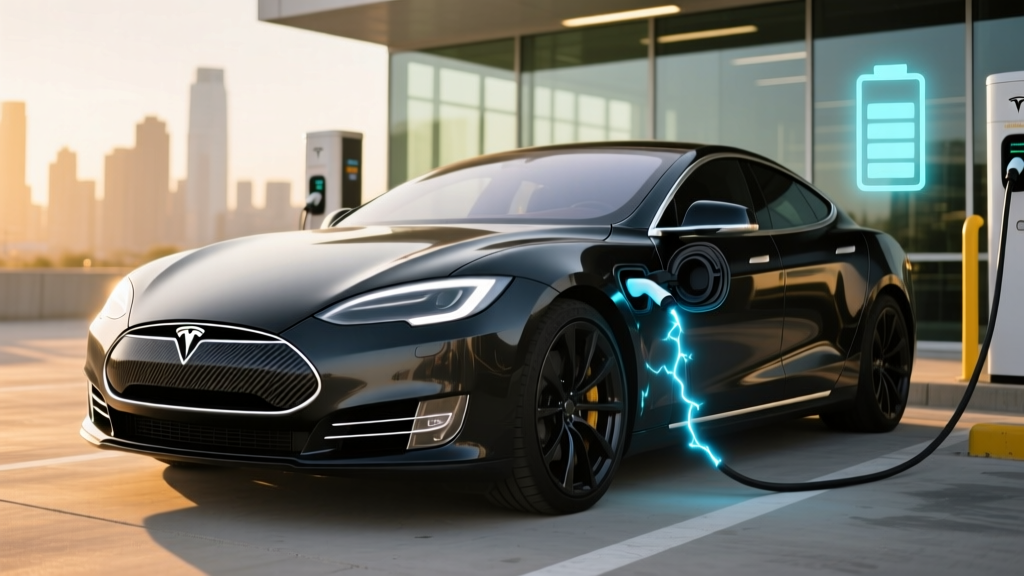
- Limit DC fast charging when possible. Occasional road-trip fast charging is fine, but making 150–350 kW DC charging your daily routine accelerates degradation. Level 2 home charging (7–11 kW) is gentler on the cells. Research published by the National Renewable Energy Laboratory (NREL) shows that frequent high-rate charging can add 1–3% additional annual capacity loss compared to predominantly L2 charging.
- Avoid extreme State of Charge (SoC) storage. For NMC packs, the sweet spot is 20–80% daily, charging to 100% only when you need the full range. LFP packs are different: Tesla and BYD explicitly recommend charging to 100% at least once a week to recalibrate the battery management system (BMS), which struggles with SoC estimation due to LFP's flat voltage curve.
- Precondition in cold weather. Lithium-ion cells resist accepting charge when cold. Use your EV's scheduled departure or preconditioning feature to warm the pack before charging or driving. This reduces lithium plating risk and improves regen braking availability.
- Park in shade or a garage in extreme heat. Sustained high temperatures (above 95°F ambient, which means higher pack temps) accelerate chemical side reactions. A garage or covered spot can reduce pack temperature by 15–25°F.
- Don't leave the car at 0% or 100% for extended periods. If you're traveling for a week, leave an NMC pack at ~50%. LFP is more tolerant of high SoC storage but still benefits from avoiding prolonged 0%.
- Use regenerative braking wisely. Moderate regen settings are fine. Aggressive one-pedal driving in very cold weather can stress the pack if it hasn't been preconditioned, since cold cells resist high charge-rate input from regen.
LFP vs NMC: Which Should You Choose?
There's no universally "better" chemistry—only the better chemistry for your use case. Here's a decision framework based on how you actually drive:
Choose LFP if:
- Your daily commute is under 80 miles round-trip and you charge at home nightly.
- You want to charge to 100% daily without worrying about accelerated degradation.
- You plan to keep the vehicle 8+ years and want maximum cycle life.
- You're buying a base or Standard Range trim to minimize upfront cost.
- You value cobalt-free sourcing and lower supply-chain risk.
- You live in a mild or warm climate where cold-weather range loss is less critical.
Choose NMC/NCA if:
- You regularly drive 200+ miles between charges (road trips, rural routes).
- You live in a cold climate (sub-20°F winters) and need better low-temperature discharge performance.
- You want the longest possible EPA range in a single charge (340+ miles).
- You need maximum towing range (electric trucks lose 40–50% range when towing).
- You're buying a Long Range or Performance trim and the price premium is justified.
In practical terms: a Tesla Model 3 RWD with its ~57 kWh LFP pack delivers an EPA-estimated 272 miles of range. The Model 3 Long Range with its ~75 kWh NMC pack delivers 363 miles. That's a meaningful gap on a road trip—but if you charge at home every night and your longest regular drive is 60 miles, the LFP car will serve you just as well at a lower price, with a battery that will likely outlast the NMC pack in total cycles.
How to Check and Monitor Your Battery's State of Health
State of Health (SoH) is the percentage of your battery's original usable capacity that remains. A brand-new pack is 100% SoH; a pack that has degraded from 75 kWh to 67.5 kWh usable is at 90% SoH.
In-vehicle tools: Most EVs display a rough SoH or battery health indicator in the settings menu. Tesla shows this under Settings → Service → Battery Health (introduced in 2024 software updates). Hyundai/Kia provides a battery health readout in the EV trip computer. Ford's SYNC system includes a battery health overview.
OBD-II diagnostics: For a more precise reading, an OBD-II dongle paired with an app like OBDeleven, Leaf Spy (for Nissan LEAF), or manufacturer-specific tools can pull real SoH data directly from the BMS. These readings show cell-level voltage variance, internal resistance, and actual usable kWh—far more granular than the dashboard estimate.
Third-party reports: Services like Recurrent offer battery health reports that compare your pack's degradation against a fleet of identical vehicles. Some dealerships and pre-purchase inspection services now include a battery health certificate in used-EV evaluations.
What to watch for: A sudden drop in range that doesn't correlate with weather, a significant increase in the gap between displayed SoC and actual driving range, or individual cell voltage deviations above 0.1V under load. These can signal a module-level fault rather than normal degradation and should be evaluated under warranty.
What's Next? Solid-State, Silicon Anodes, and Beyond
Next-generation battery technologies are in active development, but it's critical to separate lab announcements from showroom reality.
Solid-state batteries replace the liquid electrolyte with a solid material (ceramic, sulfide, or polymer), promising higher energy density (~400–500 Wh/kg at the cell level), faster charging, and improved safety. Toyota has announced a solid-state EV for 2027–2028 with a projected 600+ mile range, and Samsung SDI is targeting mass production by 2027. However, manufacturing yields, cost, and scalability remain unsolved at volume. Expect solid-state to debut in limited, premium applications first—not in mainstream $35,000 EVs.
Silicon-dominant anodes are closer to market. Companies like Sila Nanotechnologies and Group14 are supplying silicon-composite anode materials that boost energy density by 15–25% over conventional graphite anodes. Mercedes-Benz's EQG and certain 2026–2027 model-year EVs from partnering OEMs are expected to use silicon-enhanced cells. This is an incremental improvement, not a revolution—but it meaningfully extends range without changing pack size.
Sodium-ion batteries are emerging as a low-cost alternative for city EVs and energy storage. CATL has begun shipping sodium-ion packs in Chinese-market vehicles, with energy density around 140–160 Wh/kg. They won't replace LFP or NMC in long-range vehicles but could power affordable urban runabouts within the next few years.
The realistic timeline: LFP and NMC will remain the dominant chemistries through at least 2030. Solid-state is a late-2020s story for premium vehicles and a 2030s story for the mass market. Silicon anodes are the most imminent improvement, arriving in select 2026–2027 models.
Frequently Asked Questions
How long do LFP batteries last compared to NMC?
LFP batteries typically last longer in terms of charge cycles—3,000 to 6,000+ cycles before reaching 80% capacity, compared to 1,000 to 2,000 cycles for NMC. In real-world years, both chemistries will usually provide 10–15 years of service before dropping below the 70% warranty threshold, but LFP's higher cycle count gives it a wider margin, especially for high-mileage drivers and fleet use.
Is it safe to charge an LFP battery to 100% every day?
Yes. Tesla, Ford, and BYD all recommend charging LFP packs to 100% regularly—often at least once per week. This is because LFP's flat voltage-discharge curve makes it difficult for the battery management system to estimate remaining charge accurately. Regular full charges recalibrate the BMS. This is a key advantage over NMC, where daily 100% charges accelerate degradation.
Do LFP batteries perform worse in cold weather?
LFP cells have somewhat higher internal resistance at low temperatures, which translates to slightly more range loss in sub-freezing conditions compared to NMC. Expect a 25–35% range reduction in LFP vehicles at 20°F (versus 20–30% for NMC). Preconditioning the battery before driving and charging mitigates most of this gap. If you live in northern Minnesota or Alaska, NMC's cold-weather edge is worth considering.
Can I upgrade my NMC battery to LFP, or vice versa?
No. Battery packs are engineered to specific vehicle architectures, and swapping chemistries would require entirely different BMS calibration, thermal management tuning, and structural integration. Stick with the chemistry your vehicle was designed for.
What happens to EV batteries after they're replaced?
Retired EV batteries typically enter "second life" applications—stationary energy storage for solar installations, grid frequency regulation, or commercial backup power—where the 70–80% remaining capacity is perfectly usable. After second life, recycling facilities (like Redwood Materials and Li-Cycle) recover 95%+ of the lithium, cobalt, nickel, and copper for use in new battery production. This circular supply chain is reducing the environmental and cost impact of battery manufacturing.