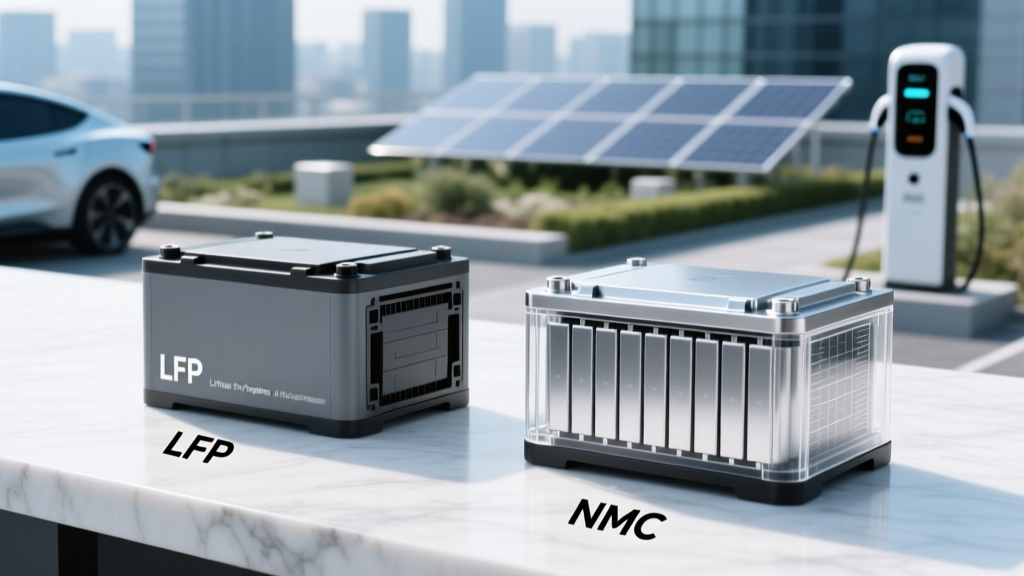
If you have shopped for an electric vehicle in the last two years, you have likely encountered a choice that did not exist a decade ago: which battery chemistry sits under your floor. Lithium iron phosphate (LFP) and nickel manganese cobalt (NMC) — along with the related NCA (nickel cobalt aluminum) — dominate today's EV market, and they behave very differently in real-world ownership. The single metric that most separates them on paper is LFP battery energy density (Wh/kg), but the practical implications reach far beyond a spec sheet.
This guide breaks down what those watt-hours per kilogram mean for range, longevity, charging habits, and total cost of ownership — with the exact numbers you need to make an informed decision.
What Energy Density (Wh/kg) Actually Tells You
Energy density measures how much electrical energy a battery cell stores per unit of mass. Expressed in watt-hours per kilogram (Wh/kg), it answers a straightforward question: how heavy must the pack be to deliver a given range?
A higher Wh/kg figure means automakers can either fit more kilowatt-hours (kWh) of usable energy into the same weight — yielding more EPA-estimated miles — or achieve a target range with a lighter, less expensive pack. This is the core engineering trade-off that separates LFP from NMC chemistries in 2026 production vehicles.
There are two ways energy density is reported:
- Cell-level Wh/kg: measured at the individual cell, before modules, cooling, wiring, and the enclosure are added.
- Pack-level Wh/kg: the full battery pack including structural components. This number is typically 30–45% lower than cell-level and matters more for vehicle weight and efficiency.
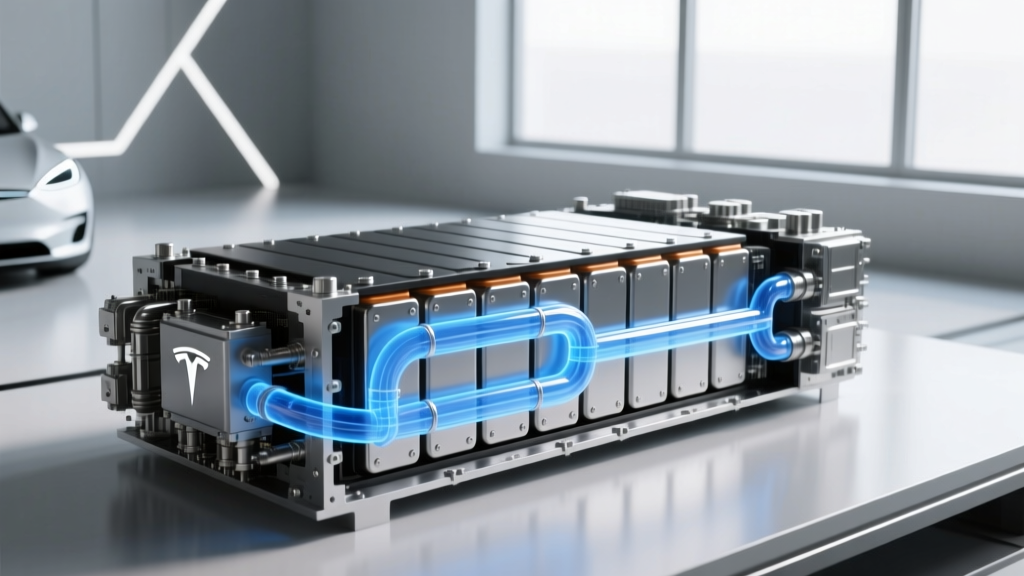
When you see manufacturers or media quote Wh/kg, confirm which level they are referencing. The gap between cell and pack figures varies significantly by platform architecture — Tesla's structural pack in the Model Y, for example, achieves a higher pack-level ratio by eliminating module housings.
LFP vs NMC/NCA Chemistry: The Full Trade-Off Matrix
Energy density is just one axis. Below is a side-by-side comparison of the two dominant chemistries across the factors that affect daily ownership.
| Attribute | LFP (Lithium Iron Phosphate) | NMC / NCA (Nickel-based) |
|---|---|---|
| Cell-level energy density | 160–180 Wh/kg | 230–290 Wh/kg |
| Pack-level energy density | ~110–140 Wh/kg | ~150–190 Wh/kg |
| Typical cycle life (to 80% SoH) | 3,000–5,000+ cycles | 1,000–2,000 cycles |
| Calendar life expectation | 15–20+ years | 10–15 years |
| Thermal stability / fire risk | Excellent — no oxygen release at high temp | Good — requires more robust BMS safeguards |
| Cold-weather performance (below 32°F / 0°C) | Moderate range loss; slower charge acceptance | Better low-temp charge acceptance; less range loss |
| Raw material cost | Lower — iron and phosphate are abundant | Higher — nickel and cobalt are volatile commodities |
| Typical vehicle applications (2026) | Tesla Model 3/Y RWD, Ford Mustang Mach-E Select, Rivian Standard, BYD models | Tesla Long Range/Performance, Hyundai Ioniq 5/6, Kia EV6/EV9, GM Ultium vehicles, Lucid, BMW iX |
| Recommended daily charge limit | 100% (regular full charges are fine) | 80–90% for daily; 100% only before long trips |
The headline takeaway: LFP trades roughly 30–35% lower energy density for dramatically longer cycle life, better thermal safety, lower cost, and simpler charge habits. NMC packs more range into a lighter package but demands more careful state-of-charge management to maximize lifespan.
How Long Do EV Batteries Actually Last?
The fear that an EV battery will need a $15,000+ replacement at 80,000 miles is largely a relic of early-generation packs. Modern thermal management systems, improved cell chemistry, and sophisticated battery management software have pushed real-world longevity well beyond most owners' planned ownership periods.
Degradation Data: What the Numbers Show
State of Health (SoH) measures remaining usable capacity compared to the battery when new. A brand-new pack is 100% SoH; at 70–80% SoH, most owners begin to notice meaningful range reduction. Here is what aggregated fleet and owner data tells us:
| Mileage | NMC/NCA Average SoH | LFP Average SoH | Real-World Note |
|---|---|---|---|
| 30,000 mi | 94–97% | 96–98% | Initial drop as SEI layer forms; both chemistries stabilize |
| 60,000 mi | 90–94% | 93–96% | Linear degradation phase; ~0.5–1% loss per year for most drivers |
| 100,000 mi | 85–91% | 90–95% | NMC spread widens based on fast-charge frequency and climate |
| 150,000 mi | 78–87% | 86–93% | Some NMC packs approach warranty threshold; LFP well within spec |
| 200,000 mi | 72–83% | 82–90% | LFP packs routinely exceed 200k mi above 80% SoH |
Data from Geotab's fleet study of over 6,300 electric vehicles shows that the average EV loses approximately 2.3% of its battery capacity per year — meaning at 10 years, the average pack retains roughly 77% of its original capacity. LFP-equipped vehicles in similar fleet studies trend higher, often retaining 85–90%+ at the 10-year mark.
A critical nuance: degradation is not linear. Most packs experience a steeper drop in the first 10,000–20,000 miles (the solid electrolyte interphase layer stabilizes), then settle into a slow, predictable decline. A second acceleration may occur at very high mileage or extreme calendar age, but few production EVs have accumulated enough data to map this phase precisely.
What Does the Battery Warranty Actually Cover?
Federal law in the United States mandates a minimum EV battery warranty of 8 years or 100,000 miles (whichever comes first). In California Air Resources Board (CARB) states — which include California, New York, Massachusetts, Oregon, Washington, and several others — the requirement extends to 10 years or 150,000 miles.
Most manufacturers exceed the federal minimum. Here is a snapshot of current warranty terms:
| Manufacturer | Warranty Period | Capacity Retention Threshold | Chemistry Notes |
|---|---|---|---|
| Tesla (Model 3/Y RWD — LFP) | 8 yr / 100,000 mi | 70% minimum SoH | LFP packs; warranty honors 100% daily charging |
| Tesla (Model 3/Y LR/Perf — NMC) | 8 yr / 120,000 mi | 70% minimum SoH | NMC packs; 80% daily charge recommended |
| Hyundai / Kia | 10 yr / 100,000 mi | 70% minimum SoH | NMC (Ioniq 5/6, EV6/EV9) |
| GM (Ultium platform) | 8 yr / 100,000 mi | 70% minimum SoH | NMC across Cadillac, Chevrolet, GMC EVs |
| Ford (Mustang Mach-E, F-150 Lightning) | 8 yr / 100,000 mi | 70% minimum SoH | LFP (Select/Standard Range) and NMC (GT/Extended Range) |
| Rivian | 8 yr / 175,000 mi | 70% minimum SoH | LFP (Standard) and NMC (Max/Large packs) |
| BMW | 8 yr / 100,000 mi | 70% minimum SoH | NMC (i4, iX, i7) |
Key points about warranty claims:
- The 70% threshold is the industry standard. If your pack drops below 70% SoH within the warranty period, the manufacturer will repair or replace modules (or the full pack) at no cost.
- Warranties cover defects and abnormal degradation — not damage from accidents, flooding, or aftermarket modifications.
- Some warranties are transferable to second owners, which supports resale value. Confirm this with the manufacturer before purchasing used.
- The warranty applies to the high-voltage traction battery — not the 12V auxiliary battery that powers accessories and computers.
How Much Does an EV Battery Replacement Cost?
Out-of-warranty battery replacement is the number-one anxiety for prospective EV buyers — and the concern most frequently overstated in media coverage. Here is the reality:
Most EV batteries outlast the vehicle they are installed in. At current degradation rates, an LFP pack may retain 85%+ capacity at 200,000 miles, and an NMC pack typically holds 75–85%. Given that the average American vehicle is scrapped at roughly 12 years and 150,000–180,000 miles (per BTS data), a full battery replacement is statistically unlikely for the original owner.
That said, if a replacement is needed — whether from a manufacturing defect that falls outside warranty, physical damage, or very high mileage — here is what to expect:
| Vehicle / Pack Size | Chemistry | Estimated Parts Cost | Labor (est.) | Total Range |
|---|---|---|---|---|
| Tesla Model 3 RWD (~57 kWh) | LFP | $7,000–$9,000 | $1,500–$2,500 | $8,500–$11,500 |
| Tesla Model Y LR (~75 kWh) | NMC | $10,000–$13,000 | $1,500–$2,500 | $11,500–$15,500 |
| Hyundai Ioniq 5 (~77 kWh) | NMC | $11,000–$14,000 | $2,000–$3,000 | $13,000–$17,000 |
| Ford F-150 Lightning Extended (~131 kWh) | NMC | $18,000–$25,000 | $3,000–$4,500 | $21,000–$29,500 |
| Chevrolet Silverado EV (~200 kWh) | NMC | $25,000–$35,000 | $3,500–$5,000 | $28,500–$40,000 |
Important context on these figures:
- Module-level repair is increasingly common. Many packs allow individual module replacement rather than full-pack swaps, reducing costs to $2,000–$6,000 for a single failed module.
- Refurbished packs from salvaged vehicles are becoming available through certified channels at 40–60% of new-pack pricing.
- Battery prices continue to fall. Cell-level pricing has dropped below $100/kWh for LFP and approximately $110–130/kWh for NMC as of 2025–2026, per BloombergNEF tracking. Replacement costs in 2030 will likely be significantly lower than today.
Factors That Accelerate (or Slow) Battery Degradation
Your battery's lifespan is not a fixed number — it is a function of how you use it. The following factors have the most measurable impact on long-term State of Health:
1. State of Charge Habits
For NMC/NCA packs, routinely charging to 100% and leaving the vehicle parked at full charge accelerates electrolyte decomposition and cathode stress. Setting your daily charge limit to 80% (or 90% for Tesla's updated recommendation) is the single most impactful habit for NMC longevity. LFP packs, by contrast, actually benefit from regular 100% charges — the battery management system (BMS) needs full-charge cycles to accurately calibrate cell balancing.
2. DC Fast-Charging Frequency
Occasional DC fast charging (Level 3, typically 50–350 kW) has minimal impact on battery health. However, daily reliance on DCFC — particularly at rates above 150 kW without proper battery preconditioning — generates sustained heat that accelerates degradation over time. Studies from the National Renewable Energy Laboratory (NREL) suggest that vehicles charged primarily via DCFC may see 1–2% additional capacity loss over 100,000 miles compared to Level 2 home charging.
3. Temperature Extremes
Battery packs are happiest between roughly 60–80°F (15–27°C). Prolonged exposure to ambient temperatures above 95°F (35°C) — especially at high SoC — is one of the most damaging conditions for any lithium-ion cell. In cold weather (below 20°F / -7°C), the pack is not damaged, but charging speed is restricted by the BMS to protect the cells. Always use preconditioning (available on most modern EVs) before fast charging in cold weather.
4. Depth of Discharge
Shallow cycling (using 20–40% of the battery per day and recharging) is gentler than regularly draining from 100% to near 0%. You do not need to obsess over this — modern BMS systems protect against deep discharge — but if your commute uses only 15% of the pack, there is no need to charge to 100% every night on an NMC vehicle.
Battery Care Best Practices — Quick Checklist
- NMC owners: Set daily charge limit to 80–90%. Charge to 100% only before road trips. Avoid leaving the car parked at 100% SoC for more than a few hours.
- LFP owners: Charge to 100% at least once per week for BMS calibration. Daily 100% charging is fine and recommended.
- All owners: Use Level 2 home charging as your primary method. Reserve DCFC for road trips or when necessary.
- All owners: Precondition the battery before DC fast charging (most EVs do this automatically when you navigate to a charger).
- All owners: In extreme heat, avoid parking at 100% SoC for extended periods. In extreme cold, plug in when possible to allow the thermal management system to maintain pack temperature from grid power.
- All owners: Do not let the pack sit below 10% SoC for more than a day or two. Lithium-ion cells degrade faster at very low SoC, especially in heat.
How to Check and Monitor Battery Health (SoH)
Knowing your battery's State of Health helps you plan for the long term and catch abnormal degradation early. Here are the primary methods available to EV owners:
In-Vehicle Displays
Some manufacturers provide a battery health indicator directly in the infotainment system or mobile app. Tesla's app, for example, does not display a raw SoH percentage but tracks rated range at 100% charge over time — a useful proxy. Hyundai/Kia's diagnostic menu (accessible via hidden service screens on some models) shows estimated SoH. Rivian provides battery health data through its app.
OBD-II Dongles and Third-Party Apps
Tools like OBDeleven, LeafSpy (for Nissan Leaf), and Scan My Tesla (with an OBD-II adapter) can read the BMS-reported SoH directly. These tools pull the same data the manufacturer's service center sees. For most buyers, a quick OBD-II scan at a pre-purchase inspection is the fastest way to verify battery health on a used EV.
Dealer or Service Center Diagnostic
Any authorized service center can run a full battery diagnostic that reports SoH, cell voltage variance, and individual module health. This is the most authoritative method and is typically free under warranty or costs $100–$200 out of warranty.
Range Tracking Over Time
The simplest DIY method: record your vehicle's displayed range at 100% charge once per month under similar temperature conditions. A gradual decline is normal. A sudden drop of more than 5–10% over a short period warrants a diagnostic check.
What Comes After LFP and NMC? Emerging Battery Technologies
Several next-generation battery technologies are in development that could reshape the energy density conversation — but none are available in production vehicles as of 2026. Here is a realistic assessment of the timeline:
Silicon-Dominant Anodes
Replacing graphite anodes with silicon can theoretically boost cell energy density by 20–40%. Companies like Sila Nanotechnologies and Group14 are supplying silicon-carbon composite anodes to select manufacturers. Expect limited deployment in premium EVs starting in 2027–2028, with broader availability by 2030. The primary challenge remains cycle life — silicon expands significantly during charging, which has historically limited longevity.
Solid-State Batteries
Solid-state cells replace the liquid electrolyte with a solid conductor, promising energy densities of 350–500+ Wh/kg at the cell level, faster charging, and improved safety. Toyota has announced a solid-state EV targeted for limited production around 2027–2028, with scaled production not expected before 2030. Samsung SDI and QuantumScape are pursuing similar timelines. Solid-state remains the most promising but also the most delayed technology in the EV battery space — manufacturing scale-up and cost reduction are significant hurdles.
Sodium-Ion Batteries
Sodium-ion cells use abundant, inexpensive materials and perform well in cold weather, but their energy density (~120–160 Wh/kg at cell level) is lower than even LFP. CATL has begun producing sodium-ion packs for select Chinese-market vehicles. In the US market, expect sodium-ion to appear first in energy storage and low-cost urban EVs, likely not before 2028.
For buyers making a decision today: LFP and NMC are mature, proven technologies with extensive real-world data. The emerging chemistries above are worth monitoring but should not delay a purchase if an EV meets your current needs.
Which Chemistry Is Right for You? A Decision Framework
Choose LFP if:
- You want maximum battery lifespan with minimal charge-habit management
- Your daily driving is under 250 miles and you can charge at home
- You prioritize lower purchase price and plan to keep the vehicle 8+ years
- You live in a moderate or warm climate (cold-weather range penalty is more noticeable with LFP)
- You value the option to charge to 100% daily without degradation concern
Choose NMC/NCA if:
- You need maximum EPA-estimated range for frequent road trips or long commutes
- You regularly drive in cold climates where NMC's better low-temperature performance matters
- You want the lightest possible vehicle (higher energy density = less pack weight)
- You are buying a performance-oriented model where power output and energy density are priorities
- You are comfortable managing charge limits (80% daily) for optimal longevity
Both chemistries are excellent choices in 2026. The LFP battery energy density gap (160–180 Wh/kg vs 230–290 Wh/kg for NMC at the cell level) is real and measurable — it translates to roughly 15–25 fewer miles of EPA range in equivalent-weight vehicles. But for the majority of American drivers who travel under 40 miles per day and charge at home, that trade-off is easily offset by LFP's cost savings, longevity, and hassle-free charging routine.
Frequently Asked Questions
How long do EV batteries last in years and miles?
Most modern EV batteries are designed to last the life of the vehicle. NMC packs typically retain 75–85% capacity at 150,000–200,000 miles (10–15 years). LFP packs routinely exceed 200,000 miles with 85%+ capacity remaining. Federal warranty requirements mandate coverage for at least 8 years/100,000 miles, and many manufacturers exceed this.
How much does it cost to replace an EV battery?
Full pack replacement costs range from approximately $8,500 for a smaller LFP pack (e.g., Tesla Model 3 RWD) to $28,000–$40,000 for large NMC packs in trucks like the F-150 Lightning Extended Range or Chevrolet Silverado EV. However, most batteries outlast the vehicle, module-level repairs cost $2,000–$6,000, and cell prices continue to decline annually.
What does the EV battery warranty cover?
EV battery warranties cover defects and abnormal capacity loss — typically guaranteeing the pack will retain at least 70% of its original capacity for 8 years/100,000 miles (or 10 years/150,000 miles in CARB states). Warranties do not cover accident damage, flooding, or unauthorized modifications. They apply to the high-voltage traction battery, not the 12V auxiliary battery.
How do I check my EV battery's health?
You can monitor battery health through in-vehicle displays, manufacturer apps, OBD-II diagnostic tools (like Scan My Tesla or OBDeleven), or a dealer diagnostic scan. Tracking your displayed range at 100% charge over time is the simplest DIY method. A pre-purchase OBD-II scan is recommended for any used EV.
Is LFP better than NMC for daily driving?
For most daily-driving scenarios, LFP is the more practical choice: it costs less, lasts longer, requires no special charge-habit management, and offers superior thermal safety. The trade-off is lower energy density (roughly 30–35% less Wh/kg), which means slightly less range in a same-weight vehicle and more noticeable cold-weather range loss. If you need 300+ miles of range or drive frequently in sub-freezing conditions, NMC may be the better fit.
Does fast charging damage my EV battery?
Occasional DC fast charging has minimal impact on battery health. Daily reliance on high-power DCFC (150+ kW) without battery preconditioning can add 1–2% additional degradation over 100,000 miles. Modern EVs manage this well through preconditioning and thermal management. For optimal longevity, use Level 2 home charging as your primary method and reserve DCFC for road trips.
Will solid-state batteries make current EVs obsolete?
Not in the near term. Solid-state batteries remain in limited pilot production as of 2026, with scaled commercial availability not expected before 2028–2030 at the earliest. Current LFP and NMC chemistries are mature, cost-effective, and will remain dominant through at least the end of this decade. Buying an EV today does not mean buying obsolete technology.