The Rise of LFP: Why Chemistry Matters More Than You Think
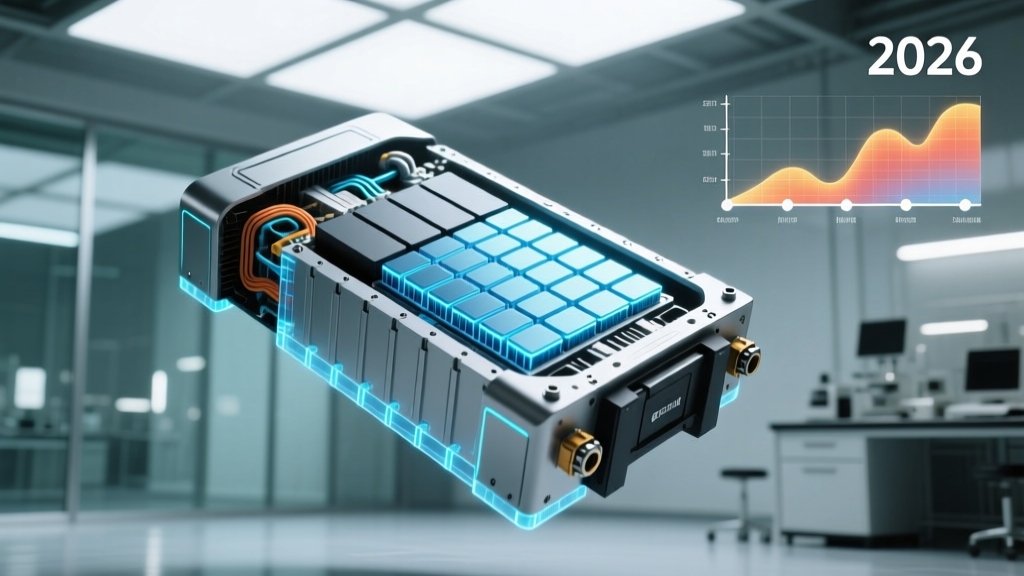
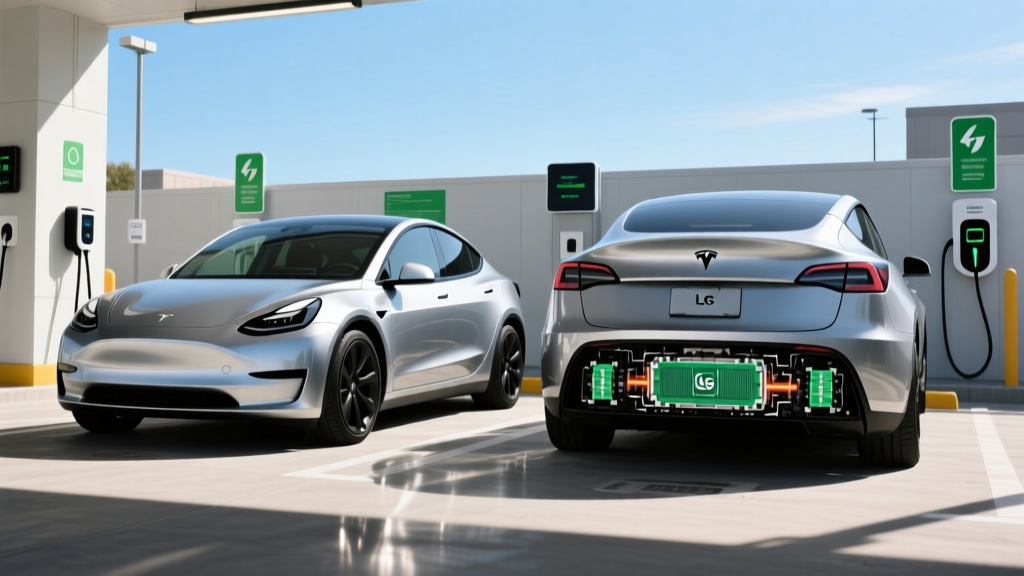
When shopping for an EV, most buyers focus on range, price, and styling. But the battery chemistry lurking under the floor dictates how your car ages, how it handles winter, and what it costs to own long-term. The lithium iron phosphate battery for electric vehicle applications — commonly called LFP — has moved from a niche option to a mainstream powerhouse, now equipping base-trim Tesla Model 3 and Model Y vehicles, the Ford Mustang Mach-E Select, and several Rivian configurations for 2026.
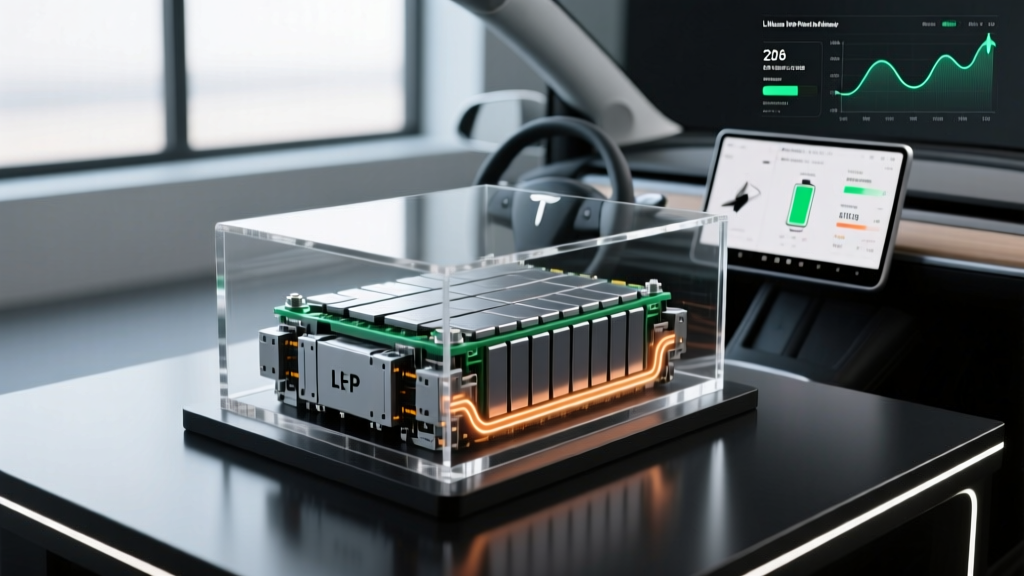
LFP cells use iron and phosphate in the cathode instead of the nickel, manganese, and cobalt found in NMC (nickel manganese cobalt) or NCA (nickel cobalt aluminum) chemistries. That material swap creates a fundamentally different ownership proposition: lower energy density but dramatically longer cycle life, better thermal stability, and a supply chain free of cobalt. Here's what the data actually shows.
LFP vs NMC/NCA: Head-to-Head Chemistry Breakdown
The table below captures the engineering trade-offs that matter for real-world ownership. Neither chemistry is universally "better" — the right choice depends on how you drive, where you live, and what you prioritize.
| Attribute | LFP (Lithium Iron Phosphate) | NMC / NCA (Nickel-based) |
|---|---|---|
| Energy Density (cell-level) | ~160–180 Wh/kg | ~220–260 Wh/kg |
| Typical Cycle Life | 3,000–5,000+ cycles to 80% SoH | 1,000–2,000 cycles to 80% SoH |
| Calendar Life Expectancy | 15–20+ years | 10–15 years |
| Cold-Weather Performance | More range loss (~30-40% at 20°F) | Moderate range loss (~20-30% at 20°F) |
| Thermal Stability / Safety | Excellent — higher thermal runaway threshold | Good — requires more active thermal management |
| Recommended Daily Charge Limit | 100% (regular full charges are fine) | 80% daily; 100% for trips only |
| DC Fast-Charging Speed | Moderate (peak ~170–250 kW) | High (peak ~250–350 kW) |
| Cobalt / Nickel Content | None | Significant |
| Relative Cost (per kWh) | Lower (~$90–110/kWh at pack level) | Higher (~$120–150/kWh at pack level) |
| SoC Estimation Accuracy | Harder — flat voltage curve complicates BMS | Easier — sloped voltage curve |
Bottom line: LFP sacrifices some range-per-pound and cold-weather efficiency in exchange for dramatically longer lifespan, the ability to charge to 100% daily without damage, lower cost, and a more ethical supply chain. If you're a daily commuter who charges at home and doesn't regularly face sub-freezing winters, LFP's advantages compound over years of ownership.
How Long Do LFP EV Batteries Actually Last?
The short answer: almost certainly longer than you'll keep the car. But let's look at real numbers rather than vague reassurances.
Degradation Data Points (LFP Packs in the Field)
- Tesla Model 3 Standard Range (LFP, 2021–2024 build): Fleet data aggregated by Recurrent Auto shows an average capacity loss of roughly 3–5% over the first 100,000 miles, with the curve flattening significantly after the initial break-in period.
- CATL-supplied LFP packs (various OEMs): Lab cycle testing demonstrates 80% State of Health (SoH) retention after 3,000–5,000 full charge-discharge cycles. At a real-world average of 250 miles per cycle, that's 750,000 to 1.25 million miles before hitting the 80% threshold.
- BYD Blade Battery (LFP): BYD's internal testing, corroborated by independent analyses, indicates needle-penetration safety compliance and 80% SoH at 3,000+ cycles.
- Calendar aging: Even if you barely drive, LFP packs lose roughly 1–2% capacity per year from calendar aging alone, depending on storage temperature and average State of Charge.
For context, the average American driver covers about 13,500 miles per year according to FHWA data. An LFP pack rated for 3,000 cycles at 250 miles each would theoretically outlast 55 years of average driving. Real-world conditions — fast charging, extreme heat, deep discharges — compress that number, but the fundamental point holds: the battery is very unlikely to be the component that kills your EV.
EV Battery Warranty: What's Actually Covered
Federal regulations mandate a minimum 8-year/100,000-mile warranty on EV battery packs (10 years/150,000 miles in CARB states like California, New York, and Massachusetts). But the fine print matters enormously.
| Manufacturer | Warranty Term | Capacity Retention Threshold | Notes |
|---|---|---|---|
| Tesla (Model 3/Y RWD with LFP) | 8 years / 100,000 miles | 70% minimum | Covers defects + capacity below threshold |
| Ford (Mach-E Select LFP) | 8 years / 100,000 miles | 70% minimum | Transferable to second owner |
| Hyundai / Kia (varies by model) | 10 years / 100,000 miles | 70% minimum | First-owner 10yr; second-owner may differ |
| Rivian (LFP-equipped 2026 configs) | 8 years / 175,000 miles | 70% minimum | Higher mileage cap benefits high-mileage drivers |
| BYD (global markets) | 8 years / 100,000 miles (varies) | 70% minimum | Blade battery; US availability limited |
Critical nuance: The 70% threshold means your battery could lose 29% of its original capacity and the manufacturer still considers it "within spec." In practice, LFP packs rarely approach this threshold under normal use. If you do experience a defect — a bad module, a BMS failure, a coolant leak into the pack — the warranty covers full repair or replacement regardless of capacity.
How Much Does an EV Battery Replacement Cost?
This is the question that generates the most anxiety — and the most misinformation. Let's ground it in 2026 numbers.
| Vehicle / Pack Size | Chemistry | Estimated Replacement Cost (Parts + Labor) | When Is It Typically Needed? |
|---|---|---|---|
| Tesla Model 3 RWD (~57 kWh usable) | LFP | $10,000 – $14,000 | Rarely before 200,000+ mi; most often due to physical damage, not degradation |
| Ford Mach-E Select (~71 kWh usable) | LFP | $13,000 – $18,000 | Same — degradation-driven replacement is extremely uncommon |
| Tesla Model Y Long Range (~75 kWh usable) | NMC | $14,000 – $20,000 | Out-of-warranty failures typically 150,000–250,000 mi |
| Hyundai Ioniq 5 (~77.4 kWh usable) | NMC | $12,000 – $17,000 | Module-level repairs may reduce cost; full pack rare |
| Chevrolet Silverado EV (~200 kWh) | NMC (Ultium) | $25,000 – $35,000 | Large packs = high cost; GM offers modular repair |
The honest context: According to data from Recurrent and warranty claim analyses, fewer than 2–3% of EV battery packs are replaced due to degradation alone within the first 10 years. Most out-of-warranty replacements result from collision damage, manufacturing defects that surface late, or coolant system failures — not gradual wear. LFP's superior cycle life makes degradation-driven replacement even less likely.
Additionally, pack-level replacement is increasingly rare. Many shops now perform module-level repairs — swapping individual bad cell modules rather than the entire pack — reducing costs by 50–70%. Tesla, Rivian, and Hyundai-affiliated service centers all offer module-level diagnostics and repair in 2026.
What Kills an EV Battery (and How to Maximize Lifespan)
Battery degradation isn't random. It's driven by specific, controllable factors. Here's what the electrochemistry actually punishes:
LFP Battery Care Best Practices
- Charge to 100% regularly. Unlike NMC, LFP cells benefit from periodic full charges. Tesla recommends charging LFP vehicles to 100% at least once per week. This keeps the Battery Management System (BMS) calibrated — LFP's flat voltage curve makes SoC estimation notoriously tricky without full-charge recalibration.
- Minimize DC fast charging when possible. Occasional Supercharging or Electrify America stops are fine, but daily 150+ kW sessions accelerate degradation. Research from the Idaho National Laboratory showed that vehicles fast-charged exclusively lost roughly 2–3% more capacity over 100,000 miles compared to Level 2-only charging. Use Level 2 at home as your primary method.
- Avoid prolonged storage at extreme SoC in heat. Sitting at 100% SoC in 100°F+ ambient temperatures stresses all lithium-ion chemistries. If storing for weeks in summer, aim for ~50–60% SoC. LFP is more tolerant than NMC here, but physics still applies.
- Precondition before fast charging in cold weather. LFP cells are particularly sluggish below freezing. Use your vehicle's preconditioning feature (or schedule charging via the app) to warm the pack before DC charging. This protects the cells and dramatically improves charge speed.
- Don't obsess over shallow cycles. LFP cycle life counts full equivalent cycles. Driving from 80% to 30% and back counts as half a cycle. The old "memory effect" concern from nickel-cadmium batteries does not apply to lithium-ion.
- Keep up with coolant system maintenance. Battery thermal management fluid should be checked per the manufacturer's service schedule. Coolant degradation or leaks are a leading cause of premature pack failure across all chemistries.
Monitoring Battery Health: How to Check Your SoH
State of Health (SoH) is the percentage of original capacity your pack can still hold. A new battery is 100% SoH; one that holds 85 kWh of its original 100 kWh is at 85% SoH. Here's how to track it:
- In-vehicle displays: Tesla's 2026 software includes a battery health estimate in the service menu. Ford and Hyundai offer similar readouts in their companion apps. These are estimates based on coulomb counting and voltage analysis — useful for trends, not exact to the decimal.
- OBD-II diagnostic tools: Devices like the OBDLink MX+ paired with apps such as ABRP (A Better Route Planner) or Scan My Tesla can pull BMS-reported SoH data directly from the CAN bus. This is more granular than the in-app estimate.
- Third-party testing services: Companies like Geotab and Recurrent offer fleet-grade battery health reports based on telematics data. Some used-EV sellers now include a certified SoH report, similar to a vehicle history report.
- The manual method: Charge to 100%, note the displayed range, and compare it to the EPA-rated range when the car was new. This is imprecise (displayed range factors in driving habits) but gives a rough sanity check. If your 250-mile EPA LFP Model 3 shows 240 miles at 100%, you're at roughly 96% SoH.
Beyond LFP: Solid-State, Silicon Anode, and What's Next
Every battery technology article faces the question: "Should I wait for the next breakthrough?" Here's the realistic 2026 outlook, stripped of hype:
Solid-state batteries — which replace the liquid electrolyte with a solid conductor, promising higher energy density and faster charging — remain in limited pilot production. Toyota has announced a solid-state-equipped vehicle for limited sale in Japan, but mass-market availability in the US is not expected before 2029–2030 at the earliest. QuantumScape and Samsung SDI are still in validation phases with OEM partners. These will likely debut in premium vehicles at significant cost premiums.
Silicon-dominant anodes — which can boost energy density 20–40% over graphite anodes — are entering production in 2026 through companies like Sila Nanotechnologies (partnered with Mercedes-Benz and Panasonic). Expect these to complement NMC chemistry in high-range applications, not replace LFP in cost-sensitive models.
Sodium-ion batteries — cheaper than LFP but with lower energy density — are entering the Chinese market through CATL and BYD. US-market vehicles with sodium-ion packs are not yet available and face supply-chain and regulatory hurdles before appearing stateside.
What this means for your purchase decision: LFP is not a stopgap technology waiting to be obsoleted. It's a mature, cost-effective chemistry that will remain the standard for affordable EVs for at least the next decade. Waiting for solid-state means waiting 3–5+ years and paying a premium when it arrives.
Frequently Asked Questions
Is an LFP battery better than NMC for my daily commute?
For most daily commuters who charge at home, yes. LFP's ability to charge to 100% daily without degradation concern, its 3,000–5,000 cycle life, and its lower cost make it the pragmatic choice. You sacrifice some range (typically 15–30 miles less than an equivalent NMC trim) and some cold-weather performance, but gain peace of mind and lower long-term ownership cost.
How much range do I lose in winter with an LFP battery?
Expect 30–40% range reduction at 20°F compared to the EPA sticker, based on testing by fueleconomy.gov and independent reviewers. A 272-mile EPA LFP Model 3 might deliver 165–190 miles in sustained cold-weather highway driving. NMC packs lose roughly 20–30% under the same conditions. Preconditioning, seat heaters (which draw far less energy than cabin air heating), and a heat pump (standard on most 2026 LFP vehicles) help recover some of this loss.
Can I fast-charge an LFP battery without damaging it?
Yes, but moderation matters. LFP cells handle fast charging reasonably well, and the BMS manages thermal limits. However, frequent DC fast charging (daily or near-daily) accelerates degradation compared to Level 2 home charging. For road trips, fast charge without worry. For daily use, a Level 2 home charger at 7–11 kW is the optimal strategy for longevity.
Does the federal tax credit apply to LFP-equipped EVs?
Possibly — it depends on the specific vehicle and your situation. Under current IRS §30D rules, the $7,500 credit requires the vehicle to meet critical minerals and battery component sourcing thresholds, MSRP caps ($55,000 for sedans, $80,000 for SUVs/trucks), and buyer income limits ($150,000 single / $300,000 joint). LFP batteries sourced from CATL in China may face sourcing restrictions that disqualify certain trims. Always verify eligibility on IRS.gov or consult a tax professional before purchasing.
Will my LFP battery need to be replaced during ownership?
Statistically, no. Fleet data shows fewer than 2–3% of EV battery packs require replacement within the first decade, and most of those are due to physical damage or manufacturing defects — not degradation. LFP's cycle life of 3,000–5,000 cycles translates to hundreds of thousands of miles. If you keep your EV for 10 years and 150,000 miles, the pack will likely retain 90%+ of its original capacity.
How do I know if a used EV has an LFP or NMC battery?
Check the vehicle's window sticker, VIN decoder, or the manufacturer's spec page for the model year and trim. In Tesla's lineup, the Model 3 RWD and Model Y RWD (when available) use LFP; Long Range and Performance trims use NMC. For Ford, the Mach-E Select with standard-range battery uses LFP. The BMS data via OBD-II can also reveal cell chemistry through voltage profiles — LFP's nominal cell voltage is ~3.2V vs. NMC's ~3.7V.