The Companies Behind Your EV's Most Expensive Component
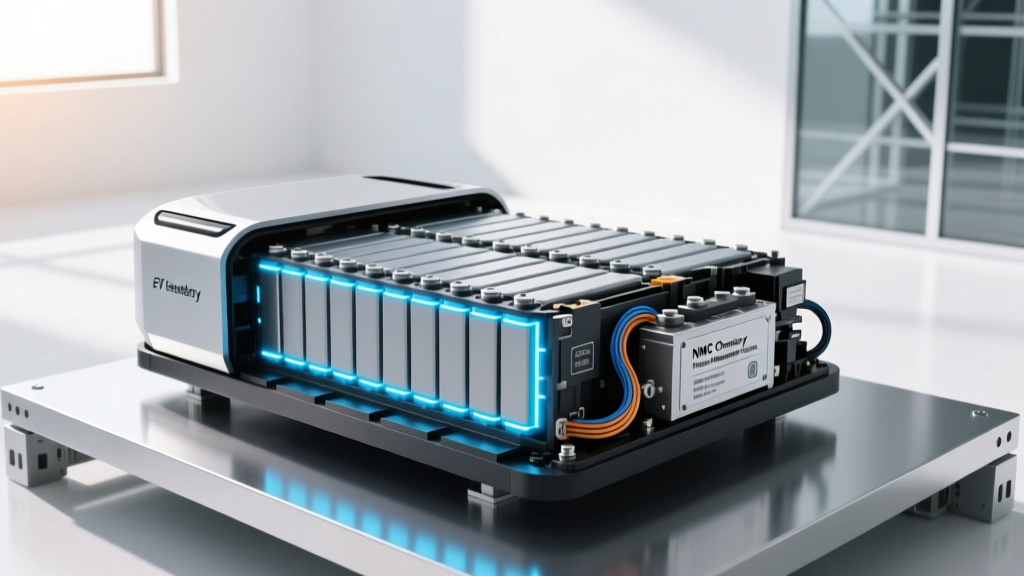
The high-voltage traction battery accounts for 25–40% of an electric vehicle's total cost, yet most buyers focus on horsepower and infotainment screens while overlooking the cell supplier powering it all. Whether you're evaluating a 2026 Tesla Model Y, a Ford F-150 Lightning, or a Hyundai Ioniq 5, the battery pack inside was almost certainly manufactured by one of a handful of global cell producers — and their chemistry choices directly affect your real-world range, charging speed, longevity, and eventual replacement cost.
This guide breaks down the leading battery manufacturers supplying today's EVs, the chemistry platforms they build on, and the hard data every EV shopper needs: degradation curves, warranty thresholds, replacement pricing, and daily habits that extend — or shorten — pack life.
The Leading Battery Manufacturers Powering 2026 EVs
Five companies dominate global EV battery cell production, collectively controlling the vast majority of supply. Here is who they are and which automakers rely on them:
- CATL (Contemporary Amperex Technology Co. Limited) — Headquartered in Ningde, China, CATL is the world's largest EV battery maker by volume. Customers include Tesla (Model 3/Y Standard Range with LFP), BMW, Mercedes-Benz, Volvo, Ford, and numerous Chinese OEMs. CATL pioneered large-format LFP prismatic cells and is a leader in sodium-ion and condensed-matter battery development.
- BYD (Build Your Dreams) — The only major manufacturer that is also a top-selling automaker. BYD's Blade Battery (LFP, prismatic) supplies its own vehicles and external clients including Tesla (for some European Model Y variants) and Toyota. The Blade design integrates cells directly into the pack structure, improving volumetric efficiency and thermal resilience.
- LG Energy Solution (LGES) — South Korea-based, supplying GM (Ultium platform), Tesla, Ford, Volkswagen, Hyundai, Stellantis, and others. LGES primarily produces NMC pouch and cylindrical cells and operates major cell plants in the US (Lansing, MI; Lordstown, OH with GM via Ultium Cells).
- Panasonic Energy — Long-time Tesla partner, manufacturing 2170 and 4680 cylindrical NCA/NMC cells at Gigafactory Nevada and new Kansas facilities. Panasonic is scaling 4680 production for Tesla's Cybertruck and next-gen vehicles.
- SK On (SK Innovation) — Supplies Ford (F-150 Lightning, Mustang Mach-E via BlueOval SK joint venture), Hyundai/Kia, and others. Primarily NMC pouch cells with US manufacturing in Commerce, GA and Bowling Green, KY.
Emerging players include Samsung SDI (supplying BMW, Stellantis, and Rivian), CALB, Gotion High-Tech (backed by Volkswagen, supplying LFP for some VW and VinFast models), and Northvolt (Sweden, supplying BMW, Scania, and Volvo — though facing financial restructuring in 2025–2026).
Why does the manufacturer matter? Because cell chemistry, form factor (cylindrical, prismatic, pouch), and manufacturing consistency directly influence energy density, thermal behavior, cycle life, and degradation trajectory. A 75 kWh pack from CATL using LFP cells will age differently than a 75 kWh pack from LGES using NMC pouch cells — even if the EPA range sticker looks identical.
LFP vs NMC/NCA: Battery Chemistry Trade-Offs Explained
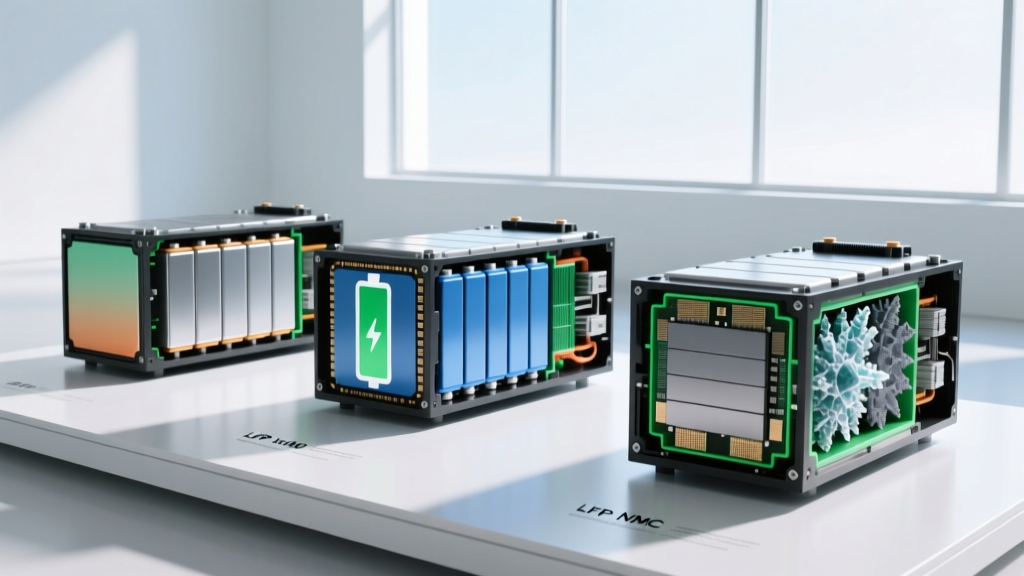
The two dominant lithium-ion chemistries in 2026 EVs are LFP (lithium iron phosphate, LiFePO₄) and NMC/NCA (nickel manganese cobalt / nickel cobalt aluminum). Each has distinct engineering trade-offs that affect your ownership experience.
| Attribute | LFP (Lithium Iron Phosphate) | NMC / NCA (Nickel-based) |
|---|---|---|
| Energy Density (Wh/kg, cell-level) | 160–200 Wh/kg | 230–300 Wh/kg |
| Cycle Life (full cycles to 80% SoH) | 3,000–6,000+ | 1,000–2,500 |
| Cold-Weather Performance | Greater range loss below 32°F; slower charge acceptance when cold | Better low-temp performance; less range penalty |
| Cost ($/kWh, cell-level, 2026 est.) | $75–$95/kWh | $100–$130/kWh |
| Thermal Stability / Safety | Superior — higher thermal runaway threshold (~270°C) | Good but lower runaway threshold (~210°C); requires more active thermal management |
| State-of-Charge Calibration | Flat voltage curve makes SoC estimation harder; manufacturers recommend periodic 100% charges | More linear voltage curve; easier SoC estimation; typically recommend 80% daily limit |
| Critical Mineral Dependence | No cobalt or nickel — fewer supply-chain and ethical concerns | Requires nickel, cobalt (NMC), or nickel/cobalt (NCA) — subject to §30D sourcing rules |
| Typical Applications | Standard-range / base trims (Tesla Model 3 RWD, Model Y RWD, BYD lineup, Ford Mustang Mach-E Select LFP) | Long-range, performance, and large-pack vehicles (Model Y Long Range, F-150 Lightning Extended, Ioniq 5 Long Range) |
The bottom line: LFP wins on longevity, cost, and safety. NMC/NCA wins on energy density and cold-weather usability. If you primarily commute in moderate climates and can charge at home, LFP is increasingly the pragmatic choice. If you need maximum range in a single charge, frequently drive in sub-freezing temperatures, or tow heavy loads, NMC/NCA packs still deliver the edge.
How Long Do EV Batteries Last? Real Degradation Data
The most persistent EV myth is that batteries need replacement every few years like smartphone batteries. The data tells a very different story.
Observed Degradation Benchmarks:
- Tesla Model 3/Y (NMC, 2170 cells): Tesla's 2024 Impact Report (the most recent comprehensive fleet data) showed Model 3/Y packs retaining approximately 85% of original capacity at 200,000 miles. Early 2018–2019 vehicles now approaching 150,000+ miles confirm this trajectory with real-world owner logging via TeslaFi and Recurrent Auto.
- Nissan Leaf (passive air-cooled, NMC): A cautionary tale — earlier Leaf models (2011–2018) without active thermal management showed 20–30% degradation by 80,000–100,000 miles, particularly in hot climates. This underscores why active liquid cooling is now standard across the industry.
- Chevrolet Bolt EV (NMC, LG pouch): Post-2020 recall/replacement packs (with updated manufacturing) show strong retention, with Recurrent Auto fleet data indicating ~90% SoH at 80,000 miles for replaced packs.
- LFP-equipped Tesla Model 3 RWD: Early fleet data (vehicles from 2022–2024) suggests LFP packs are tracking toward 90%+ retention at 100,000 miles, consistent with LFP's higher cycle-life rating.
Typical degradation follows a non-linear curve: a steeper 2–5% drop in the first year or 15,000–20,000 miles (calendar aging and initial formation losses), followed by a long, gradual linear decline of roughly 1–2% per year or 10,000–15,000 miles. Most modern, liquid-cooled packs from leading manufacturers are designed to retain 70–80% capacity at 150,000–200,000 miles — meaning the battery will likely outlast other major vehicle components.
What Does the Battery Warranty Cover?
Federal law (EPA emissions warranty requirements, adopted by CARB-affected states and followed industry-wide) effectively mandates an 8-year / 100,000-mile battery warranty minimum for EVs sold in the US. California and states adopting CARB rules push this to 10 years / 150,000 miles. Most manufacturers meet or exceed these thresholds.
| Manufacturer (2026 Models) | Battery Warranty | Capacity Retention Threshold |
|---|---|---|
| Tesla (Model 3/Y) | 8 yr / 120,000 mi (LR/AWD); 8 yr / 100,000 mi (RWD) | 70% |
| Hyundai / Kia (Ioniq 5, EV6, EV9) | 10 yr / 100,000 mi | 70% |
| Ford (F-150 Lightning, Mach-E) | 8 yr / 100,000 mi | 70% |
| GM (Ultium: Equinox EV, Blazer EV, Silverado EV) | 8 yr / 100,000 mi | 70% |
| Rivian (R1T, R1S) | 8 yr / 120,000 mi | 70% |
| BMW (iX, i4, i5) | 8 yr / 100,000 mi | 70% |
What triggers a warranty claim: If your battery's State of Health drops below the threshold (typically 70% of original usable capacity) within the warranty period, the manufacturer must repair or replace the pack at no cost. This is assessed via the vehicle's onboard battery management system (BMS) or a dealer diagnostic scan — not by range alone, since range is affected by temperature, driving style, and software updates.
What's NOT covered: Damage from accidents, flooding, improper charging equipment, or aftermarket modifications. Gradual degradation above the threshold is considered normal wear. Always keep records of charging equipment used and service visits.
EV Battery Replacement Cost: When and How Much
Here's the data point that eases most replacement-cost anxiety: the vast majority of EV batteries are never replaced during the vehicle's normal lifespan. Out-of-warranty failures before 150,000 miles are statistically rare in modern, liquid-cooled packs. When replacement is needed — typically due to a manufacturing defect, physical damage, or extreme high-mileage degradation — here are current costs:
| Vehicle / Pack Size | Battery Chemistry | Estimated Replacement Cost (2026) |
|---|---|---|
| Tesla Model 3 RWD (~57 kWh) | LFP | $10,000–$13,000 |
| Tesla Model Y Long Range (~75 kWh) | NMC/NCA | $13,000–$16,000 |
| Ford F-150 Lightning Extended (~131 kWh) | NMC | $20,000–$28,000 |
| Hyundai Ioniq 5 (~77.4 kWh) | NMC | $14,000–$18,000 |
| Chevrolet Equinox EV (~85 kWh) | NMC (Ultium) | $15,000–$19,000 |
| Rivian R1T Large Pack (~135 kWh) | NMC | $22,000–$30,000 |
These costs include parts and labor at manufacturer-authorized service centers. Independent EV shops and refurbished/remanufactured packs can reduce costs by 20–35%. Cell-level pricing continues to decline — BloombergNEF reported average pack-level pricing below $120/kWh in late 2025, trending lower — which will reduce replacement costs over time.
Module-level repair: Many packs are serviceable at the module level. A single degraded or failed module (out of 4–24 in a pack) can sometimes be replaced for $2,000–$5,000 rather than replacing the entire pack. This is manufacturer-dependent and requires specialized diagnostic capability.
Factors That Accelerate (or Preserve) Battery Life
Not all miles age a battery equally. These are the five factors with the most measurable impact on long-term State of Health:
1. State-of-Charge Habits
- NMC/NCA: Daily charging to 80% and avoiding prolonged storage above 90% or below 10% reduces stress on nickel-based cathodes. Occasional 100% charges for road trips are fine — just don't let the car sit at 100% for days.
- LFP: Manufacturers (including Tesla) recommend charging to 100% at least once per week. LFP's flat voltage curve requires periodic full charges for the BMS to recalibrate cell balancing. Storing LFP at 100% is less harmful than with NMC.
2. DC Fast-Charging Frequency
- Exclusive or near-exclusive DC fast charging (especially at 150+ kW) accelerates degradation modestly — studies from Idaho National Laboratory showed approximately 5–8% additional degradation over 50,000 miles compared to Level 2 charging, primarily from elevated cell temperatures and lithium plating risk at high C-rates.
- Practical advice: Use DC fast charging for road trips and when needed, but rely on Level 2 home charging for daily replenishment.
3. Temperature Extremes
- Sustained exposure to ambient temperatures above 95°F accelerates calendar aging. Vehicles parked outdoors in Phoenix or Riyadh without shade will degrade faster than those in Seattle or Minneapolis (where cold reduces range but doesn't meaningfully damage the pack).
- Preconditioning (warming the battery before fast charging in cold weather) protects against lithium plating — always enable navigation to a charger, which triggers automatic preconditioning in Tesla, Hyundai, Ford, and most modern EVs.
4. Depth of Discharge
- Shallow cycles (e.g., charging from 30% to 70%) are gentler than deep cycles (5% to 95%). You don't need to obsess over this, but avoiding running the battery to near-zero regularly extends life.
5. Vehicle Storage
- If storing an EV for weeks or months, set the charge level to 50–60% (NMC) or 50–70% (LFP) and leave it plugged in with a scheduled charge limit. A vehicle sitting at 5% for three months risks bricking the 12V system and stressing the traction battery.
How to Check and Monitor Battery Health (State of Health)
State of Health (SoH) is the percentage of original usable capacity remaining in your battery. A new pack is 100% SoH; a pack with 10% degradation is at 90% SoH. Here's how to monitor it:
- In-vehicle displays: Some EVs show SoH directly (Nissan Leaf's "battery health bars," Porsche Taycan's battery info screen). Tesla does not display SoH natively but provides range estimates that reflect degradation.
- Third-party apps: Tesla owners can use TeslaFi, Tessie, or Stats to log charge data and calculate SoH over time. For OBD-II-accessible vehicles, apps like ABRP (A Better Route Planner) and LeafSpy (Nissan) provide SoH estimates from BMS data.
- Dealer diagnostics: Any authorized dealer can run a battery health scan that reads BMS-reported SoH. Request this during routine service visits and keep a copy for resale documentation.
- Recurrent Auto / fleet services: If you're a fleet operator, services like Recurrent provide continuous SoH monitoring and benchmarking against comparable vehicles.
Range vs. SoH — an important distinction: Your displayed range fluctuates with temperature, driving style, and tire condition. SoH is a measure of actual capacity loss. A car showing 280 miles of range in winter doesn't necessarily have worse SoH than one showing 310 miles in summer — the BMS adjusts range estimates dynamically. Trust SoH percentage, not range alone, as the longevity indicator.
What's Next: Solid-State, Silicon Anodes, and Realistic Timelines
Next-generation battery technologies generate enormous hype, but separating laboratory breakthroughs from production reality is essential for buyers making decisions today.
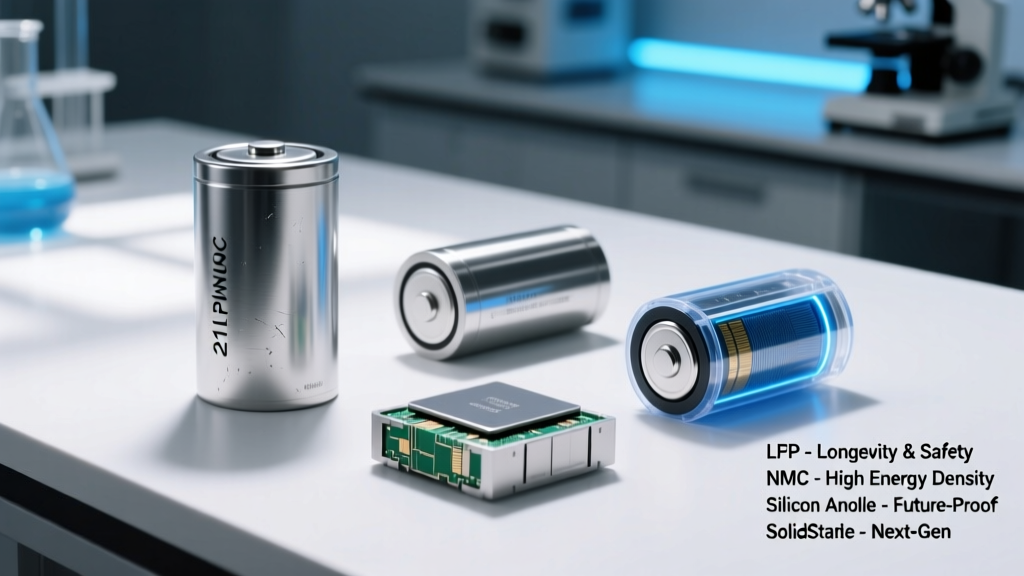
Solid-State Batteries: These replace the liquid electrolyte with a solid conductor, promising higher energy density (potentially 400+ Wh/kg at cell level), faster charging, and improved safety. Toyota, Samsung SDI, and QuantumScape are among the most advanced developers. Toyota has announced solid-state-equipped vehicles for 2027–2028, but these are expected in limited, premium models first. Mass-market solid-state at competitive pricing is realistically a 2030+ proposition. No 2026 production EV uses a solid-state traction battery.
Silicon Anode Technology: Companies like Sila Nanotechnologies and Group14 are commercializing silicon-dominant anodes that boost energy density by 10–20% over graphite anodes. Mercedes-Benz (via the EQG/G-Wagen) and Panasonic are early adopters. Expect incremental adoption in 2026–2028 premium models, scaling to mainstream by 2029–2030.
Sodium-Ion Batteries: CATL and BYD have begun limited production of sodium-ion cells for lower-cost, lower-range applications (city cars, energy storage). Energy density (~120–160 Wh/kg) limits them to budget and urban vehicles. Not expected in US-market long-range EVs in the near term.
What this means for today's buyer: Current lithium-ion technology (both LFP and NMC) is mature, well-understood, and backed by robust warranty coverage. Waiting for solid-state is not a practical strategy — the technology will debut in expensive, low-volume vehicles and take 5+ years to reach mainstream pricing. Buy based on today's proven platforms.
Frequently Asked Questions
How long do EV batteries last in years and miles?
Modern liquid-cooled EV batteries from leading manufacturers typically retain 70–85% of original capacity at 150,000–200,000 miles (roughly 12–18 years of average US driving at ~13,500 miles/year). LFP packs may exceed this due to higher cycle-life ratings. Most packs outlast the vehicle's other major components.
How much does an EV battery cost to replace?
Full pack replacement costs range from approximately $10,000 for a smaller LFP pack (e.g., Tesla Model 3 RWD) to $28,000–$30,000 for large NMC packs (e.g., F-150 Lightning Extended Range, Rivian R1T). Module-level repairs can cost $2,000–$5,000. Most owners never face this expense during their ownership.
What does the EV battery warranty cover?
All major manufacturers warranty the high-voltage traction battery for at least 8 years / 100,000 miles against capacity loss below 70% of original usable capacity. California and CARB-adopting states require 10 years / 150,000 miles. The warranty covers defects and abnormal degradation — not physical damage, accidents, or misuse.
How do I check my EV battery's health?
Use the vehicle's native battery info screen (if available), third-party apps like TeslaFi or LeafSpy that read BMS data, or request a dealer diagnostic scan. Track SoH (State of Health) percentage over time rather than relying on displayed range, which fluctuates with temperature and driving conditions.
Is LFP or NMC better for my EV?
LFP is better if you prioritize longevity, lower cost, and can charge at home regularly (it benefits from frequent 100% charges). NMC/NCA is better if you need maximum range per charge, regularly drive in very cold climates, or need the highest energy density for towing. Neither is universally superior — the right choice depends on your driving patterns and climate.
Does fast charging damage my EV battery?
Exclusive DC fast charging modestly accelerates degradation (approximately 5–8% more capacity loss over 50,000 miles vs. Level 2, per Idaho National Laboratory research). Occasional fast charging on road trips is not harmful. For daily use, Level 2 home charging at 7–11 kW is gentler on cells and significantly cheaper.
Can I buy an EV with a solid-state battery today?
No. As of 2026, no mass-production EV sold in the US uses a solid-state traction battery. Toyota and others target limited production in 2027–2028 for premium models. Mass-market solid-state vehicles are realistically expected around 2030 or later.